
Quick Answer
Start with a cost-based floor, then package the deal. To price a youtube sponsorship, convert your target owner pay into an internal working rate, add production and overhead costs, and include a buffer for revisions and admin. Then present tiered options with clear deliverables, rights scope, and payment triggers instead of one exposed rate. Use expected-case math as the main checkpoint, and do not send a proposal until scope boundaries and invoice milestones are documented.
Calculate Your Profitability Floor Before You Quote a Rate#
Your goal is not to win one deal. It is to set a repeatable floor price that pays you properly, covers delivery costs, and protects cash flow when a sponsor asks for more than that first email implied.
When you price a YouTube sponsorship, start with your own economics, not market rumor. Sponsorship pricing is not standardized, and subscriber count alone is not a reliable proxy for active audience size. Your floor needs to come from costs you can defend.
Step 1: Define your target owner pay and convert it into an internal working rate. Start with what the business needs to pay you over a year, then divide that by the hours you can realistically sell into sponsorship work. Use sponsored deliverables only: briefing, concepting, scripting, filming, editing, sponsor emails, review rounds, upload admin, invoicing, and reporting. Do not divide by all hours you work. Selling, planning, gaps between deals, and channel maintenance all take time, but they are not billable sponsorship capacity.
Your internal rate is Target owner pay ÷ realistic billable sponsorship hours = internal working rate.
The verification step matters. Check your assumption against recent projects or detailed time logs. If your rate looks shockingly high, the problem is often not the rate itself. It is usually that you overestimated how many hours are actually sellable.
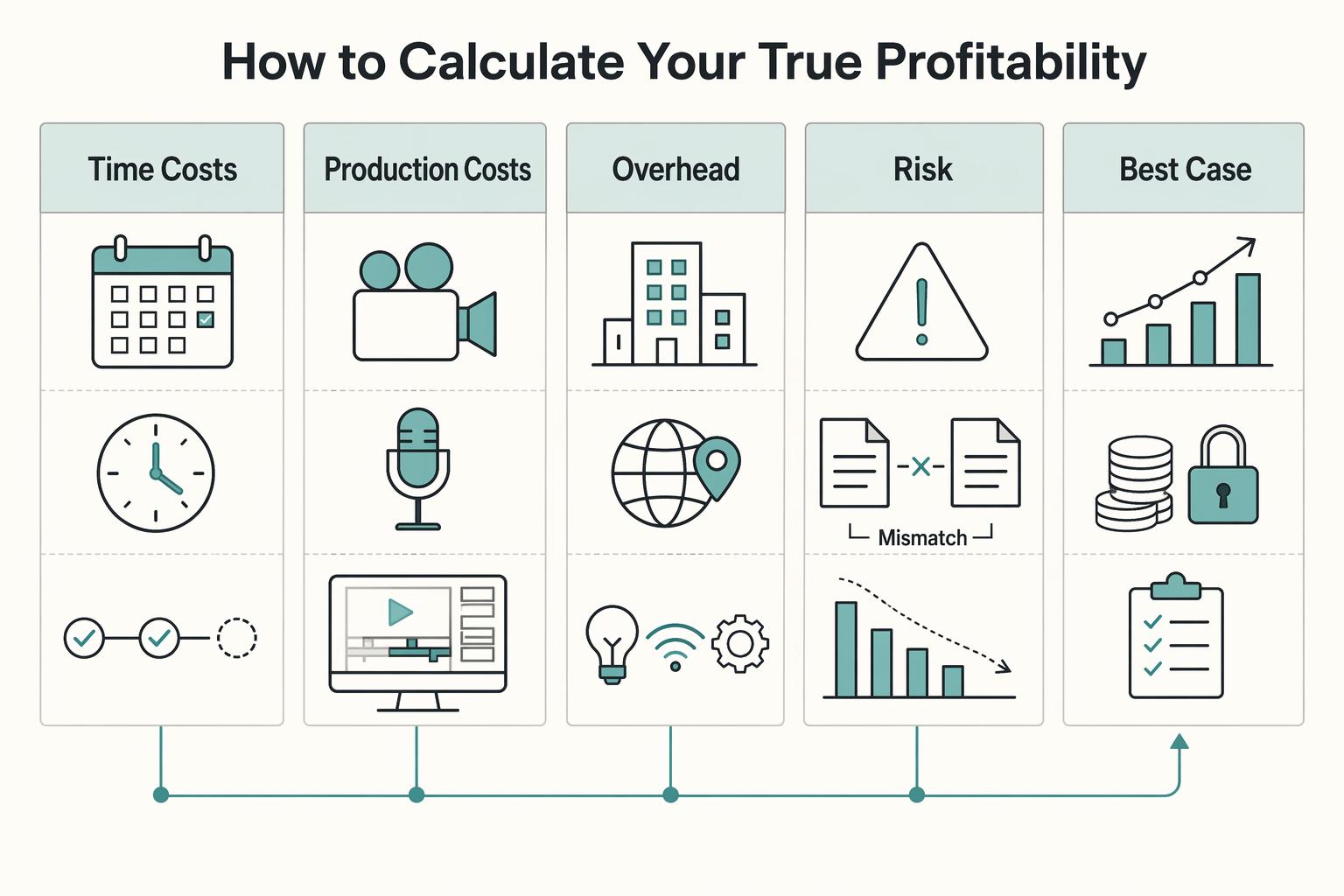
Step 2: Inventory the full cost of delivery, not just editing time. You can underquote when you count visible production effort and ignore overhead, approval drag, and compliance admin. For sponsorship work, use four buckets: time costs, production costs, overhead, and a risk buffer.
| Cost bucket | Fixed or variable | What to include |
|---|---|---|
| Time costs | Variable | Research, scripting, filming, editing, thumbnail changes, sponsor calls, review rounds, reporting |
| Production costs | Variable | Props, locations, travel, freelance help, stock assets, music licenses, captions |
| Overhead | Mostly fixed | Software, cloud storage, website, bookkeeping, insurance, internet share, equipment replacement reserve |
| Risk buffer | Variable or hybrid | Reshoots, delayed approvals, extra revisions, rush handling, extra admin tied to disclosure and rights questions |
Use a simple filter when deciding whether a cost belongs here: is it ordinary and necessary for how you deliver sponsorships? If yes, include it in the baseline. Disclosure work is easy to miss. If the video includes paid promotion, YouTube requires you to select the paid promotion setting, and both you and the brand are responsible for meeting disclosure obligations. That is not free admin.
Step 3: Build a flat rate, then pressure test it before you quote. Use this formula as your starting floor: (Estimated labor hours × internal working rate) + variable production costs + overhead allocation + risk/profit buffer = starting flat rate. Before you send it, test it against three scenarios.
| Scenario | Example input | What it tells you |
|---|---|---|
| Best-case | (H low × R) + C low + O + B | Useful for a sanity check, but too optimistic for a quote |
| Expected | (H expected × R) + C expected + O + B | This is the scenario your quoted rate should survive |
| Revision-heavy | (H high × R) + C high + O + B | If margin collapses here, add revision limits or raise price |
If only the best-case version is profitable, your quote is too low. That is the failure mode to catch before one round of feedback turns into three.
Step 4: Add a Creator Premium only after the floor is solid. This premium should come from evidence, not ego. The strongest inputs are audience fit, historical content performance, production complexity, and usage scope. Use metrics that speak to actual attention, such as unique viewers, watch time, and average view duration. If you reference audience retention, wait until the data is stable because YouTube says retention reports typically take 1 to 2 days to process.
Keep the premium conservative when the format is new, the brand fit is weak, or your proof is thin. Push it higher when you can show clear niche alignment, repeatable sponsored performance, heavier production demands, or expanded usage. Usage rights and exclusivity matter most here. If a brand wants to reuse your video in ad campaigns or lock you out of competitors, that increases value and reduces your future earning room. Those rights are not included by default just because you made the video.
Keep an evidence pack ready: analytics screenshots, a short summary of past sponsor performance, your scope assumptions, and the exact rights you priced. Once your floor is set, turn it into tiered offers instead of sending one exposed number.
If you want a deeper dive, read How to Calculate Your Billable Rate as a Freelancer. Want a quick next step for pricing a YouTube sponsorship? Try the free invoice generator.
Stop Quoting a Rate, Start Offering Partnership Tiers#
Once your floor works in the expected-case scenario, stop giving one exposed rate. Offer three scoped options so the brand chooses the level of outcome, rights, and process instead of negotiating one number down.
Build tiers from the same cost base#
Use the same fully loaded floor from the previous section for every option. Then build each tier with four levers: base production scope, usage/licensing scope, add-on channels, and complexity.
| Pricing lever | What it covers | Example from the section |
|---|---|---|
| Base production scope | Core production scope used in every option | Use the same fully loaded floor from the previous section for every option |
| Usage/licensing scope | How the brand can use the content | [organic repost add-on]; [paid usage add-on] |
| Add-on channels | Additional distribution beyond the base production scope | [community/social add-on] |
| Complexity | Rush, multi-review, or higher production demands | [rush / multi-review / higher production add-on] |
Tier price = base production scope + rights scope + add-on channels + complexity adjustment
Keep these as explicit line items, using placeholders until your numbers are verified, such as [organic repost add-on], [paid usage add-on], [community/social add-on], or [rush / multi-review / higher production add-on]. Hidden pricing is where underpriced rights and unpaid scope creep usually start.
Every tier should still clear your expected-case math. Keep the same controls in all options: a hyper-specific Scope of Work and 50% upfront in the contract.
Name options by scope, not status#
Use names that tell the buyer what changes in delivery and business use. Avoid labels like "premium" that do not explain scope.
| Tier | Deliverables | Usage and licensing scope | Revision boundaries and reporting depth | Optional exclusivity |
|---|---|---|---|---|
| Single-Video Integration | One sponsored YouTube placement in one video, with defined integration length and CTA | Only rights listed in the SOW; no paid usage unless stated | Defined review rounds and clear reporting level | Not included unless separately priced |
| Video + Distribution Support | Single-Video scope plus agreed distribution support (for example, a Community post or one repost asset) | Broader organic use only if listed in the SOW | Added review touchpoints and basic post-campaign reporting if included | Optional, bounded by category and term in the SOW |
| Multi-Asset Campaign | YouTube placement plus additional assets/channels and heavier coordination | Expanded rights only when explicitly granted, especially for paid campaigns | More approvals and fuller reporting, all bounded in the SOW | Optional and priced separately because it limits future deals |
Quick test: if a brand cannot compare these columns in under a minute, your proposal is still acting like a single-rate quote.
Qualify first, then map to the right tier#
Before you send pricing, ask five questions:
- What is the campaign objective?
- What result defines success?
- How will the brand use the content after publication?
- Who approves the work, and how many review steps are there?
- What is the timeline?
Then map the answers to the closest tier. Clean single-placement usage usually fits Single-Video Integration. Extra distribution or reporting usually fits Video + Distribution Support. Paid usage, more stakeholders, exclusivity, or tight timelines usually pushes the deal to Multi-Asset Campaign or a custom variant. If usage intent is unclear, send assumptions first, not a single rate.
After the brand picks a tier, lock scope, payment, and rights in contract language before production starts. Related: A guide to 'YouTube Sponsorships' for creators.
Contract Clauses to Lock Before Production Starts#
Lock the contract before production starts: signed agreement first, then deposit, then work.
1) Scope: define the work so change requests are obvious#
Use this as your base clause:
"Creator will deliver one sponsored YouTube integration or full dedicated video on the channel, placed at pre-roll, mid-roll, or post-roll (or the agreed time window), with the agreed integration length, agreed CTA, and required talking points in Schedule A. Brand will assign one consolidated approver. Included revisions: the agreed number of rounds for factual corrections and light messaging edits only. New talking points, structural rewrites, reshoots, extra cutdowns, additional review rounds, delayed feedback that compresses timeline, or requests for additional platforms are out of scope and require a paid change request."
2) Payment: control delivery and go-live risk#
Use this as your default payment block:
"Brand will pay 50% upfront before production begins. Remaining balance is due at final approval or final file delivery and before go-live. Creator may pause work, withhold deliverables, and delay publication until cleared payment is received. If payment is overdue by the agreed number of days, Creator may suspend performance until the account is current."
Add cancellation protection:
"If Brand cancels after work begins or after Creator reserves the slot, Brand will pay a kill fee of [amount or %] plus approved expenses incurred to date."
3) Rights: separate each right so pricing stays aligned#
| Clause | Contract language to use |
|---|---|
| Usage channels | "Brand may use content only on [listed organic channels]. Any other use requires written approval." |
| Licensing window | "License term is [X days/months] from publish date." |
| Paid media rights | "Paid usage is excluded unless expressly licensed." |
| Whitelisting | "Use of Creator handle/likeness for whitelisting is excluded unless expressly approved." |
| Exclusivity | "Exclusivity applies only to the defined category for the agreed term, with carve-outs for existing partners and non-competing products." |
4) Ownership, compliance, and disputes: close the gaps#
Use these closing clauses:
| Issue | Contract position | Note |
|---|---|---|
| Ownership | Creator retains ownership of all intellectual property except the limited license granted above | Limited license granted above |
| Sponsorship disclosure | Creator will provide required sponsorship disclosure in published content | Required in published content |
| Claims, offers, and product information | Brand is responsible for the accuracy, substantiation, and legality of claims, offers, and product information it provides | Applies to information the brand provides |
| Published deliverables | Creator is responsible for publishing agreed deliverables and required disclosure | Applies to agreed deliverables |
| Indemnity | Each party indemnifies the other only for its own breach, infringement, or unlawful materials | Limited to its own conduct |
| Dispute resolution | State the escalation process, governing law, and venue | Include all three in the clause |
"Creator retains ownership of all intellectual property except the limited license granted above." "Creator will provide required sponsorship disclosure in published content." "Brand is responsible for the accuracy, substantiation, and legality of claims, offers, and product information it provides; Creator is responsible for publishing agreed deliverables and required disclosure." "Each party indemnifies the other only for its own breach, infringement, or unlawful materials." "Dispute resolution: [escalation process], governing law [governing law], and venue [venue]."
If you use an e-signature template, keep these as reusable fields so you can move quickly without dropping protections.
With scope, payment, and rights locked, your next step is proving value with performance evidence. We covered that in A creator's guide to writing a 'Media Kit'.
How to Justify Your Premium Rate with Business-Grade Data#
Your premium rate is easier to defend when you tie it to the brand's KPI, not just channel size. Because YouTube sponsorship pricing is not standardized, keep the conversation anchored to measurable outcomes and documented evidence.
Build a rate card around what the brand is trying to buy#
Use a simple YouTube rate card that shows your tiers alongside four proof types: audience fit, attention quality, conversion signals, and brand-safety/context fit. Include only metrics that help a buyer evaluate reach, fit, clicks, conversions, or placement context. If a number is impressive but not decision-useful, remove it.
| Proof type | What it helps evaluate |
|---|---|
| Audience fit | Fit |
| Attention quality | Reach |
| Conversion signals | Clicks or conversions |
| Brand-safety/context fit | Placement context |
Match proof to the campaign objective#
Lead with the evidence that matches the stated goal so the discussion stays commercial, not vanity-based.
| Brand goal | Metrics to highlight | Proof assets to share |
|---|---|---|
| Awareness | audience fit, expected views on comparable sponsored videos, CPM basis | channel analytics, comparable sponsored uploads, rate card tier |
| Traffic | tracked clicks, click-through response to CTA | unique-link reports, prior campaign summary |
| Conversions | sign-ups, purchases, app installs, promo code use | unique-link results, promo code reports, case-study outcomes |
| Brand safety and relevance | niche alignment, content-context fit, comment quality signals | sponsor examples, comment snapshots, channel overview |
If the brand wants conversions, state the measurement method early: performance-based pricing depends on tracked links or promo codes. If they prefer predictable budgeting, position flat-rate tiers clearly; if they want shared upside, use a hybrid structure (base fee plus performance bonus).
Standardize case studies so they are easy to verify#
Use one repeatable format for every example:
- Objective
- Package used
- Execution summary
- Measured outcome
- Limits or assumptions
In the limits line, name the compensation model used (flat rate, CPM-based, performance-based, or hybrid). If payout depends on actual views, define the post-live settlement window up front (commonly 30 or 60 days).
Use a short KPI-first negotiation talk track#
Ask first: "Which KPI matters most for this campaign: awareness, clicks, or conversions?" Then mirror back your evidence by KPI and map each package tier to expected business impact.
Example structure: "Tier A is flat-rate for budget predictability. Tier B adds [extra placement/asset] to increase [reach or click opportunity]. Tier C is hybrid: base fee plus bonus if [verified KPI] meets the agreed benchmark." This keeps your rate discussion specific, outcome-focused, and easier to defend. You might also find this useful: How to monetize a 'YouTube Channel'.
From Price-Taker to Business Partner: Securing Your Future#
Treat this as your system for stable cash flow: send proposals that make scope, rights, and payment clear before work starts. When you price a YouTube sponsorship this way, you are not guessing better; you are reducing avoidable deal risk.
Before you start: keep your media kit current with audience demographics, average viewership, and your other social channels. Then write the campaign objective in one line: awareness for an existing product or a launch. If you cannot name the goal, pause and clarify it before pricing.
Show the whole commercial picture at a glance#
Use one proposal format every time so the buyer can evaluate the deal quickly.
| Old approach | Business-partner approach |
|---|---|
| Quote one number from memory or rumor | Send package-led proposals tied to deliverables, audience fit, and recent performance |
| Wait for the brand to define success | Ask what success looks like, then shape the offer around awareness or launch goals |
| Leave scope implied | Document scope boundaries, revision limits, and exact deliverables in writing |
| Accept vague payment language | Use milestone-based invoicing and state what triggers each invoice |
| Treat rights as bundled in | Clarify usage rights separately so "included" does not become open-ended reuse |
Checkpoint: a buyer should be able to read one document and understand fee, scope, rights, and payment timing without a follow-up call.
Screen deal quality before you agree#
Do this before you agree to the deal. Sponsorship pricing has no single standard, so your job is to catch weak compensation structures early and tighten unclear terms before accepting.
Use this filter: if the brief does not connect brand alignment, expected viewership, and engagement to a clear objective, you are still in a price-only negotiation. If you reference any market stat in your pitch or media kit, verify that it is current before you repeat it.
Run a five-point check before you send#
Before you send the next proposal, run this five-point check:
- media kit attached and updated
- campaign objective stated clearly
- deliverables and revision limits documented
- usage rights and approval expectations written plainly
- invoice milestones and payment dates included
If one item is missing, fix it first. That is the shift from taking deals to choosing them.
For a step-by-step walkthrough, see How to write a pitch email to a brand for a sponsorship.
Frequently Asked Questions
How do you calculate a flat rate for a YouTube sponsorship?
Start with a defensible floor, then sense-check it with recent performance. For a view-based check, use your average views from the last 10 to 15 videos, not subscriber count, because that is the stronger pricing input. If you need planning math, use: rate floor = (average views / 1,000) × CPM. Then quote a flat fee per video based on scope and recent average performance, and make sure the fee still works even if the video lands below your channel average.
What should be in a YouTube sponsorship contract?
Keep the agreement clear and specific to the deal. The main risk is vague language that leaves room for unpaid extras or mismatched expectations. Confirm deliverables, revision scope, approvals, and disclosure expectations in writing before work starts.
How do I justify a higher rate to a brand?
Tie your price to the brand’s goal and show proof that matches it: awareness metrics for reach, conversion metrics for outcomes, and audience fit for relevance. Do not let the conversation rest on a viral outlier, because a video can perform brilliantly in one category while failing in another. Show the closest comparable videos, tracked results, and any limits on attribution before you accept the brief.
What is the difference between CPM and CPV, and how should I respond?
If a brand talks in CPM, treat it as planning math, then translate it into your flat-fee floor using recent average views: rate floor = (average views / 1,000) × CPM. For example, 40,000 average views at a $75 CPM gives a $3,000 floor, but rates vary widely, so use your niche benchmark rather than a generic number. If they mention CPV, confirm what counts as a payable view and how reporting will be measured before you agree.
Is subscriber count the most important metric for pricing?
No. A common and expensive mistake is pricing from subscriber count instead of average views, especially when recent performance has changed. For pricing conversations, your stronger signals are average views on comparable uploads, audience fit, click response, and tracked conversions if the campaign is performance-led.
Which metrics matter most when I price a youtube sponsorship?
Prioritize the signals that map to business outcomes: average views for reach, audience match for relevance, and tracked clicks, sign-ups, or purchases when the brand cares about action. Deprioritize vanity metrics such as raw subscribers, impressions with no context, or a high-view video that produced zero leads. Keep your media kit split between awareness metrics and conversion metrics so each number answers a real buyer question.
Try a related tool
Researched and edited by the Gruv editorial team. Gruv builds cross-border billing, payouts, and finance-operations software for global businesses.
Sources
- apps.ecology.wa.gov/publications/documents/2104048.pdftrusted
- apps.irs.gov/app/IPAR/resources/help/ordnec.htmltrusted
- ftc.gov/business-guidance/resources/disclosures-101-...trusted
- ftc.gov/news-events/news/press-releases/2023/06/fede...trusted
- international.fhwa.dot.gov/scan/12031trusted
- irs.gov/forms-pubs/guide-to-business-expense-resourcestrusted
- losaltosca.gov/faqtrusted
- nsf.gov/funding/opportunities/seco-small-business-er...trusted
Educational content only. Not legal, tax, or financial advice.
Related Posts
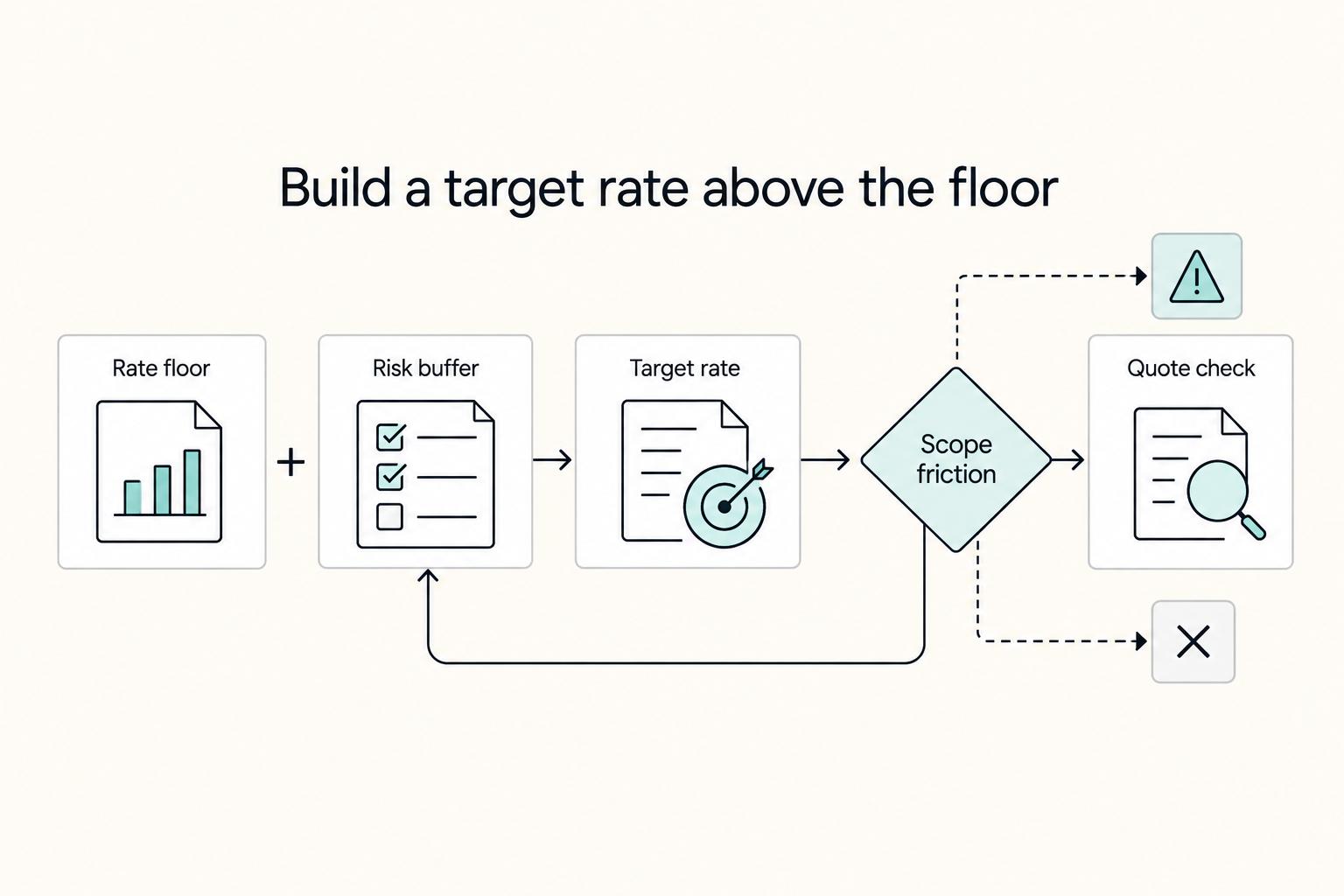
How to Calculate a Freelance Rate You Can Actually Get Paid On
A workable rate is not the neat number a calculator produces. It is the number that still works after you account for real billable capacity, non-client time, scope drift, and the gap between sending an invoice and receiving cleared cash. Start with hourly math even if you do not plan to bill hourly, then turn that number into a quote with clear `payment terms`.
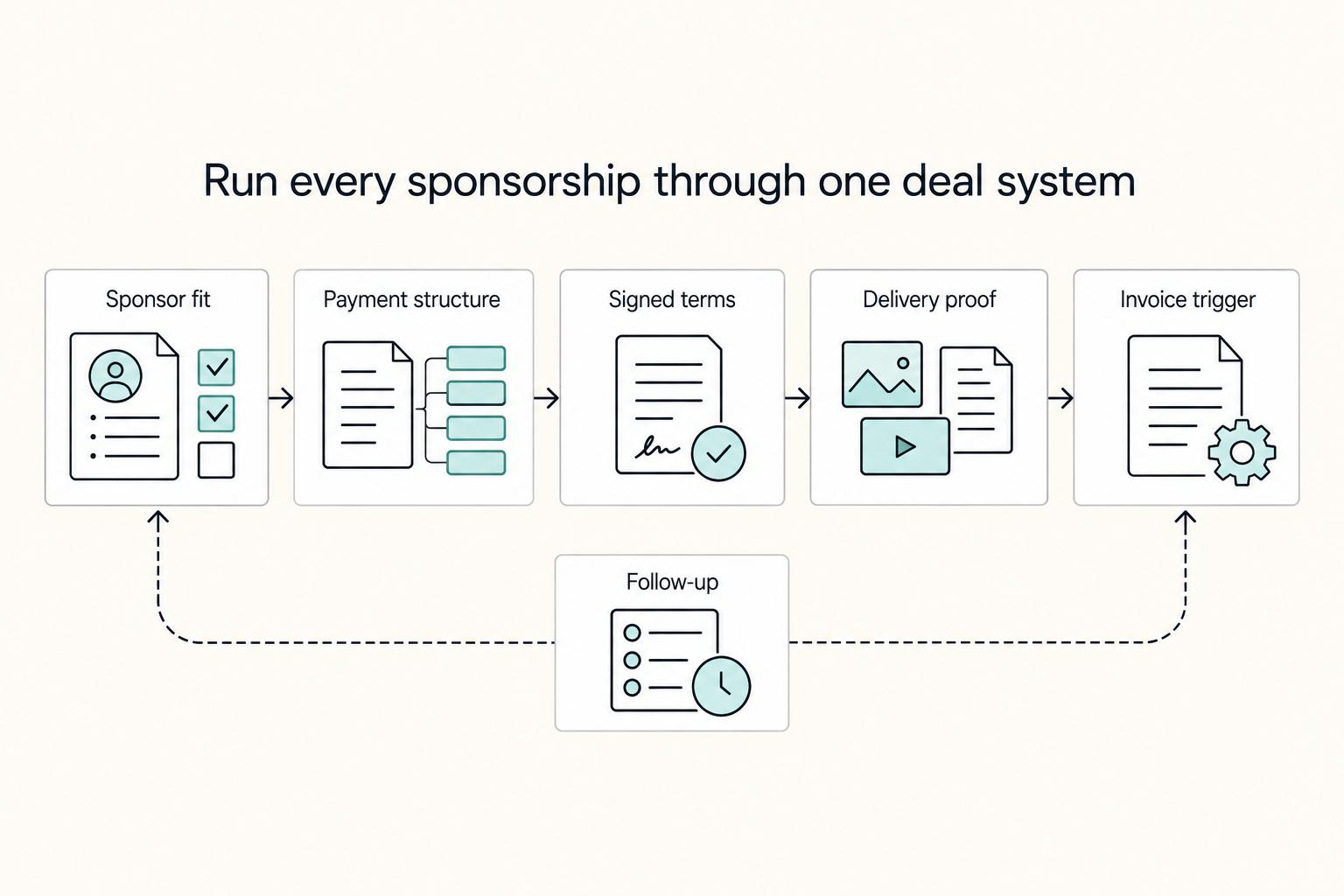
YouTube Sponsorships for Creators Who Want to Get Paid on Time
Landing interest is not the same as getting paid. The goal is not a lucky one-off campaign. It is a deal process that helps you manage sponsor work with fewer surprises.
How to Monetize a YouTube Channel for Reliable Cashflow
You are not just a content creator. You are running a business of one. That shift matters because most guides stop at feature checklists. They show you how to switch revenue on, but not how to build something resilient, compliant, and easier to manage over time.