
Quick Answer
Match channels, original assets versus placements, formats, engagement coverage, revisions and reporting before comparing fees. Check the quote’s workload and the full budget, including ads, tools, production, setup and internal review time. Vet actual process and access, then agree approvals, payment triggers, remedies and exit.
A Procurement-Style Approach to Pricing Social Media Management#
To price social media management as a buyer, compare the same channels, production, engagement coverage and reporting, then check the full monthly budget and working terms. A post count alone does not tell you what is included.
A low monthly retainer can still become costly when ownership is unclear, KPI design is weak, and governance is loose. A procurement-style approach is more disciplined: define the outcome, vet the operator, then lock the working terms.
| Decision point | Price-first buying | Procurement-style buying |
|---|---|---|
| What you compare | Post count, hours, add-ons | KPIs, scope boundaries, governance, payment terms |
| Main risk exposure | Unclear ownership and weak accountability | More upfront selection work, but tighter risk controls |
| Expected outcome | Activity that is harder to evaluate consistently | Clearer package fit and easier performance review |
That is the logic behind the three-step sequence below.
Step 1 Define#
Define the package objective before you compare offers. Know what this service must do for the business, what it will not do, and which indicators will track progress.
Write a one-page brief with an objective, approval owner, channels, response coverage and revision limits. Use measurable indicators that match the objective and explain where data comes from. Separate provider-controlled outputs from sales outcomes that also depend on your offer, website, sales team and market.
Step 2 Vet#
Vet the partner against how your business actually runs, not just content samples. You want confidence that they can work inside your approval pace, reporting needs, and account-access rules.
Ask to see a sample report, the content approval path, and how they handle platform permissions. Strong creative can still come with vague reporting and no clear owner when posts stall.
Step 3 Secure#
Secure the commercial and control terms in writing. Governance is what turns planned value into real operating impact.
Your document pack should name deliverables, approval turnaround, invoicing cadence, late-change handling, and who keeps control of logins, assets, and publishing rights. From there, Stage 1 turns that discipline into a concrete setup step by locking your KPIs, package objective, and guardrails.
For the provider’s cost basis, the freelance rate guide explains billable capacity. Use the pricing calculator to check an explicit workload and margin estimate rather than using an invoice format as a budget.
Stage 1: Define the Mission#
Use a mission brief before comparing final prices so scope, approvals and payment expectations are clear. Indicative budgets can help discovery; a binding package should name what is included and what remains your responsibility.
Step 1 Choose KPIs that match the objective and measurement limits#
Start with the "so what" test: focus on what happens after posting, not follower counts or post volume. Use a short KPI set that helps you make decisions about budget, scope, and provider fit.
Keep this to 3-4 KPIs so reporting stays usable instead of turning into a long dashboard that does not drive action. If a metric cannot change a decision, remove it.
Choose a small relevant KPI set, such as:
- Qualified inquiries or leads, with a stated qualification rule and CRM owner.
- Campaign-tagged website visits and tracked key events, with consent and attribution limits disclosed.
- Publishing and response commitments the provider can control.
- Engagement or reach for an awareness objective, plus a stated review decision.
For website referrals, agree consistent source, medium and campaign tags under Google Analytics campaign guidance. Compare results over an agreed window and explain the attribution model. Tracked visits or attributed sales are not by themselves proof of incremental profit. Make provider fees due on the agreed service terms unless a separate, measurable performance-fee arrangement is expressly negotiated.
Step 2 Build a scoping matrix before you compare packages#
Write a scope matrix before comparing final proposals. You can discuss indicative budgets during discovery; resolve channels, formats, client inputs and exclusions before a binding quote.
Use a simple matrix like this:
| Package intent | Included deliverables | Client inputs required | Explicitly out of scope |
|---|---|---|---|
| Illustrative publishing package | 12 original static posts adapted for two named channels: 24 placements; one agreed revision round per asset | Brand assets, approved claims, access and a named reviewer with an agreed response window | Filming, paid-media management/spend, crisis or out-of-hours coverage and extra revisions unless priced |
| Illustrative engagement coverage | Five hours monthly, checked in agreed weekday windows; questions routed to a named client contact | Approved response guidance and escalation contact | 24/7 response and customer-support resolution unless separately staffed |
The goal is clarity, not complexity. A provider should be able to restate your mission, deliverables, and exclusions without guessing.
Step 3 Hand over a brand stewardship brief and assign decision rights#
Give your provider a short brand stewardship brief they can execute against. Include:
- voice guardrails
- claim boundaries
- approval workflow
- response rules
- escalation path for sensitive posts
Then define decision rights explicitly in the package: who owns execution tasks, who owns channel and offer decisions, and who owns reporting interpretation and recommendations. Do not rely on job titles alone. Titles vary, but written ownership prevents confusion.
Your mission-ready checkpoint is simple: pause hiring until you have a KPI set, a completed scope matrix, a usable stewardship brief, and a named approval owner. Once those are complete, move to partner vetting with consistent criteria.
For personal-brand positioning and tone, use the freelance social-media brand guide to prepare the source brief rather than asking candidates to invent your claims.
Stage 2: Vet the Partner#
Before you compare retainers, verify how each candidate thinks, executes, and manages risk. A polished feed can still hide an execution-heavy provider, and a poor fit can cost you time, effort, and money.
Step 1 Request operating proof before price discussion#
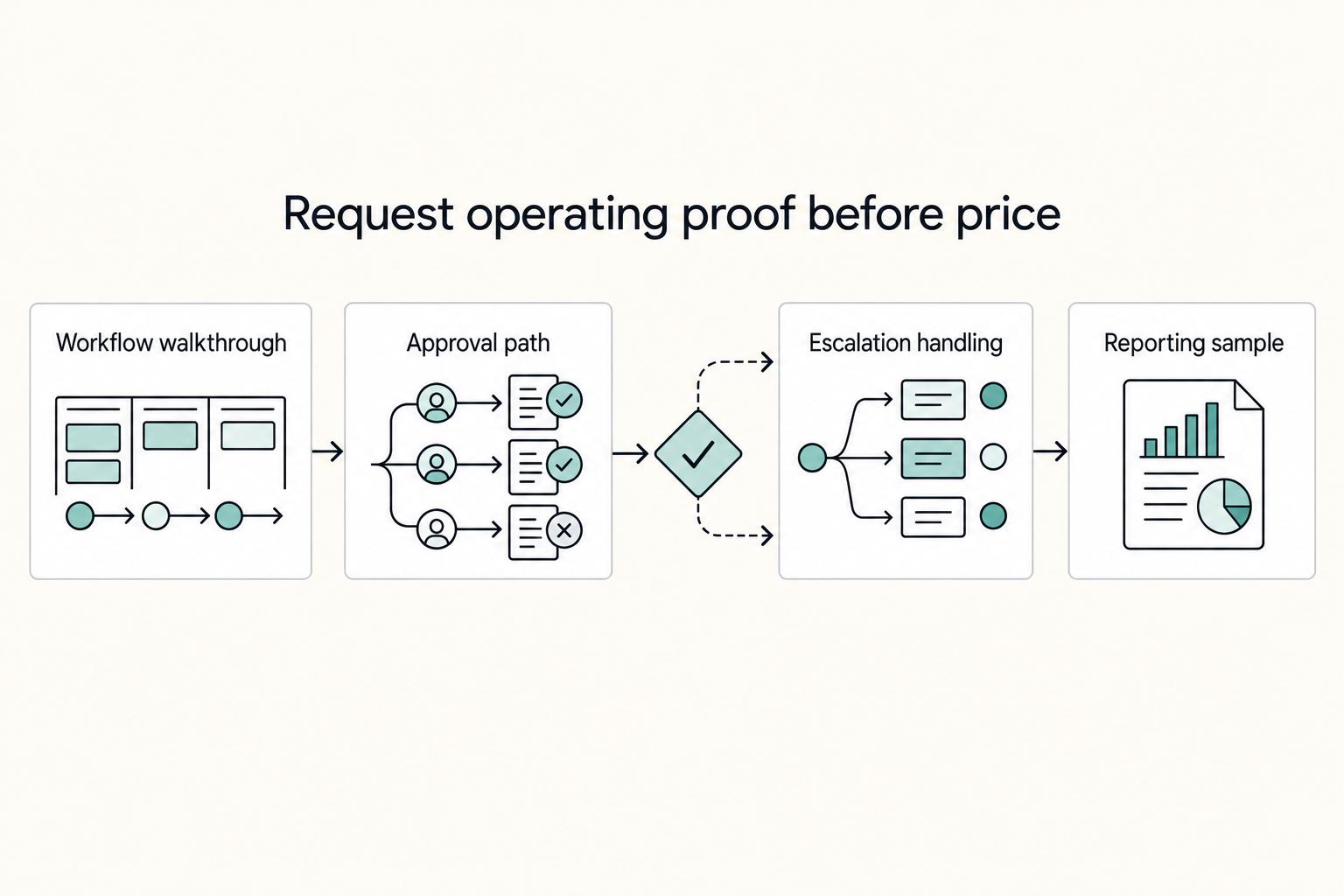
On the first discovery call, ask for four things in plain language: workflow walkthrough, approval path, escalation handling, and a reporting sample. You are checking whether they can explain how work moves from idea to publish to business impact without vague gaps.
| Request | What it should clarify |
|---|---|
| Workflow walkthrough | How work moves from idea to publish |
| Approval path | Who reviews and approves |
| Escalation handling | How sensitive posts are handled and how negative comments are escalated |
| Reporting sample | How reporting serves the agreed objective and explains data/attribution limits |
Walk through a normal month: drafts, review, sensitive posts, comments and reporting. A candidate can discuss an indicative price early; the concern is committing to a final package without understanding scope, approval dependencies and measurement. Request anonymized examples rather than another client’s confidential account data.
Use a simple checkpoint: after the call, you should be able to restate their operating process clearly without filling in missing steps yourself.
Step 2 Use a 7-point pass/fail scorecard#
Score each candidate from the call, proposal, and report sample using this 7-point pass/fail check.
| Scorecard item | Pass if... | Fail if... |
|---|---|---|
| Strategy depth | They explain the business problem, priority tests, and why. | They cannot explain how the proposed work fits your objective. |
| Measurement fit | They report the agreed awareness, engagement or demand objective and explain attribution limits. | They promise guaranteed causal revenue from platform metrics alone. |
| Channel judgment | They justify channel mix for your audience and goals. | They copy a generic channel playbook. |
| Risk awareness | They define moderation, intrusive messaging and sensitive-issue response. | They minimize or ignore downside scenarios. |
| Communication clarity | They answer directly with specific, defensible detail. | They rely on generic positioning language. |
| Repeatable execution | They show a consistent monthly process and reporting rhythm. | Their workflow depends on ad hoc decisions. |
| Accountability | They define what they own, what you own, and how performance is reviewed. | Ownership is unclear or shifts during the conversation. |
Then pressure-test the fit by provider type:
| Candidate type | Best fit for your goals | Capacity/process question to verify | Accountability question |
|---|---|---|---|
| Generalist manager | Defined publishing/maintenance scope | Who supplies strategy and handles absences? | Who owns the calendar, approvals and reporting? |
| Niche freelancer | Subject or audience expertise where needed | What is the backup and capacity limit? | Who is the direct contact and who can approve changes? |
| Boutique agency | Several specialists or channels when needed | Who handles sales-to-delivery and specialist handoffs? | Who is the named daily owner and escalation contact? |
Step 3 Confirm minimum controls that protect brand and cashflow#
For personal-brand work, check positioning and claim accuracy along with the chosen objective. An awareness or engagement assignment can be valid without a promised sales result. Ask what evidence will show progress and what work still belongs to your team.
Ask for evidence of minimum controls: onboarding checklist, asset and access management, revision control, approval expectations, and incident response after publishing. You do not need their entire internal stack, but you do need clear proof these controls exist and are used consistently.
Test a simple incident: an unapproved post goes live. Ask who can pause it, preserve the publishing record, notify your contact, correct it and document follow-up. Do not require a live mistake on your account as a trial.
Stage 3: Secure the Partnership#
If a provider passed vetting, secure the deal before launch by locking two things: the package scope and the contract terms. That is how you protect cashflow, prevent scope creep, and keep payment predictable.
Step 1 Lock the package level before you negotiate the fee#
As checked on 5 October 2026, LYFE Marketing’s pricing page advertises a $750–$7,000 monthly range and plan fees of $750, $1,350 and $1,550. Its $750 plan lists 12 image posts for Facebook/Instagram; the other two list 12 and 20 vertical-video posts for Instagram/TikTok. It also lists a $300 setup fee and says advertising spend is separate. These are one vendor’s offers, not market averages or quotes for the scope below. Confirm current scope, counting rules and terms directly.
Use a package table in the proposal before legal review:
| Package level | How to set the fee | Illustrative scope to price | Ownership boundary | Reporting depth | Revision limits |
|---|---|---|---|---|---|
| Presence maintenance | Estimate production, adaptation, coverage and reporting; compare quotes for this exact scope | Scheduling, light adaptation, page monitoring and responding, around 12 posts per month if agreed | You own strategy, source assets, and final approvals; provider executes the calendar | Basic monthly summary | Write the exact cap by asset type |
| Growth retainer | Price added original production, engagement hours and measurement separately | Original content, community handling, KPI-linked reporting, higher output such as 20 posts per month if agreed | Provider owns day-to-day execution; you own brand approvals, offers, and sensitive claims | Monthly KPI-tied report, not engagement-only | Write exact rounds for copy, design, and short-form video |
| High-touch or complex program | Quote specialist time, formats, service coverage and paid-media management explicitly | Multi-channel coordination, deeper analytics, production coordination, paid distribution support, heavier moderation | Provider may coordinate specialists; your business keeps account ownership, admin access, and final signoff | Channel-level reporting with recommendations and spend context | Write cap, turnaround impact, and excess-revision fees |
Pick the smallest tier your team can support operationally. If your approvals are slow, a bigger package can increase carryover and billing disputes instead of results.
Step 2 Count total monthly cost before signing#
Your retainer is only one part of real spend. Hidden overruns usually come from costs no one clearly assigned.
| Cost area | What to count | Track for each line |
|---|---|---|
| Provider fee | Retainer, setup fee, rush work, and out-of-scope rates | Owner, payee, and payment timing |
| Paid distribution budget | Boosted posts or ads if not explicitly bundled | Owner, payee, and payment timing |
| Production assets | Photography, video, editing, design templates, captions, and platform cutdowns | Owner, payee, and payment timing |
| Tooling | Scheduling, analytics, approval, listening, and reporting tools | Owner, payee, and payment timing |
| Approval overhead | Your internal review time, legal/compliance review for sensitive claims, and delay costs when approvals miss the agreed window | Owner, payee, and payment timing |
Confirm whether tools, reporting and production are included in the fee, and keep advertising spend separate from ad-management labour. Assign an owner, payee and payment date to each cash line. Internal approval time is an economic cost but not necessarily an additional cash payment; show it separately to avoid double counting.
Compare Hourly, Project and Retainer Terms#
| Pricing model | Best use case | Scope creep risk | Billing predictability | Budget cue |
|---|---|---|---|---|
| Hourly | Narrow, clearly documented tasks | Varies; rises when scope or channel count is not explicit | Varies; improves with written limits | Agreed hourly rate × authorized hours, with a cap and approval for overages |
| Project fee | Defined deliverables with named channel coverage | Varies; rises when revisions or extra channels are undefined | Varies; improves when outputs are fixed in writing | Tie payment to named outputs, included channels, and add-on charges |
| Monthly retainer | Ongoing work with explicit posting and engagement expectations | Varies; rises when package scope is broad but undefined | Varies; improves when cadence, channels, and exclusions are explicit | Budget against the documented monthly workload, included channels, and extra-channel rates |
Worked Example: A Monthly Quote and the Buyer’s Total Budget#
This illustrative publishing/engagement package covers 12 original static posts adapted to two channels, one revision round, agreed weekday checks and a monthly report. The provider estimates 4 hours planning, 12 production, 4 adaptation/scheduling, 5 engagement, 4 reporting and 3 meetings/approval handling: 32 hours. At a fully allocated internal labour cost of $40/hour, labour is $1,280; add $120 provider-paid expenses to reach $1,400. A 30% delivery-margin target gives $1,400 / 0.70 = $2,000 monthly. This is an example estimate, not a market rate; overhead must be included appropriately, and delivery margin is not take-home profit.
If four extra hours become recurring at that same cost basis, incremental cost is $160; at 30% margin, the illustrative additional fee is $160 / 0.70 ≈ $228.57 before tax. Agree the actual add-on price and scope before the extra work. A larger volume of revisions or response coverage also changes capacity; calling the package a retainer does not make it unlimited.
| Buyer budget line | Illustrative monthly amount | Cash or economic cost |
|---|---|---|
| Provider retainer | $2,000 | Cash; includes its own $120 expenses |
| Client-managed ad spend paid to platform | $600 | Separate cash budget, not another management fee |
| Buyer’s separately required tool | $100 | Cash; not the provider’s included expenses |
| Separately commissioned photography | $300 | Cash; excluded from base production |
| Internal approvals: 6h × $50 | $300 | Economic time cost; not another supplier invoice |
Recurring cash spend is $3,000; including internal time gives $3,300 economic cost. An illustrative $400 one-time onboarding charge makes first-month cash spend $3,400 and economic cost $3,700. These figures assume no tax, FX, transfer fees or other extras; add actual applicable amounts. Keep payment timing beside the amounts so advance retainer, platform spend and setup funding are available when due.
Make Approval, Access and Recovery Rules Concrete#
For example, send next month’s calendar by an agreed date and require review within two business days. If the client misses the window, reschedule unapproved work, record the dependency and use the agreed carryover/rework rule. Do not automatically publish sensitive claims by silence. Distinguish an in-scope correction from a new revision request, and distinguish a missed KPI target from a missed contractual output.
Keep business account recovery and permitted admin control with the client. Grant the provider only the platform roles it needs, use MFA and named access, and verify the exit/revocation route before launch. Define who may approve claims and sponsored content. Where an endorsement has a material connection, FTC disclosure guidance calls for a clear disclosure; do not rely on a vague approval brief to solve that obligation. Identify actual personal-data roles and necessary contracts before sharing audience or lead data.
Step 3 Write contract language that still works under pressure#
Name deliverables, incorporated documents and versions, approval and change rules, invoice timing and remedies. Use terms that match the customer type, parties and law; a private social-media retainer does not need government procurement clauses. A clear contract helps operations but does not guarantee enforceability.
| Clause area | Define in writing |
|---|---|
| IP and account control | Business retains permitted admin/recovery control; scoped provider roles, MFA, content licence/assignment and exit revocation |
| Service levels and acceptance | Channels/formats/counting, coverage, approval deadlines, revision limits, acceptance, reporting and remedies; no guarantee of organic reach |
| Confidentiality | Permitted use/access, secure storage, actual personal-data roles and required processing arrangement |
| Exit and handover | Notice period, final delivery obligations, asset export format, account-role transfer, and treatment of unfinished drafts |
| Cross-border payment and tax documentation responsibilities | Invoice currency, transfer-fee allocation, and any required business or tax documentation each side must provide before payment |
| Billing and changes | Advance/calendar/milestone trigger, due date, currency, taxes, fee allocation, disputed sums, agreed late-payment/cure process and written extras |
Negotiate these clauses in plain language, and do not rely on assumptions from the proposal. If you need help with permissions, use How to Manage a Client's Social Media Accounts Securely.
Do not launch until scope, acceptance criteria, invoicing terms, late-payment handling, platform-access permissions, and dispute path are all documented and agreed.
Agree the report format with the client social-media reporting guide, including what data is available and what decisions the report should support.
Choose a Package You Can Fund and Operate#
Choose a provider that can deliver the agreed scope at an affordable total cost, with clear responsibilities and evidence suited to the objective. Resolve material gaps before signing.
Use Define, Vet and Secure to compare mission, workflow, scope and terms. An activity-focused package can fit an awareness or publishing task if it is priced and measured honestly. Require a justified link to the business objective; do not demand a guaranteed sales result the provider cannot control.
Evaluate the actual offer rather than using price as a proxy for quality. A lower fee can suit a narrower well-run scope; a higher fee still needs defined responsibilities and usable reporting.
| Decision point | Weakly defined offer | Clearly defined offer |
|---|---|---|
| Measurement | Metrics lack an objective or decision | Reports the agreed goal with data/attribution limits |
| Scope control | Broad "support" language | Names channels, cadence, approvals, and exclusions |
| Brand-risk control | Thin moderation/escalation detail | Clear communication rules and escalation path |
| Lifecycle coverage | Scope implies coverage that is not staffed | States whether awareness, acquisition, retention or advocacy work is included |
| Owner time recovered | Requires frequent direction | Runs with less day-to-day supervision |
Before you sign, verify the working handoff document, not just the proposal summary. It should match what you approved in Define, Vet, and Secure and make review cadence explicit so analytics and monitoring continue after launch.
Final decision checklist:
- Confirm the provider fits the mission you defined.
- Confirm reporting fits the objective and explains measurement limits.
- Confirm channel coverage, cadence, monitoring, and exclusions in writing.
- Confirm account ownership, asset handover, payment timing, and termination terms in writing.
- Confirm a scheduled analytics and monitoring review after launch.
That is how you keep this as a controlled operating decision instead of a vague marketing expense.
If you also procure search marketing, pricing SEO services helps define that separate scope; do not assume it is bundled into a social retainer.
Frequently Asked Questions
How do you calculate ROI for social media management?
Use ROI = (incremental contribution before marketing costs − marketing costs) / marketing costs × 100 for a defined period and scope. Contribution is revenue less the related product/service delivery costs, not revenue alone. Illustratively, $6,000 incremental contribution and $4,000 all-in marketing cost give 50% ROI. If analytics only attributes $6,000 of revenue to social touchpoints, you cannot assume that contribution or incrementality; report the available evidence and limits instead.
What contract clauses matter most before you approve the first invoice?
Agree scope, incorporated brand documents, channels/counting, revisions, approval, acceptance, fee trigger/due date, account roles and remedies before commitment. An advance or calendar-based retainer invoice need not wait for completed posts or improved KPIs. Check it against the agreed terms and route actual disputes without treating all results targets as permission to withhold earned fees.
Should you pay hourly, by project, or on a monthly retainer, and how should you set the budget?
Hourly suits bounded uncertain work with an approved cap; a project fee suits a defined launch/deliverable; a retainer suits a recurring monthly workload. Compare quotes only after matching channels, formats, coverage and client responsibilities. Set a budget from included work and total costs, not a universal hourly or monthly benchmark.
State whether a post means an original asset, a channel adaptation or a published placement. Twelve originals adapted to two channels can mean twenty-four placements, not twenty-four unique pieces. Ask for named add-on fees and a written approval rule.
What should you verify inside the package before signing?
Confirm publishing, engagement handling and response coverage separately. List channels, original assets versus placements, production formats, revision rounds, approval deadlines, reporting and exclusions. Scheduling alone may be the right scope; it does not include moderation or customer-support resolution unless expressly agreed.
What are the tax and compliance issues with a cross-border provider?
Record supplier legal identity, location of services, invoice currency, applicable indirect tax, fees and any withholding/reporting obligations. For a US payer, W-9 generally documents a US person; an appropriate W-8 may document a foreign payee, with form choice depending on individual/entity and income. Where personal services are performed generally determines their US source, not simply where the client or bank is. Use the actual facts, share tax documents securely and separately assess data-processing/transfers and advertising disclosure duties.
What is the difference between a social media manager and a strategist?
Titles vary, so avoid assuming a fixed manager-versus-strategist split. Ask for a written task list that names who owns publishing, engagement monitoring, content direction, and reporting priorities, and who is accountable when work stalls.
Try a related tool
Researched and edited by the Gruv editorial team. Gruv builds cross-border billing, payouts, and finance-operations software for global businesses.
Sources
Includes 5 external sources outside the trusted-domain allowlist.
- ftc.gov/business-guidance/resources/disclosures-101-...trusted
- irs.gov/forms-pubs/about-form-w-9trusted
- irs.gov/instructions/iw8bentrusted
- facebookblueprint.com/student/collection/284227/path/240398external
- ico.org.uk/for-organisations/uk-gdpr-guidance-and-resou...external
- lyfemarketing.com/services/social-media-management-services/costsexternal
- support.google.com/analytics/answer/10917952external
- support.google.com/analytics/answer/10596866external
Educational content only. Not legal, tax, or financial advice.
Related Posts
How to Calculate a Freelance Rate You Can Actually Get Paid On
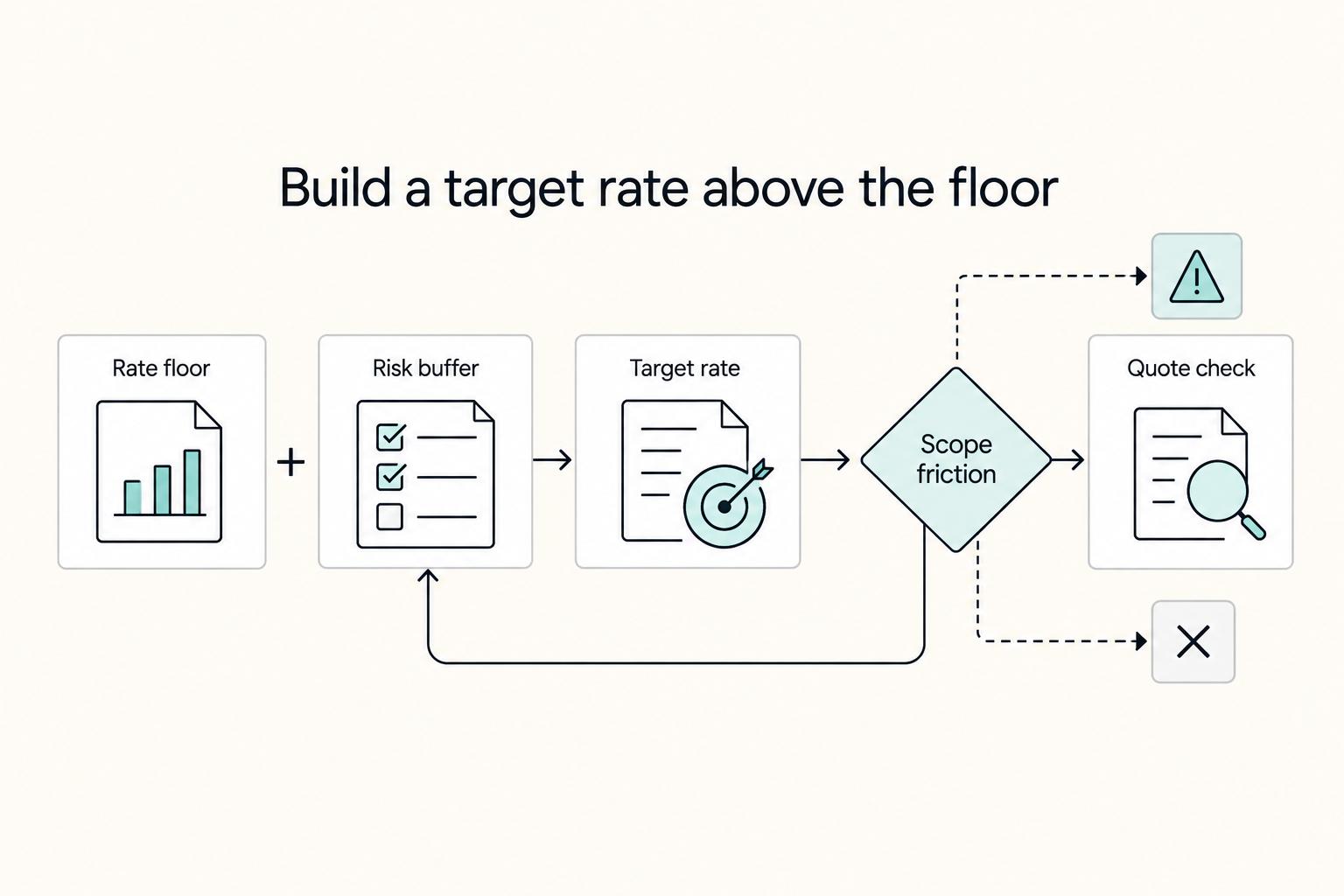
A workable rate is not the neat number a calculator produces. It is the number that still works after you account for real billable capacity, non-client time, scope drift, and the gap between sending an invoice and receiving cleared cash. Start with hourly math even if you do not plan to bill hourly, then turn that number into a quote with clear `payment terms`.
How to Use Social Media to Build Your Freelance Brand
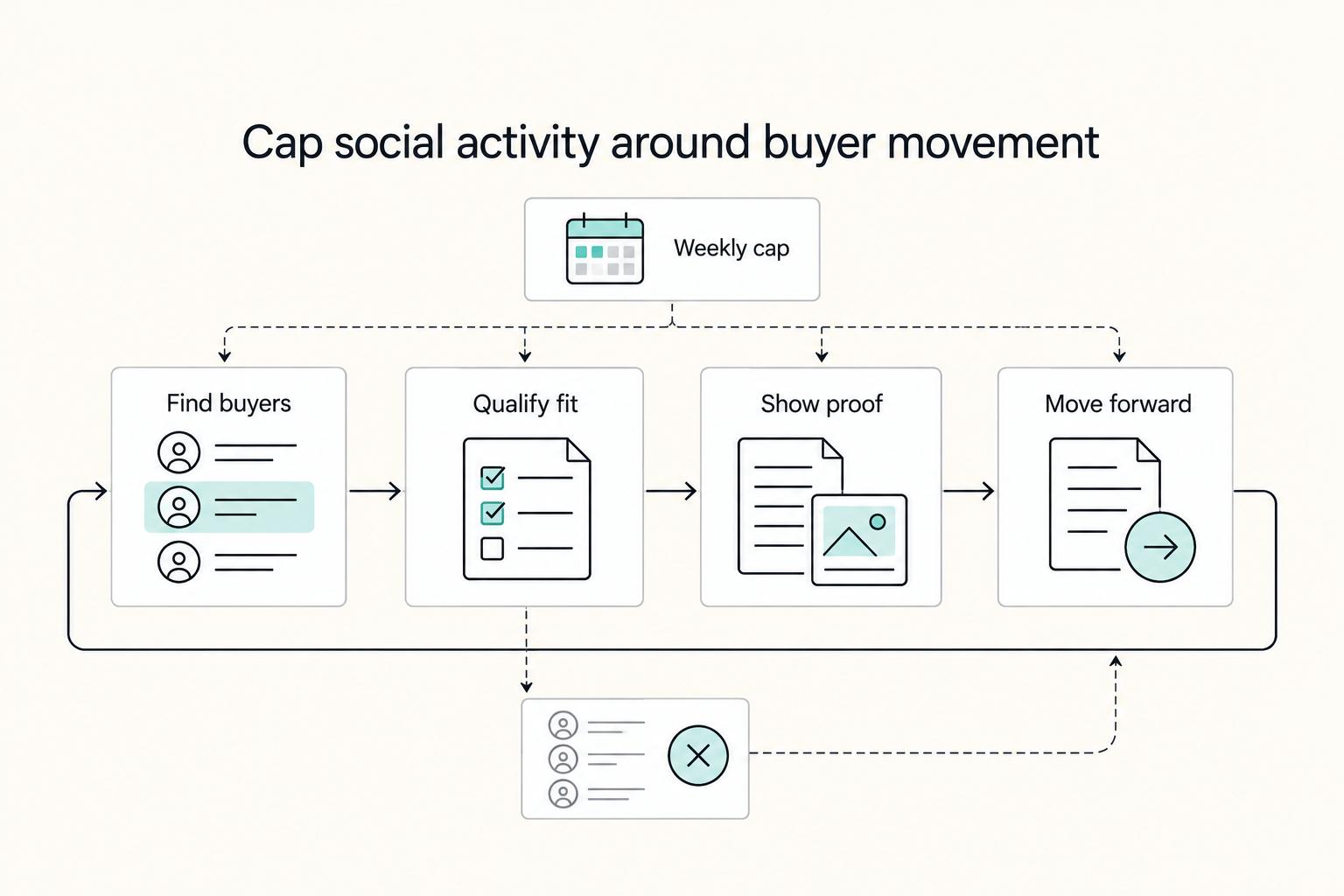
Treat your social presence as a capped client-acquisition block, not a daily posting race. If an activity does not help you find, qualify, or move real buyers forward, it does not belong on your weekly calendar.

The Freelance Payment Penalty: A Modeled Audit of Platform Fees, FX Spreads, and Payout Delays
The money rarely disappears through a single, easy-to-spot fee. The real loss is stacked. A marketplace takes its commission, a processor adds a charge for international cards, a bank or payment company converts the currency at a spread, a platform holds the funds before release, and a wire sheds a little to intermediaries on the way in. Each layer looks defensible on its own, but the worker feels the combined result as a smaller deposit and a later payday.