
Quick Answer
Start with one Project Estimate File for each app quote, then price from your own records rather than memory. Choose time and materials when discovery is still moving, and use fixed price only when scope, exclusions, and acceptance criteria are stable. Put delivery boundaries in the Statement of Work, and run every change request through written impact review, repricing, and approval before new work starts.
Pricing is where many strong independent professionals still hesitate. You can do excellent work and still second-guess the number, default to a competitor's rate, worry that you are leaving money on the table, or quietly take on free work without meaning to.
That is usually not a skill problem. It is a pricing strategy problem. The fix is to treat pricing like an operating decision inside your business of one, not a last-minute negotiation. This guide walks through that shift, from setting your floor rate to choosing the right commercial model, tightening scope, and presenting a proposal a client can actually approve.
Pillar 1: Calculate Your Fully-Loaded Rate to Eliminate Underbidding#
Do not quote a build until you have a documented estimate and a clearly defined pricing floor and target based on your own records. If you skip that step, your app quote is not an estimate. It is a guess.
The shift is simple. Treat your quote like an estimate that must be developed, documented, reviewed, and updated as the project gets clearer. Reliable estimates do not come from memory alone. They come from inputs you can trace.
Step 1 Build a cost capture sheet before you price#
Start one estimate file for each proposal. Use a simple "Project Estimate File" approach and keep your assumptions, revisions, and backup in one place. If a client asks why the number changed after discovery, you should be able to show what changed in the estimate.
| Cost bucket | What it covers |
|---|---|
| Baseline scope and resources | What is being delivered, what people/systems are required, and what assumptions define the current version |
| Direct delivery costs | Third-party services, tooling, testing/deployment needs, and any outside support required to deliver |
| Risk and timing costs | Rework risk, approval delays, payment-cycle risk, and coordination overhead that can affect margin and cash flow |
Those buckets make it easier to trace real cash impact and uncertainty instead of burying them in one flat number.
If you already have clean job costing from past work, use it. If you do not, use scratch estimating and build the cost from the ground up instead of copying an old quote that may already contain hidden underbilling.
Step 2 Model real capacity, not fantasy availability#
Underpricing often starts with unrealistic capacity assumptions. Your denominator is not all working hours in a year; it is the time left after admin, sales, support, estimation, invoicing, and internal fixes. Split capacity into delivery and non-delivery time, then base pricing on realistic sellable time.
A simple worksheet looks like this:
- Inputs: annual cash requirements, planned working time, key assumptions
- Adjustments: subtract leave, training, sales calls, proposals, admin, support, unpaid revisions
- Outputs: a documented pricing floor and a target price with assumptions stated explicitly
Use your own records for the final math; there is no universal freelancer formula or fixed percentage in this guidance.
Verification point: review your last few projects and compare planned versus actual time spent in meetings, revisions, QA, and post-launch support. If those hours are missing from your sheet, your pricing is likely understated.
Step 3 Review the estimate before it becomes a quote#
Review the estimate once before you send numbers. Check that each assumption has backup, each cost bucket is complete, and the estimate is updated to reflect current risks and timing.
This is where a lot of margin disappears. Scattered assumptions, stale spreadsheets, and fragmented communication can create operational chaos and margin loss before scope creep is obvious. Keep one source of truth, note every estimate update, and optimize for clarity, not just cost-cutting.
If you want a deeper calculator for the rate itself, use this companion guide on how to calculate your billable rate as a freelancer. We covered related planning detail in How to create 'Wireframes' for a mobile app. If you want a quick next step, try the free invoice generator.
Pillar 2: Select Your Pricing Model: The Risk & Reward Matrix#
Pick your model based on uncertainty, not preference. Your pricing model decides who carries risk when new information appears, delivery assumptions change, or support work extends beyond the original plan.
If you apply a high-certainty contract to a low-certainty project, margin usually erodes. Use the model to balance two goals at once: deliver revenue now and keep room to learn as the project unfolds.
Step 1 Classify uncertainty before choosing the model#
Start with four checks in your estimate file: scope clarity, discovery maturity, delivery uncertainty, and post-launch support expectations. When those inputs are unstable, reliable prediction is harder, so your contract should allow controlled learning instead of forcing false precision.
Use this table as a selection tool.
| Model | Fit signals | Red flags | Contract guardrails | Billing and cashflow implications | Communication cadence |
|---|---|---|---|---|---|
| Time and materials | Scope is evolving; discovery is incomplete; priorities may change | Client requires a hard total before requirements stabilize | Hourly/daily rates, approval path, time logging rules, change log, spend review points | Billing follows actual work; invoice totals vary | Weekly timesheet, progress update, and forecast refresh |
| Fixed price | Scope is documented; exclusions are clear; acceptance criteria are explicit | "Small changes are included" language; unproven integrations; unresolved dependencies | Statement of Work, exclusions, change-order rule, acceptance and revision limits | Higher budget predictability for client; you carry overrun risk | Milestone reviews with formal signoff |
| Outcome based | Client can define a measurable result and provide baseline data | Results depend on factors outside your control | Metric definition, baseline, measurement window, dependency list, fallback fee | Payment may be delayed by measurement timing | Recurring metric reviews with decision-makers |
| Retainer | Ongoing maintenance, iteration, advisory, or launch support is expected | Client expects unlimited work for one flat fee | Included work types, capacity cap, rollover rule (if any), response expectations, out-of-scope billing | Smoother recurring revenue with capacity commitments | Monthly activity report, backlog review, and reprioritization |
Step 2 Match model to project shape#
Use this quick flow to remove guesswork:
| Project shape | Pricing model |
|---|---|
| Ambiguous scope or unfinished discovery | Time and materials |
| Stable scope with explicit acceptance criteria | Fixed price |
| Primary goal is a measurable business result | Outcome based (usually with a clear base fee) |
| Work is continuous after launch | Retainer |
The risk split is simple: each model shifts uncertainty between you and the client. Your job is to choose the structure that matches current uncertainty, not the one that looks easiest to sell.
For fixed-price work, align contract language tightly with your scope of work guidance.
Step 3 Add control points that protect margin#
Set operating checkpoints before delivery starts. Track estimate vs actual effort, unresolved decisions, blocked dependencies, and pending approvals, then trigger a commercial review when those signals cross your agreed limits.
Test risky assumptions early through a paid spike, prototype, or technical validation step when uncertainty is material. Hidden risk often appears through interactions between tools, data, and environments, not from one isolated component.
For a step-by-step walkthrough, see How to Price a Data Science Project based on 'Model Performance'.
Pillar 3: Make Scope, Delivery, and Change Approval Explicit Before You Quote#
Your scope is your payment control system: if delivery, "done," client inputs, and change approval are not explicit, do not quote a fixed total and do not start build work.
This follows Pillar 2 directly. Fixed price needs strict boundaries, and time and materials still needs clear scope so spend changes are explainable instead of arguable.
Step 1 Define the base scope before you quote#
Write and validate the base scope first, then price it. Treat that base scope as the version of work that assumes no significant problems, and track uncertainty separately in a risk/dependency list.
Before you quote, define these SoW items clearly: feature list, platforms, key integrations, environments, client-provided assets, acceptance method, and post-launch support expectations. If any of these are still moving, present an estimate range instead of a single number, or move to paid discovery or time and materials.
Use one hard checkpoint: can you review assumptions line by line with the client and confirm ownership, for example credentials, copy, assets, and approvals? If not, the scope is not ready for a fixed quote.
Step 2 Define "done" so features are testable#
If a feature cannot be tested against the SoW wording, scope is still too loose.
| Feature criteria part | What to write |
|---|---|
| In-scope behavior | What this feature does in this version, with observable limits |
| Out-of-scope exclusions | Related behavior not included and handled only through change control |
| Handoff condition | What must exist to mark delivery complete in the agreed environment and acceptance flow |
This is scope control, not admin overhead. If a request does not map to in-scope behavior, treat it as a change. If handoff conditions are vague, "almost done" can drag and delay billing.
Step 3 Add working definitions for high-friction terms#
Use short plain-language SoW definitions so payment and delivery decisions are consistent. These are project working definitions, not legal definitions.
| Term | Working distinction to define in your SoW |
|---|---|
| Revision | Change to approved work that does not materially expand scope |
| Defect | Delivered work not behaving as described in approved scope/acceptance wording |
| Enhancement | New or expanded behavior beyond approved scope |
| Dependency | External service, decision, approval, or input required for delivery |
| Client-provided asset | Materials the client must supply (for example copy, images, credentials, brand files) |
Apply them consistently: added behavior is an enhancement, not a revision; preference changes are not defects when delivered behavior matches the approved scope.
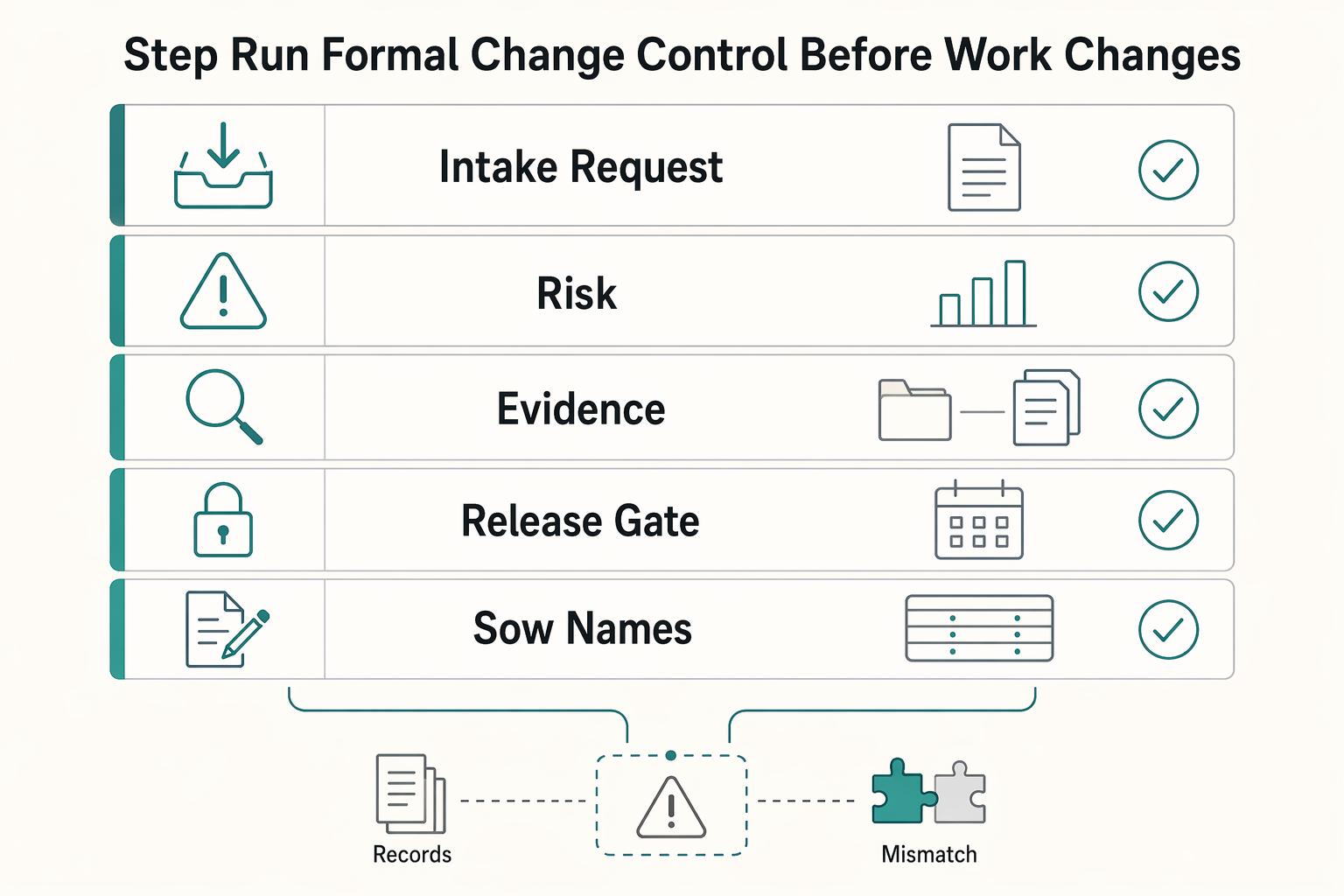
Step 4 Run formal change control before work changes#
Do not process scope changes informally in chat. Use this sequence every time:
- Intake the request in writing.
- Review impact against approved scope, dependencies, and current risk list.
- Reprice and document timeline impact.
- Reset dates when sequencing or approvals are affected.
- Get written approval before starting. Sample policy text: "Client approves or rejects change requests within the approval window verified in the contract or project records. No change work begins before written approval."
- Execute only after approval is logged.
This protects both models: it prevents margin leakage in fixed price and keeps forecast transparency in time and materials.
Use this kickoff checklist:
- SoW names the pricing model and uses those terms consistently with Pillar 2.
- Each feature has in-scope behavior, exclusions, and a handoff condition.
- Dependencies and client-provided assets are explicit.
- Change requests require repricing, timeline review, and written approval.
- Open risks stay visible outside base scope instead of hiding in vague contingency.
Done well, this scope discipline protects cashflow: fewer unpaid requests, fewer timeline slips, and fewer invoice disputes. If you want a deeper delivery handoff view, read How to Perform User Acceptance Testing (UAT) for a Mobile App.
Pillar 4: Frame Your Price: From Cost to Strategic Investment#
Once your pricing model and SoW are set, present your offer so the client can choose clearly, not guess. Your proposal should show exactly what changes by tier: scope depth, risk coverage, support level, and decision speed.
Step 1 Package the offer into decision-ready tiers#
Build tiers as different delivery shapes, not just different feature counts. This helps the client choose the level of certainty and support they want, while protecting your cashflow if complexity grows.
| Tier | Feature depth | Service level | Payment protection terms |
|---|---|---|---|
| Foundation | Focused MVP for one core use case and main pain point | Standard cadence, limited post-launch support window, only named integrations | Acceptance tied to listed feature criteria, changes handled separately, client inputs due by agreed dates |
| Growth | MVP plus selected operational features (for example analytics, admin controls, added workflows) | More review points, broader support coverage, more implementation guidance | Milestones tied to defined deliverables, assumptions listed in proposal, timeline resets when dependencies slip |
| Expanded | Broader release scope with more integrations, edge cases, and launch support | Higher collaboration load, faster decisions required, extended support expectations | Tighter approval discipline, explicit out-of-scope list, commercial terms adjusted for higher uncertainty and coordination cost |
Quick check: if you cannot explain in one sentence why someone should pick Tier 2 over Tier 1, your tiers are still too vague.
Step 2 Write the proposal like a buyer document#
Use a buyer-first structure so approval is straightforward:
| Proposal section | What to include |
|---|---|
| Problem statement | Name the current pain in plain language |
| Expected business outcome | State the result this app should support, without promising guaranteed ROI |
| Scope boundaries | Anchor to the approved feature list, exclusions, and environments |
| Delivery assumptions | List client-provided assets, approvers, credentials, and third-party dependencies |
| Commercial terms | State pricing model, invoicing logic, and what triggers change work |
| Acceptance path | Define how delivery is reviewed and accepted against the SoW |
This is how you frame budget as a strategic investment: each spend item should map to a real use case tied to user pain points and the client's strategy.
Step 3 Run a short cost-of-waiting discovery before submission#
Before sending, pressure-test urgency with verified inputs only:
- What manual task or lost conversion is this app meant to reduce? Verify the current baseline metric from client or project records before using it.
- What does that cost per week or month today? Verify the current baseline metric from client or project records before using it.
- What happens if launch slips by one quarter? Verify the opportunity or operational impact from client, project, or source records before using it.
- Which use case is first priority, and which can move to a later phase?
If AI or usage-based services are involved, separate implementation cost from ongoing total cost of ownership in the proposal so spend stays visible and surprises are less likely.
Before sending, cross-check alignment with Pillar 2 and Pillar 3: the selected tier must match the pricing model, and every promised outcome must be backed by scoped work, assumptions, and an acceptance path. For a final check, review the proposal against your SoW line by line. Related: How to Price a 3D Animation Project.
Conclusion: Price with Confidence - You Are a Business, Not a Commodity#
Treat your proposal like a controlled business document, not a rough estimate. To price app work with less avoidable risk, keep the sequence simple: set a traceable baseline, choose the right model, lock scope, and present the price with clear checkpoints.
-
Step 1: Set a traceable baseline. Build the quote from documented assumptions, not guesswork. Verification point: someone reviewing your file should be able to follow how scope, effort, and review checkpoints produced the current number.
-
Step 2: Choose the model and oversight path before execution. Avoid one-template-for-every-deal thinking. Simplistic handoff decisions can hurt throughput and response time, and standardization without enforceable oversight can create confusion rather than control.
-
Step 3: Lock scope and change control in writing. Your Statement of Work should name inclusions, exclusions, assumptions, approval points, and how new requests are handled. Give each submission a clear proposal ID so revisions, pricing updates, and approvals can be matched later when multiple drafts are in play.
-
Step 4: Present price with explicit checkpoints. Tie each phase or option to a defined deliverable, decision point, and owner. Keep the proposal auditable so status and accountability stay clear as work moves.
Before you send the final proposal, ask four things: Is the scope clear enough that two people would read it the same way? Is risk ownership explicit? Are checkpoints and operational metrics defined? Is oversight ownership named and enforceable? If any answer is weak, revise before sending.
If you need help tightening the inputs, revisit the billable-rate calculation guide and How to Write a Scope of Work for a Mobile App Development Project. You might also find this useful: How to Price a Copywriting Project. If you want help with a specific pricing scenario, Talk to Gruv.
Frequently Asked Questions
How do you calculate the true cost of an app project?
Start by gathering the inputs that actually drive cost: the app’s business purpose, target users, key device behavior, usability expectations, scope, and who will build it. There is no single exact app price, so quote a range early and tighten it as definition improves. That is the check that helps prevent scope creep, budget overruns, and money spent on projects that cannot be finished. See Pillar 1 and Pillar 3.
What is a fully-loaded hourly rate for a freelance developer?
There is no universal hourly rate for freelance app work. Pricing depends on your project scope and the team model or relationship, so validate assumptions before locking a quote. If you need the calculation logic, use Pillar 1 or How to Calculate Your Billable Rate as a Freelancer.
How do you price a fixed-bid vs. a time-and-materials app project?
Choose based on change risk, not client preference alone. Early in Product Definition, estimates are highly uncertain, so fixed bids carry more risk when requirements are still moving. If scope is still evolving, time and materials can better absorb that uncertainty and reduce scope-creep risk. See Pillar 2.
How much does it cost to build an MVP app?
Do not treat any single number as universal. Published ranges vary widely by complexity and scope (for example, one cited range is US $10,000-20,000 for basic apps and US $50,000-80,000+ for more complex builds), and other quoted ranges are much wider. If the client cannot name one core use case first, the MVP is still too vague to price well.
What are the hidden costs of mobile app development?
Look beyond build hours and focus on estimation risk. Most overruns come from unclear scope and changing requirements, and cost also shifts based on who builds the app and the engagement model. Define what is included and excluded early to reduce budget blowouts later.
How do you estimate the hours for an app feature?
Treat early hour estimates as provisional. During Product Definition, estimates can be off by as much as 400% in either direction, so present ranges first and tighten them as assumptions are validated. This is one of the most practical ways to reduce scope creep and budget blowouts.
Try a related tool
Researched and edited by the Gruv editorial team. Gruv builds cross-border billing, payouts, and finance-operations software for global businesses.
Sources
- artsci.usu.edu/math-stats/amlc/files/r-studio-reference-she...trusted
- courts.ca.gov/sites/default/files/courts/default/2024-12/f...trusted
- dot.nj.gov/transportation/capital/pd/documents/Cost_Est...trusted
- eere-exchange.energy.govtrusted
- home.wvlegislature.gov/committee/house-judiciarytrusted
- icds.psu.edu/funding/rising-researchers/rising-researcher...trusted
- ncleg.gov/EnactedLegislation/SessionLaws/HTML/2023-202...trusted
- pmc.ncbi.nlm.nih.gov/articles/PMC8310463trusted
Educational content only. Not legal, tax, or financial advice.
Related Posts
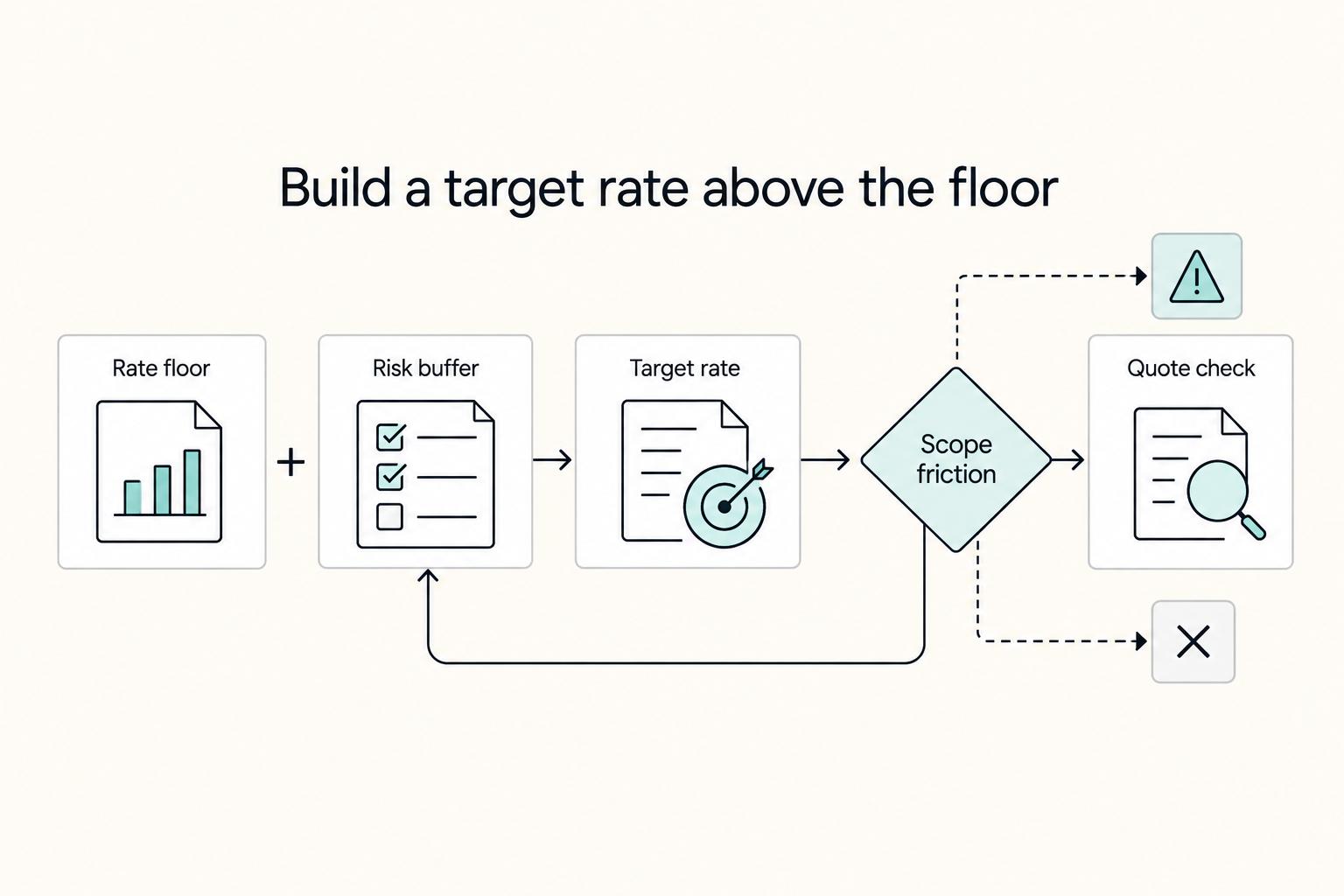
How to Calculate a Freelance Rate You Can Actually Get Paid On
A workable rate is not the neat number a calculator produces. It is the number that still works after you account for real billable capacity, non-client time, scope drift, and the gap between sending an invoice and receiving cleared cash. Start with hourly math even if you do not plan to bill hourly, then turn that number into a quote with clear `payment terms`.
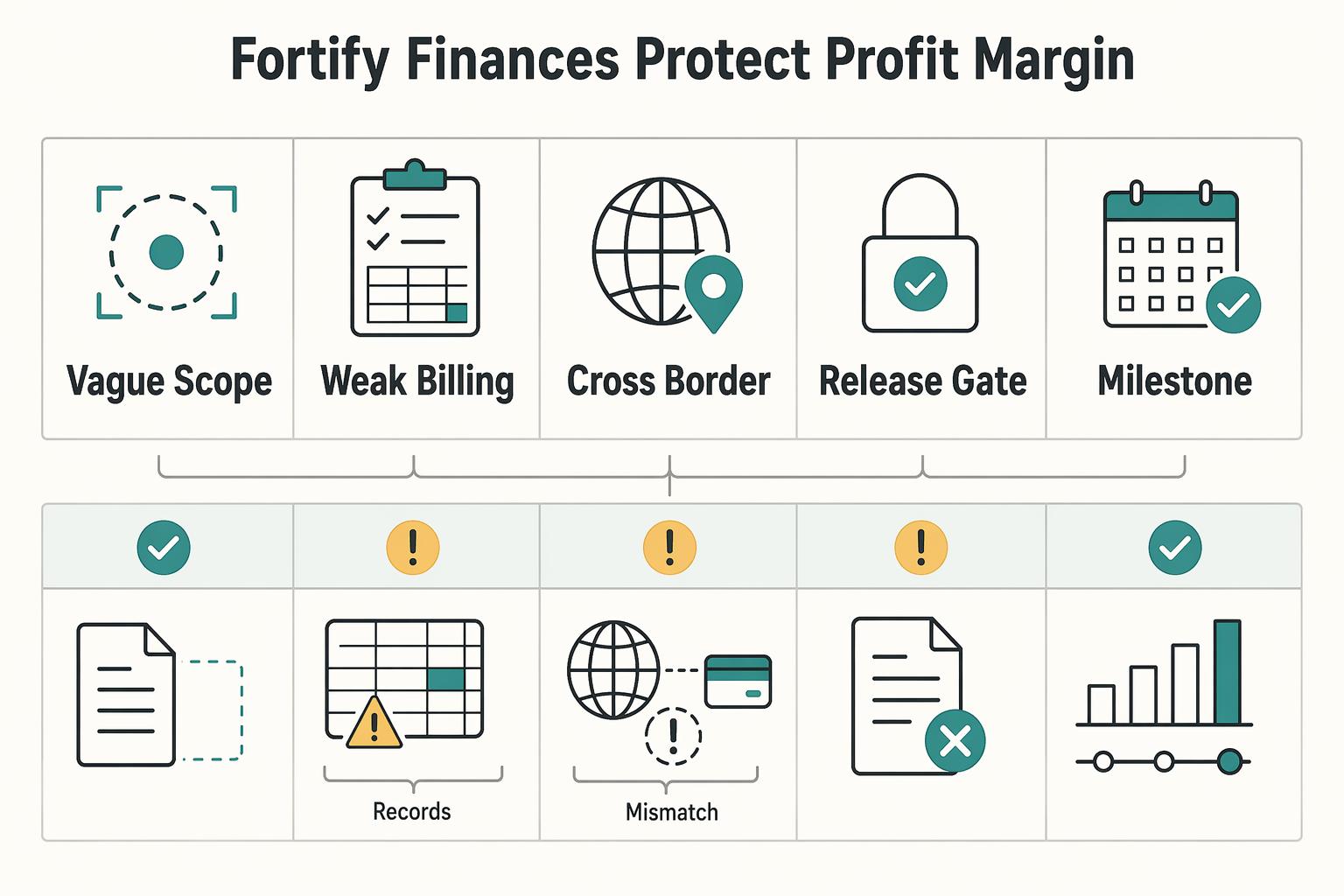
How to Write a Scope of Work for a Mobile App Development Project
A strong SOW for mobile app development protects your margin, reduces legal ambiguity, and shows the client you run a controlled project. For an experienced freelance developer, technical skill is table stakes. What usually separates a high-value consultant from a replaceable pair of hands is the structure of the engagement, and the Statement of Work sits at the center of it.

The Freelance Payment Penalty: A Modeled Audit of Platform Fees, FX Spreads, and Payout Delays
The money rarely disappears through a single, easy-to-spot fee. The real loss is stacked. A marketplace takes its commission, a processor adds a charge for international cards, a bank or payment company converts the currency at a spread, a platform holds the funds before release, and a wire sheds a little to intermediaries on the way in. Each layer looks defensible on its own, but the worker feels the combined result as a smaller deposit and a later payday.