
Quick Answer
Start by deciding what business result the engagement should influence, then price the package around that outcome and risk level. To price a branding package, move from task lists to scoped lanes with defined exclusions, revision boundaries, and approval checkpoints, then tie invoices to named milestones in the SOW. Finish by setting contract triggers for payment and IP release so handoff and cashflow stay aligned.
Command Your Value: The Three-Pillar Framework for Pricing Creative Expertise#
Underpriced branding work can strain cashflow quickly. You stay busy, but proposals feel improvised, revisions expand, and pricing starts to feel like guesswork.
To price branding work with less guesswork, keep three controls working together. Position frames the value story so the client is buying a business outcome, not just your time. Package controls scope with a clear proposal structure, defined deliverables, and revision boundaries. Protect sets payment expectations and approval checkpoints so revenue depends less on goodwill after delivery.
Choose the pricing logic first#
Choose the pricing logic you want clients to respond to. A value-led conversation asks what the rebrand, identity, or strategy work is meant to change in the business. Hourly pricing asks how long tasks will take. That difference shapes margin, revisions, and client behavior.
| Decision area | Hourly pricing | Value-led pricing |
|---|---|---|
| Client conversation | Centers on time and line items | Centers on worth and business use |
| Pricing confidence | Can keep you defending costs and second-guessing numbers | Uses package logic and frameworks to reduce guesswork |
| Scope control | Can expand into task-by-task requests | Easier to define with clear deliverables and exclusions |
| Market pressure | Pulls toward average-price comparisons | Helps shift discussion toward value and outcomes |
Make sure the proposal sells a decision, not tasks#
Before you send a proposal, check what the document is actually asking the client to buy. If it reads like a task list, you are still defending cost. If it reads like a packaged decision with defined outcomes, included deliverables, and clear exclusions, you are positioning value. That distinction matters because weak package structure is what keeps many creatives stuck in pricing uncertainty.
Avoid competing on average market pricing#
Do not join the race to the bottom. Competing around average market pricing pulls you into the most crowded part of the market and makes underpricing feel normal. The cost is not just lower fees. It is a cycle of undervaluing your expertise and, over time, burnout.
With that baseline in place, Pillar 1 focuses on the value case you should establish before deciding on the number. If you want a deeper dive, read How to Calculate Your Billable Rate as a Freelancer. If you need a quick next step while figuring out how to price a branding package, Try the free invoice generator.
Pillar 1: POSITION - Define Your Value, Don't Just Bill Your Time#
Position is the first pricing control: anchor your package to the business outcome the client wants, not your tracked hours. That shift will not remove all risk, but it makes approval conversations clearer and reduces time-based negotiation loops later.
What outcome are you pricing?#
Start with the business change, not the file list. Pricing always involves iteration: too high can shrink demand, and too low can leave too little profit to deliver well.
Use one consistent qualification checklist in strategy calls so the inputs behind your pricing stay comparable:
- business model and primary revenue path
- offer economics (what they sell, how they sell it, and where conversion is weak)
- decision owner (who can approve budget and who can block scope)
- implementation constraints (timing, internal capacity, outside dependencies)
Before you draft a fee, confirm two basics: the target outcome in one sentence and the person who can approve the project. If either is unclear, treat the price as provisional and keep diagnosing.
How much can branding really influence?#
Price from influence, not effort. Ask what business change the project supports, how much branding can influence that change, and how much uncertainty you are taking on. Then set the working range from your current pricing policy, scope, and verified project records before testing it against buyer response.
Use the five brand pillars as a checkpoint: purpose, perception, personality, position, and promotion. If those are still unclear, you are probably pricing ambiguity, so narrow the scope or run diagnosis before a full proposal.
| Branding deliverable | Business signal to watch | Buyer risk reduced |
|---|---|---|
| Brand strategy | Clearer audience definition and sharper positioning in sales conversations | Paying for creative work that is not aligned to market reality |
| Visual identity | Stronger recognition and more consistent presentation across channels | Looking inconsistent or unproven at launch |
| Messaging guide | Smoother sales, onboarding, and internal communication | Teams improvising language and diluting positioning |
| Style guide and templates | Faster rollout and fewer execution errors after handoff | Rework from inconsistent brand use |
Validate any client-specific metric examples before you add them to a proposal, workshop deck, or case study.
When should you sell a paid diagnostic first?#
Sell a paid diagnostic when the value case is still unclear. Treat it as scoped work with defined inputs, outputs, and handoff artifacts. That reduces free-consulting leakage and gives you a stronger basis for the next quote.
Typical inputs include founder interviews, current brand materials, sales notes, customer feedback, and competitor references. Typical outputs include a short gap diagnosis, the target outcome, relevant brand pillars, recommended scope, and a proposal path. Handoff artifacts can be a memo, decision notes, or a presentation for internal approval.
A common failure mode is giving away diagnosis, then sending a fixed quote based on partial assumptions. If a prospect will not pay for any diagnostic work, treat that as an early qualification signal. Related: How to Price a Graphic Design Project (Logo).
Pillar 2: PACKAGE - Engineer Proposals That Prevent Scope Creep#
Once the outcome is clear, package the work so the buyer can approve it quickly and your cashflow stays predictable. Lead with the business result, then make scope, approvals, timeline, and payment terms easy to scan in the proposal. Use the SOW to lock down what gets done, how it gets done, and when it is due.
Build three package lanes the client can compare fast#
Use plain names and outcome-first framing. Keep each lane explicit on approach, process, deliverables, timeline, and commercial terms.
| Package | Scope shape | Decision criteria | Risk level if under-scoped | Recommend when |
|---|---|---|---|---|
| Brand foundation | Strategy, core positioning, essential identity assets | Buyer needs a clear direction before broader rollout | Lower | Early-stage business needs a defined brand before expanding channels |
| Identity and messaging | Foundation plus messaging guide and broader identity application | Buyer needs consistent sales and marketing communication, not only visuals | Medium | Team has traction but brand language and presentation are fragmented |
| Brand rollout | Identity, messaging, style guide, templates, and launch support | Buyer needs adoption across teams and channels after handoff | Higher | Multiple stakeholders or channels make partial scope likely to create rework |
Recommendation rule: if approval confidence is low, propose the narrowest lane that can still achieve the stated outcome. If rollout complexity is high, do not under-scope just to win the deal.
Verification point before you send: you can name the package, the business intent, and who signs off each milestone.
Lock scope in the proposal and SOW#
Scope creep usually starts with assumptions that were never written down. Use this checklist in every package:
- Included deliverables, file formats, and handoff artifacts
- Not included: extra applications, implementation, content creation, printing, account management, or anything else not explicitly listed
- Revision limit set from your current contract and scope before use
- Client feedback window set from your current contract and project timeline before use
- Named approver for each milestone sign-off
- Timeline reset rule if feedback or approvals arrive late
If a line sounds vague, tighten it before signature.
Standardize change orders and add-ons#
Treat out-of-scope requests as a standard process, not a fresh negotiation every time.
Change-order workflow
- Trigger: new deliverable, extra revision rounds, added stakeholders, changed handoff format, or accelerated schedule
- Documentation: written request plus reference to the original proposal/SOW scope line
- Repricing: issue updated fee and terms before the added work starts
- Timeline reset: recalculate dates from change-order approval date, not from the original schedule
Keep an add-ons library so you can quote quickly without rebuilding scope from zero. Organize it by client objective and delivery complexity:
- Positioning add-ons: competitor brand analysis, naming workshop
- Rollout add-ons: expanded templates, packaging applications, fuller style guide
- Pre-pricing band set from your current pricing policy, scope, and verified project records before use
You might also find this useful: How to Create a Brand Style Guide for a Client.
Pillar 3: PROTECT - Set Payment Terms That Control Your Cashflow#
Your payment terms are your cashflow control system. They decide when work starts, what unlocks each phase, and what proof supports each invoice.
Match billing to risk, timeline, and handoff points#
Use billing structure as a risk decision, not a default template. Set deposit and milestone timing based on project length, unrecoverable effort before approval, and whether a major handoff gives the client most of the value before you are fully paid.
| Billing model | Cashflow stability | Dispute exposure | Admin overhead | Use it when |
|---|---|---|---|---|
| Single upfront | High if collected before work starts | Lower, because payment and value align early | Low | Short, well-bounded work with one clear outcome |
| Milestone billing | Medium to high if milestones come before major handoffs | Medium, because each phase needs clear acceptance criteria | Medium | Branding work with discovery, concept, revision, and final delivery phases |
| Recurring retainer | Predictable once established | Medium, especially if scope drifts into ad hoc requests | Medium to high | Ongoing brand support, rollout support, or fractional creative direction |
If discovery is long, approval is multi-stakeholder, or concept work cannot be reused, collect more earlier. If final files, templates, or usage rights deliver most of the practical value, do not leave too much fee to the final invoice.
A common failure mode is choosing payment terms that are easy to approve but force you to finance delivery. That can turn into months of frustration before you reset and restart. Verification point: before kickoff, each invoice trigger in the SOW should map to a specific deliverable or approval event.
Make invoices easy to approve and hard to challenge#
Your invoice should match the contract, accepted scope, and approved milestone one-to-one. For cross-border work, aim for operational clarity: every invoice should be reviewable, traceable, and backed by evidence if finance challenges it.
Use this checklist before sending:
- legal names for both parties and the contract or SOW reference
- invoice number, invoice date, service period, and milestone name
- plain description of what was delivered and accepted
- currency, payment instructions, and transfer-fee allocation if your agreement covers it
- required tax IDs or jurisdiction-specific tax notes for the parties involved, verified before issue
- a saved evidence packet: signed contract, accepted proposal, delivery email, approval email, and the invoice copy
For cross-border invoices, make tax-handling verification a real pre-issue step. Red flag: finance cannot connect the invoice to a signed document and accepted milestone. Verification point: a teammate outside the project can identify what was bought, when it was delivered, and why payment is due now.
Tighten the contract terms that decide whether you get paid#
Keep contract protections short, explicit, and enforceable. Define payment triggers and acceptance rules for each phase, then define cancellation, late-payment remedies, and liability limits in plain language.
Check for these before work starts:
- an IP transfer or license trigger tied to a defined contract event
- cancellation terms covering completed work, committed time, and reserved production capacity
- a clear liability cap
- explicit late-payment remedies and pause-work rights
- milestone acceptance criteria, named approver, and required approval format
If your project includes Turkey-facing trademark or patent licensing, the cited source ties full enforceability against third-party claims to a written agreement plus TURKPATENT registration under Industrial Property Law No. 6769, with Annex K for trademark licensing and Annex C for patent licenses. In that case, confirm the filing path and retain the license registry certificate in your records.
That is jurisdiction-specific, not universal. The broader rule is universal: define payment triggers, define proof, and do not release the highest-value handoff without the paperwork that protects payment.
For a step-by-step walkthrough, see How to price a 'Fractional CTO' engagement for a Series A startup.
Conclusion: You Are Not a Vendor; You Are an Investment#
Treat your next proposal like a risk decision, not a creative guess. Before you send anything, set the process controls first: where the submission happens, which identifier must be present, when the deadline hits, and what information should stay out of the record if it could be posted publicly without edits.
Position the fee against the client's decision#
Do not start with hours. Start with the decision the client is making and the risk of getting that decision wrong. Specific branding-package pricing formulas, deposit percentages, or milestone splits are not established, so keep those as context-specific rather than universal rules.
Verification point: someone outside the project should be able to read the proposal and identify the decision, the required submission details, and the approval path.
Package the work so scope has edges#
Your package should clearly name deliverables, exclusions, timeline, approval checkpoints, submission channel, and required identifiers. In formal processes, missing identifiers can block processing (for example, submissions that require both agency name and docket number). Use the same discipline in client work.
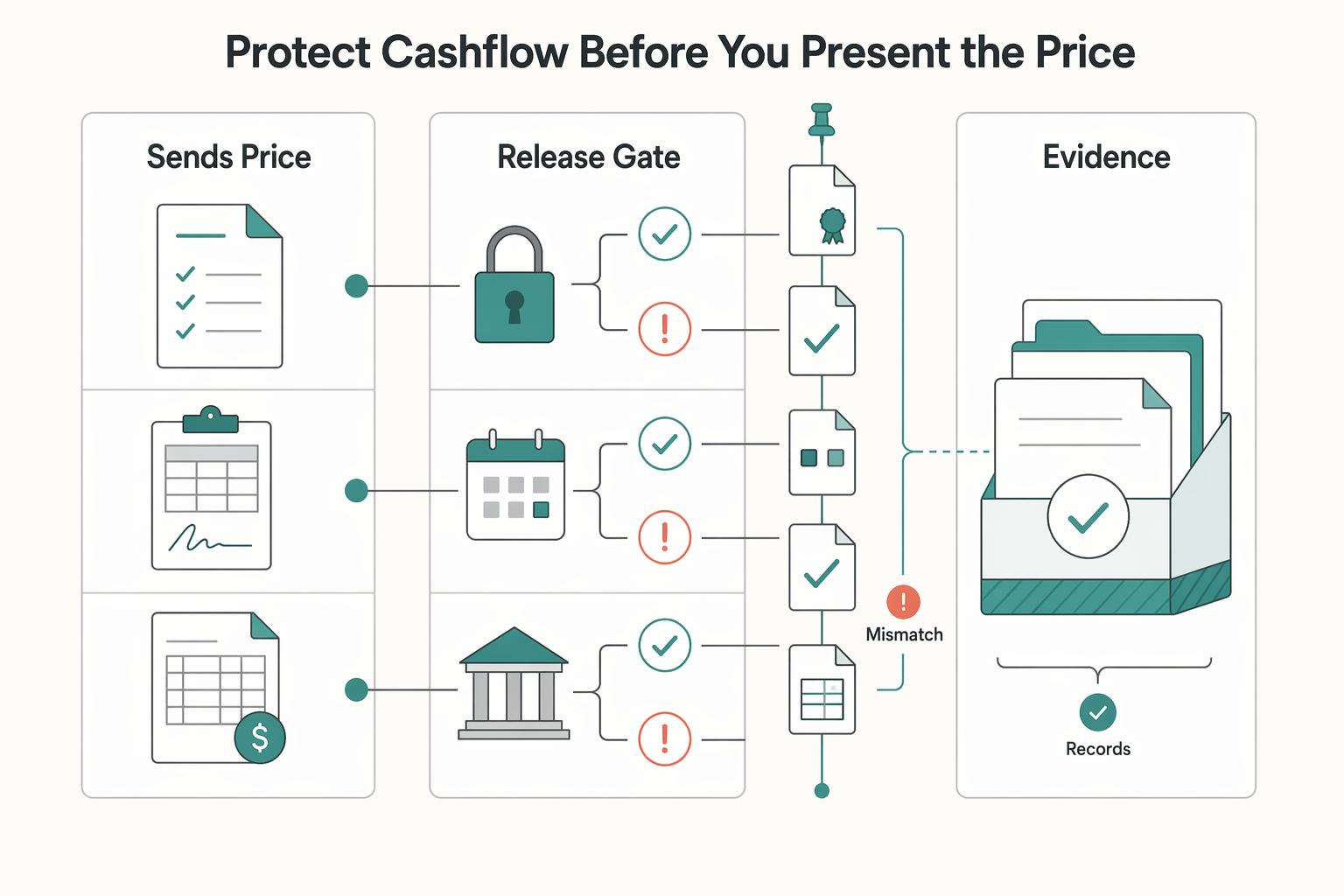
Protect cashflow before you present the price#
Write payment and approval triggers into the proposal, SOW, and invoice using the same milestone names. Keep an evidence pack with the signed agreement, accepted proposal, delivery notice, approval record, and invoice copy.
Before you send the next one, run this check:
- Confirm where approvals are submitted and recorded
- Confirm required identifiers are present in each record
- Confirm deadline and timezone for each approval checkpoint
- Confirm sensitive personal/contact details are handled as if records could be publicly posted without edits
| Vendor-style behavior | Investment-style behavior |
|---|---|
| Sends a price before defining the decision path | Defines decision path, identifiers, channel, and deadlines first |
| Uses informal approvals scattered across chat/email | Uses explicit approval checkpoints with recorded evidence |
| Treats documentation as optional admin work | Treats documentation as process control for payment and auditability |
This shift will not replace pricing judgment, but it does reduce avoidable process risk.
Frequently Asked Questions
How do you set a starting price for a branding package?
Start with scope, then benchmark against ranges that are actually supported. One pricing source lists logo design at $300 to $1,500 on average, with provider bands of $100 to $1,000 (freelance), $1,000 to $5,000 (professional designer), and $2,500 to $30,000+ (agency branding package), plus $10 to $100 for DIY tools. Treat these as reference points only and verify freshness before publishing or quoting; the pricing page is dated April 2, 2024, and some benchmarks may be outdated. If a client anchors to the cheapest route, call out tradeoffs: DIY/template options may limit copyright, and lower-cost freelance work can carry higher originality risk.
What should be in your proposal before the client approves it?
This guide does not provide verified industry-standard rules for proposal checklists, revision limits, change-order triggers, or approval workflows. Treat those as contract choices and define them explicitly in writing before approval.
How do you stop scope creep without sounding difficult?
This guide does not provide a universal process, so avoid presenting one as standard. Keep scope boundaries and change handling explicit in the contract and proposal so out-of-scope requests can be priced separately.
Which pricing model fits the project?
Use a provider-type comparison first, then map it to your project needs: | Provider type | Range shown in source | Typical upside | Typical tradeoff | |---|---|---|---| | DIY logo maker/template | $10 to $100 | Lowest upfront cost | You may not be able to copyright the design | | Freelance logo designer | $100 to $1,000 | Lower cost custom work | Higher risk of plagiarized design | | Professional logo designer | $1,000 to $5,000 | Higher-quality process; may include broader branding deliverables | Higher budget requirement | | Design agency (logo + branding package) | $2,500 to $30,000+ | End-to-end custom branding support | Widest cost range |
How should you structure payments for branding work?
This guide does not support a fixed deposit rule or milestone split (for example, 50/50 or 50/25/25). Set payment structure by contract and project risk, and label any percentages as subject to current verification rather than universal norms.
What is the simplest way to reduce late-payment risk?
This guide does not set specific legal thresholds for late fees, interest, or enforceability. Keep billing terms, approval points, and deliverable handoffs explicit in signed documents so payment expectations are clear.
Try a related tool
Researched and edited by the Gruv editorial team. Gruv builds cross-border billing, payouts, and finance-operations software for global businesses.
Sources
- congress.gov/bill/117th-congress/house-bill/2471/texttrusted
- cpsc.gov/s3fs-public/Ballot-Package-Draft-SNPR-to-Rev...trusted
- d.lib.msu.edu/etd/38546trusted
- digitalcommons.liberty.edu/cgi/viewcontent.cgitrusted
- eeoc.gov/wysk/what-you-should-know-about-covid-19-and...trusted
- grants.nih.gov/grants/glossary.htmtrusted
- pharmacy.ca.gov/laws_regs/lawbook.pdftrusted
- pmc.ncbi.nlm.nih.gov/articles/PMC8710754trusted
Educational content only. Not legal, tax, or financial advice.
Related Posts
How to Calculate a Freelance Rate You Can Actually Get Paid On
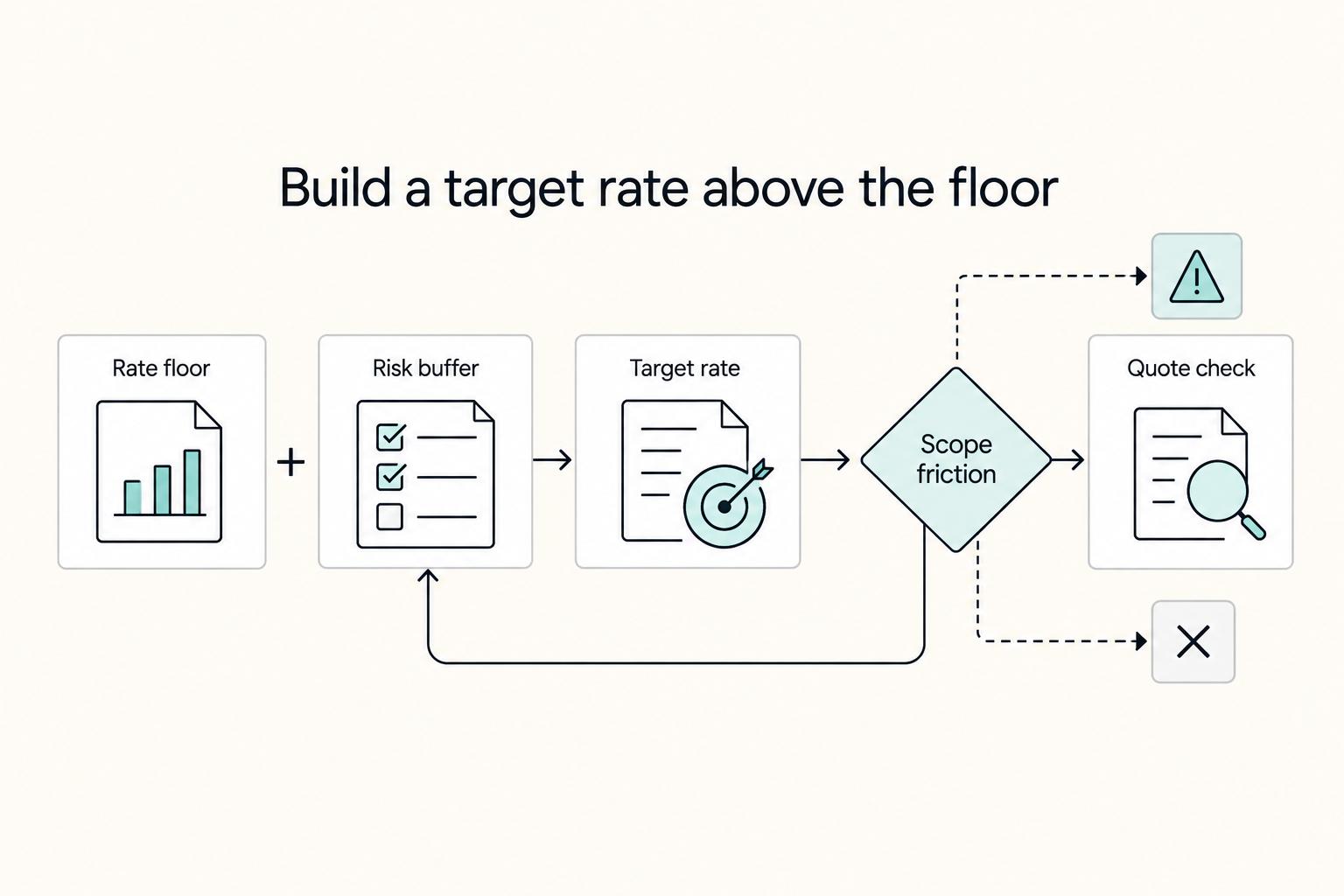
A workable rate is not the neat number a calculator produces. It is the number that still works after you account for real billable capacity, non-client time, scope drift, and the gap between sending an invoice and receiving cleared cash. Start with hourly math even if you do not plan to bill hourly, then turn that number into a quote with clear `payment terms`.
How Graphic Designers Protect Cross-Border Payments and Cash Flow
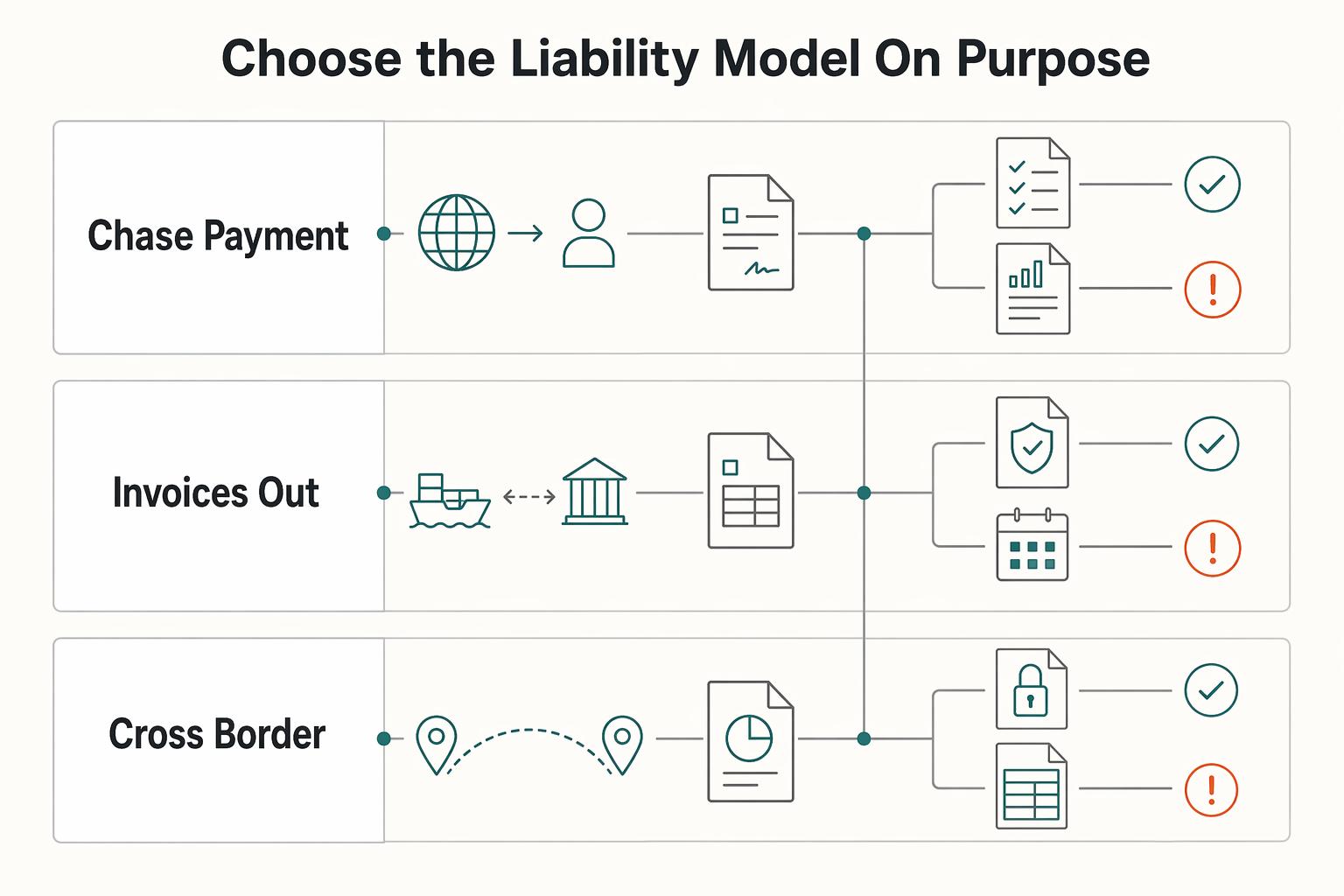
Traditional payment protection is often too reactive for cross-border independent work. The real risk is usually operational: late or missing payment, invoice-validity issues, payment-rail friction, and fees that reduce your margin after settlement.
How to Create a Brand Style Guide for a Client
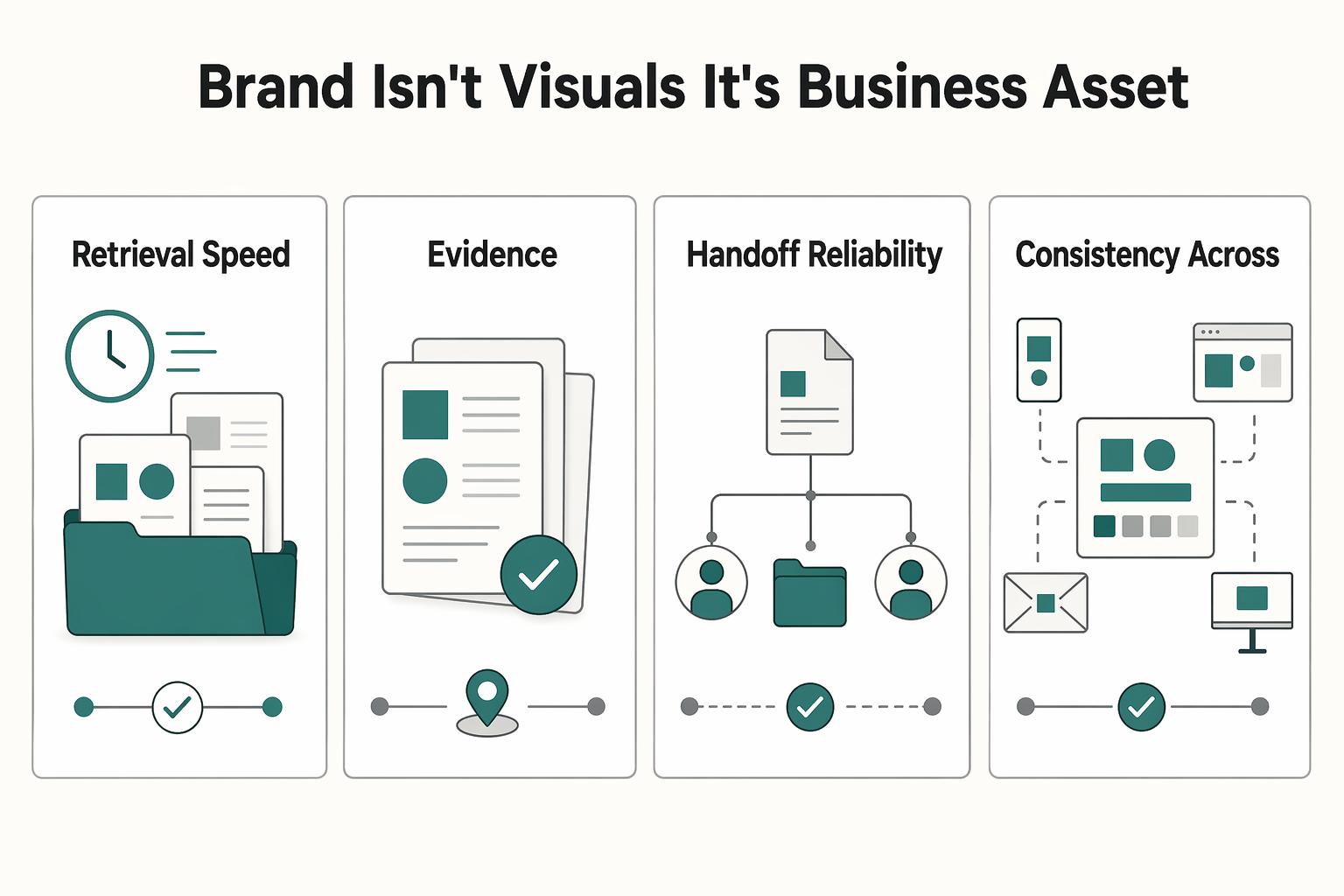
If you work alone, your guide does not need to be a full brand book. It should work as a control document. Standardize the few choices that keep coming up so your proposals, reports, invoices, decks, and delegated work look and sound like they come from the same business.