
Quick Answer
Start with a project fee, not a flat per-minute quote. For price 3d animation project decisions, use runtime only as a background check, then set the number from business objective, usage scope, revision exposure, and timeline pressure. Put controls in writing before you send terms: one approver, defined feedback windows, a clear Definition of Done, and payment milestones linked to review release and final file release. If key inputs are missing, send a provisional range and list what must be confirmed.
Move From Per-Second Quoting to Value and Risk Pricing#
If you want to price 3D animation work without hurting your cashflow, stop treating duration as your main unit of value. A per-second rate can help as a rough reference, but it often underprices the parts that actually create risk: complex deliverables, broad usage rights, heavy revision exposure, and weak payment terms.
| Decision lens | Rate-card quoting | System-based pricing |
|---|---|---|
| Main anchor | Seconds or hours | Business outcome, scope, risk, and controls |
| What it misses | Complexity, IP, and commercial value | Less likely to miss usage rights and revision exposure |
| Cashflow protection | Often added late, if at all | Built in through payment milestones and scope controls |
Step 1. Replace duration-first thinking. A quote like $200 per second does not tell the client how hard the work is to produce, or protect you when the asset becomes more valuable once published. Before you send a number, confirm four basics in writing: exact deliverables, the commercial scope of usage rights, strict revision limits, and how payment milestones will work. If any of those are fuzzy, the quote is not ready.
Step 2. Anchor the fee to value and risk. Your price should reflect the client's business outcome, not just your production time. Then add the real risks: client disorganization, technical complexity, aggressive timelines, and usage-rights scope. This is where fixed quotes often fail, especially when "just one more revision" turns into a profit leak.
Step 3. Turn the proposal into a control document. The rest of this article walks through three moves in order: value anchoring, risk loading, and scope and payment controls. By the end, your proposal should include strict revision limits, non-negotiable payment milestones, and a clear Definition of Done. If a client pushes back on price, reduce scope, not your rate.
For a step-by-step walkthrough, see How to Price a Data Science Project based on 'Model Performance'. If you came here looking for help pricing a 3D animation project, Try the free invoice generator.
Part 1: The Value-Based Engine: Anchor Your Price to Client ROI, Not Your Hours#
Start from the outcome first, then shape scope and risk around it. If you start with duration alone, you end up defending effort instead of business value.
Use this intake on every lead before you quote. It protects your cashflow because tighter discovery reduces rework, approval drag, and payment disputes about what success was supposed to be.
1) Business objective Ask what result this animation is meant to support, not just what format the client wants.
- What should happen after someone watches this?
- Where does this asset sit in the launch or buyer journey?
- What decision should the viewer make?
Checkpoint: you should be able to write one line starting with: "This animation supports..."
2) Value driver Ask how they will judge whether the project worked. You do not need a perfect ROI model, but you do need a client-validated success metric or decision criterion.
- What metric moves if this works?
- How are you measuring this now?
- What outcome would make this project clearly worth doing?
If the client cannot validate a target, mark the target as an assumption in the proposal and keep scope tighter.
3) Cost of delay Ask what goes wrong if approvals slip or inputs arrive late. This is how you surface timeline pressure and decision risk before they turn into revision churn.
- What happens if approvals are delayed?
- Is this tied to a launch, campaign, or other deadline?
- What depends on this asset being approved on time?
If approval ownership is unclear, revision rounds usually sprawl and payment gets harder to collect. Turn that into proposal controls: named approver, revision limits, payment milestones, and a precise Definition of Done.
Turn discovery into pricing options Give options that separate scope, usage rights, collaboration load, and risk ownership.
| Option | Scope | Usage and licensing | Collaboration load | Risk ownership |
|---|---|---|---|---|
| Baseline | Core animation deliverable from client-provided brief/assets | Narrow use defined in proposal | Higher client involvement in direction and approvals | More clarity/timing risk remains with client |
| Supported | Core deliverable plus pre-production alignment | Broader use defined in proposal | Shared feedback and decision responsibility | Risk is more balanced |
| Expanded | Broader production support and/or additional deliverables | Expanded use defined in proposal | Lower client coordination burden; more guidance from you | More execution risk sits with you, so price increases |
When price is challenged, adjust one of these levers instead of cutting your rate.
Proposal translation (mini-example) Weak: "Deliverable: one 60-second 3D animation." Stronger: "Deliverable: one 60-second 3D animation to support the verified project objective, aimed at the approved target metric, for agreed channels and licensing scope, with approvals led by the named client approver."
This sets up Part 2, where you price risk explicitly instead of absorbing it by default.
If you want a deeper dive, read How to Calculate Your Billable Rate as a Freelancer.
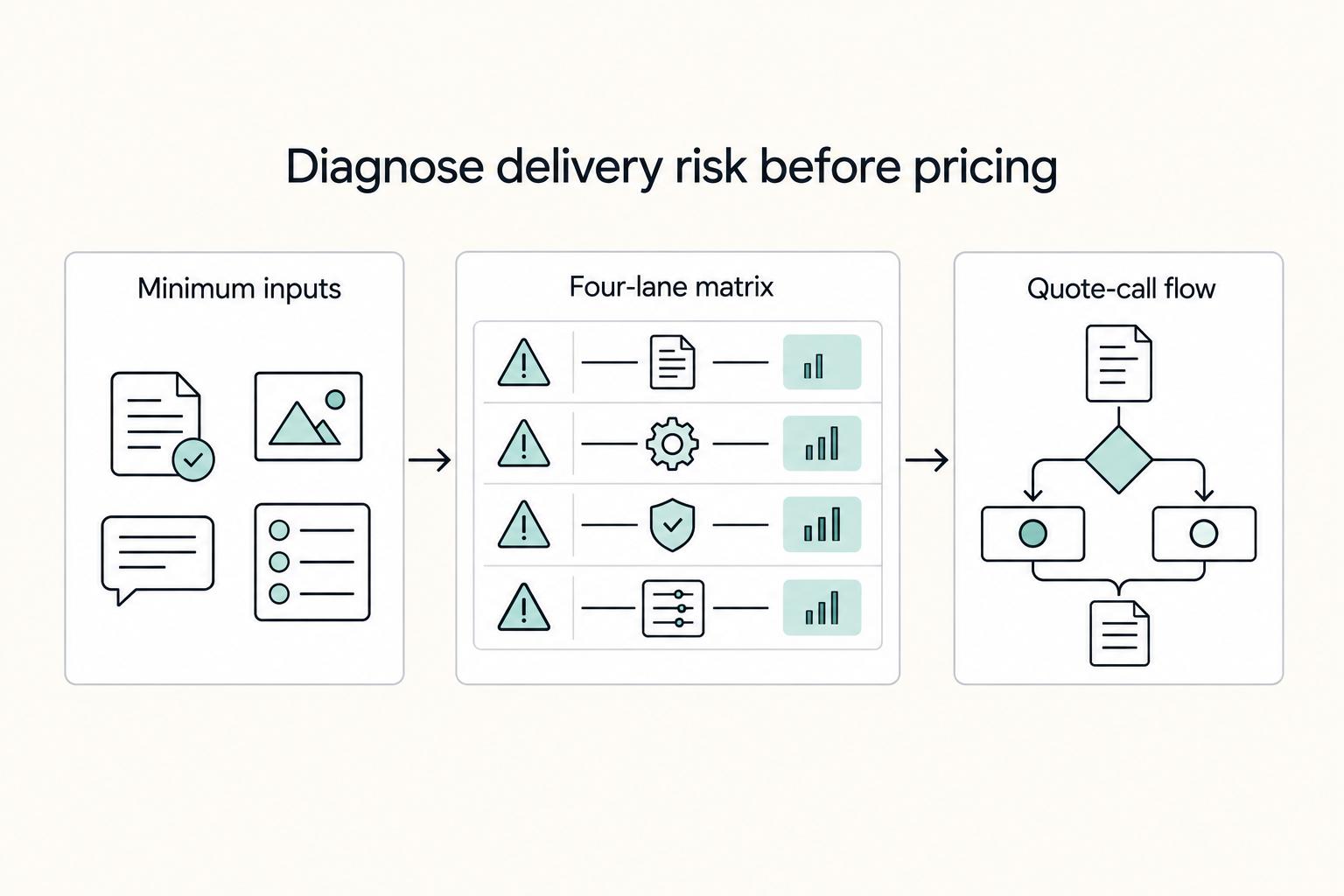
Part 2: Diagnose Delivery Risk, Add a Control, Then Price It#
After you anchor value, price delivery risk the same way every time: diagnose the risk, tie it to a contract control, then apply a clear pricing response.
Step 1. Lock the minimum inputs before pricing risk#
Do not score risk from a vague brief. Confirm the objective, audience, and agreed deliverables first. If those are unclear, execution gets messy fast and your quote becomes hard to defend.
Before you discuss numbers, write down: who approves, what is being delivered, what counts as complete, when feedback is due, and what usage rights are included. If anything is not confirmed, mark it as an assumption in the proposal.
Step 2. Use the four-lane matrix on every quote call#
| Risk lane | Risk signal | Why it affects profitability | Contract control | Pricing response |
|---|---|---|---|---|
| Client | No single approver, shifting brief, unclear feedback path, too many decision-makers | More coordination and revision sprawl increase effort and delay sign-off | Named approver, revision limits, feedback deadlines, payment milestones | Keep the base fee only if controls are accepted. If not, use a verified client-risk premium range or reduce scope. |
| Technical | New style/pipeline, untested simulation, uncertain asset quality, assumption that new tools remove review work | More test cycles, rework, and quality risk | Paid discovery/test phase, exclusions list, quality checkpoints, precise Definition of Done | Use a verified technical-risk premium range, or split R&D from production as a separate line item. |
| Timeline | Compressed deadline, launch-tied delivery, dependency on fast client inputs not yet committed | Context switching and rush execution raise error risk and schedule pressure | Milestone dates, approval windows, written schedule assumptions, payment milestones | Apply a verified rush premium or multiplier to the compressed portion only, or narrow deliverables. |
| Usage | Rights described as broad/open-ended, channels or term not defined | Same asset can carry higher commercial value when rights scope expands | Written usage-rights clause with approved channels and term; expansion priced later | Keep license narrow by default. For broader rights, use a verified usage premium range or quote a separate license line. |
Usage is its own lane. The file may not change, but the rights value does when scope or term expands.
If a client pushes for speed because "AI makes this faster," treat that as a planning input, not a pricing shortcut. You still need room for final quality assurance and artistic judgment in your timeline and fee logic.
Step 3. Run this quote-call flow to reduce pushback#
- Diagnose risk: ask which lane is most likely to expand effort, delay approvals, or broaden rights.
- Explain rationale in plain business terms: "I can hold this fee if approvals run through one owner and usage stays within the agreed term."
- Document assumptions in the proposal: deliverables, revision limits, payment milestones, Definition of Done, and usage-rights scope.
If price is challenged, reduce scope or narrow rights before cutting your rate. This keeps the quote defensible and protects cashflow when approvals, timeline, or usage change after kickoff. Related: How to Price a Graphic Design Project (Logo.
Part 3: The Scope-Creep Defense System: Building a Proposal That Protects Profit#
Your proposal should operate as a control document, not a price tag. It protects your margin, delivery pace, and cashflow when deliverables start to drift beyond the original agreement.
Step 1. Define the finish line so completion is verifiable. For each deliverable, write a practical Definition of Done that both sides can approve without interpretation gaps. If a third party cannot tell what is included, what quality standard applies, and what is out of scope, the proposal is still too vague.
Use this checklist block for each major deliverable:
- Deliverable name and quantity
- Format or export package: final asset spec pending approval
- Quality or review standard: benchmark pending client approval
- Acceptance criteria: approval criteria pending final confirmation
- Handoff assets included and explicit out-of-scope items
Step 2. Run a feedback protocol, not only a revision cap. Revision limits protect you only when feedback flow is controlled. Name one approver, require one consolidated feedback document per review stage, and set a clear review window.
Define in-scope feedback as changes that align with the approved brief and agreed deliverables. Define change-order triggers as requests that add work or alter timeline, budget, resources, or usage rights. If price pushback appears, reduce scope instead of cutting your rate.
Step 3. Link payment milestones to release and rights events. Tie each payment event to what work starts, what review materials are released, and when final use rights are released under your signed terms.
| Milestone event | Payment checkpoint | Release and rights checkpoint |
|---|---|---|
| Kickoff booking | Upfront payment split pending contract approval | You reserve production capacity and begin work |
| Review stage release | Mid-project payment split pending contract approval | You release review materials for approval |
| Final approval + cleared final invoice | Final payment release terms pending contract approval | You release final files and transfer licensed use only as defined in signed terms |
Step 4. Handle scope changes through a fixed change-order path. Do not negotiate scope changes in chat fragments. Use a short sequence every time: request logged, impact summary (timeline/budget/resources), written approval gate, then schedule reset if approved. No extra work starts before updated scope, price, and timing are accepted.
Pre-send proposal check (reuse every project):
- Named deliverables with Definition of Done
- Clear out-of-scope list
- One approver and consolidated feedback path
- Written change-order triggers and approval gate
- Payment milestones tied to release and rights checkpoints
We covered this in detail in How to Price a Mobile App Development Project.
Conclusion: Anchor the Fee, Price the Risk, Put Controls in Writing#
Once those control points are in the proposal, the shift is simple: you are no longer guessing what to charge. You are deciding what kind of business you will run, what risk you will accept, and what must be funded before work moves.
Step 1. Anchor your fee to value. When you price an animation project, start with the client's goal, intended use, and project size, not just your labor. A small 15- to 30-second social video is a different commercial decision from a 1- or 2-minute campaign. A simple check is whether the proposal states the objective clearly enough that pricing feels tied to business use, not a generic production line.
Step 2. Adjust for risk instead of absorbing it. If scope grows, the timeline is compressed, or the style/complexity increases, either raise the fee or reduce the scope. The red flag is a quote that still reflects the base concept after the project has clearly become harder to deliver.
Step 3. Control scope, approvals, and cashflow in writing. Before work begins, your proposal should set expectations and keep both sides aligned. The scope of work should name goals, audience, style, assets, milestones, revision limits, and payment terms. A simple verification check: can a third party tell what is included, what counts as final, and what triggers payment? If not, you increase the chance of muddier approvals, reopened stages, and delayed payment.
Use this on your next project quote:
- Define the client goal and intended usage
- List deliverables, exclusions, and handoff assets
- Name one approver and one feedback path
- Confirm included revision rounds
- Confirm milestone dates
- Confirm payment term and due point
- Confirm change-order terms
That is the practical core of pricing like an owner. The FAQ below covers the edge cases that usually show up once you start applying it. You might also find this useful: How to Price a Copywriting Project.
Frequently Asked Questions
Which pricing model should you use?
A practical approach is to present a project fee to the client and keep hourly math as your internal floor. A per-second reference can help you sanity-check duration, but it should not drive the whole number because complexity, revisions, production stages, and production time can change the real effort fast. | Method | Best use case | Main risk | Client-facing stance | |---|---|---|---| | Value-based pricing | Commercial work where business use, timeline, and deliverables are clear | You underprice if discovery is weak | Present this as the project fee tied to scope and intended use | | Internal hourly baseline | Checking whether the fee covers your time, overhead, and revision risk | You start selling time instead of outcomes | Keep it private; use it to validate your minimum | | Per-second reference | Rough internal comparison for similar deliverables | Becomes a flat per-minute quote that ignores complexity | Use only as a background check, not the headline price |
What do you say when a client says your quote is too high?
Do not cut the rate first. Step 1: restate the goal, deliverables, timeline, and intended use so the client can see what the fee is buying. Step 2: if the budget is fixed, reduce scope, not rate, by removing a scene, simplifying environments, shortening runtime, or moving audio production out of scope. A good checkpoint is simple: after the call, can you point to exactly what changed in the quote? If not, you are probably absorbing extra work for free.
What should your contract or proposal include?
You do not need a long document, but you do need clear controls in writing before work starts. Include sections like: Scope and deliverables, including stages if relevant such as storyboarding, product design, character design, or rigging. Revision limits, approval points, milestone dates, payment terms, and final file release conditions. Usage rights, source or handoff assets, confidentiality, and what happens if the project is paused or canceled Your verification check is whether a third party could tell what is included and when a stage is approved. If they cannot, disputes usually show up later as revision loops.
Should you charge more for photorealistic work than stylized work?
Sometimes, but not by default. Photorealistic animations aim to replicate real-life appearance, while stylized animations are shaped around a brand aesthetic. Either one can become expensive if modeling, lighting, texturing, rendering complexity, or revision load rises. Ask for references before you quote. If the client says "clean and simple" but sends luxury ad references, treat that as a red flag and revise the estimate before approval.
Can you quote a flat per-minute rate?
You can, but it is a common way to misprice a 3D animation project. Duration matters because longer pieces usually need more rendering time. Runtime alone still misses revision load, software demands, audio, and stage count. If you need a quick response, give a provisional range, then list the discovery items still needed.
How much should a 1-minute animation cost?
There is no credible universal answer. One source shows quotes for seemingly similar work ranging from $300 to $3,000 to $10,000. That is a useful reminder that scoping quality is often the real issue, not a market rate card. Before you price by duration, confirm six things: style, number of scenes, production stages, revision load, timeline, and whether voiceover, music, or sound design are included. If any of those are still vague, your quote is not ready.
Try a related tool
Researched and edited by the Gruv editorial team. Gruv builds cross-border billing, payouts, and finance-operations software for global businesses.
Sources
Includes 4 external sources outside the trusted-domain allowlist.
- bizfileonline.sos.ca.govtrusted
- copyright.gov/history/1961_registers_report.pdftrusted
- federalregister.gov/documents/2023/06/05/2023-05744/federal-good...trusted
- contra.com/p/2RsAbreL-stop-scope-creep-7-battle-tested-...external
- cybertizemedia.com/blog/animation/animation-production-cost-wit...external
- hellobonsai.com/proposal-template/animationexternal
- jobbers.io/scope-creep-prevention-contract-clauses-that...external
Educational content only. Not legal, tax, or financial advice.
Related Posts
How to Calculate a Freelance Rate You Can Actually Get Paid On
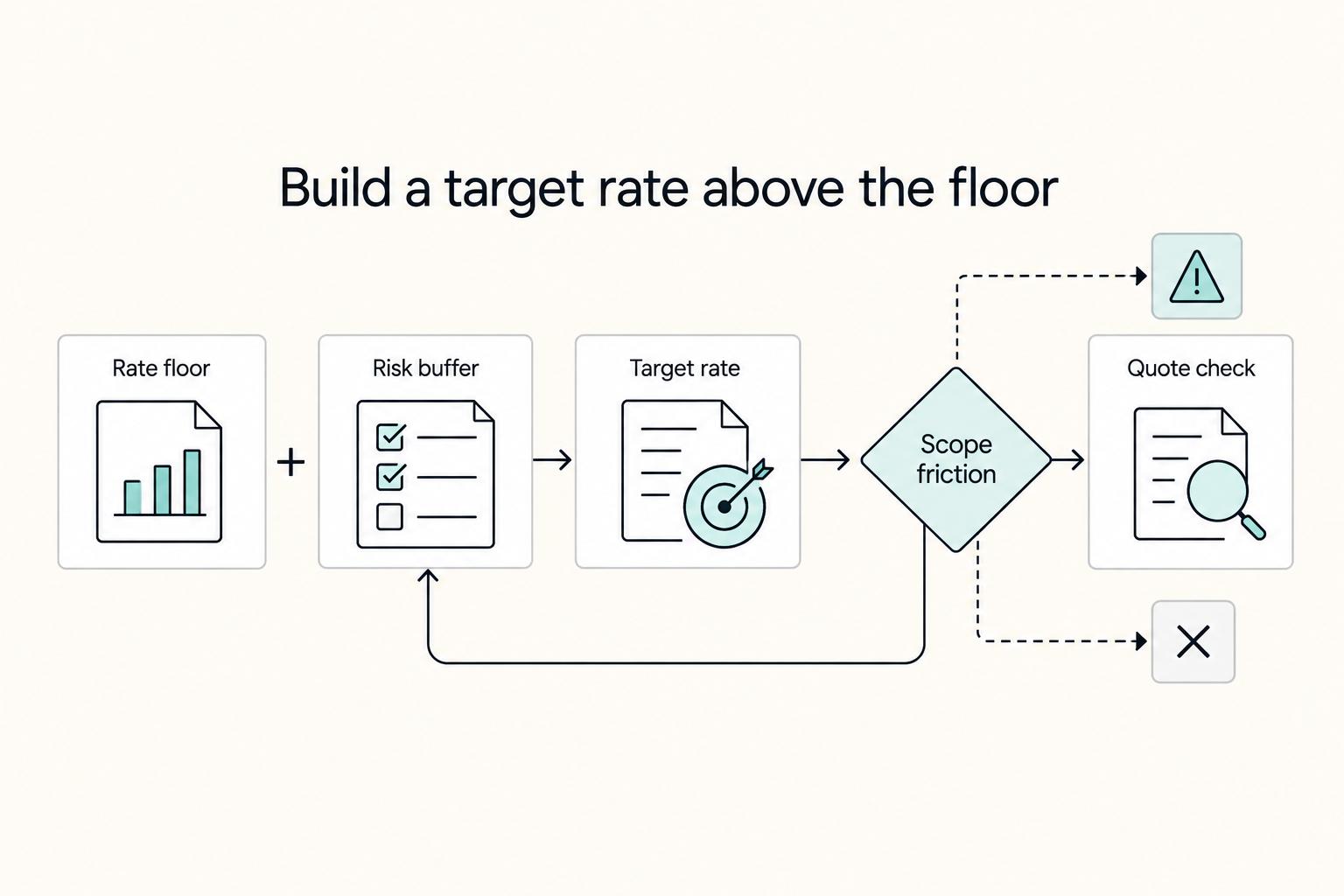
A workable rate is not the neat number a calculator produces. It is the number that still works after you account for real billable capacity, non-client time, scope drift, and the gap between sending an invoice and receiving cleared cash. Start with hourly math even if you do not plan to bill hourly, then turn that number into a quote with clear `payment terms`.
How Graphic Designers Protect Cross-Border Payments and Cash Flow
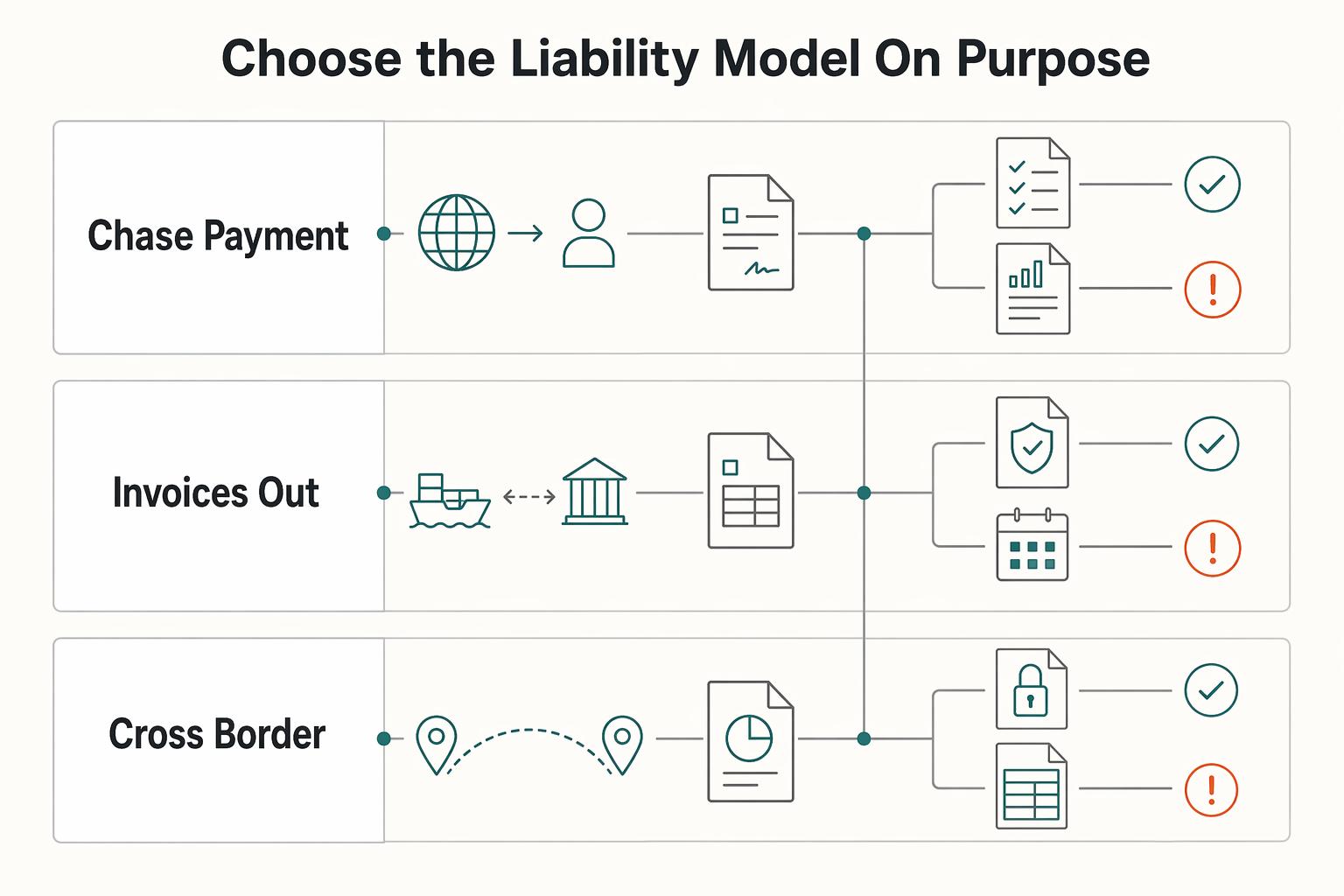
Traditional payment protection is often too reactive for cross-border independent work. The real risk is usually operational: late or missing payment, invoice-validity issues, payment-rail friction, and fees that reduce your margin after settlement.

The Freelance Payment Penalty: A Modeled Audit of Platform Fees, FX Spreads, and Payout Delays
The money rarely disappears through a single, easy-to-spot fee. The real loss is stacked. A marketplace takes its commission, a processor adds a charge for international cards, a bank or payment company converts the currency at a spread, a platform holds the funds before release, and a wire sheds a little to intermediaries on the way in. Each layer looks defensible on its own, but the worker feels the combined result as a smaller deposit and a later payday.