
Quick Answer
Plan a multi-day hiking trip in four phases: choose a route that matches your experience and fitness, sort logistics, verify key details before you leave, and manage the trip with simple daily checks. Build a three-layer navigation setup, map water sources and bailout options, test your gear on an overnight shakedown, and share a clear trip brief with a trusted off-trail contact.
Introduction: Your Expedition is a Project, Not a Vacation#
If you want to plan a multi-day hiking trip with fewer avoidable mistakes, treat it like something you build on purpose, not something you improvise the night before. By the end, you should have a practical phase-by-phase plan and a checklist mindset you can use right away.
That framing matters because backpacking rewards advance planning. Route conditions, distance, weather, water access, and campsite locations all shape whether a trip feels manageable or starts going sideways early. Skipping the planning to calm your nerves often has the opposite effect. A clear checklist is often what gets you moving.
Here is the four-phase structure we will use:
- Choose the right trip. Match the route to your experience and current fitness so you do not overcommit on day one. If you are newer to this, start with a shorter, less difficult hike.
- Sort the logistics. Lock in practical pieces such as transport, budget, insurance, and any travel requirements that apply to your route.
- Check the plan before you leave. Verify the details that break trips most often: trail conditions, expected distance, weather, water availability, and campsites.
- Manage the trip in the field. Use simple daily checks so you can adapt early instead of reacting late.
Not every planning step needs the same depth. A one-night walk close to home does not need the same prep as a remote self-guided route where you need to be more self-sufficient. The rest of this article follows those four phases in order, with concrete planning tools where they help.
For a step-by-step walkthrough, see How to Pack a Backpack for a Multi-Day Hike.
Phase 1: The Intelligence & Feasibility Study - Are You Green-Lit for Launch?#
Do not lock dates until your route passes a go/no-go check for terrain load, water reliability, and permit or access status. If any one fails, adjust the route or timing before you commit.
Keep one working plan across your map, offline app, and trip notes so you can verify details in one place.
Step 1: Run a feasibility screen (go/no-go)#
Screen the route by distance and difficulty first, then test timing against your current pace range. A 10-mile day can take about 3.5 to 6 hours depending on speed and endurance, so mileage alone is not enough.
Before you green-light the route, confirm each day has:
- A realistic hiking-time range based on your pace, not a best-case estimate.
- A water plan with uncertain points flagged, with current seasonal water status to verify from official sources before use.
- A current admin check for permits, bookings, restrictions, or closures, noting that the exact permit timeline must be verified from official park or land-manager records before use.
If you are relying on a document marked draft, for example one labeled DRAFT April 17, 2025, re-verify against the current official park or booking source before deciding.
Step 2: Pre-mark each day in your full navigation stack#
Build each day in a three-tiered setup: dedicated GPS, smartphone with offline maps, and physical map/compass. For each day, pre-mark:
- Primary track
- Alternate line
- Exit points
- Communication checkpoints
Your pass condition is simple: the same daily plan exists on paper and in your offline app, not in only one device.
Step 3: Pre-commit bailout triggers and objective tradeoffs#
A bailout corridor is your pre-mapped daily exit path. Decide in advance that you will use it if one of these triggers appears: weather shift, pace breakdown, injury, or key gear failure.
Then confirm your route matches your actual trip objective:
| Objective | Choose more of this | Accept less of this |
|---|---|---|
| Experience and comfort | Shorter days, simpler navigation, easier exits | Big mileage and harder terrain |
| Challenge | Longer days, tighter pacing | Margin for delays |
| Scenery | Flexible pace, time at viewpoints | Total distance covered |
| Faster pace | Cleaner route, fewer side trips, earlier starts | Extra stops and detours |
If your route and objective do not align, revise now, before launch.
If you want a deeper dive, read The Best Travel Backpacks for Digital Nomads.
Phase 2: Systems & Logistics - Building Your Redundant Operational Stack#
After your route is approved, build your systems so a single failure does not end your day. Your navigation, water treatment, Big Three setup, and trip handoff should still work when you are tired, wet, or low on battery.
Step 1: Build and verify a three-layer navigation setup. Use three layers to avoid single points of failure, and keep the same route, bailout corridor, and key waypoints on all three.
| Layer | Primary role | Common failure mode | Backup action |
|---|---|---|---|
| Dedicated GPS (or similar primary device) | Main field reference for route line and location checks | Dead battery, device damage, setup mistakes | Switch to offline phone maps and confirm position with paper map |
| Smartphone with offline maps | Secondary live map and backup map library | Battery drain, broken screen, missing offline downloads, no connection | Use airplane mode, carry backup power, then fall back to paper map and compass |
| Physical map and compass | Failsafe when electronics are unreliable | Poor weather protection, incomplete map printouts, weak compass practice | Carry printed multi-page maps and rehearse basic bearing and position checks before departure |
If you use an app such as CalTopo, do route work on desktop first: measure distance and vertical, add notes, and print field maps. The cited tier range is free to $100/year, with Mobile at $20/year and Pro at $50/year; Pro can matter if you want 11x17 and 300 dpi printing.
Step 2: Plan fuel and hydration from your actual route days. Start with your real day structure, not generic formulas. Write down daily hiking-time estimates, known water points, where treatment happens, and where you need to leave a source full because the next source is uncertain. Keep intake targets provisional until you verify what works for your body and conditions.
Then add redundancy: one primary water treatment method and one backup, plus a contingency food block you keep untouched unless weather, delays, or camp changes force it. This protects decision quality late in the day, when low energy or missed water can cascade into bigger problems.
Step 3: Choose your Big Three for conditions, not bragging rights. Pick shelter, sleep system, and backpack based on terrain, forecast, trip length, and your comfort tolerance.
| Factor | When to prioritize it more |
|---|---|
| Weight | Long climbs and high daily movement demands |
| Weather protection | Wind, prolonged rain, exposed camps |
| Durability | Rough terrain, repeated abrasion, longer use cycles |
| Comfort | Cold nights, poor sleep history, uneven campsites |
| Cost | When balancing performance needs against budget constraints |
Use this as a tradeoff check, not a race to the lightest setup. Your validation point is simple: each Big Three choice needs a route-specific reason.
Step 4: Close logistics with a usable trip brief and handoff. Before you leave, create one brief another person can use without guessing. Include:
- final route with daily camps or target stopping zones
- bailout corridor for each day
- check-in method and your "when to worry" threshold
- emergency contacts
- trailhead transport in and out
- fallback options if weather, access, or timing changes
- route-specific requirements where applicable (for example, Yosemite overnight guidance listing wilderness permits and park-approved bear canisters)
Share the brief with one trusted off-trail contact and walk through what to expect if you miss a check-in. Include non-trail hazards too, such as a busy road crossing at a trailhead.
You might also find this useful: How to Plan a Cross-Country Road Trip.
Phase 3: The Pre-Deployment Phase - From Physical Shakedown to Mental Rehearsal#
This phase is where you prove your plan works in real conditions, not just on paper. You are testing whether your systems still hold when you are tired, wet, or frustrated.
Step 1: Build a route-specific readiness routine#
Train for your actual route demands, not a generic fitness goal. If your trip includes long climbs, practice steady uphill movement with your expected pack load. If it includes rough descents, add step-ups, lunges, and single-leg balance work so your legs and feet are ready for uneven terrain. If long water carries are possible, test that too, since spacing like 8 and 10 miles between sources can change effort and comfort quickly.
Keep your checks simple and personal: pack-carry comfort at expected load, how your feet and shoulders feel the next day, and whether recovery matches your normal baseline. Validate exact numbers during shakedowns, including final loaded pack weight, route-specific climb duration, and the recovery signals that are normal for you. If pain, chafing, or exhaustion repeats in practice, treat that as a fix-now issue.
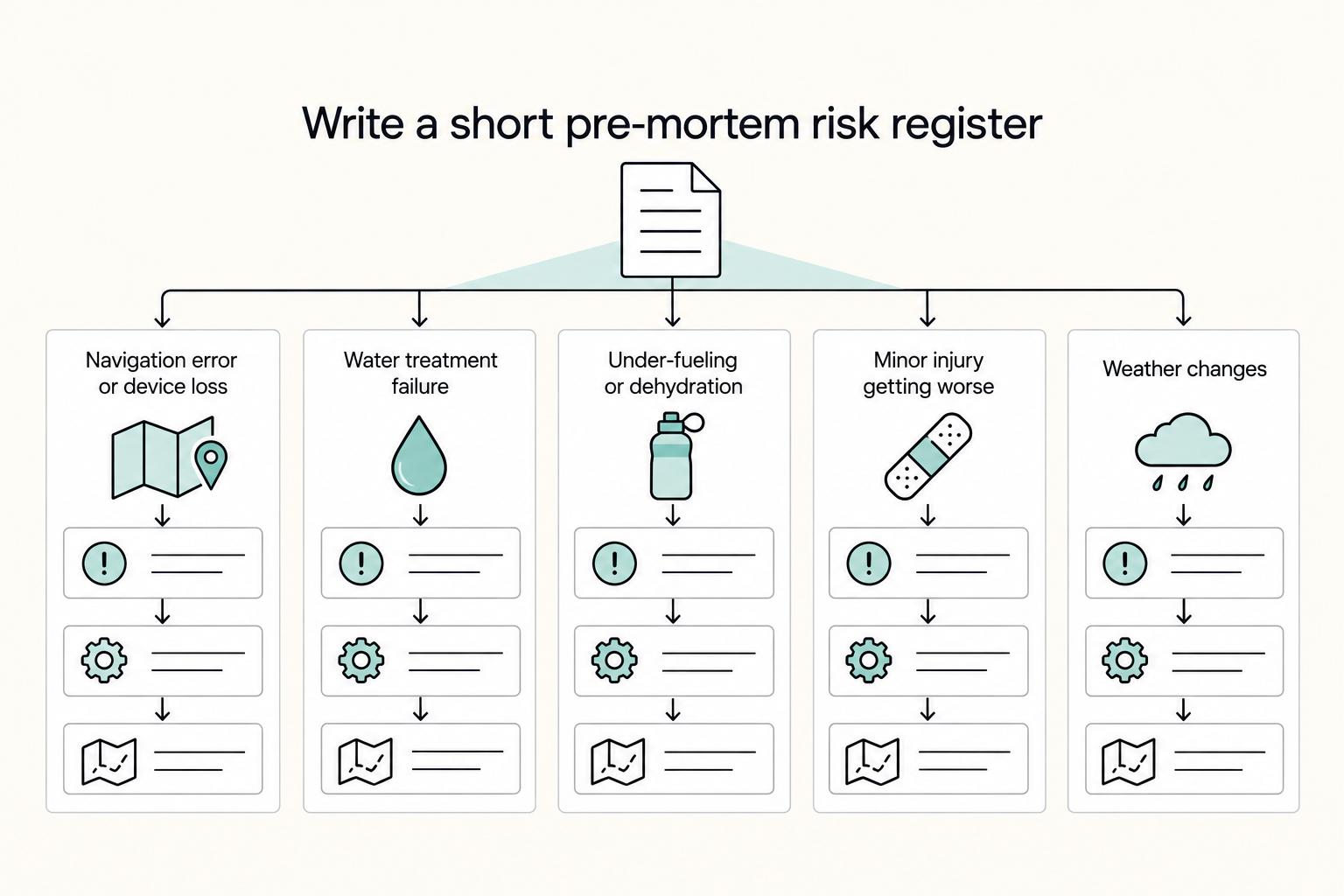
Step 2: Write a short pre-mortem risk register#
A pre-mortem is a before-you-leave failure rehearsal. Pick your top five likely failure points, then define what you will notice first, what you will do immediately, and what backup plan keeps the day manageable.
| Failure scenario | Early warning sign | Immediate response | Backup plan |
|---|---|---|---|
| Navigation error or device loss | Missed turn, conflicting map views, or damaged phone after a short drop | Stop, confirm your position, and cross-check before moving | Switch to your three-tiered navigation system, including paper map and compass |
| Water treatment failure | Filter slows, clogs, or stops working | Protect remaining clean water and reassess the next source | Use backup chemical treatment and shorten to a bailout corridor if needed |
| Under-fueling or dehydration | Pace drops, decisions get sloppy, or you skip intake | Stop early, eat, drink, and reset timing | Use your contingency food and cut the day shorter |
| Minor injury getting worse | Hotspot, ankle tweak, or altered stride | Treat it immediately and reduce strain | Move to the day's pre-mapped exit option |
| Weather changes that outpace your plan | Building wind/rain/cold or slower progress than expected | Add layers early and reassess timing | Change objective, use a bailout corridor, or end the day sooner |
Step 3: Run an overnight shakedown and make a go/no-go call#
Do at least one overnight shakedown with your exact kit and food. The goal is to test function, not chase miles.
- Gear performance: Shelter pitch, sleep setup warmth, and food-storage setup all work in field conditions.
- Packing workflow: Midday essentials are reachable without unpacking everything.
- Sleep and cooking systems: You can cook, clean up, and settle in without missing parts or power surprises.
- Navigation handoff: With your phone in airplane mode, offline maps still open, and you can hand off to paper map and compass smoothly.
- Post-test adjustments: Log every issue, label each as comfort or trip-risk, and resolve trip-risk items before departure.
If the shakedown exposes repeated hotspots, weak setup steps, or backups you never actually used, that is useful signal. Adjust, retest, and then decide if you are ready to depart.
We covered this in detail in The Best GPS Watches for Hiking and Trail Running.
Phase 4: In-Field Execution - Applying Your Operational Protocols#
Once you leave the trailhead, keep the day steady with a repeatable routine. You are not improvising from scratch each morning; you are running a short checklist that helps you catch issues early and adjust before they grow.
Step 1 Start each morning with five checks#
Before you move, run the same sequence:
- Body status: Check hotspots, stiffness, unusual fatigue, headache, or a minor injury that is trending worse.
- Route and weather re-check: Confirm today's route on your primary device, then cross-check key turns and your bailout corridor on map/compass.
- Water plan: Confirm next likely source, current carry, and treatment readiness (primary filter + chemical tab backup).
- Gear readiness: Place layers, rain protection, first snacks, and navigation tools where you can access them quickly.
- Required items check: Confirm permit and area-specific storage requirements are with you and usable before you start.
Quick self-test before first steps: you should be able to state your first major turn, next water source, and fastest exit option.
Step 2 Fuel, hydrate, and pace before you feel behind#
Use the intervals you validated in your shakedown hike, not guesswork in the moment.
- Eat on your shakedown-tested fueling interval.
- Hydrate on your shakedown-tested hydration check interval.
- Run a short body/pace check on your shakedown-tested recovery interval.
If you start skipping food, delaying water treatment, or pushing climbs so hard that recovery lags, slow down early. Heavy carries tend to show up first on descents, so pace control is part of injury prevention, not just speed management.
Step 3 Use clear triggers to adjust the day#
Use this decision frame instead of debating while tired:
- Change route: Weather shifts, navigation confidence drops, or water reliability falls below plan.
- Slow down: Footing degrades, breathing stays high, or your normal eat/drink rhythm breaks.
- Add recovery time: A hotspot, ankle tweak, or low energy improves with rest but returns when you rush.
- Use your preplanned bailout corridor: Pain is worsening, you cannot cleanly verify position after losing one navigation layer, or problems are stacking instead of resolving.
If two "small" issues hit together, treat that as a major warning.
Step 4 Close each evening so tomorrow starts clean#
Use the same order each night: shelter, insulation, water refill/treatment, food storage, then next-day setup. Lay out breakfast and first snack, preload tomorrow's route view, and check high-impact gear for wear. Keep your Leave No Trace waste kit (trowel, waste bags, hand sanitizer) accessible.
If part of the goal is to disconnect, use simple habits: keep your phone in airplane mode except for planned navigation or weather checks, then do a five-minute reflection on three prompts: where you are, what changed today, and what you want to notice tomorrow.
This pairs well with our guide on How to Prevent and Treat Blisters While Hiking.
Beyond the Trailhead: Executing with Confidence#
Your job on trail is simple: keep running the plan you already tested, and adjust early when reality changes. Confidence comes from early checks, not from pushing through uncertainty.
Use this daily flow:
- Start with a short reset. Confirm today's distance, terrain, likely water/resupply points, key decision points, and your fallback route before you start.
- Check early, not late. At natural checkpoints, verify your location and current conditions, and keep your fueling, hydration, and pace consistent so small issues stay small.
- Switch early if needed. If conditions no longer match your plan, stop, confirm what is true now, and move to your fallback: shorten the day, use an alternate camp/route, wait, or exit.
When conditions change, use a quick go/no-go sequence:
- Monitor: pace vs daylight, water reliability, terrain exposure, and how you are handling pack load.
- Trigger: if one of those breaks your plan assumptions, treat it as a decision point.
- Execute: take the fallback you set in advance instead of negotiating with warning signs in the moment.
Multi-day hiking often means repeated 5-15 mile days with limited rest, so disciplined checks protect you from avoidable compounding errors. Preparation does not remove uncertainty, but it does lower avoidable risk and help you stay present while you hike.
Related: How to Pack Light for Long-Term Travel (One Bag Guide).
Frequently Asked Questions
How do you make a contingency plan you will actually use?
Keep it to one decision table with early warning signs you can spot fast. The point is not to predict everything. It is to decide what makes you continue, what makes you stop, and what you do next without talking yourself into a bad call. | Scenario | Early warning sign | Go or no-go | Immediate fallback action | | --- | --- | --- | --- | | Planned water source is unreliable | Source is dry, much lower than expected, or you are carrying less than the next confirmed stretch requires | No-go on the original segment unless you can verify the next reliable source and carry enough | Refill fully at the last reliable source, shorten the day, or take your bailout route | | You lose confidence at a trail junction | The sign, map, and terrain do not match cleanly | No-go on continuing "just to see" | Stop walking, confirm location on your map, then backtrack to the last known point if needed | | Weather is worsening on exposed terrain | Conditions are building and your margin is shrinking on a ridge, pass, or open section | No-go on the exposed section | Drop to a lower route, wait, or end the day early | | Your pace no longer fits the day | Time and distance are no longer lining up for camp, water, or daylight | No-go on the original campsite target | Cut mileage and use the closer camp or exit you identified before the trip | What usually goes wrong first?
It is often not one big event. Planning can break down when water planning is vague, when mileage ignores time versus distance, or when location checks happen only after uncertainty. Most people plan around 3 to 10 miles per day depending on fitness and elevation gain, so if your route only works on your strongest day, shorten it. What should you verify before you leave home?
Check permits, trail conditions, insects, and how much food you will need. Also write down daily mileage and where you expect to get water, because those two details shape almost every in-field decision. If you only have a weekend, a closer destination often gives you more trail time and less rushed travel.
What navigation setup should you actually carry?
For most trips, carry a paper map and use your phone with offline maps as a second reference. The paper map should show trails, intersections, and notable features, and you should stop at each trail junction or other key feature to confirm where you are. Your phone helps, but only if you downloaded the maps before leaving and know the app well enough to use it without guessing. | Setup | Practical tradeoff | Common failure risk | Best fit | | --- | --- | --- | --- | | Paper map only | Simple and broad route view, but you must actively read it | You do not stop to verify at intersections | Marked trails when you already use maps comfortably | | Phone with offline maps only | Fast position checks, but setup and app skill matter | You forgot offline maps or do not know the app well | Shorter or familiar trips, not as your only plan | | Paper map plus phone | Slightly more to manage, but better cross-checking | You carry both but never verify at key features | Most multi-day trips | How should you handle food planning?
Plan food by day and by use: breakfast, on-trail snacks, and dinner. Then pressure-test that plan in your shakedown. If you finish under-fueled or come home with a lot of untouched food, adjust portions before the main trip. What is a sensible water baseline?
A common starting point for moderate hiking in mild weather is about 1 liter for every two hours, and many hydration setups hold 2 to 3 liters. That is only a baseline, not a rule for every multi-day route, so match it to your weather, effort, and spacing between sources. The failure mode is leaving a source without knowing the next reliable one.
How do you prepare for a solo trip without overthinking it?
Start with shorter solo hikes, then a familiar overnight, preferably on an out-and-back route so you can turn around if needed. Practice being alone, but also practice your checks: route, water, body status, and camp setup. If solo travel makes you rush simple tasks, that is your red flag to slow down, and it is worth reviewing A Guide to Wilderness First Aid before you go. What makes a shakedown worth doing?
Use the exact gear, food, layers, and navigation setup you expect to carry on the real trip. Then verify three things: your planned mileage feels realistic, your water plan works in real time, and you can find your location at junctions without improvising. If one of those fails on the test, fix it before the main hike, not at the trailhead.
Try a related tool
Researched and edited by the Gruv editorial team. Gruv builds cross-border billing, payouts, and finance-operations software for global businesses.
Sources
Includes 2 external sources outside the trusted-domain allowlist.
- bryan.edu/wp-content/uploads/2025-26_catalog.pdftrusted
- dlnr.hawaii.gov/dsp/files/2025/09/8.-Hawaii-State-Parks-Camp...trusted
- fs.usda.gov/sites/default/files/fs_media/fs_document/tra...trusted
- marquettemi.gov/wp-content/uploads/2019/01/CMP_2015-Amended-...trusted
- parks.ny.gov/sites/default/files/2025-11/FINAL%20SCORP%20...trusted
- tams.unt.edu/studentlife/forms/handbook.pdftrusted
- andrewskurka.com/review-caltopo-backcountry-mapping-gps-navig...external
- filestore.scouting.org/filestore/Merit_Badge_ReqandRes/Pamphlets/Ba...external
Educational content only. Not legal, tax, or financial advice.
Related Posts

The Best Travel Backpacks for Digital Nomads
Start by ruling out bad fits, not by chasing a universal winner. If a bag does not match how you move, how you work, or what you can comfortably carry, drop it early. That matters far more than one extra pocket or a slick product page.
How to Pack Light for Long-Term Travel Without Work Disruptions
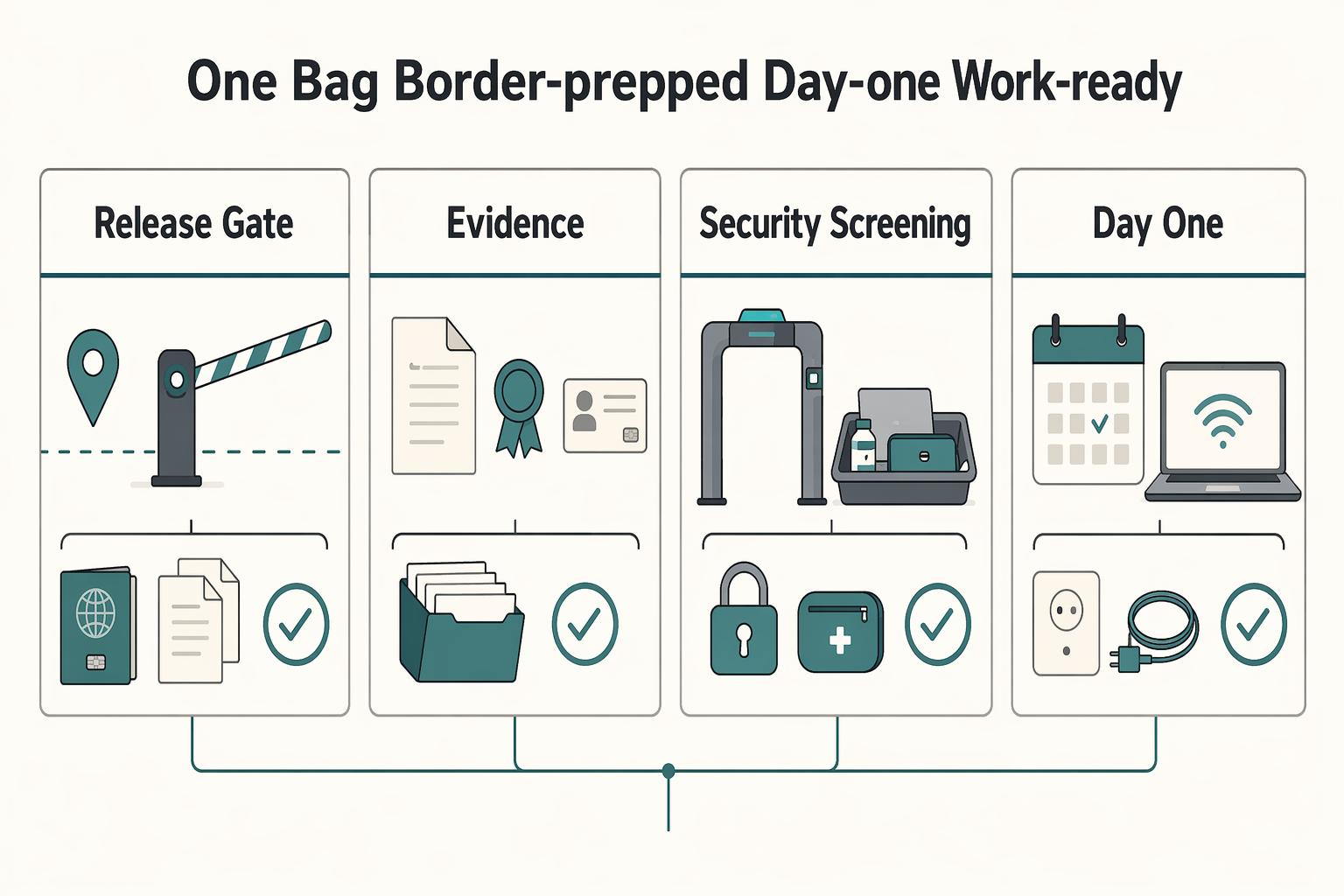
The rule is simple: pack light only if losing your main bag would not break identity, payments, health essentials, or your first work session. If those four still work from your personal item, you can travel much lighter without turning arrival day into a recovery exercise.
Wilderness First Aid for Remote Professionals
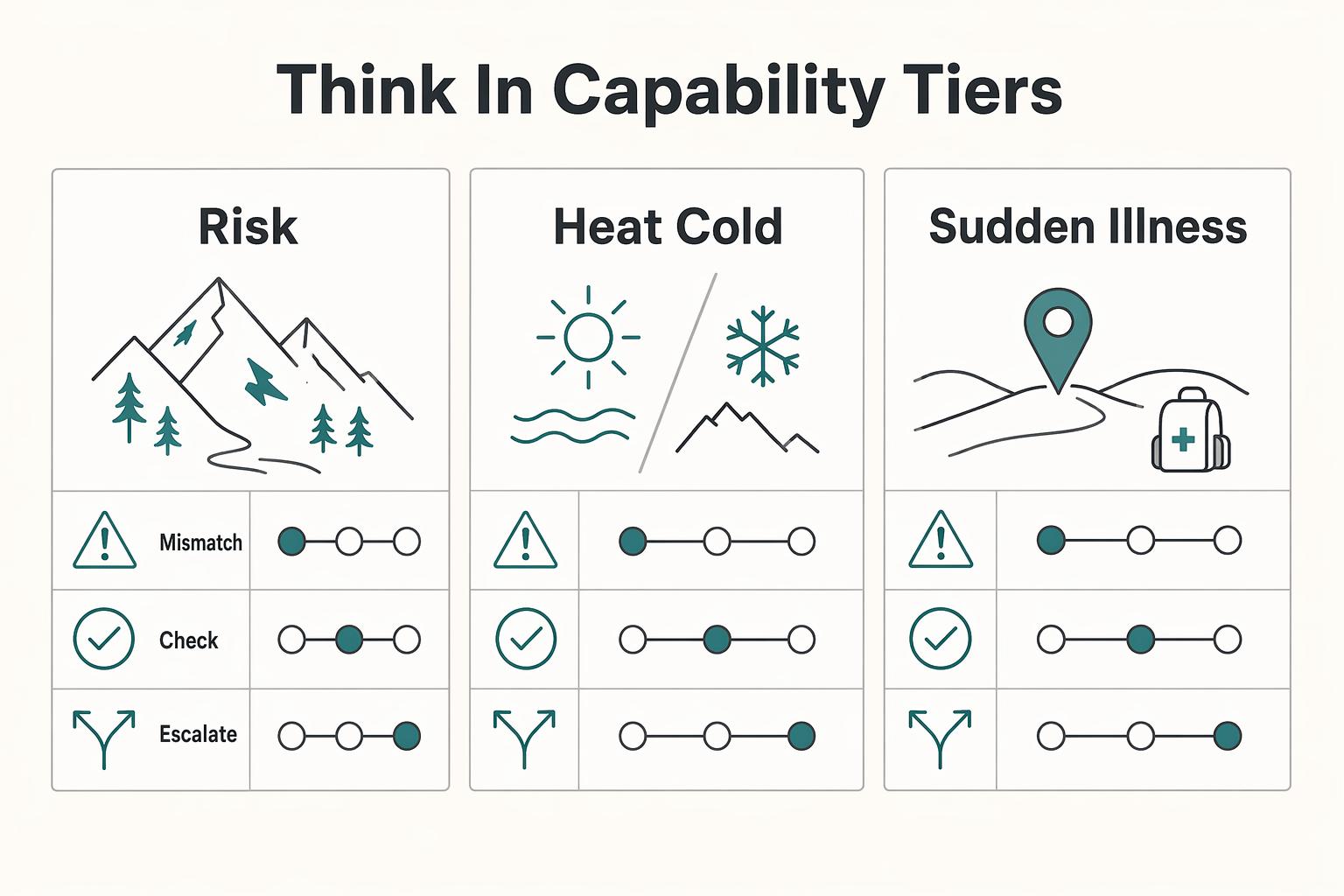
Your business is built on freedom: the freedom to work from anywhere, serve clients globally, and set your own terms. That freedom also removes the layers that usually absorb disruption before it turns into a business crisis. Your office might be a villa in rural Spain, a research site in Costa Rica, or a temporary base in a developing nation. In any of those places, you are also the security lead, risk manager, and first responder.