

Quick Answer
Yes - when your work is in a U.S. agreement country and that agreement assigns coverage to the United States, request the certificate through SSA before foreign work begins. To get certificate of coverage from ssa, verify destination status first, then file with exact identity, business, country, and date inputs that match your records. After approval, provide the document to the relevant foreign authority or payroll contact and retain proof of receipt.
Phase 1: The Strategic Assessment - Why This Certificate is a Financial Shield#
Treat this as a go-or-no-go compliance decision, not routine admin. You are deciding whether your work stays in one social security system or whether you may face social security taxes in both places on the same earnings.
Define the decision clearly#
A U.S. Certificate of Coverage is proof used under a totalization agreement when your work is assigned to U.S. coverage. When that happens, the certificate serves as proof of exemption from the foreign social security system under the agreement.
| Decision point | Without Certificate of Coverage | With Certificate of Coverage |
|---|---|---|
| Coverage result | Possible exposure to both U.S. and foreign social security systems on the same earnings | U.S. coverage only, but only if the agreement assigns your work to the United States |
| What you may owe | Possible U.S. and foreign social security taxes on the same earnings | U.S. social security taxes under U.S.-assigned coverage; foreign social security taxes may be exempt if the certificate is accepted under the agreement |
| What you can show | No SSA proof of foreign-system exemption | SSA-issued proof of exemption when U.S. coverage is assigned |
If your summary is only "I need a document," stop and restate the real objective: avoiding dual social charges when the agreement allows it.
Apply the two guardrails before you assume protection#
The first guardrail is simple: this only works in U.S. agreement countries. If your destination is outside that network, the certificate does not create an exemption on its own.
The second guardrail is where people get tripped up. Self-employed coverage assignment is country-specific and can depend on residence. Assignment outcomes differ across agreements, so you have to check the rule for your exact destination and fact pattern. Do not assume employee transfer language, such as "for five years or fewer," applies to self-employed work. Use this checklist to close Phase 1 before you move on.
Phase 1 decision checklist (self-employed)#
- Confirm your destination is currently an SSA agreement country.
- Confirm the self-employed coverage-assignment rule for that country, including any residence condition.
- Confirm that if U.S. coverage applies, a certificate is the proof path for foreign exemption.
- Request the certificate as early as possible, preferably before foreign work begins.
By the end of Phase 1, you should know three things: whether the country is covered, whether U.S. coverage is assigned, and whether you should request the certificate now. Then move to Phase 2 and verify the destination-country fit. If you want a deeper dive, read the digital nomad tax guide.
Phase 2: The Pre-Check - Confirm Your Destination Is in the Totalization Agreement Network#
Start here before you file with SSA. First confirm that your actual work country is an SSA agreement country. If it is not, do not assume a certificate will protect you. This pre-check matters for two reasons only: reducing dual social security exposure and possible coordination of benefit credits when your career is split across countries.
Verify country status on SSA pages#
Use SSA's official agreement pages, not secondary lists. Verify country status there before you rely on any certificate path.
| Country status | What it means for you | Next action |
|---|---|---|
| Confirmed on SSA agreement pages | A certificate may be available if agreement rules assign your coverage to the United States | Continue to the country-specific rule check, then prepare your filing |
| Not shown on SSA agreement pages | This check does not establish agreement-based certificate protection | Stop the certificate path and move to a contingency path |
| Facts are mixed (or involve more than one country) | Country status alone does not resolve your result | Pause and clarify your fact pattern before filing |
Match status to where you physically work#
For this pre-check, verify the country where you will actually perform the work. If the client is based elsewhere, treat that as context, not proof that certificate protection applies. If your work period spans multiple countries, treat it as a mixed case. Do the same if any part of it falls in a non-agreement jurisdiction. Do not assume one certificate covers the full period.
| Situation | How to treat it | Next step |
|---|---|---|
| You will actually perform the work in one country | Verify that country for the pre-check | If agreement-country status is confirmed, proceed to the country-specific coverage rule check and then request the certificate |
| The client is based elsewhere | Treat that as context, not proof that certificate protection applies | Verify the country where you will actually perform the work |
| Your work period spans multiple countries | Treat it as a mixed case | Pause and clarify your fact pattern before filing |
| Any part of the work falls in a non-agreement jurisdiction | Treat it as a mixed case | Do not assume one certificate covers the full period |
Choose the correct path#
Once country status is clear, follow the matching path. If the country is confirmed, proceed to the country-specific coverage rule check and then request the certificate. If the country is not confirmed, or your facts are mixed or unclear, do not proceed on the assumption that certificate protection applies. Move to a contingency path and consult a cross-border tax professional if the facts are mixed or unclear.
For another document-request workflow example, see How to get a 'police clearance certificate' from the FBI for a foreign visa.
Phase 3: Use the online path, enter exact details, and check before submitting#
Use the SSA online certificate request path as your default and treat mail or fax as a fallback. Once Phase 2 confirms that your work country is in scope, this phase is about clean, exact inputs, not speed.
The online route is usually the best first move because it checks for missing or incorrect entries before transmission and can provide email confirmation for approved requests. Keep the country-specific agreement instructions open while you complete the request, since required details can vary by country.
Pre-submit checklist (self-employed)#
Before you start the form, pull the source documents you will use. Enter data from those records, not from memory. Your names, dates, addresses, and work description should match your official records consistently.
| Category | Field | Requirement |
|---|---|---|
| Identity details | Full legal name | As shown in SSA-facing records |
| Identity details | U.S. Social Security number | In 000-00-0000 format |
| Identity details | Date of birth | Match your official records consistently |
| U.S. self-employment entity details | Business legal name | Or your legal name if you are a sole proprietor |
| U.S. self-employment entity details | Nature of self-employment activity | In specific terms |
| Foreign engagement details | Agreement country | Where you will physically perform the work |
| Foreign engagement details | Dates | Planned start date and anticipated end date or return date |
| Foreign engagement details | Foreign client or company | Name and address if requested |
| Foreign engagement details | Scope of work | Described consistently across the request and your records |
If the live form asks for an extra field, complete it from the same source records so your entries stay consistent.
Quick QA before submit#
Many application problems start as data problems. Run a short quality check before you submit so you do not create avoidable delays.
| Risk | How to catch it before submit | What to fix |
|---|---|---|
| Employer-field confusion | Review each employer or business field and check whether you entered client data out of habit | For self-employed requests, use your U.S. business details unless country instructions explicitly require something else |
| Vague service description | If the activity label could fit almost any freelancer, it is too broad | Replace generic wording with the specific activity used in your agreement |
| Mismatched dates | Compare every date in the form against signed records | Align start and end dates, or return dates, across the form and source documents |
| Wrong work country | Confirm the country in the form is where work is physically performed | Correct it, or pause if work spans multiple countries |
| Name/address mismatch | Check spelling, suffixes, and address formatting against official records | Fix typos, abbreviations, and alternate-name drift before submit |
Also check formatting and field-length behavior in the form. If a name field cuts off text, make sure the shortened entry still identifies you correctly and consistently.
Submit with proof in mind#
Build your proof file as you submit, not afterward. The goal is not just to send the request. It is to be able to show exactly what you filed and when.
- Draft the request in the SSA online service.
- Self-audit against identity and business records.
- Submit and opt into email confirmation if offered.
- Save any confirmation details shown after submission plus any email confirmation you receive.
- Store everything in one compliance folder for Phase 4 use.
That record set makes deployment easier later. In some country guidance for self-employed workers, a copy of the certificate is kept with the annual U.S. tax filing as proof of exemption.
If timing is tight, build in a buffer before your planned work start date.
Related: The Self-Employment Tax Trap: How Totalization Agreements Can Save US Expats Thousands.
Before you submit, organize your travel windows, work locations, and compliance notes in one place. That keeps your application details consistent: Use the Tax Residency Tracker.
Phase 4: Strategic Deployment - Using Your Certificate After Approval#
Approval is not the finish line. What you do with the certificate next - recipient, channel, and timing - can be case-specific, so verify those details directly for your jurisdiction. In parallel, handle any UK Self Assessment obligations on HMRC timelines and keep records you can produce later.
Send it to the operational owner#
If ownership or process is unclear, verify the current authority, submission channel, and document requirements before you rely on the exemption.
| Jurisdiction | Who receives the certificate | When to submit | What proof to retain |
|---|---|---|---|
| UK | Verify the current authority or process that handles certificate deployment. Keep in mind Self Assessment is separate from certificate deployment. | Verify certificate timing for your case. Separately, if Self Assessment applies for a prior year, HMRC says you must notify by 5 October. | Keep records (for example submission records and correspondence), and keep your UTR available if online filing is part of your UK tax admin. |
| Germany | Verify the current authority or process for your case. | Verify the current timing for your case. | Keep case records, including submission evidence and correspondence. |
| France | Verify the current authority or process for your case. | Verify the current timing for your case. | Keep case records, including submission evidence and correspondence. |
For the UK, keep the boundary clear: Self Assessment registration or reactivation is tax administration, not proof that your certificate was deployed. HMRC also notes that first-time online filers must register for Self Assessment, previously registered users may need to reactivate an existing account, and filing without reactivation may delay processing.
Confirm the record actually changed#
On its own, "I sent it" is weak evidence. Where possible, keep written confirmation such as a portal receipt, a reply, a payroll note, or another case-linked acknowledgment showing the record was received or updated.
Run a post-approval control check#
After submission, do one more pass so you catch failures while they are still easy to fix:
- Confirm delivery and save evidence immediately.
- Check the next invoice, payroll statement, or local contribution notice for ongoing deductions, if applicable.
- If deductions continue, escalate with your certificate copy, submission proof, and submission date, and ask what correction or extra evidence is required.
- Archive the certificate copy, submission evidence, correspondence, and acceptance confirmation in one compliance folder.
- For UK Self Assessment administration, check key deadlines early (including 5 October notification where applicable and 31 January payment).
You might also find this useful: What is a 'Certificate of Coverage' for Social Security Totalization Agreements?.
Conclusion: From Compliance Burden to Strategic Advantage#
If your work is covered by a U.S. totalization agreement and the agreement assigns coverage to the United States, a Certificate of Coverage helps you keep a clear compliance record. It documents why foreign social security tax should not apply. It can also help you avoid social charges on the same earnings in two places and gives you proof when a foreign authority, payroll contact, or client asks for it.
In practice, this is about operational control. You keep your documentation aligned with SSA's coverage decision, reduce cross-border payroll surprises, and stay ready to show evidence after work starts.
| Decision point | Reactive approach | Operator approach |
|---|---|---|
| Country and coverage check | Assumes the destination is covered or assumes U.S. coverage applies | Verifies the country is in the agreement network and confirms the agreement assigns coverage to the U.S. |
| Application quality | Files with incomplete or loosely matched details | Submits complete details, checks assignment dates carefully, and uses SSA validation checks where available |
| Recordkeeping | Keeps only the final certificate, or nothing beyond a download | Keeps the certificate, approval confirmation, and submitted details together |
| Foreign-side delivery | Waits until someone asks for proof | Sends the certificate to the relevant foreign-side party and keeps written proof of receipt |
The difference is whether your records actually support your position. SSA's online certificate service checks for keying errors or missing information before submission and lets you request email confirmation of approved requests. If you prefer not to submit online, SSA also notes that web transmission is not guaranteed risk-free, and mail or fax remains an alternate request path.
What you do next#
| Action | What to do | Checkpoint |
|---|---|---|
| Confirm agreement coverage | Verify your destination is in the U.S. agreement network and that the agreement assigns coverage to the United States | You can clearly state why a U.S. certificate is available for your case |
| Apply with complete details | Use the SSA request channel that fits your case and verify the core details before submission, especially assignment dates, including the Beginning Date of Assignment field | You submitted complete details and requested email confirmation where available |
| Store records together | Keep the certificate, approval email or confirmation, and submitted details in one file set | You can retrieve the full proof set quickly |
| Deliver the certificate to the foreign-side party | Send it to the authority, payroll team, or local compliance contact handling foreign social security treatment in your case, and keep written proof of receipt | Your exemption proof has been delivered, not just approved |
Work through those four checkpoints in order, and do not rely on the exemption until each one is complete.
If your work pattern, country status, or contract setup changes, pause. Verify the new facts against current SSA guidance or with a qualified cross-border advisor before relying on the existing certificate.
For related reading, see How to Get a Certificate of Residence (Form 6166) from the IRS.
If your country mix, entity setup, or payment flow is complicated, confirm the right operational path before you finalize your process: Talk to Gruv.
Frequently Asked Questions
Do you actually need a certificate?
If you are self-employed in an agreement country, first confirm whether the agreement assigns your coverage to the United States. If it does, you need the certificate to document your exemption because agreement-based relief has to be supported by a certificate from the country that continues coverage. If your country is outside the agreement network, a U.S. certificate is not available.
How long does it take in 2026?
Treat the processing window as something to verify before filing, not a fixed planning assumption. Missing or inconsistent case details can slow handling. If you file online, save your control number and use SSA support if you need help with the filing channel or online form process.
How do you apply if SSA sources seem to conflict on the filing channel?
Treat the filing channel as a verification step, not a judgment call. One SSA page says employers and self-employed individuals can request online, while POMS says self-employed people, except performers or entertainers, must request by mail or fax. Confirm the channel that matches your case before filing. Keep evidence of what you used.
Is there a fee to apply?
SSA’s forms page states that forms are free. If you see a paid offer, treat it as a private service, not an SSA filing fee. You can still pay a professional for advice, but that is separate from the SSA request.
What do you do after approval?
Make a copy available to the foreign tax authority if requested, and confirm the current country-specific process. UK agreement guidance names HM Revenue & Customs as one example, but you should not treat one country’s process as universal. Keep written proof of receipt and store your certificate, submission proof, and correspondence together.
What if your contract is extended, the country changes, or the certificate has a mistake?
Do not rely on a certificate that no longer matches your dates, country, or core facts. SSA help text allows special-circumstance notes, including extension requests, in the comment box. Recheck the correct filing channel. Reference your earlier request or control number. Submit corrected details as soon as you find the issue.
Try a related tool
Researched and edited by the Gruv editorial team. Gruv builds cross-border billing, payouts, and finance-operations software for global businesses.
Sources
Includes 2 external sources outside the trusted-domain allowlist.
- irs.gov/individuals/international-taxpayers/totaliza...trusted
- secure.ssa.gov/poms.nsf/lnx/0302001005trusted
- ssa.gov/international/agreement_descriptions.htmltrusted
- ssa.gov/international/agreements_overview.htmltrusted
- gov.uk/self-assessment-tax-returns/registeringexternal
- gov.uk/log-in-file-self-assessment-tax-returnexternal
Educational content only. Not legal, tax, or financial advice.
Related Posts

Digital Nomad Taxes in 2026 With a Defensible Filing Plan
With digital nomad taxes, the first move is not optimization. It is figuring out where you may be taxable, where filings may be required, and what proof supports that position.
The Self-Employment Tax Trap: How Totalization Agreements Can Save US Expats Thousands
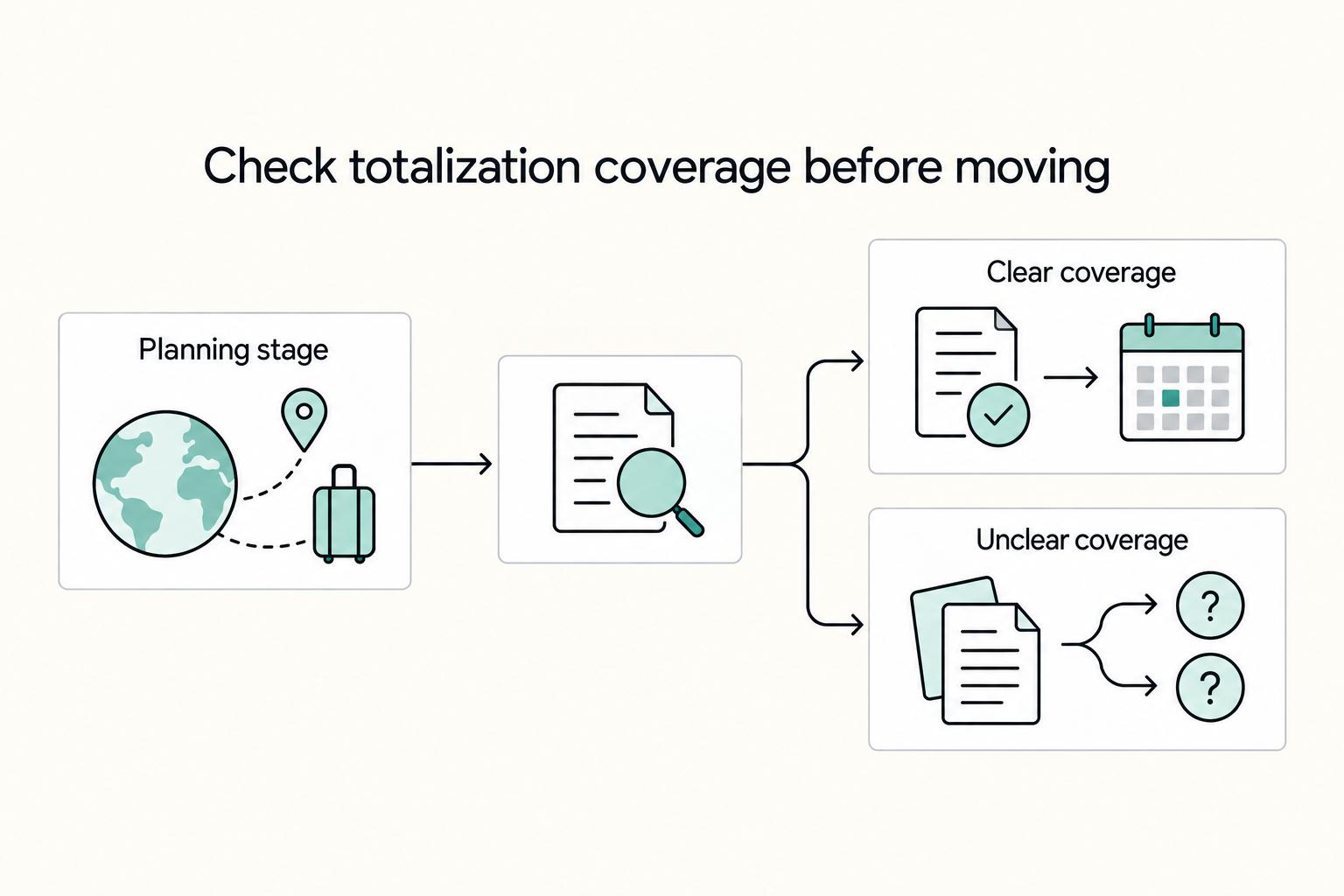
Most US expat freelancers will spend weeks researching income tax in a new country, then spend zero minutes on the one tax that can still follow them even when their US income tax bill is low or zero.
What is a 'Certificate of Coverage' for Social Security Totalization Agreements?
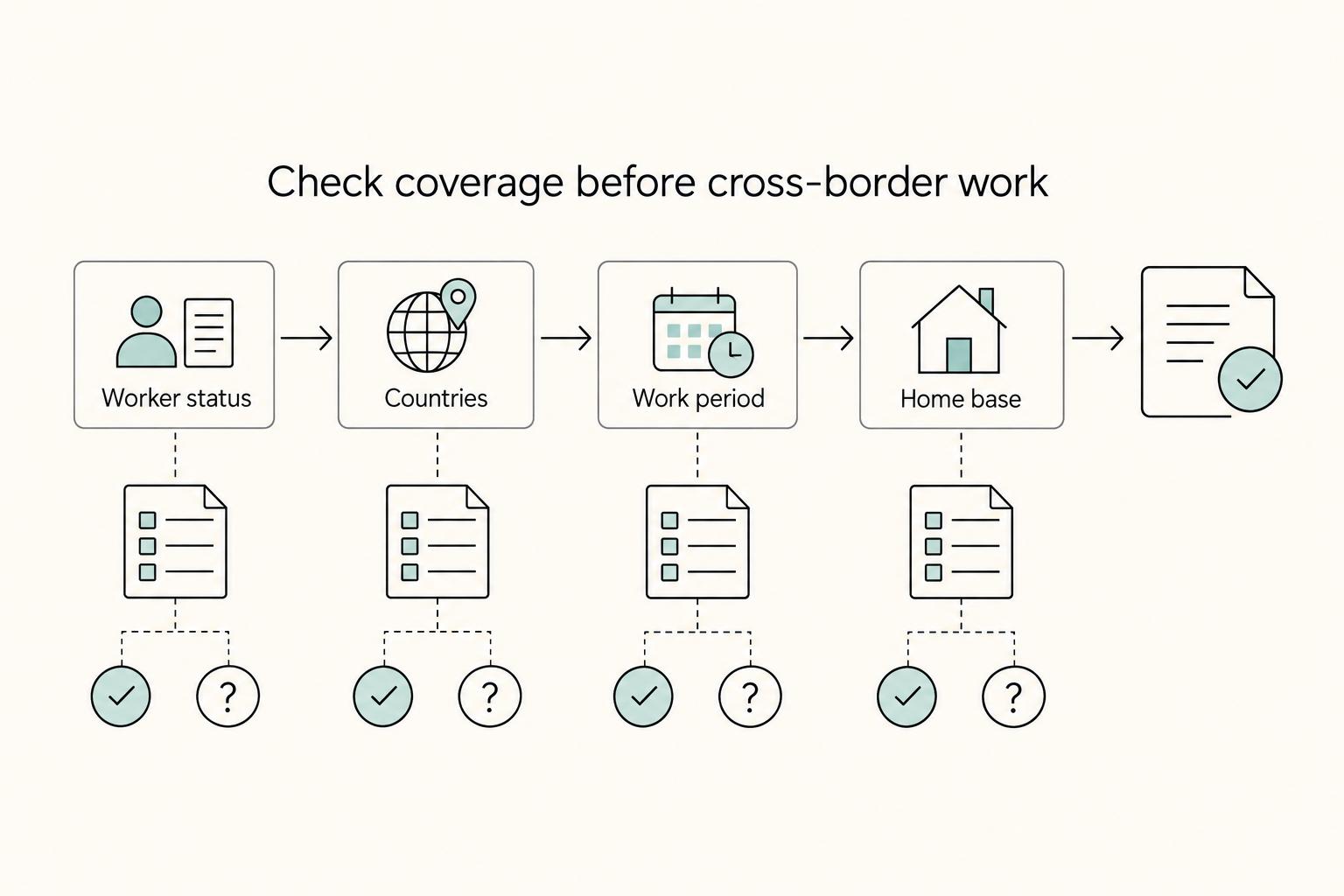
If you are dealing with **certificate of coverage social security** questions, the goal is simple: document where Social Security coverage belongs before a preventable cross-border compliance problem develops.