
Quick Answer
Start by treating outreach as a reliability practice, not a pitch sprint. To network with journalists effectively, make your LinkedIn and X profiles clearly show one expertise lane, engage with recent beat-relevant coverage before sending a DM, and offer one concrete contribution in your first note. When a reporter is on deadline, acknowledge fast, provide only what you can verify now, and give an exact follow-up time. Move detailed or sensitive exchanges to email or a call when precision matters.
Build Better Relationships with Journalists on Social Media#
Networking with journalists works best when first contact feels useful, not transactional. You are building trust over time so a reporter can recognize you, reach you quickly, and use your input under deadline pressure.
Use each channel for its strength: social platforms can help with first contact and real-time conversation, while email and phone still matter. Match your outreach to where a journalist is already active instead of assuming one channel fits everyone.
Before outreach begins, make sure a reporter can quickly understand your fit and how to reach you. Your bio, recent public interactions, and contact details should point to the same topic lane. If those signals conflict, even a good message can look uncertain.
Set guardrails before you start so your outreach stays consistent and low risk:
- Pick one topic lane you can explain in one sentence.
- Add a visible contact method, ideally an email address.
- Set a response standard for what you send now and what you send later.
Step 1: Define your value in public. Update your headline and bio so a reporter can identify your expertise quickly. Keep claims specific and avoid broad positioning that attracts the wrong requests.
Step 2: Start with useful interaction, not a direct ask. Respond to a recent post or story with relevant input. Do not open by asking for coverage or a call.
Step 3: Set response standards before opportunities appear. Media decisions can move quickly, sometimes within an hour. You do not need to be online all day. You do need a clear response pattern: acknowledge fast, share what is accurate now, and give a precise follow-up time if a full answer is pending.
Use this baseline response standard in every channel:
- Acknowledge receipt quickly.
- Confirm scope in one sentence.
- Provide what is accurate now.
- Commit to a precise follow-up time.
Treat this baseline as your reliability promise. It keeps your tone steady across public comments, DMs, and email, and gives you a consistent checklist you can run every week.
What success looks like and what to prepare first#
Success is relationship momentum, not instant coverage. The signal is a relevant contact list, recurring interactions, and useful replies from journalists whose beat overlaps your lane.
| Prep item | What to include |
|---|---|
| Define success signals | Track relevant replies, repeat interactions, and clearer fit between your expertise and journalists' current coverage |
| Build a beat entry for each contact | Record journalist interests, recent stories, and outlet context |
| Prepare your core materials | Keep a short bio, clear topic lanes, proof of expertise, and a clean contact path ready |
| Set communication boundaries early | Decide what you can discuss publicly, what needs more context, and what you should hold back |
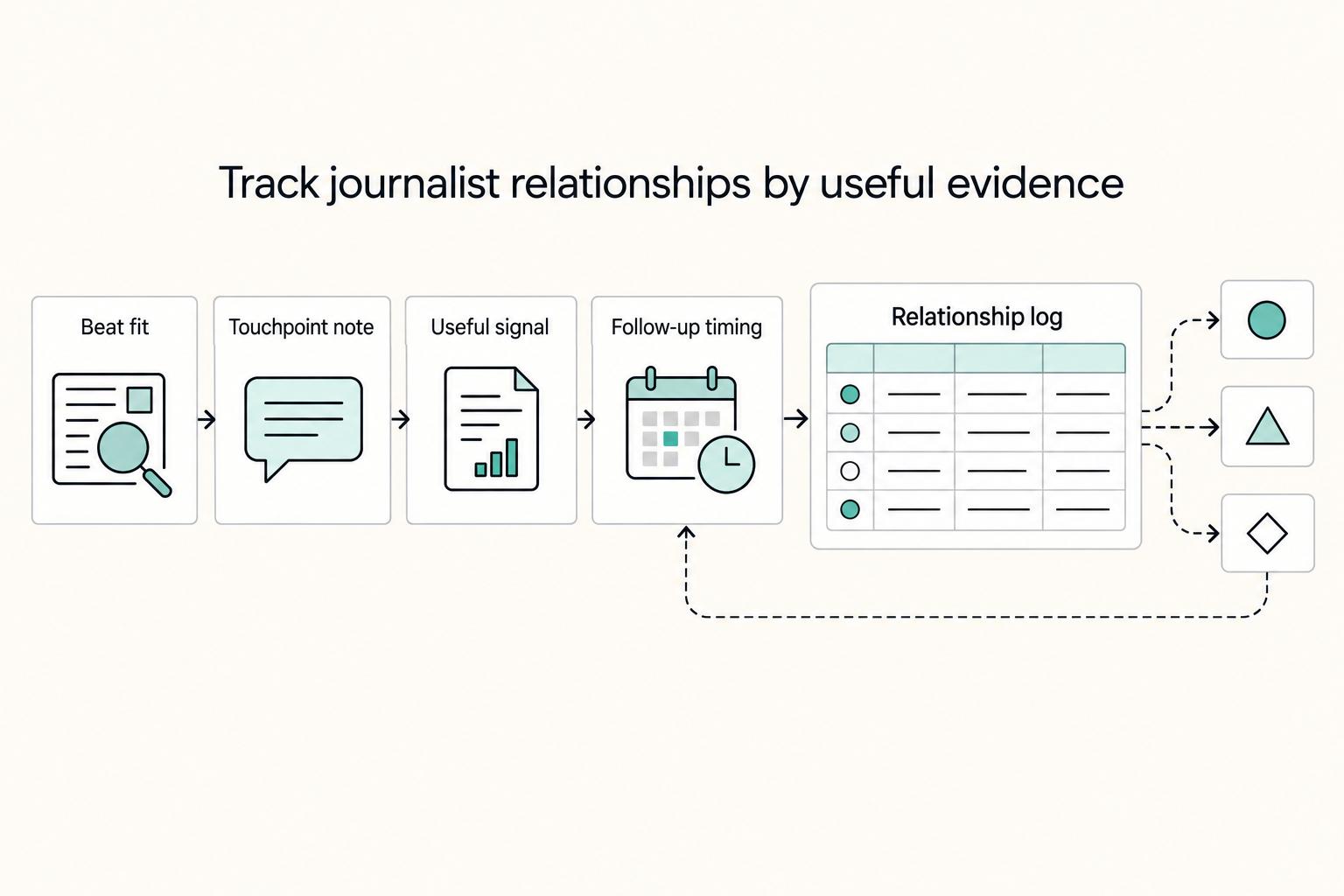
| Track next actions | Use one sheet with beat, platform, last touchpoint, next action, and notes |
Before outreach, prepare this core set:
- Define success signals. Track observable outcomes: relevant replies, repeat interactions, and clearer fit between your expertise and journalists' current coverage.
- Build a beat entry for each contact. Record journalist interests, recent stories, and outlet context so your outreach stays specific.
- Prepare your core materials. Keep a short bio, clear topic lanes, proof of expertise, and a clean contact path ready.
- Set communication boundaries early. Decide what you can discuss publicly, what needs more context, and what you should hold back.
- Track next actions. Use one sheet with beat, platform, last touchpoint, next action, and notes.
Add one practical filter before you start sending messages: define what a poor-fit contact looks like. If the journalist has no current beat overlap, no recent related story, or no clear audience fit, keep them in monitor mode until the fit changes.
Set a simple review rhythm after each outreach block. Check what got useful replies, what got silence, and what felt off-lane. That keeps your list clean and your voice credible.
Do not wait to be discovered, and do not limit your list to high-profile bylines. Strong-fit contacts also include early-career reporters, small-newsroom staff, and freelancers.
Set up LinkedIn and X so journalists can trust you in 30 seconds#
A reporter should understand your fit in one quick scan. In a crowded information feed, clear messaging cuts through noise.
- Align your core message across LinkedIn and X. State one clear expertise area and who you help, then adapt that message to each platform format.
- Pin one high-signal post on each platform. Choose a post that shows how you think and what you can contribute, not vague thought leadership.
- Make contact simple and professional. Add one clear contact path and set a realistic expectation for replies.
- Remove credibility leaks before outreach. Fix inactive links, inconsistent role descriptions, and public threads that conflict with your stated lane.
Run a quick trust check from a journalist viewpoint. Can someone tell what you cover, why your input is useful, and how to reach you without scrolling through unrelated posts? If the answer is no, fix profile clarity before you send new messages.
Consistency matters as much as polish. When your pinned content, bio language, and recent comments all support the same lane, your outreach note needs less explanation.
With these basics in place, outreach can land better because your profile already carries part of the trust load.
Build a focused media list instead of chasing every reporter#
A short, researched list can outperform a long contact dump. If your angle does not fit the beat or audience, the answer is usually no.
Track each contact in one place: beat, recent coverage, audience fit, last touchpoint, and next action. If beat fit and recent relevant work are not confirmed, that contact is not ready.
- Build a manageable first list. Prioritize quality and include only contacts whose coverage overlaps your topic.
- Validate fit before outreach. Read recent articles and confirm your angle matches what they actually cover.
- Sort by fit. Put strongest-fit contacts first and keep lower-fit names in monitor-only status.
- Update after each interaction. Once someone responds, log preferences and use them in future outreach.
A failure mode is ranking contacts by outlet prestige instead of beat fit. That can lead to broader pitches and more follow-up friction. Beat alignment should be the gate.
Another practical check is to compare your proposed angle against the journalist's recent work. If your note cannot reference a current thread in their coverage, pause and refine before sending.
Your list is ready when top-priority contacts each have clear beat fit, a recent relevant piece, and a concrete next step.
Decide where to engage first on LinkedIn or X#
Pick your first channel from observed behavior and stated preferences, not habit. Start where the journalist already engages with sources and readers.
- Audit behavior before outreach. Consider
X (Twitter)when the journalist is active in public threads. ConsiderLinkedInwhen they post professional updates and discuss in comments. Keep a simple watchlist (for example, a Twitter list) so activity checks stay current. - Use public signals to choose your first outreach channel. Check profiles and public guidance to see whether they prefer LinkedIn, X, or email for pitches, then match your first move to that preference.
- Handle LinkedIn as a gated flow. Get the connection accepted, then observe interaction patterns before deeper outreach. Keep your first note tied to the beat, and follow any public guidance on preferred pitching channel.
- Use a pilot checkpoint before scaling. Run a short pilot and review interaction quality. If quality stays low, adjust channel choice and message quality before increasing volume.
Use this quick channel rule when you are unsure:
| Signal you see | First move | Next step |
|---|---|---|
| Frequent public thread replies on X | Start with a useful public reply | If direct outreach is appropriate, use the channel they publicly prefer |
| Professional post discussion on LinkedIn | Send a brief connection request tied to beat | After acceptance, observe interactions before pitching |
| Stated preference for email pitching | Skip social pitch | Use email and keep social for light context |
This keeps attention on relationship quality, which is more reliable than high-volume outreach.
Make the first outreach message useful not transactional#
Your first note should reduce work for the journalist, not ask for attention on credit. Journalists get heavy outreach volume, and reported response rates can be very low, around 3.27%, so relevance and clarity need to be obvious immediately.
Before sending, confirm role, beat, and recent work, then draft from one concrete point of fit.
- Reference one recent piece, then add one useful input. Mention a specific recent article, post, or thread, then offer one practical contribution tied to it, such as a source type, data path, or field example you can share quickly.
- Keep the first DM tight. Keep it concise and relevant to the reporter's beat, state one specific way you can help now, and use a low-pressure close.
- Use a send-or-hold rule. If you cannot offer relevant value yet, do not send. Irrelevant or inaccurate outreach can hurt credibility, and reported blocking behavior is high for both irrelevant and incorrect outreach.
- Remove transactional phrasing. Skip broad, self-focused asks. Make one specific offer the journalist can accept or decline quickly.
A simple first-note draft pattern is context, fit, contribution, next step. If any part feels vague, hold the message and sharpen the offer.
Run one final tone check before sending. Replace abstract value claims with concrete help you can deliver now, and remove any sentence that reads like a mass pitch.
Quick quality check before sending: does the message stay concise and relevant, show clear beat fit, include one concrete offer, and have a simple next step? If not, tighten it before outreach. See also A Guide to the Schengen 90/180 Day Rule.
Stay visible weekly without becoming noise#
Stay visible by being consistently useful, not constantly active. After first outreach, treat ongoing visibility as a quality habit. A 2025 recap based on insights from over 1,500 journalists reported that 50% see PR relationships as important to their success, 36% see them as moderately or slightly important, and 14% say they are not important at all. That supports a long-term approach centered on relevance and relationship quality.
Step 1 Set a weekly cadence cap before Monday#
Use this as a working weekly cap, not a fixed rule: comment on 5 relevant posts, share 1 practical insight, and send 2 lightweight check-ins only when there is clear context. Focus on the channels where each journalist is already active, and make each touchpoint connect to a recent post, story, or stated beat.
Run a send-or-hold test before posting or messaging. If you cannot name the value in one sentence, hold it. This filters out low-signal replies and keeps your outreach credible.
Prepare your weekly queue in advance so your posting does not become reactive. Draft likely responses around current themes in your lane, then customize once a relevant story appears. That makes your timing faster without making your tone generic.
Step 2 Rotate content formats so your value stays fresh#
Avoid repeating one style. Rotate formats so your value is easy to recognize and not repetitive.
| Format | What to share | When it helps most |
|---|---|---|
| Quick analysis | A short take on a new development in your topic lane | A reporter is testing angles and needs concise context |
| Field observation | A practical pattern you have seen firsthand, without confidential details | A story needs reality checks, not theory |
| Resource pointer | A useful guide, dataset, or explainer worth saving | A recurring question appears in public threads |
Keep each format anchored to one clear point. If a post starts drifting into broad commentary, trim it back to one claim, one example, and one practical takeaway.
Step 3 Keep a usefulness ledger and plan follow-ups from evidence#
Track more than names and dates. For each touchpoint, log:
Help offeredWas it used(yes,no, orunknown)Next follow-up date
Review the ledger regularly and adjust based on what is actually useful. Over time, consistency plus restraint is what keeps you visible and welcome when you network with journalists.
When you review outcomes, separate activity from usefulness. A high number of comments means little if none led to follow-up. Keep the actions that helped a journalist progress a story, and cut the rest.
Respond fast when a journalist is on deadline#
Speed and reliability matter under deadline pressure. Treat each journalist request as urgent, acknowledge quickly, confirm what you can provide, and state your time window.
Step 1 Acknowledge quickly and lock the deadline#
Reply as soon as you see the message. If the deadline is not stated, ask for it directly, then confirm what you can deliver in that window. A practical benchmark is responding within 1-2 hours when possible, but it is not a universal rule.
If you cannot answer fully yet, send a partial commitment with a specific timestamp instead of a vague promise. For example:
- 'I can share two verified points by 2:30 p.m. and a fuller response by 4:00 p.m. Does that fit your deadline?'
Before sending the first reply, do a quick triage: clarify the story angle, state what you can verify now, and note what still needs confirmation. This keeps early speed from turning into later corrections.
Step 2 Route the conversation to the right channel#
Use a simple response flow: acknowledge the request quickly, then move to the channel where you can share precise wording and confirm timing. If you are not ready to answer immediately, ask to call back and then follow through.
If details are sensitive or easy to misquote, move to a written channel immediately and clarify your boundaries.
When you switch channels, say why in one line. A short explanation such as "Moving this to email so wording stays precise" reduces friction and keeps both sides aligned.
Step 3 Send partial but accurate input when time is tight#
If a full response is not possible before deadline, send verified points first, then state what is pending and exactly when you will follow up. Accuracy beats completeness when time is short.
If you promise a callback, follow through at the promised time. Over time, fast acknowledgment, clear scope, and precise follow-up are what make you dependable.
If your follow-up timing slips, send an updated timestamp before the original deadline passes. That single habit protects trust better than waiting until the journalist asks where the answer is.
Know when to move from social DMs to email or a call#
Use DMs for first contact only when there is a clear signal that DM outreach is welcome. If that signal is missing, use another contact route.
| Channel | Use when | Next step |
|---|---|---|
| DM | A journalist has indicated that DM outreach is acceptable and you only need short coordination | If the exchange starts requiring careful wording, attachments, or a clear approval trail, move the conversation out of DM |
| Your response needs more context, precise wording, or files | Keep one source-of-truth email thread for each story | |
| Call | Written exchanges are creating confusion or timing is tight | Send a short post-call recap by email with confirmed points, open items, and follow-up timing |
Step 1 Start with DM only when it is clearly appropriate#
Use DMs for short coordination only when a journalist has indicated that DM outreach is acceptable. Do not treat DM as the default for pitching: journalists are split on DM outreach, and some will block unsolicited DM pitching. If a journalist has not indicated DM is welcome, use another contact route.
A practical DM test is simple. If the exchange starts requiring careful wording, attachments, or a clear approval trail, consider moving the conversation out of DM.
Step 2 Move to email once details matter#
When your response needs more context, precise wording, or files, consider shifting to email so details are easier to track in one place. DMs can help with quick coordination, while email can make longer updates easier to manage. Keep one source-of-truth email thread for each story, and route detailed answers back into that same thread.
When multiple people join, restate key points in the current email thread instead of splitting details across channels. That helps reduce conflicting versions and missed caveats.
Step 3 Escalate to a call only for complexity or urgency#
If written exchanges are creating confusion or timing is tight, a call can help resolve open questions faster. Treat the call as a clarification step, not the final record. Send a short post-call recap by email with confirmed points, open items, and follow-up timing.
A call works best when you define scope before joining. State the specific issue to resolve, then close with written confirmation so nothing depends on memory.
Handle sensitive topics and legal boundaries without freezing#
When a conversation turns sensitive, slow down and set boundaries first: protect people, protect confidentiality, and avoid improvising in DMs.
Step 1 Classify the risk before sharing details#
If the exchange suggests source exposure, retaliation, or other safety risk, pause specific fact-sharing. Do not give ad hoc safety instructions in chat. Focus on reducing harm and moving the conversation toward appropriate risk-planning support.
In practice, the first move is to narrow scope. Confirm what topic can be discussed at a high level, what cannot be shared at all, and which details require a different channel.
Step 2 Lock channel boundaries early#
Use social DMs for coordination, not confidential detail. Ask only for what is needed to set up a safer follow-up, and avoid sharing names, documents, screenshots, locations, or timeline specifics.
Use this red-flag checkpoint before you send:
- No private client details.
- No confidential documents or screenshots.
- No identifying source information, including details that could reveal identity when combined.
If pressure rises in public threads, keep your response short and factual, then pause and re-establish boundaries in a more controlled follow-up before sharing details.
Step 3 State NDA limits in plain language#
If a Non-Disclosure Agreement (NDA) applies, state your limits clearly and immediately, then offer what you can discuss at a high level. NDAs are intended to preserve confidentiality, and reputational NDAs are often enforced unevenly, so uncertainty is not permission to disclose. If the scope is unclear, pause and seek legal review before continuing.
Direct language helps here. Say what you can share, what you cannot share, and when you can return with reviewed wording. Avoid hedged answers that sound like partial permission.
Step 4 Run a quick risk assessment before each follow up#
Risk cannot be eliminated in high-risk reporting contexts, but planning and risk assessment can reduce danger. Before each follow-up, confirm who needs access, what can be documented, and what must stay off record. If anyone involved says the risk is too high, pause the exchange and do not penalize that decision.
Treat each follow-up as a new decision point, not a continuation on autopilot. New participants or new details can change risk quickly, so re-check boundaries every time.
Common mistakes that damage trust and how to recover#
Trust and credibility are core to successful journalism. When a relationship is strained, use clear corrections and consistent follow-through, and avoid one-size-fits-all assumptions.
Step 1 Replace generic outreach with a precise reset#
Replace generic outreach with a reset that is specific to the journalist's current work. Send a brief note that acknowledges the mismatch, references one recent story, and offers one concrete way you can help now.
Use this reset structure:
- One ownership line for the off-target message.
- One sentence connecting your expertise to the journalist's current beat.
- One specific value add with realistic timing.
If there is no response, wait until you have a genuinely relevant update.
If you do get a reply, keep the second message focused on delivery, not persuasion. Provide the promised input quickly and avoid adding unrelated asks.
Step 2 Reopen silent threads with new context#
If a thread goes quiet, reopen with context from the journalist's latest work and one useful follow-up tied to that topic, then close with a low-pressure next step.
Avoid "just checking in" messages without new information.
A good reopening note answers one practical question: what changed since your last message that is useful right now. If you cannot answer that, hold the follow-up.
Step 3 Narrow availability promises and keep them#
Set a response window you can reliably meet, and keep it consistent before expanding what you offer.
Trust in media has been under pressure for years. In 2016, confidence in media was cited at 32%, and that figure rose by only 2% over the following six years.
When capacity is tight, reduce promise scope rather than extend uncertainty. A smaller accurate response can protect trust better than a broad response that arrives late.
Step 4 De-escalate public friction before it becomes reputation damage#
Public conflict can escalate into credibility and reputation harm, especially in polarized environments where smear campaigns are more likely to gain attention. Keep in-thread replies factual, brief, and centered on public-interest communication rather than partisan framing.
If detailed back-and-forth is needed, consider moving detail to a private channel while keeping the core correction visible. Assess how far the claim spread and how serious the damage is before deciding how much response effort to invest.
If a correction is required, publish the clearest corrected point first and avoid unnecessary repetition of the original claim language.
Your 30 day checklist to start networking with journalists#
Use this month as a relevance sprint: prioritize beat fit, timely angles, and consistent follow-through over volume.
| Phase | Focus | Key detail |
|---|---|---|
| Week 1 | Optimize profiles and build a fresh target list | Every Tier 1 contact has a current beat note and a clear "why now" angle |
| Week 2 | Start public engagement and log every touchpoint | Note what you offered and whether the journalist used it |
| Week 3 | Send focused first messages to Tier 1 contacts | If response quality is weak, revise message fit first, then revise channel choice, then retest |
| Week 4 | Review outcomes and expand carefully to Tier 2 | Expand to Tier 2 only after Tier 1 outreach shows repeatable fit |
| Ongoing | Refresh, measure, and compound trust | Maintain one current view of contact status so you can act quickly when a live story opens in your lane |
- Week 1: optimize profiles and build a fresh target list.
Make your topic lane clear on your primary public profiles, and keep your contact path easy to find. Build a campaign-specific list for this month instead of relying on a static master list. For each Tier 1 contact, log beat, outlet, and one recent story so your outreach reflects current coverage. Verification checkpoint: every Tier 1 contact has a current beat note and a clear "why now" angle. Execution detail: review your own profile and tracker together, then remove any contact where you cannot state beat fit in plain language.
- Week 2: start public engagement and log every touchpoint.
Engage before you ask by adding useful context to relevant stories and sharing practical input in your lane. Track every interaction in one place so you can see what is working. Verification checkpoint: your tracker shows value-first interactions, not just requests. Execution detail: after each touchpoint, note what you offered and whether the journalist used it. Keep follow-up notes brief and specific.
- Week 3: send focused first messages to Tier 1 contacts.
Keep first messages short, specific, and centered on beat fit and why the idea matters now. Skip broad copy-paste outreach; crowded inboxes reward relevance. Evaluate response quality, not just count; clarifying follow-ups can be a stronger signal than generic replies. Failure mode to avoid: treating journalists as one-time instruments instead of long-term contacts. Execution detail: if response quality is weak, revise message fit first, then revise channel choice, then retest.
- Week 4: review outcomes and expand carefully to Tier 2.
Review results by channel, topic, and message type, then keep what led to concrete follow-up. Expand to Tier 2 only after Tier 1 outreach shows repeatable fit. In crowded launch periods, attention is limited, and you may be competing with 49+ other companies after a major event, so follow-up matters. Verification checkpoint: write three carry-forward rules for list quality, message quality, and follow-up timing. Execution detail: promote only the patterns that produced useful exchanges, and retire patterns that generated silence or off-topic replies.
- Ongoing: refresh, measure, and compound trust.
Refresh your list regularly because beats and roles change. Keep response commitments, correct errors quickly, and keep notes current. Run a deeper review on a regular cadence to remove stale contacts and weak angles. This will not guarantee coverage, but it improves relevance and relationship quality over time. Execution detail: maintain one current view of contact status so you can act quickly when a live story opens in your lane.
Related: How to Write an Arbitration Clause for a Freelance Contract.
Frequently Asked Questions
How do you network with journalists without sounding transactional?
Start with relevance, not requests. Reference a recent story, connect it to the journalist's beat, and offer one concrete way you can help now. Strong media relationships are built over time, so consistent follow-through matters more than one perfect pitch. A practical test is whether your note helps the journalist make progress immediately. If it does not, revise before you send.
What should you do before reaching out to a journalist on social media?
Review the reporter's beat and recent coverage first, then prioritize targeted outreach instead of broad outreach. Keep your contact details, including email, visible on your site and social profiles so reporters can reach you quickly. Prepare a short, specific explanation of how your expertise fits their current coverage.
How quickly should you respond when a reporter contacts you?
Respond quickly, even if your first reply is just an acknowledgment and a clear follow-up time. For breaking news, some print reporters may need sources within an hour. Fast responses can keep you in consideration, but they do not guarantee coverage, so share verified points first and mark what is still pending.
What is the best first message to send on LinkedIn or X?
There is no universal best message because reporter preferences differ. Keep it brief, personalized to the journalist's audience, and centered on one relevant contribution you can make. Avoid generic intros that could apply to anyone, and adapt your outreach to the reporter's preferences.
How do you stay on a journalist's radar without spamming?
Stay visible between pitches by engaging with relevant work and sharing useful, timely input. In one PRSA-cited resource, journalists reported blocking outreach for irrelevance (76%) and incorrect information (62%). The practical takeaway is simple: send fewer, better messages that are clearly relevant and accurate.
When should you move from social DMs to email or a call?
Move channels based on reporter preference and urgency. If the exchange needs clearer detail or faster coordination, ask whether email or a call is better for them. Keep communication practical and clear, and avoid implying absolute confidentiality in every context.
Try a related tool
Researched and edited by the Gruv editorial team. Gruv builds cross-border billing, payouts, and finance-operations software for global businesses.
Sources
Includes 5 external sources outside the trusted-domain allowlist.
- foreignpress.org/journalism-resources/how-can-journalists-bui...external
- indivisible.org/resource/tips-journalists-how-build-great-co...external
- jobs.prsa.org/career-resources/finding-talent-10/media-rel...external
- rethinkmedia.org/blog/some-best-ways-engage-and-build-relatio...external
- spj.org/networking-the-key-to-staying-happy-and-fed-...external
Educational content only. Not legal, tax, or financial advice.
Related Posts

How to Manage Your Personal Brand as a Freelancer
Your brand is not a mood board. Think of it as the experience people have of your work: the promise you make, the proof you can show, and the way you present yourself across client touchpoints. Get that clear first, and your fit is easier to read from profile to proposal.

How to Write an Arbitration Clause for a Freelance Contract
**Build a simple dispute playbook so both sides know what happens next. Use it when conflict starts.** When you run a solo business, you cannot absorb unpaid work, vague terms, or open-ended civil court uncertainty. You are the CEO of a business-of-one, which means your contracts need to function like systems, not wishful thinking.
A Guide to the Schengen 90/180 Day Rule
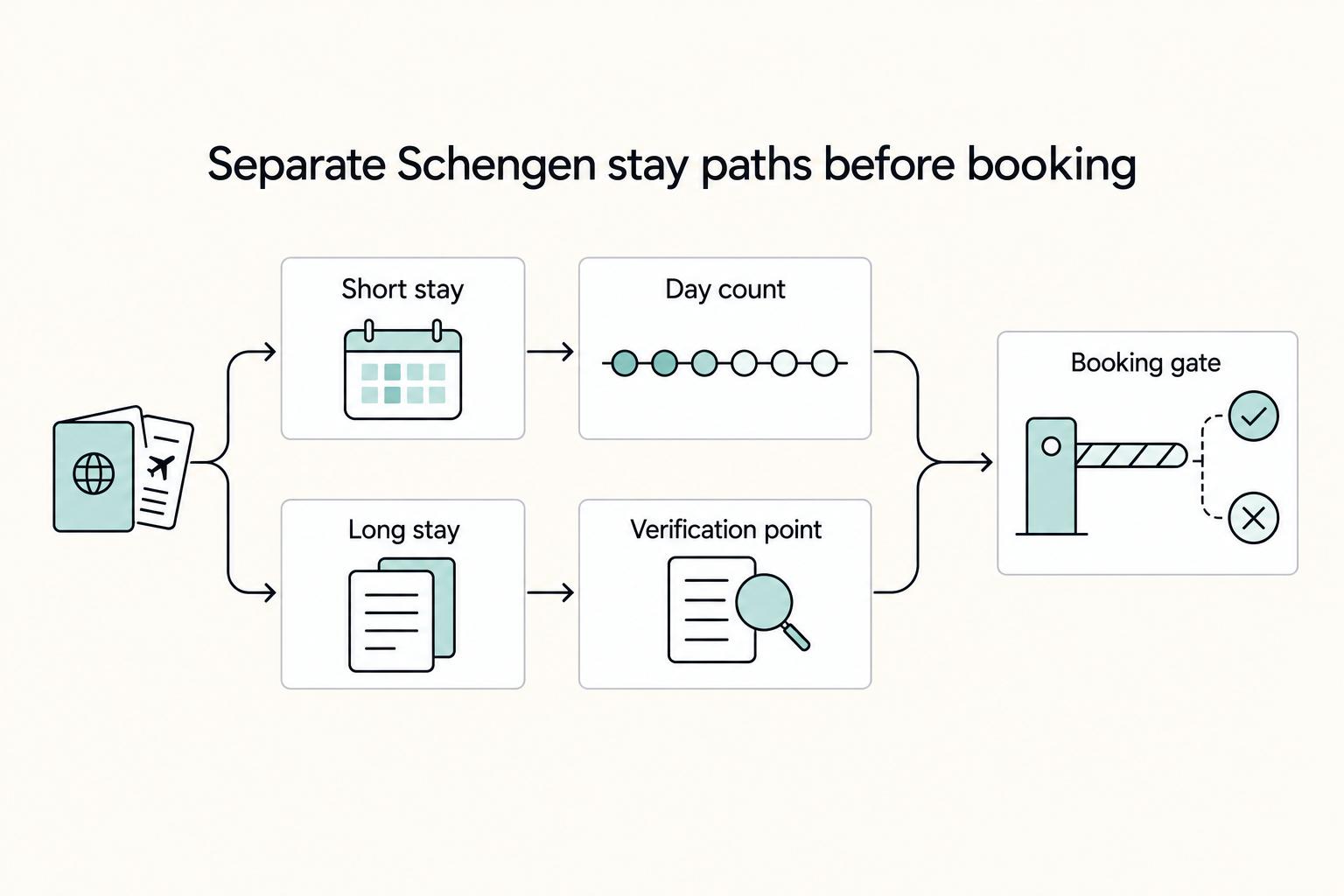
**Treat Schengen short-stay limits as an operating constraint, then run every movement decision through one repeatable system.** If you treat Europe travel like a chain of bookings, you create avoidable risk. Run it like operations, and you protect flexibility, reduce stress, and keep your visa compliance posture clean across the Schengen Area.