
Quick Answer
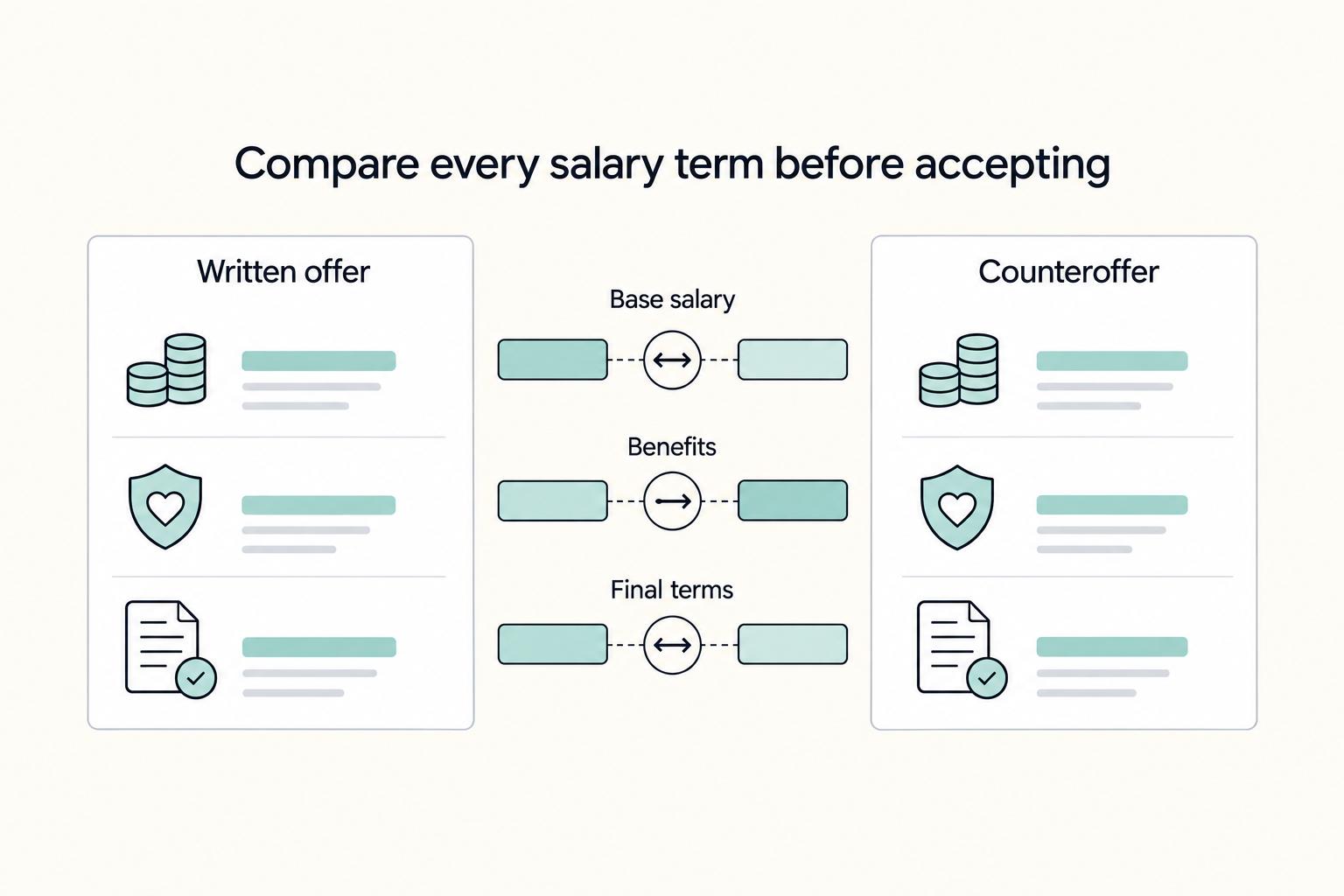
Start by negotiating only after you receive a written offer, then treat the process like document review. Build a defensible salary range, send one clear counteroffer in writing, and verify every agreed change appears in the updated Offer letter and Employment contract. If base pay is fixed, negotiate one or two high-value package terms and confirm them in writing. Accept only when compensation, start timing, and legal clauses align across final documents.
You are negotiating your first salary like a contract, not a favor#
Negotiate your first salary after the written offer arrives, and treat it like contract review, not a test of personality. Your job is not to win a debate. Your job is to make sure the pay, title, start date, benefits, and any special terms you discussed actually appear in the documents you will sign.
That framing matters. Asking for better terms is a normal professional step when you have a legitimate basis for the ask. It is not a personal challenge to the recruiter or hiring manager. If you approach it like a favor they might grant, you can end up asking too vaguely and losing track of what was actually agreed.
Before you start#
Wait until you have the Offer letter in hand. That is the practical moment to negotiate, not the interview stage. Once you have a written offer, you are no longer reacting to hypotheticals. You are reviewing actual terms and deciding whether the package works for you.
If you are moving from freelance or consulting work into employment, this shift can matter even more. In employment, clear Contract terms reduce ambiguity. "We can revisit that later" or "HR will sort it out" is not the same as seeing the term in the offer and then in the Employment contract.
Reset the objective before you reply#
You are trying to improve your Compensation package while preserving trust and momentum. For many first negotiations, that means one focused counter, not a long list of demands.
Use a simple checkpoint: can you explain your ask in one or two business sentences? Your number should tie to a researched salary range and the actual role. Cornell's guidance supports grounding your range in national salary survey data and, for a first job, being prepared for the low end of that researched range.
Treat every discussed item as a term that needs confirmation#
Salary is only one line. If the employer says yes on a call to a higher Base salary, a signing bonus, or a different start date, your next move is to get the updated offer in writing.
This is where first-time candidates can slip. A practical risk is drift: you remember one number, the recruiter remembers another, and the final documents leave out a point you thought was settled.
Define success as document match, not conversational progress#
The outcome you want is a signed Offer letter and Employment contract that reflect what was discussed, with no missing assumptions.
Before you accept, verify the final version against your notes: compensation, benefits, effective date, title, and any special terms you negotiated. If something important is still verbal, pause. Momentum helps, but clarity protects you. You might also find this useful: How to Write Your First Resume.
What to prepare before you negotiate#
Prepare before you reply so your ask is consistent, credible, and anchored to the written Offer letter, not memory.
| Step | Main action | Grounded details |
|---|---|---|
| 1 | Build your evidence pack | Start with a researched Salary range and add two or three points showing where you fit, such as skills, experience, accomplishments, internship outcomes, client work, certifications, or directly relevant scope |
| 2 | Pull the offer into one page | Summarize the offered Base salary, Benefits package, and any terms that are explicitly documented, including Effective date, Currency, and Deductions where listed |
| 3 | Pre-write fallback positions | Decide your fallback asks before the call; if salary does not move, prioritize non-salary terms such as equity, stock options, or extra vacation days |
| 4 | Narrow the ask when the role looks constrained | If the role appears tightly banded or rigidly Entry-level, make one focused, well-supported ask and set a fast accept/decline rule |
Step 1: Build your evidence pack. Start with a researched Salary range, then add two or three points showing where you fit in that range. Tie your number to role pay and your skills, experience, and accomplishments. For a first role, that can include internship outcomes, client work, certifications, or directly relevant scope.
Step 2: Pull the offer into one page. Summarize the offered Base salary, Benefits package, and any terms that are explicitly documented, including Effective date, Currency, and Deductions where listed. This helps you catch gaps early instead of negotiating only the headline number.
Step 3: Pre-write your fallback positions. Decide your fallback asks before the call so you do not improvise under pressure. If salary does not move, prioritize which non-salary terms you will ask for first, such as equity, stock options, or extra vacation days.
Step 4: Narrow the ask when the role looks constrained. If the role appears tightly banded or rigidly Entry-level, make one focused, well-supported ask and set a fast accept/decline rule. In constrained roles, a clear and modest request usually works better than trying to renegotiate every term. This pairs well with our guide on How to Find Your First Freelance Client.
Set your number ladder before you reply#
Set your ladder before you respond: one anchored Salary range, three decision points, and one consistent script. This keeps your Counteroffer credible and prevents you from negotiating against yourself.
Build three numbers from one grounded range#
Build your ladder from a researched Salary range, then set your minimum desired salary before you start the conversation.
| Ask | Rationale | Evidence | Fallback |
|---|---|---|---|
| Ideal ask | Strongest defensible number within your researched range for this role and scope | Market range, relevant skills, internship or project results, certifications, overlap with job duties | Move to your acceptable midpoint |
| Acceptable midpoint | Number you can accept if the rest of the Compensation package is strong | Same range data plus package value from the Offer letter | If base pay is fixed, shift to benefits or other perks |
| Walk-away floor | Minimum desired salary, or minimum total package you can responsibly accept | Your range, priorities, and written pay/benefit terms | If the offer stays below this after tradeoffs, decline respectfully |
Quick check: if you cannot explain each number in one or two sentences, tighten the logic before you reply.
Write your ladder into a short note#
Put the ladder into a short note before replying to the Job offer so your logic stays the same across email and calls.
Use the ideal ask to open when your evidence is strong. Use the acceptable midpoint to keep momentum if they flag budget limits. Keep your floor private and treat it as a decision line, not a debate point.
Do not answer instantly just because the offer arrived. Take the time to confirm your three numbers still match the written Offer letter, not just a verbal summary.
Shift to high-value terms if the base salary cannot move#
If the Base salary cannot move, shift to the highest-value items in the Benefits package and negotiate those directly.
Pick one or two priority terms, ask clearly, and request the updated total package in writing. Do not assume "salary is final" means every other term is final.
A useful line: if the Base salary is fixed, I would like to explore flexibility elsewhere in the compensation package, and I would appreciate updated terms in writing.
Re-check your floor after every employer response#
After each response, re-check your floor against the current Payment terms, Currency, and Deductions.
Even when headline pay is unchanged, written term changes can change the practical value of the offer. Keep one ladder, update it only when written terms change, and let your floor drive the final yes-or-no decision. For a deeper pricing lens, see How to Calculate Your Billable Rate as a Freelancer.
Choose your leverage based on offer type and constraints#
Your leverage should match the offer structure, and the real negotiation should start only after you receive the Offer letter in writing.
| Offer type | Likely constraint | Best focus |
|---|---|---|
| Private-sector Job offer | Appears flexible | Lead with the value you bring, connect your ask to your researched Salary range, and make a clear, defensible request |
| Federal Government job | It can be difficult to negotiate a higher GS level, and each grade has 10 steps | Ask whether step placement is flexible, focus on fit, and review non-salary terms before deciding |
| Entry-level role, especially in cohort hiring | Offers are often standardized and room to negotiate may be limited | Ask for one prioritized concession; a practical flex point is start timing |
Match your ask to the offer structure#
If a private-sector Job offer appears flexible, lead with the value you bring and connect your ask to your researched Salary range. Keep the case specific to role fit and scope, then make a clear, defensible request.
For a federal Government job, treat leverage differently. It can be difficult to negotiate a higher GS level, while step placement may be more flexible, and each grade has 10 steps. If grade movement is constrained, focus on fit, ask whether step placement is flexible, and review non-salary terms before deciding.
Narrow the ask when leverage is limited#
In an Entry-level role, especially in cohort hiring, offers are often standardized and room to negotiate may be limited. Instead of reopening the full Compensation package, ask for one prioritized concession.
A practical flex point is start timing. If that is not your priority, make one focused non-salary request and keep it tight.
Use the Offer letter as your negotiation gate#
Do not run the core negotiation during early interviews. Wait for the written Offer letter, then verify that key terms are explicit: Base salary, Benefits package, and Effective date (start date).
If those details are missing or compensation components stay vague, pause acceptance and ask for an updated written offer. That is not automatic bad faith, but it is a risk signal worth resolving before you commit.
For a step-by-step walkthrough, see How to Hire Your First Salesperson.
Make the counteroffer in writing and control tone#
Make your counteroffer in writing once you have the written offer. A concise, courteous email keeps your ask clear and gives both sides a clean reference point for the final Offer letter.
Use request language, not pressure#
A Counteroffer letter can be an email, and the most effective tone is professional, concise, and courteous. Ask, explore, and propose. Avoid demands or ultimatums.
Use plain request language:
- "I'd like to discuss the starting salary."
- "I'd like to propose..."
- "Is there flexibility on the Base salary?"
Before sending, confirm your revised ask still matches the Salary range, role scope, and evidence you already prepared.
Follow a clear sequence in the email#
Use this order so your message is easy to review and respond to:
- Thank them for the Job offer.
- Restate excitement about the role and team.
- State your revised Base salary ask in one clear sentence.
- Give brief support (market range, role scope, relevant results).
- Invite discussion.
Keep support tight. A short, focused case is usually stronger than a long list of points.
Send a same-day recap after calls#
If you negotiate by phone or video, send a same-day recap email. It is not a legal requirement, but it helps keep verbal points aligned with the written offer process.
Keep the recap short: thank them, summarize any revised Base salary discussed, and note what is unchanged or still pending confirmation. If they say it is their final offer, move to verification and confirm the Benefits package, Effective date, and title before deciding. We covered this in detail in How to Manage Your First Paycheck After Graduation.
Negotiate the full package, not salary alone#
Do not decide on Base salary alone; compare the full Compensation package line by line before you accept. A higher headline number can still be a weaker Job offer once bonus terms, Benefits package, Payment terms, Currency, and Deductions are clear.
Build one side by side comparison#
Use the written Offer letter, your Counteroffer, and any recap notes in one view so you are not deciding from memory. If a term is vague, do not count it yet. Ask for the written rule, timing, or condition.
| Package item | Offer A | Your counteroffer | Final accepted terms |
|---|---|---|---|
| Base salary | |||
| Bonus logic and eligibility | |||
| Benefits package | |||
| Payment terms and pay frequency | |||
| Currency and deductions visibility |
Trade lower salary only for documented value#
Accept a slightly lower Base salary only if the total package is stronger and the growth terms are documented. If the tradeoff is real, it should be written into the updated terms, not left as a verbal promise.
Check cross-border pay mechanics before you say yes#
For cross-border roles, verify which Currency controls payroll, whether any conversion assumptions apply, and what pay looks like after Deductions. You do not need a full tax model, but you do need enough visibility to understand likely take-home pay and payment timing.
When comparing across locations, ground your numbers in market research and account for cost-of-living differences. Also refresh older market inputs before deciding. If payroll details are unclear, ask who has decision rights on payroll or finance approval and wait for written confirmation before you commit. Need the full breakdown? Read How to Choose Your First International Market for Expansion.
Lock down legal and risk terms before you accept#
Legal terms are not boilerplate: if Termination, liability, or dispute language is vague, pause acceptance and request revisions before you accept the Job offer.
Read the exit terms like you might actually need them#
Start with Termination, notice, and final-pay handling. Confirm who can end employment, whether any notice window is stated, and how final compensation is handled. Do not rely on verbal explanations when the documents are unclear.
Your baseline check is simple: the final Offer letter and Employment contract should align on core employment terms, including compensation, benefits, and start date. If end-of-employment handling is missing or unclear, treat it as an unresolved term.
For final pay, do not assume same-day payout. Federal law in the US does not require an immediate final paycheck in every case, and state rules can differ. If timing is not clear in writing, ask HR or payroll for the applicable rule and get that answer by email before signing.
If the contract points to "company policy," ask to see the controlling policy or a written summary. If they cannot provide either, treat the term as unresolved.
Compare liability clauses together, not one by one#
Read Indemnification and Limitation of Liability together, because the liability cap can materially change your real exposure under indemnity terms.
Employment agreements are commonly drafted by the employer's lawyers, so one-sided language can appear. A practical red flag is broad language that makes you responsible for losses, claims, or legal costs without clear triggers or limits.
| Clause | What to verify | Red flag |
|---|---|---|
| Indemnification | What triggers it, whose claims it covers, and whether it is tied to your acts | Open-ended duty to cover losses or claims with no clear limit |
| Limitation of Liability | Whether the contract caps your financial exposure | No cap, or a cap that excludes the claims most likely to be asserted |
| Termination | Who can end employment, under what conditions, and whether notice is addressed | Vague reference to policy with no attached policy or summary |
| Final-pay handling | How final wages or earned amounts are paid | Silence on payout handling plus no written HR clarification |
If broad indemnity language appears, ask what real scenarios it is meant to cover. If the scope still looks wider than the role justifies, get an employment lawyer review before signing.
Check where and how disputes would happen#
Verify Governing Law, Jurisdiction, and Dispute Resolution. Governing Law sets which law applies in a dispute, and Jurisdiction identifies which courts can hear it. If arbitration is required, check whether the agreement also includes a jury-trial waiver.
Use a practical decision rule: the forum should be workable for your location and finances. A distant court or arbitration venue can make enforcement harder even when your claim is valid.
Before signing, run one final consistency check across the final Offer letter, any updated email recap, and the Employment contract. If legal clauses are missing, inconsistent, or too vague to explain clearly, request a revised version before you accept. Related: How to Write a Contract for a UK-Based Client.
If talks stall, recover without damaging the relationship#
When pay discussions stop moving, protect the relationship by narrowing the ask, getting changes in writing, and closing quickly if the fit is not right.
| Situation | Next move | Written anchor or timing |
|---|---|---|
| Base salary is final | Ask for one concrete change in the Benefits package and one clear timing term tied to the Effective date | Ask for a revised Offer letter instead of relying on verbal promises |
| They are still working on it | Reply promptly, confirm their deadline, and if needed ask for 24 hours or a few days to decide | Set a professional cutoff and tie your decision to receiving the updated Offer letter |
| You decide to decline | Send a short written decline that is appreciative and focused on fit, not frustration | Do it within 24 to 48 hours |
Step 1: Pivot to one specific package term and one timing term. If base salary is final, stop reopening the whole package. Ask for one concrete change in the Benefits package and one clear timing term tied to the Effective date. If they agree, ask for a revised Offer letter instead of relying on verbal promises.
Step 2: Set a clear response window and work from documents. Reply promptly, confirm their deadline, and if needed ask for 24 hours or a few days to decide. If they are still "working on it," set a professional cutoff and tie your decision to receiving the updated Offer letter. If the document does not change, treat the terms as unchanged.
Step 3: If you decline, do it quickly and professionally. Once you decide, send a short written decline within 24 to 48 hours. Keep the message appreciative and focused on fit, not frustration, and thank them for the Job offer without rearguing terms.
Keep each version of your Counteroffer, revised Offer letter, and final Contract terms together with the dated email thread so you can verify exactly what changed.
Copy-and-paste final checklist before you say yes#
Before you accept, make sure your Salary range, Counteroffer, Compensation package, Offer letter, and Employment contract all reflect the same deal in writing.
- Validate your number against a real range.
- I validated my target against a real
Salary rangefor role, level, and location. - I set a clear target and a walk-away floor.
- I can explain my ask in one or two calm, specific sentences.
- Make sure the
Counterofferexists in writing.
- I sent a written
Counteroffer(or a written recap after a call). - I stated the revised ask and the reason.
- I saved the employer's written response, including "final offer" responses.
- Compare the full
Compensation package, not onlyBase salary.
- I compared
Base salary, bonus/incentive terms, benefits, title, and growth path. - I know which one or two terms matter most to me.
- I am not trading base pay unless the total package tradeoff is clear and documented.
- Confirm money details before you sign.
- I confirmed
Currency,Payment terms,Deductions, andEffective date. - I know how deductions could affect take-home pay.
- I know when the role starts and when first pay should happen.
- Review core contract terms before acceptance.
- I reviewed
Termination,Limitation of Liability,Indemnification,Governing Law,Jurisdiction, andDispute Resolution. - I flagged anything unclear, one-sided, or missing.
- I asked questions before signing.
- Accept only after final documents match the agreed terms.
- The final
Offer letterandEmployment contractmatch each other. - Every agreed term appears in writing, including non-salary concessions.
- I accepted only after reviewing the final versions line by line.
Related reading: How to Finance Your First Rental Property. Want a quick next step for "how to negotiate your first salary"? Try the SOW generator.
Frequently Asked Questions
Should you negotiate your first salary or just accept the first number?
If you have a legitimate reason and the offer is not already at or above your target, ask. Cornell notes it is not impolite or unprofessional to negotiate, and SNHU says many employers expect it, so the first number may not be final. If this is an entry-level role with limited flexibility and the package already clears your floor, make one narrow ask or accept cleanly.
How much should you counter without looking unrealistic?
Anchor your ask to a real salary range based on national salary surveys, not a random percentage. Cornell’s guidance is especially useful here: propose a range you can defend, and for a first job be prepared to accept the low end of that range. If you cannot explain how you got the number in one or two sentences, your counter is probably too loose.
What is the best first sentence when you ask for more?
Start with appreciation and one concrete ask. For example: “Thank you for the offer. I’m excited about the role, and based on the salary range I found for similar positions, would you be open to discussing a base salary of X?” That opening works because it is clear, confident, and respectful, which is the tone SNHU recommends.
When is the right moment to negotiate during hiring?
A common moment is after you have the job offer and before you accept. If salary alignment is unclear earlier in the process, Cornell suggests asking, “What is the range you’re considering at this time for the position?” Ask early enough to understand the range, but do not wait until after you say yes.
What tone gets better outcomes in a first negotiation?
Use request language, not pressure. A good message sounds clear, confident, and respectful: you are asking them to review terms, not challenging their judgment. The failure mode is sounding either apologetic or combative, because both can make it harder to discuss the compensation package on the merits.
What should you do if you have little leverage in an entry-level role?
Ask for one prioritized improvement, not a broad rewrite of the whole package. If the salary is fair or the base salary is fixed, Cornell advises negotiating other issues, such as a signing bonus. As a practical step, ask the employer to confirm any agreed change in writing.
What must be confirmed in writing before you accept?
Specific documentation practices vary by employer, but ask for any agreed compensation terms or negotiated items to appear in the written offer before you accept. If something was discussed but is not reflected in the written terms, ask for clarification before deciding.
Try a related tool
Researched and edited by the Gruv editorial team. Gruv builds cross-border billing, payouts, and finance-operations software for global businesses.
Sources
- colorado.edu/graduateschool/services-resources/career-res...trusted
- cso.gse.harvard.edu/resource/checklistpdftrusted
- customcareer.miami.edu/blog/2025/03/27/how-to-negotiate-a-severance...trusted
- dol.gov/general/topic/wages/lastpaychecktrusted
- dol.ny.gov/salary-negotiation-guidetrusted
- gradschool.cornell.edu/career-and-professional-development/pathways...trusted
- hbs.edu/ris/Publication%20Files/10-050_0c58b9fb-4265...trusted
- law.berkeley.edu/article/salary-negotiations-updated-8222013trusted
Educational content only. Not legal, tax, or financial advice.
Related Posts
How to Calculate a Freelance Rate You Can Actually Get Paid On
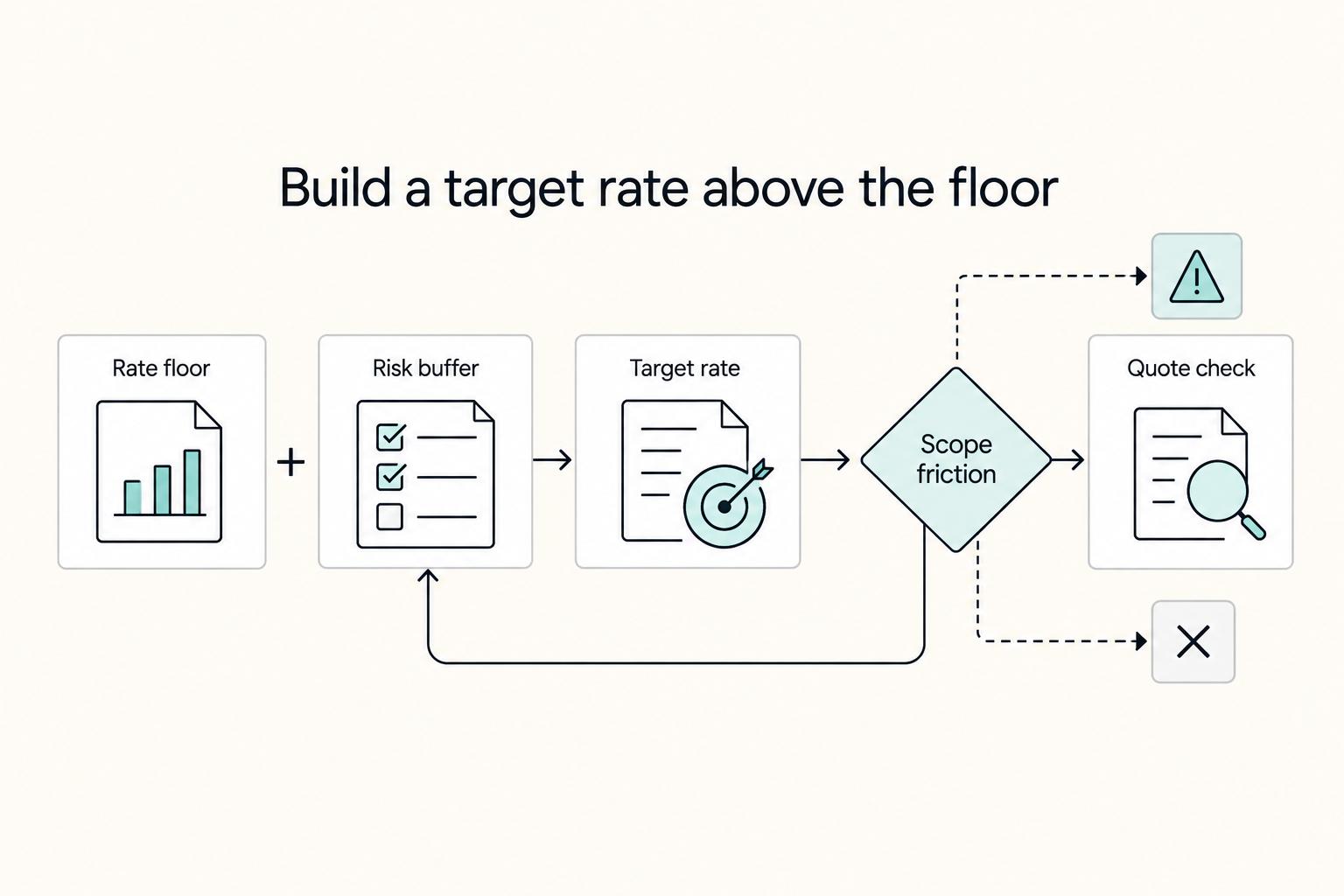
A workable rate is not the neat number a calculator produces. It is the number that still works after you account for real billable capacity, non-client time, scope drift, and the gap between sending an invoice and receiving cleared cash. Start with hourly math even if you do not plan to bill hourly, then turn that number into a quote with clear `payment terms`.
How to Write a Contract for a UK-Based Client
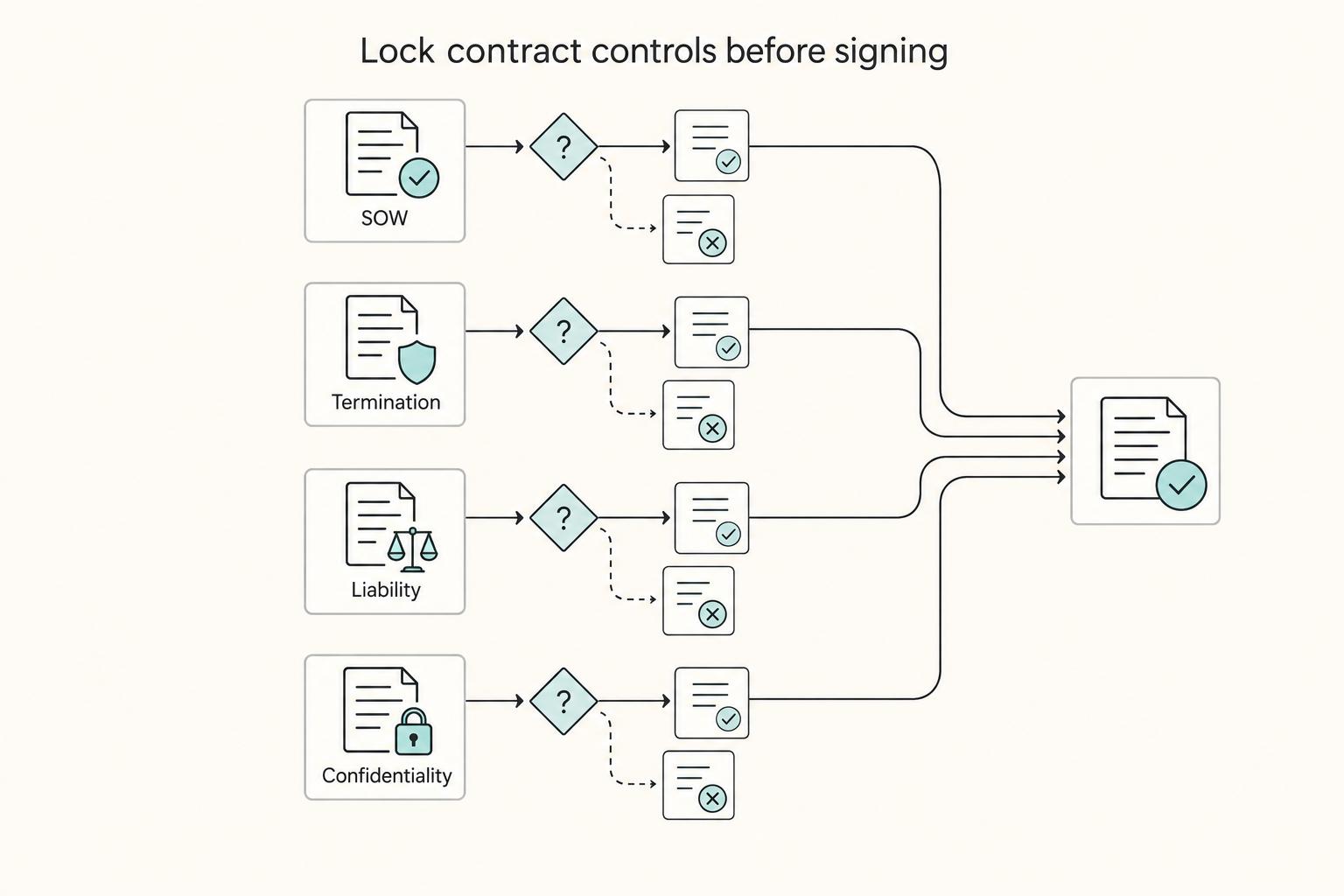
Use this as your pre-signature risk screen. Lock down scope, exit, liability, and confidentiality before you sign. If any of those are vague, they can become dispute points later.

The Freelance Payment Penalty: A Modeled Audit of Platform Fees, FX Spreads, and Payout Delays
The money rarely disappears through a single, easy-to-spot fee. The real loss is stacked. A marketplace takes its commission, a processor adds a charge for international cards, a bank or payment company converts the currency at a spread, a platform holds the funds before release, and a wire sheds a little to intermediaries on the way in. Each layer looks defensible on its own, but the worker feels the combined result as a smaller deposit and a later payday.