
Quick Answer
Yes, you can negotiate a long-term Airbnb stay, but do it only when losing that listing will not derail your move. Send one clear ask in the Airbnb Contact Host thread with exact dates, guest count, and booking readiness. Then confirm any revision appears in checkout before payment. Set a personal book-by cutoff in advance and keep one usable backup open. If replies become vague, late, or off-platform, stop and book the backup.
You're not trying to "haggle" - you're trying to lock housing with zero relocation drama#
Your first job is not to squeeze out a discount. It is to secure a workable place on the right dates without turning your move into a waiting game. If you want to negotiate Airbnb long-term stay pricing, treat it like a housing decision with deadlines, not a casual back-and-forth.
There is no reliable universal rule here, and most visible discussion is anecdotal. That matters because the downside is not just paying a little more. The bigger risk is losing the listing, burning days on slow replies, and ending up with a weaker backup.
| Approach | What you optimize for | Decision speed | Downside risk |
|---|---|---|---|
| Price-first haggling | Maximum reduction | Slow, because you keep the thread open | Higher risk of losing the place while you push |
| Certainty-first booking | Confirmed housing at an acceptable total | Faster, because you decide by a cutoff | Lower risk of relocation disruption |
| Passive waiting | Maybe a better answer later | Slowest | Highest risk if the calendar changes or replies stall |
Qualify the listing before you ask#
First decide whether this is a place worth protecting, not whether the host seems flexible.
Start with fit and timing. Does it solve your move on the basics that matter: dates, workspace, check-in window, cancellation terms, and total checkout price? Then look at listing viability. If losing this exact place would create relocation pain because comparable options are thin, that is your first sign not to negotiate.
A useful checkpoint is simple. If you would book this listing today at the current total, and you do not have an equal backup, book now instead of opening a price discussion. Save negotiation for listings you can afford to lose.
Set your personal booking cutoff#
Decide this before you message. Do not let the host set your timeline by replying whenever they feel like it.
Pick a clear stop point such as "I will wait until tonight" or "I will wait one business day." When that time passes, you either book at the displayed rate or move to your backup. Write the cutoff down next to the listing link and total price so you do not renegotiate with yourself later.
Make one clean ask inside the platform thread#
Keep the ask short, specific, and easy to answer.
Include your dates, stay length, and the exact thing you want reviewed: the total for that stay. You are not trying to sound clever. You are making it easy for the host to say yes, no, or send revised terms in one place where you can compare them later.
Cap the negotiation rounds#
Set a fixed cap, such as two rounds, so you can tell whether this is moving or drifting.
If the host replies with a workable adjustment, great. If they refuse, counter once only if the place is still worth pursuing. If the thread gets vague, slow, or starts changing multiple terms at once, stop. That matters more than the last bit of savings because ambiguity is how relocation housing gets messy.
Keep a live backup until the booking is confirmed#
Do not drop your backup until the first booking is actually confirmed.
Your backup should be more than a bookmarked tab. Keep one real alternative with dates open, total price noted, and a decision time of its own. If your primary thread drags past your cutoff, you pivot without drama.
One practical detail: do not assume a host's pricing flexibility from the headline rate alone. Property management sources describe different fee structures, including flat monthly billing and percentage models, with cited ranges such as 3.75% to 14%, 4% to 12%, and 15% to 30% in another source. That is host-side context, not a discount rule for you. It is a reminder that two similar listings may have very different room to move, and included services can differ from one provider to another.
If this stay is a bridge into a local lease, you may also want to read A Guide to Renting an Apartment in Europe as a Foreigner.
Can you negotiate Airbnb for a long-term stay - and when is it actually worth it?#
Yes, sometimes. It is worth negotiating only when a possible discount matters less than your risk of losing workable housing. Use this test first: if this listing disappears today, does your move get harder? If yes, prioritize booking certainty.
Keep the ask inside Airbnb#
Message the host in Airbnb before booking and ask them to review the total for your exact dates. Then confirm any change is visible in the booking details you can actually accept in your account, with the right dates and total.
| Check | Where to verify | Action |
|---|---|---|
| Request the adjustment | Airbnb message thread before booking | Ask the host there to review the total for your exact dates |
| Revised price and terms | Booking flow before payment | Confirm the right dates and total appear in your account |
| Off-platform push | Conversation or payment moves off-platform | Stop and move on |
Decide: negotiate now or book now#
| Signal you can check fast | Negotiate now | Book now |
|---|---|---|
| Replacement options | Several comparable listings still work | Few realistic backups |
| Calendar pressure | Flexible timing or broad availability | Tight dates or scarce availability |
| Host responsiveness | Clear, timely replies | Slow, vague, or inconsistent replies |
| Move dependency | Helpful option, not mission-critical | You need this stay to land, work, or bridge to the next lease |
Check whether real price room exists#
Before you message, compare similar listings for the same dates, area, and must-haves. Then check whether the listing already includes weekly or monthly pricing adjustments. In many cases, long-stay pricing is already built in, so extra room may be limited.
Example pivot: if you arrive Sunday, start work Monday, and this is the only listing that fits your check-in window and setup, book it. In that case, housing certainty beats possible savings.
What to prepare before you negotiate (so you look low-risk and move fast)#
Do the money and readiness checks first, then negotiate. If your all-in total or payment path is still unclear, pause and resolve that before you message.
Pre-message checklist (quick):
- your
good-enoughtotal for the exact dates - your
walk-awaytotal (hard ceiling) - funding method selected and tested
- FX timing/exposure checked for your booking window
- exact guest count and a one-line ready-to-book note
Set your two decision totals first#
Write down both totals for the exact stay dates, including booking total plus payment friction you may trigger. Your good-enough total is what you can accept immediately. Your walk-away total is the cap you will not cross.
This is the control point: a lower headline price is not a real win if fees or FX costs push your final total back up. Treat any unverified fee, threshold, or exchange-cost detail as unresolved until you confirm it in the payment flow or provider terms.
Price the payment path, not just the listing#
Pick one path on purpose and verify it before outreach.
| Payment path | Speed certainty before your book-by time | Traceability in your records | Hidden-cost risk to check |
|---|---|---|---|
| Direct card | Often fast if issuer approves the amount | Usually clear on card statement + booking record | Issuer FX or card fees |
| Wallet top-up | Depends on top-up success before deadline | App history plus booking record | Top-up fee shown in app; issuer fees may also apply |
| Transfer-first | Depends on transfer cutoff and arrival time | Bank transfer record plus booking record | Timing miss if funds land late |
If you use Revolut US, use it as a cost-check example, not an assumption. Bank-transfer funding is listed as no load fee in US tables, card top-ups can carry fees, and exact add-money fees are shown in-app. Exchange cost is plan-dependent, fair-usage resets monthly, and Standard has additional thresholds/fees to account for, including out-of-hours exchange between 5pm Friday and 6pm Sunday ET. Check Profile > Your plan and then set your real ceiling.
Prepare a host-risk signal pack#
Before you send your first message, line up:
- completed profile details
- clear trip purpose
- exact guest count
- one sentence confirming you are ready to book once the updated total appears in Airbnb
If dates, guest count, or payment readiness are still fuzzy, your message reads higher-friction.
Go/no-go gate: if your all-in math or payment path is still uncertain, do not negotiate yet. Finalize totals and readiness proof first.
For another long-stay planning read, see How Remote Professionals Stay Healthy During Long Stays Abroad.
Run a four-phase funnel: search, ask, decide, lock your backup#
Run this as a four-phase funnel with hard exits: continue only when each phase gives you stronger proof. If it does not, book. Your goal is housing certainty on timeline, not a long message thread.
| Phase | Action | Exit criteria (continue vs. book) | Evidence to capture |
|---|---|---|---|
| Step 1 Search | Build a shortlist and pick at least one backup you would actually book. | Continue only when you have a primary option and a backup in a comparable area; otherwise keep searching. | Listing links, nightly total, cancellation terms, check-in window screenshot |
| Step 2 Ask | Message top options with exact dates, guest count, and a ready-to-book note. Request any adjustment through Airbnb so it stays traceable in thread. | Continue only after a clear yes, no, or counter in thread; if replies are unclear, move on. | Screenshot of confirmed availability and any in-thread offer |
| Step 3 Decide | Recheck the final checkout total against your good-enough and walk-away numbers. | Book when one option meets your verified total and essentials; if not, use backup or next option. | Checkout total screenshot, host message confirming essentials |
| Step 4 Lock backup | Keep your backup live until your primary booking is confirmed. | Exit only when you hold one confirmed place to stay. | Booking confirmation and cancellation deadline for backup |
Apply the critical dependency gate#
Book immediately when housing uncertainty starts to threaten a work start, family arrival, or visa/admin appointment. A pending thread is not housing, so treat confirmed accommodation as the dependency for the rest of your move.
Your backup is only real if it meets all three standards: comparable area, workable check-in window, and cancellation flexibility that matches your timeline. If it fails any one, replace it. If you need a stronger fallback beyond platform stays, use A Guide to Renting an Apartment in Europe as a Foreigner.
Escalate fast when the thread drifts#
Use this default path so you do not get stuck in uncertainty:
| Thread signal | Default action |
|---|---|
| No reply | Move to the next listing and remove this one from your critical path |
| Vague reply | Send one clarifying follow-up, then stop if it is still unclear |
| Changing terms | Default to booking your backup unless the update is fully reflected in Airbnb and the checkout total still works |
Only continue when each step gives you a stronger signal than before.
Send short, decision-ready messages the host can answer quickly#
Use short, decision-ready messages so the host can answer quickly and you can keep your timeline under control. Before you send anything, set two numbers: your aspiration point, which is your preferred total, and your reservation point, which is the highest total you will accept.
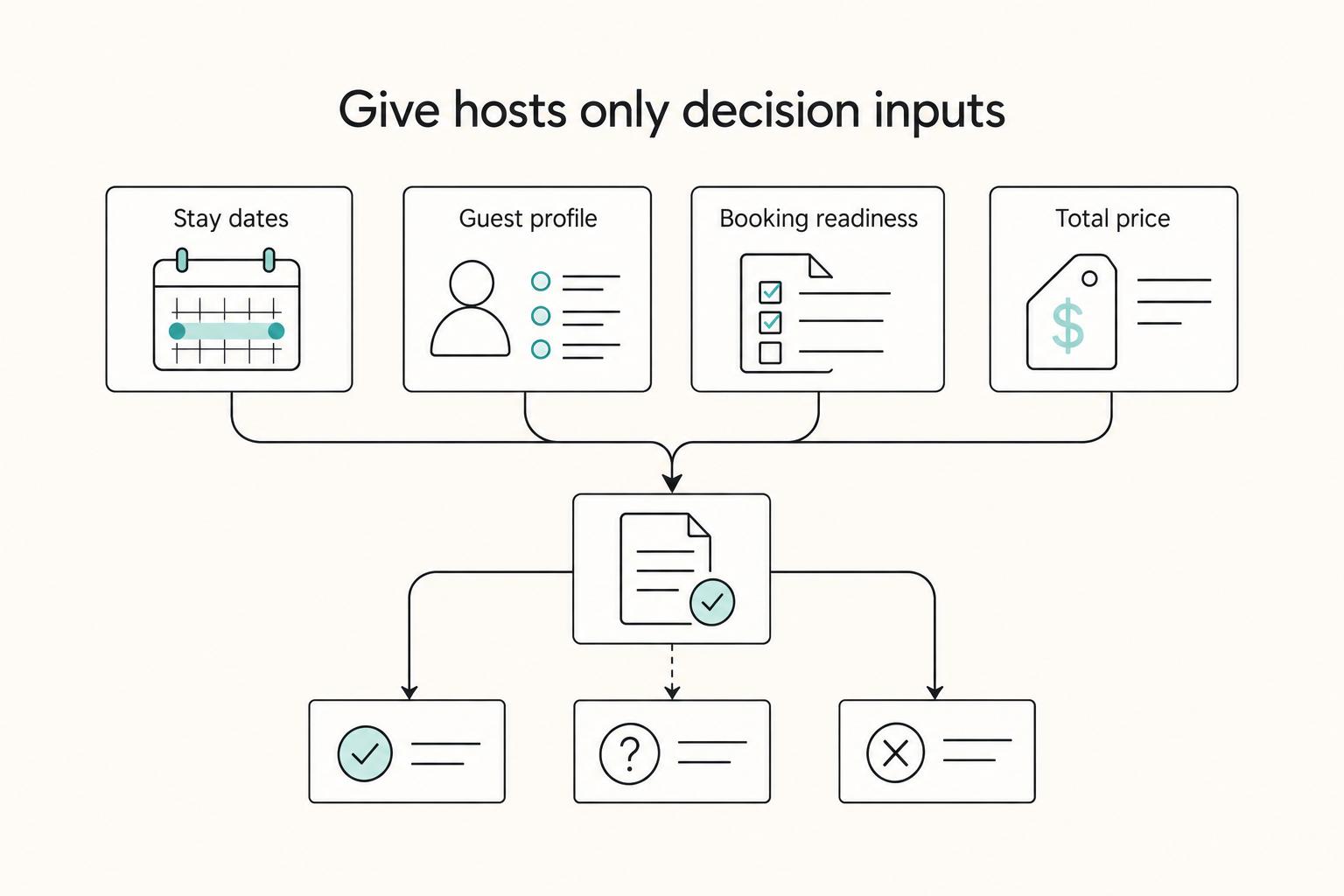
Strip the message to host decision inputs#
Keep each message focused on dates, stay length, guest profile, and booking readiness.
| Message block | Why host cares | What to include | What to avoid |
|---|---|---|---|
| Dates and stay length | Lets them check fit and availability fast | Exact check-in, exact check-out, total nights | "Around a month," wide date ranges, missing year |
| Guest profile | Helps them screen reliability quickly | Guest count and one short reliability line | Long personal story, visa details, work history dump |
| Ready-to-book note | Signals this is a real booking decision | "Ready to book today" or your real cutoff | Fake urgency, pressure language |
| Total-price checkpoint | Prevents confusion on the real cost | Ask for the full-stay total as shown in Airbnb | Vague "best price?" asks, partial totals |
Do not negotiate on partial numbers. Early in the thread, get either a clear full-stay total or a clear no.
Send the three-message sequence#
Use these templates and only change bracketed fields.
- Initial ask
Hi [Host Name], I'm interested in [check-in] to [check-out] ([total nights] nights) for [guest count] guest(s). We're [short reliability line]. If those dates are available, are you open to an adjusted total for the full stay? I'm ready to book today if the final total and terms work in Airbnb.
- Clarification or counter
Thanks for the reply. To confirm, is the quoted amount the full total for your stay dates as it will appear in Airbnb checkout? If you can do your target rate for those dates in Airbnb, I can book today. If not, no problem, I just need a clear total by your deadline.
- Respectful close
Thanks for getting back to me. I'm confirming another place to stay on schedule. If your in-thread total for [dates] changes before [cutoff], feel free to message me here.
Route the reply and log the next action#
Use a fixed next step so you do not improvise.
| Reply type | Next message |
|---|---|
| Yes | Ask the host to confirm the final total and terms in Airbnb for [dates]; once the checkout total matches, you can book |
| Counter | If the host can do [reservation-or-better number] for [dates] in Airbnb, you can book today; otherwise you will pass |
| No | Thank them for the clear answer and close the thread to book another option |
| No response | Send one follow-up saying you need to finalize housing by [cutoff]; if you do not hear back, you will book elsewhere |
- Yes
Send: "Great, thank you. Please confirm the final total and terms here in Airbnb for [dates]. Once the checkout total matches, I can book."
- Counter
Send: "Thanks. If you can do [reservation-or-better number] for [dates] in Airbnb, I can book today. Otherwise I'll pass."
- No
Send: "Thanks for the clear answer. I'm closing this and booking another option."
- No response
Send one follow-up: "Hi [Host Name], quick check on [dates]. I need to finalize housing by [cutoff]. If I don't hear back, I'll book elsewhere." Then stop.
Keep the safety rule strict: keep all price and term changes in the Airbnb thread, and treat nothing as agreed until the written terms and final checkout total align there.
Track three fields per thread so messaging supports timeline control:
- Status: sent, replied, countered, closed
- Decision cutoff: exact date/time you stop waiting
- Next action: follow up once, book, or drop
We covered adjacent planning issues in A Guide to Getting a Long-Stay Visa in France.
The counter-offer ladder + stop conditions (so you don't negotiate yourself into a bad deal)#
Use a three-rung cap, then decide. If a thread stops giving you timeline certainty, in-thread traceability, or a clear full-stay total, stop negotiating and protect your move.
Run one controlled counter-offer ladder#
Keep all numbers, dates, and terms in the Airbnb thread so you have one searchable proof trail before you pay.
| Rung intent | Your ask | Your concession | Host proof required | Your next action |
|---|---|---|---|---|
| Rung 1: test willingness | Ask for a modest improvement on the full-stay total for exact dates | Speed only: "I can book today if the total works." | Written full-stay total for those dates as it will appear at checkout | If clear, decide. If vague, ask once for the exact checkout total. |
| Rung 2: trade real value | Ask for your target total tied to a longer stay or small date shift | Flexibility on check-in, check-out, or stay length | Updated dates and updated full total restated in-thread | If dates still fit your plan, decide now. |
| Rung 3: close or exit | Send your final acceptable total and cutoff time | Immediate booking and no more back-and-forth | Clear yes with final written total, or clear no | Book if it meets your bar. Otherwise close and move on. |
Before moving up a rung, do one check: can you repeat the current offer in one sentence without guessing? If not, do not continue.
Use hard stop conditions#
Apply trigger-to-action rules instead of extending the thread:
- Delayed reply past your cutoff: send a close message and move to backup housing.
- Any push to move details or payment off-platform: stop and continue only with written in-thread terms.
- Unclear total after one clarification ask: drop the listing.
- Late-added chores or conditions: ask for complete checkout expectations in writing, then re-evaluate total friction and cost.
Use a 4-point good-enough booking check#
Accept when all four are true:
- Dates fit your relocation timeline.
- Final checkout total is clear.
- Key terms are written in the thread.
- Price is inside your pre-set acceptable range.
If one fails, pivot fast. If several threads stall, a true long-term rental may be the better path.
Related reading: How to obtain a police clearance certificate for a long-stay visa application.
Risk controls before you accept: don't trade a discount for relocation chaos#
Accept only when the key details are written, clear, and consistent. If a point is important to your move and you cannot verify it in the thread and final total, treat it as unverified and pivot.
Use this as your standard: do not treat any decision-critical detail as complete until you can verify it directly.
Confirm the four checks before you book#
Focus on usability first, discount second. Keep each check tied to text you can point to.
| Risk area | What you verify in-thread | Accept signal | Pivot trigger |
|---|---|---|---|
| Fit | Exact dates, arrival plan, and the essentials you asked about for day one | Each point is answered clearly and still fits your move | Any essential point is vague, changed, or conflicts with your plan |
| Extension | Whether a later extension is possible and how the host says it would be handled | You can plan around the stated position, even if nothing is guaranteed | You likely need flexibility, but the answer stays unclear or deferred |
| Terms | Check-in steps, checkout expectations, and any conditions that affect your stay | Conditions are clear and consistent with your plan | New restrictions or chores appear late, or terms stay unclear |
| Total cost | Final total for your exact dates | The written total matches what you see before payment | Price shifts mid-thread, parts remain unclear, or totals do not reconcile |
If you cannot restate the full deal in one sentence without guessing, do not accept yet.
Use trigger-action rules so timing stays protected#
Set actions in advance so the thread cannot drift.
- If the host declines your ask: decide immediately whether the current offer is still acceptable; if not, move to backup.
- If the host is silent at your cutoff: send one close message, stop waiting, and book your backup.
- If pricing changes late: compare the new total to your backup now, not to the earlier number.
- If new conditions appear late: ask once for a full written restatement; if it stays unclear, treat it as a no.
The goal is relocation certainty, not winning every negotiation.
Save a small evidence pack before payment#
Keep a short record of what you relied on: listing link, exact dates, written confirmations, and final total at checkout. Keep it simple, but make sure you can re-check it quickly under time pressure.
Before paying, do one final pass: fit, extension stance, terms, and total cost all match the final offer. If one is missing, wait or pivot.
This pairs well with How to Pack Light for Long-Term Travel (One Bag Guide).
Conclusion: Run this system in under an hour, then book with confidence (or pivot fast)#
Your goal is not to win a discount. Your goal is housing certainty through a repeatable process you can run quickly, with clear limits, a real backup, and no last-minute relocation drama.
The rule that matters most is simple: decide your response standard before you send a message. If the host's reply quality, clarity, or timing falls below that standard, stop waiting, book the backup, and move on. That is how you keep control while negotiating a long-term Airbnb stay.
| Step | What you do | What you verify | What triggers a pivot |
|---|---|---|---|
| Step 1: Shortlist | Pick a small set of listings you would genuinely book, plus one backup on a platform you trust. Use the same dates, guest count, and must-haves across every option. | The place works even without a discount: location, workspace, rules, basics, and move-in timing all fit. | You would feel forced into the booking if negotiation fails, or you do not have a backup you can live with. |
| Step 2: Qualify | Compare each listing's current full-stay total against your next-best viable option. Check whether the long-stay price already looks built in. | You know which listing is actually competitive before you ask for anything. | The listing is already your only workable option, or the price difference versus your backup is too small to justify delay. |
| Step 3: Set limits | Write down three things before messaging: your good-enough total, your walk-away total, and your book-by cutoff time. | Your backup is still available right before outreach. | You cannot name a firm cutoff, or you know you will keep bargaining past your own limit. |
| Step 4: Message | Send one clean ask in the Airbnb thread with exact dates, who is staying, and that you are ready to book now if the total works. | The host replies clearly and, if they agree, sends the revised offer in platform. | Replies are vague, slow, evasive, or push payment, deposits, or side terms off platform. |
| Step 5: Verify | Before paying, check the revised dates, full-stay total, cancellation terms shown at checkout, and any essentials you care about in writing. Save screenshots of the thread, offer, and checkout total. | The numbers match what was discussed, and key terms like internet, utilities, rules, and extension expectations are documented. Confirm how pricing and liability work if the stay is shortened. | Terms stay fuzzy, totals change at checkout, or the cancellation/pricing downside is unclear. Treat this as a manual check, not an assumption. |
| Step 6: Book or pivot | If the offer clears your checks, book it in platform. If not, lock the backup immediately. | You have a confirmation, saved records, and no open ambiguity. | Any missed cutoff, weak reply, or unresolved term means you stop and take the backup. |
If Airbnb stops being the low-drama option, move straight to A Guide to Renting an Apartment in Europe as a Foreigner. If your situation is country-specific or time-sensitive, use the Gruv contact page as your next step.
You might also find this useful: A Guide to Renting a Car Long-Term in Europe.
Frequently Asked Questions
Can you negotiate Airbnb for a long-term stay?
Yes, sometimes you can, but ask only when you have room to lose the listing. Use the Airbnb Contact Host message thread, give your exact dates and full-stay total, and make one clean ask. If the listing already appears to have long-stay pricing built in, assume there may be little room and do not drag the thread out.
How do I request an Airbnb special offer from a host?
Ask in the Airbnb thread whether the host can adjust the price for your exact dates and, if they agree, send the revised offer in platform. Verify that the dates and full-stay total in the offer match what you discussed before you pay. Do not move payment, deposits, or installment arrangements off platform.
When should I negotiate vs. book immediately?
Negotiate only if you have a real backup and losing this listing will not disrupt your move. Book immediately if this place is the only one that fits your arrival plan, key terms, or budget with low drama. If seeing it disappear tonight would create relocation stress, stop asking and lock it.
What should I say to ask for a long-term stay discount on Airbnb?
Give the host what they need to say yes quickly: your exact dates, total nights, who is staying, and that you are ready to book now if the total works. Then make one specific ask tied to the full-stay total, not a vague request for “the best price.” If you want to negotiate long-stay terms without sounding risky, clarity beats persuasion every time.
How much discount is realistic for a long Airbnb stay?
Do not chase a universal percentage target. Compare the host’s current total against your next-best viable listing for the same dates, then decide whether a lower offer would actually beat that backup in a meaningful way. If the revised total still does not clearly improve on your backup, stop negotiating and move on.
What are the risks of negotiating on Airbnb?
The first risk is listing loss: hosts may not hold dates without confirmed payment, so the calendar can move while you wait. The second is signaling risk, since some hosts read repeated bargaining as a haggler red flag and a possible problem-guest pattern. Also check the cancellation terms you actually see before paying, especially on longer stays, because host-community reports describe cases where shortening a booking still kept the discounted long-stay rate, and forum discussions also describe notice-period liability after cancellation notice.
What if the host says no or does not respond?
If the host says no, decide right away whether the original price still works for your exact dates, terms, and relocation timeline. If yes, book it. If no, book your backup instead of reopening the negotiation. If the host does not respond, send one clean follow-up, then pivot to your backup booking. If this keeps happening, move out of short-stay cycles and use A Guide to Renting an Apartment in Europe as a Foreigner as your next path.
Try a related tool
Researched and edited by the Gruv editorial team. Gruv builds cross-border billing, payouts, and finance-operations software for global businesses.
Sources
Includes 1 external source outside the trusted-domain allowlist.
- downloads.regulations.gov/FTC-2023-0064-0001/content.htmtrusted
- explorecourses.stanford.edu/print;jsessionid=10ezok5l8d3lo1ehl3vrxm06sztrusted
- pmc.ncbi.nlm.nih.gov/articles/PMC8907882trusted
- scholarcommons.sc.edu/cgi/viewcontent.cgitrusted
- sec.gov/Archives/edgar/data/1512024/0001062993220180...trusted
- sec.gov/Archives/edgar/data/1468174/0001468174220000...trusted
- sunvalleyidaho.gov/vertical/sites/%7B0BF53F75-612F-48C9-9676-4A...trusted
- community.withairbnb.com/t5/Help-with-your-business/Beware-offering-g...external
Educational content only. Not legal, tax, or financial advice.
Related Posts
Renting in Europe as a Foreigner on a 90-Day Timeline
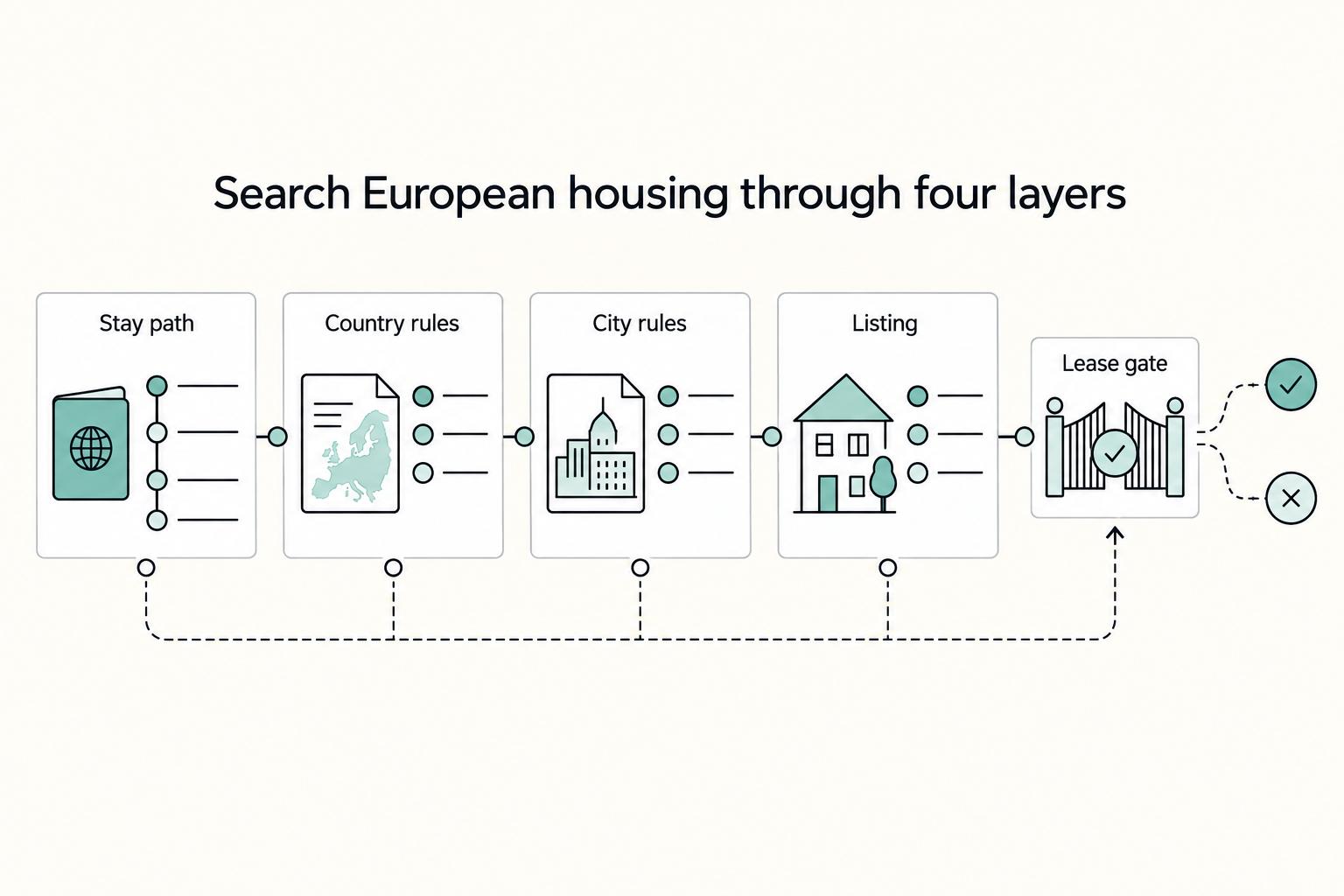
If you're **renting in Europe as a foreigner**, treat the move as a staged long-term housing plan, not a booking sprint. Your first decision is not which listing looks best. It is which city you're targeting, which legal stay track applies there, and when you'll be ready to sign without guessing.

A Guide to Notion for Freelance Business Management
If your workspace feels busy but fragile, you do not need more pages. You need one connected system. Treat your freelance business like a business-of-one and use Notion as the control layer that connects client decisions, delivery, and billing in one place.

A Guide to Client-First Development in Webflow
**Treat Client-First in Webflow like a system for delivery decisions, not a styling trend, so you can move faster today without creating surprises tomorrow.**