
Quick Answer
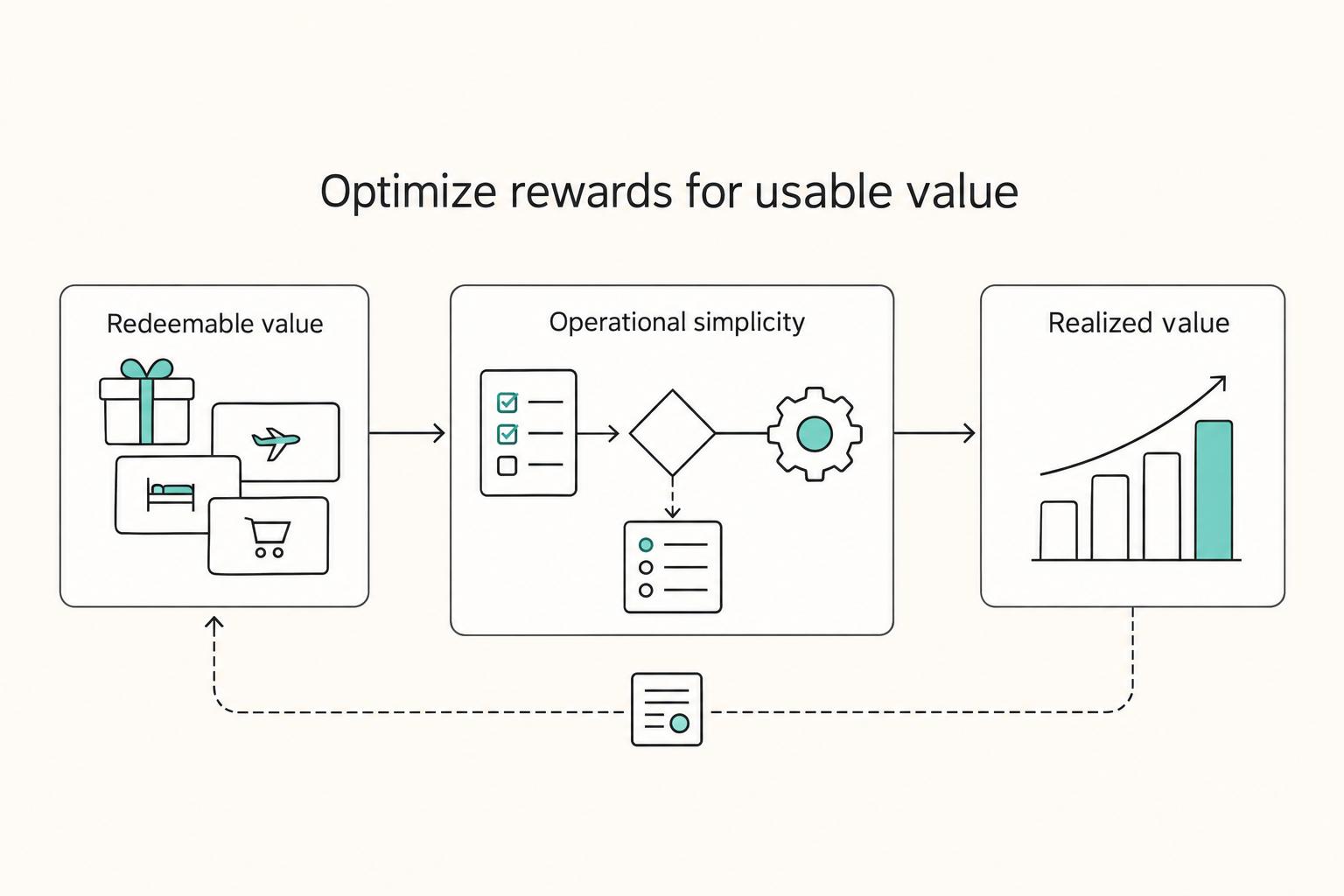
To maximize credit card rewards for free travel, run a cashflow-first system: use a simple default card setup, pay in full, and optimize only spend you already make. Choose cards by real categories, then apply a net-value check so fees, friction, or reimbursement risk do not wipe out gains. Track weekly, review monthly, and optimize for redemption outcomes you will actually use.
You don't need "travel hacking" - you need a cashflow-safe rewards operating system#
Build a simple rewards system that protects your ability to get paid first, then use it to maximize credit card rewards without adding risk or busywork. You've moved past the hype cycle of "travel hacking." Run this like an operator: fewer cards, clearer rules, and decisions you can defend in your books. If you run a business-of-one, you're the CEO, and your rewards setup should protect cashflow before it chases points.
Your goal is not more credit card points. Your goal is reliable cashflow that incidentally funds award travel and free flights.
If you're a freelancer or small team, the downside rarely shows up as "I forgot to use the 5x card." It shows up as instability: late invoices, unpredictable timing, account friction, and fee surprises. Treat rewards like a game and you keep rolling dice. Treat rewards like a system and you keep control.
Step 1: Install a "rewards second" decision loop#
Start with a default you can execute under pressure, not a perfect stack you only remember on good days. Pick a baseline behavior, write the rules in plain language, then add a safety check for anything that creates reconciliation pain or reimbursement uncertainty.
- Pick a baseline behavior: one primary card for most spend, plus one secondary card only when a rule triggers it.
- Write your rules in plain language: "Default Card for everything. Secondary Card only for Category X or Offer Y."
- Add a safety check: if a purchase creates reconciliation pain or reimbursement uncertainty, choose the cleanest method, not the highest multiplier.
Hypothetical scenario: you book travel for a client project and plan to invoice it back. You choose the payment method that keeps the receipt trail clean and matches your reimbursement terms. Points become a byproduct, not the reason you took the risk.
Step 2: Optimize for the outcome you can actually use, not headline multipliers#
Most reward talk focuses on earn rates. Operators think through the whole picture, including the costs and effort required to turn points into something real.
| What people optimize | What you optimize instead | What to track weekly |
|---|---|---|
| "Best multiplier" | The outcome you can actually realize | Fees you paid, offers you used, categories that coded correctly |
| "More cards" | Fewer defaults, fewer mistakes | Exceptions you made and why |
| "Big point totals" | Redeemable value you can actually use | Whether points are piling up without a plan to redeem |
Step 3: Run a tracking cadence you can sustain
You do not need a new hobby. You need a light routine that catches mistakes early, before they turn into fees, miscoding, or missing receipts.
- Weekly: review transactions, confirm category coding, store receipts, and note any exception purchases.
- Monthly: tally what you earned, what it cost you to earn it (fees, time, friction), and whether you moved closer to a real redemption.
Terms and redemption economics change, so confirm details in your own account. That fits how Gruv thinks about money movement: make decisions traceable, controlled, and repeatable.
Prerequisites: set your "cashflow guardrails" before you chase a single point#
Set cashflow guardrails that keep you paying in full, tracking cleanly, and collecting revenue with minimal friction before you chase a single point. A rewards system has to survive real life. Two things kill "free flights" fast: interest and messy bookkeeping. Do this setup once and you can pursue credit card points, award travel, and loyalty programs without turning your finances into a side quest.
Step 1: Lock in "pay-in-full" mechanics (and align dates to income)#
Treat rewards as optional until you can reliably pay the bill without stress. Interest can erase rewards value fast, so build around payment certainty.
- Turn on autopay with an amount you can defend every month (many operators choose the full balance when cashflow supports it). Confirm the draft date does not land before your typical client payments clear.
- Add calendar reminders for statement close and due date for each issuer (American Express included). Verification point: you can explain, in one sentence, how this month's statement gets paid.
Step 2: Build a spend map you can actually use (and isolate cross-border friction)#
Export a recent sample of transactions (a few months works) and tag the categories that drive your rewards outcome: software, ads, travel, meals, shipping, tools. If you mix business and personal, tag that too. Then separate true spend from friction so you can model net value.
| What to tag | What it tells you | What to do next |
|---|---|---|
| Core categories (travel, ads, software) | Where multipliers might matter | Pick one multiplier category only |
| Fees (platform, FX, processing) | Where rewards can turn negative | Compare rewards value vs total fees |
| Client pass-through spend | Where cashflow risk hides | Tighten invoice timing and proof |
Hypothetical scenario: you pay for a cross-border SaaS tool, then notice extra FX or platform fees on the statement. You treat those fees as a cost of earning points, not as invisible, and you stop yourself from overvaluing the redemption.
Step 3: Define "get paid first" rails, tracking, and compliance ownership#
Decide how clients pay you before you optimize how you pay vendors. This is where "maximize rewards" stops being abstract and starts being operational.
| Area | Article guidance |
|---|---|
| Primary collection method | Pick a primary collection method (card checkout vs bank transfer) and document when you allow exceptions |
| Tracking stack | Set one tracker (Notion or a spreadsheet), receipt capture, and monthly statement exports |
| Third-party tools | If you consider MaxRewards or MaxRewards Platinum, evaluate permissions and data access first, then decide |
| Ownership | Assign who reconciles, and where you store contractor onboarding and tax paperwork |
Operator note: card products and program terms change. Build guardrails that survive product shifts, then chase the points.
Which card should I use for each purchase? The 10-minute decision framework you can reuse daily#
Use a simple, repeatable set of gates (control, earn mechanism, net costs, and risk) so you can maximize credit card rewards without turning every checkout into "travel hacking." You do not need perfect optimization. You need consistent decisions you can execute and reconcile later.
Step 1: Start with "control," not just the merchant category#
Start with how much control you have over timing, documentation, and reimbursement. Category matters, but control is what keeps the process clean.
| Control check | Article guidance |
|---|---|
| Reimbursable | Confirm whether it is client, employer, or partner spend, or whether it is truly your cost |
| Recurring | Check whether it is recurring or a one-off that needs more attention |
| High-impact | Check whether it is a large amount or hard to undo if something goes wrong |
| Documentation | Confirm you will have an invoice or receipt and a clear business purpose without chasing it later |
Ask a few quick questions:
- Is this reimbursable (client, employer, partner), or is it truly your cost?
- Is it recurring (easy to set-and-forget), or a one-off that needs more attention?
- Is it high-impact (large amount or hard to undo) if something goes wrong?
- Will you have clean documentation (invoice/receipt and a clear business purpose) without chasing it later?
Practical check for reimbursable spend: confirm what your contract says about payment fees (if any) and whether you will be reimbursed on the full amount or net of any friction.
Step 2: Match spend to the right earn mechanism (safe default beats perfect optimization)#
Pick a setup you can run every day, even when you are rushed. A small stack you actually follow beats a complex stack you forget.
- One catch-all card for anything you cannot classify fast.
- One "best category" card for your biggest spend bucket.
This two-card default beats a wallet full of edge cases. If you use a wallet (like Apple Pay), do a quick sanity check after the first charge posts so you know you can recognize the merchant and match it to your records.
Step 3: Apply a net value gate (the part most guides skip)#
Treat rewards like a rebate funded by the payment system, not magic. Networks like Visa and Mastercard charge merchant fees to fund consumer rewards.
Use a quick gate: if the purchase adds meaningful fees (FX, cross-border, platform surcharges) or pushes you toward a high-fee setup, you need a stronger reason than "more points."
Step 4: Add a risk gate before you tap-to-pay#
If the merchant makes disputes painful (hard cancellations, unclear refund terms), prioritize clean reconciliation over optimization. For teams, standardize what "done" looks like: receipt, business purpose, and client mapping (if reimbursable). If you can't explain it later, do not put it on the points card.
Step 5: Write the "why" once, then reuse#
Write one line per card and stop renegotiating with yourself. Keep it boring and enforceable.
- "Card A: travel."
- "Card B: everything else."
- "Card C: only for a specific offer (tracked in MaxRewards or your own log)."
Hypothetical scenario: a client asks you to front a travel booking. You confirm reimbursement terms, run the fee check (including any cross-border friction), then use your travel card only if you can document the expense and recover the full cost cleanly.
If you want a deeper dive, read The Best Notion Templates for Freelancers.
Want a quick next step for "maximize credit card rewards"? Try the free invoice generator.
How do I maximize credit card rewards without increasing spending?#
Maximize credit card rewards by routing the spending you already do through the rewards structure that fits your habits. Rewards vary by card type and company, so the win is matching your everyday categories and routines, not buying more stuff.
Step 1: Match your card to where you already spend (do not add new spend)#
Start with your real spending patterns and choose rewards that line up with them.
- Pay attention to exactly where you tend to spend, then pick a card that rewards those categories.
- If you want cash back, look for a card that offers multipliers in the categories you spend the most on.
- If you do not travel much, do not pick a travel card just because it has flashy perks.
Step 2: Put recurring payments on your rewards card#
Recurring payments are an easy way to earn steadily without changing your behavior.
- Switch your recurring payments to your cash back card to continuously earn rewards.
- Keep it simple enough that you can stay consistent month to month.
Step 3: Stack savings with timing (when you were going to buy it anyway)#
You do not need new spend to get more value; you need better timing and pairing.
- Pair sales or welcome offers with your cash back card to maximize your savings.
Step 4: Keep the system lightweight so you actually stick with it#
Complexity is where "optimization" goes to die.
- Re-check occasionally whether your rewards still match your habits, since rewards vary by card and issuer.
Should I optimize for earn rate or redemption value?#
Optimize for redemption value first, then earn rate, because the best multiplier fails if you redeem poorly or never redeem at all. Without a target, you drift into hoarding points, rationalizing annual fees, and calling it a plan.
Step 1: Pick your redemption target before you optimize earning. Define one outcome in plain language: a domestic round-trip, a long-haul business class trip, or a hotel stay. Practical check: if you cannot describe the target trip (where, roughly when, and what "good enough" looks like), you will default to collecting points for sport and overpay for complexity.
Step 2: Run a simple two-bucket model (earn is not the whole game). Use this operator split:
| Bucket | What you optimize for | What you get | Risk you manage |
|---|---|---|---|
| Points geared toward travel flexibility | Flexibility for travel redemptions | Points (a rewards currency you can redeem for options like travel, gift cards, or money back on your statement) | Program rules vary, so confirm terms before you move points |
| Cash back | Certainty and clean accounting | Cash back (a credit or direct cash deposit based on a percentage of spend) | Lower upside, higher predictability |
This keeps you honest. You can chase travel redemptions when it serves the plan, and you can take certainty when cashflow matters more than aspiration.
Step 3: Price every redemption like an operator. Compare pay cash vs pay points using the same baseline (same itinerary, same dates, same fees you actually pay). Set your own conservative cents-per-point value based on what you have redeemed before, not what blogs imply. If the redemption falls below your conservative value, pay cash and keep points for a better use.
Step 4: Treat outsized value as conditional, not guaranteed. Transfers to airline and hotel partners can unlock higher-value redemptions, but the details matter. Verify the rules and redemption options before you move points.
Step 5: Track realized value, not blog value. Log points earned and points redeemed, then calculate your realized cents-per-point. Use blogs for ideas, then let your spreadsheet decide what counts as "good." If you use apps that surface offers or promos, treat them as execution support, not a valuation engine.
Hypothetical scenario: you target one hotel stay. You earn points aggressively for three months, then you find a poor redemption rate at checkout. You pay cash, keep points, and update your conservative value so your next decision tightens automatically.
The weekly/monthly tracking routine that keeps rewards profitable (and audit-ready)#
Run a simple weekly reconciliation plus a monthly close so you can keep rewards from getting wiped out by fees, miscoding, and missing documentation. Done well, this is just expense tracking: turning "financial chaos into organized, practical data" that supports smarter decisions and cleaner records.
Step 1 and 2 (Weekly): reconcile fast, then log exceptions (your real control lever)#
Step 1: Reconcile and prevent leakage. Treat your weekly sweep as a quick control check and early warning system.
- Review new card transactions and sanity-check that the merchant, amount, and category look right.
- Flag anything that looks fraudulent or unauthorized so you can catch it quickly.
- Maintain receipt documentation for IRS compliance and audit protection (keep what you need to support the expense).
Step 2: Maintain a "card choice exceptions" log. This prevents self-deception and keeps your story coherent later.
- When you deviate from your default card rule, record why (limited time offer, warranty coverage, merchant restrictions, Apple Pay behavior, client pass-through).
- Write it like an audit note: timestamp, transaction ID, and one sentence rationale.
Hypothetical scenario: you normally route software subscriptions to your catch-all card, but a vendor bills through an unexpected entity and breaks category coding. You log the exception, fix the default rule, and stop the leak next cycle.
Step 3 to 5 (Monthly): close the loop on value, risk, and documentation#
Step 3: Close on net impact, not just gross points. Compare what you earned and what you actually redeemed against the costs and friction of running the setup (fees and charges can erase the upside). Where supported, Gruv's ledger and exports can make reconciliation cleaner.
Step 4: Track a few numbers that force honesty. Keep it simple: rewards earned, rewards actually redeemed, costs/fees you paid, and any issues you had to resolve (like unauthorized spend). This is also basic risk management. Credit card programs come with real categories of risk regulators pay attention to, including credit, operational, liquidity, strategic, interest rate, and compliance risk.
Practical check: if your costs consistently outweigh your realized value, simplify your setup.
Step 5: Build it into your ops stack. Put a one-page Rewards SOP next to invoicing and collections (rules, default cards, exception log format, monthly close checklist) in whatever system you already run. If you already use Notion for operations, keep it there: A Guide to Notion for Freelance Business Management.
Cashflow-first risk gates: protect your "get paid" system while you earn free travel#
Install four risk gates that keep your cash position and compliance clean, then treat travel hacking and credit card points as a secondary optimization. The goal is to prevent one bad cycle (missed payment, cost pileup, missing paperwork) from turning rewards into operational debt.
Gate 1 and 2: debt risk off, fee drag off#
Gate 1: Never let rewards create debt risk. If you cannot pay cards in full, pause the rewards effort and run a simpler setup (often cash back) until your cashflow stabilizes. Put a process in place so payments clear on time, and treat any missed cycle as a process failure (wrong due date, missing buffer, invoice timing), not a willpower issue. Verification point: your statement balance clears without you thinking about it.
Gate 2: Avoid hidden "buying points" behavior. Any time a payment method adds extra cost, rerun your net value gate using your own realistic point value.
Use this quick decision table:
| Situation | Default rail | When you still use a card |
|---|---|---|
| Vendor adds extra cost to pay by card | Choose the lowest all-in cost rail you trust | You need card protections or the value clearly stays positive after the added cost |
| Client wants to pay you | Prefer a lower-friction, documented collection method | The client requires card checkout or you price the added cost into terms |
| Inbound bank transfer acceptable | Consider bank transfer collection | Only for edge cases where card checkout solves a real business constraint |
Hypothetical scenario: a client offers to pay by card "for points." You run the numbers, see the extra-cost pressure, and switch the default to bank transfer. You keep card checkout available, but only when the client pays the cost explicitly.
Gate 3 and 4: compliance rails plus explicit policies#
Gate 3: Put compliance and documentation on rails (especially for teams). If you pay contractors globally, build a workflow that survives scrutiny: collect and store required identity and tax documentation where required, and keep a consistent paper trail for onboarding and payouts. If cross-border tax rules touch your life, keep the facts straight. To claim the foreign earned income exclusion (FEIE), you must have foreign earned income, your tax home must be in a foreign country, and you must meet either the bona fide residence test or the physical presence test. The IRS states: "You meet the physical presence test if you are physically present in a foreign country or countries 330 full days during any period of 12 consecutive months." The IRS also clarifies: "The 330 qualifying days do not have to be consecutive." And even if you qualify to exclude income, you still claim the FEIE by filing a U.S. tax return reporting the income.
| FEIE element | What the article says |
|---|---|
| Income | You must have foreign earned income |
| Tax home | Your tax home must be in a foreign country |
| Residency or presence | You must meet either the bona fide residence test or the physical presence test |
| Physical presence test | You are physically present in a foreign country or countries 330 full days during any period of 12 consecutive months |
| 330-day rule | The 330 qualifying days do not have to be consecutive |
| Filing | Even if you qualify to exclude income, you still claim the FEIE by filing a U.S. tax return reporting the income |
Gate 4: Make policies explicit so optimization does not turn into chaos. Write down: who can use which card, spend limits, required receipts, and reimbursement timelines. If you sell digital services, evaluate a Merchant of Record (MoR) approach where it fits your model (coverage varies).
Common mistakes (and how to recover fast when things go wrong)#
Recovering from rewards mistakes starts with one move: protect cashflow first, then rebuild a simple, repeatable rewards routine. You want a break-glass plan for the week when "free flights" starts feeling like friction. A rewards credit card earns points for purchases, ideally "earning points just for buying things you already need." Used the wrong way, "the interest and fees can outweigh the benefits, just as quickly."
Use the operator table to fix and verify each mistake#
Use this operator table. Run it like incident response, not a vibe check.
| Mistake | Do this in the next 24-72 hours | Verification point |
|---|---|---|
| 1) Chasing rewards goals your cashflow can't support | Pause discretionary spend (subscriptions you can delay, optional travel, tools you can defer). Revert to your default card for all purchases. Reforecast monthly burn so you see the next statement before it lands. | Your forecast covers the next statement comfortably without stretching client receivables. |
| 2) Paying fees to "earn points," especially on inbound payments | Re-run your net value gate. Move client collections to lower-fee rails where supported (for example, Gruv Virtual Accounts for bank transfers, where enabled). Keep card rails only when the client requires card checkout or you price the cost into terms. | You can explain, in one sentence, why each payment rail exists. |
| 3) Losing points to operational sloppiness (wrong card, missed steps) | Implement a weekly sweep: pick one day, review transactions, and make sure purchases went on the right card. Capture receipts and clean up anything unclear while it's still fresh. | Mistakes trend down over time, and your routine stays stable. |
| 4) Redemption traps (rushing, poor value) | Slow down. Compare the points option against the cash price you would actually pay, and only redeem when the value is clearly there for you. | You can defend the redemption with a simple cash vs points comparison. |
| 5) Creating an accounting and tax mess (teams especially) | Separate client reimbursables from operating spend. Centralize receipts and supporting records, and keep them tied to purpose and client. When in doubt, ask your bookkeeper or CPA, then write the rule into your SOP. | Your books show rewards optimization without blurring compliance or client funds. |
If you want a cleaner default card setup after you stabilize, go back to a simple default plus multiplier pair.
Conclusion: build the system once, then earn free travel on repeat (without hurting cashflow)#
You get the most from credit card rewards when you treat rewards like a system, not a hobby. With a decision framework, risk gates, and a tracking cadence, your job is to lock in a safe default you can run even in a chaotic week. That is how "travel hacking" turns into more predictable award travel instead of messy books and random free-flight dreams.
Step 1: Choose a safe default that you can actually execute#
Consider starting with two cards, one framework, and one weekly routine as your baseline. Complexity creates failure modes: missed payments, miscoded categories, unused annual-fee benefits, and offer leakage.
| Setup | What it optimizes | Common failure mode | Best for |
|---|---|---|---|
| Two-card default (catch-all + multiplier) | Consistency and low leakage | Leaving value on the table in niche categories | Most freelancers and small teams |
| Multi-card stack (many categories) | Theoretical earn rate | Missed rules, missed offers, higher admin | Operators who enjoy maintenance and track net value monthly |
If you want help picking your default plus multiplier pair, use The Best Business Credit Cards for Freelancers as a short list, then apply your net-value gate.
Step 2: Re-run the same monthly loop (and keep it explainable)#
Run the same four decisions every month: pick the right rail for collections, pick the right card for spend, track net value, document exceptions. Keep one sentence per card that explains why you used it. That one sentence becomes your audit trail lite.
One reality check: welcome offers vary, and you may not qualify. Treat welcome offers as optional upside, not the foundation of your plan.
Hypothetical: you front a client expense to earn points, but their reimbursement stalls. Your system should flag that as a cashflow exception immediately, not after you pay interest and scramble.
Step 3: If cross-border complexity rises, consider tooling that keeps records clear
If you scale into cross-border collections and payouts (and start juggling FX, VAT context, and more stakeholders), you can explore Gruv modules like Virtual Accounts, Payouts, and MoR (where supported) as infrastructure options. Do not chase features. Chase clear controls, traceability, and records (where enabled).
Copy/paste checklist (end-of-week, 10 minutes)
- Review transactions + receipts (your statement is a reference point)
- Confirm category coding for top spend
- Activate offers, then verify they applied (manually or with a tracking tool)
- Log any exception purchases + why
- Check autopay + upcoming statement balance
- Update net rewards tracker (fees + annual fee allocation)
- Confirm redemption target
- Do not transfer points until availability exists
Frequently Asked Questions
How do I maximize credit card rewards **without increasing spending**?
Put your existing spend on the right cards and let bonus categories and promos do the work. Map your top spend buckets (software, ads, travel, meals, shipping), then assign a default card plus one multiplier card for your biggest category. Do a quick weekly sweep for issuer offers and other promotional offers so you capture bonuses without buying anything extra.
Is it better to optimize for **earn rate** or **redemption value**?
Optimize for redemption outcomes first, then earn toward them. Earn rate alone does not guarantee better award travel because availability and blackout dates can limit what you can book. If you want certainty and cleaner accounting, keep part of your setup in cash back since it is simpler to realize.
What is the fastest way to know **which card to use for each purchase**?
Write one rule per card and make it the default. Example: “Card A for travel, Card B for everything else, Card C only when an offer applies.” Verify category coding after the first billing cycle because your statement acts as the source of truth.
How do annual fees, interest, and redemption options affect **true net rewards**?
Net it out like a P&L line item: value in, costs out. If your cards have fees or you end up paying interest or penalties, factor those into whether the rewards are actually worth it. Redemption options matter because points can redeem in different ways, and miles-style redemptions can face availability or blackout constraints. | Lever | Increases value when… | Reduces value when… | |---|---|---| | Earn rate | Your spend naturally matches bonus categories | You force spend to hit a bonus | | Annual fee (if any) | You consistently use benefits and redeem | You pay for features you do not use | | Interest/late fees (if any) | You avoid them | You pay them month to month | | Redemption options | You redeem for what you would buy anyway | You redeem impulsively or under constraints |
Can freelancers optimize rewards while protecting **cashflow stability**?
Yes, if you separate earning points from getting paid. Use rewards on controlled operating spend (subscriptions, predictable tools), and treat client pass-through expenses like a cashflow risk that needs tight reimbursement terms. If their payment net terms slip, you still owe the card statement, so you need a rule that limits fronting unless reimbursement timing stays reliable.
What weekly/monthly system should I use to track categories, offers, and redemptions?
Run a cadence you can keep even during busy weeks. Weekly: review transactions, confirm category coding, attach receipts, and verify offers actually applied. Monthly: total the rewards you earned and the costs you paid (any annual fees or other fees you incurred), then decide whether to simplify or keep your setup.
Do reward strategies change for cross-border freelancers dealing with FX, VAT, or tax forms like W-8/W-9?
Sometimes. Cross-border fees and administrative or tax requirements can change the economics and workflow, and the details vary by issuer and jurisdiction. Keep it operator-simple: track extra fees separately from spend, and store compliance artifacts in one place so rewards activity does not contaminate your bookkeeping.
Try a related tool
Researched and edited by the Gruv editorial team. Gruv builds cross-border billing, payouts, and finance-operations software for global businesses.
Sources
Educational content only. Not legal, tax, or financial advice.
Related Posts
The Best Business Credit Cards for Freelancers
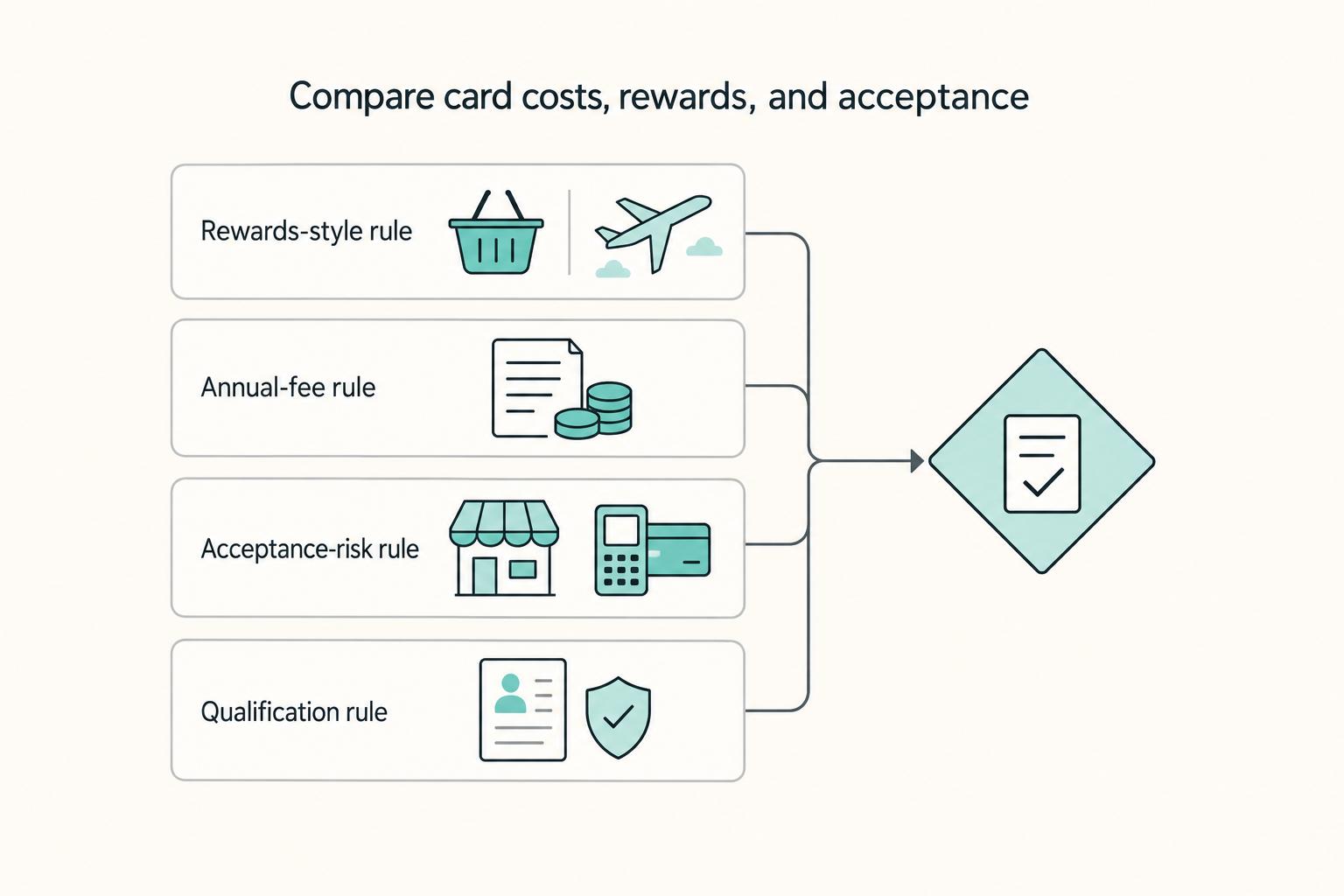
Pick for reliability first. For a freelancer, the right business card is usually the one that keeps recurring bills moving, keeps records clean, and avoids extra costs when income swings from month to month. Rewards still matter, but they sit on top of those basics. They do not replace them.

A Guide to Notion for Freelance Business Management
If your workspace feels busy but fragile, you do not need more pages. You need one connected system. Treat your freelance business like a business-of-one and use Notion as the control layer that connects client decisions, delivery, and billing in one place.
The Best Notion Templates for Freelancers
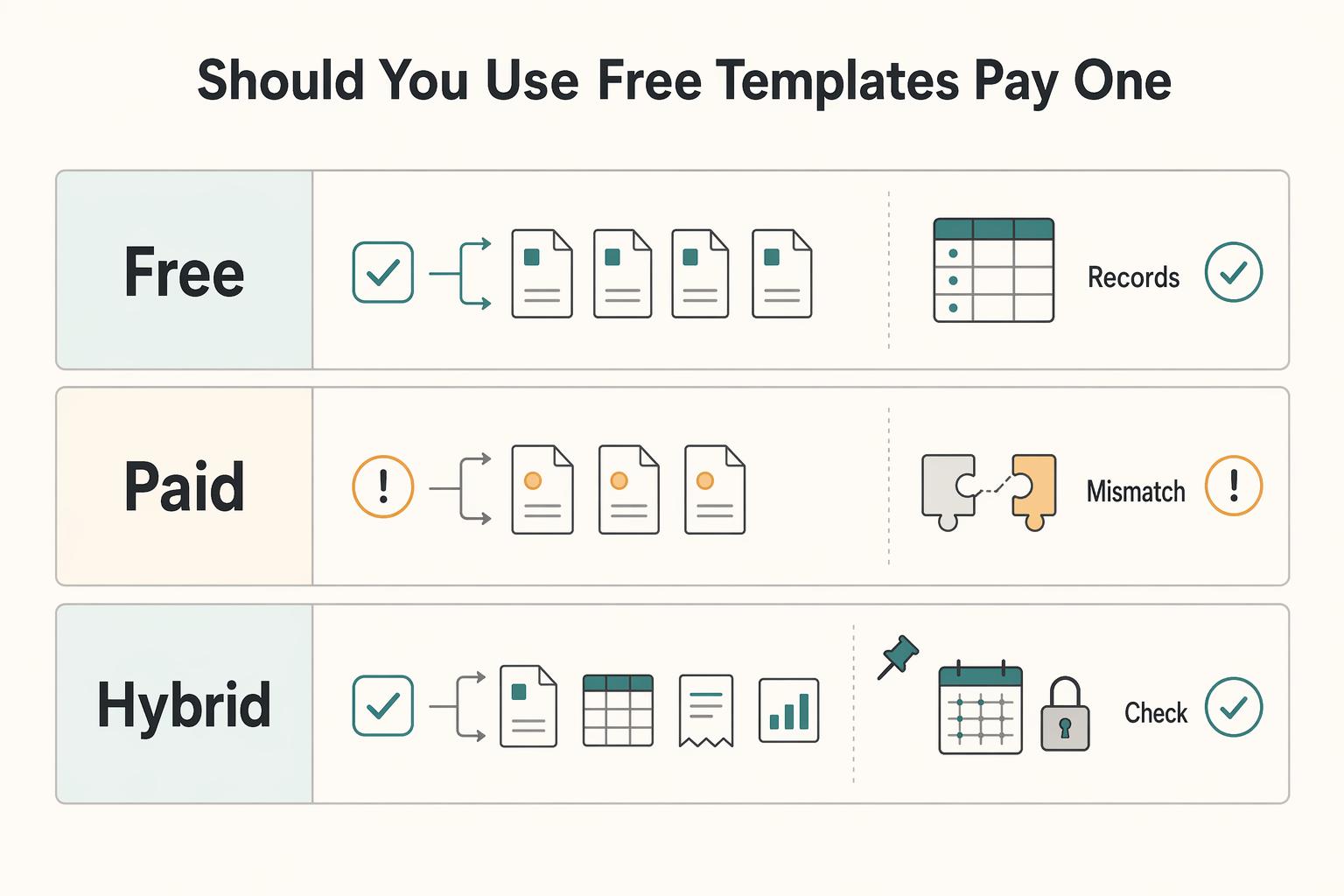
The **best Notion templates for freelancers** are not the prettiest ones. They are the ones you can verify, update, and trust when a client needs an answer now.