

Quick Answer
Manage an offshore development team across time zones by making written execution the default. Choose the right engagement model, define ownership and performance rules early, keep all tasks and decisions in one project tracker, and use live calls only for exceptions. Add clear contracts, least-privilege access, and a documented escalation path so work keeps moving without constant real-time coordination.
Decide the engagement model, use the three-phase lens, verify with documents#
Step 1. Make the four decisions that actually shape the result. To manage offshore development work well, decide early on your engagement model, how ownership and decision-making will work, how work will move across time zones, and how performance will be judged. Offshore hiring can give you access to global talent, faster delivery, and more scalable operations, but it is not just a cost play. If you optimize only for rate, you usually end up with less control and weaker alignment.
This playbook is an operations and risk guide, not legal advice. It helps you structure the relationship, set expectations, and avoid common management mistakes.
Step 2. Use the three-phase lens before you hire.
| Phase | What you decide | What it solves |
|---|---|---|
| 1. Engagement setup | Engagement model, team ownership boundaries, operating norms | Reduces avoidable risk before code is written |
| 2. Async execution | How tasks, decisions, and updates are documented | Keeps work moving across time zones |
| 3. Strategic partnership | How you measure outcomes and share business context | Turns delivery into sustained value |
Choose the engagement model for the work and management capacity. Project outsourcing can fit a defined deliverable; a dedicated team can provide continuity but needs explicit responsibilities and review. Exclusivity, daily control and long-term integration can affect the actual legal relationship, so do not treat a vendor label as a classification decision.
Step 3. Verify discipline with documents, not impressions. Your first checkpoint is simple: every sprint or iteration should be clearly defined and documented in your project management platform. If tasks mostly live in chat, calls, or someone's memory, async communication will break down under time-zone pressure. Keep a small evidence pack from day one: sprint documentation, clear owners, and a written decision log. The main failure mode is not distance by itself. It is weak strategic alignment, where work gets done but business value does not.
Phase 1: Choose the Model, Contracts, Access, and Payouts Before Recruiting#
If you want fewer surprises later, set your foundation before you recruit: choose the relationship model, lock contract positions, set access controls, then choose payment rails.
Step 1. Pick the engagement model and separate the two legal-risk checks. Treat these as separate questions. Contractor classification risk is whether day-to-day working conditions look like employment. Permanent establishment risk is whether your activity in that country could be treated as a taxable business presence.
Use this rule of thumb: the more ongoing and integrated the setup, the more review you need. A dedicated team is typically a long-term extension of your internal process, so review earlier if you want tight daily control, fixed hours, exclusivity, or broad internal access.
Before you make an offer or grant test-task access, complete this pre-hire checklist:
- Choose the model: project-based outsourcing, dedicated team, or another long-term arrangement.
- Set scope boundaries: deliverables, decision rights, overlap expectations, tool ownership, and outside-client flexibility.
- Set counsel timing: local review before signature, not after onboarding.
- Log jurisdiction unknowns: worker-status tests, tax nexus triggers, and country-specific thresholds that need official or counsel verification.
Your checkpoint is a short hiring memo with country, model, scope summary, and counsel status.
Step 2. Decide contract positions before rate negotiation. Your agreement set should remove ambiguity on ownership, confidentiality, conflict handling, and exit. For cross-border development, make explicit decisions on:
- IP assignment
- Confidentiality
- Governing law
- Dispute path
- Termination
- Data-processing and security duties
On IP, do not assume payment alone settles ownership. Tie deliverables to your company in the agreement and SOW, then have counsel confirm jurisdiction fit. Apply the same review mindset to governing law and dispute path.
Pre-kickoff checkpoint: one signed contract set, one active SOW, and one data-processing/security addendum when sensitive data is in scope.
Step 3. Put IP and access controls in place before first commit. Contract language helps, but practical control comes from access discipline. Start with least-privilege access: only the repos, branches, environments, and secrets needed for current work.
- Use business-owned accounts for code hosting, ticketing, cloud, password management, and communication.
- Avoid shared admin accounts and avoid sending credentials in chat.
- Keep an access register with tool, role, and owner.
- On offboarding, remove repo access, revoke sessions/devices, rotate credentials as needed, and disable tokens, SSH keys, and shared folders.
- Run documented access reviews on a cadence that fits your team and remove stale access quickly.
Step 4. Choose payment rails for record quality and payout reliability, not convenience.
| Payment option | Compliance documentation | FX transparency | Payout reliability | Operational overhead |
|---|---|---|---|---|
| Direct bank wire | Check bank and corridor requirements plus contract/invoice records | Compare quoted rate, fees and net received | Verify delivery evidence, trace and return handling | Bank access, approvals and reconciliation |
| Business payout platform | Verify program requirements and exportable records | Compare full quote, fees and recipient net amount | Test recipient eligibility, status visibility and exceptions | Provider integration and exception ownership |
| Supplier/agency invoice | Confirm supplier agreement, invoice and applicable tax records | Check supplier currency and payment terms | Verify beneficiary and escalation path | Agency dependency and service review |
Treat fees, tax handling, transfer limits, and withholding treatment as pending official or counsel verification before you choose a payout route.
With this base in place, your next job is reducing execution delay across time zones. Related: How to Manage Client Communication Across Different Time Zones.
Phase 2: Installing Your Asynchronous Operating System#
To manage offshore development across time zones without constant delays, make written execution your default and use live time for exceptions. Time differences reduce instant access and slow clarifications, so decisions that stay in chat or memory create avoidable wait time.
Step 1. Set operating rules before the first sprint. Use one project tracker as your system of record. Every meaningful work item should include scope, status, blockers, decisions, acceptance criteria, pull request links, and release notes. Use live calls only when:
- A tradeoff needs real-time discussion.
- You are running planned brainstorming that everyone can attend.
- A blocker remains unresolved after the written escalation path.
Agree response windows in working hours, overlap times and the handoff format before the first sprint. Record holidays and daylight-saving changes in the shared schedule. Routine questions can wait for the next agreed work window; work-stopping issues need a named escalation owner. Urgent production incidents use the staffed on-call path, rather than expecting every offshore developer to be awake.
Step 2. Standardize one task brief template. If the brief is weak, async work stalls. For every meaningful task, include:
- Problem statement
- User impact
- Dependencies
- Acceptance criteria
- Rollout notes
- Handoff expectations
Attach the working context up front: design links, relevant docs, likely code area, and known risks or constraints. If you cannot define acceptance criteria or rollout notes yet, the task is not ready.
Step 3. Choose tools for traceability, not preference. If your offshore setup is a long-term extension of your team, your tools should reinforce your internal workflows, security standards, and reporting structure. Prioritize clear decision trails and cross-team visibility.
| Tool area | Selection criteria | Common failure mode |
|---|---|---|
| Project tracker | Decision history stays on the task; links cleanly to PRs and docs | Work happens in chat while tickets stay incomplete |
| Team chat | Fast coordination, but decisions are pushed back into tickets | Notification noise hides real blockers |
| Version control and code review | PRs are linked to tickets, reviews, tests, and release notes | Code merges without clear rationale or reviewer accountability |
Agree Definition of Done for each work type. A code change should include acceptance evidence, relevant tests, reviewer identity and release requirements. Track ready-for-release separately from deployed-and-verified when deployment belongs to another team. Record the release owner and planned checks without pretending those checks already happened.
Once this system is stable, you spend less time chasing updates and more time building ownership with your offshore team.
Phase 3: Transforming Your Developer into a Strategic Asset#
Predictable delivery is your baseline. The real gain comes when you bring your developer into planning early, give clear ownership boundaries, and make early problem-raising normal across time zones.
Step 1. Integrate the developer into planning and ownership#
Give developers the business context and technical inputs needed for their agreed scope. Involve them in planning and review while respecting the engagement’s actual decision rights and working arrangements.
Before major initiatives, share a short business context brief that covers:
- Who the user is
- What problem matters
- Why it matters now
- Which constraints are fixed
- How success will be judged
Then document decision rights inside your governance structure. For each area (technical approach, estimates, sequencing, release readiness, scope changes), state who decides, who is consulted, and who is informed. Get planning input before commitments are finalized, not after timelines are already promised.
Use this pre-commit checkpoint: do you have written developer input on feasibility, risks, assumptions, and dependency order? If not, you are still treating the developer as downstream execution, not real ownership.
This is especially important when work requires customization and understanding your governance and end users. Short-term outsourcing can fit contained tasks, while ownership-heavy work typically fits a longer-term offshore setup better than temporary external profiles.
Step 2. Make early escalation normal in an async team#
Early escalation is a norm you enforce consistently. Write the rule clearly: when blocked, the developer updates the ticket with the issue, impact, last step tried, and the next decision needed. If it can wait, keep it async in writing. If it is work-stopping, follow your Phase 2 escalation path.
Use no-blame language. Start with facts, impact, containment, and what should change in the brief or checklist next time. Avoid opening with fault-finding. Keep a repeatable line such as: "Raise bad news early so we can solve it while the issue is still small."
Set one explicit cross-time-zone norm: if progress depends on an unanswered question, log the blocker before the workday ends instead of waiting for the next cycle.
| Outcome area | Signal to review weekly or per sprint | What to agree and inspect |
|---|---|---|
| Delivery | Committed work accepted with required evidence attached | Scope and acceptance expectations, with dependency changes recorded |
| Quality | Post-release defects or rework linked to shipped changes | Defect severity and rework trends, interpreted with change complexity |
| Reliability | Milestones met, or renegotiated before deadlines when risk appears | Milestone risks raised early and revised commitments documented |
| Collaboration | Planning input recorded, assumptions clarified, blockers raised early in writing | Written handoffs and decision requests available for the next work window |
Step 3. Turn your first hire into a repeatable hiring and onboarding model#
Treat your first strong contributor as your template for scale. Build reusable artifacts:
- Role scorecard: technical scope, written communication, ownership behavior, async readiness
- Trial-task rubric: clarifying questions, assumptions, tradeoff quality, test evidence, handoff quality
- Onboarding runbook: governance structure, tool access, Definition of Done, escalation rules, first ownership area
- Early feedback checkpoints tied directly to the role scorecard
When evaluating an agency, request relevant skill profiles, agreed rates, availability, replacement arrangements and subcontractor visibility. Share candidate information only with the permissions and privacy controls needed for evaluation. Confirm who will do the work and who owns continuity if that person leaves.
We covered this in detail in How to Manage a Software Project in ClickUp with a Remote Team.
Related reading#
Frequently Asked Questions
What are the legal risks of hiring an offshore development team?
Legal risk is jurisdiction-dependent, so avoid one-size-fits-all rules. Confirm which worker-classification, tax-presence, and data-handling obligations apply in each country, and involve qualified local counsel when the arrangement is high impact or unclear. If your process still has unresolved jurisdiction checks, pause and verify them before work starts.
How should you pay an international offshore contractor securely?
There is no single payment setup that fits every country. Choose a method your finance team can reconcile and audit, and verify at setup which records and compliance requirements apply in both jurisdictions. For fees, FX handling, payout timing, and compliance coverage, confirm details directly with the provider and local advisors instead of assuming defaults.
How do you protect your intellectual property with offshore developers?
Do not rely on contract wording alone. Keep code and documents in company-controlled systems, grant access by role, and review permissions on a regular schedule. IP ownership and assignment enforceability are jurisdiction-specific, so get local legal review when the risk is material.
What should be in a contract for an offshore developer?
Your agreement should match the actual working relationship and operating model, including scope, payment workflow, confidentiality, IP language, termination, and data-handling expectations. Enforceability is jurisdiction-specific, so for business-critical work, have local counsel validate terms in the relevant countries. A domestic template often needs cross-border review before use.
Is it better to hire a freelance offshore developer or use an agency?
There is no universal winner. A freelancer can fit narrow scope and direct management, while an agency can fit multi-skill delivery and coverage needs. Decide based on your management bandwidth, required skills, and how much visibility you need into who is doing the work.
How do you build team culture with an offshore developer in a different time zone?
Use shared written standards, planning input and clear response expectations. Set routine and review windows around agreed working hours and time-zone overlap, with holidays and daylight-saving changes recorded. Use a separately staffed on-call escalation for urgent incidents; do not promise immediate responses from people outside their agreed coverage.
What project method works best for offshore teams?
There is no universally best method for offshore teams. Use the framework that fits your time-zone overlap and supports documentation-first asynchronous handoffs. The common failure is choosing a process that assumes instant access when your team is distributed.
Researched and edited by the Gruv editorial team. Gruv builds cross-border billing, payouts, and finance-operations software for global businesses.
Sources
Includes 2 external sources outside the trusted-domain allowlist.
Educational content only. Not legal, tax, or financial advice.
Related Posts
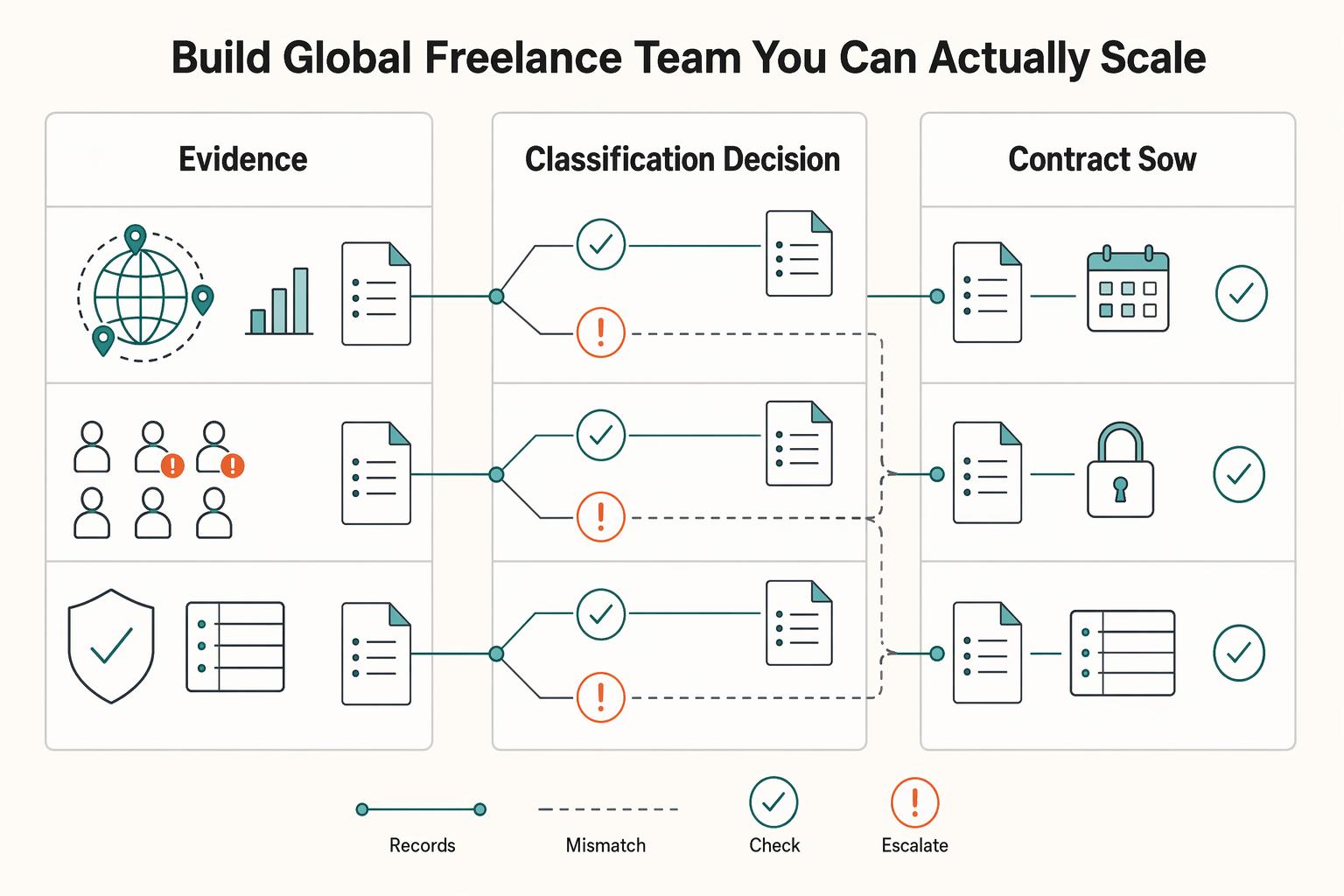
How to Manage a Global Freelance Team Without Compliance Gaps
If you want to manage a global freelance team without constant cleanup, use the same intake-to-payout process for every engagement and save an artifact at each gate. Common failure points are instinct-based classification, vague scope, and payments approved in chat with no audit trail.
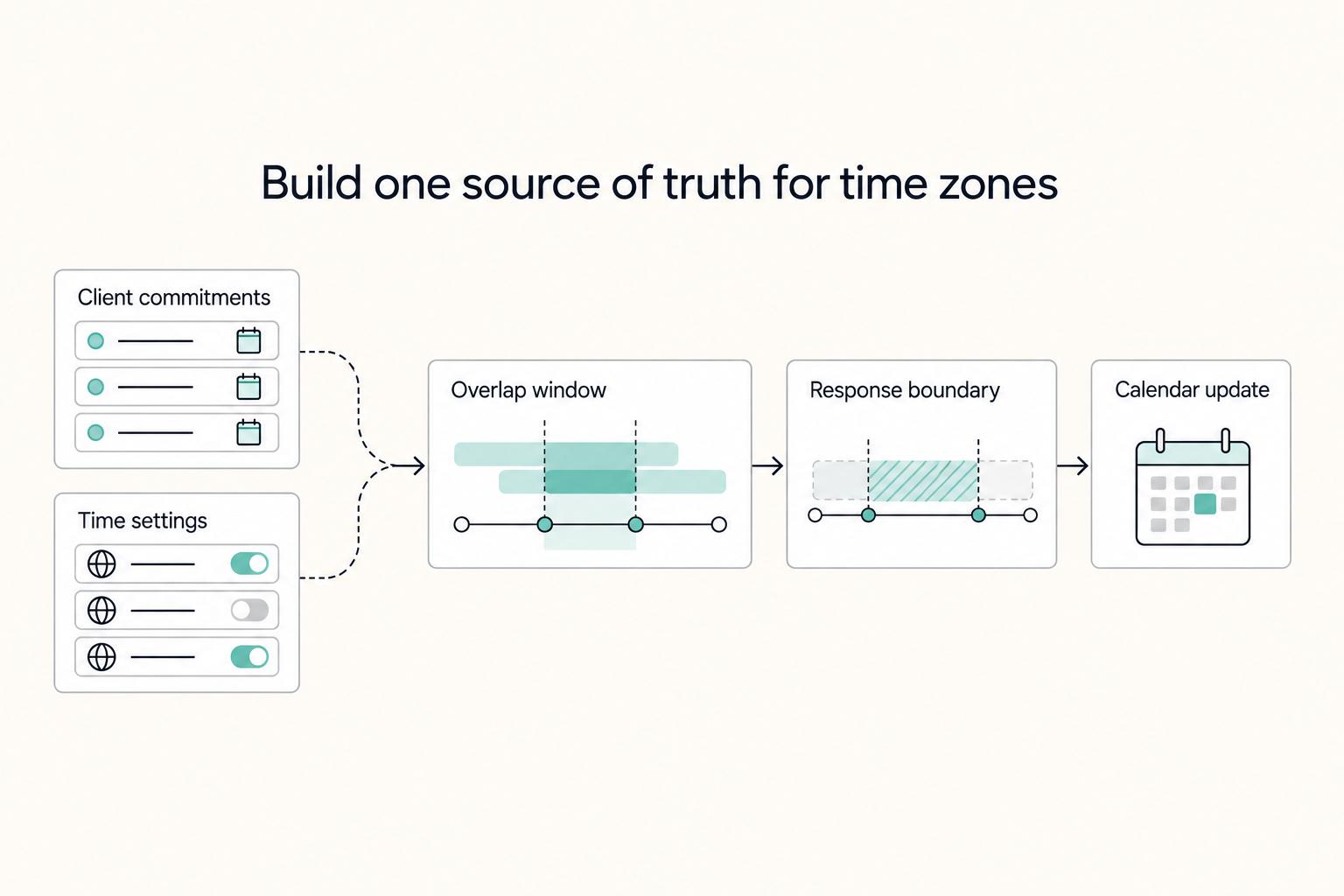
How to Manage Client Communication Across Different Time Zones
You can get better control of client time zones with a short setup pass. Stop treating timing as a courtesy issue and treat it as a written operating choice. The goal is simple: clearer rules, fewer delays, and fewer boundary problems because everyone knows which local time controls scheduling, what counts as urgent, and when a reply is actually due.
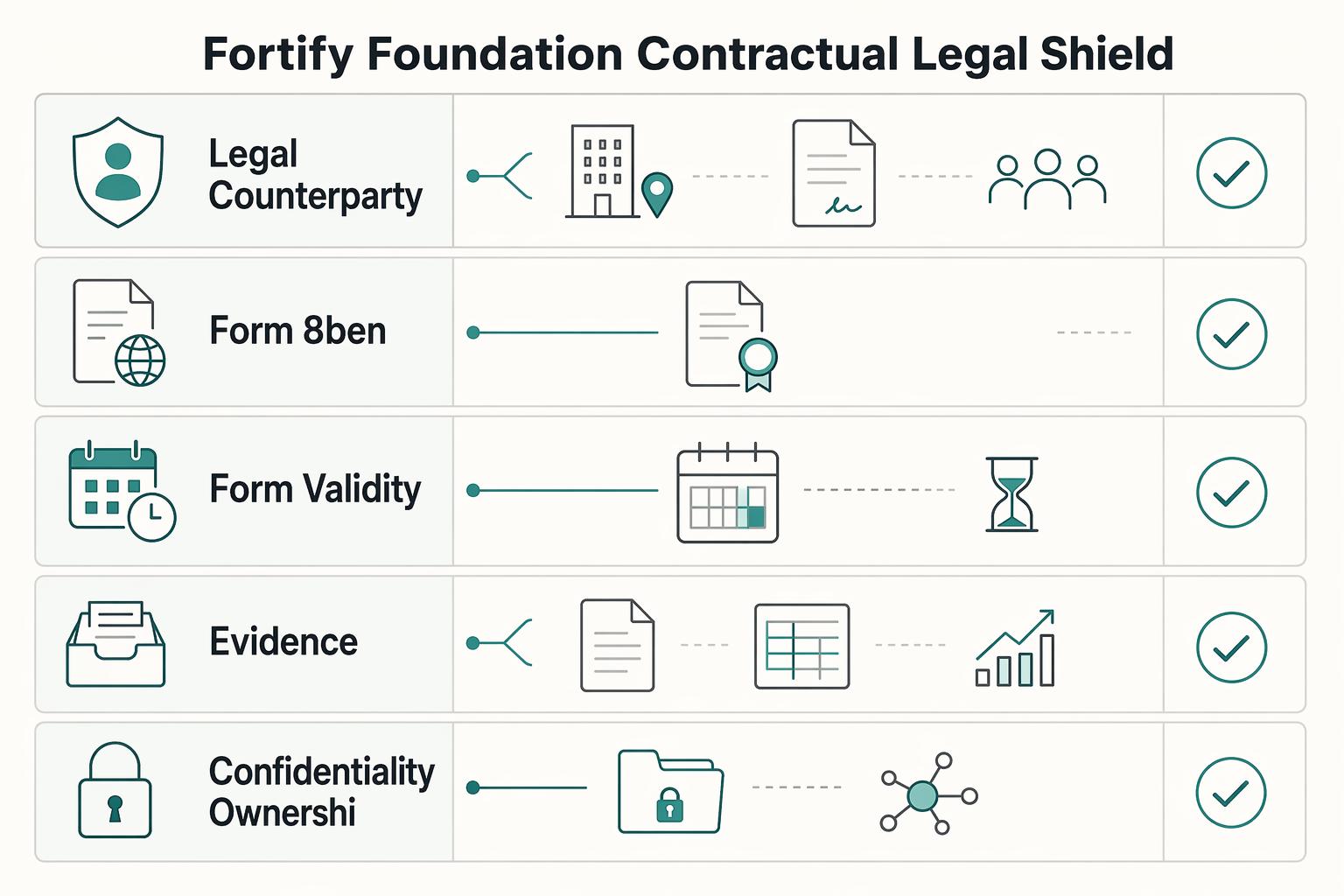
How to Manage a Remote Team of Subcontractors
To work with remote subcontractors without creating avoidable legal risk, make sure your contracts and day-to-day behavior tell the same story. A common structure is one MSA for the standing relationship and one SOW for each engagement. Keep management focused on outcomes, not on controlling how the work gets done.