

Quick Answer
To make your freelance website GDPR compliant, set a safe tracking default, implement consent that actually controls scripts, publish a clear privacy notice, and keep lightweight proof records. Start by mapping where personal data enters your site, then verify that non-essential tracking stays off before opt-in. Treat compliance as an operating routine with change logs and repeat checks after every tool update.
Reach a GDPR-style minimum viable setup in one working session#
You can get your website to a practical, GDPR-style minimum viable setup in one working session by (1) setting a safe default for tracking, (2) implementing real cookie consent behavior, (3) publishing a plain-English privacy notice, and (4) keeping lightweight "prove-it" records. You run a business of one, so your compliance setup needs to be operational, maintainable, and fast to verify. You do not need enterprise compliance theater. You need a freelancer-grade system you can keep running without slowing deals.
This playbook is built for the realities of a freelance website: you collect leads, you book calls, you invoice clients, and you probably run analytics. Cookies can make a site work better and feel more personal, but they can also collect data about visitors. That is why consent matters. Treat this as a systems problem, not a copy exercise.
Before you start (about 10 minutes)#
Goal: reduce ambiguity so you do not accidentally "half-comply," then capture what your site is doing right now.
- Open a private browser window and visit your site. Screenshot what loads before you click anything (banner state, widgets, popups).
- List every place personal data enters your business (contact form, newsletter, booking tool, embedded chat).
- List every tracking surface (analytics, ad pixels, embedded video players). Assume anything that sets identifiers needs a decision, and often needs cookie consent before it runs.
- Pick a "safe default" posture you can defend: block non-essential tracking until a visitor opts in (where you can).
The minimum viable control stack (what you implement today)#
You do not need a full compliance department. You need controls you can explain, reproduce, and verify in a private window.
| Control | What "good" looks like | Your verification step |
|---|---|---|
| Cookie consent | Visitors can accept or refuse, and your site changes behavior based on that choice | Refresh the site and confirm non-essential tags do not fire before consent (if you've chosen an opt-in default) |
| Privacy notice (often called a privacy policy) | Plain language, easy to find, and linked where you collect data | Click from footer and next to each form and confirm it stays accessible |
| Consent log | A simple record of what you tested or exported from your consent tool | Save a dated screenshot or export and store it in your ops folder |
| Change log | A running note of what you changed and why | Add an entry each time you change banner settings, tags, or form tools |
Hypothetical scenario: you add a scheduling widget the night before a launch. You run your pre-consent check, spot new tracking requests, and pause the widget until you classify it, update cookie consent behavior, and log the change. You keep momentum and stay defensible.
Outcome: by the end of this session, you will know what you collect. Your cookie consent will reflect the behavior you intend (for example, blocking non-essential tracking until opt-in, if that's your default). Your privacy notice will be clear, findable, and connected to your forms. You will also have a lightweight consent log plus change log for auditability.
If you want a deeper dive, read Taxes in Germany for Freelancers and Expats.
Can you ignore GDPR if you're not in the EU?#
No. You should not ignore GDPR just because you operate outside Europe if your website collects, processes, stores, or deletes personal data from people in the EU (and the EEA). In general, GDPR may still apply if you offer goods or services to people in the EU, monitor their behaviour, or otherwise target EU residents, regardless of where your business or servers are located.
Step 1: Run the "EU touch" test (5 minutes)#
Start with the practical baseline: GDPR (General Data Protection Regulation) governs how websites collect, process, store, and delete personal data from EU residents, and it sets rules for handling personal data from people in the EU and the European Economic Area (EEA).
Use this decision table to reduce ambiguity and pick a default you can defend:
| Signal | What it means operationally | Safe call |
|---|---|---|
| You get inquiries from EU companies or EU-based people | Your site "touches" EU personal data in normal use | Treat GDPR as in scope |
| Your site runs analytics or marketing tags for all visitors | You may "monitor behaviour" via identifiers | Use consent banners and configure tags accordingly |
| You "only work with US clients" but your site is public | You cannot confidently prove EU visitors never interact | Assume exposure and set baseline controls |
Quick decision rule (safe default): if you cannot confidently prove you never get EU or EEA visitors interacting with your site, set a baseline setup that supports GDPR compliance. The cost of a clean baseline is usually lower than scrambling later.
Step 2: Don't outsource compliance to your host or platform#
Platform reality check: your host or platform can support parts of compliance, but the responsibility stays with you. A host can act as a data processor (infrastructure security, encryption, providing a DPA), but you operate as the data controller. You own application-layer choices like consent banners, privacy policies, plugin choices, and responding to user data requests. "GDPR-compliant hosting" will not make the whole site compliant.
Prep: map your data flows and tools before you touch the site#
Map where personal data enters and where it lands before you change anything on the site. If GDPR applies to you, you need a clean operational picture. This prep prevents a common failure mode: you change a cookie banner while your tools keep collecting identifiers in the background.
Before you start (10 minutes)#
Treat this like a quick deployment checklist. GDPR has real downside, including fines that can reach £17,500,000 or 4% of global annual revenue, whichever is higher.
More practically, you want speed under pressure. If you do not have a current inventory of what you store and where, incident response becomes a time sink. GDPR's 72-hour notification clock does not pause for guesswork.
Step-by-step: build your inventory + consent readiness#
Step 1: Inventory your capture points, then map destinations. List every "entry point" where people can give data (forms, live chat, tracking pixels, log files). Add anything similar on your site that collects personal data. Then write down where each one sends data (email provider, CRM, spreadsheet, inbox).
Keep a simple change log (date, change, why, what you checked). Run your site like a system, not a memory test.
Step 2: List your tracking surfaces and mark what likely needs consent before it runs. Review anything that could set identifiers or transmit user data: analytics tags, ad pixels, embedded video players, chat widgets. Flag anything non-essential you plan to treat as opt-in, depending on your setup and context. This is where people miss "background" collection while focusing on the banner.
Step 3: Gather your current artifacts (even if messy). Pull your existing privacy policy or privacy notice, capture what your cookie banner currently shows, and record relevant plugin settings (especially on WordPress). Do this for continuity and debugging, not because GDPR demands a specific format.
Step 4: Choose a minimum viable tool stack and commit. If you run WordPress, pick one consent-management approach and stick to it. Tool thrash creates inconsistent consent behavior.
Step 5 (2-minute check): Take a "before" snapshot in a private window. Open an incognito window, load your site, and note what appears before any interaction: banners, embeds, and anything that looks like tracking. Hypothetical scenario: you spot an embedded scheduler loading immediately. That tells you you need to classify it and decide how it should behave under your consent setup before you call anything "compliant."
| Surface | What to list | What you decide now |
|---|---|---|
| Capture points | Contact form, newsletter, calendar, chat | Where data goes, who can access it |
| Tracking surfaces | Analytics, pixels, embedded media | What should not run until the right consent is in place |
| Artifacts | Privacy notice, banner behavior, settings | What you must update and verify |
You might also find this useful: How to Automate Your Personal Finances.
Step 1 - Run a 10-minute GDPR scope audit (EU vs UK GDPR) and set your safe default#
If EU residents' personal data can enter your systems, assume GDPR exposure. If UK personal data is involved, UK GDPR may also apply depending on jurisdiction. With your data flows and tools mapped, stop debating edge cases and pick a posture you can actually execute consistently. This does not "finish" GDPR compliance. It gives you a baseline so your next changes stay aligned.
Step 1A: Define what you collect (don't guess)#
Open your inventory and label each item with the exact data you touch. Write it like an operator, not a lawyer:
| Data area | Personal data mentioned | Scope rule |
|---|---|---|
| Lead forms | name, email, message content (and anything they paste in) | If an EU resident's personal data can enter this pipeline, treat it as in-scope for GDPR compliance |
| Analytics | identifiers that can single someone out | If an EU resident's personal data can enter this pipeline, treat it as in-scope for GDPR compliance |
| Billing | invoice name, business address, VAT details (if applicable), payment references | If an EU resident's personal data can enter this pipeline, treat it as in-scope for GDPR compliance |
Decision rule: if an EU resident's personal data can enter any of those pipelines, treat it as in scope. GDPR can apply even when you operate outside the EU if you process EU residents' personal data.
The UK retained its own GDPR framework post-Brexit, and UK data protection law also interacts with PECR and the Data Protection Act 2018.
Step 1B: Pick a compliance posture and set your "safe default"#
Pick a default you can apply across pages, tools, and vendors, then tighten it as you learn more. This is an internal operating choice, not legal advice.
Now draw a quick "jurisdiction map" for yourself: (1) where you operate, (2) where clients and users sit, (3) where key vendors process data. This keeps you from missing obvious routing issues (for example, "we forgot the booking tool routes data elsewhere").
Safe default when uncertain: keep non-essential cookies and tracking off by default, and only enable them after cookie consent. If you cannot tell whether an embedded tool sets identifiers, keep it off until you confirm what it does, then reclassify it based on what you observe.
Related: Working Remotely in Latin America: A Visa Guide.
Is a cookie banner enough for GDPR compliance? (No - here's the correct consent setup)#
No, a cookie banner alone does not make a website GDPR compliant because the banner has to actually control what runs on your site. A common, GDPR-oriented posture is simple: non-essential tracking stays off until the user opts in. Now you need to make that posture real in production, and verify it. Treat your banner as a control surface, not decoration.
What "enough" looks like in practice (banner vs behavior)#
A banner only helps when it gives users meaningful choice and your site honors that choice. The practical bar is simple: users can accept, reject, or customize, and your site behaves differently based on that choice.
| Setup | What the visitor sees | What your site does before consent | Risk signal |
|---|---|---|---|
| Banner-only | A notice with buttons | Analytics and marketing tags still load | You collect data before choice |
| Consent-controlled | Accept, Reject, Customize | Only necessary functions run | Consent actually gates tracking |
Operational minimums (aim for defensible, not "cute"):
- Block non-essential scripts until consent is given. Cookies (small data files stored on a device or browser by websites or third parties) matter here because scripts can set them. If scripts fire early, you lose control.
- Offer clear options: Accept all, Reject all, and a preferences path.
- Use plain-language categories in a preference center, by category (for example, analytics and marketing). If you cannot explain a category in one sentence, you probably do not need it.
Hypothetical scenario: you embed a scheduling widget and cannot tell if it drops identifiers. Classify it as non-essential, block it by default, then re-enable it only after opt-in and testing.
Implementation paths + operator verification#
WordPress: configure a consent tool that supports prior blocking and auditability. The WordPress CookieYes listing describes a customizable banner that blocks non-essential scripts until consent is given, includes Accept/Reject, and can record and export user consent in CSV for audits. That gives you both control and evidence for your consent log.
| Check | How to run it | What to confirm or do |
|---|---|---|
| Pre-consent network check | Open browser dev tools, go to Network, refresh the page, click nothing | Confirm you see no analytics or ad endpoints pre-consent; record the result in your consent log |
| Consent path test | Test Accept all, Reject all, and Save preferences | Confirm scripts load only on the paths that allow them |
| Early-firing tags | If you catch tags firing early | Pause marketing pixels, switch to "block by default," then add a change log entry (date, what changed, what you tested) |
Wix: use whatever banner and consent settings you have available, then verify behavior yourself in a private window. Do not assume an app respects consent just because it appears in a dashboard. Run the same checks:
- Open browser dev tools, go to Network, refresh the page, click nothing. Confirm you see no analytics or ad endpoints pre-consent. Record the result in your consent log.
- Test three paths: Accept all, Reject all, Save preferences. Confirm scripts load only on the paths that allow them.
- If you catch tags firing early: pause marketing pixels, switch to "block by default," then add a change log entry (date, what changed, what you tested).
Related: Try the SOW generator.
Step 3 - Publish a privacy notice that meets GDPR Article 12/13/14 (without legal theater)#
Publish a plain-language privacy notice that matches what you actually do with personal data when you collect it. Once cookie consent actually controls scripts, your notice needs to match reality. This is one of the most common gaps, and one of the fastest fixes.
Build a freelancer-grade privacy notice (structure you can actually maintain)#
Treat your privacy notice (often called a privacy policy) as your public-facing processing declaration. In plain terms, it should tell people about the type, scope, and purpose of the personal data you collect, use, and process, and inform them of their rights. Keep it in language they can actually follow.
Use this operator-friendly structure (best-practice, not legal theater):
- What you collect + why (your purposes). Write this like a services operator: "When you submit my contact form, I use your name, email, and message to respond and scope the project."
- Where data comes from (if not direct). If you receive intros through referrals or platforms, say so in human language.
- Who you share with + what choices/rights people have. List the kinds of vendors you use to run the business (email, scheduling, analytics, hosting), and explain what options people have (for example, how to request access or deletion). If you include retention, state it in plain terms (without pretending it's exact down to the minute).
| Touchpoint on your freelance website | What to disclose in your notice (plain language) |
|---|---|
| Contact form | What you collect, why you use it, where it goes next (email/CRM) |
| Newsletter signup | What you send, how often (if you know), how to unsubscribe |
| Booking tool embed | What details it collects and which provider processes them |
| Analytics (after opt-in) | What you measure and how consent controls it |
Hypothetical scenario: you get a lead through a referral form on a partner site. Add one sentence under "Where data comes from" explaining that partners may share basic contact details so you can reply.
Placement + "prove it" checks (reduce risk fast)#
Make your privacy notice easy to find (for example, in your footer) and easy to reach at the moment someone is about to hand you data (for example, near your forms). Guidance around children's data protection, in particular, emphasizes using plain, clear language people can understand.
Verification checklist (run this like a release):
- Open every form on your site and confirm you can reach the privacy notice link without scrolling gymnastics.
- Compare your notice against your actual tools. If you added a new widget, update the notice in the same session.
- Avoid overpromising security. Internet-based data transmissions can have security gaps, so avoid language that suggests absolute protection.
Step 4 - What proof should you keep to show compliance (without building a bureaucracy)?#
Keep a small, dated evidence pack that shows your legal basis and your cookie consent behavior. GDPR compliance is often framed as coming down to three things: a legal reason for processing, strong security, and being ready to act on user rights. Having "receipts" makes it easier to show what you did and why, without building a bureaucracy.
Once your privacy notice matches your tools and your cookie consent actually gates tracking where enabled, you want proof you can produce when a client asks, a platform reviews you, or you are debugging odd behavior. This matters for real-world risk too: GDPR fines are often described as potentially reaching €20 million or 4% of annual global turnover, and the EU GDPR affects businesses both inside and outside the EU. It has been in force since 25th May 2018.
Build a lightweight evidence pack (prove it, don't perfect it)#
Treat evidence as operational hygiene. You do not need enterprise paperwork to act professionally, but you do need receipts.
Here's a simple evidence pack you can maintain:
| Evidence item | What it proves | What "good" looks like |
|---|---|---|
| Dated consent snapshot | Your cookie banner actually controlled tracking choices | Screenshot or export (if your tool supports it) showing consent state and categories at a point in time |
| Dated change log entries | You made deliberate changes, not random tweaks | One line per change: date, what changed, why, what you tested |
| One-page "processing map" | You know which tools touch which data and why | Tools list aligned with your privacy policy claims (no contradictions) plus a noted legal reason for each kind of personal information you handle |
A consent record is just your record of consent states and tests (not a legal novel). Many consent setups store a choice cookie (for example, a "CookieConsent" cookie that stores information about the user's choice on whether cookies are allowed or denied). Capture evidence that your site respected that choice.
A change log is your running timeline. Log banner config edits, privacy notice updates, and tool swaps. Keep it in a doc or notes app you actually use.
Set a monthly recheck cadence and steps for unexpected tracking#
Set a lightweight monthly cadence (think: a short calendar reminder, not a GDPR requirement):
- Re-check that cookies that are not strictly necessary are not firing before opt-in. (Some sites explicitly ask permission for cookies that are not strictly necessary for the basics of the website to function.)
- Remember that necessary cookies are often described as supporting the functioning and security of the website and not being possible to decline. Your checks should focus on everything beyond that.
- On WordPress, treat every new plugin, embed, or widget as a potential tracking surface. Log it.
New tool trap test (do this every time): add the new widget (chat, scheduler, video embed). Then open a private window and load the page without clicking "Accept." If the widget drops cookies or fires analytics requests before cookie consent, treat it as non-necessary and block it until opt-in.
Hypothetical scenario: you add a scheduling widget to speed up sales calls and it quietly loads third-party scripts on page load. Switch it off, reconfigure it to wait for consent, then add a change log entry that notes what you tested (Accept, Reject, Preferences).
Recovery playbook when someone reports unexpected tracking:
- Disable the tag or widget first.
- Re-run your consent tests in a private window.
- Update your privacy policy if the tool change affects disclosures.
- Write one corrective-action entry in your change log while the facts are fresh.
Step 5 - Harden your lead + client workflows (forms, booking, invoices) so GDPR doesn't break deals#
Collect less data in your lead and client workflows, and keep every step consistent with what you say in your privacy notice. When you rely on consent or other approvals, keep an internal record so you can explain what happened later. This is where deals start, and where slippage usually happens: forms, booking tools, and payments.
Step 5A: Fix your capture points like an operator (clarity, minimization, consistency)#
Treat every capture point as a mini product flow. The target state is simple: a visitor understands what happens next, and you can explain it in your privacy notice without hand-waving.
| Workflow rule | What to do | Article note |
|---|---|---|
| Minimize fields | If you only need name, email, and a short message to qualify, do not collect job title, company size, budget, and phone "just because" | Collect less data in your lead and client workflows |
| Keep the privacy notice easy to reach in-context | Put the link on the same page as the form or booking flow so the user can access it before they submit | Do not rely on the footer alone |
| Separate inquiry handling from marketing | Route service inquiries into your CRM or inbox pipeline; route newsletter subscriptions into your email platform | Do not mix the two for convenience, because you will lose track of user intent later |
| Record decisions | When you add, remove, or reroute a form integration, log it in your change log the same day | Keep an internal record so you can explain what happened later |
Use the same rules across contact forms, discovery call booking, and "get a quote" flows.
Hypothetical scenario: you embed a scheduler for faster sales calls, then later switch providers. If you do not update your privacy notice and change log, you create a gap you cannot explain later when a client asks where their details went.
Step 5B: Handle cross-border reality with one baseline (less guessing, fewer mistakes)#
If you work globally, you will not reliably segment visitors by geography without errors. Run one strict-enough baseline flow for everyone, then tighten only when you have a concrete reason.
Use this table as your default operating map:
| Workflow surface | Main risk | Default control | What to keep aligned |
|---|---|---|---|
| Lead forms | Over-collection and unclear routing | Fewer fields, clear routing, consistent disclosures | Privacy notice + change log |
| Booking tools | Extra data captured by the vendor | Only ask what you need to schedule | Privacy notice + tool list |
| Invoices/checkout links | Third-party processing and data handling | Prefer hosted flows you can operationally support, and document vendor swaps | Privacy notice + change log |
One practical operator note: when you choose tools that produce audit-ready records and clear histories, you spend less time arguing about "where did the data go?" during disputes. Gruv leans into that same principle for money movement recordkeeping (where enabled, and it varies by program).
Step 6 - Put legal backstops in your site Terms: Termination, Limitation of Liability, Indemnification, Governing Law, Jurisdiction, Dispute Resolution#
Use your site Terms to set the rules for commercial and misuse risk when a visitor turns into a lead or client. Your privacy policy explains how you handle personal data. Your Terms can cover the non-data problems that data protection rules are not designed to address, like payment issues, abusive submissions, and dispute logistics.
Common clauses to consider (and how they map to website operations)#
Think in operational triggers, not legal theory. Your Terms should tell you what to do on a bad day.
| Clause | What it protects you from | Where it shows up on a freelance website | What to keep aligned |
|---|---|---|---|
| Termination | Ongoing access or engagement you no longer want to provide | Abuse of contact forms, harassment, spam, non-payment after onboarding | Your privacy notice retention language (what happens to inquiry/client data) |
| Limitation of Liability | Outsized claims tied to site use or informational content | Blog posts, templates, portfolio claims, uptime issues, linkouts | Your real risk profile (and any insurance you actually carry) |
| Indemnification | Third-party claims triggered by what a user submits or how they use your site | File uploads, free-text form fields, "paste your materials here" onboarding | Your form rules (what you allow users to submit) |
Practical drafting rule: write these clauses to match your actual flows. If you accept attachments in a form, your indemnification language should match the reality that users might submit unlawful or rights-infringing content.
Hypothetical scenario: a prospect uses your contact form to submit content they do not own, then blames you when a third party sends a complaint. Your Terms can help set expectations: you can remove content, stop providing access/services, and place responsibility for submissions on the submitter.
Cross-border clarity you control (reduce accidental multi-country disputes)#
If you work with people in different places, pick one set of "where and how we handle disputes" defaults and publish them (requirements vary by jurisdiction).
- Governing Law: Choose one governing law that matches your operating base and contract strategy. Do not leave it vague.
- Jurisdiction: Name the courts or venue you can realistically operate under. Avoid language that invites disputes in multiple countries.
- Dispute Resolution: Define a process you can run consistently, for example: written notice → good-faith attempt to resolve → mediation/arbitration/courts (pick an end-state you can actually support).
Verification checklist (2 minutes):
- Put your Terms link in the footer next to your privacy policy.
- If your site collects personal data, keep Terms easy to find on the same pages where people submit it (alongside your privacy notice).
- If you revise Terms, consider noting the revision date and what changed.
Common mistake: copying Terms from another business with conflicting governing law and jurisdiction. Recovery: pick one Governing Law + Jurisdiction pair you can actually use, update the footer links, and record the revision date.
Wrap-up: Your Minimum Viable GDPR Stack + copy/paste checklist#
At a defensible minimum, get valid consent before placing any non-essential cookies, map what personal data you collect/process/store, and keep auditable consent records. You now have a setup you can run, verify, and repeat. Compliance usually fails when you treat it as a one-time document instead of an operating habit.
Cookie compliance does not mean "slap up a banner." It means transparency, giving visitors control over their information, and being able to show what choices were made. Many privacy regulations require valid user consent before you place non-essential cookies. Your first move is operational: make sure your site does not place non-essential cookies until the visitor opts in, and keep auditable logs of those consents.
The minimum viable stack (what to do, how to verify, what to save)#
| Control | What "done" means | Verification you can run | Record to keep |
|---|---|---|---|
| Non-essential cookie gating | You place non-essential cookies only after consent | Visit in a private window, interact with consent choices, then re-check cookies | Auditable consent logs (from your consent mechanism) |
| Data handling processes (documented) | You can explain where data lives, how long you keep it, and how you handle requests like access or erasure | Read it like a client. If you cannot follow it, rewrite it | A dated copy of your process notes (or your privacy policy, if you use one) |
| Data map | You know every tool that touches personal data | List forms, inboxes, CRMs, schedulers, analytics | One-page inventory |
Hypothetical scenario: you add a chat widget on your freelance website. Treat it like a deployment. Install it, run the private-window cookie check again, confirm what personal data it collects/processes/stores, and update your data map and processes as needed.
Copy/paste checklist (Minimum Viable GDPR Compliance for a Freelance Website)#
- I checked what privacy and data protection obligations likely apply to my site (rules vary by jurisdiction).
- My cookie banner and consent mechanism collect valid consent before placing non-essential cookies.
- I tested consent choices and confirmed my cookie behavior matches those choices.
- I keep auditable consent logs (or equivalent records) from my consent mechanism.
- I have clear, written processes for where personal data lives, retention, and handling user requests like access or erasure.
- I mapped all personal data processing on my freelance website (forms, newsletter, booking, analytics) so I can trace data from collection to deletion.
- I treat data protection as an ongoing effort, not a one-time document.
- I re-test cookie behavior and update my records after any site or tool change.
Frequently Asked Questions
Do I need GDPR if I’m not in the EU?
If your freelance website processes personal data connected to people in the European Union (EU), you should align your data practices with the General Data Protection Regulation (GDPR) even if you live elsewhere. A practical trigger is when you sell services to EU residents or you monitor behavior online (for example, through analytics). If you cannot confidently prove you never get EU visitors, treat “make website gdpr compliant” as your safe default.
Is a cookie banner enough for GDPR compliance?
A cookie banner can be part of your approach, especially if you need a way to obtain explicit consent for certain data processing. But aligning with GDPR is broader than a banner: you’ll generally also want a clear, comprehensive privacy policy and strong security practices.
What must a GDPR privacy notice include?
A comprehensive privacy policy is vital. Keep it plain-language and genuinely reflective of what your site does, and make sure it supports lawful data processing, including obtaining explicit consent where needed (requirements can vary based on context).
How do I make a Wix freelance website GDPR compliant?
Keep it platform-agnostic. Start by making sure you have a comprehensive privacy policy that matches how your site handles personal data, and put it somewhere people can actually find. Then make sure you’re obtaining explicit consent where it’s required for your processing. Finally, protect personal data with strong security measures like HTTPS and regular checks.
How do I make a WordPress freelance website GDPR compliant (and which plugin should I use)?
There isn’t a single “right” plugin in the abstract. Focus on outcomes: a comprehensive privacy policy, explicit consent where needed for lawful processing, and security measures like HTTPS and regular checks. On WordPress, be extra mindful of what themes and plugins do with personal data, since each one can affect how data is processed.
EU GDPR vs UK GDPR for freelance websites: what changes in practice?
The UK implemented its own version of the law, known as the UK GDPR, and it closely mirrors the EU GDPR. In practice, many freelancers aim for one solid baseline across both: a comprehensive privacy policy, explicit consent where required for lawful processing, and strong security (like HTTPS and regular checks). Then, where relevant, reflect whether you’re operating under EU GDPR, UK GDPR, or both.
What proof should I keep to show GDPR compliance if a client asks?
Keep a lightweight evidence pack you can produce quickly. At a minimum, keep a dated copy of your privacy notice and notes on how you obtain explicit consent where it’s needed. Also keep evidence of basic security steps, like using HTTPS and logging regular checks or audits you perform to protect personal data.
Try a related tool
Researched and edited by the Gruv editorial team. Gruv builds cross-border billing, payouts, and finance-operations software for global businesses.
Sources
Includes 5 external sources outside the trusted-domain allowlist.
- federalregister.gov/documents/2024/11/18/2024-25079/required-rul...trusted
- etsy.com/ca/market/gdpr_templateexternal
- gdpr.eu/privacy-noticeexternal
- gdpr.eu/privacy-noticeexternal
- support.wix.com/en/article/preparing-your-wix-site-for-the-gdprexternal
- vanta.com/resources/8-steps-to-make-your-website-gdpr-...external
Educational content only. Not legal, tax, or financial advice.
Related Posts
Taxes in Germany for Freelancers and Expats
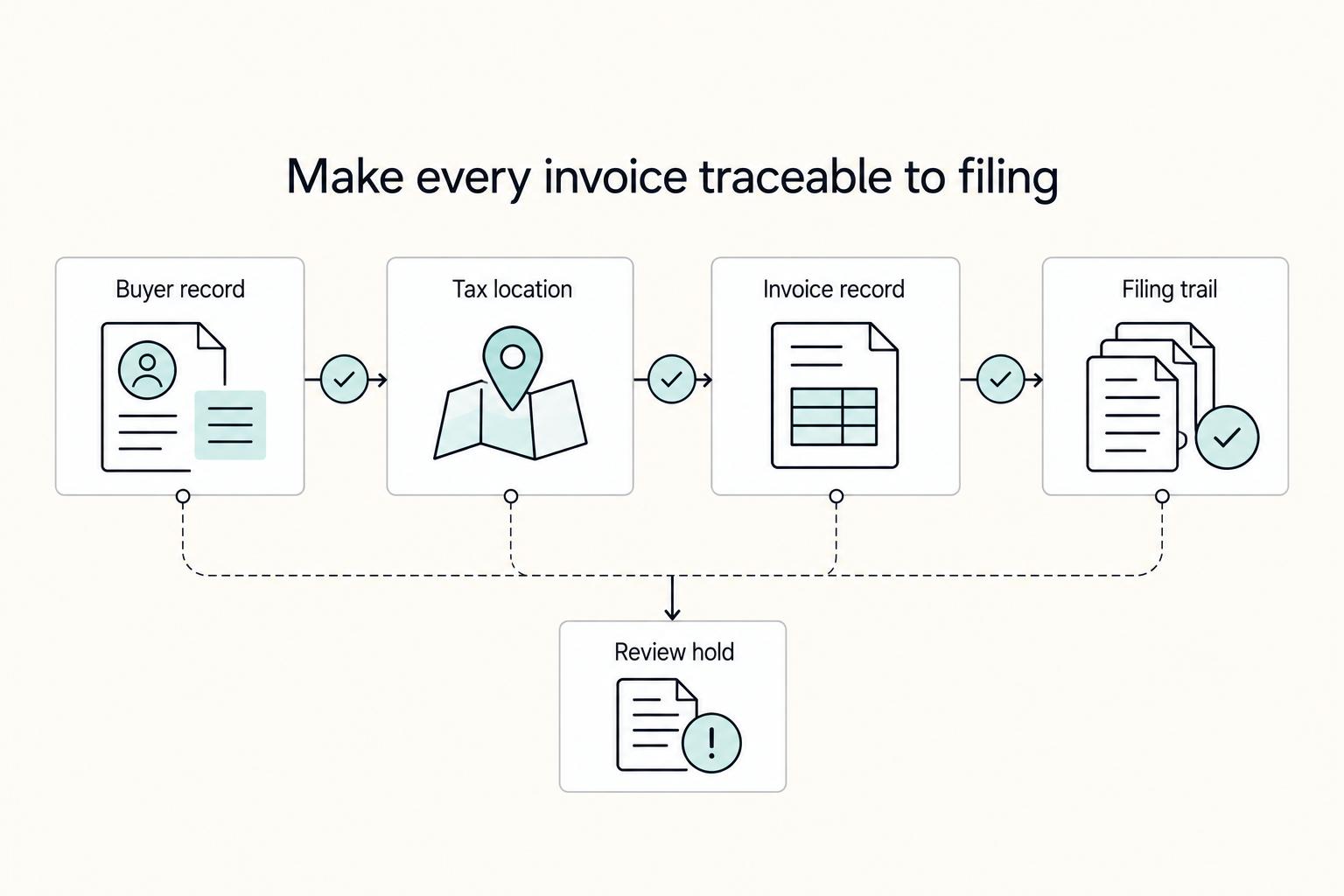
Low-stress compliance in Germany comes from decision order, not tax tricks. Use this sequence: confirm core facts, apply conservative temporary assumptions, verify the few points that can break invoices or filings, and keep one evidence file that explains each decision.
Working Remotely in Latin America Without Visa Guesswork
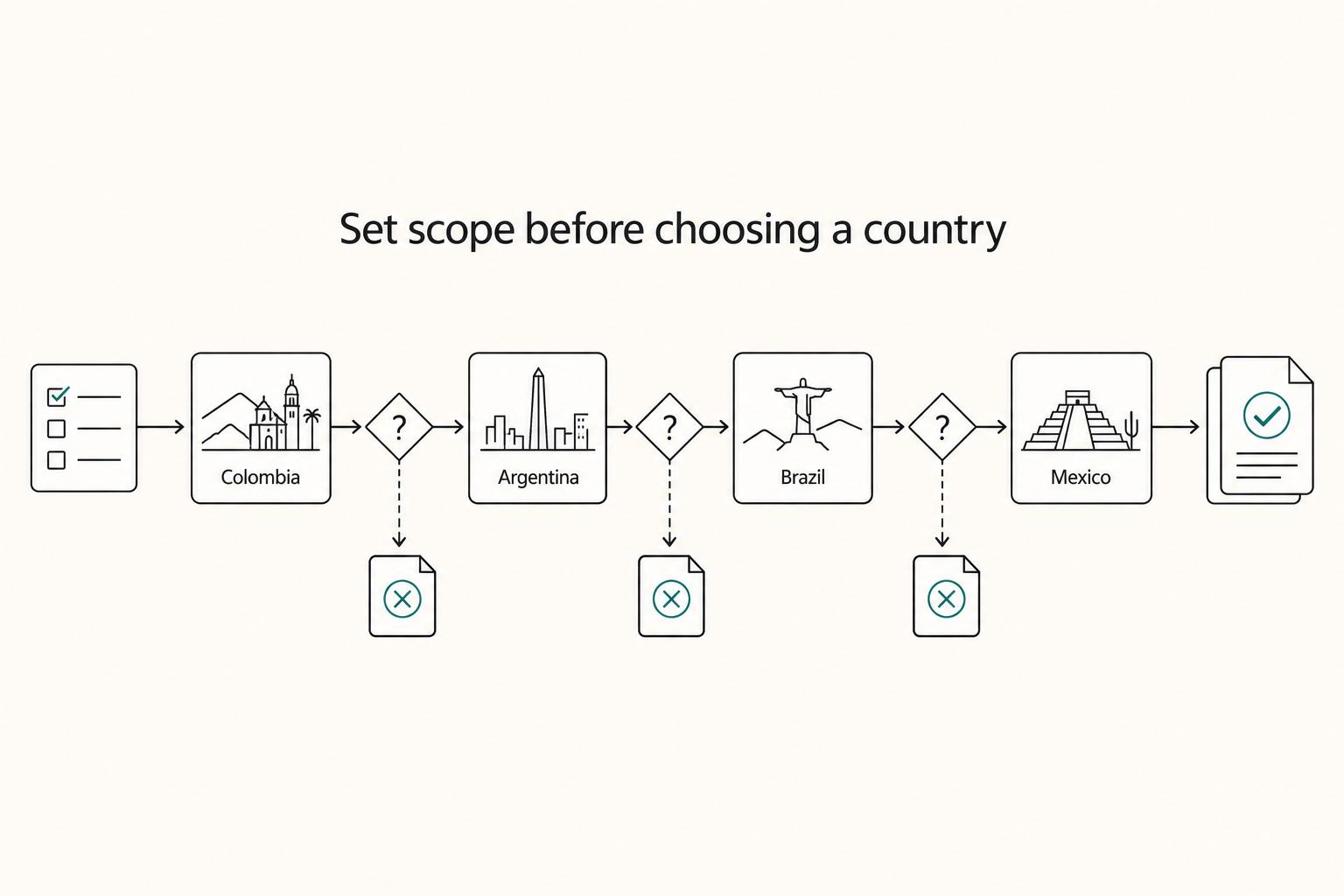
Treat this move as a verification project, not a booking sprint. If you are planning a remote-work move in Latin America, the first practical step is to separate what is clearly supported now from what still needs direct government confirmation before you spend money or lock dates.
How to Automate Your Personal Finances
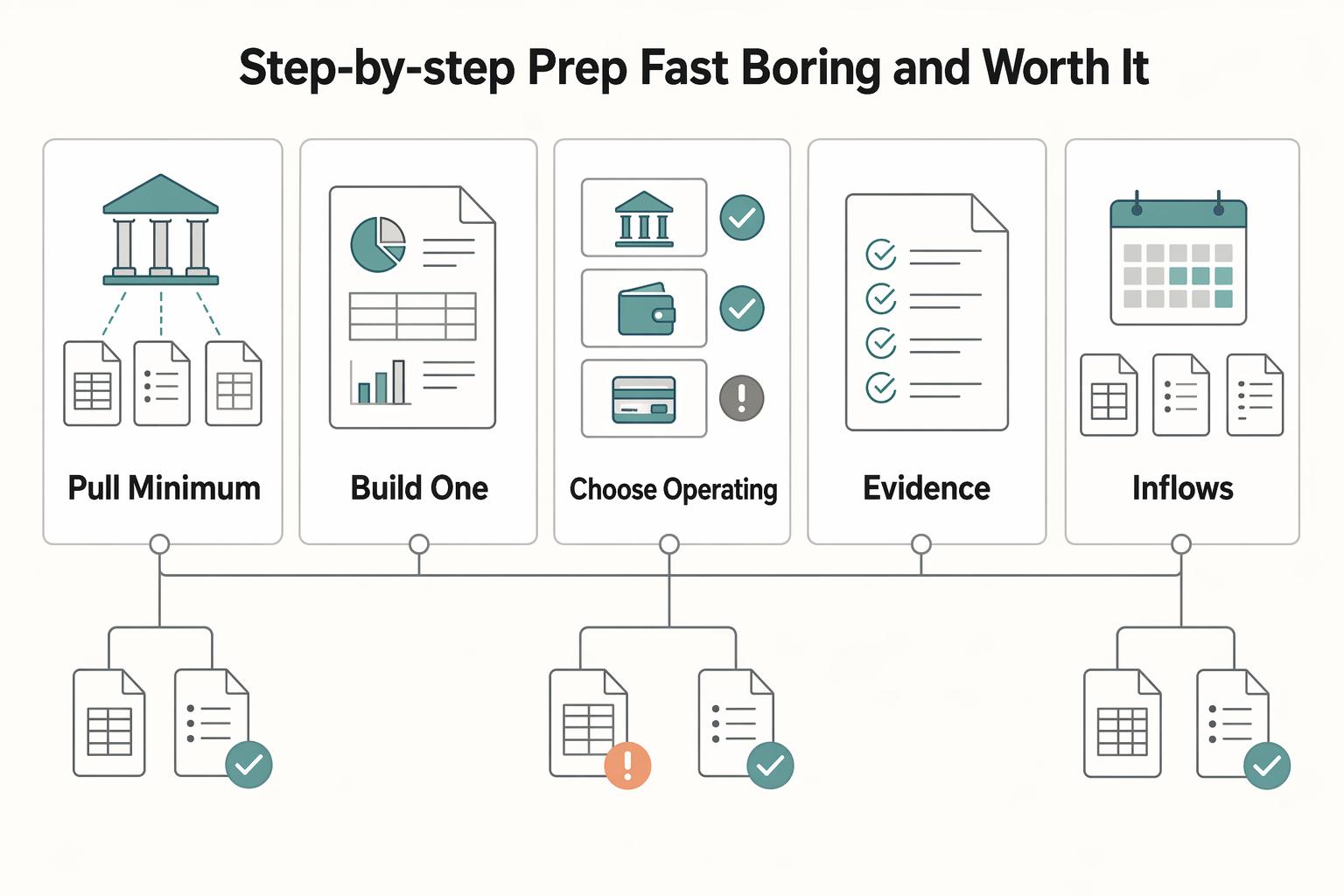
Build a risk-first financial system that handles timing uncertainty first, then automates the rest. If you want to automate personal finances, the real upgrade is moving from "try harder" habits to a system that keeps working when real life gets messy. If you run a business-of-one, you want rules, triggers, and checks that still hold up when money shows up later than expected.