
Quick Answer
Start with a 30-day onboarding cycle to make friends as a digital nomad: choose two channels, attend structured formats in Week 1, then focus on repeat contact in Weeks 2-4. Use concrete follow-ups right after good conversations, with one clear next plan and a low-pressure alternative. Keep what produces familiar faces and easy logistics, and cut channels that stay noisy, vague, or hard to sustain.
You don't need "more meetups" - you need a 30-day social onboarding plan#
Trying to make friends as a digital nomad can feel harder when every week starts from zero. One practical option is a 30-day onboarding experiment with a small target you can track: for example, three people you would like to see again, plus one recurring social slot that stays on your calendar.
This is a planning heuristic, not a proven formula. The goal is repeat contact that can survive work deadlines, apartment setup, bad weather, and low-energy relocation days. If social effort stays unstructured, outcomes can feel random. A basic rhythm makes it easier to see what is useful and what is just taking time.
Set a realistic target and protect the four blocks#
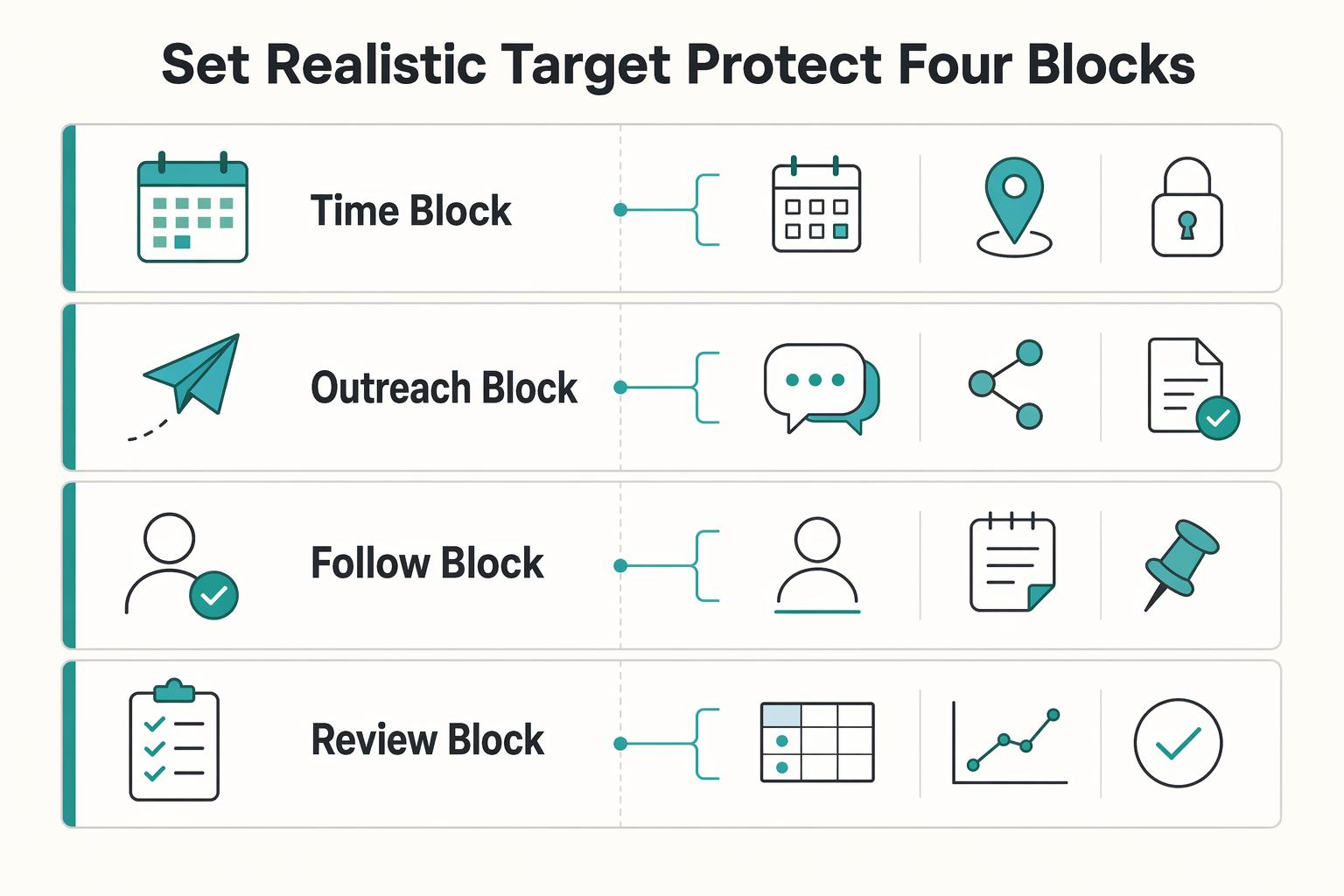
Start with a target modest enough to keep for a full month. You are not trying to force instant closeness. You are trying to create repeated exposure and clearer follow-through. Put these four blocks into your calendar or notes app:
| Block | What to schedule | Purpose |
|---|---|---|
| Time block | One protected social window each week | Showing up somewhere in person |
| Outreach block | One short block | Sending invites, replies, or intro messages |
| Follow-up block | One short block | Turning a good conversation into a specific next plan |
| Review block | 10 to 15 minutes each week | Decide what to keep, repeat, or drop |
A simple checkpoint: can you point to one upcoming social commitment, one sent message, and one note with a person's name plus next step? If not, the plan is probably still in your head, not in your calendar.
Run the month in four phases#
If you want structure, run the month in phases so you are not trying to solve every social problem at once.
| Phase | Main focus | Decision point |
|---|---|---|
| Pre-move setup | Choose only two channels for the month, draft a reusable intro message, and save a few low-pressure options before you arrive | Before arrival, decide where to place attention |
| First-week activation | Show up quickly in structured formats such as coworking onboarding, a class, a run club, or a language exchange | In the first week, decide what is easiest to enter |
| Repeat-contact phase | Spend less energy on new rooms and more on people and places that felt easy to return to | In weeks two to four, decide who and what deserves a second pass |
| Ongoing maintenance | Protect one recurring slot and a few names worth following up with, then rotate experiments around that baseline | After that, decide what you can sustain without crowding out work or rest |
The point of each phase is different, so the decision point changes with it: where to focus before arrival, what is easiest to enter in Week 1, who deserves a second pass in Weeks 2 to 4, and what you can realistically sustain after that.
Choose two channels and judge them by friction, not hype#
Do not add five social apps, three group chats, and a stack of events just because you feel urgency. Pick two channels for one month and give them enough repetition to get a fair signal.
| Channel | Setup friction | Repeatability | Trust path | Follow-up load |
|---|---|---|---|---|
| Coworking events | Low if you already have access; medium if you need a pass | Medium if the space runs regular events | Starts broad and light; you still need one-to-one follow-up | Medium |
| Interest groups like classes, run clubs, language exchange | Medium because you need schedule fit and a genuine interest | High when the group meets on a fixed rhythm | Trust can build through repeated shared activity | Low to medium |
| Warm intros from friends, coworkers, or clients | Low once someone makes the connection | Medium because volume is limited | Starts with context, so early conversation may be easier | Low |
Keep a channel if you see repeat faces, clear logistics, and at least one person you would comfortably message again. Drop it if the vibe is sales-heavy, plans are consistently vague, or you keep leaving with nobody to follow up with. One bad night is usually not enough to quit; a few low-signal passes may be.
If momentum drops, do not respond by scrolling harder or booking three unrelated events. Reset to a minimum: keep your recurring slot, send one direct message, and return to one place you already recognize. If the flat feeling is turning into loneliness rather than a bad week, read The Best Ways to Overcome Loneliness as a Digital Nomad and rebuild from that baseline.
If you're also planning the move itself, this pairs well with our guide on A Deep Dive into Brazil's New Digital Nomad Visa.
Prerequisites: what to prepare before you try to "be social" (so it actually works)#
Before you try to meet people, reduce the setup friction that kills follow-through. If your first week is packed with housing fixes, client work, and transport admin, social plans usually lose unless you prepare them before arrival.
Lock your work basics first#
Start by stabilizing work: reliable wifi, a place where you can focus, and a realistic daily work window. The beach-post version of nomad life is not your operating baseline. If these basics are still uncertain, fix them before you add social commitments.
Shortlist channels with a fast filter#
Pick only channels you can repeat, not the ones that look busiest. Keep a channel only if it passes this filter:
- Repeat attendance is realistic
- Coordination load is low
- Follow-up is clear
- It fits your work calendar
Drop channels that rely on constant group-chat monitoring, vague last-minute plans, or late nights you cannot sustain. If you cannot explain in one sentence why a channel fits your week, treat it as a maybe and move on.
Write one reusable intro and budget it in your calendar#
Create one reusable intro with practical details, not promotion: city, stay length, work rhythm, availability window, activity preferences, and preferred contact method. Example structure: "In Lisbon for 5 weeks, working US hours, free weekday mornings and Sunday afternoons, up for coworking lunch, a walk, or a language exchange. WhatsApp is easiest."
Then block outreach, attendance, and follow-up in the same planning system you use for admin tasks so the tradeoffs are visible before you land.
| Prep item | Verification checkpoint |
|---|---|
| Channel shortlist | You have 2 channels only, and you can state why each fits your schedule |
| Intro message | You can paste and send it without rewriting the basics |
| Backup options | You have 3 to 5 saved plans in your notes if one host cancels |
| Boundary scripts | You have a ready line for saying yes, no, or "not this week" |
Step 1 (Pre-move): How do you "seed" a friend network before you arrive?#
Before you fly, aim for three concrete outcomes: one booked social plan, one warm contact, and one fallback option. This keeps you out of endless browsing and gives you a real starting point when you land.
Run a short recon sprint and filter hard#
Do one focused recon session, then stop. A 2026 study of over 10,000 #digitalnomad posts found platform dynamics tend to reward recognition and engagement content, while practical details can get buried, so only keep channels with clear execution signals.
| Search prompt | Check before you save it | Keep it if... |
|---|---|---|
| "City + weekly meetup" | Recurring cadence, next date, named host | You can see the next meetup and newcomers are clearly welcome |
| "City + coworking community" | Visible host/community manager, onboarding post or thread | Next step is clear (RSVP, Slack join, front-desk signup) |
| "City + run club" or "City + board games" | Fixed meeting point, regular schedule, repeat-attendance signals | You could attend without messaging five people for logistics |
| "City + WhatsApp/Slack/Facebook group" | Recent activity, moderation, clear join/ask path | It supports real coordination, not just noisy chat |
If you cannot confirm date, location, host signal, and newcomer path quickly, drop it.
Send early outreach with an easy reply path#
Send outreach once your shortlist is ready, and keep reply friction low. Short, time-bounded asks can get faster responses, especially for short stays.
| Outreach type | Key details | Core ask |
|---|---|---|
| Community post | City, arrival date, stay length, work hours, free window, activity preferences, preferred contact method | If anyone else is new, happy to meet |
| Niche group DM | Move timing, the group you saw, stay length, newcomer-friendly check, next date you can make | Is that group newcomer-friendly? If yes, I can make next Tuesday |
| Warm intro ask | Destination, stay length, request for one trusted contact, coffee or coworking context | Is there one person you trust there who likes meeting newcomers for coffee or coworking? |
Community post template: "Arriving in Lisbon on 12 April for 5 weeks, working US hours. Free weekday mornings for coworking lunch or a walk. If anyone else is new, happy to meet. WhatsApp is easiest."
Niche group DM template: "Hey, I'm moving to Chiang Mai next week and saw you go to the Tuesday climb. I'm there for a month. Is that group newcomer-friendly? If yes, I can make next Tuesday."
Warm intro ask template: "I'm heading to Mexico City for two weeks. Is there one person you trust there who likes meeting newcomers for coffee or coworking?"
Track contacts and book one structured plan#
Track leads in one place (notes app, spreadsheet, or simple CRM-style list) so momentum survives arrival-week admin. Keep it lightweight with five fields: name, channel, status, follow-up owner (who owes the next reply), and next action.
Before departure, run a go/no-go check:
- One calendar hold with a clear start time
- One warm contact you can message on arrival
- One fallback option if the first plan cancels
If your only plan depends on live group chat and mobile data, treat it as fragile.
You might also find this useful: How to Use a Wise US Business Account to Satisfy 'Proof of Income' for Spain's Digital Nomad Visa.
Step 2 (Week 1): What should you do in your first 7 days to meet people fast?#
In Week 1, focus on repeatable contact, not activity volume. Treat this as a short execution cycle: arrival-day setup, midweek follow-through, and end-of-week pruning.
On arrival day, pick structured channels first: hobby meetups, local digital nomad/expat Facebook groups, friend-finding apps (like Meetup, Couchsurfing, or Buddyng), and friends-of-friends intros. These options lower social friction and make it easier to start conversations, especially with people who are also new to the area.
Use this as a flexible safe default, not a rigid quota: choose only what fits your real schedule and bandwidth, then scale up if it still feels sustainable.
| Format | Fit signal | Energy cost | Best follow-up action |
|---|---|---|---|
| Hobby meetup or activity-based group | Shared activity gives natural conversation prompts | Medium | "Great meeting you at [activity]. I'm planning to go again [day]. Want to join?" |
| Friends-of-friends intro | Trusted path reduces first-meeting friction | Low to medium | "Thanks for meeting today. I'll be near [area] on [day] if you want to grab a quick coffee." |
| Local digital nomad/expat Facebook group | Active local thread and clear meetup coordination | Low | "I saw your post in [group]. I'm going to [event/place] on [day/time] if you want to join." |
| Meetup/Couchsurfing/Buddyng event | Clear event logistics and relevant attendee mix | Medium | "Good to meet at [event]. I'm doing [specific plan] on [day] if that works for you." |
By midweek, send short follow-ups while context is still fresh. Use the same pattern each time: context reminder, specific invite, easy opt-out. Example: "Good meeting you at [place/event]. I'm going to [specific plan] on [day/time]. If it fits, join; if not, no worries."
Track contacts in one place (notes or calendar) with simple fields: name, where you met, last touchpoint, next invite, and status. If someone says yes, place it on your calendar immediately.
At end-of-week review, keep only high-signal channels. Continue if facilitation is clear, attendees are reasonably consistent, the vibe fits your boundaries, and logistics are easy enough to repeat. Drop if it feels chaotic, hard to access, misaligned with your boundaries, or too high-friction to attend consistently.
Week 1 verification checkpoint: one repeat plan booked, one recurring slot selected, and one contact list ready for Week 2 outreach.
Step 3 (Weeks 2-4): How do you turn one-off meetups into real friends?#
In Weeks 2 to 4, stop chasing volume and focus on repeat contact with people who already feel easy to be around. Re-meet in structured settings, send a same-day follow-up with one specific plan, and turn clear mutual fit into a simple recurring ritual.
Prioritize people who reply clearly, show up when they say they will, ask you questions back, and feel comfortable to spend time with. Deprioritize vague "maybe later" threads, bursty messaging with no plan, or contacts that require too much coordination for a basic coffee or walk. Discovery is often fragmented across coworking Slack channels, WhatsApp groups, and pop-up coliving hubs, so access can look like progress when it is not. Progress here is repeat contact.
| Follow-up format | Effort | Social pressure | Repeatability | Best use case |
|---|---|---|---|---|
| Group re-encounter | Low | Low | High | You liked the person and want shared structure to carry part of the interaction |
| One-to-one invite | Medium | Medium | Medium to high | You had a strong first conversation and want to test real fit |
| Micro-hosted small group | Medium | Low to medium | High | You have 2 to 4 decent contacts who may click around one simple plan |
Re-meet with structure, then confirm the plan#
Use a built-in format for touchpoint two: the same class, coworking lunch, hobby meetup, or walking route. Send the follow-up while the first meeting is still fresh, and propose one clear option: "Good meeting you at coworking. I'll be back Thursday and grabbing lunch after if you want to join." If a group chat is where you met, use it to surface options, then move real commitments into your calendar or notes.
Escalate only when fit is mutual#
Escalate to one-to-one after a good re-encounter. Use a micro-hosted plan when you have a few decent contacts but no clear strongest fit yet. Keep it lightweight: one plan, one time, one place.
Keep investing when people reschedule quickly after conflicts, remember details, or suggest the next plan themselves. Pull back when plans stay vague, cancellations repeat without alternatives, or the connection only exists inside chat. If you see low-signal patterns twice, keep the contact loose and redirect effort.
Convert strong fit into a repeatable rhythm#
After two or three easy meetups, suggest a recurring slot instead of another one-off invite: the same Wednesday class, Friday coworking lunch, or Sunday walk. The goal is not instant closeness; it is making future contact easier than drift.
Your Week 4 checkpoint is simple: you can name 2 to 3 people you would comfortably invite again, at least one plan now repeats with low effort, and your notes show who is warming up versus draining time. If that is not happening and isolation starts to build, use The Best Ways to Overcome Loneliness as a Digital Nomad as your reset.
If you want a deeper dive, read How to Create a High-Converting Freelance Services Page.
The channel-selection matrix: Which is better - events, groups, or intros?#
Pick channels you can repeat during a normal workweek, not channels that only work when you have extra time and energy. A practical mix is usually two channels with different jobs: one for exposure, one for consistency or trust.
Digital nomads are not one uniform segment, so choose based on your schedule, social style, and current bandwidth instead of copying someone else's setup.
Score fit by go/no-go, not hype#
Use these five factors as hard checks before you commit:
- Activation effort (go/no-go): Go if you can join without heavy setup; no-go if access depends on long back-and-forth.
- Conversation density (go/no-go): Go if one outing gives you multiple real conversations; no-go if you mostly sit on the edge.
- Repeatability (go/no-go): Go if the same format returns often enough for second and third meetings; no-go if it is one-off or irregular.
- Structure (go/no-go): Go if the activity carries part of the interaction; no-go if all momentum depends on you forcing conversation.
- Trust path (go/no-go): Go if shared context, norms, or a connector reduces ambiguity; no-go if context is unclear and follow-through is weak.
| Channel | Activation effort | Conversation density | Repeatability | Structure | Trust path | Best when | Tends to fail when |
|---|---|---|---|---|---|---|---|
| Events | Usually low | Usually high | Mixed | Often clear | Lower at first | You need fast exposure and fresh contacts | Facilitation is weak, logistics are unclear, or the room is mostly self-promo |
| Groups | Medium | Medium | Usually high | Mixed | Builds over time | You want familiar faces and steady re-encounters | Chat stays online, plans stay vague, or ownership is unclear |
| Friend-of-friend intros | Depends on connector | Lower volume, higher context | Medium | Low unless you add an activity | Usually strongest | You want a higher-trust first meeting | The intro is vague, delayed, or pushes a high-pressure one-to-one |
Commit for 30 days and run one checkpoint#
Run your top two channels for one 30-day cycle, then review. Keep the mix stable unless one channel clearly breaks.
Use this quick validation framework before you commit:
- Can you state in one sentence why these two channels fit your calendar and energy?
- Do you already have the next date, place, and host or connector saved?
- Have you defined drop rules in advance (unclear logistics, repeated no-shows, sales-heavy tone, or boundary friction)?
- Does each channel still work during work-heavy weeks, when work and social time overlap most?
If any answer is no, tighten the mix now rather than adding more channels. If you want vetted options for your next test cycle, start with The Best Digital Nomad Communities to Join.
For a step-by-step walkthrough, see Sailing Around the World as a Digital Nomad Without Breaking Your Workflow.
What if you're introverted, on a tight schedule, or only staying briefly?#
If your energy or calendar is tight, use a structure-first plan and keep it simple. Pick formats with a clear start and end, a built-in activity, repeat exposure, and a sensory load you can handle after work. Treat this as a practical filter, not a universal ranking.
Pick structure-first options#
Use this table to choose based on your actual week, not your ideal week.
| Option | Energy cost (you) | Scheduling friction (you) | Repeatability | Follow-up ease |
|---|---|---|---|---|
| Guided activity | Low / Medium / High | Low / Medium / High | Is there another session or similar event soon? | Can you comfortably message 1 person afterward? |
| Recurring class | Low / Medium / High | Low / Medium / High | Is there a next session already on the calendar? | Is reconnecting natural because you will see them again? |
| Small interest group | Low / Medium / High | Low / Medium / High | Does the group meet consistently with active organizing? | Can you suggest a simple next touchpoint without pressure? |
| One-to-one walk | Low / Medium / High | Low / Medium / High | Can you realistically schedule a second meet before you leave? | Did the first meet feel easy enough to repeat? |
If a listing is vague on timing, location, or format, skip it and pick a clearer option.
Set a minimum viable week#
When work is heavy, prioritize consistency over volume:
- Keep one low-energy default social block.
- Keep one repeatable format on your calendar.
- Keep one same-week follow-up habit (short and specific).
A simple message is enough: "I'm free Tuesday 10am or Thursday 6pm if either works."
Compress the loop for short stays#
If your stay is brief, run a tight sequence:
- Join one structured option early.
- Send one same-week follow-up to the best-fit person.
- Repeat one touchpoint before you leave, even if it is just a walk or coworking lunch.
Pass/fail checkpoint: this week, can you maintain one low-energy default, one repeatable format, and one follow-up habit under deadline pressure? If no, reset to that baseline and use The Best Ways to Overcome Loneliness as a Digital Nomad. Related: A Guide to Dating as a Digital Nomad.
Guardrails: How do you stay safe, sane, and not lonely while you build community?#
Use a simple operating policy: keep your social plan consistent enough to follow each week, then adapt it to the city and setting.
Write your boundaries before you need them#
Set defaults in advance, then adjust to context instead of improvising in the chat. Keep one short note on your phone so your decisions stay steady when you are tired, lonely, or rushed.
| Context | Your default | Key red flag | Immediate next action |
|---|---|---|---|
| 1:1 invite from messages | Suggest a plan format you are comfortable with and confirm basic details before you commit | Urgency, secrecy, guilt, or dodging basic planning questions | Move it to a lower-pressure format, suggest a group option, or decline |
| New person from an event or coworking space | Keep early follow-ups simple and clearly scoped until trust is clearer | Repeated vague logistics, repeated last-minute changes, or boundary pushing | Reschedule on your terms or stop the thread |
| Nightlife or high-chaos plans | Decide your own limits before joining and keep a plan you can exit cleanly | Pressure around alcohol, money, or splitting off from the group | Leave, or switch to a calmer daytime plan |
Use short scripts you can reuse:
- Public-first meetup: "Happy to meet for coffee for about an hour."
- Polite decline: "Thanks for the invite. I'm keeping this week light, so I'll pass."
- Group-first alternative: "I'm more comfortable with a group plan first. If one comes up, send it over."
Set a connection floor and an activity ceiling#
Treat this as a repeatable routine, not a mood-based decision. Keep a minimum social baseline you can hit on a heavy week, and a maximum that still protects sleep, work focus, and emotional bandwidth.
You can use the same pattern from this article as a personal baseline: one recurring group touchpoint plus one direct invite in a normal week, with a cap on total plans. This is a practical default, not a universal rule. If you miss your floor for two weeks, restart with the smallest version of your routine instead of overbooking a catch-up week.
Climb trust gradually and audit it weekly#
Use a trust ladder for pacing: shared setting, repeat contact, then more personal time. It is a pacing tool, not proof.
Run a weekly self-audit in the same note:
- Did I keep my defaults, or override them under pressure?
- Did I notice urgency, secrecy, guilt, or other manipulation signals?
- Did I stay between my connection floor and activity ceiling?
- Do I have one person or one group I want to see again next week?
If advice starts sounding like charm, manipulation, or gaming people, drop it. Your checkpoint is simple: your note has your boundary scripts, red flags, and your fallback routine for lonely weeks.
Related reading: A Guide to Colombia's Digital Nomad Visa and Tax Implications.
Common mistakes (and fast recovery plans when things go sideways)#
When a social week goes sideways, you usually do not need a bigger personality shift. You need a tighter next cycle: repeat exposure, low-pressure follow-up, and short invites with a clear end.
Diagnose the failure pattern before you add more plans#
Pick one failure pattern from your last 7 to 10 days and fix that first. Trying to fix everything at once usually creates noise, stress, and burnout.
| Failure pattern | Likely root cause | Immediate corrective action for your next social cycle |
|---|---|---|
| You read group chats and save posts, but rarely attend | Passive scrolling feels productive, but people do not get repeated contact with you | Reply to one current plan and attend it, or post one concrete invite in an active thread today |
| You keep jumping to new events | You are optimizing for novelty instead of consistency | Return to the same class, coworking event, or venue for the next two weeks |
| You wait for others to lead after good conversations | Rejection fear turns into silence | Send one simple follow-up with a specific, low-pressure plan |
| You rely mostly on high-noise plans | Activity is high, continuity is low | Swap one late-night plan for one structured daytime activity this week |
Checkpoint: your fix should be visible in your calendar or messages today. If it only lives in your head, nothing has changed.
Run a 7-day recovery sprint you can actually finish#
Keep this reset small enough to complete. In the next seven days: attend one repeat event, send one direct follow-up, and micro-host one plan.
Treat micro-hosting as an execution tool, not a personality test: one plan, clear context, predictable end. Keep invites easy to decline and tightly scoped. Short, defined activities of 45 to 90 minutes are often easier to accept than open-ended hangs.
Check momentum by repeat contact quality, not activity count#
Do not score yourself on total social volume. Score yourself on continuity.
At week's end, confirm:
- you returned to at least one familiar setting
- you have at least one person or group with a clear next touchpoint
- your invites had clear scope and an easy opt-out
If your notes show many names but almost no repeat contact, you are busy, not connected. If that slide is becoming real loneliness, use that as an escalation point instead of adding more random plans.
Need the full breakdown? Read A Deep Dive into Uruguay's Digital Nomad Visa and Tax Benefits.
Conclusion: Your 30-day "friends flywheel" (and a checklist you can paste into your notes)#
If you want to build real continuity without turning your social life into a second job, run one simple 30-day loop and review it weekly. Use it as a practical template, not a guaranteed formula. The point is not to do more. It is to make repetition easier with the right people and the right spaces.
| Step | What you do | Completion signal | Continue or drop rule |
|---|---|---|---|
| 1. Choose | Pick 2 channels only for the next 30 days: 1 discovery channel and 1 repeatable place to return to. Save options in your notes and book the first item. | You have 1 event on the calendar and 1 channel you can revisit next week. | Drop a channel if logistics stay vague, posts go unanswered, or you cannot see how it becomes repeat contact. |
| 2. Show up | In your first week, attend structured things, not random nights out. Aim for formats where conversation has a built-in reason to happen. | You can name 1 person worth following up with and 1 group worth trying again. | Drop if the room feels salesy, chaotic, or so noisy that you cannot actually connect. |
| 3. Follow up | Message the strongest contact while the interaction is still fresh. Give one specific invite and one easy backup. | The next touchpoint is visible in your calendar, chat, or notes. | If replies stay vague after 2 clear attempts, stop pushing and put energy elsewhere. |
| 4. Repeat | Return to the same group, venue, or activity. Add small one-on-one or two-person plans around it. | The same names start appearing again and the conversation gets easier. | If you only collect one-off chats for a while, the channel is not carrying enough repeat value. |
| 5. Anchor | Protect 1 weekly social slot even during work-heavy weeks. Keep it small enough that you actually keep it. | You still have a standing touchpoint when work and admin spike. | If a week goes sideways, restart from baseline instead of redesigning everything. |
A good follow-up is usually concrete and low-pressure. For example: "Good meeting you. I'm working from X cafe Tuesday 10 to 12 if you want to join for an hour. If that misses, I'm free for a short walk Thursday after work." This can help because the plan is real, the backup is simple, and neither option needs a big emotional commitment.
If your outreach is getting ignored, check the message before you blame the city. Generic notes like "we should hang sometime" are easy to forget. One practical checkpoint is whether your message includes your dates, your rough work hours, and one actual plan you are willing to do even if only one person says yes.
Paste this into your notes:
- Pre-move
- Choose 2 channels for the next 30 days * Save a short intro with your city, dates, work hours, and one concrete invite * Book 1 structured activity before arrival
- Arrival
- Attend 2 structured social touchpoints in week 1 * Test 1 recurring slot you could keep weekly * Send same-day follow-up to the best-fit person
- Ongoing
- Repeat the highest-signal group * Host 1 small plan with a clear time and place * Review weekly: keep, drop, or replace one low-signal channel
- Recovery
- If momentum breaks, do 1 event, 1 message, and 1 repeat plan * Re-read your priorities before first meetups with new people
If this stops feeling like a scheduling problem and starts feeling heavier than that, read The Best Ways to Overcome Loneliness as a Digital Nomad. If your real blocker is staying in one place long enough to build continuity, start with How to Apply for a Digital Nomad Visa Without Costly Delays.
For visa-specific context, see A Comparison of Japan's New Digital Nomad Visa vs. the Business Manager Visa.
Frequently Asked Questions
How quickly can you make friends as a digital nomad?
Expect early traction before deep friendship. A practical early sign is that someone replies, you have a group you can return to, and a next plan on your calendar. If you want more momentum, avoid spreading yourself across too many channels and stick with a couple long enough to be recognized.
What should you do before arrival?
Pick your channels before you fly, not after you land tired and start doom-scrolling. A practical combo is one discovery channel such as Meetup, Buddyng, or Couchsurfing, plus one city-specific Facebook group for digital nomads or expats. A simple checkpoint is joining the group, drafting a short intro with your dates and work hours, and putting one structured activity on your calendar before departure.
Are events better than intros?
Use the channel that matches your bottleneck, then repeat it enough to see whether it works for you. Events can help you start conversations quickly, city groups can help with visibility before and after arrival, and intros can help when you already have a warm contact. The mistake is trying everything at once and never repeating the same touchpoint. | Channel | Where it helps | What to repeat | Common failure mode | |---|---|---|---| | Events like Meetup, Couchsurfing hangouts, tours | You just arrived and need first conversations | Return to the same organizer or format | You collect chats but never see the same people twice | | City Facebook groups for digital nomads or expats | You want local visibility before and after arrival | Post and reply consistently, not just lurk | You read threads, save ideas, and never post a concrete plan | | Friend or community intros | You already know one person, or belong to a paid membership community | Make clear, specific asks | Small pool and vague asks like “let me know if anyone’s around” |
What if you are introverted?
Choose formats where the activity does some of the social work for you. A structured tour, or even a brief hostel stay for the first few days before moving into an apartment, can be easier than loud pub crawls or hostel dorms for some travelers, especially older travelers. Give yourself a defined window, arrive a bit early, and leave once you have had one solid conversation.
What if you are only staying briefly?
Compress the cycle. Join one structured thing as early as possible, then invite someone you connected with into a small follow-up before you leave, like coffee before coworking or a short walk after work. If you need options fast, scan The Best Digital Nomad Communities to Join before booking random events.
How do you turn one-off meetups into real friends?
Send a follow-up while the context is still warm and make the next step easy to answer. Use one clear plan with two options. For example: “I’m at X cafe Tuesday morning or free for a walk Thursday after work if either suits.” A useful check is whether there is a concrete next touchpoint, not just a good conversation.
How do you avoid loneliness relapse when work and admin take over?
Keep at least one repeat social touchpoint during deadline weeks. Unstructured solo travel can drift into isolation and expense quickly; one account describes about a month of hotels, taxis, and flights feeling both lonely and financially unsustainable. If your calendar is packed, protect consistency over ambition and do the smallest version that keeps you visible.
Try a related tool
Researched and edited by the Gruv editorial team. Gruv builds cross-border billing, payouts, and finance-operations software for global businesses.
Sources
Includes 1 external source outside the trusted-domain allowlist.
- andrew.cmu.edu/course/15-123-kesden/applications/labs/lab2/...trusted
- cs.ucf.edu/courses/cop3502/fall2023/material/23-11-07/d...trusted
- e-resident.gov.ee/blog/posts/digital-nomad-friends-top-tips-on...trusted
- home.snu.edu/~jsmith/library/body/v13.pdftrusted
- repository.library.northeastern.edu/files/neu:bz60wp35m/fulltext.pdftrusted
- snap.berkeley.edu/project/9274006trusted
- users.cis.fiu.edu/~weiss/cop3337_f99/dict.txttrusted
- boundlessroads.com/how-to-become-a-digital-nomadexternal
Educational content only. Not legal, tax, or financial advice.
Related Posts
The Best Ways to Overcome Loneliness as a Digital Nomad
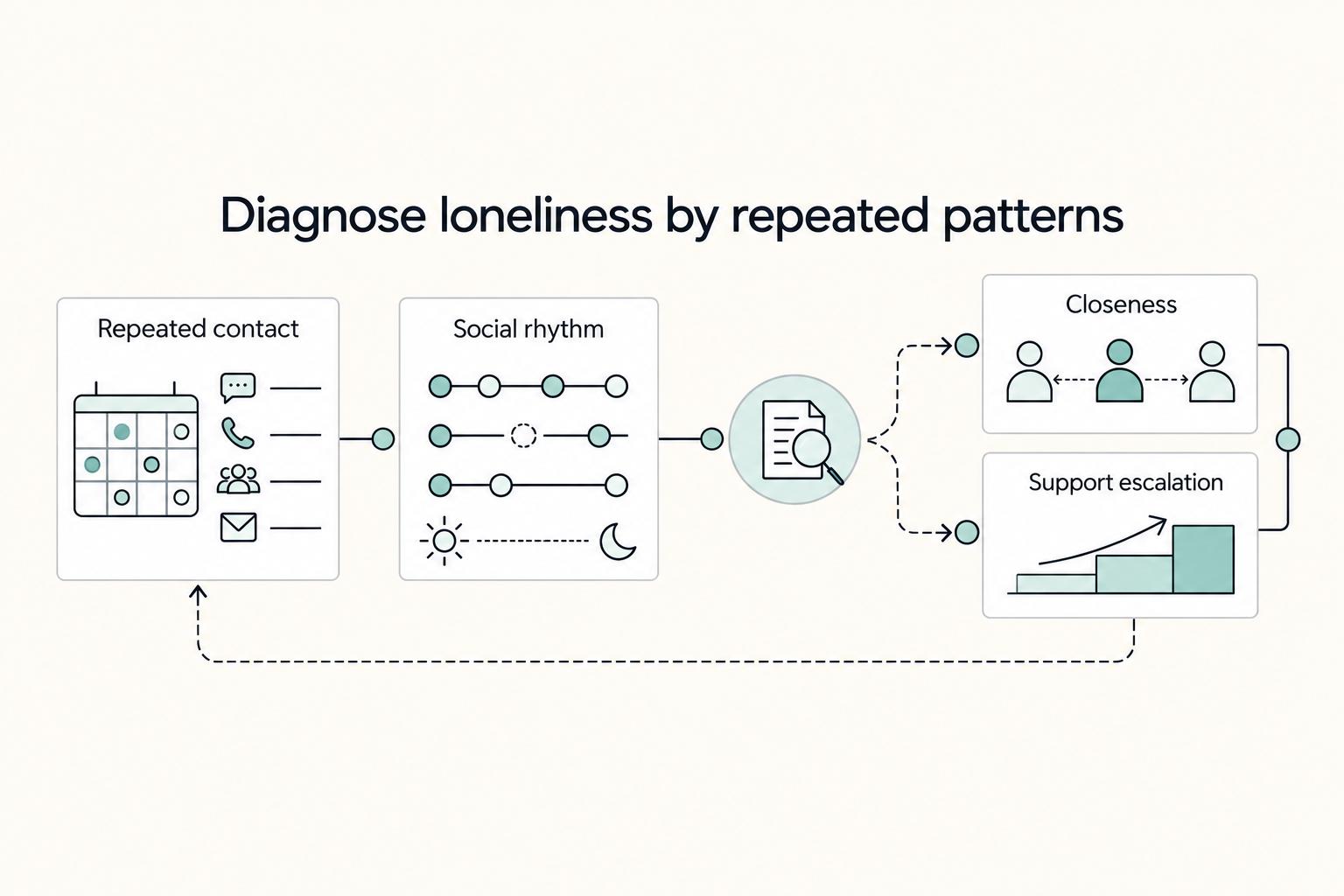
If you run a business of one while moving city to city, treat connection as an operating issue, not a personality verdict. You do not need to become louder, more social, or permanently available. You need a repeatable way to move from unknown faces to familiar ones.
The Best Digital Nomad Communities to Join
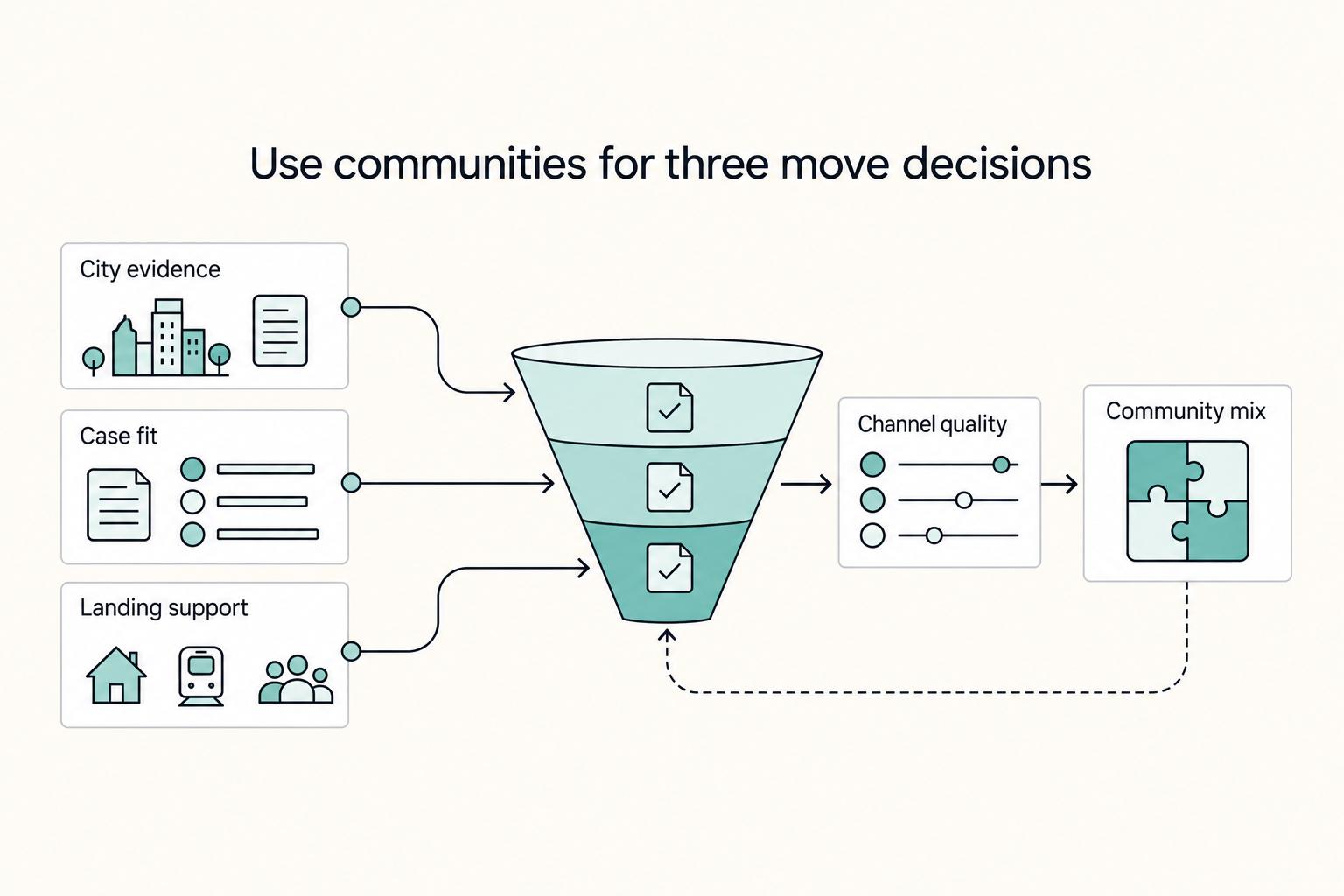
If your move date is real, use communities to answer three decisions in order: which city stays on your list, whether your case actually fits, and whether your landing week is covered. Judge every channel by outcomes, not activity. If it does not give you evidence you can use, stop giving it time.

How to Create a High-Converting Freelance Services Page
If you want fewer renegotiation loops, treat your page as a qualification tool, not a polished brochure. The goal is not more inquiries for their own sake. It is fewer vague inquiries that turn into messy delivery.