

Quick Answer
Use guest posting for freelancers as a structured system: pick one objective per post, target publications by fit and credibility, send editor-friendly tailored pitches, and submit publication-ready drafts. Then distribute each live post intentionally and track a few decision-making KPIs like acceptances, publishes, profile visits, and inquiries. This turns one-off placements into compounding brand trust.
You don't need "more exposure" - you need a guest-posting system that produces trust on schedule#
Treat guest posting like a system you run regularly, not a lottery ticket you hope pays off. As a business-of-one, you do not need "more exposure." You need a repeatable way to use guest posts to build trust, authority, and clear business signals without burning time.
A guest post is a content piece you write for someone else's site. The outcome swings wildly when you treat it like roulette. You pitch, you wait, you publish, then you refresh your inbox wondering why nothing moved.
The fix is not "more pitches." It's a system that forces clarity up front and gives you more control after publication.
Here's the mindset shift: every guest post is a professional asset. It should create value in three directions at the same time:
| Asset lens | What "good" looks like | What to verify before you invest time |
|---|---|---|
| Audience value | A specific, practical solution (not generic guest blogging advice) | You can state the reader's problem in one sentence |
| Publisher value | Reduced editorial workload plus a clean, on-brand draft | You can match their tone, structure, and topic gaps |
| Freelancer upside | Visibility with a new audience and stronger relationships with publishers (not guaranteed) | You can name the one business objective for this post |
Build the system (safe defaults you can actually maintain)#
Run guest posting like content marketing ops:
- Decision gates (go or no-go): Audience fit, publisher fit, and reputational risk. If you would not proudly share it on LinkedIn, skip it.
- Quality controls: Treat each draft like a deliverable. Clear structure, clean claims, and zero fluff paragraphs.
- Simple tracking model: Track statuses (pitched, accepted, drafted, submitted, published) plus outcomes you can observe (profile visits, replies, inquiries, introductions).
Hypothetical scenario: you write for a site that reaches your buyers, but they strip links. You still take the placement if your objective is authority proof. Then you convert that credibility by distributing it and updating your profiles.
What you'll walk away with (so you stop guessing)#
By the end of this guide, you'll have a targeting framework, a pitch template, a draft readiness rubric, and a lightweight tracking dashboard you can run without turning this into a second job. When you're ready to distribute intelligently, and not just "post and pray," pair this with A Freelancer's Guide to LinkedIn Marketing.
What is guest posting for freelancers - and what outcome are we actually buying?#
Guest posting for freelancers is writing an article for someone else's site in exchange for exposure (and sometimes a link back), and it works best when you define the business outcome before you pitch. Guest posting is not inherently "lead gen" or "SEO." It is a trade. Your job is to decide what you are buying with your time.
In plain terms, guest posting means writing an article for someone else's website or blog. The definition is simple. The operating model isn't.
You are creating an asset that needs to work for the publisher, the reader, and you.
Step 1: Use a mutual-value lens (publisher, reader, you)#
Operate from this baseline:
- Publisher win: You deliver audience-ready content and reduce editorial workload. This is why low-quality, spammy approaches fail. Copyhackers puts the rule on the table: "Never give an editor homework. Instead, make it as easy as possible for an editor to say, 'Yes.'"
- Reader win: You ship a specific, practical solution. Not generic guest blogging tips. A reader should finish your post knowing exactly what to do next.
- Freelancer win: You can build authority and relationships. You might also earn SEO value through backlinks or brand mentions, but link policies vary by site and editor.
Quality matters, and the line is clear: "But don't confuse guest posting with outdated link-spamming tactics."
Step 2: Set safe expectations, then choose one objective per post#
Treat outcomes as possibilities, not guarantees. A single post can create long-tail results, but conversion rates and timelines vary by niche, topic, and distribution. Different publications create different kinds of value.
For example, a recognizable masthead can function as authority proof in your portfolio even if you never see direct inquiries from that placement.
Pick one primary objective per post, then optimize for it:
| Objective | What you optimize for | What "success" looks like |
|---|---|---|
| Authority proof | Strong byline, clear expertise, quotable frameworks | You can reference it in pitches and sales calls |
| Lead capture | A relevant next step (newsletter, consult request) if allowed | You get replies, intros, or opt-ins you can attribute |
| SEO adjacency | Editorial-context links or mentions (not link-farming) | You earn relevant mentions without policy fights |
Go/no-go check: Write the objective in one sentence: "This post exists to ____ for ____ by ____." If you cannot write that sentence, pause and rewrite the angle before you pitch.
Hypothetical scenario: you want leads, but the site forbids promotional links. You either switch the objective to authority proof, or you walk away and pitch a lead-friendly publication instead.
Prep once, reuse forever: the freelancer guest-posting kit (prereqs + assets)#
Build a reusable pitch-and-proof kit so guest posting runs like ops, not adrenaline. With a clear objective per post (authority, leads, or SEO adjacency), your next constraint is execution speed without quality drift. The kit below is the minimum that keeps editors confident and keeps your positioning consistent.
Step 1: Assemble your editor-friction reducers (identity + context)#
Treat every pitch like a trust transaction. Editors reject uncertainty more than imperfect ideas, so remove the obvious gaps up front.
| Item | Use | Guidance |
|---|---|---|
| Author bio | Answer "Who are you, and why should our readers listen?" | Trim or expand depending on the outlet; keep it role-based, not a life story |
| Positioning line | Reuse in bylines | Keeps your personal branding consistent across sites |
| "Where to learn more" link | Give editors one destination you control | Use your homepage or portfolio; do not scatter editors across five destinations |
Put those three items in one folder or doc you can paste from.
Verification point: you can answer "Who are you, and why should our readers listen?" in two sentences, with no hype.
Step 2: Package credibility like a professional (samples + proof, not a pitch deck)#
Anne Mini, who teaches writers how to pitch, puts the emotional truth on the table: "composing query letters is perhaps the most universally-resented necessity." Your kit should make pitching feel less like reinvention and more like reuse.
Include:
- A small set of published clips that match the publication's tone (pick clarity over "prestige").
- A proof list you can stand behind (selected clients, talks, case work, or prior publications). Only list names you can verify and that you have permission to reference.
Hypothetical scenario: an editor likes your idea but asks, "Have you written for this audience before?" You respond with two relevant clips and one proof bullet, not a paragraph of persuasion.
Step 3: Install light boundaries (reputation and SEO control)#
Guest posting and backlinking sit close to SEO incentives, so set safe defaults before you scale your outreach.
Keep it simple:
- Don't overclaim. If you can't back it up quickly, soften the language or cut it.
- Ask about link rules early. Follow the site's guidelines and prioritize reader utility over SEO.
If you want scale, consider tooling that supports a structured workflow. For example, Rocket Guest Posting describes itself as "the world's largest database of websites that accept guest posters" and says it includes over 100,000 websites, plus SEO and social metrics, bulk export of contact emails, and an outreach tracker.
Use tools like that carefully. Bulk outreach amplifies bad targeting decisions faster than good ones.
Next step: once your kit exists, plug it into a distribution loop so every placement compounds (see A Freelancer's Guide to LinkedIn Marketing).
Build your guest-posting operating framework (90 minutes, then 30 minutes/week)#
Treat guest posting like a small system: consistent themes, a visible queue, and a few rules that protect your name and your time. You already have the kit. Now you need a rhythm that survives client spikes and still produces placements you are proud to attach your name to.
Step 1: Define positioning you can repeat#
Choose themes you can come back to without reinventing your expertise. For example: B2B onboarding, pricing systems, technical SEO.
Verification point: you can finish the sentence, "I write about ___ for ___ so they can ___," and it matches the services you sell.
Step 2: Keep a simple pitch queue (so nothing disappears)#
Create one place that shows what you pitched and what needs attention next. Keep it in a spreadsheet, Notion, or your CRM.
The goal is not a fancy workflow. It's visibility.
Step 3: Do a quick quality check before you pitch#
Before you reach out, sanity-check the basics:
| Check | Question |
|---|---|
| Audience match | Does the audience match who you want to be known for helping? |
| Editorial quality | Does the site look like it takes editorial quality seriously? |
| Public share test | Would you be happy to share the eventual link publicly? |
Hypothetical scenario: you find an "easy accept" site that promises quick publication, but the homepage stacks thin posts with spammy outbound links. Skip it, even if it looks like a fast win.
Step 4: Make it repeatable, not heroic#
Adsy puts the principle plainly: "Build distribution routines, so promotion becomes repeatable." In their blog-promotion table of contents, guest posting is one of the steps.
When your schedule tightens, reduce scope, not quality.
Step 5: Expect turbulence and build in resilience#
Freelance work can be "ripe with problems and complications," including "disappearing websites, changing regulations, unpaid invoices, ghost clients." Even if those aren't specific to guest posting, the point holds: things change, and you need a workflow that does not collapse when they do.
Practical check: if you cannot run this during a busy week, simplify the process and keep it moving.
Which publications are worth your time (and which are reputation risk)?#
Pick publications that match your current brand stage, then sanity-check them for fit and credibility. Targeting is where a lot of guest posting strategies break down: either you chase vanity logos you cannot convert, or you borrow someone else's weak reputation.
Step 1: Segment targets by brand stage (so you stop pitching like everyone else)#
Match targets to what you actually need right now in your content marketing and thought leadership arc.
| Brand stage | Priority targets | Note |
|---|---|---|
| Early-stage (prove you belong) | Niche blogs, industry newsletters, and communities where your buyer already listens | Resist the temptation to chase big-name mainstream outlets if you cannot convert that attention into conversations |
| Mid-stage (earn peer validation) | Outlets with clear standards and editing, and readers who actually care about the topic | Publish where peers set the bar, not where anyone can submit |
| Late-stage (stack credibility carefully) | Selective halo publications | Stay realistic about timelines and acceptance; keep shipping in niche venues while you wait |
- Early-stage: Start with niche blogs, industry newsletters, and communities where your buyer already listens. Elna Cain puts the upside plainly: guest posting can "kick-start your business," especially when you use it to build a portfolio and reach more people. Resist the temptation to chase big-name mainstream outlets if you cannot convert that attention into conversations.
- Mid-stage: Publish where peers set the bar, not where anyone can submit. Look for outlets with clear standards and editing, and readers who actually care about the topic.
- Late-stage: Add selective halo publications to reinforce positioning. Stay realistic about timelines and acceptance. Keep shipping in niche venues while you wait.
Step 2: Do a quick "fit over vanity" check#
You do not need a spreadsheet masterpiece. You need consistency.
- Audience fit: You can name the reader and their pain in one sentence.
- Editorial standards: Clear bylines, tight structure, specific examples, and a real point of view.
- Submission and link rules: The publication spells out what they allow, and links (when used) support the reader instead of turning the post into a link dump.
Hypothetical scenario: you find an "easy" guest blogging site that accepts instantly, but every post pushes unrelated products. Even if you snag a link, the placement makes you look cheap. Mark it red and move on.
Step 3: Add two risk controls most freelancers skip
- Brand adjacency: Avoid sites that surround your work with questionable topics or low-quality, link-heavy content. You cannot control every neighbor, but you can control where you place your name and personal branding.
- Dependency risk: Don't build your entire funnel on one publisher. Be present across multiple platforms and focus on offering value and building trust instead of scattering links everywhere.
Practical check: If you wouldn't send the site to a premium client as "where I publish," it's not a Tier A guest posting target.
How do freelancers pitch guest posts without sounding spammy?#
Pitch like a partner who brings a finished, audience-specific idea, not like a stranger asking for "exposure" and a backlink. Your goal is simple: make the editor feel relief. Relief comes from clarity, fit, and proof you can deliver without drama.
Step 1: Use the editor's frame (reduce their workload, increase certainty)#
Editors swim in low-effort requests. Location Rebel puts it bluntly: "I get pitched a lot of guest posts. And most of them are absolutely terrible." Your email should feel like a near-ready assignment.
Do that with two moves:
- Pitch one specific article with a clear takeaway. Skip "I'd love to contribute." Lead with the outcome for their reader.
- Prove audience fit by referencing 1-2 recent posts. No flattery. Just precision: "Your recent piece on X stops at Y. I can add Z (a checklist, a decision gate, or a teardown)."
Use this gut-check to avoid guest post spam, which Health Writer Hub describes as pitches from people "only interested in 'link building'," not the blog's content.
| Element | Credible pitch | Spammy pitch |
|---|---|---|
| Topic | One defined problem and takeaway | Vague "any topic you want" |
| Site knowledge | References recent post and fills a gap | No mention of their audience |
| Links | Mentions link expectations up front | Tries to sneak links in later |
| Writing quality | Clean grammar and formatting | Typos and sloppy phrasing (instant rejection risk) |
Step 2: Send a structured pitch (copy, paste, then tailor)#
Use a simple structure like this, and tailor every line:
- Subject: Outcome + audience (Example: "Idea for [Site]: a 7-step onboarding checklist for [audience]")
- Opening (1-2 sentences): The idea, the reader pain, the promised result.
- 2-sentence credential: Relevant proof and why you qualify. Include a link to a portfolio or profile plus one relevant writing sample.
- 2-3 headline options + mini-outline bullets: Show the structure so they can say yes quickly.
- One-line disclosure: If you have link expectations, say so plainly, and avoid turning the post into "backlinks as payment" (a dynamic critics flag as a corrupted version of guest posting).
Step 3: Follow up like a pro (and stop cleanly)#
Follow up once after you've given them time to review, then send one final check-in. After that, label it "no response" in your tracker and move on.
Hypothetical scenario: you draft one strong onboarding checklist pitch. If you can paste it unchanged into 50 emails, you did not target. Rewrite it until only one publication could plausibly run it.
Draft like a publisher: post structure, links, and a quality gate before submission#
Draft your guest post like the editor already said yes: deliver a clear, unique piece, then run a pass or fail quality gate before you hit send. Pitching gets you a green light. Execution is what earns trust.
Step 1: Build a repeatable post architecture (clarity beats cleverness)#
Use a predictable structure as your safe default. You do not need to reinvent the format each time. You need the reader to finish the piece and know exactly what to do next.
One workable sequence:
- Clear opening: Start with the outcome and why it matters to the reader.
- Step-by-step method: Give steps the reader can follow in one sitting. Where it helps, add a quick "what done looks like" check so it's not just theory.
- Examples, templates, and edge cases: Include an example, mini template, or decision point. Then address what to do when the obvious approach breaks.
- Reader-first CTA: Close with a next action that serves the reader. Keep self-promo secondary.
Hypothetical scenario: you write a thought leadership post about "content marketing systems." If it doesn't give the reader anything they can apply immediately, it can read like a hot take instead of a submission-ready guest post.
Step 2: Handle links and citations like a grown-up (utility first, backlinking second)#
Treat backlinks as secondary to usefulness, not the whole point. Outreach is no longer just about requesting a backlink; it's framed around value exchange, relevance, and personalization. Carry that same posture into the draft.
Practical link defaults:
- Follow the publisher's guidelines first. If the editor wants no links in-body, comply.
- Only include links that genuinely help the reader and fit the post. Don't force them.
- Be cautious with claims. If you can't support a statement confidently, rewrite or cut it.
Also write unique work. Ryan Robinson defines the baseline expectation plainly: "Guest blogging, also called guest posting, is when you write an article for someone else's blog," and "a guest post will normally be a unique piece of content you'll have to write."
Step 3: Run the submission-ready quality gate (pass or revise)#
Use this rubric before submission:
| Gate | Pass | Fail (revise) |
|---|---|---|
| Clarity | A reader can apply it in one sitting | Key steps feel abstract or incomplete |
| Uniqueness | The draft is written for this site (not reused elsewhere) | Reads recycled or overly generic |
| Scanability | Strong headings, bullets, minimal fluff | Long blocks, buried takeaways |
| Compliance | Matches word count, formatting, tone, and link rules | Ignores guidelines or pushes irrelevant links |
Practical check: read your draft like an editor and ask, "Would I publish this under my brand?" If you hesitate, revise once more.
Publish, distribute, and convert: turn one guest post into a durable brand asset#
Treat "it's live" as the starting line, then run a distribution and conversion workflow that turns a guest post into repeatable trust. The post is the asset. Distribution and conversion are how you collect the value.
This is real work, but it can be manageable: one case study reports publishing 29 guest posts in seven months with a total budget of $3,600.
Step 1: Distribute like an operator (not a hype machine)#
Organic Media Group puts the playbook in plain language: "Share your post on social media, email lists, and engage with readers." Do that with a short, scheduled sequence on LinkedIn, not a single drive-by share.
Use this content marketing sequence after publication:
- Key insight: One punchy takeaway, then link to the post.
- Contrarian point: What most people get wrong about the topic, then your correction.
- Checklist excerpt: A small section of your framework.
- Short case example: A brief "here's how I'd apply this" walkthrough (keep it hypothetical if you can't share client details).
- What I'd do differently: A follow-up that demonstrates thought leadership and maturity.
Verification point: you should see actual replies and questions, not just impressions. Reply fast, and route people back to the article when it genuinely helps.
If the publisher allows republishing on Medium, ask for their preferred approach first. If they reject full republishing, publish a "key takeaways" version that links to the original.
Step 2: Convert without getting salesy#
Promotion builds attention. Conversion builds a business.
Lock in these mechanics:
- Update your LinkedIn Featured section with (1) the guest post and (2) one next-step offer.
- Create one tight asset that matches the post's promise.
| Guest post topic | "Next step" asset that fits | What it signals |
|---|---|---|
| SEO cleanup process | One-page audit checklist | Competence and a clean method |
| Positioning and messaging | Template (headline, bio, offer) | Clarity and speed to value |
| Lead gen system | Mini-audit offer (limited slots) | Confidence without spam |
Hypothetical scenario: you publish a piece on pricing systems. You add a one-page "pricing intake" template to Featured, then you point every LinkedIn follow-up post to that template, not your generic homepage.
Step 3: Compound relationships (this is the quiet multiplier) Guest posting can pay twice when you treat it as network-building, not just backlinking. Blog Management nails the dynamic: "Thought leadership grows when your ideas circulate in new rooms and get cited by strangers."
Send a tight thank-you to the editor, ask what performed well, then propose a second angle only after you get feedback. Cross-promote other contributors when it fits, because peers remember who sends attention without begging for it.
Practical check: if the only place the post lives is on the publisher's site, you did not finish the workflow. For a deeper LinkedIn execution system, use A Freelancer's Guide to LinkedIn Marketing.
Run guest posting as a system: setup, KPIs, and a checklist#
Run guest posting like a system with target gates, editor-grade pitches, publishable drafts, and a tracking loop you can audit fast. This is the same thread through the whole guide: treat every placement like a business asset, not a one-off win.
Before you start (10 minutes, one-time)#
Step 1: Set your topic lanes and objective. Pick 2-3 lanes you can own (repeatable themes), and assign one objective per post (authority, leads, or SEO adjacency). Verification: you can state the objective in one sentence.
Step 2: Create a simple pipeline tracker. Borrow the proven "card stages" model (for example: Bloggers To Pitch → Contacted → Responded, then add the extra stages you need to get from "yes" to "published"). Verification: every target has exactly one status, no guessing.
Step 3: Make a low-risk first move this week. Pick a small list of targets, send a few tailored pitches, draft one post to submission-ready, and start tracking. Hypothetical: you choose a niche SaaS blog (Tier A), a respected community newsletter (Tier A), and a Medium publication (Tier B), then you learn which lane earns replies without burning your best targets.
Step 4: Track only the minimum KPIs that change decisions. Use this table as your safe-default dashboard:
| KPI | What it tells you | Next action |
|---|---|---|
| Pitches sent | Output volume | Increase only if quality stays high |
| Acceptances | Target fit + pitch clarity | Double down on the best-fit editors |
| Publishes | Execution reliability | Improve draft readiness, reduce back-and-forth |
| Profile visits (LinkedIn) | Brand pull | Tighten bio, Featured, and CTA |
| Inquiries + assisted conversions | Business impact | Repeat topics that attract qualified buyers |
For distribution, run a simple LinkedIn sequence, then refine your approach using the same discipline you bring to operations. If you want a tighter LinkedIn system, use: A Freelancer's Guide to LinkedIn Marketing.
Copy/paste checklist (one session setup + weekly execution)#
- Define 2-3 topic lanes + one objective per post (authority / leads / SEO)
- Build your editor-ready kit: bio, headshot, LinkedIn link, 2-3 samples (Medium ok)
- Create a Tier A / Tier B publication list
- Apply go/no-go gates: audience fit, editorial rigor, reputation risk
- Send tailored pitches (each with 2-3 headlines + mini-outline)
- Draft 1 post using the publisher-grade structure + quality rubric
- Confirm link policy and backlinking expectations before submission
- Post-publish: run a LinkedIn distribution sequence
- Track minimum KPIs: pitches sent, acceptances, publishes, profile visits, inquiries, assisted conversions
- Review monthly: double down on the publishers that produce the best brand + lead signals
Light-touch operator note: once guest posts drive inbound, keep your back office equally clean. Consistent invoicing, clean records, and predictable payment tracking protect your time and credibility (and where enabled, tools like Gruv can help you track invoices and payouts in one place).
Frequently Asked Questions
What is guest posting for freelancers, and how is it different from guest blogging?
Guest posting (also called guest blogging) means writing a blog post for someone else’s website. In practice, some freelancers use “guest posting” to emphasize the business outcome (like partnerships, brand building, or referrals) and “guest blogging” to emphasize the writing. Safe default: treat them as the same tactic, then get specific about your objective (thought leadership, SEO adjacency, or referrals).
How do freelancers pitch guest posts without sounding spammy?
You avoid spam by reducing the editor’s workload and increasing their certainty. Copyhackers nails the principle: “Never give an editor homework. Instead, make it as easy as possible for an editor to say, ‘Yes.’” In practice, that means one clear angle, a tight outline, and proof you can execute (one strong sample plus your LinkedIn).
Is guest posting better as high-volume outreach or fewer high-quality submissions?
There isn’t one universal “better” approach. Treat it as a systems decision: pick the pace you can sustain while still making it easy for editors to say yes and delivering work you’re proud to put your name on. If you’re experimenting, keep the quality bar high enough that you’re not burning relationships.
What should a freelancer include in a guest post pitch?
Include only what helps an editor say “yes” fast. Use a subject line with outcome + audience, then add 1-2 sentences of credibility (plus a sample link), 2-3 headline options, and a mini-outline (bullets). Close with a simple note on link expectations and any conflicts.
How can guest posting support freelance brand building beyond SEO?
Treat guest posting as old-school PR that moved into blogging, not just backlinking. It can help you demonstrate your thinking under editorial standards and create assets you can reuse across content marketing (LinkedIn posts, email onboarding, a “Featured” proof stack). Hypothetical: you publish a process post, then you turn the steps into a repeatable client intake checklist that quietly signals, “I run systems.”
How long does it take for guest posting to generate leads or measurable SEO impact?
There is no fixed timeline, so do not plan your pipeline around one. Guest posting works best when you track leading indicators you control (acceptances, publishes, profile visits, replies, inquiry quality) and let outcomes compound. If you need a faster feedback loop, tighten conversion mechanics (clear bio, clear next-step asset) instead of chasing more placements.
Are backlinks from guest posts still valuable for SEO?
Guest posts can include a link back that can help SEO, but you should not treat guest posting as a link manipulation strategy. One source explicitly criticizes “bastardized” guest posting as posts written “largely as payment for backlinks to manipulate search engine rankings.” Safe default: prioritize relevance, editorial context, and reader value. Consider any backlinking upside as a byproduct, not the product.
Try a related tool
Researched and edited by the Gruv editorial team. Gruv builds cross-border billing, payouts, and finance-operations software for global businesses.
Sources
Includes 7 external sources outside the trusted-domain allowlist.
- amyporterfield.com/transcript/6transcriptexternal
- copyhackers.com/2019/11/guest-postingexternal
- copyhackers.com/2019/11/guest-postingexternal
- creative.artisantalent.com/guest-post-how-to-add-freelancing-as-a-secon...external
- hostinger.com/tutorials/guest-postexternal
- locationrebel.com/guest-postingexternal
- locationrebel.com/guest-postingexternal
Educational content only. Not legal, tax, or financial advice.
Related Posts

LinkedIn for Freelancers Who Want a Predictable Client Pipeline
Treat LinkedIn as two jobs you run at the same time: a credibility check and a conversation engine. If you only chase attention, you can get noise. If you only send messages, prospects may click through to a thin profile and hesitate.
How to Get Health Insurance in Portugal as a Digital Nomad
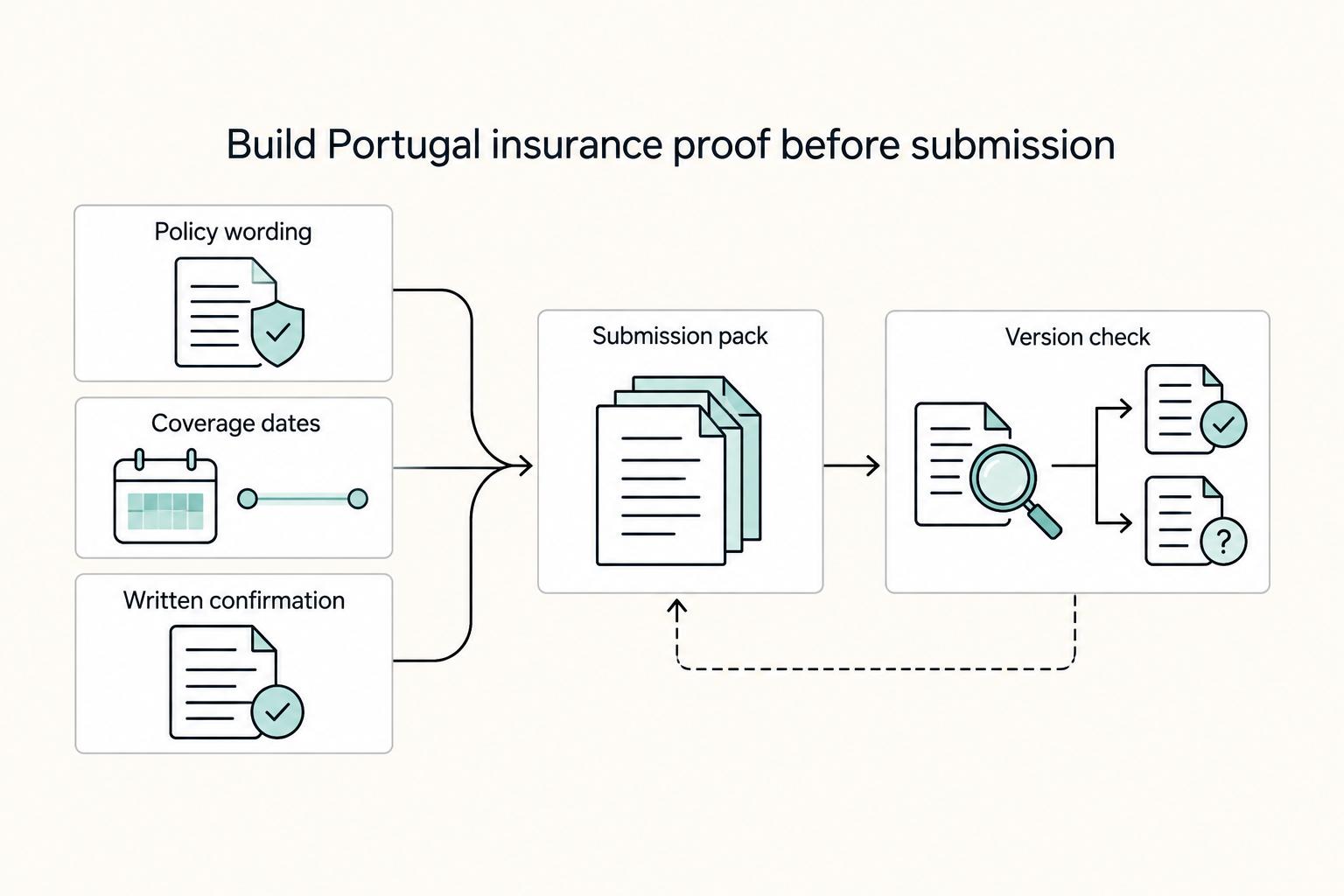
If you are searching for health insurance portugal nomad options, treat the decision as part of your visa file before you treat it as a product search. The policy matters, but timing, wording, and document quality often determine whether your file moves cleanly or turns into a clarification request.

What Happens if You Overstay the Schengen 90/180 Day Rule?
**If you are worried about a Schengen overstay issue, treat it as an operations problem and run a documented timeline.** Think of yourself as running a business of one, with mobility as part of the system. A small counting error can disrupt more than a trip. It can affect relocation timing, client delivery, and re-entry plans at the same time. For remote professionals, travel in Europe rarely sits in isolation. Flights, housing, contracts, and immigration steps usually lock together.