

Quick Answer
Build a small, task-first system before you leave, then pressure-test it in real interactions after arrival. To learn language while traveling, use a 30-day base for must-handle moments like check-in, payments, SIM setup, and pharmacy questions, then run daily live reps in repeat contexts. Speak first, use backup tools second, and keep a correction log (`context | what failed | corrected line`) so weak phrases get fixed and reused the same day. Expand only after core exchanges hold at normal speed with one follow-up.
Learn Language While Traveling Without Winging It#
If you want to learn language while traveling without winging it, aim for reliability before fluency. Your first job is not to sound impressive. It is to get through early daily interactions when the conversation speeds up and reading skills stop helping.
| Self-audit check | What to confirm |
|---|---|
| Handle core first-week interactions without reading | You can say every line out loud from memory |
| Catch the key detail in a reply | You recognize the key words in the reply |
| Ask for repetition without switching to English immediately | You can ask someone to repeat slowly or write something down |
| Do at least one errand alone | The local language touches your actual life, not just your study time |
Start with a short can-do-alone list built around the first interactions you expect to handle. Keep it small enough that you can say every line out loud from memory and then handle one follow-up question without looking at your phone. If you cannot do that, the list is too big.
Before you start#
Write one page only. For each first-week interaction, note your opening line, one likely reply you may hear, and one repair line, such as asking someone to repeat slowly or write something down. This matters because reading ability does not always carry over to speaking, especially at conversational pace.
Use a simple check: can you say the line clearly, recognize the key words in the reply, and recover once if you miss something? If not, trim the phrase list before you add more.
Step 1: Build your pre-departure base. Practice in sequence, not in random bursts. A structured course model uses sequential progression and prerequisites, and the same idea helps here. Work all four skills, comprehension, speaking, reading, and writing, but bias your prep toward hearing and saying the phrases you will actually use first.
Use your own trip details when you rehearse. Practice real names, places, and routine requests you expect to handle early. You should be able to deliver each line without notes and answer a basic second-turn question like a time, price, number, or location. If this fails, stop collecting new phrases and repeat the same small set until they come out cleanly.
Use tools for narrow jobs#
Use tools as backup, not your first move. Try your line first, then use support tools to clarify what you missed, and keep only the phrases you actually needed. The goal is active recall at normal pace, not perfect reading with prompts.
Step 2: Run an early immersion loop. Once you arrive, repeat the same low-stakes interactions on purpose. Use the same cafe, shop, front desk, or transit counter long enough to hear familiar patterns. Try your line first, then use a support tool only after the attempt. Right after, log three things: what you said, where it broke, and the corrected version you will reuse tomorrow.
If you are traveling with someone, watch for the buffer effect. A companion can absorb the speaking for you, which lowers discomfort but also cuts your reps. Give yourself one daily errand to do alone so the local language touches your actual life, not just your study time.
Step 3: Ramp up only after survival language holds. Expand in order: single request, then short exchange, then unscripted conversation. Do not jump straight to broad social chat if you still freeze in basic exchanges. A better rule is to expand only when your week-one script survives normal speed, mild noise, and one follow-up.
Run this self-audit at the end of the week: Can you handle your core first-week interactions without reading? Can you catch the key detail in a reply? Can you ask for repetition without switching to English immediately? Can you do at least one errand alone? If the answer is "no" more than once or twice, treat that as a red flag. Cut phrase volume, increase live recall reps, and keep the scope tight until the basics hold. If you also want your routine to hold up, see How to Eat Healthy While Traveling Long-Term.
Pick Your Language Scope Before You Book#
Set your scope before booking so your first-week language needs are reliable, not theoretical. Decide what you must handle alone in real situations, then study for those moments first.
Before you start: write one page with your city, neighborhood, housing setup, work setup, and first-week errands. Use that to produce one output: a ranked list of conversations you need to complete without help.
Step 1: Map contexts to conversations, then rank them. List the touchpoints most likely to create friction early: airport transit, check-in, landlord or host messages, SIM purchase, grocery basics, pharmacy questions, and payment issues. Convert each touchpoint into an actual exchange you need to run. Then rank each exchange by urgency (can this derail your week?) and frequency (will this repeat enough to matter?).
Step 2: Scope by stay scenario. If your stay is short, keep scope tight around transit, lodging, payments, food basics, and simple health needs. If your stay is medium length, keep that base and add recurring admin and light social exchanges. If your stay is long, add deeper social and professional language only after daily-needs communication is stable.
For any scenario, include foundation study before arrival: core structure, grammar, verbs, and pronunciation, not only memorized lines. If you book lessons or a host family, prioritize conversation-focused formats and confirm active speaking is expected.
Step 3: Validate with three operating levels before expanding. Do not expand your phrase list until each high-priority exchange passes this check: you can complete the task, handle one follow-up, and repair a breakdown. Repair means you can ask for repetition, slower speech, or written clarification without immediately switching languages.
| Language task | Bucket | Why it belongs there |
|---|---|---|
| Check-in, address confirmation, transport questions | Must have for week one | Failures here cause immediate delays and stress |
| SIM, Wi-Fi, payment, grocery basics | Must have for week one | These repeat quickly and affect daily function |
| Pharmacy or simple health questions | Must have for week one | Lower frequency but high consequence when needed |
| Social opinions, hobbies, travel storytelling | Deferable | Useful, but not required for early independence |
| Deeper work discussion or networking chat | Deferable at first | Add after routine tasks stop breaking down |
Step 4: Treat fallback to your stronger language as a recovery trigger. If routine interactions keep shifting to English or your stronger language, treat that as a warning sign. Reduce passive study, increase repeated live reps in the same contexts, and add ear training with audio or podcasts before those interactions. If local-language use is not required in your work or social routine, expect effort to drop unless you protect daily speaking reps. For a step-by-step walkthrough, see How to Keep Your Valuables Safe While Traveling.
Build a 30-Day Base Before Departure#
Use these 30 days to build reliable task-level communication, not fluency. Your goal is simple: handle high-friction moments without freezing or switching languages right away.
| Week | Focus | Checkpoint |
|---|---|---|
| Week 1 | Build a small phrase base with essential phrases tied to planned activities, then speak your must-work lines out loud from memory | You can recall each line without reading and still produce it later |
| Week 2 | Move to real input such as signs, menus, check-in messages, and short service exchanges; log every miss and rehearse the corrected line the same day | You can catch the core detail in a basic reply |
| Week 3 | Add live speaking with tutor or partner sessions focused only on your worksheet scenarios, then repeat the same exchanges in self-drills without notes | You can complete the task, handle one follow-up, and attempt one repair before switching languages |
| Week 4 | Rehearse failure-sensitive scenarios such as unclear responses, interruptions, missing details, or failed payments; keep your phrasebook as backup | Corrected lines come back fast under pressure, not only in practice mode |
Before you start, create a one-page worksheet:
- target city and target language
- 5 to 7 target contexts from your scope
- the exact conversation each context creates
- failure-sensitive moments (check-in, payment issues, SIM setup, pharmacy questions, transport changes)
- must-work lines for each context, including one repair line (for example: asking someone to repeat or write it down)
Also set up a miss log with three columns: context | what failed | corrected line.
| Tool/channel | Role in your system | Readiness check |
|---|---|---|
| Habit app | Short daily reps to keep momentum | You can say key lines from memory after practice |
| Real-world input (signs, menus, booking/chat text, service audio) | Train your ear and pattern recognition in realistic contexts | You catch the key detail in a short reply |
| Tutor/partner sessions | Pressure-test your exact scenarios with follow-ups | You complete task + one follow-up + one repair attempt |
| Self-drills | Rehearse retrieval without notes between live reps | You can run the exchange out loud cleanly |
| Phrasebook/translator backup | Emergency support after your first spoken attempt | You use backup to recover, not to avoid speaking |
- Week 1: Build a small phrase base.
Use essential phrases tied to your planned activities, not random vocabulary. Keep app sessions short and consistent (5 to 10 minutes can work), then finish by speaking your must-work lines out loud from memory. Checkpoint: you can recall each line without reading and still produce it later.
- Week 2: Move to real input.
Match your lines to what you will actually see and hear: signs, menus, check-in messages, and short service exchanges. Log every miss, then rewrite and rehearse the corrected line the same day. Checkpoint: you can catch the core detail in a basic reply.
- Week 3: Add live speaking.
Run short tutor or partner sessions focused only on your worksheet scenarios. Ask for one follow-up each time, then repeat the same exchanges in self-drills without notes. Checkpoint: you can complete the task, handle one follow-up, and attempt one repair before switching languages.
- Week 4: Rehearse failure-sensitive scenarios.
Practice messy versions of real moments: unclear responses, interruptions, missing details, or failed payments. Keep your phrasebook as backup, but use it after your first spoken attempt. Checkpoint: corrected lines come back fast under pressure, not only in practice mode.
If your phrase list keeps growing but recall stays weak, stop expanding. Cut back to high-frequency tasks and repeat live reps in the same contexts until retrieval improves. This pairs well with Manage Finances While Traveling Long-Term Without Cashflow Gaps.
Prepare a First-Week Survival Script You Can Actually Use#
Use your first-week script to handle real tasks, not to sound fluent. In the first month abroad, routine tasks pile up fast, so focus on reliable communication for arrival logistics, housing, connectivity setup, food and basics, basic health needs, and help requests.
| Script part | Include this |
|---|---|
| Primary line | What you need |
| Repair line | A line such as asking someone to repeat slowly |
| Confirmation line | A line such as "So it is at 6 pm on the second floor?" |
| Fallback line | A saved backup line using your phrasebook or translation support |
- Step 1: Pick five first-week situations and cut everything else.
Build one script each for arrival logistics, housing communication, SIM or Wi-Fi setup, ordering food or buying basics, and asking for help. Keep each one tied to a task you expect in your first 7 days. If you cannot picture where you will use it, remove it.
- Step 2: Build each script with one reusable structure.
For each situation, write: your primary line, a repair line, a confirmation line, and a fallback line using your phrasebook or translation support. For example: what you need, "Please repeat slowly," "So it is at 6 pm on the second floor?", then your saved backup line. Keep this in a personal travel phrasebook with offline access so you can use it on the move.
- Step 3: Rehearse for noise, speed, and stress.
Practice out loud in realistic conditions: standing, moving, and answering quickly. Aim for clear delivery, not perfect grammar. If a line breaks under pressure, shorten it until you can say it cleanly.
- Step 4: Turn role-play into a correction loop.
Ask a tutor or partner to run the same scenarios and add unscripted follow-up questions. Log what failed, simplify weak lines, and retest the same situation until recall is stable. If you freeze in live speaking, reduce passive app time and replace it with short spoken retrieval drills on these same scenarios.
Related reading: How to Find a Nanny or Au Pair as a Digital Nomad Family.
Set Up Your First 14 Days for Daily Immersion#
Treat the first 14 days as a repeatable speaking system: same contexts, clear goals, daily correction, and same-day reuse. Immersion works when you run it with focus, not when you rely on random exposure.
- Lock recurring contexts and one goal per context.
Pick fixed places you will revisit and assign one conversation task to each (for example, order customization, asking where an item is, confirming a stop, or a short intro). Repetition in stable contexts helps you see what is actually breaking: recall, listening speed, or wording.
- Choose one structured speaking channel and keep it stable.
Use one channel across the full period, such as a class, tutor, or conversation exchange. Pick it only if it fits your real schedule, gives real correction, and is easy for you to attend consistently. If you keep switching tools and formats, you can feel active without building reliable speaking ability.
- Run the same daily loop.
Use one short cycle each day: brief prep, live reps, immediate debrief, targeted correction, and same-day reuse of corrected lines. Keep a simple correction log with what failed, what you heard, the corrected version, and what caused the miss. Without correction tracking, you can stay surrounded by the language and still stagnate.
- Use a clear pivot rule when comprehension drops.
Local speech will include pace and colloquial phrasing that is harder than controlled practice. When comprehension drops, simplify input and return to your core exchanges until they are stable again, then add complexity. Keep Days 10-14 focused on real-world practice, but not at the cost of losing control of your core tasks.
You might also find this useful: How to Maintain a Healthy Routine While Traveling.
Choose the Right Learning Mix for Your Budget and Schedule#
Use a simple two-part setup: one primary method you can sustain each week, plus one support method that fixes its main weakness.
Before you compare options: write down your weekly learning budget and the speaking slots you can realistically protect. Keep this separate from housing, flights, visas, insurance, and local transport, because listed course prices are not total trip cost.
Step 1: Set your limits first. Filter by time before money. If your calendar is unstable, rigid formats can fail even when they look good on paper. If your stay is short, rule out options that require longer commitments, such as ESL Work & Study formats that list 4+ weeks and a minimum age of 18.
Use posted pricing as a comparison signal only. ESL's Work & Study page shows examples from 120 EUR/week (Berlin) and 190 EUR/week (Lyon), but those are course starting prices, not full relocation costs.
Step 2: Choose one primary method.
| Option | When this is the best fit | What to pair it with | Early warning sign |
|---|---|---|---|
| Duolingo (or similar habit app) | You want low-cost daily reps and you are still building beginner recall. The Good Trade describes Duolingo as stronger for beginners than advanced learners and lists a paid tier at $7/month. | One live feedback channel each week so recognition becomes usable speech. | You keep a streak but still avoid real conversations or cannot handle follow-up questions. |
| Structured course abroad (for example, EF format) | You want in-person structure with flexible start timing. EF states Monday starts, 2-52 weeks, and "start from any level." | Short daily review of phrases you actually need outside class. | You attend class, but class language does not transfer into daily interactions. |
| ESL Work & Study | You want language study plus work/volunteering exposure and you meet entry rules. ESL lists Intermediate-Advanced entry, 4+ weeks, age 18+, and class size 12-15. | Daily phrase review tied to tasks you actually do in placement. | You are a beginner, staying under four weeks, or assuming the paid-job track guarantees placement (the page says it provides assistance/guidance). |
Step 3: Add one support method, not several. Pick support based on what your primary method does not cover. If your primary is app-based, add live correction. If your primary is class-based, add short daily recall so class content survives real-life use. When comparing Work & Study providers, copy the key details before paying: start conditions, minimum duration, entry level, class size, and inclusions.
Step 4: Troubleshoot one variable at a time. If progress stalls, change one thing per week:
- If you attend but do not speak, reduce extra app time and increase live correction.
- If you miss sessions, reduce scheduling load before changing content.
- If fit is wrong, verify entry level and duration before renewing.
Treat payment friction as an operations issue, not a motivation issue. If foreign transaction problems disrupt lessons, fix that directly with your travel banking setup: The Best Debit Cards for International Travel. For app-only comparisons, use The Best Language Learning Apps for Travelers.
Use Language to Reduce Isolation and Build Local Belonging#
Treat belonging as part of your relocation plan from day one, not as a reward after admin is done. Language barriers can limit access to services and participation in everyday social life, so this is both an operational and social priority.
Step 1: Run two language tracks each week: task and social. Keep task language for forms, service conversations, housing messages, and other logistics. Keep social language for introductions, shared interests, invitations, and follow-up questions that move a conversation forward. If admin work takes over your week, still protect one live social-speaking block so you do not become functional but socially stuck.
Step 2: Prioritize one recurring, low-pressure setting where local-language use is normal. A recurring setting gives you repeated practice with less reset friction than one-off encounters. Language classes can also help because the shared goal can make social connection easier.
| Better for weekly belonging practice | Lower-return for weekly belonging practice |
|---|---|
| Recurring settings you can revisit (for example, a regular class or group) | One-off events where each conversation starts from zero |
| Spaces where local-language use is expected or welcomed | English-dominant spaces where local-language use is optional |
| Conversations that can expand beyond immediate transactions | Interactions that stay purely transactional |
Step 3: Set one boundary for the English-only bubble. Do not ban English. Instead, keep at least one recurring local-language setting on your calendar each week, and if you miss it, reschedule it in the same week.
Use this checkpoint: if task conversations are improving but social depth is not, shift one study block from review into live social-speaking reps on shared-interest topics. If language-first tactics still are not enough, use The Best Ways to Overcome Loneliness as a Digital Nomad as your next support layer.
We covered this in detail in The Best Digital Nomad Cities for Slow Travel.
Catch Common Mistakes Early and Recover Fast#
When an exchange breaks down, run the same recovery loop every time: pause, restate, confirm, record, then reuse the corrected phrasing in your next live interaction.
Because words and nonverbal signals work together, the problem is often bigger than vocabulary. Check your full delivery: phrasing, gestures, eye contact, and paralanguage (pace, volume, tone).
| Signal you're off | Fast correction in the moment | Follow-up practice action |
|---|---|---|
| You keep adding words and the other person still looks unsure | Cut to one short sentence, slow down, lower volume slightly | Log the shortest version that worked |
| The reaction shifts right after a gesture | Stop the gesture, keep your hands still, restate in plain words | Note the gesture and swap it for a neutral option |
| Your wording is clear but the exchange feels tense | Soften eye contact, relax your face, ask for confirmation | Record the context and test a calmer delivery next time |
Shorten the message before adding more words#
Notice when you shift into word-only overload: stacked clauses, mental translation, or faster speech. Reset to one action plus one noun, then confirm understanding. After the conversation, log both versions: what failed and what worked.
Treat gesture mismatch as its own problem#
Nonverbal cues do not follow a formal rulebook, so do not assume your familiar gesture will carry the same meaning. If the reaction changes after you point or signal, pause movement and restate with plain language. If needed, point to the object, map, menu, or screen, then record which gesture created friction.
Check delivery, not just vocabulary#
If the interaction feels strained, adjust delivery before rewriting the words. Ease eye contact, keep your expression open, and confirm with a short check like "Is that clear?" or "Did I say that right?" In your notes, include setting, delivery, and corrected phrasing, then reuse that exact correction in your next live interaction to lock it in.
Use This 90-Day Checklist to Stay on Track#
Use this as an execution tracker, not a fluency promise. Your 90-day target is conversational reliability in everyday situations, with visible proof each week.
| Stage | What you do | Evidence you completed it | What to adjust if stalled |
|---|---|---|---|
| Before departure | Decide your minimum can-do-alone list for the first month, then write the exact lines you will use. | One note or page with real first-week scenarios and lines you can say out loud without reading. | If scope keeps expanding, cut to first-72-hour tasks only. |
| Days 0-30 | Choose one study mix (habit practice, input, live correction) and run it consistently; if a tool is paid, trial the free version first. | One weekly plan, one habit tracker, and one correction log. | Change only the study mix after one full week of consistent use. |
| Arrival week | Use your scripts in live interactions first, then use Google Translate or a phrasebook as backup after your first attempt. | A running note of corrections from real interactions, and multiple everyday exchanges handled without reading word-for-word. | If you freeze, shorten scripts and rehearse likely follow-up questions in the same context. |
| Days 31-60 | Pick one repeatable immersion anchor and increase live conversation volume there. | Calendar proof of recurring contact in one setting, plus longer everyday exchanges over time. | Change only the environment if that anchor keeps defaulting to English. |
| Days 61-90 | Review weekly and change one lever at a time: study mix, live conversation volume, or environment. Intensify what already helps before adding tools. | Weekly note with one decision and one next action, plus habit tracker, correction log, and calendar history. | If progress stalls, pick the single weakest lever and test only that for one week. |
Two checks tell you whether this is working: you are more reliable in ordinary interactions, and your tracker shows repeated real-world use.
Slip-ups happen, and strict no-English rules are not always realistic. Build recovery into the plan, keep adjustments narrow, and avoid reactive tool-switching.
If you use a course benchmark, treat it as pending until the current benchmark is verified.
If isolation is the blocker, use The Best Ways to Overcome Loneliness as a Digital Nomad. For a broader routine reset during long stays, see How Remote Professionals Stay Healthy During Long Stays Abroad. For next-step tooling, Browse Gruv tools. For country/program fit questions, Talk to Gruv.
Frequently Asked Questions
Can you learn a language just by traveling?
You can make real progress, but travel alone does not do the work for you. Immersion helps only if you keep creating target-language reps instead of drifting into an English-speaking bubble. If most of your interactions are still in English except for restaurant orders or taxi instructions, your travel exposure is not turning into practice.
How much should you know before you arrive?
Know enough to start interactions in the target language instead of defaulting to English for convenience. A simple checkpoint: if you can only handle a few basic lines, you likely need more focused practice before arrival.
What should you prepare before arrival if your move is close?
Prepare a short survival set tied to the interactions you will face first. The goal is not broad coverage; it is reducing the chance that you stay in English for convenience once you arrive.
What is the fastest way to improve in the first month abroad?
Strategy matters: immersion works better when you deliberately choose target-language interactions instead of retreating to English.
Which tool should you use: Duolingo, italki, LingQ, or a language school?
Do not assume one of these tools is the clear winner. Choose based on whether it helps you get consistent real practice in the target language and avoid an English-speaking bubble.
Are Google Translate and a phrasebook enough?
Progress stalls when most day-to-day interactions remain in English.
What if you feel stuck even though you are surrounded by the language?
Do not assume more time abroad will solve it by itself. Strategy matters: the same travel opportunity can produce very different results depending on whether you choose local-language interactions or default to your comfortable language. The excerpt also warns that people can spend many years abroad without learning the local language if the bubble persists.
Try a related tool
Researched and edited by the Gruv editorial team. Gruv builds cross-border billing, payouts, and finance-operations software for global businesses.
Sources
- cde.ca.gov/sp/el/er/documents/mleleducation.pdftrusted
- cde.ca.gov/sp/se/ac/documents/ab2785guide.pdftrusted
- ef.edu/ilstrusted
- farmingdale.edu/courses/index.shtmltrusted
- files.eric.ed.gov/fulltext/ED253104.pdftrusted
- grants.nih.gov/sites/default/files/rppr_instruction_guide.pdftrusted
- nj.gov/humanservices/ddd/assets/documents/community...trusted
- pmc.ncbi.nlm.nih.gov/articles/PMC7727365trusted
Educational content only. Not legal, tax, or financial advice.
Related Posts
The Best Ways to Overcome Loneliness as a Digital Nomad
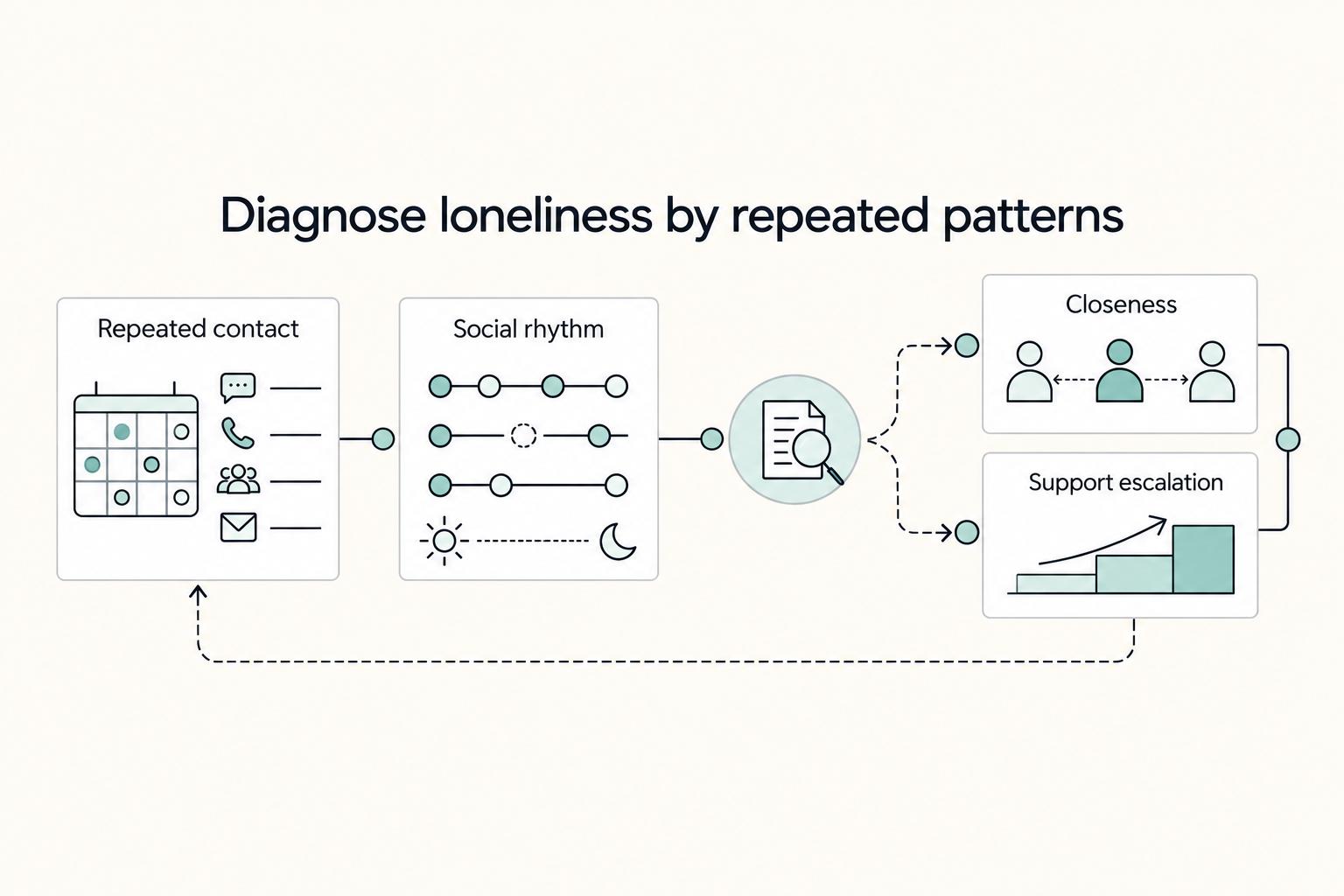
If you run a business of one while moving city to city, treat connection as an operating issue, not a personality verdict. You do not need to become louder, more social, or permanently available. You need a repeatable way to move from unknown faces to familiar ones.

The Best Debit Cards for International Travel
If reliable cash access is the priority, do not evaluate this like a perks list. Treat it like continuity planning. Give one card the everyday ATM job, fund a second card for disruptions, and decide that split before you leave.

The Freelance Payment Penalty: A Modeled Audit of Platform Fees, FX Spreads, and Payout Delays
The money rarely disappears through a single, easy-to-spot fee. The real loss is stacked. A marketplace takes its commission, a processor adds a charge for international cards, a bank or payment company converts the currency at a spread, a platform holds the funds before release, and a wire sheds a little to intermediaries on the way in. Each layer looks defensible on its own, but the worker feels the combined result as a smaller deposit and a later payday.