
Quick Answer
To incorporate a company in Singapore, confirm your business is genuinely cross-border, secure at least one locally resident director, prepare the filing pack, and submit through Bizfile, usually via an ACRA-registered corporate service provider if you are a foreign founder without Singpass. After registration, appoint a company secretary within six months and track tax and annual filing deadlines.
Is a Singapore company a sensible base for a solo operator?#
If your clients, contracts, and tax exposure already cross borders, a Singapore company can be a sensible base. If your work is still local, your compliance tolerance is low, or the real decision-making will stay elsewhere, it can add cost and friction without giving you the result you expect.
Step 1 Qualify your strategic fit#
For a solo operator, fit is not about image. It comes down to where your clients are, how much legal risk you carry, how you get paid, and where you will actually run the business from. A Singapore Private Limited company can be 100% foreign-owned, but if you stay outside Singapore you must appoint a locally resident director, and the company must keep a registered office in Singapore. Use this quick go/no-go checklist:
| Signal | Direction | Detail |
|---|---|---|
| Client geography is genuinely international | Go | This matters more if you bill across Asia or need a non-home-country company for contracts and invoicing. |
| Risk exposure is more than trivial | Go | If business liabilities could materially affect your personal finances, the liability split starts to matter. |
| Can handle ongoing compliance | Go | Expect a registered office, a company secretary within six months of registration, ECI filing within 3 months from financial year end, and annual return filing within 7 months after financial year end. |
| Banking need is vague | Pause | Do not build the whole plan on assumed remote bank opening. |
| Want treaty benefits but will manage everything from elsewhere | Pause | Singapore tax residency depends on where control and management is exercised, not where the company is incorporated. |
| Long-term residency in Singapore is possible or you are comfortable using a local director structure | Go | That requirement is not optional under ACRA. |
In practice, the pattern is simple: go if your business is already cross-border, risk is real, and you can handle the ongoing compliance; pause if the banking plan is speculative or you are counting on treaty benefits while control stays elsewhere.
Checkpoint: If you cannot explain, in one sentence each, your client geography, where strategic decisions will be made, and who will satisfy the local director requirement, you are not ready to move.
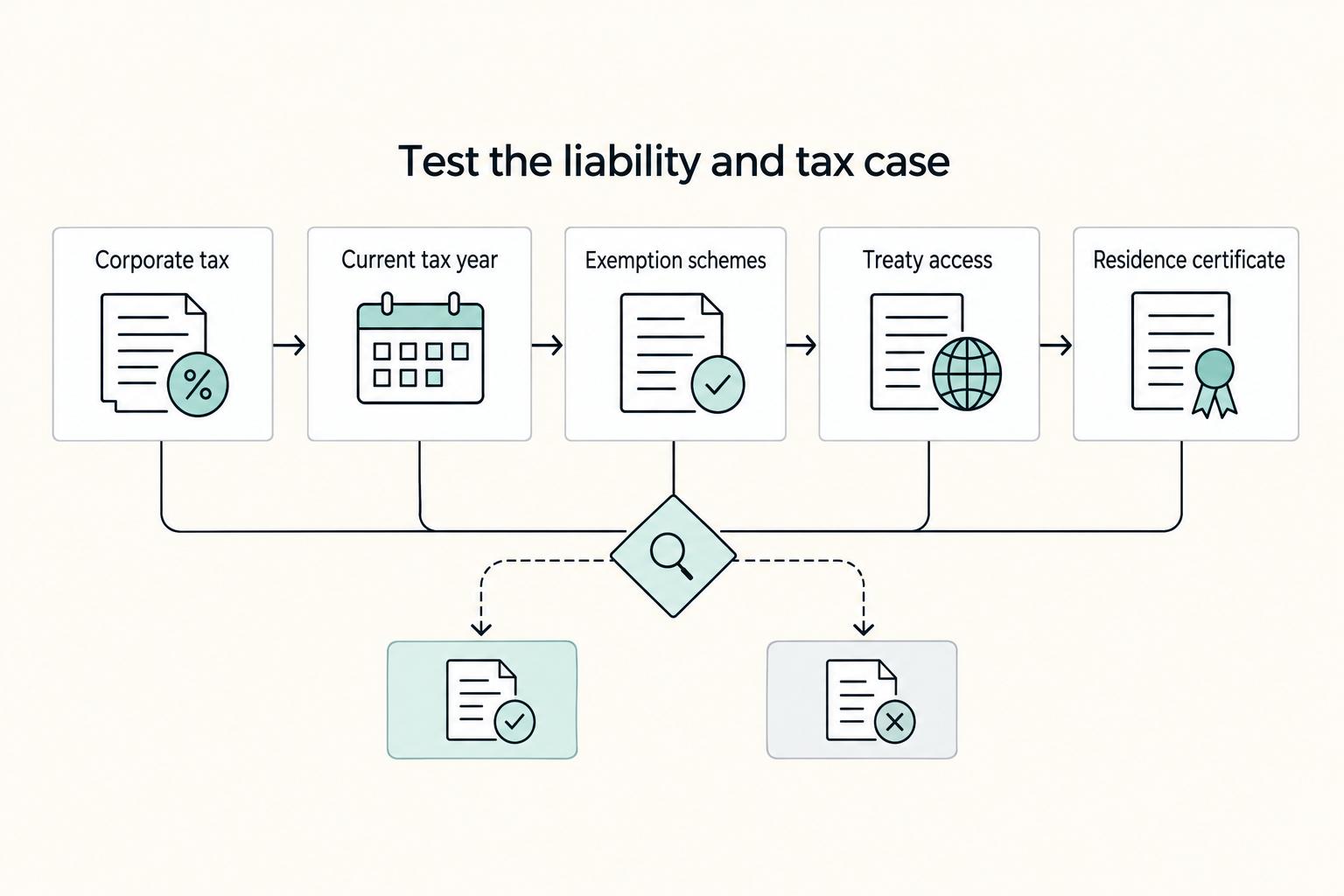
Step 2 Test the liability and tax case#
The main legal upside is real, but it is not automatic. A Singapore company is a separate legal entity, meaning it is legally distinct from its shareholders and directors. Shareholders have limited liability, which means members are generally not personally liable for the company's debts and losses.
That protection is not absolute. If governance breaks down or director duties are breached, the practical protection can be much weaker than founders expect. ACRA is explicit that director duties apply to all directors, including nominee directors, and breaches can lead to civil or criminal consequences.
A practical test is simple: could you show a clean paper trail that the company, not you personally, entered the contract, issued the invoice, received the money, and approved the decision? If not, the liability story is weaker than it looks.
| Tax item | Verified current rule | Operator note |
|---|---|---|
| Headline corporate tax | 17% on chargeable income | This is the baseline rate for local and foreign companies. |
| YA 2026 corporate income tax rebate | 40% of corporate tax payable | Subject to IRAS conditions, with total combined rebate and cash grant benefits capped at $30,000. |
| Tax exemption schemes | Confirm current exemption criteria before you model them | Do not model first-year savings from exemptions until you confirm the live rules. |
| Treaty access | Singapore has tax agreements with around 100 jurisdictions | Treaty relief depends on facts and conditions, not just incorporation. |
| Certificate of Residence | Available to Singapore tax resident companies | You will need this to support treaty claims where relevant. |
| Foreign-sourced income relief | Treaty relief, Section 13(8), and foreign tax credit may apply | Useful, but fact-specific and worth advisor review before you rely on it. |
Step 3 Map cross-border tax before committing#
This is the step solo founders skip, then regret. If tax efficiency is part of the reason you want to set up in Singapore, first confirm where the company will be tax resident. Then check whether your home country will still tax you or attribute company income back to you.
| Review | What to cover | Why it matters |
|---|---|---|
| Tax residency mapping | Where you live, where board and strategy decisions happen, and where key directors are physically present | IRAS treats control and management as strategic decision-making, and holding meetings in Singapore alone may not be enough. |
| Permanent establishment review | Where you regularly work or maintain a fixed place of business | PE risk can create tax exposure outside Singapore even if the company is formed there. |
| Home-country anti-deferral review | If you are a US or Australian tax resident, ask specifically about CFC or attribution rules | US CFC rules can apply when ownership thresholds exceed more than 50 percent. |
| Evidence pack | Draft board minutes, service agreements, director appointment plan, and a simple governance memo | Shows who approves strategy and from where. |
Before you proceed, hand an advisor a short fact pack covering those four points.
Checkpoint: If your advisor cannot tell you where company tax residency is likely to land, whether a COR is realistic, and whether your home country has CFC or PE issues, stop before filing. If you clear that screen, the next decision is how you will meet the locally resident director requirement without giving up practical control.
If you want a deeper dive, read Sole Proprietorship vs. LLC: The Definitive Guide for Global Freelancers.
Two paths to meeting the local director requirement#
That local director requirement is the real fork in the road. You either stay abroad and use local director support so the company can be formed and maintained, or you relocate and become the locally resident director yourself after the right Ministry of Manpower approval.
Step 1 Choose your control model#
For a Singapore company, ACRA requires at least one director who is locally resident in Singapore. If you remain outside Singapore, you still need a locally resident director in place, even though you can still own 100% of the shares. A non-resident foreigner can also be a registered director without applying for an Employment Pass, so the remote-owner path is legally possible, but it does not remove the local-resident requirement.
In practice, the remote-owner model usually means you keep ownership while using a nominee director arrangement to satisfy the residency rule. Treat that as a compliance dependency, not a paperwork trick. ACRA treats nominee status as a real category, and since 9 June 2025, nominee-director appointments arranged by way of business must go through an ACRA-registered corporate service provider. Foreign founders also need a corporate service provider to file the incorporation through Bizfile.
Your guardrails are straightforward. Verify the provider is ACRA-registered. Ask who will maintain the nominee information for ACRA's central register, and confirm how updates are handled within the required 2 business days after any change. The common failure mode is assuming "nominee" means no real duties or no real influence. Directors still carry legal responsibilities, so your service agreement, approval process, and document trail need to show what you retain and what requires formal director action.
| Criteria | Remote owner with local nominee support | Relocated founder as resident director |
|---|---|---|
| Control model | You retain ownership and depend on a local director appointment and CSP process | You hold management and the resident-director role directly once approved |
| Operational complexity | Higher coordination with CSP and nominee records | Higher immigration and relocation work |
| Relocation commitment | None required | Real move or sustained presence in Singapore |
| Compliance workload | More third-party coordination | More personal responsibility on the ground |
| Ongoing cost type | Likely CSP, nominee, registered office, and secretarial costs | Likely immigration and relocation costs |
| Best fit if | Your business is mobile and you do not need to live in Singapore | You want to run the company from Singapore and build local presence |
Step 2 Test the resident route before you commit#
If you want to relocate, verify the MOM route before you build the company around it. ACRA says foreigners who wish to manage the company in Singapore must seek MOM approval after incorporation. Common routes include an Employment Pass for foreign professionals, managers, executives, and technicians, or an EntrePass for eligible entrepreneurs building venture-backed or innovation-led businesses.
Use the EP route when you are joining or running the company in a conventional executive capacity. Use EntrePass when the business actually matches MOM's innovation criteria and ownership rules, including the stated 30% shareholding condition. Confirm the current eligibility criteria before you rely on either path.
One important checkpoint is salary. MOM pages show different EP salary baselines, including $5,600 a month on one page and $5,000 on another key facts page, with later changes flagged for 1 Jan 2027 and 1 Jan 2028. Do not rely on an old figure. If you already hold an EP and plan to take a director appointment, check whether a Letter of Consent is required.
Step 3 Choose your path and queue the next action#
At this point, the right move should be clearer. Use this checklist before you file:
- If you want location freedom and can manage through a CSP, continue to the next section and stress test the nominee-director setup.
- If you want to live in Singapore, stop and verify the MOM route first, including current eligibility and timing.
- If you cannot name your CSP, your local director solution, and who updates nominee filings, you are not ready to file.
For a step-by-step walkthrough, see How to Incorporate a Company in the British Virgin Islands (BVI).
Protecting practical control with a nominee director#
If the phrase "nominee director" makes you nervous, that is a healthy reaction. You are appointing a real director to satisfy Singapore's locally resident director requirement. The useful question is not "Can I avoid trust?" but "What can I verify, document, and restrict before I sign?"
Step 1 Define the role before you buy the service#
A nominee director in Singapore is not a casual label. Under the Companies Act, a director is a nominee if the director is accustomed or under an obligation, whether formal or informal, to act in accordance with another person's directions, instructions, or wishes. For your purposes, the role is usually defined by the governance documents and service terms, while you remain the shareholder and can also be appointed as a foreign director if you live overseas.
That distinction matters because nominee status does not erase director duties. ACRA states that directors' duties apply to all directors, including nominee directors, and the statutory duty includes acting honestly and using reasonable diligence. So your practical control comes from governance, mandates, and documents, not from pretending the nominee is invisible. A useful boundary check:
- Routine statutory filings may be handled through the company secretary, directors, or your filing setup in Bizfile. Do not assume the nominee alone signs or files everything.
- In practice, board resolutions, bank mandates, and signing authorities should be clear and current. Do not leave them broad by default.
- Your explicit approval is strongest when it is built into resolutions, service terms, and approval rules for contracts, banking, and changes to officers or shareholdings.
The failure mode is simple: founders hear "non-executive" and skip the paperwork that makes the role narrow in practice.
Step 2 Vet the provider like a compliance dependency#
Treat the provider as part of your control structure, not just an admin vendor. Since 9 June 2025, corporate service providers must be registered with ACRA, comply with the CSP regime, and vet nominee directors. If the appointment is arranged by way of business, it must go through a registered CSP and the nominee must be assessed as fit and proper. That is your first hard filter.
| Due diligence point | What you should verify | Evidence to ask for |
|---|---|---|
| Licensing status | Confirm the CSP and relevant registered qualified individual can be found through Bizfile searches | Bizfile entity search and people search result |
| Service scope | Check whether the package covers incorporation filing, resident-director support, registered office, company secretary appointment timing, and nominee-register updates | Engagement letter or proposal |
| Governance process | Ask who prepares board resolutions, who keeps the ROND information, and who files central-register updates within 2 business days after changes | Written process note |
| Escalation path | Ask who handles decisions if the nominee refuses a request, sees a compliance issue, or needs supporting documents before signing | Service agreement or SOP summary |
| Fee transparency | Confirm annual fee, onboarding fees, disbursements, replacement fees, and termination charges | Full fee schedule and renewal terms |
One checkpoint you can actually test: ask the provider how they handle the Central Registers of Nominee Directors and Nominee Shareholders. From 16 June 2025, companies must submit nominee information to ACRA's central registers, and updates after the initial filing must be filed within 2 business days. If the answer is vague, keep looking.
Step 3 Lock the boundaries in writing#
This is where control either becomes real or stays theoretical. Your document pack should show exactly how authority is allocated and how the appointment ends. At minimum, review:
- Nominee service agreement: scope, excluded acts, approval requirements, fees, and service standards.
- If your arrangement uses a declaration of trust or similar document, have it reviewed so the role and limits are clear.
- Resignation mechanics: how removal works, what notices are needed, and who files the officer change through Bizfile within 14 days if applicable. Do not assume a pre-signed undated resignation letter is legally required.
- Indemnity terms: what company liabilities you cover, what misconduct is excluded, and whether the indemnity stops if the nominee acts outside authority.
- Handover and termination procedure: return of records, transfer of corporate documents, pending filings, and replacement-director timing.
One more records point matters now more than it used to. Nominee status is publicly visible after filing with ACRA's central registers, while the nominator's full particulars are restricted to law enforcement access. Also, if someone becomes a nominee after incorporation, the nominee must inform the company within 30 days, and your provider should be able to show how that notice is captured.
Before you move to the filing stage, tighten operations:
- Set bank mandates so the nominee is not added as a banking signatory unless there is a documented reason.
- Require written approval for contracts, officer changes, share issues, and regulated commitments.
- Keep a monthly recordkeeping cadence for resolutions, invoices, bank statements, and nominee correspondence.
- Schedule a quarterly compliance review covering Bizfile updates, ROND accuracy, annual return timing, and whether your company secretary has been appointed within six months of incorporation.
If you can verify the CSP, narrow the authority, and keep the evidence pack current, this path can stay controlled rather than fragile.
We covered this in detail in A Guide to Incorporating a Private Limited Company in India as a Foreigner.
Treat the incorporation filing as a handoff project#
Once your director setup is locked down, treat the filing like a handoff project, not a mystery. Common delays come from weak prep, unclear business activity wording, or late endorsements, not from Bizfile itself.
Step 1 Prepare the submission pack#
Owner: You first, then your corporate services provider. Start with the company name. ACRA makes that the first step. Your provider should screen for names that are not identical to existing names and do not contain prohibited or undesirable words. Pair that with the right SSIC code early, because the name application requires your business activity selection.
Your pack should be filing-ready before anyone submits anything: shareholder and director particulars, resident-director arrangement, issued share capital details, financial year end, and your constitution choice. At incorporation, the minimum issued share capital is S$1. For the constitution, choose either ACRA's Model Constitution or a custom version if you need tailored governance. Confirm the current document list with your provider before filing.
Step 2 File through Bizfile#
Owner: CSP for most foreign founders, especially if you do not have Singpass. Foreigners without Singpass need a registered corporate service provider to submit through Bizfile. The filing can be done as one combined name-plus-incorporation application or as a two-step process using the approved name transaction number.
| Milestone | Timing | Note |
|---|---|---|
| Name approval validity | 120 days | Relevant if the filing is done as a two-step process using the approved name transaction number. |
| Referred name review | 14 to 60 days | Applies if the name is referred to another agency. |
| Complex incorporation application | Up to 15 working days after payment | This is the stated timing for complex applications after payment. |
| Officer endorsement | Within 60 days after approval | Appointed officers must endorse in Bizfile or the application lapses. |
The practical checkpoint here is timing and dependencies. Name approval is valid for 120 days, but if the name is referred to another agency, that review may take 14 to 60 days. Complex incorporation applications may take up to 15 working days after payment. Do not miss officer endorsements after approval: appointed officers must endorse in Bizfile within 60 days or the application lapses.
Step 3 Activate the company in the right order#
The first post-incorporation decisions matter more than the filing itself. Owner: You drive decisions, CSP supports setup. Start with the corporate bank account. ACRA states you can begin immediately after Bizfile registration, but banks may still ask for extra documents and may require account signatories and majority directors to be physically present in Singapore. So confirm signer availability and evidence-pack completeness before you promise clients a go-live date.
Next, handle access and tax. You can apply for Corppass one day after you get your UEN for government transactions. Then decide on GST based on actual facts, not assumptions. Compulsory registration applies if taxable turnover exceeds S$1 million under the retrospective or prospective test, and under the forecast test you must apply within 30 days. Also note your Year 1 tax checkpoint: ECI is due within 3 months from financial year end. For licences, scope them through GoBusiness Licence e-Advisers before trading.
| Blocker | What it breaks | Fix |
|---|---|---|
| Incomplete KYC pack | Bank onboarding and CSP checks | Ask for the bank and CSP document checklist upfront; expect follow-up requests |
| Unclear business activity description | Name application or filing review | Match the activity wording to the SSIC code before submission |
| Late officer endorsement | Incorporation lapses | Calendar the Bizfile endorsement deadline as soon as approval emails land |
This pairs well with our guide on How to Incorporate a Business in Canada as a Freelancer.
Run first-year compliance with an owner for each task#
Your first year gets much easier if you separate registry work from tax work and assign an owner to each task on day one. The big mistake is treating everything as "provider stuff." If your books, officer details, or approvals are late, your provider cannot fix that after the fact.
Step 1 Route each task to the right authority#
Use one simple rule: ACRA looks after the company as a registered entity, and IRAS looks after the company as a taxpayer.
That matters because the evidence pack is different. ACRA tasks are about keeping the public record current through Bizfile, including the Annual Return, officer-detail updates, and AGM-related data where relevant. If an AGM was held, the AGM date must be included in the annual-return process, and financial statements may also be required if applicable. IRAS tasks are about tax positions and supporting records, including ECI, the annual Corporate Income Tax Return, GST registration triggers, and tax record retention for at least 5 years from the relevant Year of Assessment.
A practical check: when a task comes up, ask, "Does this update the register, or does it calculate tax?" If it updates directors, shareholders, or statutory records, route it to ACRA. If it estimates income, reports tax, or tests GST thresholds, route it to IRAS.
Step 2 Appoint and use your company secretary properly#
This is not optional admin. Your company must appoint a company secretary within 6 months from incorporation. That role cannot stay vacant for more than 6 months, or directors may face a penalty of up to S$1,000.
Do not treat the secretary as a name on a form. Ask them to handle four things clearly: maintain statutory records, monitor filing dates, coordinate Bizfile submissions, and tell you what approvals or documents are needed before each filing. ACRA is explicit that the secretary should keep directors aware of annual-return and other filing deadlines. Your part is to respond quickly when there is a change in particulars, because officer-detail changes must be updated via Bizfile within 14 days.
| Trigger | Action | Owner | Dependency | Consequence |
|---|---|---|---|---|
| Company incorporated | Appoint company secretary and confirm scope | You + provider | Incorporation date and agreed scope | Vacancy risk; directors may face penalty if role is left vacant too long |
| Director or officer details change | Lodge update in Bizfile | Provider files, you notify | Change details and effective date | Registry becomes outdated; 14-day update rule can be missed |
| FYE closes | Prepare books and assess ECI filing | You prepare data, provider reviews/files | Finalised bookkeeping, bank records, invoices | Wrong or late tax estimate if books are not ready |
| AGM held, if applicable | Capture AGM date for annual return | You + secretary | Verified meeting date and records | Annual-return filing may be incomplete |
| Annual return season | File AR with ACRA | Provider files, you approve | Financial statements if applicable | Late lodgment penalty of up to S$600 per late filing |
| Tax return season | File Form C-S, C-S (Lite), or C | Provider prepares/files, you confirm tax data | Complete accounting and tax support | IRAS may impose a composition amount or take recovery action |
Step 3 Run a first-year control routine#
The best first-year control routine is light, repetitive, and boring. That is a feature, not a flaw.
- Monthly: reconcile bank activity, store invoices and contracts, keep director and shareholder change notes, and check whether any registry change needs a Bizfile update.
- Quarter-end: hand your bookkeeping pack to the provider, review revenue against GST compulsory-registration tests, and ask for a compliance health check with filing windows marked clearly.
- At FYE and year-end tax prep: lock the ledger, confirm supporting documents are retained for at least 5 years from the relevant YA, and verify who is filing ECI, the Annual Return, and the Corporate Income Tax Return.
If you want peace of mind, the best control is not a bigger provider package. It is a short recurring review where you confirm books, changes, and deadlines before they become filing problems. You might also find this useful: A Guide to DAOs for Freelance Contributors.
Frequently Asked Questions
How much does it cost to set up the company?
The fixed ACRA eService fees are $15 for the name application and $300 to register a new business entity. Your total cost may be higher if you need a corporate service provider, company secretary, registered address, or a nominee director. Ask for an itemised quote before you sign.
Can you own 100% of the shares as a foreign founder?
Yes. Foreigners can own 100% of the shares, but the company still needs at least one director who is ordinarily resident in Singapore.
What is a private limited company in plain English?
In Singapore, the usual form is a private company limited by shares, often called a Pte Ltd. It has share capital and a cap of 50 shareholders, whether individuals or corporate entities.
What does “ordinarily resident director” mean for you?
It means the company must have at least one director ordinarily resident in Singapore. If you plan to fill that role yourself, check with the relevant pass issuer such as MOM or ICA rather than assuming your status qualifies automatically.
Is a nominee director just a name on a form?
No. A nominee director is still a legal director, and all directors remain responsible under the legislation. The role can satisfy the local director requirement, but it does not erase director duties or replace proper governance documents.
What is the minimum capital, and what does paid-up capital mean?
The minimum issued share capital at incorporation is $1. Paid-up capital is the amount shareholders have actually paid to the company for their shares, which is different from the legal minimum.
Do you need to travel for banking?
Maybe. Banks may ask for extra documents and may require account signatories and majority directors to be physically present in Singapore. Confirm the bank's current policy, document checklist, and post-registration access steps before you rely on a remote setup.
How should you use the company with clients?
Use the company as the contracting and invoicing party, not just as a label. Once you have the UEN, use the company name and UEN on invoices, statements of account, official notices, and business correspondence.
What still matters after setup?
You still need to maintain the structure after setup. Appoint a company secretary within 6 months, keep the filing calendar current, and remember that ECI is generally due within 3 months after FYE, the annual return within 7 months after FYE, and the corporate income tax return by 30 Nov each year. Annual return filing still applies even if the company is inactive or dormant.
Try a related tool
Researched and edited by the Gruv editorial team. Gruv builds cross-border billing, payouts, and finance-operations software for global businesses.
Sources
- acra.gov.sg/compliance/registers-of-nominee-directors-an...trusted
- acra.gov.sg/register/business/registering-different-busi...trusted
- ato.gov.au/businesses-and-organisations/international-t...trusted
- iras.gov.sg/taxes/corporate-income-tax/estimated-chargea...trusted
- iras.gov.sg/taxes/goods-services-tax-%28gst%29/gst-regis...trusted
- law.cornell.edu/uscode/text/26/957trusted
Educational content only. Not legal, tax, or financial advice.
Related Posts

Sole Proprietorship vs LLC for Global Freelancers in 2026
For most freelancers in 2026, the practical default is still simple: use the simplest structure you can run cleanly, then formalize when risk actually rises. If your work is still in validation mode and the downside is contained, a sole proprietorship is often the practical starting point. When contract exposure, delivery stakes, or dispute risk starts climbing, forming an LLC deserves earlier attention.
Singapore Corporate Tax for Foreign Entrepreneurs Without Filing Surprises
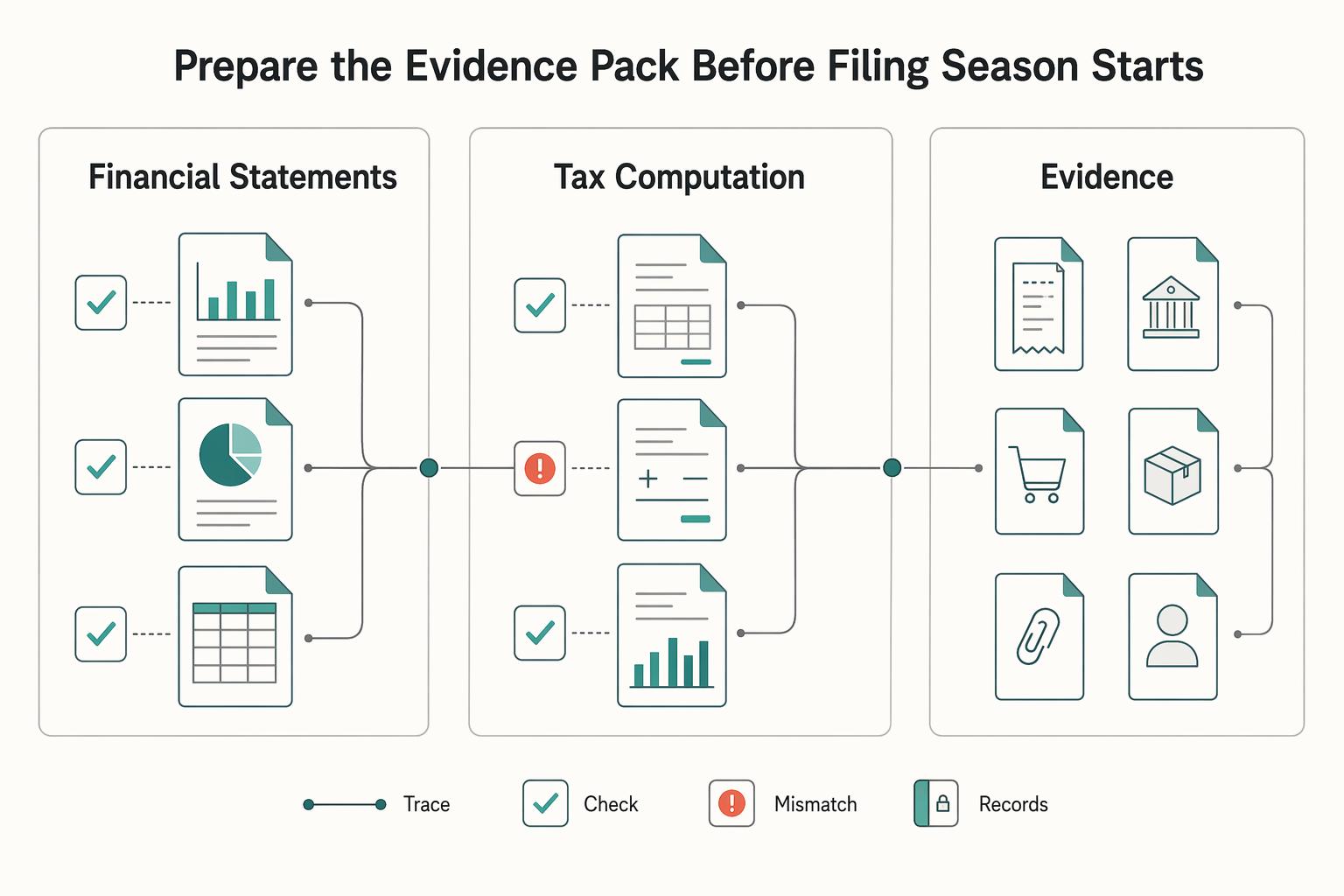
Delays often come from mismatches between entity records, tax timing, and filing prep, not just the 17% rate. Start in this order: confirm whether your setup is treated as a company for income tax, map the correct Year of Assessment (YA), then verify core records before estimating anything.
DAO for Freelancers Who Need Payment Certainty
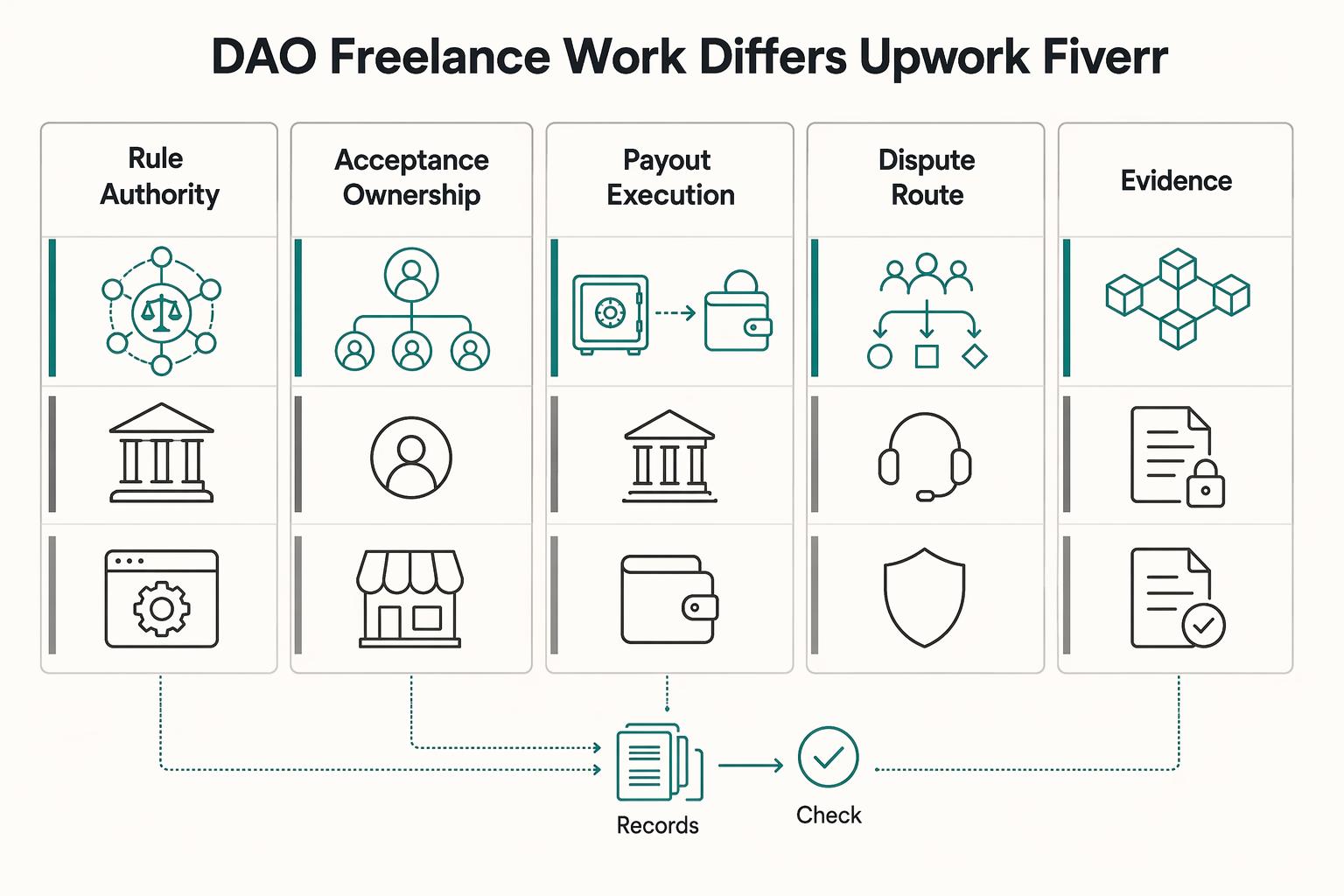
Treat any **dao for freelancers** opportunity as unconfirmed income until you verify who releases funds and how that release happens. A passed vote, active Discord, or busy forum thread may look encouraging, but none of it guarantees payment.