
Hiring your first salesperson out of overwhelm often leads to costly failure because the foundational systems are missing. To succeed, you must first document your sales process in a simple playbook and then de-risk the hire by delegating tasks in controlled, incremental tiers, starting with low-risk activities like list-building. This systematic approach transforms a high-stakes gamble into a scalable revenue engine, giving you more control and the freedom to focus on strategic growth.
Before You Hire, Audit Whether You Are Ready to Delegate#
The decision to bring on your first salesperson begins not with a job description, but with a hard look in the mirror. This hire is an investment that goes far beyond salary; it's a strategic commitment of cash, time, and trust. Get this wrong, and you risk not only a significant financial loss but also damage to your brand and morale. Get it right, and you build the foundation for scalable growth.
Before you take that step, you must rigorously assess your own readiness. This framework will guide you through that audit.
The Three-Part Readiness Audit#
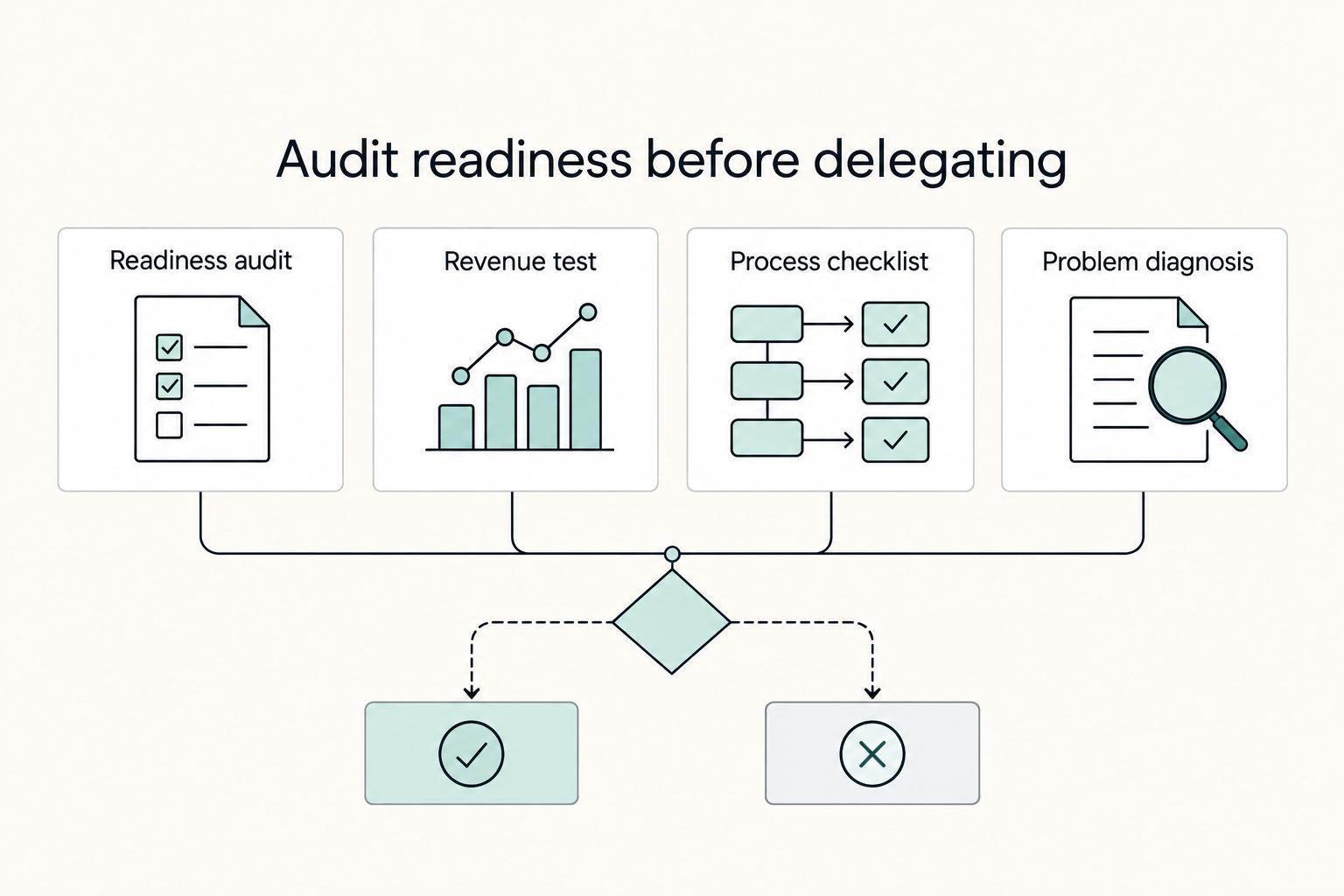
First, determine if the foundations are in place. Without sufficient capital, a documented process, and a clear diagnosis of your core problem, you are hiring prematurely.
1. The Revenue Readiness Test#
Hiring a salesperson is an act of financial faith that requires a significant cash runway. A new hire will not close deals on day one. You must budget for a ramp-up period—the time it takes for them to become fully productive. For many B2B roles, this can last three to nine months, factoring in training and your average sales cycle.
Calculate Your "Delegation Runway"
Before you proceed, calculate if you can afford to support a new hire until they generate a positive ROI. The fully-loaded cost of an employee is typically 1.25 to 1.4 times their base salary once you factor in taxes, benefits, and tools.
- Delegation Runway (in months) = (Current Cash Reserves) / (Salesperson’s Fully-Loaded Monthly Cost)
If your runway is less than six months, you are likely not ready. Pushing a new hire to produce revenue under immense financial pressure is a recipe for failure. You need enough capital to give them the space to learn, build a pipeline, and succeed.
2. The Process Readiness Checklist#
If your sales process lives entirely inside your head, you aren't ready to delegate—you're ready to document. Without a clear, repeatable process, you cannot effectively train, manage, or measure a new hire. Handing over your brand's reputation without a playbook is an abdication of control, not a strategic delegation of tasks.
Ask yourself:
- Can I write down the exact steps from identifying a lead to closing a deal?
- Have I documented my ideal client profile, including who I don't work with?
- Do I have a set of core email templates or call scripts for outreach and follow-up?
- Is there a central place—even a simple spreadsheet—where I track all lead interactions?
If you answered "no" to any of these, your first task is to create a foundational sales playbook. Only then can you ensure a new hire will represent your business consistently. Start with How to Create a Sales Playbook for Your SaaS Team if your process is still mostly living in your head.
3. The Problem Diagnosis Framework#
Finally, diagnose the root cause of your pain. Are you truly bottlenecked by sales opportunities you can't pursue, or are you simply drowning in administrative work? Hiring for the wrong problem is a common and costly mistake.
This framework can clarify your next move:
| Your Primary Symptom | The Real Problem | The Right First Hire |
|---|---|---|
| "I'm buried in scheduling, follow-ups, and paperwork." | Administrative Overload | A Virtual Assistant (VA) to handle non-sales tasks and free up your time. |
| "I don't have enough new leads coming in the door." | Top-of-Funnel Deficiency | A fractional Sales Development Rep (SDR) to focus solely on prospecting and booking meetings for you. |
| "I have too many qualified leads but not enough time to close them all." | Sales Capacity Bottleneck | A part-time or fractional Account Executive to manage deals from discovery to close. |
If this audit confirms you have the runway, a documented process, and a true sales capacity bottleneck, you are ready to proceed. Your next step isn't writing a job ad. It's building the system that will ensure your new hire succeeds.
Phase 1: Write Down the Standards a New Hire Can Apply#
The biggest fear in hiring a salesperson is that they will dilute your brand or fumble key relationships. The only way to mitigate that risk is to create a playbook that serves as your proxy—a guide that ensures your standards are met even when you’re not in the room. The goal is replication, not replacement. You are distilling 80% of your institutional knowledge into a simple, actionable guide.
Your "Micro-Playbook" doesn't need to be a 100-page manual. It must be a concise document a new hire can apply within their first week.
Essential Components:
- One-Sentence Value Proposition: The single, powerful sentence that explains what you do, for whom, and why it matters.
- Ideal Client Profile (ICP): Be ruthless. Define exactly who you serve (budget, industry, title) and, more importantly, who you don't.
- Top 3 Lead Sources: Document where your best clients come from and the initial approach for each channel.
- Core Communication Scripts: Write out your highest-performing email and LinkedIn connection request templates. These are starting blocks, not rigid rules.
- Top 3 Objections & Responses: Document the most common pushbacks you get and your proven, empathetic responses.
- "Red Lines": Codify your non-negotiable rules of engagement. What language should they never use? Are there competitors you never mention? What client behaviors are immediate red flags?
- Single Source of Truth: Choose a simple system to track leads and conversations. A well-structured spreadsheet, Trello board, or Notion page is more than enough. The goal is visibility, not feature overload.
This system provides the structure that allows a talented individual to act confidently on your behalf.
Phase 2: De-Risk the Hire with Tiered Delegation#
With your playbook in hand, you can de-risk the hiring process through methodical, tiered delegation. The most common mistake is searching for a "unicorn" who can flawlessly execute every stage of the sales cycle. This high-risk gamble exposes your brand and revenue if the hire fails.
A smarter approach is to reframe the goal from role abdication to task delegation. You will grant responsibility incrementally, building trust and validating skills at each stage. This framework breaks the sales process into three tiers, moving from lowest to highest risk.
| Tier | Task Focus | Risk Level | Primary Goal for Validation |
|---|---|---|---|
| Tier 1 | Lead Research & List Building | Low | Can they understand your ICP and follow precise instructions? |
| Tier 2 | Initial Outreach & Appointment Setting | Medium | Can they communicate your value proposition using approved scripts and book meetings? |
| Tier 3 | Qualification & Discovery Calls | High | Can they be trusted to represent your brand in live conversations with prospects? |
Tier 1 (Low Risk): Lead Research & List Building#
This is the proving ground. Before a new hire ever speaks to a potential client, they must prove they understand who a client is. Your first directive is simple: "Using the ICP in the playbook, build a list of 100 prospects in our shared CRM." This low-cost test measures their diligence and ability to apply your playbook's core principles. If they can’t master this, they won't succeed with more complex tasks, and you can part ways with minimal loss.
Tier 2 (Medium Risk): Initial Outreach & Appointment Setting#
Once they prove they can identify the right targets, authorize them to engage. Their mission is strictly defined: book meetings for you using the pre-approved scripts from your playbook. You retain full control of all substantive, client-facing conversations. This creates a critical firewall, allowing you to validate their communication skills in a controlled environment.
Tier 3 (High Risk): Qualification & Discovery Calls#
Only after weeks or months of consistent success in the first two tiers should you delegate live conversations. This privilege is earned. By this point, the hire has demonstrated a deep understanding of your brand and customer. You can now train them to handle initial discovery calls, freeing your time for closing deals and strategic growth.
Navigating Contracts and Global Compliance#
Once you identify a promising candidate through this tiered approach, you must formalize the relationship with a legal structure that protects your business, especially when hiring internationally. If the real bottleneck is still admin execution rather than pipeline creation, How to Onboard a New Virtual Assistant Effectively is often the better first system to build.
Contractor vs. Employee: The High-Stakes Difference#
Misclassifying an employee as an independent contractor is a dangerous financial risk, with severe penalties that vary by country. The U.S. Department of Labor's current misclassification guidance is a useful starting point, but you should also compare it against the rules that apply where the contractor actually works. For U.S.-specific cleanup and risk framing, review A Guide to California's 'AB5' Law for Independent Contractors and What to Do If You've Been Misclassified as an Independent Contractor.
While this is not legal advice, authorities worldwide generally assess the degree of control you exert. To maintain a clear contractor relationship, ensure they control the how and when of their work, use their own primary equipment, and are responsible for their own taxes. You define the what—the deliverables.
The Clauses Your Contractor Agreement Must Include#
Your independent contractor agreement is your shield. While you should consult a legal professional, your contract must include these critical clauses:
- Clear Definition of Services: Be specific. Instead of "sales help," write "The Contractor will perform lead generation and appointment setting services, with a target of delivering 10 qualified appointments per month."
- Confidentiality and IP Ownership: State explicitly that all work product and client lists created for your business belong to you.
- Termination Conditions: Outline the notice period (e.g., 14 or 30 days) for either party to end the contract.
- Payment Terms & Currency: Specify the exact compensation, payment schedule, and currency (e.g., "all payments to be made in USD").
Who Owes the Tax, and What to Keep on File#
Your contractor is an independent business owner responsible for their own taxes in their own country. For U.S.-based businesses hiring foreign individuals, you must have them complete and sign Form W-8BEN. The IRS page for Form W-8BEN explains the foreign-status certification you are collecting. Keep that form on file, receive their professional invoice, and pay against documented terms. This clean process is fundamental to de-risking global hiring.
Phase 3: Manage with Metrics, Not Micromanagement#
With a compliant foundation in place, you can build a management system that grants autonomy, builds trust, and provides strategic oversight without daily check-ins. Data is your ally; micromanagement is the enemy.
The "3 Metrics That Matter" Dashboard#
For a top-of-funnel hire, complexity is a trap. Use a simple, shared spreadsheet to track the only three numbers that directly correlate to results.
| Metric | Why It Matters | Example Target |
|---|---|---|
| Activities | Your input metric. It measures raw work (e.g., emails sent) and is a leading indicator of future results. | 100 new outreach emails per week |
| Meetings Booked | Your core output metric. It proves that the activities are generating qualified conversations. | 3 qualified meetings booked per week |
| Pipeline Generated | Your quality metric. It measures the potential value of the deals, ensuring they are targeting the right prospects. | $15,000 in new potential pipeline per week |
This dashboard provides a complete story at a glance. If Activities are high but Meetings are low, you have a messaging problem. If both are high but Pipeline is low, they are targeting the wrong customer. It’s a diagnostic tool, not an instrument of control.
The 30-60-90 Day Success Plan#
Empower your new hire with a clear vision of success. A 30-60-90 day plan replaces ambiguity with a concrete set of priorities.
- Days 1-30: Foundation & Immersion. The goal is learning, not performance. The focus is on mastering the playbook, internalizing the ICP, and building their first prospect list.
- Days 31-60: Execution & Calibration. They begin outreach. The objective is to apply their knowledge, test messaging, and book their first 5-10 qualified meetings.
- Days 61-90: Consistency & Optimization. The goal is to establish a repeatable rhythm that reliably hits a weekly meeting quota with growing independence.
The Asynchronous Communication Cadence#
Constant "check-in" messages kill productivity and signal a lack of trust. Institute a simple rhythm that respects everyone's time.
- One Weekly Progress Email: At the end of their week, the contractor sends a templated email covering the "3 Metrics," key wins, roadblocks, and their focus for the upcoming week.
- One 30-Minute Weekly Sync Call: This is not a status update; the email handled that. This is a strategic coaching session to review the dashboard, diagnose challenges, and brainstorm solutions together.
This cadence replaces reactive micromanagement with a proactive system of accountability, empowering your first salesperson while ensuring you retain strategic control.
Your First Hire Isn't a Person—It's a System#
The goal of this framework is not simply to offload tasks. It is to fundamentally shift your role from being the sole engine of your business to becoming its architect. The most critical step is realizing you are not hiring a person to solve a problem; you are building a system that produces a predictable result.
You began by documenting your sales process to create a replicable playbook that safeguards your brand. The Tiered Delegation framework is your risk management protocol, allowing you to grant responsibility based on proven performance, not blind hope. The "3 Metrics That Matter" dashboard is your control panel, providing the data to manage outcomes without micromanagement.
This systematic approach transforms a high-risk, anxiety-inducing decision into a calculated investment in your own freedom. You are installing a machine that generates opportunities—a machine you can tune and optimize over time. Each component is designed to give you more control, not less, as you grow.
Stepping back from doing everything yourself is a major strategic move. By systemizing your process, delegating in risk-managed tiers, and managing with data, you are not just hiring help. You are building a more resilient revenue engine that frees you to focus on leadership, closing, and higher-value work. If you want help pressure-testing the operating setup, Talk to Gruv.
Frequently Asked Questions
What tasks should I delegate to my first salesperson?
Start with the lowest-risk, highest-impact activities. The ideal starting point is Tier 1: Lead Research & List Building. Task them with building a targeted prospect list based on your playbook. Once they master that, graduate them to Tier 2: Initial Outreach & Appointment Setting, where they use your scripts to book meetings that you will take. This maintains your control over critical client conversations.
Should I hire a fractional salesperson or a virtual assistant (VA)?
This depends on your core problem. A Virtual Assistant is for administrative bottlenecks—calendar management, data entry, and scheduling. A fractional salesperson (SDR) is for a new business bottleneck—their sole focus is executing top-of-funnel activities to generate qualified meetings. Don't hire a salesperson to do an admin's job.
What is a realistic budget for a part-time, remote salesperson?
While rates vary, a realistic budget for a qualified freelance SDR is typically $25 to $50 per hour. For a commitment of 15-20 hours per week, expect to invest between $2,000 and $4,000 per month. Be wary of rates significantly below this range, as they may reflect a lack of specialized sales experience.
How do I create a safe contract for a foreign sales contractor?
Consult a legal professional, but ensure your international independent contractor agreement includes: a clear definition of services, clauses for confidentiality and IP ownership, clear termination conditions, and specific payment terms (including currency).
What's a simple checklist for onboarding a remote salesperson?
Keep it lean and focused.
- Day 1: Grant access to essential tools and share the "Micro-Playbook."
- Day 2: Walk them through your Ideal Client Profile and the "3 Metrics That Matter" dashboard.
- Day 3: Review the 30-60-90 Day Plan and schedule your weekly sync call.
- End of Week 1: Have them build a test list of 25 prospects for your review.
What are the absolute essential tools for a first sales hire?
You don’t need an expensive tech stack. Start with the essentials:
- A professional email address (e.g., salesperson@yourcompany.com).
- A prospecting tool like LinkedIn Sales Navigator or Apollo.io.
- A shared tracker, which can be as simple as a Google Sheet or Notion page.
How can I protect my existing client relationships?
The Tiered Delegation framework is designed for this. Your first fractional hire should have zero contact with your existing clients. Their mandate is exclusively new business generation. By restricting their role to the top of the funnel (Tiers 1 and 2), you create a protective barrier around the relationships you’ve built.
Researched and edited by the Gruv editorial team. Gruv builds cross-border billing, payouts, and finance-operations software for global businesses.
Sources
Educational content only. Not legal, tax, or financial advice.
Related Posts

What to Do If You've Been Misclassified as an Independent Contractor
Treat this as a protection problem first, not a label debate. If your work was treated as an independent contractor arrangement even though the relationship functioned differently, your first goal is to protect pay, rights, and records while you choose the least risky escalation path. You can do that without making accusations on day one, which often keeps communication open while you document what happened.
How to Create a Sales Playbook for Your SaaS Team
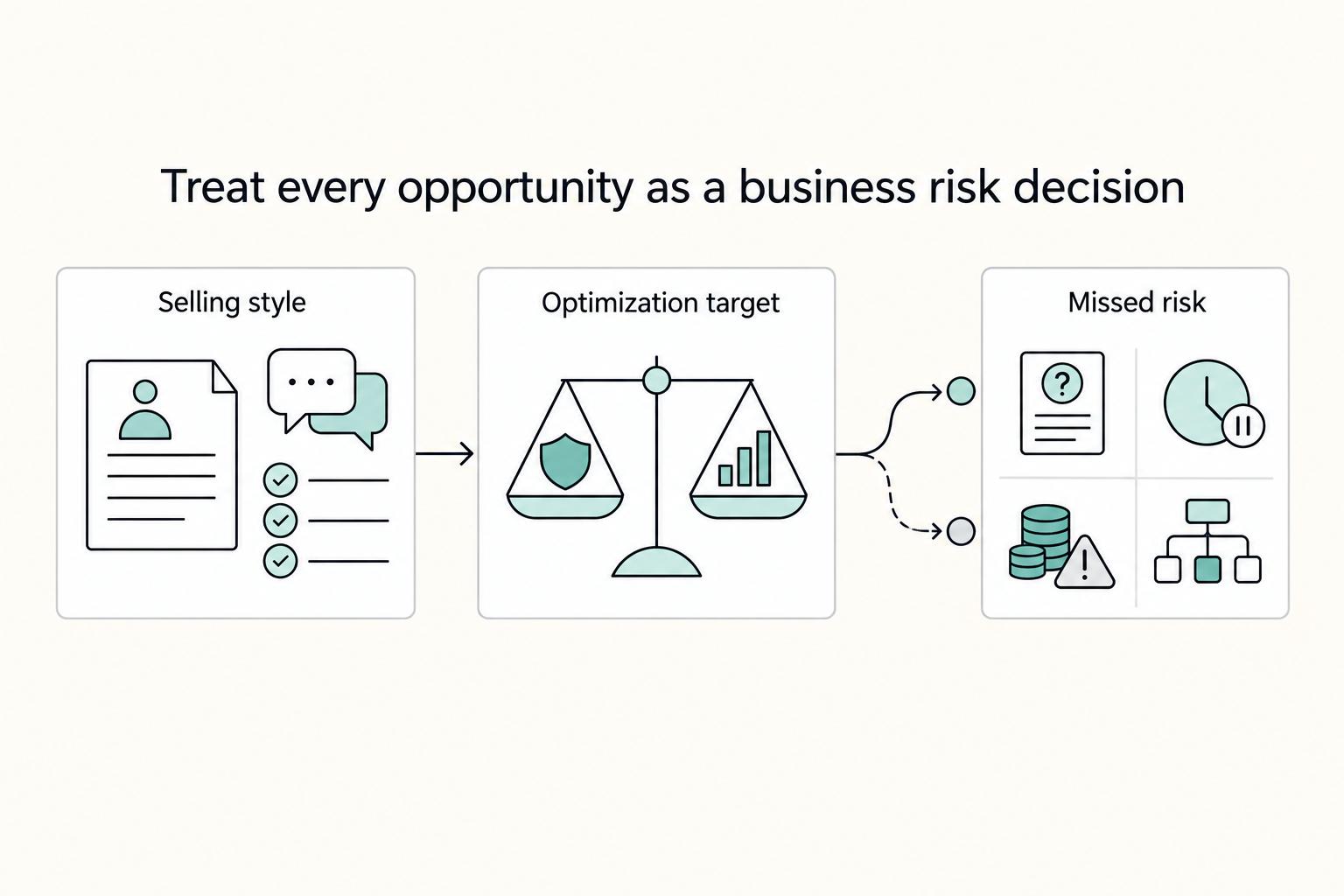
A sales playbook can help you avoid the wrong deal, not just win the right one. Treat each opportunity as a business risk decision first and a sales opportunity second. If you take on a prospect who is wrong for your offer, the impact often shows up later: unclear expectations, slower payment, rushed delivery, and product decisions shaped by the wrong customer.

The Freelance Payment Penalty: A Modeled Audit of Platform Fees, FX Spreads, and Payout Delays
The money rarely disappears through a single, easy-to-spot fee. The real loss is stacked. A marketplace takes its commission, a processor adds a charge for international cards, a bank or payment company converts the currency at a spread, a platform holds the funds before release, and a wire sheds a little to intermediaries on the way in. Each layer looks defensible on its own, but the worker feels the combined result as a smaller deposit and a later payday.