
Quick Answer
Yes - use a patreon tax guide approach that treats creator income as reportable from the first dollar and keeps platform forms in their proper role. Form 1099-K is a reporting document, not the trigger for your filing duty, so track payouts, fees, refunds, and off-platform receipts throughout the year. If you are outside the U.S., handle withholding separately with the correct W-8 documentation and verify treaty claims before making filing decisions.
Tax season should not feel like a siege. For many creators, it does. The fix is not a bigger spreadsheet or a last-minute scramble. It is a setup you build on purpose, in the right order.
This guide moves you from reactive cleanup to practical control. The sequence is simple: build the right Structure, put an Always-On system behind it, then use that foundation for real Optimization. When those three pieces work together, taxes become a routine operating task instead of a yearly crisis.
Part 1: Laying the Foundation: From Hobby to Business#
Treat monetized creative work as a business activity, not just a creative one. Follow this order: classify your intent, then document the business basics that support good decisions.
Step 1. Classify your intent (hobby vs. business)#
Start with a simple question: is this mainly for personal satisfaction, or are you building reliable income? The practical difference shows up in how you operate. Hobby-style work stays casual. Business-style work means clear goals, planning, and consistent income and expense tracking.
The exact tax treatment of publishing activity is jurisdiction-specific and law-specific. If you are unsure, do not assume hobby and business treatment are interchangeable.
Keep evidence of intent from day one:
- a dated note stating your income goal
- consistent income and expense records
- a simple plan note you update as goals or offers change
If you cannot quickly explain what came in and what went out, treat that as a process gap and fix it now.
Step 2. Document business basics before volume grows#
Handle this early, before cleanup gets painful. Keep financial planning and recordkeeping consistent so you can evaluate whether the work is sustainable.
Use this checklist:
- keep a simple financial plan tied to your goals
- track income and expenses consistently
- review records regularly so each transaction is clear
Avoid casual tracking once money is involved. Without a solid grasp of these basics, it is harder to build a viable business.
Step 3. Choose structure after your records are clean#
Choose structure after your goals are clear and your records are consistent. If your records are still inconsistent, fix that first.
The key unknown is that exact liability, payroll, and tax outcomes by structure depend on local law and your specific facts.
Step 4. Bring in a pro when complexity jumps#
Bring in a tax professional when you are unsure how rules apply to your situation. Good records help, but they do not replace jurisdiction-specific guidance.
| Situation | Why advice is needed |
|---|---|
| You are unsure how tax laws apply to your publishing activity | Good records help, but they do not replace jurisdiction-specific guidance |
| You are considering a structure change | Need verified local guidance |
| Your records are incomplete | Key decisions depend on assumptions |
This foundation makes every later compliance decision simpler. If you want a deeper dive, read Digital Nomad Taxes in 2026 With a Defensible Filing Plan.
Part 2: Building the Engine: Your "Always-On" Compliance System#
Once your banking is separated, run compliance as a monthly process so your numbers stay explainable and defensible.
Step 1. Separate platform reporting from your filing duty#
Treat platform reporting and your filing duty as separate workflows until you verify the live rules that apply to your situation.
For 1099-K, treat the current 1099-K threshold as pending IRS/platform verification. Log every payout, fee, refund, and off-platform business receipt from day one so you are not rebuilding the story at year-end.
Use reconciliation as your control point. Match each payout to what actually happened that month: whether full access was paid-only, the offer shown to members, and the content delivered. Keep concrete artifacts, such as a post marker like "Episode 238 Transcript", the post timestamp, and the related payout statement. If your membership page showed $5 per month, keep that snapshot for the same period. Those records are what make your numbers explainable later.
Step 2. Build a minimum compliance stack that proves what happened#
You do not need brand-name tools. You need coverage across four basic jobs, and each one should let you answer a simple question quickly if something gets reviewed.
| Layer | What it must do | What you should be able to verify quickly |
|---|---|---|
| Accounting ledger | Capture transactions, categorize inflows and outflows, and produce monthly totals | Each deposit and expense ties to a clear business purpose |
| Receipt evidence store | Keep dated receipts, invoices, contracts, and screenshots in one searchable place | You can retrieve source documents for any checked transaction |
| Mileage or activity log | Record date, purpose, and context for business travel or activity | You can explain why the activity was business-related |
| Payout reconciliation record | Tie Patreon payouts to statements, fees, refunds, and bank deposits | Platform totals and bank totals match, with differences explained |
If one layer is missing, your records can weaken fast, especially when payout timing, fees, or refunds are involved.
Step 3. Turn estimated tax into a standing cash routine#
If you handle estimated tax, turn it into a standing cash routine and verify the live filing rules before you act.
| Step | What to do |
|---|---|
| Project income | Use your current member base, pricing, expected churn, planned launches, and material expenses |
| Choose a reserve method | Choose a reserve method with a qualified tax professional when needed, and apply it consistently as money arrives |
| Move reserve cash | Move reserve cash on payout day into a dedicated tax account to reduce spending drift |
| Execute payments | Execute payments on the live rule set, confirming the current estimated-tax payment schedule with the relevant tax authority |
| Review monthly | Review monthly and adjust quickly when actuals diverge from forecast |
Step 4. Run a monthly review and escalate early when the facts stop being clean#
Run this checklist each month while the facts are still easy to verify:
- reconcile Patreon payouts to bank deposits
- clear uncategorized transactions
- save missing receipts, invoices, and pricing screenshots
- compare actual income and expenses against forecast
- confirm reserve transfers were completed
- escalate to a qualified tax professional if you find unreconciled payouts, missing documentation, large forecast variance, or cross-border or multi-state complexity
A guide like this can keep you organized, but if the facts are unclear or cross into more than one jurisdiction, the right move is to escalate early. Related: Do I Have to Pay State Taxes While Living Abroad as a Digital Nomad?.
Before your next filing cycle, set up a simple evidence trail for travel days and location records with the Tax Residency Tracker.
Part 3: Activating the Defenses: High-Impact Deductions Most Creators Miss#
Across these four areas, use one standard: claim only what you can document, tie it to your current business facts, and make sure you could explain it clearly if reviewed. Clean books make the numbers easier to defend. Weak records and unsupported allocations make them harder very quickly.
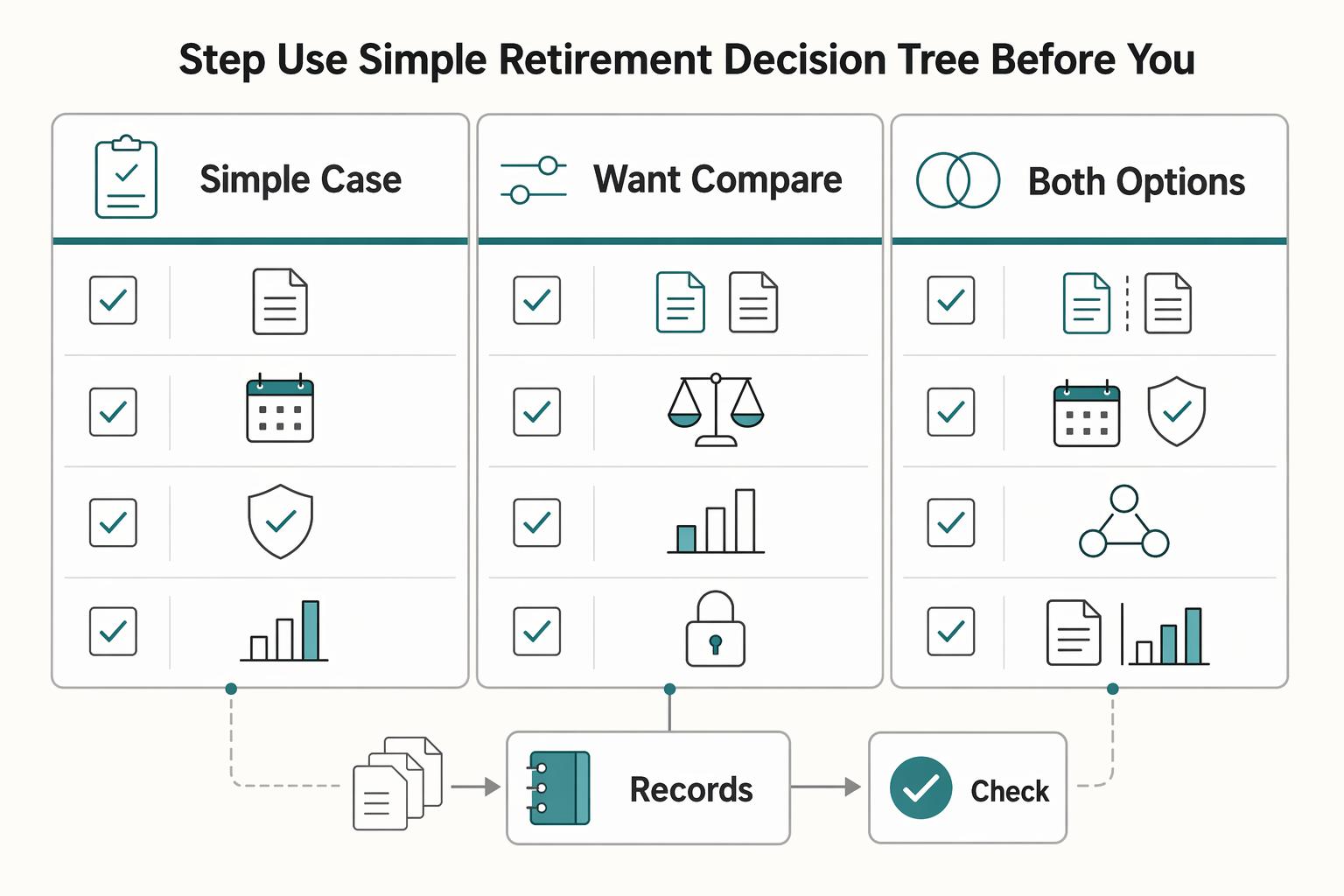
Step 1. Use a simple retirement decision tree before you choose a plan#
This guide does not provide verified SEP-IRA or Solo 401(k) limits, eligibility thresholds, or timing rules for creators, so treat this as a verification workflow.
- If you want the simpler admin path first, compare a SEP-IRA and confirm current eligibility, setup timing, and contribution rules before acting.
- If you want to compare a plan with different contribution mechanics, review a Solo 401(k) and confirm current eligibility, setup timing, and admin obligations before acting.
- For both options, treat the current limit as pending official verification before planning contributions.
The real check is execution, not marketing language. The plan setup, funding timing, and support from clean records all need to line up.
Step 2. Treat self-employed health insurance as an eligibility check, not an automatic write-off#
This guide does not verify current self-employed health-insurance deduction criteria for this creator context. Do not claim it by default. Verify current filing rules before including it.
Common review checks:
- eligibility facts are incomplete or unclear
- income support for the amount is unclear
- payment and reimbursement records are incomplete
- policy and claimant details do not line up cleanly
If any of those points are unclear, pause and verify the current filing instructions before claiming the deduction.
Step 3. Choose the home-office method you can defend with records#
Take the method you can support cleanly, not the one that looks better at first glance. Keep a dated evidence set and a short method worksheet so your calculation is reproducible.
| Option | Use this when | Keep this on file |
|---|---|---|
| Simplified method | You want a lower-admin approach | Workspace records, dated evidence, method worksheet, and the current simplified-method rate confirmed with the relevant tax authority |
| Regular method | You can support an allocation of actual housing costs | Records for total costs, business-use assumptions, and an allocation worksheet |
| Wait to claim | Facts or records are incomplete | Build documentation first, then reassess |
If business-use facts or records are unclear, do not force the deduction.
Step 4. Separate skill-maintenance education from new-trade education#
This guide does not provide creator-specific education-expense deduction rules, so stay conservative and verify current guidance before claiming.
Use this include-or-escalate frame:
- include for review: education tied directly to services you already provide
- escalate for verification: education tied primarily to a different line of work
Talk to a tax professional before claiming when facts are mixed, including:
- personal and business use in the same expense
- trips that bundle conference time, client work, and personal days
Clean records make these calls easier to support. Weak records and rough allocations make them harder very quickly. You might also find this useful: How to Handle the Kiddie Tax for Your Child's Investment Income.
A Note for Global Professionals: Securing Your Borders#
If you live outside the U.S. and receive Patreon income, this section is only about U.S. platform withholding. Getting the platform form right can change U.S. withholding, but it does not replace your home-country filing obligations.
Step 1. Confirm the form and income classification first#
Get the form right before you submit anything. For a non-U.S. individual with income that is not personal-services income, the form in scope is Form W-8BEN. Patreon also states that non-U.S. creators must submit W-8BEN or W-8BEN-E to receive payouts, so if you are paid through an entity, verify whether the entity form applies.
| Form | When it applies | Note |
|---|---|---|
| Form W-8BEN | Non-U.S. individual with income that is not personal-services income | Get the form right before you submit anything |
| Form W-8BEN-E | Patreon states that non-U.S. creators must submit W-8BEN or W-8BEN-E to receive payouts | If you are paid through an entity, verify whether the entity form applies |
| Form 8233 | Income is treated as personal services | The IRS points to Form 8233, not W-8BEN |
Then confirm income classification before you file. If the income is treated as personal services, the IRS points to Form 8233, not W-8BEN.
Step 2. Complete W-8BEN as a withholding/treaty document#
Treat W-8BEN as a withholding and treaty certification document. Small mistakes here can change the withholding result, so keep a clean record of what you filed and why.
Use this checklist:
- confirm you are the beneficial owner of the income
- state your treaty-country residence as determined under the applicable treaty
- complete Part II (Claim of Tax Treaty Benefits) only after checking the specific treaty article and income type
- track renewal timing: W-8BEN is generally valid through the last day of the third succeeding calendar year, unless facts change earlier
- keep submission proof (confirmation screen or email) and the filed version in your records
| Scenario | Platform withholding outcome |
|---|---|
| No valid W-8 on file | Statutory withholding can apply; for U.S.-source FDAP income, the baseline is generally 30% unless reduced by treaty |
| Valid W-8BEN, no treaty claim | Statutory withholding may still apply, depending on classification and source rules |
| Valid W-8BEN with treaty claim | Reduced rate or exemption can apply only when the treaty article covers that income, your residency/beneficial-owner representations are valid, and the payer does not know you are ineligible |
Step 3. Use a treaty only after a defensible check#
Do not rely on treaty relief just because a treaty exists. First confirm that the treaty article actually covers your income and that your treaty-residency position is supportable. Then check how the same income is treated in your home country and whether foreign tax credit relief may be available. Treaty outcomes are not uniform across countries or income types, and state-level treatment can differ from federal treaty treatment.
Escalate to a professional when residency is split in the same tax year, an entity is involved, or platform income classification is unclear. The common failure is not missing the form. It is taking a treaty position you cannot support later.
For a step-by-step walkthrough, see The Self-Employment Tax Trap: How Totalization Agreements Can Save US Expats Thousands.
Conclusion: Build decisions from records you can access and verify#
Use this as your operating summary. The key point from the excerpt is the access-and-evidence path: the full conversation is for paid Just Toast subscribers, and an Episode 238 Transcript checkpoint is available. Build your next tax decisions from records you can access and verify, then confirm specifics with a qualified tax professional.
Step 1. Set monthly defaults you can keep#
Turn the core framework into defaults you can maintain each month.
| Area | Reactive risk | Early default |
|---|---|---|
| Access | You rely on partial summaries without checking the full source material. | Confirm paid-subscriber access first (membership starts at $5 per month) before relying on the full conversation. |
| Records | You cannot reproduce what you based decisions on later. | Keep the transcript and related records in one organized place you can retrieve quickly. |
| Validation | You treat unverified tax assumptions as settled rules. | Mark unknowns clearly and validate them with a tax professional before filing actions. |
Step 2. Run one reliability check#
Can you trace each important decision to a record you can produce quickly, for example the transcript or your own documents? If not, treat it as an open issue now, not a year-end guess.
Step 3. Execute in order#
Confirm access, collect the transcript and your records, list unresolved tax questions, then resolve those with a qualified advisor before filing.
For broader context, review How to Handle Royalty Income on Your US Tax Return.
If you want your creator income flow tied to compliance-gated payouts and clearer audit records where supported, see whether Gruv for Freelancers fits your setup.
Frequently Asked Questions
Do I have to pay taxes on Patreon if I made less than $600?
Yes. Your filing obligation is separate from platform reporting, so you must report all income even if no Form 1099-K is issued. Patreon may issue a 1099-K at the current 1099-K threshold pending IRS/platform verification, and it may still issue one below that threshold. Reconcile your dashboard to payouts and bank deposits, and remember that the 1099-K shows gross earnings before fees and refunds and is issued per page, not per taxable identity.
Is my Patreon income a hobby or a business?
Treat it as a business when your primary purpose is income or profit and you operate with continuity and regularity. Treat it as a hobby when you do it mainly for enjoyment and without profit intent. No single factor controls, so look at the full pattern, including your records, how consistently you run the activity, and your efforts to make a profit. Hobby income is still reportable, so the classification should match how you actually operate.
How do I pay estimated taxes for my Patreon income?
If you are in business for yourself, you generally need estimated payments, and the usual trigger is expecting to owe at least $1,000. Do not wait for a 1099-K to decide. Use a simple path: estimate net Patreon income, estimate income tax plus self-employment tax, check whether withholding elsewhere covers enough, and if not, confirm the current estimated-tax payment schedule with a tax advisor before you pay. Recheck midyear if income changes, because underpaying by a payment-period due date can trigger penalties.
Should I form an LLC for my Patreon?
Form an LLC when you want a state-law business structure and clearer legal separation between you and the activity. Do not form one on the assumption that it automatically lowers federal tax. A single-member LLC is usually a disregarded entity for federal tax unless you elect otherwise with Form 8832, and trade or business earnings are generally still subject to self-employment tax similar to a sole proprietor. If you use an LLC, support it with separate contracts, accounts, and bookkeeping.
What is the most overlooked tax deduction for Patreon creators?
A commonly overlooked option is a self-employed retirement plan. The right choice depends on your business setup and your tolerance for admin, so verify current-year limits before funding. | Option | Best fit | Admin effort | Current-year cap check | Escalate when | | --- | --- | --- | --- | --- | | SEP | You want a simple employer-contribution plan | Low; can be set up as late as the return due date, including extensions | Confirm the current-year cap with the IRS | You have employees or want more design flexibility | | SIMPLE IRA | You want a startup-friendly plan with lower setup and operating burden | Low to moderate; IRS says no employer filing requirement | Confirm the current-year cap with the IRS | You want more contribution flexibility or plan design options | | One-participant 401(k) | Owner-only business, or owner plus spouse | Moderate; contributions can be made in employee and employer capacities | Confirm the current-year cap with the IRS | You hire employees, or plan assets exceed $250,000 and Form 5500-EZ filing can apply |
Does Patreon handle sales tax for me?
Sometimes, but not universally. Patreon says it may be required to add sales tax or VAT based on the member's location, and for VAT payments it processes, it generally calculates, collects, files, and remits. You should still keep the records shown in Patreon's Sales tax section with your payout records. If you have cross-border activity or off-platform sales, run a separate check on your own local indirect-tax registration and filing obligations.
Try a related tool
Researched and edited by the Gruv editorial team. Gruv builds cross-border billing, payouts, and finance-operations software for global businesses.
Sources
Educational content only. Not legal, tax, or financial advice.
Related Posts

Digital Nomad Taxes in 2026 With a Defensible Filing Plan
With digital nomad taxes, the first move is not optimization. It is figuring out where you may be taxable, where filings may be required, and what proof supports that position.

Do I Have to Pay State Taxes While Living Abroad as a Digital Nomad?
Living abroad does not end `state income tax` exposure by itself. The first decision is practical: choose a filing position your facts can support, then build records that support the same story all year.

The Freelance Payment Penalty: A Modeled Audit of Platform Fees, FX Spreads, and Payout Delays
The money rarely disappears through a single, easy-to-spot fee. The real loss is stacked. A marketplace takes its commission, a processor adds a charge for international cards, a bank or payment company converts the currency at a spread, a platform holds the funds before release, and a wire sheds a little to intermediaries on the way in. Each layer looks defensible on its own, but the worker feels the combined result as a smaller deposit and a later payday.