
Quick Answer
Treat stock options for freelance consultant europe as contingent upside, not income needed for monthly operations. Set your cash floor first, then test each offer for recipient/document alignment, a four-event tax map (grant, vesting, exercise, sale), and clear invoice enforceability before reducing cash fees for equity. If eligibility, timing, or paperwork remains unclear, keep the cash share higher or decline.
Why stock options can help or hurt your freelance cashflow#
Start with one rule: treat private company stock options as upside, not operating income. Your monthly essentials should work on cash alone, because equity can stay uncertain longer than your runway.
Step 1 Keep your operating budget funded by cash#
Treat equity as extra consideration, not a substitute for invoices you need now. Any equity outcome is uncertain and may not line up with your cash needs.
Before you discuss option value, do one basic check: write down your monthly cash requirement and compare it with the contract's guaranteed cash. If the deal only works because you are assuming future equity value, pause and reprice.
Step 2 Assume the unknowns can stack#
The real problem is stacked uncertainty. Cross-border tax and compliance timing can stay unresolved longer than planned, and VAT processes show how timing risk builds.
For complex VAT treatment, taxable persons can request an advance ruling through VAT Cross-border Rulings. In the cross-border SME scheme, you file one prior notification in your Member State of establishment, and the exemption path starts only after that state grants the EX number. The process should not take longer than 35 working days, but it can take longer when additional investigations are needed.
Ongoing admin matters too. Under OSS, covered VAT returns are filed electronically, with quarterly or monthly cadence depending on the scheme. Under the cross-border SME scheme, you file one quarterly turnover report across all 27 Member States, and leaving the scheme may trigger a quarantine period in some states. These examples are about VAT process timing, not stock-option outcomes, and they show why you should treat non-cash compensation conservatively.
Step 3 Use a decision process before you say yes#
Use the same sequence every time:
- cash coverage
- legal fit
- tax clarity
- documents and enforceability
If any step is unresolved, keep the cash share higher, renegotiate, or decline.
Run a failure-mode test before you agree. Assume the company is honest but slow, approvals slip, paperwork drags, tax confirmation takes time, and any non-cash outcome does not arrive on your schedule. If your business is not stable on cash alone in that scenario, the offer is too fragile for your current runway.
Use that lens throughout the rest of this guide. Protect runway first, then decide whether equity belongs in the deal. You might also find this useful: Tax Implications of Receiving Stock Options as a Freelancer.
What to prepare before you review any option offer#
Do not start with valuation. First confirm who you are in the deal, who the counterparty is, and which tax registration steps may already matter.
Step 1 Confirm your status in writing#
Get your exact status for the activity in writing and keep it consistent across your contract, onboarding, and invoice details. If you are operating as a sole trader, remember you are legally responsible for all aspects of the business, including debts. If you are engaged as an employee for that activity, you are not entitled to an ABN for that activity.
Step 2 Confirm the legal counterparty and workflow#
Get the exact legal entity name that will sign, pay, and collect compliance documents. Do this before you spend time on option terms so your commercial terms and admin path match from the start.
Step 3 Check Australia registration requirements early (if relevant)#
If your sales are connected with Australia, verify the GST path early. You need an ABN before GST registration, and once registration is required, you must register within 21 days.
| Australia checkpoint | Grounded detail | Timing or threshold |
|---|---|---|
| ABN before GST registration | You need an ABN before GST registration | Before GST registration |
| Required GST registration | Once registration is required, you must register | Within 21 days |
| Turnover threshold | Registration is required at A$75,000, or A$150,000 for non-profits | Penalties may apply if you do not register when required |
| Non-resident standard GST registration | Can require additional identity proof, BAS lodgment, and GST payment | Monthly or quarterly cycle; extra proof-of-identity checks can extend processing time |
For non-resident businesses, standard GST registration can require additional identity proof, BAS lodgment, and GST payment on a monthly or quarterly cycle. Ask for written confirmation of the GST registration details and effective date. Extra proof-of-identity checks can extend processing time, and non-residents cannot lodge electronically from outside Australia.
Step 4 Check thresholds before you review equity detail#
If your Australia-connected sales may approach the A$75,000 threshold, or A$150,000 for non-profits, flag that early, because penalties may apply if you do not register when required.
This pairs well with our guide on How to Structure an LLC for a Freelance Writing Business.
Set your cash floor before discussing equity#
Cash has to work on its own, so treat any option grant as contingent upside, not budgeted operating cash.
Step 1 Convert your baseline into a non-negotiable cash floor#
Write your monthly cash floor before you negotiate. Keep it explicit: minimum monthly invoiced cash, latest payment timing you can absorb, and the point where delay becomes unacceptable.
Then test the proposed terms against that floor without counting equity. If the cash terms miss the floor, the deal is not funding your operations yet.
Step 2 Stress test the floor against admin timing, not just project scope#
Price in administrative delay instead of assuming compliance changes happen immediately. For EU VAT complexity, the cross-border SME scheme requires a prior notification in the Member State of establishment, and VAT-exempt treatment in selected Member States starts only after the EX number is granted. The process is expected within 35 working days, but it can take longer when extra investigation is needed.
If you use One Stop Shop, remember OSS returns are additional and do not replace the regular VAT return. Build your cash floor so it still works while those filings and timelines play out.
Step 3 If the client wants more equity, keep cash terms explicit#
If a client asks for more equity, ask for clearer cash mechanics in return: faster payment timing, shorter approval windows, and tighter acceptance wording.
Capture that trade in writing before the call ends: cash amount, equity amount, payment timeline, approver path, and what happens if equity documents are delayed. That keeps scope and payment risk visible.
Step 4 Set your walk-away trigger before pressure shows up#
Set your walk-away triggers in advance and keep them simple. Example triggers: cash below your written floor, no written payment timeline, or unresolved VAT admin timing at project start. Use them consistently. If a deal only works under perfect conditions, pause or decline.
Need the full breakdown? Read How to use 'escrow' for a large freelance project payment.
Check whether the option type even fits your status#
Before you discuss valuation, confirm what is actually being granted and who receives it. If that is unclear, treat the upside as unconfirmed.
Step 1 Ask for the exact instrument name#
Ask for the formal instrument name, not shorthand. If you hear "options," "equity comp," or "ISO-like," request the plan label, draft grant form, and proposed grantee name in writing.
If someone references Incentive Stock Options, or ISOs, or Internal Revenue Code Section 422, treat that as a prompt to verify with legal and tax advisors, not proof that the structure fits your setup. The practical checkpoint is whether the plan and draft grant documents clearly identify the intended recipient.
Keep the standard simple: one issuer, one instrument, one named grantee, one signature path. If the company cannot provide that, you are discussing a concept, not a grant.
Step 2 Map the legal recipient against your engagement path#
Map the proposed grant to your actual engagement route: independent contractor personally, your own entity, or an Employer of Record setup. Then ask the issuer to map that same route to the draft grant documents.
Your verification point is document consistency. If the services or invoicing path and the draft grant point to different recipients, treat eligibility as unresolved unless the mismatch is explained in writing.
Step 3 Separate equity eligibility from VAT admin, but use VAT facts as a reality check#
VAT does not determine option-plan eligibility, but it does show which entity is supplying services and where reporting sits.
If you use the cross-border SME scheme, VAT-exempt treatment in selected Member States starts when your Member State of establishment grants the EX number. The process should not take longer than 35 working days after prior notification, but it can take longer where extra anti-evasion or anti-avoidance investigations are required.
If you use OSS, confirm your Member State of identification. OSS is optional, but once you opt in, all supplies under that scheme must be declared through that OSS return. That still does not answer equity eligibility, but it does limit hand-waving about who the supplier is.
If cross-border VAT treatment is unclear, a VAT Cross-border Ruling can be requested in the participating EU country where the requester is VAT-registered. Where multiple companies are involved, one company should submit on behalf of the others.
Step 4 Build a one-page eligibility table and use it as a stop signal#
A simple side-by-side table exposes fit risk early. The point is not to model upside. It is to stop you from discounting cash for an instrument that may not even fit the legal setup.
| Proposed structure | Legal fit | Compliance checkpoint | Risk signal |
|---|---|---|---|
| Direct option participation | Confirm with plan and draft grant documents that the recipient is clearly identified | Confirm issuer, instrument name, named grantee, and document match | Recipient or instrument details change repeatedly |
| Phantom equity | Confirm once formal instrument terms identify the recipient | Confirm written terms and recipient mapping across documents | Upside language appears before complete documentation |
| Hybrid equity structure | Confirm once each component is listed and tied to one recipient | Confirm each component has a clear recipient and aligned paperwork | Mid-process substitution after work starts |
Use the table as a hard rule: if legal fit is still "unknown" after document review, do not discount your cash fee for equity. Keep the stop line simple: no instrument name, no named grantee, no document match, no equity discount. Related: 183-Day Rule Explained: Stop the Tax Myths Before They Cost You.
Map tax checkpoints before you sign anything#
Before you sign, split your checklist into two buckets: what is confirmed now and what is still unknown.
Step 1. Build a four-event map and mark unknowns. Create a one-page map with four rows: grant, vesting, exercise, and sale. For each row, record the country involved and the expected trigger, if known.
Use a hard label for each row: confirmed or unknown. If a row is unknown, do not price it as if tax timing is settled.
| Event | Current status from available material | Next action |
|---|---|---|
| Grant | Unknown | Note what still needs confirmation |
| Vesting | Unknown | Note what still needs confirmation |
| Exercise | Unknown | Note what still needs confirmation |
| Sale | Unknown | Note what still needs confirmation |
Step 2. Separate option uncertainty from service-tax obligations you can verify now. Not everything is uncertain. If your services are connected with Australia, some checkpoints are already concrete:
- GST registration is required at the A$75,000 threshold, or A$150,000 for non-profits.
- Once registration is required, you must register within 21 days.
- Before GST registration, you need an ABN.
- For non-residents, additional identity proof can slow ABN processing.
- Under standard GST registration, BAS lodgment and GST payment are monthly or quarterly.
- If you are outside Australia, you cannot lodge electronically and may need an Australian registered tax agent.
- Penalties may apply if you fail to register when required.
Step 3. Lock down status before final economics. Confirm in writing who is providing services and who is receiving any equity-related instrument. Do not assume those are interchangeable across personal and entity routes.
Keep the basics straight. A sole trader is legally responsible for all aspects of the business, including debts. If someone is engaged as an employee, they are not entitled to an ABN for that activity. If those basics are unclear, pause before finalizing terms.
Step 4. Set a signing rule for unresolved tax points. Use a simple rule: if country-specific tax treatment for the four events is still unknown, do not treat option economics as settled before signing.
Before signature, you need clarity on what is confirmed, what is unknown, and what risk you are carrying now. If you want a deeper dive, read Digital Nomad Taxes in 2026 With a Defensible Filing Plan.
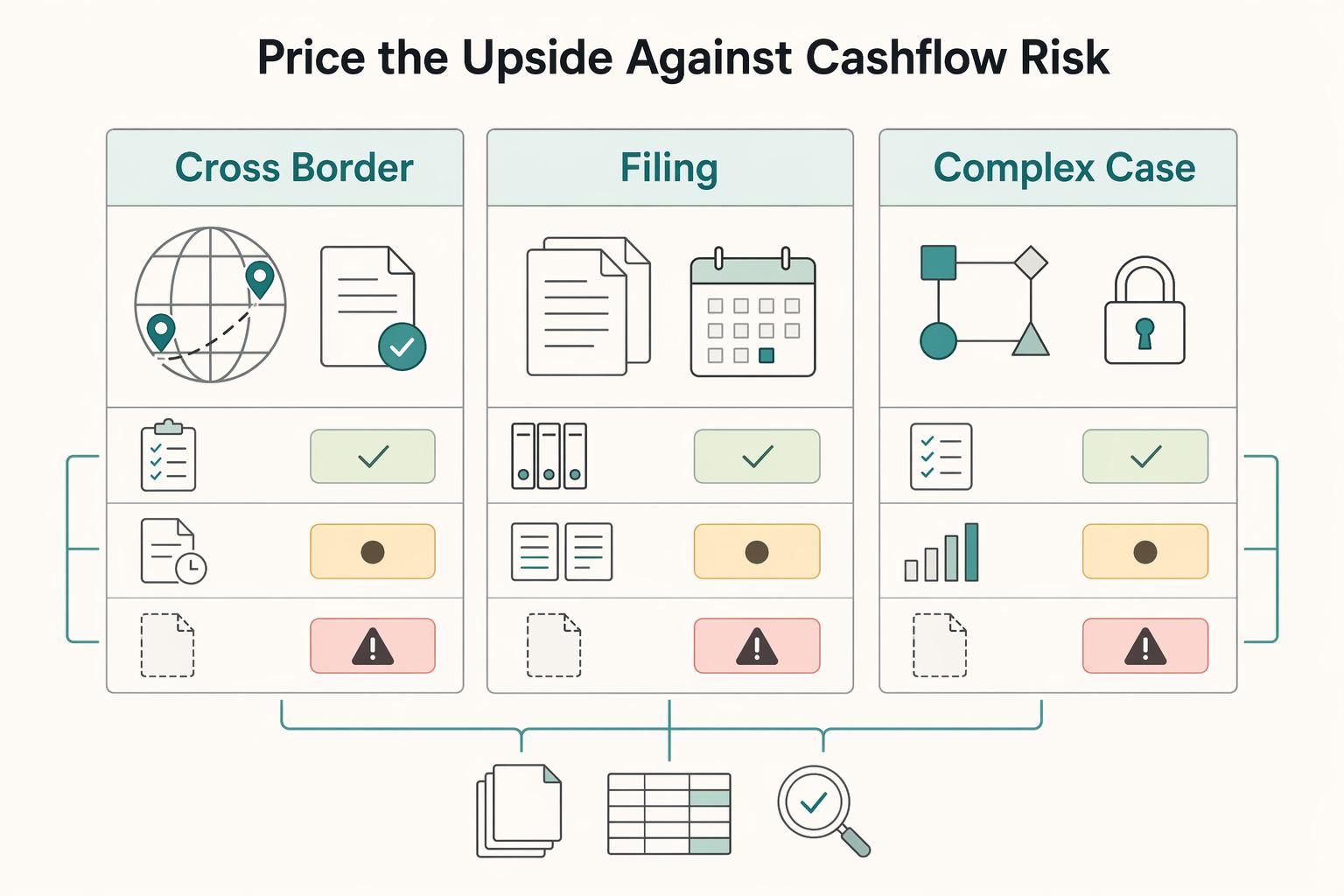
Price the upside against cashflow risk#
Treat option upside as uncertain and cash compliance costs as real. These VAT checkpoints can help with cashflow planning, but they do not give you a method to value stock-option upside. Do not rely on the grant to fund near-term obligations until your cash invoices can cover operating costs and VAT work on their own.
Step 1. Put contract certainty ahead of upside assumptions. Build a one-page risk sheet from signed documents with three labels: confirmed, unconfirmed, and missing. If key option terms are still unconfirmed, treat the upside as unresolved rather than budgeted value.
Step 2. Price the VAT workload you can verify now. Model the VAT checkpoints you can verify now and build their timing into cashflow.
| Checkpoint | What is confirmed | Cashflow implication |
|---|---|---|
| Cross-border SME scheme entry | You file one prior notification in your Member State of establishment (MSEST). VAT exemption in selected Member States starts only from the date your MSEST grants the EX number and confirms it can be used. | You may carry normal VAT or admin exposure until EX confirmation is active. |
| Cross-border SME timing | Registration should not take longer than 35 working days, but can take longer in specific anti-evasion or avoidance investigations. | Keep buffer cash for delays. |
| Cross-border SME turnover cap | Access requires Union annual turnover not exceeding EUR 100 000 in the current and previous calendar year. | If you are above the cap, plan for a different VAT path. |
| OSS filing | OSS returns are additional and do not replace your regular VAT return. Filing is quarterly for Union and non-Union schemes, or monthly for the import scheme. | Budget for ongoing filing effort even if you use OSS. |
| Complex cross-border VAT treatment | You can request a VAT Cross Border Ruling in advance for foreseen complex transactions. | Use this to reduce VAT-treatment uncertainty, not to value option upside. |
Step 3. Use an Accept / Negotiate / Decline rule as internal business judgment (not a legal threshold).
- Accept: cash compensation already covers operations and VAT admin, and key terms are confirmed in signed documents.
- Negotiate: cash is workable, but material contract or VAT points are still unconfirmed.
- Decline: you would need option upside to fund near-term obligations, or major contract or tax points are still unresolved at the start.
Negotiate terms that keep invoices enforceable#
Your cash payment obligation should stand on its own. Treat any option grant as separate upside with separate paperwork. If the payment clause is not clear without reading equity documents, your invoice position is weaker than it should be.
| Contract point | What to document | Grounded note |
|---|---|---|
| Cash payment clause | Fee amount, invoice trigger, payment timing, VAT treatment, and late-payment consequences | The payment clause should stand on its own |
| Cross-border SME timing | Use the tax position that is active when you bill | Exemption starts only when your Member State of establishment grants and confirms the EX number |
| Equity business terms | Grant amount, strike price, vesting start date, vesting cliff, and treatment on termination or end of engagement | If a term affects value or whether the grant is actually issued, it should be written before you rely on it |
| Failure protections | A cash substitute, a signed extension, or a pause right until documents are delivered | Delayed internal approvals, missing grant documents, or loss of cap-table access should not suspend or erase the cash payment obligation |
| EOR or hybrid setup | Who buys the services, who issues the equity instrument, and which entity owes the cash invoice | Require jurisdiction-specific legal review before signature |
Step 1 Separate cash payment from equity in the contract#
State plainly that service fees are payable in cash against invoice on defined terms, with VAT handled under the tax position that is active when you bill. Keep option language as additional consideration, not as a condition for whether cash fees are due, unless you intentionally accept and price that risk.
For cross-border VAT, do not assume exemption status before it is live. Under the cross-border SME scheme, exemption starts only when your Member State of establishment grants and confirms the EX number for the selected Member State or Member States.
Before signing, read the payment clause by itself. It should stand on its own for fee amount, invoice trigger, payment timing, VAT treatment, and late-payment consequences.
Step 2 Write down option terms that would otherwise become a dispute#
The VAT material here does not set a legal minimum for contractor equity clauses, so do not treat it as equity-law guidance. If you accept equity upside, put the business terms you agree on in signed or clearly incorporated documents, such as grant amount, strike price, vesting start date, vesting cliff, and treatment on termination or end of engagement.
If a term affects value or whether the grant is actually issued, it should be written before you rely on it. If you cannot build a clear timeline from the signed set, you are still negotiating.
Step 3 Add failure protections for predictable break points#
Assume ordinary execution failures will happen and deal with them in the contract. Delayed internal approvals, missing grant documents, or loss of cap-table access should not suspend or erase the client's cash payment obligation.
You can define practical outcomes in advance, such as a cash substitute, a signed extension, or a pause right until documents are delivered. The point is to stop equity-document delays from turning into a dispute about invoice due dates.
If VAT treatment is complex, consider a VAT Cross-border Ruling as an advance VAT-treatment tool. Requests must follow national VAT-ruling conditions in the EU country where the request is filed.
Step 4 Require jurisdiction specific review for EOR or hybrid setups#
If an Employer of Record or hybrid equity structure is involved, require jurisdiction-specific legal review before signature. Grant eligibility for those structures isn't confirmed here, so treat eligibility as a legal-review item, not an assumption.
Map responsibilities in writing: who buys the services, who issues the equity instrument, and which entity owes the cash invoice. If those parties differ, clarity up front is what keeps both collections and compliance defensible.
If you use OSS, remember the filing structure has to match contract reality. You register in one Member State of identification, declare all supplies under the chosen OSS scheme through OSS returns, and follow the related record and invoice rules.
For a step-by-step walkthrough, see How to handle being paid a 'signing bonus' as a freelance contractor.
Before you sign, draft your payment and equity clauses in one place so cash obligations stay explicit: Use the Freelance Contract Generator.
Build a document pack you can defend later#
Documentation is part of risk control. Keep one dated file that shows what was filed, what was invoiced, and which VAT status was actually active on each invoice date.
| Record | Keep | Grounded note |
|---|---|---|
| Prior notification | Dated proof of the prior notification filed in your Member State of establishment | For cross-border SME use |
| EX number grant date | The date your Member State of establishment granted the EX number | This is when exemption can start |
| Quarterly turnover reports | Each quarterly turnover report submitted through that state | Cross-border SME reporting |
| Member State of identification | Your Member State of identification | If you use OSS |
| OSS return filings | OSS return filings | Quarterly for Union and non-Union schemes; monthly for the import scheme |
| Issued invoices | Issued invoices and related records | Supports records, invoices, and audit-related checks |
| Event notes | Short event notes such as prior notification filed, EX number granted, or return filed | Show the status that was live on each date |
Step 1. Keep one master evidence file you control. Create one client folder and keep your own copies of VAT-relevant records you submit or receive, including registration and filing confirmations. The test is simple: can you reconstruct the VAT and invoicing timeline without relying on the client's systems?
Step 2. Record VAT status checkpoints as they happen. For cross-border SME use, keep dated proof of the prior notification filed in your Member State of establishment, the date your Member State of establishment granted the EX number, when exemption can start, and each quarterly turnover report submitted through that state.
If you use OSS, keep the setup details and filing trail: your Member State of identification, OSS return filings, quarterly for Union and non-Union schemes and monthly for the import scheme, and confirmation that OSS returns are additional and do not replace your regular VAT return.
Step 3. Keep invoice records clean and complete. Maintain a clear archive of issued invoices and related records so your filing history is easy to verify. This supports OSS documentation expectations around records, invoices, and audit-related checks.
Step 4. Log timing risks in real time. Add short event notes when status changes occur, for example prior notification filed, EX number granted, or return filed. Do not assume registration timing will always be smooth. The process should not take longer than 35 working days, but it can take longer when anti-evasion investigations are required. Your file should show the status that was live on each date, not the status you expected.
Execute in order from offer to invoice to records#
Work in sequence. Set the VAT route first, invoice based on the status you actually have, then maintain the reporting and record trail. The EU VAT materials support that sequence, but they do not settle independent-contractor or PSC classification, or stock option grant mechanics.
Step 1. Separate VAT execution from the equity promise. Stock-option terms are outside the scope of these VAT mechanisms. For VAT administration, set the VAT route first and then issue cross-border invoices on that confirmed status.
Step 2. Confirm live VAT status before issuing cross-border invoices. If VAT treatment is uncertain, use a VAT Cross-border Ruling where available, filed in the participating EU country where you are VAT-registered.
If you use the cross-border SME scheme, file the prior notification in your Member State of establishment and wait for EX-number confirmation. VAT exemption starts only from the date that EX number is granted and confirmed for use.
Step 3. Register and report on the rail you choose. If you opt into OSS, register in one Member State of identification. OSS is optional, but once you use it, all supplies within that scheme must be declared through OSS returns. OSS returns are additional and do not replace your regular VAT return.
Step 4. Keep invoicing and reporting records traceable. Under the SME scheme, simplified invoices are allowed. Keep invoice and return records organized so reported amounts can be reconciled to what was invoiced.
Step 5. Run a fixed reconciliation cadence. Check invoices regularly against the VAT status that was live on each invoice date. Then file the required returns on time, including SME quarterly turnover reporting in your Member State of establishment and OSS quarterly or monthly returns depending on the scheme.
If you use the SME route, monitor the EUR 100,000 Union turnover cap across the current and previous calendar year and keep turnover disclosure aligned across the 27 EU Member States. Do not rely on expected approval timing. SME registration should not exceed 35 working days, but it can take longer where anti-evasion investigations are required.
Fix common failure modes before they become losses#
A common compliance failure is treating unconfirmed steps as settled. The safer approach is to treat anything unclear or unsigned as unresolved risk.
Step 1 Ask for exact VAT eligibility language, not shorthand. If someone says a cross-border VAT exemption is available, treat that as unconfirmed until the formal path is documented. For the cross-border SME scheme, file the prior notification in your Member State of establishment (MSEST) and confirm your Union turnover for the current and previous calendar year stays within the EUR 100,000 ceiling.
Step 2 Pull timing and activation checkpoints into early planning. Do not assume exemption timing until MSEST confirms your EX number can be used in each selected Member State. The registration process should not take longer than 35 working days in normal cases, but it can take longer when additional anti-evasion checks are required.
Step 3 Treat filing obligations as live from day one. Set ownership and cadence before go-live: the cross-border SME scheme requires one single quarterly turnover report through MSEST, and OSS return cadence depends on scheme, quarterly for Union/non-Union and monthly for import. If you use OSS, confirm your Member State of identification and portal workflow early.
Step 4 Rebuild your compliance timeline before filing or pricing upside. Keep one dated log for prior notification, MSEST confirmations, EX-number activation, and each return/payment deadline. If VAT treatment is still unclear, use the VAT Cross-border Rulings process in the participating EU country where you are VAT-registered before locking commercial assumptions. Related reading: A Guide to Conflict Resolution for Freelance Partnerships.
Copy-paste checklist before you accept stock options#
Use this as a stop sign, not a courtesy checklist. If any item is still vague, keep the deal cash-first or pause signing until it is written down.
- Confirm your legal status and engagement path in writing.
Get the contract to state whether you are operating as a sole trader, independent contractor, through a PSC, or through an Employer of Record, and name the paying entity. If Australia is in scope, status matters immediately because employee activity is not entitled to an ABN for that activity, and a sole trader is legally responsible for business debts and obligations. Verification: save the clause or email that states your status and payer. Failure mode: the work is treated like contractor work up front, then later treated differently.
- Confirm your Australian tax setup before agreeing to non-cash compensation.
If your work is connected with Australia, check ABN status and whether your sales are connected with Australia for GST. Before GST registration, you need an ABN. GST can apply to sales connected with Australia, registration is required once turnover reaches A$75,000, or A$150,000 for non-profits, and you must register within 21 days once required. Verification: keep the ATO notice with GST registration details and effective date. Failure mode: penalties for late required registration.
- Treat non-cash plan labels as unproven until documents are in hand.
Do not rely on labels alone. Require the actual plan and grant documents plus written confirmation of what you are eligible for under your engagement setup. Verification: signed, retrievable documents, not informal messages.
- Lock cash terms before any non-cash mix.
Your service fee should be a clear cash obligation with invoice dates, payer, approval timing, and payment method. Keep any non-cash component separate so a delayed grant process does not become a payment dispute. Verification: the signed agreement separates cash fees from non-cash compensation. Failure mode: work is delivered, but only the non-cash promise was documented.
- Document Australian compliance unknowns explicitly.
Do not smooth over uncertainty. Mark ABN status, GST turnover assumptions, and whether sales are connected with Australia as confirmed or open. If you are a non-resident on Australian standard GST registration, also record the compliance load: BAS lodgment and GST payment are recurring, monthly or quarterly, and lodgment from outside Australia is not electronic, so an Australian registered tax agent may be needed.
- Build your evidence pack before work starts.
Keep one folder with signed agreements, invoices, receipts, bank proof, and written confirmation of the cash or non-cash split. If Australia is in scope, include ABN records, GST registration confirmation, BAS filings, and notes on why sales were or were not connected with Australia. Verification: someone else could reconstruct your income, non-cash rights, and compliance timeline without guessing.
We covered broader plan-structure context in How to Structure an Employee Stock Option Plan (ESOP) for a US Startup.
Keep dated records of residency, payments, and compliance events: Track it with the Tax Residency Tracker.
Frequently Asked Questions
Can a freelance consultant in Europe be paid in company stock options?
Treat equity language as unverified until the plan and grant documents are reviewed for your legal setup. Until then, do not treat options as guaranteed compensation.
Are Incentive Stock Options (ISOs) under Internal Revenue Code Section 422 available to contractors?
This guide does not establish contractor availability for Section 422 ISOs. Treat "ISO" or "ISO-like" wording as unconfirmed unless legal and tax advisors validate eligibility in your case. Price the work as if no special tax treatment is guaranteed.
If I work through an Employer of Record (EOR), can I still receive equity?
Treat equity eligibility through an Employer of Record as case-specific until the parties document how eligibility works in your arrangement. If that documentation is missing, keep payment risk low.
What cash percentage should I require before accepting a stock option grant?
No grounded universal cash-versus-equity percentage is provided here. Set cash terms around your operating needs and downside tolerance, not a generic benchmark. If equity terms remain unclear, require more compensation in cash.
Which terms matter most in the option documents besides strike price?
Rely only on terms that are explicit, signed, and easy to retrieve later. If key terms are vague or missing, treat the equity value as uncertain.
When can taxes be triggered for contractor options in cross-border setups?
This guide does not establish one cross-border trigger framework for contractor option taxation. For VAT administration only, OSS allows registration in one Member State of identification for eligible cross-border supplies, and OSS returns are additional to the normal VAT return. If VAT treatment is unclear, a VAT Cross-border Ruling request can be introduced in a participating EU country where you are VAT-registered.
What records should I keep in Carta and in my own files for audits and disputes?
Keep your own complete records of signed agreements and payment documentation you actually receive. If you use EU VAT schemes, remember OSS returns are additional to the normal VAT return, and keep cross-border SME records such as prior notification, EX number, and quarterly turnover reports.
Try a related tool
Researched and edited by the Gruv editorial team. Gruv builds cross-border billing, payouts, and finance-operations software for global businesses.
Sources
Educational content only. Not legal, tax, or financial advice.
Related Posts

Digital Nomad Taxes in 2026 With a Defensible Filing Plan
With digital nomad taxes, the first move is not optimization. It is figuring out where you may be taxable, where filings may be required, and what proof supports that position.

183-Day Rule Tax Myths That Trigger Residency Filing Mistakes
If you are a mobile freelancer or consultant, start here: the "183 day rule tax" idea is not a single universal test. It is a shortcut phrase people use for different residency rules that do not ask the same question. If you mix federal and non-federal residency logic, you can create filing risk even when your travel calendar looks clean.
Tax Implications of Receiving Stock Options as a Freelancer
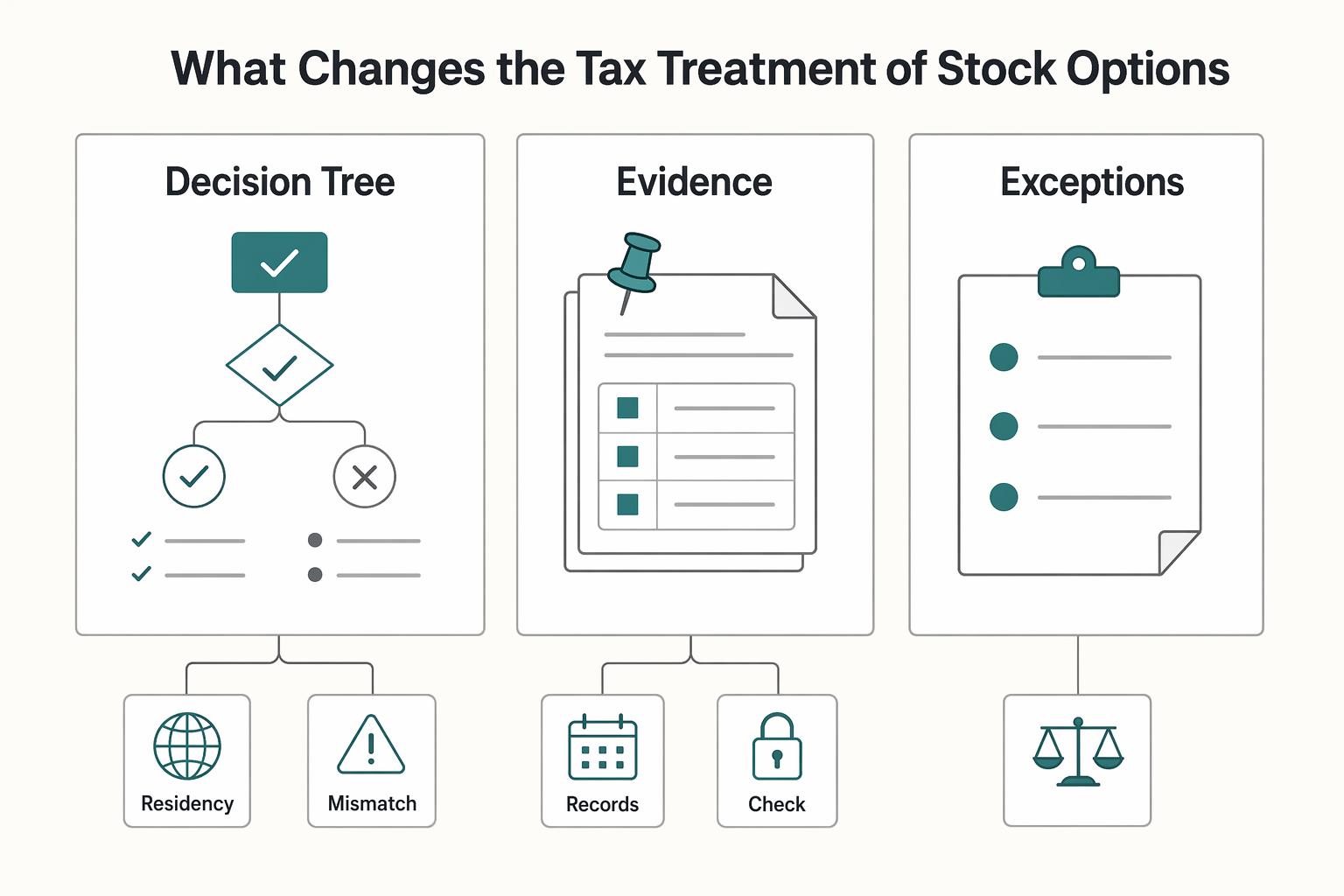
Stock options can create tax exposure at multiple moments, so sequence matters more than guesswork. Use a compliance-first order for grant, stock option exercise, and stock disposition so decisions are made before money moves.