
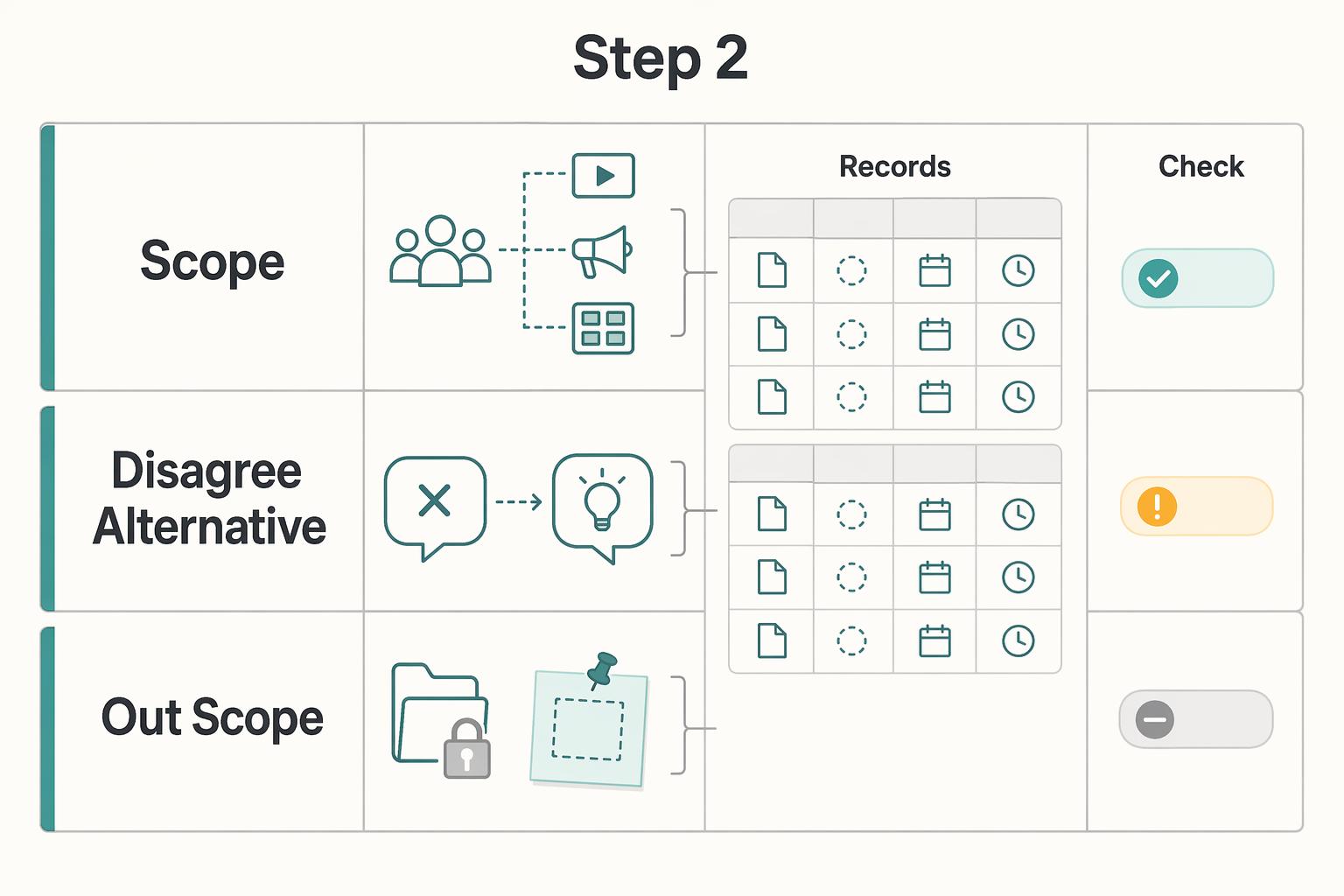
Quick Answer
Use a three-step sequence: route every comment into one official thread, classify it against your approved scope, then respond in writing before editing. Confirm the asset version, decision owner, and requested outcome so vague notes do not trigger random rework. When a request changes deliverables or reopens sign-off, pause and issue an addendum placeholder first. This keeps revisions tied to documented direction and reduces payment friction.
For a creative professional running a business-of-one, client feedback is not just an emotional event. It is a business control point. Even an email with the subject line "Thoughts on the latest draft" can trigger anxiety. The risk is real. One poorly handled comment can throw off timelines, expand scope, complicate payment, and damage your reputation.
The practical way to handle criticism of creative work is to control intake, classify the request, and reply from the record before you revise.
You have probably heard some version of "develop a thick skin" or "don't take it personally." That is not very useful. It treats a commercial process like a feelings problem and ignores the actual issue. When payment is on the line, a contract is in force, and your reputation is attached to the work, feedback affects the health of your business.
You do not need a platitude. You need a way to manage risk. The goal is not to numb yourself to feedback, but to control it. This article replaces vague advice with a professional three-stage process. Take feedback out of the realm of stress and put it into a system you can run. When you do that, criticism becomes easier to clarify, easier to classify, and easier to respond to without giving away time or authority.
The framework has three stages:
- Stage 1: The Intake Protocol - Establish a defensible way to receive and clarify feedback before it creates confusion.
- Stage 2: The Triage System - Sort input by source and scope so you know what to act on, what to defer, and what to re-scope.
- Stage 3: The Action & Communication Loop - Respond with confidence, document the impact, and protect the work you are being paid to do.
This is not about getting tougher. It is about building a process that keeps you from reacting on instinct. When each note has a place, a test, and a next action, you stay in control of the project instead of bracing for impact.
Stage 1: The Intake Protocol - How to Control the Input Before It Controls You#
Do not start by answering feedback. Start by controlling how it enters the project. If you want to manage criticism with less confusion and rework, set intake rules before any revision work begins.
| Checkpoint question | Related article detail |
|---|---|
| Who is allowed to approve changes? | One low-friction setup is a single client lead who consolidates stakeholder input and sends one decision. |
| Where does official feedback live? | Name a single working source of record, such as one email thread, one portal, or one task card. |
| What version of the work are they commenting on? | Name the asset and version. |
Step 1. Define what counts as official feedback#
Define what counts as official feedback. A practical project rule is one channel, one decision owner, one record. In practice, that means naming a single working source of record, such as one email thread, one portal, or one task card. Then state that comments from anywhere else are not approved direction until they are routed there.
You also need to decide who can submit feedback. One low-friction setup is a single client lead who consolidates stakeholder input and sends one decision. That matters because people can share the same broad goal but still apply very different taste, risk tolerance, and priorities. If five people comment directly, you are not getting one usable signal. You are getting five interpretations.
Your basic checkpoint is this. At any point, you should be able to answer three questions: Who is allowed to approve changes? Where does official feedback live? What version of the work are they commenting on?
| Input type | What it looks like | Your immediate next action | Where to log it |
|---|---|---|---|
| Practical feedback | Specific change tied to a clear part of the deliverable | Acknowledge, clarify any missing detail, then move to review | Official thread or project record |
| Vague opinion | "Make it pop," "I just do not like it," "It feels off" | Ask targeted follow-up questions before agreeing to revise | Same official record, tagged as pending clarification |
| Off-channel input | DM, text, hallway comment, live-call aside | Thank them, route it to the decision owner or official channel, do not treat it as direction yet | Add a note in the record that off-channel input was received and routed |
Step 2. Ask for the exact issue and intended outcome#
Do not spend effort before you have clarity. When written feedback arrives, resist the urge to defend the work or jump straight into revisions. Use a short structure instead. Acknowledge receipt. Name the asset and version. Ask for the exact issue. Ask for the intended outcome. Confirm when you will come back with a recommendation.
On live calls, avoid revising in real time unless the change is trivial and fully understood. Take notes, ask a few direct questions, then close with: "I am going to summarize this in writing before I make changes." That pause protects you. A common failure mode in digital workflows is overload: too many apps, too much data, and constant notifications. Once feedback is scattered across that noise, intake control gets weaker.
If the feedback is vague, use a simple prompt set:
- What specifically is not working?
- What should the audience think, feel, or do instead?
- Is there one example that shows the direction you mean?
If you cannot identify the location, reason, and intended result of a requested change, the note is not ready for production work.
Step 3. Send a written recap after every call#
Before you commit to revisions, confirm the record. After any call or meeting, send a written recap with the date, attendees, asset version, requested changes, open questions, and who will confirm. This is your evidence pack if memories start drifting later.
Keep the recap lean and reflective: "My understanding is X, Y, and Z. Please confirm before I proceed." That gives the client room to correct your interpretation before you spend billable time on the wrong thing. Intake is not about being defensive. It is about making sure every next step is attached to a clear, documented instruction.
Once the input is clean, you can decide what the feedback actually requires. Related: How to overcome 'writer's block'.
Stage 2: The Triage System - How to Differentiate Feedback from Scope Creep#
Once feedback is captured, do not revise yet. Triage first: identify the source, test the request against your written project outline and sign-off record, then decide what happens next before time and budget drift.
| Source category | What it is | Next action |
|---|---|---|
| Project-direction feedback | Input from the stakeholder handling approvals for this deliverable in the official channel. | Move it to scope testing. |
| Advisory feedback | Useful input from people who are not approving this phase. | Log it as advisory; do not execute it unless approved direction adopts it. |
| Market signal | Reactions from users, audience, or public channels. | Log the pattern, then decide whether it belongs now or in a later iteration. |
This is the control point. Vague requests can trigger repeated back-and-forth and scope creep, so your job is to turn each note into a clear decision.
Step 1. Start with the source before judging the comment#
Start with the source before judging the comment itself. A note can be useful and still not be current project direction.
Use these working categories:
- Project-direction feedback: input from the stakeholder handling approvals for this deliverable in the official channel.
Next action: move it to scope testing.
- Advisory feedback: useful input from people who are not approving this phase.
Next action: log it as advisory; do not execute it unless approved direction adopts it.
- Market signal: reactions from users, audience, or public channels.
Next action: log the pattern, then decide whether it belongs now or in a later iteration.
Quick check: can you name the source, the asset version, and whether this feedback can change the current deliverable? If not, it is not ready for execution.
Step 2. Test each request against what is already documented#
Test each request against what is already documented: your written project outline, approved deliverables, and sign-off record.
When feedback is vague, audit before you act. Ask what is broken, where it appears, and what outcome is needed. This prompt helps: As a [your role], I want [your goal], so that [the benefit]. It turns opinion into a practical request.
If the note suggests a broader issue, run a short diagnostic pass before rewriting. Check the same message across key touchpoints so you can tell whether the problem is local or cross-touchpoint.
| Request type | What it means in practice | Required next step | Documentation required |
|---|---|---|---|
| In-scope revision | Fits the current deliverable and approved direction | Revise and confirm any timing impact in the project record | Asset version, exact change, approver |
| Net-new request | Adds work beyond the baseline outline | Pause execution, estimate impact, and document as an amendment | Amendment appendix linked to the baseline document, with stakeholder approval/initials before work starts |
| Reopened approval | Previously approved direction is being changed | Pause, quantify rework, confirm approval path, then re-scope | Original sign-off record plus written authorization for the reset and its impact |
Step 3. Write the decision down before you edit anything#
End triage with a written decision before you edit anything. Every request should land in one of three buckets: proceed now, queue for next phase, or amendment required.
Proceed now when it is clear and in scope. Queue when it is useful but not required for this phase. Use an amendment when the request adds material new work or reopens signed-off direction.
Final checkpoint: one line in the project record stating source category, scope status, decision, and whether timeline or budget changes. If that line is missing, you are still reacting instead of managing.
Once triage is complete, move to communication so revisions, payment, and approvals stay aligned. If you want a deeper mindset reset, read How to Deal with Imposter Syndrome as a Freelancer.
Stage 3: The Action & Communication Loop - How to Respond, Re-Scope, and Protect Your Payment#
Respond before you revise. Use this order: reply, confirm impact, get written approval, then execute so feedback stays controlled instead of drifting into unplanned work.
| Situation | Response focus | Example line |
|---|---|---|
| Agree | Confirm the issue and the current deliverable. | I can make that revision within the current deliverable. |
| Disagree | Acknowledge the goal and recommend a different fix. | My recommendation is to shorten the intro and keep the proof points. |
| Out of scope | State that it expands the approved deliverable. | I'll send an addendum placeholder with timing and budget impact before starting. |
Step 1. Reply to the goal behind the comment#
Reply to the goal behind the comment, not just the phrasing. Reflect the concern, then state the next step.
If you agree: "I see the issue in version 3, page 2. I can make that revision within the current deliverable and note any timing change in the project record."
If you disagree: "I understand the goal is clarity for first-time buyers. I would not recommend cutting that section, because it removes key context. My recommendation is to shorten the intro and keep the proof points."
If it is out of scope: "I can do that as an added request. It expands the approved deliverable, so I'll send an addendum placeholder with timing and budget impact before starting."
This keeps the exchange two-way and ties decisions to the agreed work.
Step 2. Write down timeline and scope impact immediately#
Write down timeline and scope impact immediately. If a request adds a new audience, another channel, or reopens signed-off work, record the rework in your scope-change record before execution.
| Request type | Required message | Project artifact update | Payment clarity |
|---|---|---|---|
| In scope | Confirm revision and any minor timing effect | Revision log + approval trail | Link revision to the current invoice line |
| Disagree, alternative recommended | Validate goal, recommend different fix | Decision note in approval trail | Helps reduce "you ignored my comment" disputes |
| Out of scope | Pause and price before work starts | Scope-change record or addendum placeholder | Link added work to a separate invoice line or updated invoice |
Minimum checkpoint: one follow-up note that names the asset version, requested change, timing impact, and whether it stays inside the current revision round.
Step 3. Get written approval, then execute from that note#
Get written approval, then execute from that approved note. Keep the revision log, approval trail, scope-change record, and invoice linkage in one project record so decisions do not get lost across DMs or memory.
The common failure mode is revising first and documenting later. That is where conflict grows, especially when constructive feedback turns into a chain of "while you're in there" requests.
You might also find this useful: How to Watermark Your Creative Work Before Sending to Clients.
Conclusion: From Criticism to Control#
All of the edge cases above point to the same practical truth: feedback gets easier to handle when you stop treating each note like a personal test and start treating it like a repeatable process. That does not make criticism painless. It makes your next move clearer.
Step 1: Control the input. Set shared expectations before feedback starts. Clarify where feedback should be collected and who gives final direction. Before you revise, consolidate comments so you are working from one current instruction set.
Step 2: Classify the note. Do not edit first and think later. Decide whether the comment is feedback on the current direction or a shift in direction. Repeated criticism is often where feedback can start to feel like control, so this distinction matters.
Step 3: Respond with a record. Reply to the goal, state your recommendation, and document what happens next. Keep a written trail of the version discussed, key decisions, and confirmations.
High-quality criticism from the right people can be useful, especially when it comes early, and resilience can be built over time. Confidence gets steadier when it comes from evidence and consistent decisions, not from pretending criticism does not affect you.
For your next client cycle, focus on three practical habits:
- set intake rules
- define how you classify feedback versus direction changes
- standardize your response and documentation steps
This kind of routine helps you separate useful criticism from control and choose your next move consistently.
For a step-by-step walkthrough, see How to Copyright Your Creative Work as a Freelancer.
Frequently Asked Questions
How do you professionally disagree with feedback?
Start by showing that you heard the goal, then state your recommendation without arguing. A short reply is enough: “I hear the goal is [outcome]. I would not recommend [requested change] because it weakens [reason]. My recommendation is [alternative].” If they still prefer the original change, acknowledge it and move forward without turning it into a debate.
What if the feedback is vague, blunt, or just says it “doesn’t feel right”?
Do not defend the work on the spot. Ask for specifics before you touch the file: “Can you point to what is working? What is not working? What outcome did you want instead?” That checkpoint matters because vague reactions are hard to act on, and defensiveness usually shuts down the useful detail you actually need.
How do I tell the difference between normal feedback and a real scope change?
From a critique standpoint, treat notes as normal feedback when they give concrete adjustments to the current draft. Treat them as a reset when they replace the core direction rather than refine it. When it is unclear, pause and ask for the exact outcome before revising.
What should I say when criticism starts affecting payment conversations?
This answer addresses critique behavior, not payment policy. For the criticism part, keep your reply factual: restate the goal, summarize the current draft, and ask for specific changes instead of reacting emotionally.
How do I handle conflicting feedback from multiple stakeholders?
Pause revisions and ask for one consolidated set of specific notes. Conflicting or vague direction is difficult to act on; a single, clear instruction set is easier to apply without defensiveness.
What should I lock down during onboarding so feedback stays manageable?
Set a simple critique routine early: share feedback after review, include what worked and what did not, and keep comments specific. The goal is to make feedback concrete enough to revise against.
How do I keep criticism from turning into imposter syndrome?
Treat the work as a draft and the note as data, not as a verdict on your ability. When a comment hits hard, run three checks in writing: is it specific, is it practical, and does it relate to the brief? That gives you something observable to work from.
Try a related tool
Researched and edited by the Gruv editorial team. Gruv builds cross-border billing, payouts, and finance-operations software for global businesses.
Sources
Includes 2 external sources outside the trusted-domain allowlist.
- brookings.edu/articles/algorithmic-bias-detection-and-miti...trusted
- executive.mit.edu/course/questions-are-the-answer/a056g00000UR...trusted
- niehs.nih.gov/research/resources/bioethics/whatistrusted
- pmc.ncbi.nlm.nih.gov/articles/PMC10054602trusted
- pmc.ncbi.nlm.nih.gov/articles/PMC9355701trusted
- sc.edu/study/colleges_schools/artsandsciences/engli...trusted
- aakashg.com/write-user-storiesexternal
- blog.workday.com/en-us/10-straightforward-ways-improve-workpl...external
Educational content only. Not legal, tax, or financial advice.
Related Posts
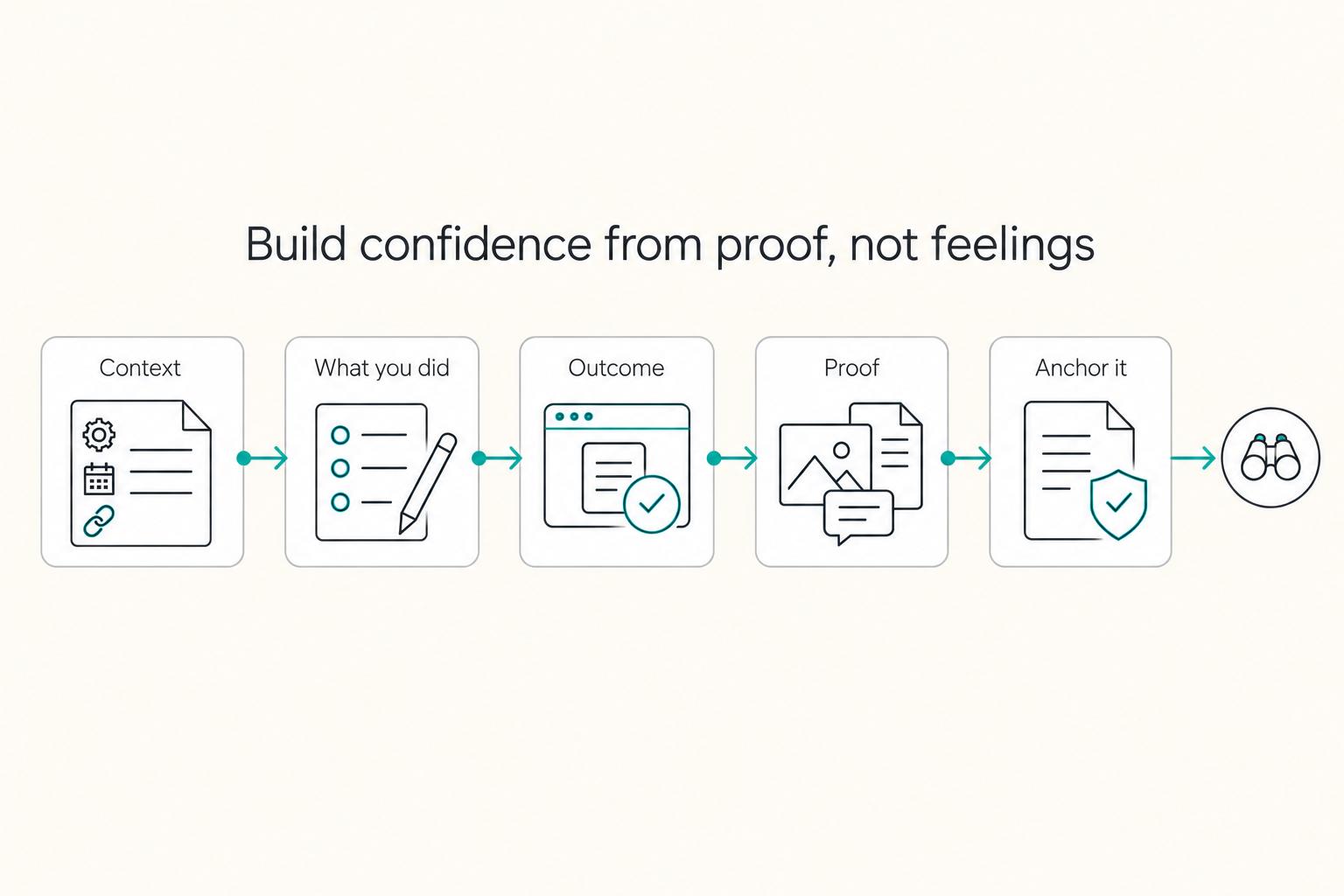
How to Deal with Imposter Syndrome as a Freelancer
**Freelance impostor feelings can flare when your work lacks clear, documented boundaries-even when you *do* have talent.** You're the CEO of a business-of-one, and your job is to turn shaky moments into repeatable operations.
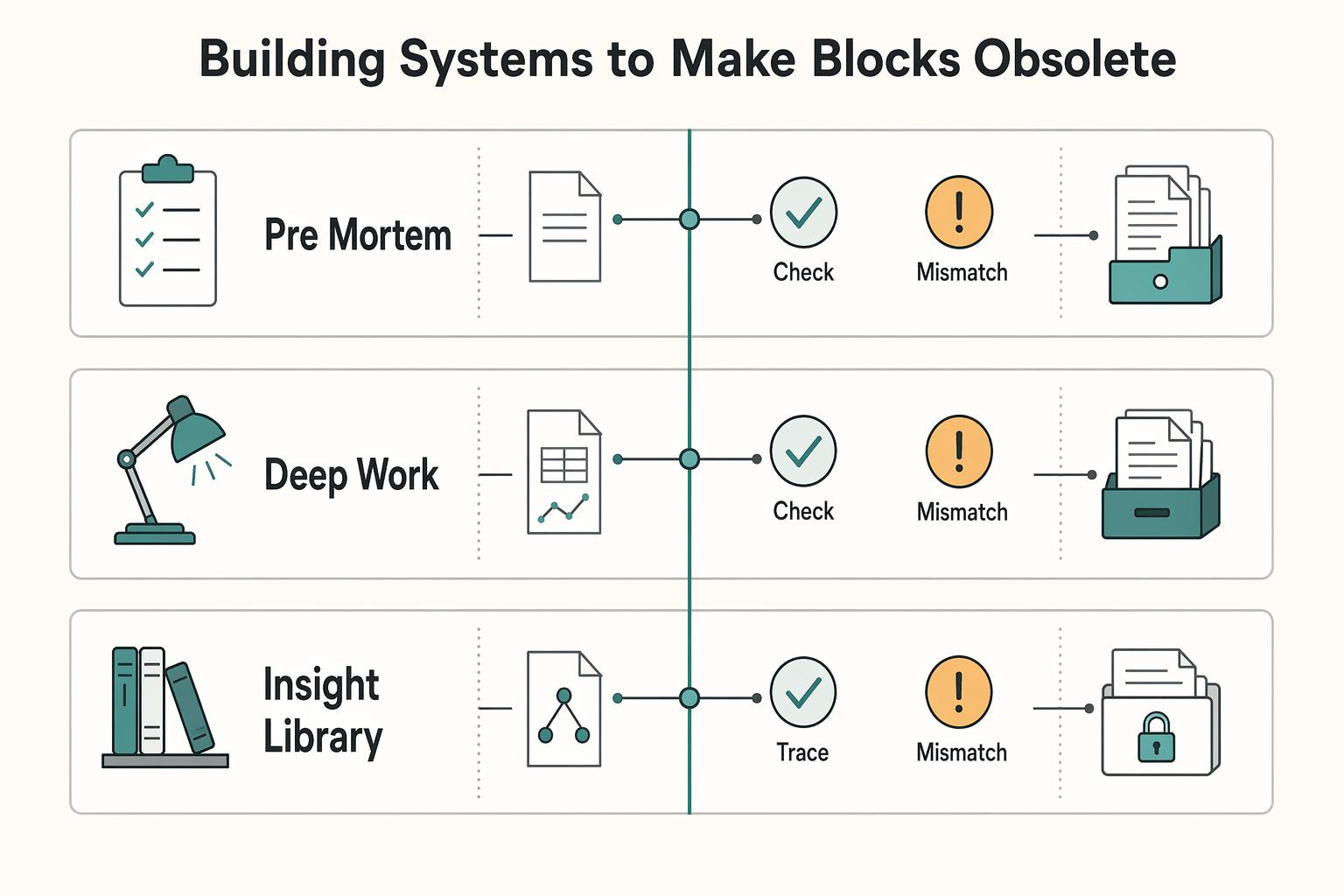
How to Overcome Writer's Block: Diagnose Strategy, Process, Resource, or Confidence Problems
Treat a stall as a delivery risk, not a personality verdict. Your first job is to find the point of failure in the work, because the fix only helps if you route the problem to the right SOP.

The Freelance Payment Penalty: A Modeled Audit of Platform Fees, FX Spreads, and Payout Delays
The money rarely disappears through a single, easy-to-spot fee. The real loss is stacked. A marketplace takes its commission, a processor adds a charge for international cards, a bank or payment company converts the currency at a spread, a platform holds the funds before release, and a wire sheds a little to intermediaries on the way in. Each layer looks defensible on its own, but the worker feels the combined result as a smaller deposit and a later payday.