
Quick Answer
Start by treating the earn-out as at-risk money, not closing cash. In a business sale agreement, require one defined metric (revenue, gross profit, or EBITDA), one calculation method, and written review rights before you negotiate secondary terms. Confirm the earn-out period, who prepares the statement, and how objections are filed. If the draft refuses transparency, books-and-records access, or a workable dispute route, renegotiate or exit. The practical standard is whether a third party could verify what is owed without guessing.
Why earn-out structure determines whether deferred payment is real#
Start with the real answer: an earn-out in business sale can bridge a valuation gap, but for a seller it also turns part of the price into delayed payment risk. The headline number only matters if the contingent piece is clear, measurable, and enforceable.
Buyers and sellers usually reach for an earn-out when they are close on a deal but still disagree on price. That can be sensible. It can also move today's price argument into a post-close fight about results, calculations, or whether a target was actually met.
In practice, these periods often run for several years, with a meaningful share of the price tied up in future performance. For a seller, that is not just valuation math. It is cashflow exposure.
Before you start#
Step 1: Reframe the sale price into cash now versus cash later. If a meaningful part of the consideration is deferred, do not treat it like closing cash. Treat it as post-closing consideration that still has to be earned, measured, and paid. Your first judgment is simple: does the deal still work if that contingent piece underperforms, gets delayed, or is disputed?
Step 2: Verify the core mechanics in the first draft, not after you get attached to the deal. At minimum, the draft term sheet or business sale agreement should name the earn-out period, the financial metric being used, and how that metric will be calculated. That is your first checkpoint.
If the buyer cannot show you the period length, the chosen metric such as revenue or EBITDA, and a calculation method in plain terms, you are not looking at a finished price. You are looking at an unresolved disagreement.
Step 3: Decide early whether you are evaluating upside or protecting downside. For sellers, the default question is not "how high could this go?" It is "what has to be true for me to actually get paid?" If the answer depends on vague definitions or unclear calculation rules, your next move is usually renegotiation or walking away.
The rest of this guide stays practical on purpose. Instead of broad M&A theory, it focuses on the period, metric, and calculation choices that determine whether deferred payment is real or cosmetic. The recurring failure mode is weak structure. An earn-out that looks generous at signing can still leave the seller arguing about formulas, timing, or performance after closing. Your job is to spot that risk before the purchase price becomes a post-close dispute.
Decide if the earn-out is acceptable before you negotiate details#
Decide go or no-go early: if the deal only works when the contingent payment performs perfectly, treat the earn-out as high risk.
Step 1. Gate the cash mix. If most of the value is deferred, require stronger protections before negotiating minor wording. Earn-outs are often used when valuation is uncertain, and that uncertainty can shift risk back to you through future performance and the buyer's ability to pay. Write down closing cash, maximum contingent payment, the earn-out period, and the minimum outcome you can accept without upside.
Step 2. Tighten the target, not discretion. If the buyer says contingency is needed, narrow the performance target definitions in the SPA. Push for one metric, one formula, one calculation owner, and clear included/excluded items with worked examples. If opening positions affect the math, require a right to review and correct them. "Commercially reasonable efforts" is not a substitute for clear calculation terms.
Step 3. Treat opacity as a walk-away signal. If the draft rejects basic transparency, review rights, or audit rights where needed, assume dispute risk is high. Earn-outs are a common source of post-completion disputes, especially when headline upside is broad but enforcement is weak. Acceptable means realistic upside with terms you can verify and enforce; risky means vague upside and buyer-controlled calculations.
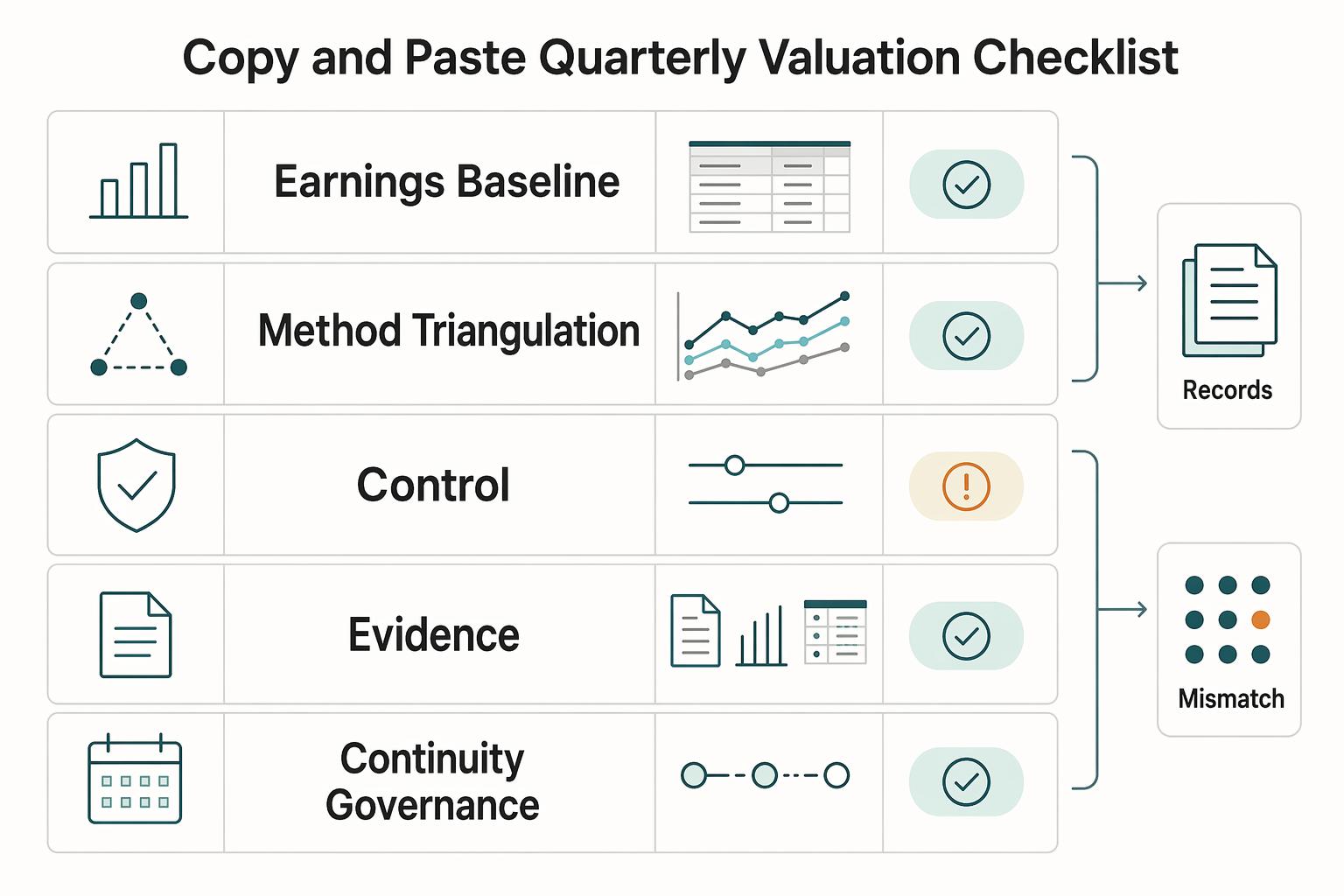
Related: How to Perform a Business Valuation for a Small Agency.
Prepare your seller evidence pack before the first term sheet draft#
Prepare your evidence pack before the first draft so definitions are anchored in your numbers, not the buyer's wording. Earn-outs can bridge valuation gaps, but weak structure and unclear metrics increase post-close dispute risk.
Step 1 Build one metric pack and make every number tie out#
Build one file set for each proposed payout metric, with consistent history for revenue, gross profit, and EBITDA, plus a clear calculation bridge. Avoid isolated screenshots or metric definitions that change period to period.
If EBITDA is in scope, include a reconciliation to GAAP net income. Also prepare the pack for diligence-level testing, since Quality of Earnings work is commonly done after LOI signature. If a metric cannot be explained consistently, do not use it as an earn-out metric.
Step 2 Document the drivers behind each milestone#
For each milestone, document what drives attainment and separate what you control from what depends on buyer decisions after closing. Include customer concentration, pipeline assumptions, and other dependencies that can change outcomes.
Use a simple check: what must stay true for this target to be hit? If that list includes buyer-controlled actions, flag it now and address it in drafting.
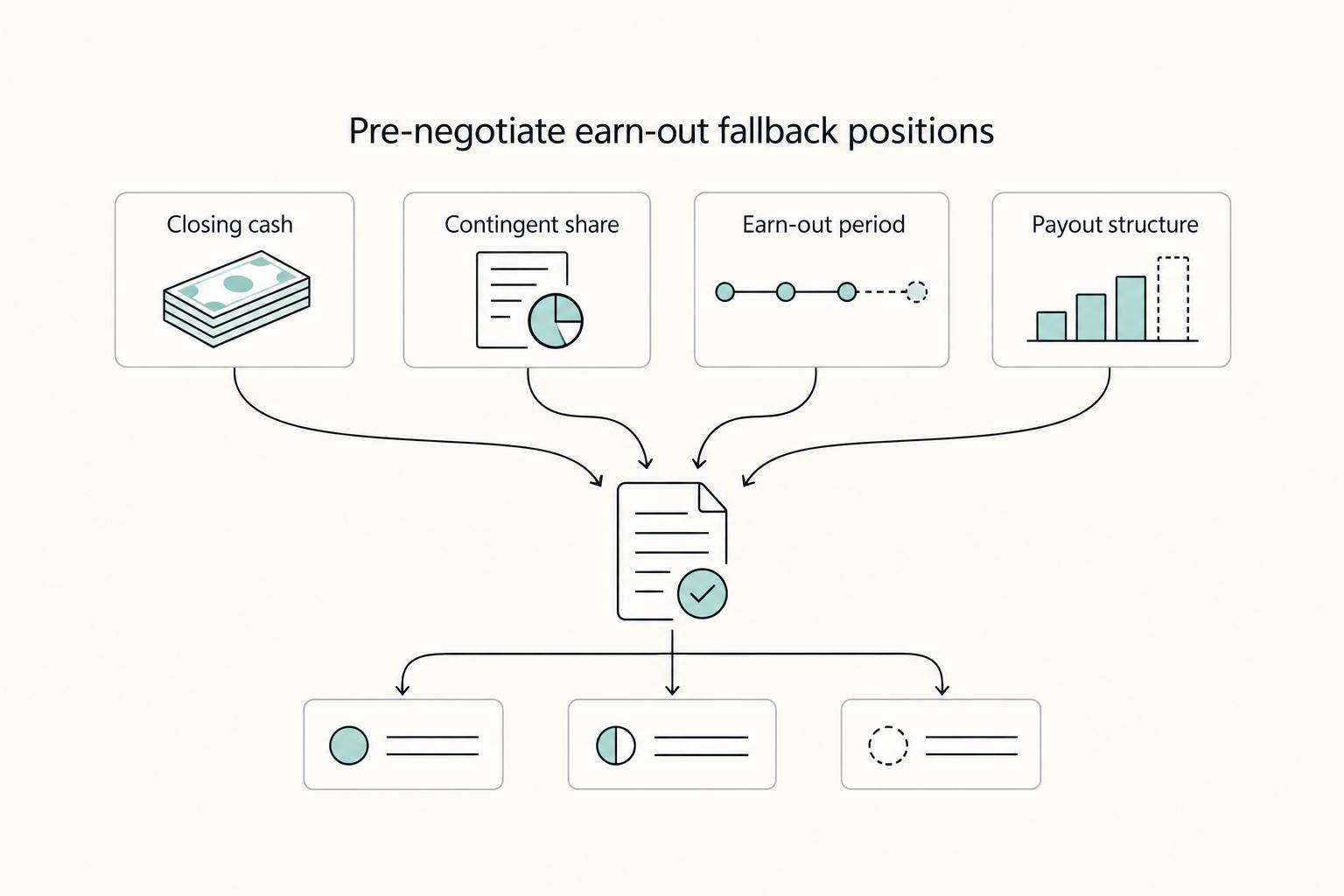
Step 3 Pre-negotiate your fallback positions before the first paper#
Set fallback terms before the buyer anchors the first draft. Focus on purchase price mix, earn-out duration, and the rule for target attainment in the business sale agreement.
| Fallback item | What to set |
|---|---|
| Minimum closing cash | minimum closing cash you will accept |
| Maximum contingent share | maximum share of price in contingent payment |
| Earn-out period | acceptable earn-out period; 2 to 3 years is a common reference point |
| Payout structure | all-or-nothing, linear, or partial above threshold |
Keep fallback positions explicit:
- minimum closing cash you will accept
- maximum share of price in contingent payment
- acceptable earn-out period (2 to 3 years is a common reference point)
- payout structure (all-or-nothing, linear, or partial above threshold)
Then lock down what "hit the target" means (for example, booked revenue, collected revenue, gross profit, or EBITDA under a defined method). If a target cannot be measured from your evidence pack against a written definition, it is not ready for term-sheet language.
Choose metrics and milestones that are measurable and hard to manipulate#
Pick the metric first, because it often determines how much post-close discretion can change the payout result. In practice, sellers often prefer revenue-based targets because they are less exposed to cost-structure or accounting-treatment shifts; gross profit and especially EBITDA usually need tighter drafting to avoid disputes.
Step 1 Compare the metric before you argue about the target#
Use the metric choice as a control test, not just a valuation debate.
| Metric | Manipulation risk | Verification burden | Seller control after closing |
|---|---|---|---|
| Revenue | Lower than profit-based metrics | Moderate: clear booking and cutoff rules still matter | Often higher if results stay tied to your customers/pipeline |
| Gross profit | Medium: classification and allocation can move results | Higher: direct-cost rules must stay consistent period to period | Mixed: operations may help, but coding choices can still shift outcomes |
| EBITDA | Highest if add-backs/allocations are loose | Highest: unclear normalization creates competing calculations | Often lower if buyer controls overhead, staffing, and shared services |
Decision rule: if buyer-controlled budget, pricing, staffing, or allocation choices can swing the target, add explicit adjustment language or reject that performance target.
Step 2 Write each milestone so one calculation wins#
Each milestone should have one formula, one calculation owner, and one backup method under the agreed accounting approach. Vague phrasing like "revenue for the period" or "EBITDA consistent with past practice" is where calculation disputes start.
Lock these points in writing for every performance target:
- exact formula (inclusions, exclusions, timing, and scope)
- who prepares the first calculation
- fallback method if records are late, incomplete, or inconsistent
- accounting method and any past-practice covenant that governs recognition/classification consistency
If continuity matters, say it directly. Where no past-practice covenant exists, courts may defer to bona fide buyer business decisions.
Step 3 Build checkpoints and anti-gaming terms into the merger agreement#
Set verification checkpoints so issues surface early, not only at final payout. A practical baseline is a monthly close package, variance notes, and a short cure window before any denied post-closing consideration becomes final.
Add anti-gaming guardrails in the merger agreement so cost reclassification, allocation-policy changes, or recognition shifts cannot silently reduce the earn-out outcome without corresponding adjustment mechanics. If disputes go to an expert forum, define scope precisely: an independent accounting firm can be authorized to resolve earn-out calculation disputes, and agreement language may also determine whether related covenant or bad-faith issues are included.
Lock operating control rights so the seller can actually hit targets#
Control rights are only useful if they are tied to the exact decisions that move each earn-out number. If the buyer controls those decisions, either lock protections into the merger agreement or change the payout design.
Step 1 Match each milestone to the decisions that drive it#
Start with the milestone, then list the operating levers that materially affect it: budget, pricing, hiring, staffing levels, discount approvals, product timing, and customer handoff. Post-closing control of budgets, staffing, and operations is a core earn-out negotiation point because those choices can move revenue, gross profit, or EBITDA even when demand is unchanged.
A practical drafting move is a short schedule mapping each performance target to the approvals needed to achieve it. Your test is simple: a third party should be able to read that schedule and identify who controls the payout inputs.
Step 2 Name approvals the buyer must give during the earn-out period#
If buyer consent is required, name each approval and define the standard in the sale agreement. Typical items include the annual operating budget tied to the target, replacement hires for named roles, and pricing changes within pre-agreed bands.
| Approval item | Drafting detail |
|---|---|
| Annual operating budget | tied to the target |
| Replacement hires | for named roles |
| Pricing changes | within pre-agreed bands |
Do not rely on vague drafting. A "best efforts" covenant has been treated under Delaware law as requiring reasonable steps, but disputes still arise when the buyer has discretion to run the surviving entity. Specific approval rights reduce that ambiguity.
Step 3 Protect the people who actually produce the result#
If target performance depends on specific people, address retention directly in the earn-out structure. Retention-linked earn-outs are used to help keep key employees in place after acquisition, which can reduce avoidable target misses driven by turnover.
At minimum, maintain a named key-employee schedule with each person's role, account or product responsibility, and replacement expectations. Also require notice if a listed employee resigns, is terminated, or has duties materially reduced so issues surface before payout calculations break.
Step 4 Shift to event-based triggers if the buyer keeps full control#
If the buyer keeps full operating control, reduce reliance on profit-only targets and move more payout weight to objective milestones. Event-based triggers, such as launching a new product or completing a major project, are a recognized earn-out structure and can narrow accounting disputes.
If you cannot keep budget, pricing, or hiring authority, avoid an EBITDA-heavy design unless adjustment language is very tight. Related reading: How to Run Airbnb Rental Arbitrage as a Compliance-First Business.
Draft the legal clauses that protect payout certainty#
If you want earn-out payments to behave like real purchase price, draft remedies, liability limits, and dispute mechanics as tightly as the performance formula.
Step 1 Define termination events and the payment result for each one. Do not stop at an end date. List the events that can end the earn-out early and the exact outcome for each event, including events like a later sale or change in control during the earn-out period.
State explicitly whether the trigger causes:
- acceleration of all unpaid amounts,
- payment of amounts already earned but unpaid, or
- no acceleration.
Add a survival sentence so rights tied to completed measurement periods continue, including payment rights, calculation access, dispute rights, governing law, and jurisdiction. The check: if the business is sold mid-period, a third party should be able to tell what is owed without guessing.
Step 2 Coordinate liability clauses so they do not cancel earned payment rights. Limitation of liability, exclusive-remedy language, and fraud carve-outs should be harmonized with the earn-out payment clause. If they are not, the buyer may argue an earned but unpaid contingent amount is just another capped claim.
State whether earned amounts are treated as purchase price owed under the agreement or as indemnity-style claims. If the intent is payout certainty, say core payment obligations for earned amounts are not nullified by general caps.
Step 3 Build indemnification around calculation integrity and setoff. Indemnification commonly covers breaches of representations, warranties, and covenants. For earn-outs, tie that structure to breaches that affect revenue, EBITDA, or the integrity of the agreed calculation process.
Then state whether indemnity claims can be set off against contingent payments. If setoff is allowed, narrow when and how it applies. If it is not allowed, say so directly.
Step 4 Choose governing law and jurisdiction based on enforceability and real-world cost. Forum selection is a practical enforcement lever, not boilerplate. Choose governing law and jurisdiction together, and test whether that path is usable if a payment dispute actually happens.
If a specific law is selected, name the court or ADR seat clearly rather than leaving forum language open-ended.
Step 5 Hard-code the dispute path, decision-maker scope, and interim payment handling. Define how payment is calculated, noticed, and challenged. Include a pre-filing good-faith negotiation step with fixed notice and response windows.
Be explicit on expert determination versus arbitration. If the intent is narrow accounting review, say so and limit authority to that scope. If language is broad, the decision-maker may get authority over wider legal issues tied to the amount owed. Also state what happens during the dispute, including whether undisputed amounts are paid while only contested amounts are held back.
Set post-close measurement and dispute operations on day one#
A strong earn-out still breaks down if post-close reporting and dispute handling are loose, so lock the operating rhythm on day one.
Step 1 Establish a standing reporting calendar#
Set fixed dates for each measurement period: draft earn-out statement, supporting materials, objection notice, and escalation. Tie that calendar to the accounting policies and defined metric in the earn-out schedule, not to a generic "monthly financials" cycle.
For each period, both sides should be able to point to one due date for the draft statement and one due date for objections. If your agreement includes a negotiation window after an objection notice, follow that timeline before escalation.
Step 2 Require a consistent evidence package every period#
Use the same evidence package each cycle so calculations can be tested consistently. At minimum, require:
| Evidence item | What it should show |
|---|---|
| Metric workbook | the path from source figures to payout result |
| Ledger extracts | supporting reported numbers |
| Change explanation | any accounting change, reclassification, or operational decision that affects gross profit, EBITDA, or another defined metric |
- a metric workbook showing the path from source figures to payout result
- ledger extracts supporting reported numbers
- a short explanation for any accounting change, reclassification, or operational decision that affects gross profit, EBITDA, or another defined metric
If you receive only a topline number, treat the notice as incomplete and request the supporting package under your information rights.
Step 3 Route disputes to the right decision-maker#
Use a two-step dispute path. First, send disputed calculation items to the independent accounting firm or other technical reviewer named in the agreement, and keep that scope limited to earn-out calculation issues.
Second, move unresolved non-calculation issues to the legal forum selected under governing law and jurisdiction. This split helps prevent technical review from absorbing broader legal interpretation disputes.
Step 4 Make documented sharing and challenge windows non-negotiable#
No payout denial should be treated as final until the documented calculation is delivered and the agreed response window has run. That checkpoint keeps delay or partial reporting from becoming a de facto denial.
If deadlines slip or required documents are missing, object in writing, identify what is missing, and continue using the contract's dispute timeline.
For a step-by-step walkthrough, see Comparables Analysis for Business Valuation in a One-Person Business.
Handle common failure modes and recover before value is lost#
Treat ambiguity, buyer-driven operating changes, and reporting slippage as immediate repair work. Value is usually lost when you wait for the next calculation cycle instead of correcting the process while records are still current.
Step 1 Amend vague targets before the next measurement period#
If a performance target can be read two ways, amend the merger agreement before the next measurement period. Disputes often start when definitions or calculation formulas are vague, ambiguous, or silent.
Use a short amendment or side letter with worked examples, test cases, and one clear formula path from source numbers to payout. Then run one shared hypothetical period and confirm both sides reach the same result. If they do not, the target still needs tightening. Keep the sample calculation, metric workbook, and accounting-method note with the amendment.
Step 2 Recut milestones when buyer operating changes break the original logic#
When post-close operating changes alter financial performance, reset the milestone logic to match the new reality. Do not assume operating-consistency protection exists by default; one cited deal sample found those provisions in about 17% of earn-outs.
Compare post-close operating decisions against the assumptions behind the original target. If those assumptions no longer hold, push for revised milestones, agreed adjustments, or tighter control rights for actions that directly affect payout. A core red flag is being held to the old metric after the operating model has changed.
Step 3 Enforce reporting failures through signed remedy clauses#
Late or incomplete reporting should trigger a prompt written objection under the signed Dispute Resolution and Termination framework. Do not argue only about the result; state clearly that the submission is incomplete when the calculation support is missing.
Your checkpoint is procedural: has the contract process started correctly under the agreed notice and support requirements? If required backup is missing, document that in writing and move the issue through the agreed path. Silence is expensive because one tolerated exception can be used later as proof that informal reporting was acceptable.
Conclusion#
A workable earn-out is not just upside on paper. It is a contract you can measure, influence, and enforce. If definitions, control rights, and enforcement terms are weak, the contingent piece is really purchase price risk that you are financing after closing.
- Decide whether to accept, renegotiate, or walk away based on the price risk split.
Look at how much of the total purchase price is guaranteed at closing versus contingent later. If the deal only makes sense when the deferred piece pays out in full, treat that as a red flag and renegotiate instead of hoping the buyer will operate in your favor. If the buyer will not give you basic transparency, books and records access, or a workable dispute path, walking away is often the cleaner decision.
- Lock every formula and milestone before signing.
In most cases, post-closing payment is tied to revenue or earnings targets, so you need one unambiguous formula for each metric you use, including any milestone-based trigger. Do not rely on shorthand labels alone. Your checkpoint is whether a third party could calculate the payout from the contract, the accounting method, and the source records without guessing. If a target can be reinterpreted later, expect a dispute later.
- Secure the operating rights that make the target achievable.
Specific post-closing covenants are a core protection, especially where pricing, budget, or staffing directly drive the result. Define the operational covenants that are most critical to the metric and the reporting obligations needed to monitor them. Buyers often resist restrictions on post-close operations, so if they insist on broad control, adjust metric design toward measures that are less exposed to buyer-only decisions.
- Finish the legal clauses that decide whether an earned payment is actually collectible.
Review dispute-resolution, liability, and governing-law mechanics together, not as isolated boilerplate. The failure mode here is straightforward: a strong payout formula can still be undercut by weak forum language or liability caps that muddy core payment obligations. Many agreements use ADR with an arbitrator or independent accountant, but do not assume that wording solves everything. The exact clause matters, and recent Delaware guidance shows ADR language can reach operational-covenant and bad-faith issues if drafted that way.
- Set the post-close verification calendar and evidence package now, not after closing.
Require fixed reporting dates and a standard package for each measurement period: calculation support, variance explanation, and the books and records needed to test the result. A strong practical ask is separate books and records for the acquired business during the earn-out period. Your final verification check is straightforward: if payout is denied, can you trace the denial to documents, challenge it within the response window, and get the dispute into the agreed forum without first arguing about what records you are entitled to see? If not, the earn-out terms are still underdrafted.
Frequently Asked Questions
What is an earn-out in a business sale, in plain language?
An earn-out in business sale is a contingent post-closing payment. You sell now, get part of the purchase price at closing, and receive more later only if the business hits agreed targets in the sale agreement. In plain English, it is delayed money tied to performance, not guaranteed cash.
Why do buyers and sellers use an earn-out instead of agreeing on one fixed purchase price?
Usually because they do not agree on value at signing. An earn-out bridges that valuation gap: the buyer pays less upfront, and the seller keeps upside if the business performs as expected. The tradeoff is the point of the structure. Some post-close performance risk shifts back to you as the seller.
Which metric is safer for sellers in practice: revenue, EBITDA, or gross profit?
There is no universal winner. Sellers often prefer revenue because it is top-line and generally less vulnerable to cost-allocation or accounting-treatment changes. Buyers often prefer EBITDA or net-income-style targets. Gross profit can also be used, but the safer choice depends on how the agreement defines and calculates the metric.
What control should a seller keep during the earn-out period to avoid missed targets?
Because buyer post-close control can materially affect target attainment, sellers often negotiate protections over decisions that directly affect the earn-out metric. If the buyer controls operations, negotiate clear calculation rules and regular reporting tied to the payout formula.
What most often causes earn-out disputes after closing?
Common flashpoints are post-close operating changes and disagreements about whether targets were met and a payment is owed. Disputes often escalate when earn-out payments are withheld. If your contract has an ADR clause, check whether disputes go first to an independent accountant or arbitrator, because forum choice can affect speed and cost.
Are earn-outs common in small business sales or mostly in mid-market M&A?
They are not limited to one deal type, but broad market claims should be treated carefully. One cited private-deal dataset shows earn-out use in non-life-sciences deals rising from 13% to 21% between 2018 and 2022. That shows usage increased in that sample, but it does not give an exact rate for your size, sector, or buyer type.
Which details are still case-specific and cannot be assumed from market norms?
Do not assume duration, payout timing, metric definitions, adjustment rules, or dispute procedure from "standard practice." Those points depend on what is written into your contract and how the payout is calculated. If it matters to payout, it belongs in the signed document.
Try a related tool
Researched and edited by the Gruv editorial team. Gruv builds cross-border billing, payouts, and finance-operations software for global businesses.
Sources
Includes 2 external sources outside the trusted-domain allowlist.
Educational content only. Not legal, tax, or financial advice.
Related Posts

Digital Nomad Health Insurance Comparison for Long-Stay Moves
Use focused time now to avoid expensive mistakes later. Start with a practical `digital nomad health insurance comparison`, then map your route in [Gruv's visa planner](/tools/visa-for-digital-nomads) so we anchor policy checks to your real plan before pricing pages pull you off course.
How to Perform a Business Valuation for a Small Agency
**Treat valuation for a small agency as a risk control system, not a headline multiple, and you are more likely to protect agency value before you ever start selling a business.**
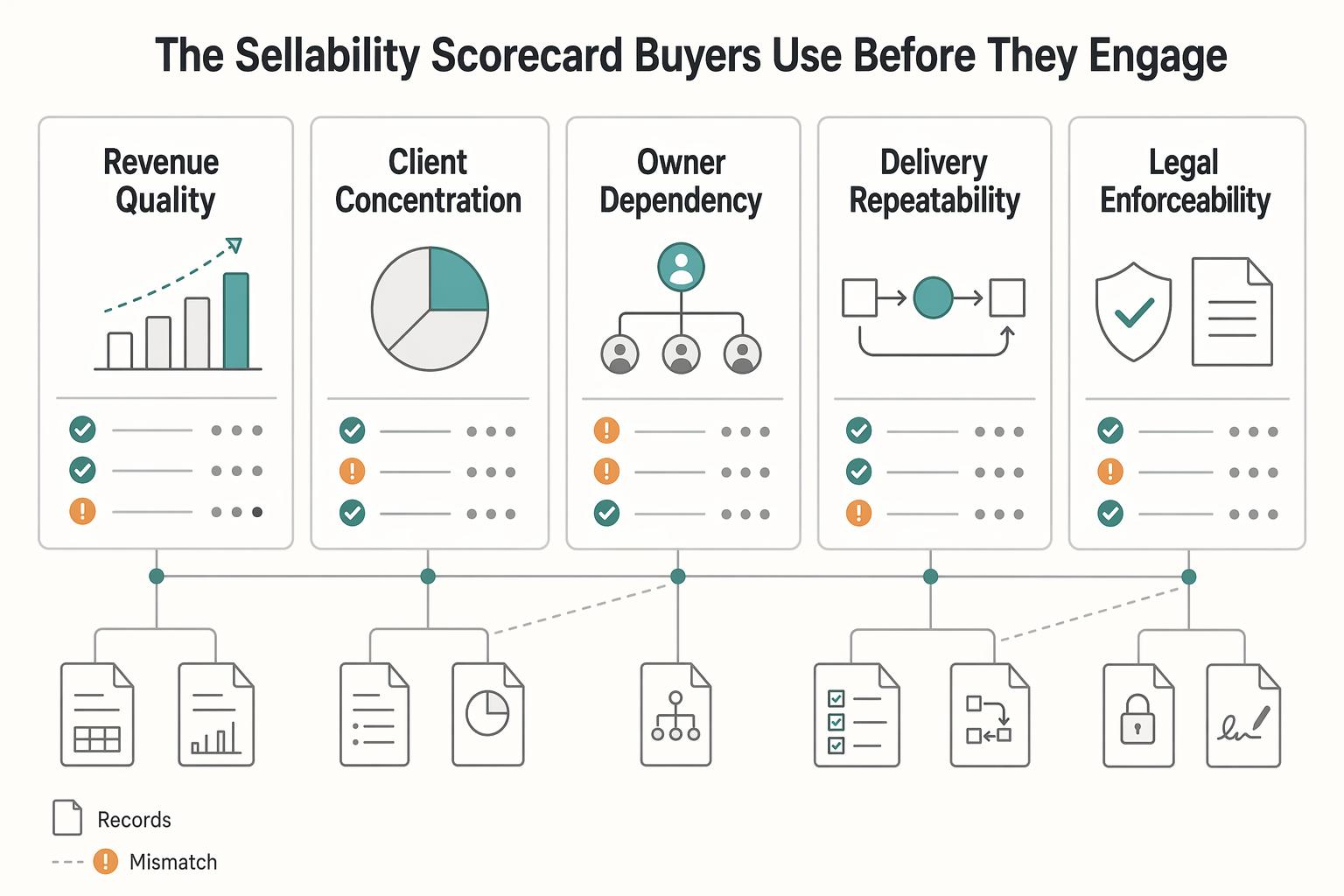
A Guide to Selling Your Freelance Business or Agency
**When you sell your freelance business, buyers are paying for a reliable asset they can verify, transfer, and run, not for your personal hustle.** A common mistake is mixing advice about winning clients with advice about closing an acquisition. Those are different jobs. This guide is a sellability-to-close playbook designed to reduce surprises before buyer conversations begin.