
Quick Answer
Foreigners can obtain CUIT in Argentina. Match the identifier to your next activity before filing. Use CUIT for ongoing invoicing, CUIL for employment procedures, and CDI only for limited banking or registrable-asset actions when you do not have CUIT/CUIL. If you do not have DNI, ARCA may route you through Presentaciones Digitales with Formulario 460 F/PD and migration-file proof, then require ongoing management through Clave Fiscal and Domicilio Fiscal Electrónico.
For independent work in Argentina, you generally need CUIT; for employment procedures, CUIL; and for banking or registrable-asset transactions without either identifier, CDI. Your immigration documents determine which application route to use. Tax residency and tax-regime registration are separate decisions, so plan those alongside the application.
Phase 1: Are You CUIT-Ready? A Strategic Risk Assessment#
Before you try to get a CUIT in Argentina, make one decision first: proceed now, pause and gather evidence, or speak to a cross-border tax advisor. CUIT setup usually goes more smoothly when your residency posture and likely tax regime are clear before you file.
Step 1: Define the commitment#
A CUIT is Argentina's tax identification code for people engaged in economic activity, and it is administered by ARCA. You will still see AFIP in legal texts and older guidance.
A CUIT is not just an ID number. It can place you into ongoing compliance processes that include invoicing and tax filings. By itself, it does not automatically make you an Argentine tax resident, but it can become part of the factual record showing where you operate. Before you move forward, keep these two terms clear:
- Tax residency: the status that determines whether Argentina taxes you on Argentine-source income only or on worldwide income.
- Center of vital interests: the country where your closest personal and economic relationships are concentrated.
Step 2: Classify your residency posture#
Start with objective triggers, then test tie-breaker factors. That gives you a more defensible read on whether you should file now or wait.
| Signal type | What to check | Why it matters | Default action |
|---|---|---|---|
| Objective trigger | You already have, or are about to get, permanent immigration status in Argentina | Secondary tax summaries treat this as a strong residency signal | Speak to a cross-border tax advisor if you still have active tax ties elsewhere |
| Objective trigger | Your physical presence is approaching a duration that could change your income-tax posture | Length and continuity of stay can affect how your status is viewed | Pause and map all entry and exit dates before filing |
| Qualitative tie-breaker | Your spouse, dependants, long-term home, or core personal life is in Argentina | This supports a center-of-vital-interests analysis | Pause and gather evidence if your facts point to more than one country |
| Qualitative tie-breaker | Your economic life is shifting locally, such as Argentine clients, local banking, a long lease, or regular local operations | This supports the case that Argentina is your operating base | If combined with objective triggers, get advisor input before applying |
At the end of this step, make one clear call:
- Proceed now: your facts are clearly temporary or limited and easy to document.
- Pause and gather evidence: your ties are mixed, or your position is not yet defensible.
- Speak to a cross-border tax advisor: two countries could reasonably claim tax residency over you.
Step 3: Pre-choose your tax regime#
Plan your tax regime before you start invoicing. Monotributo and Responsable Inscripto have different eligibility and reporting requirements; obtaining CUIT and registering for taxes are separate steps.
Monotributo is the simplified small-taxpayer regime that bundles key tax and social components into one payment. It can fit when you want lower admin and your activity still falls within the current parameter rules. Those rules are not based only on annual billing, so confirm the live eligibility tables before deciding.
Responsable Inscripto is the general IVA route with full determination and payment duties. ARCA's invoicing flow indicates first-time authorization for class "A" invoices through Clave Fiscal. That generally means a heavier ongoing compliance load.
Use this decision lens:
| Decision factor | Monotributo (usually fits if...) | Responsable Inscripto (usually fits if...) |
|---|---|---|
| Client and invoice profile | Your invoicing profile is straightforward | You need class "A" invoicing logic |
| Admin burden | You want a simplified regime and can stay within current parameters | You can handle full IVA determination and payment duties |
| Growth path | You expect to stay within simplified parameters, subject to current caps and conditions | You expect to outgrow simplified limits or need broader IVA mechanics early |
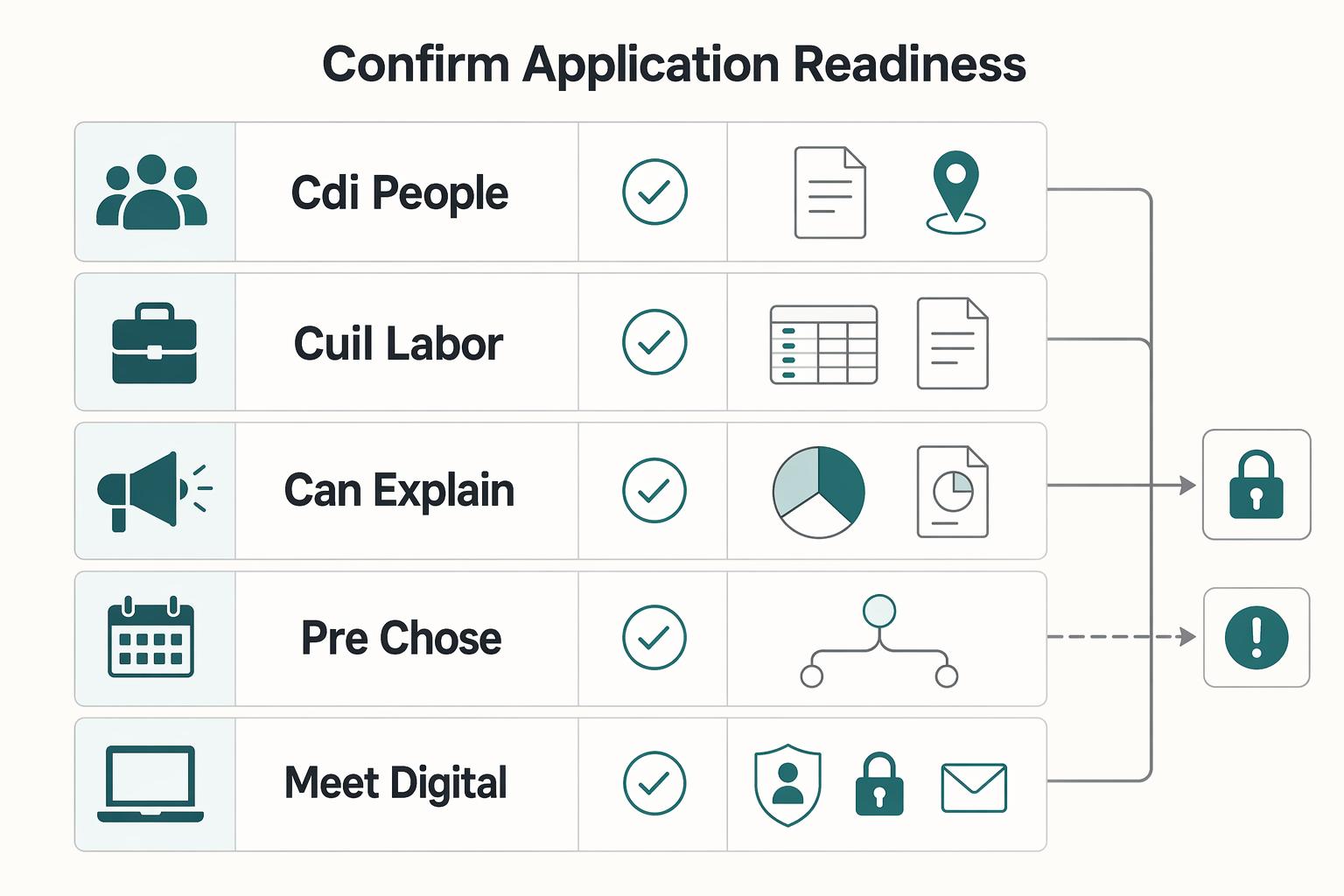
Step 4: Confirm application readiness#
Once your residency posture and tax regime are clear, test whether you are ready to apply through the correct route. For ARCA's digital foreigner flow, the core prerequisites are CUIL or CDI, Clave Fiscal (level 2+), and Domicilio Fiscal Electrónico.
- CDI: for people without CUIT or CUIL who need banking or financial operations, or registrable-asset transactions.
- CUIL: the labor identification code used at the start of employment activity.
If you cannot use the digital path, special-case guidance allows an in-person request. The same guidance states that some foreigners may receive a provisional CUIT with a maximum validity of 2 years and should process an Argentine DNI and report that number during that period. Treat that as case-dependent, not automatic.
Before you apply, run this checklist:
- You can explain your residency posture in one clear paragraph.
- You have planned the tax regime for your activity and know which registration follows CUIT issuance.
- You meet the digital prerequisites, or you already mapped the in-person route.
- You have a basic evidence pack ready, including status documents, address support for your route, travel log, and income or client proof.
- You will escalate to a cross-border advisor if dual-residency risk or a likely regime mismatch appears.
If you are also weighing where to base yourself, you might find this useful: The Best Digital Nomad Cities in Latin America.
Phase 2: CUIT vs. CDI - The Global Professional's Decision Matrix#
Once your tax posture is clear, the next decision is simpler: choose the identifier that matches the activity you are about to carry out. Ongoing economic activity points to CUIT, employment procedures point to CUIL, and narrow one-off banking or registrable-asset actions may fit CDI when you do not have CUIT or CUIL.
Quick definitions (decision-use)#
| ID | Who should use it | Typical use case | Ongoing compliance commitment |
|---|---|---|---|
| CUIT | Autónomos, monotributistas, professionals, merchants, and companies doing economic activity | Recurring invoicing, tax-regime registration, business operations | Typically tied to ongoing tax registration and compliance under the chosen regime |
| CUIL | People in the labor and social-security track | Employment contributions and benefits procedures | Labor and social-security administration, not self-employed tax registration |
| CDI | People without CUIT or CUIL who need a limited identifier | Opening a bank account, financial-system operations, or registrable-asset transactions | Not valid to identify you for tax or social-security obligations |
Step 1: Map your case before filing#
Match the ID to what you will actually do in the next 90 days, not to a vague future plan. If recurring invoices are coming soon, default to CUIT and avoid a CDI detour.
| Your situation | Choose | Why | Next action |
|---|---|---|---|
| You will invoice as an autónomo, monotributista, professional, merchant, or company | CUIT | CUIT is the tax ID used for ongoing economic activity | Start the CUIT route and plan the tax registration required before invoicing |
| You are entering formal employment and need contributions recorded | CUIL | CUIL is the labor and social-security ID | Obtain or verify CUIL through the ANSES or employment path |
| You have no CUIT or CUIL and only need banking, financial, or registrable-asset procedures | CDI | CDI is designed for this limited scope | Use CDI only for that specific transaction scope |
| You reside abroad and need CUIT | CUIT via authorized representative | Residents abroad must request CUIT through a duly authorized person domiciled in Argentina | Prepare the representative authorization route |
Step 2: Guardrails for common edge cases#
Most mistakes here come from choosing for convenience instead of choosing for the real activity.
| Edge case | Guidance | Key note |
|---|---|---|
| Remote freelancer with Argentine clients | Recurring paid activity generally points to CUIT | CDI cannot be used for tax or social-security obligations |
| One-time asset purchase or one banking move with no CUIT or CUIL | CDI can work if the scope truly stays narrow | If activity expands later, conversion to CUIT is done through Actualización y corrección de datos registrales |
| Planned move from non-resident to resident with near-term work | Pressure-test the direct CUIT path now | Do not optimize only for today's transaction |
Talk to a professional before filing if your facts are split across countries, your client base is divided between local and foreign, or your residency posture may change soon.
Step 3: Provisional CUIT path (verify fit first)#
For foreign residents in Argentina without DNI, the special CUIT route uses Presentaciones Digitales under Alta CUIT personas humanas - Situaciones especiales and Form 460 F/PD. It requires valid migration-file proof showing the assigned file number and residency character. If digital filing is not possible because you do not have CUIT and Clave Fiscal, ARCA allows in-person filing with a prior web appointment.
In this pathway, some cases receive a provisional CUIT with a maximum validity of 2 years, or less if tied to an admission term. After obtaining an Argentine DNI, report it within 10 días hábiles administrativos. Verify current eligibility before relying on this route.
Step 4: Default-safe path checklist#
- My next activity is clear: recurring invoicing means CUIT; employment means CUIL; a one-off banking or registrable-asset action may fit CDI if I do not have CUIT or CUIL.
- I am not using CDI for any tax or social-security obligation.
- I have the route documents ready, including migration-file proof for a foreigner-without-DNI CUIT or representative authorization if I am abroad.
- If I already have DNI, I confirmed the resident CUIT route requirements, including Clave Fiscal nivel 3 o superior.
- If my case is mixed or uncertain, I will get cross-border tax advice before submitting.
If you want a deeper dive, read Digital Nomad Taxes in 2026 With a Defensible Filing Plan. If your CUIT vs. CDI choice still feels borderline, map your travel pattern and residency exposure first with the Tax Residency Tracker.
Phase 3: Choose the Correct ARCA Path for Your Status#
Execution is usually straightforward if you choose the correct ARCA path for your status and fix inconsistencies before resubmitting. An avoidable mistake is using standard CUIT Digital when your case belongs in the special foreigner route.
Lock the terms and your route before you start#
| Applicant status | Route | Channel or note |
|---|---|---|
| Have Argentine DNI | Resident route | Use the CUIT Digital platform, app, or Sistema Registral |
| Foreign resident in Argentina without DNI | Special foreigner route | Use Presentaciones Digitales with Alta CUIT personas humanas - Situaciones especiales, not standard CUIT Digital |
| Reside abroad | Representative route | Request CUIT through a representative or authorized third party domiciled in Argentina |
- Clave Fiscal: ARCA or AFIP login credential for tax services.
- Inscripción Digital: digital CUIT start channel in ARCA platforms for eligible applicants.
- Turno (web): required appointment for in-person attention.
- Formulario 460 F/PD: form required in the special CUIT process, with sections 1 to 5 completed.
- Residencia precaria: interim migration status while residence is processed; use the validity shown on your current certificate.
Choose the path by status first:
- If you have Argentine DNI, use resident channels such as the CUIT Digital platform, app, or Sistema Registral.
- If you are a foreign resident in Argentina without DNI, use
Presentaciones DigitaleswithAlta CUIT personas humanas - Situaciones especiales, not standard CUIT Digital. - If you reside abroad, request CUIT through a representative or authorized third party domiciled in Argentina.
Step 1: Self-audit your documents before filing#
When validation fails, the system usually flags inconsistencies and requires a corrected new submission. A document check before you file helps reduce avoidable rework.
| Document | Required in this route | Validation issue to check | How to pre-validate |
|---|---|---|---|
| Passport or home-country ID card | Identity document required in the special foreigner route | Inconsistencies across files or unreadable images | Confirm the same name and number appear everywhere, and upload clear full-page scans |
| Argentine DNI (when applicable) | Identity document for resident-with-DNI channels | Using a DNI channel that does not match your status | Log in first and confirm your DNI path is available before completing forms |
| Migration expediente proof showing residence character | Required proof for the no-DNI special route | Missing residence-character details, unclear expediente number, or non-current proof | Check that the file is current and both fields are clearly visible before upload |
| Formulario 460 F/PD (sections 1 to 5) | Required form in the special process | Incomplete sections or inconsistencies with your identity document | Complete it line by line and cross-check it against your identity document |
| Recent face photo | Required for the no-DNI special route | Filters, accessories or an unclear image | Use a recent, high-resolution, front-facing photo on a light background without glasses or accessories covering the face or ears |
| Fiscal-address evidence | Prepare the applicable evidence specified in the special-route instructions | Unsupported or inconsistent address | Use an accepted address document and check the dates and names against the instructions |
If you are filing with residencia precaria, verify that it is still valid on the filing date.
Step 2: Pick the filing path and fallback fast#
Pick the right channel first. If that channel blocks you, switch quickly instead of forcing repeated submissions through the wrong one.
- Use standard digital channels only if you have DNI and meet the current live prerequisites.
Verify the current requirement in the portal before you proceed.
- Use special digital filing if you are a foreign resident without DNI.
File through Presentaciones Digitales → Alta CUIT personas humanas - Situaciones especiales. Prepare Form 460 F/PD, identity and migration-file documents, a recent face photo, and the applicable fiscal-address evidence. A provisional CUIT lasts at most 2 years, or less if limited by the admission period.
- If digital cannot be completed, switch to in-person through a web turno.
Bring originals and copies for document verification.
- Treat credential wording as a live verification item.
Official materials conflict on whether the digital block condition is missing CUIT + Clave Fiscal or CUIL + Clave Fiscal. Do not assume. Confirm the current rule before filing.
Step 3: Prevention checklist by stage#
A clean first submission is much easier than fixing avoidable errors after the fact.
- Before submission:
Align names and numbers across all documents and 460 F/PD. Replace expired or incomplete migration proof. If the channel is wrong, restart in the correct one.
- During submission:
If inconsistencies appear, correct them and submit a new request. Do not keep retrying unchanged files. If special-route access fails, verify the current credential rule, then move to the turno fallback.
- After submission:
If you receive a provisional CUIT, calendar the DNI follow-up immediately. After getting DNI, process the replacement or update within 10 business days. Monitor your Domicilio Fiscal Electrónico. If ARCA flags inconsistencies, resolve the requested correction quickly to reduce CUIT-limitation risk.
Step 4: Decide if a contador or gestor is worth it#
Professional help is often useful when your case includes no-DNI special filing, abroad-representative routing, repeated validation failures, or low confidence with official Spanish.
Delegate document review, route selection, and appointment handling if needed, but keep the final review of your identity data. Before hiring, confirm they:
- Can explain the difference between standard CUIT Digital and
Alta CUIT personas humanas - Situaciones especiales. - Specify exactly what they handle and what still requires your personal appearance.
- Provide a written document checklist and flag live-verification items instead of assuming the rules never change.
After approval: tax registration and provisional-CUIT follow-up#
A CUIT number does not complete your tax registration. For independent work, ARCA lists the next steps: declare the activity and applicable business addresses, then register for the taxes or regime that apply. Save the registration confirmations with your identity and application records.
If your CUIT is provisional, keep its expiry date with your migration documents. After receiving your Argentine DNI, apply to replace the provisional CUIT within 10 administrative business days. ARCA also requires association of the identifiers and unification of historical registration data through Actualización y corrección de datos registrales, using Form 581/PD and the current DNI.
From Bureaucracy to Business-Ready: Mastering Your Argentine Operations#
The lowest-risk way to handle this is to repeat the same logic whenever your facts change: assess first, choose the right ID and regime second, then execute and maintain.
- Assess your facts before you act.
Recheck the two core residency signals: how much time you are spending in Argentina, and whether your personal and economic ties now point to a center of vital interests there. A CUIT alone does not automatically make you a tax resident, but CUIT plus local ties can become part of that analysis.
- Confirm your CUIT or CDI setup still matches your real activity.
If you are carrying on ongoing economic activity, your setup should reflect that. If your need is truly one-off, confirm whether CDI may be the better fit. This is the decision that prevents avoidable friction, because a tax ID is not just paperwork. It signals intent and creates a durable fiscal record tied to your identity documents.
- Treat execution as ongoing maintenance, not a one-time task.
Recheck that your registration and tax setup still match how you actually work, and update them when your facts change. The goal is simple: your registration should always match your real operating model.
If your residency status, work pattern, or exit plan changes, run the check again. If your current CUIT or CDI setup no longer fits, escalate to a contador. If you stop operating in Argentina, get local professional guidance on how to update or close your registration instead of leaving it open.
Before you lock in your long-term Argentina setup, pressure-test your cross-border payment and compliance flow with a quick conversation with Gruv.
Frequently Asked Questions
Do you need CUIT or CUIL?
Decide based on the activity. If you will invoice and operate as an independent professional, use CUIT. If you are entering employment or an ANSES-linked labor process, use CUIL. If you already have CUIT for monotributo or autónomo work, official guidance says you do not need to process CUIL for that purpose.
Can you get a CUIT without full residency?
ARCA has a specific route for some cases. If you do not have an Argentine DNI and you are in the residency process, ARCA routes you to Presentaciones Digitales instead of the standard online inscription. For that foreign or special path, ARCA states you need CUIL or CDI, Clave Fiscal nivel 2 o superior, and Domicilio Fiscal Electrónico. For residencia precaria, check the validity on your current certificate.
When should you choose CDI instead?
Choose CDI when you do not have CUIT or CUIL and need to open a bank account, operate in the financial system, or acquire registrable assets. Do not use CDI for tax or social-security compliance, because ARCA explicitly states it is not valid for fiscal or previsional obligations.
Do you need a contador or gestor to get cuit in argentina?
Consider one if your case includes foreign-document handling, special routing, or inconsistent data across portal and identity records.
How long does it take?
Treat processing time as case-specific. Confirm the current window in your exact channel before planning around it, especially if your file goes through Presentaciones Digitales.
What if you leave Argentina and stop operating?
File your baja formally. ARCA states the request must be submitted by the último día hábil del mes siguiente al cese, and the online flow includes F 420/T Baja de Impuestos/Regímenes. If you stop activity, do not leave the registration open past that step.
Try a related tool
Researched and edited by the Gruv editorial team. Gruv builds cross-border billing, payouts, and finance-operations software for global businesses.
Sources
- afip.gob.ar/presentaciones-digitales/documentos/110-Alta...trusted
- afip.gob.ar/inscripcion/cuit-cdi/extranjeros-residentes-...trusted
- afip.gov.ar/inscripcion/cuit-cdi/extranjeros-residentes-...trusted
- argentina.gob.ar/servicio/obtener-la-clave-de-identificacion-cditrusted
- argentina.gob.ar/servicio/obtener-cuit-por-internettrusted
- boletinoficial.gob.ar/detalleAviso/primera/336722/20251224trusted
- servicios.infoleg.gob.ar/infolegInternet/anexos/305000-309999/309908/...trusted
- serviciosweb.afip.gob.ar/publico/cuitOnline/Extranjero.aspxtrusted
Educational content only. Not legal, tax, or financial advice.
Related Posts

Digital Nomad Taxes in 2026 With a Defensible Filing Plan
With digital nomad taxes, the first move is not optimization. It is figuring out where you may be taxable, where filings may be required, and what proof supports that position.

Hungary White Card Guide for Digital Nomads: Eligibility, Documents, Fees, and Timeline
Treat this like an audit, not a hope-and-pray submission. Your job is to decide whether your real-world setup fits the permit logic, pick the right filing route, then build one evidence pack that stays coherent even if someone reviews it line by line.

The Best Digital Nomad Cities in Latin America in 2026
You should leave this section with one primary city and one backup city, not a vague shortlist. If you want the clearest starting point, make **Mexico City** your primary base and choose one backup city, for example **Medellin**, then use a short trial stay to decide whether that order holds.