
Quick Answer
Yes. A US freelancer can get a Portuguese mortgage when the file is built for creditworthiness review, not for headline income. Submit a Financial Stability Package that ties US tax returns, P&L statements, annotated bank statements, invoice trails, and any requested CPA letter into one reconciled record. Keep bank or broker feedback in writing, then clear each phase in order: pre-approval view, underwriting plus valuation, ESIS review, and final signing conditions.
Why Your Six-Figure Freelance Income Worries Portuguese Banks (And How to Fix It)#
Your headline income is not the main issue. The real question is whether an underwriter can read your file as a clear ability-to-repay case under Portugal's creditworthiness assessment.
Portuguese lenders assess repayment capacity before signing the mortgage agreement. In that review, they look at your professional situation, regular income and expenses, and credit-liability data, with income continuity checked over at least the prior three months. They should not qualify you based on assumed future income growth.
For a freelance file, underwriting friction usually comes from two places, and both show up early:
- Income stability risk: strong annual income, but uneven monthly inflows.
- Cross-system translation risk: non-resident documents can vary by country and lender, and some files may require translation/authentication.
| Underwriter question | Salaried file is usually read as | Freelancer file is usually read as | What to do before first submission |
|---|---|---|---|
| Is income regular right now? | 3 recent pay slips or other proof of regular income | Business financial statements, proof of regular income, recent bank activity | Make recurring personal inflows easy to spot and consistently labeled |
| Can income be verified end to end? | Pay slips and regular-income proof | Company balance sheet + income statement + bank statements (often last 6 months) | Reconcile figures across business financials and bank statements |
| Is repayment capacity likely to hold? | Stable regular income and clear expense profile | Multiple clients, variable payment timing, project cycles | Add a short income continuity narrative explaining recurring work and payment timing |
| Are non-resident checks complete? | Standard resident checklist | Country- and lender-dependent items, for example, a credit liabilities report; possible translation/authentication in some cases | Request the lender-specific checklist up front and build to that list |
Start by standardizing the basics. Keep your documents consistent across business financial statements and bank statements. Make large deposits traceable to the underlying client payments and settlement dates. Remove avoidable ambiguity, especially mixed personal and business flows or unexplained transfers.
For the first submission, send one clean package. Include your core income evidence and continuity narrative, and map it to the lender's exact checklist, including any non-resident credit liabilities report or translation requirement they request.
The goal is not to prove you had one great year. It is to make your next monthly payment look predictable.
If you want a deeper dive, read Portugal Digital Nomad (D8) Visa: A Complete Guide.
The 24-Month Lookback: Your Strategy for a 'Bank-Ready' Financial Identity#
Treat the lookback period as starting now. Over the next 12-24 months, make your finances read as stable, clean, and easy to verify. Underwriting leans on documented history, not projected upside.
Do not wait for a lender checklist. Build your file now so it already aligns across personal statements, business records, US tax returns, and the materials your broker can use to translate your profile for a Portuguese bank.
Step 1. Set a repeatable owner's draw policy#
Set one written transfer policy from business to personal, then follow it every month. Keep the amount, timing, and transfer label as consistent as possible so your recurring personal income is easy to identify.
If client payments are uneven, keep that volatility in the business account whenever possible instead of moving it into your personal cash flow. There is no fixed required draw amount here; the signal is a repeatable pattern over time.
Step 2. Keep business and personal books clean and separate#
Use separate business and personal accounts in practice, not just on paper. Route client revenue to business accounts and personal spending to personal accounts so your records are easier to review.
Keep bookkeeping categories consistent month to month, and document any meaningful recoding changes. Stable categorization helps your P&L, bank activity, and tax reporting tell the same story.
Set a monthly reconciliation checkpoint. Clear uncategorized items, resolve mismatches, and log unusual entries while details are fresh so later underwriting questions are easier to answer.
Step 3. Make every material inflow traceable end to end#
Use one rule: every material inflow should map to an invoice, payment receipt, and bank line item, with supporting contract or scope documents where applicable. If that chain is incomplete, expect follow-up.
Keep a simple evidence folder by client or month. That way, your bank analysis, invoicing history, and supporting narrative are ready when needed.
| Transaction pattern | Likely underwriting read | What to keep on file |
|---|---|---|
| Client payment with full document chain | Easier to validate | Invoice, payment proof, matching bank line |
| Transfer between your own accounts with clear memo | Usually explainable with records | Both statements and consistent transfer labels |
| Deposit/transfer without clear supporting records | Likely follow-up questions | Build the missing chain now |
Step 4. Build a Financial Stability Package, not a reactive document dump#
A strong file is easier to assess when it is organized before the bank asks for items one by one. For freelance cases, a specialist broker can help present your records in a format Portuguese underwriting teams can review.
Prepare a concise package that stays current: US tax returns, P&L statements, bank statement analysis, invoicing history, and any CPA letter your broker recommends. The goal is to reduce translation friction between your US records and the Portuguese review process.
If you follow these four steps across the 12-24 month window, your file becomes easier to trust. Consistent owner draws, clean account separation, traceable inflows, and an organized stability package reduce the need for the bank to guess.
You might also find this useful: A Guide to Portugal's D7 Visa for Passive Income Earners.
The Financial Stability Package: How to Present Your Business as a Rock-Solid Investment#
Keep the objective simple: make your file easy for a Portuguese underwriter to validate with fewer follow-up requests. Creditworthiness assessment is mandatory, and the review focuses on your professional situation and regular income. Your package should make that evidence obvious and internally consistent.
Before you submit anything#
Do not send a raw folder and expect the bank to piece it together. Self-employed files can require extra documents, and the core set commonly includes bank statements, tax returns, and profit-and-loss records.
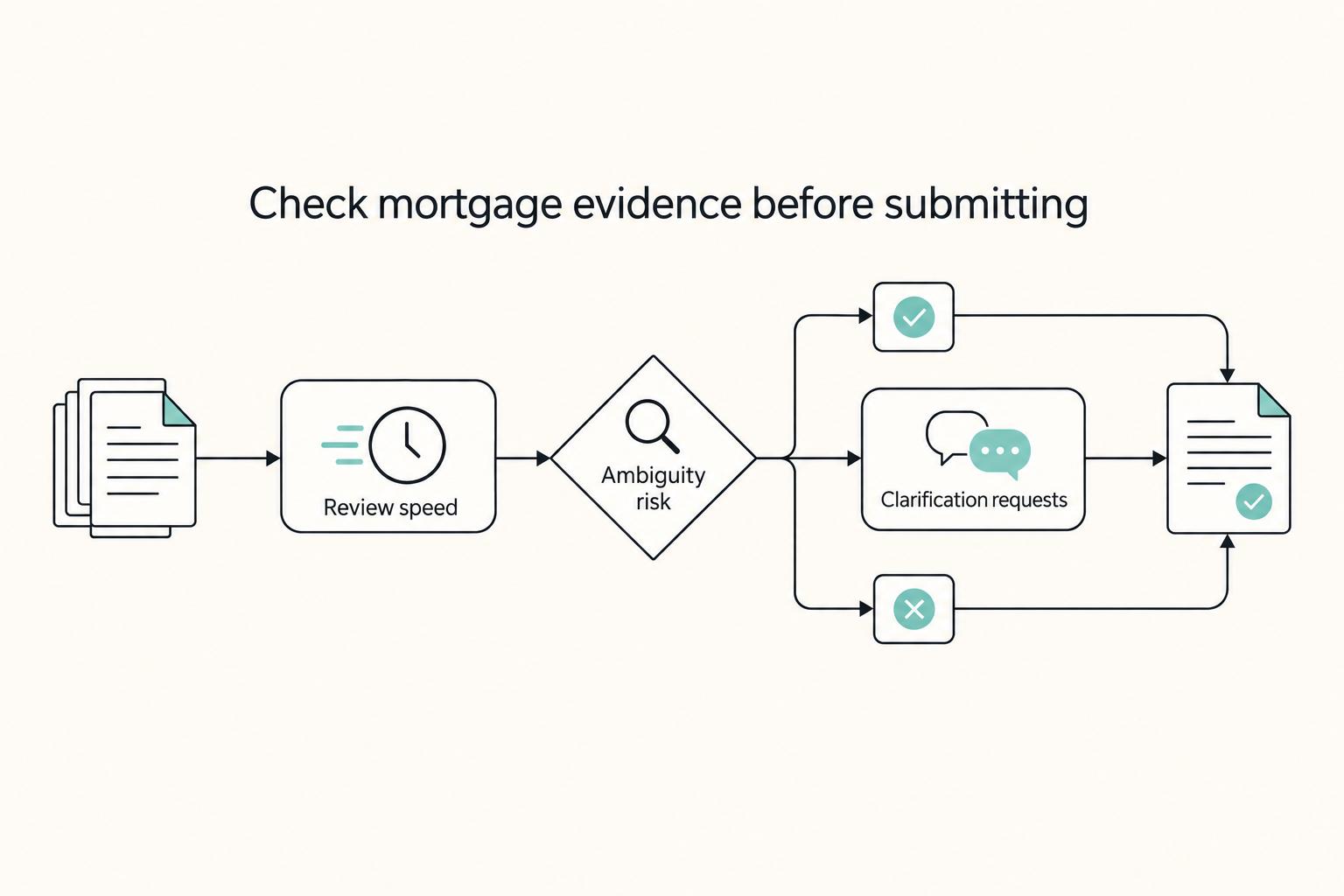
| Review point | Raw document dump | Curated stability package |
|---|---|---|
| Review speed | Can be slower because the reviewer must infer your income story | Can be faster because key numbers and support are mapped upfront |
| Ambiguity risk | Usually higher around transfers, owner draws, and mixed flows | Usually lower when each material item is labeled and reconciled |
| Clarification requests | More likely when documents conflict or lack context | Less likely, though lender-specific follow-up can still happen |
The practical standard is simple: each document should support the same income story without forcing the reviewer to reconstruct it.
Pillar 1. Income narrative (one page, testable)#
Start with a factual summary the underwriter can verify line by line.
| Item | Detail |
|---|---|
| Business model | legal setup and services |
| Billing pattern | project, retainer, or mixed |
| Client concentration risk | state directly if one client is material |
| Revenue continuity pattern | recurring, seasonal, or lumpy |
| Currency method | currency and conversion method used across the full package |
| Lookback window | lender-specific lookback window, if requested |
Ready/not ready gate:
Ready:narrative totals match your returns, P&L, and statement-level flows.Not ready:narrative claims stability that your documents do not show, or uses inconsistent FX treatment across files.
Pillar 2. CPA letter (if requested: verification, not prediction)#
A CPA third-party verification letter is a common request in self-employed mortgage files. If your lender requests one, use it to confirm filed-record facts, not to forecast future income.
| Item | Detail |
|---|---|
| Names | taxpayer name and business name |
| CPA details | CPA firm details, signature, and date |
| Tax years | tax years covered, typically aligned to recent return history |
| Return verification | confirmation the referenced returns were prepared or reviewed |
| Income figures | income figures that match filed returns |
| Business-activity note | brief business-activity note only if supportable from records |
| Accounting basis | accounting basis or material qualifications, if relevant |
| Lookback note | lender-specific lookback note, if requested |
Ready/not ready gate:
Ready:CPA figures reconcile to tax returns and your package summary.Not ready:CPA figures differ from returns, or language overreaches what records support.
Pillar 3. Annotated statements (trace every material inflow)#
This is where many self-employed files either hold together or fall apart. Annotate statements so a reviewer can move from deposit to source evidence without guessing.
| Item | Detail |
|---|---|
| Marked items | mark recurring owner draws, large client receipts, and inter-account transfers |
| Source references | attach invoice, contract, and payment references for material inflows |
| Label consistency | keep annotation labels consistent month to month |
| Reconciliation bridge | maintain one reconciliation bridge when annual returns, monthly statements, and invoice currency differ |
| Statement range | lender-specific statement range, if requested |
Ready/not ready gate:
Ready:each material deposit can be traced end to end, and recent statements reflect the regular-income pattern you claim.Not ready:deposits cannot be matched, annotations rely on missing evidence, or business and personal co-mingling remains unresolved.
Your tax returns, P&L, statements, and invoice trail must tell one coherent story before submission.
For a step-by-step walkthrough, see Using a Stability Report to apply for a UK mortgage as a freelancer with international clients.
Before you submit your dossier, standardize your client billing trail with this free invoice generator.
Hiring Your Strategic Partner: The Specialist Mortgage Broker#
Treat broker selection as risk control, not convenience. Portuguese lenders may view variable self-employed income as higher risk, so your broker should help reduce ambiguity.
Once your package is coherent, a specialist broker can help translate it for underwriting. Your CPA letter, bank statement analysis, and invoicing history can verify income, but they still need to be presented as a stable, testable story in the local review context.
Step 1. Vet for relevant case experience#
Interview more than one broker, and keep the questions specific to self-employed foreign files. Use this checklist:
- Ask how often they handle US self-employed applicants versus mainly salaried files.
- Ask which documents they use to make freelance income understandable to lenders.
- Ask for one recent case where income required clarification, and how they handled lender friction.
- Ask who drafts clarification responses on deposits, invoices, or tax figures, and who verifies consistency with the submitted file.
- Ask how they handle translation requirements, including what must be translated, when, and by whom.
Aim to leave the call with a clear method, not just general confidence language.
Step 2. Confirm bank-fit strategy and realism#
You need a broker who explains lender fit, not one who promises broad access or easy approvals. A strong process reviews your 12-24 months of evidence, selects lenders based on file fit, then submits a package that minimizes underwriter guesswork.
| Decision area | Pass signal | Fail signal |
|---|---|---|
| Similar case history | Gives concrete examples of self-employed foreign files and how evidence was framed | Stays vague or focuses mostly on salaried local borrowers |
| Bank targeting | Explains why specific lenders fit your file | Suggests sending to many lenders without rationale |
| Fee transparency | States what you pay, what is included, and what triggers payment | Keeps fee scope or triggers unclear |
| Expectations | Sets realistic expectations and flags likely friction points | Implies guaranteed or near-certain approval |
| Communication quality | Gives direct answers and clear next steps | Contradicts prior answers or leaves ownership unclear |
Step 3. Set scope boundaries before submission#
Before any documents go out, define scope in plain English. Confirm these boundaries up front:
- Bank targeting: who decides where your file is submitted, and on what basis.
- Translation support: whether they coordinate translations, review translated documents, or only provide requirements.
- Underwriting back-and-forth: who drafts clarification responses and who validates them against your package.
- Escalation path: what happens if a lender challenges a figure or document.
If ownership is unclear here, clarification rounds can become slower and less consistent.
Step 4. Put engagement terms in writing#
Use a short written checklist so responsibilities are explicit:
- Deliverables the broker will produce or coordinate.
- Documents you must provide directly.
- Update cadence during active underwriting.
- Exact fee triggers.
- What changes if you pause, switch lenders, or withdraw.
- What happens if approval is not achieved.
- Who owns clarification responses after submission.
The goal is a controlled process from first review through final clarifications, with one consistent income story throughout.
Related: Getting a Mortgage as a Freelancer Without Guesswork.
Project Managing the Application: A Step-by-Step Timeline#
Run this as a controlled handoff process, not a document scramble. For a US freelancer, waiting for a bank checklist is a common failure mode because variable income can create translation friction.
| Phase | Goal | Owner | Common delay risk | Mitigation action |
|---|---|---|---|---|
| 1. Pre-approval view | Get an initial lending position based on your full file | You + broker; bank reviews | Income story appears inconsistent | Submit a complete Financial Stability Package, then resolve gaps in writing |
| 2. Offer and contract prep | Keep property negotiations aligned with finance reality | You + broker + advisors | Offer terms move ahead of finance assumptions | Reconfirm budget and conditions before you commit to terms |
| 3. Underwriting and property valuation | Clear detailed bank checks and valuation review | Bank leads; broker coordinates; you respond | Valuation vs. purchase-price tension or deposit questions | Reply quickly with matched invoices, statements, and CPA support |
| 4. Final closing and signing | Close only after funding and signing conditions are confirmed | You + bank + advisors | Last-minute missing confirmations | Get written sign-off on funds, documents, and signing sequence before appointment |
Each phase builds on the last. A disciplined handoff usually means fewer surprises later in the process.
Step 1 Prepare for pre-approval#
Start by giving your broker a decision-ready package: US tax returns, P&L statements, CPA letter, bank-statement analysis, and invoicing history. Your broker can turn that into a lender-facing file, and the bank may give either a working pre-approval view or a list of unresolved points.
Checklist:
- Documents to prepare: full Financial Stability Package tailored to lender requests.
- Confirmations to get: who drafts clarification notes, who validates consistency, and what the bank still needs to mark the file complete.
- Dependency before moving forward: written borrowing range guidance or a written issues list.
Step 2 Search and offer against a real budget#
Treat pre-approval as a working boundary, not a guarantee. Before you lock terms, keep your broker and advisors aligned on finance conditions and offer language so the deal structure does not outrun your file.
Checklist:
- Documents to prepare: current income-proof set already submitted in phase 1.
- Confirmations to get: lender assumptions still in force, and advisor review of finance-related offer terms.
- Dependency before moving forward: no unresolved finance-condition ambiguity in the proposed terms.
Step 3 Respond quickly during underwriting and valuation#
This phase moves from broad comfort to detailed verification. The bank may test deposits, tax figures, or income consistency. It will also assess property valuation against purchase price as a separate checkpoint.
Checklist:
- Documents to prepare: support for large deposits, invoice-to-inflow matches, CPA letter, and P&L backup.
- Confirmations to get: each clarification response is consistent with what was previously submitted.
- Dependency before moving forward: open questions reduced to explicit, trackable items.
Step 4 Close only after the handoffs are confirmed#
Closing can include a final signing step, but the exact sequence and conditions should be confirmed with your lender and advisors. Move to signing only when funding, documents, and responsibilities are explicitly confirmed.
Checklist:
- Documents to prepare: final signing package requested by your lender/advisors.
- Confirmations to get: what must be signed, what triggers fund release, and who owns last-minute checks.
- Dependency before moving forward: written confirmation that pre-signing conditions are satisfied.
This pairs well with our guide on The Best Way for a UK Freelancer to Get Paid by an Australian Client. It can help if you want cleaner payment trails and cross-border recordkeeping habits before underwriting starts.
Conclusion: From Freelancer to Property Owner - The Power of a Proactive Strategy#
Treat this as a file-control process, not a guessing game. Your job is to present your freelance profile as regular, documentable personal income that a lender can assess for creditworthiness.
Step 1. Position your income as stable personal cashflow. Use this framing with lenders or an authorised credit intermediary: my income may come from freelance clients or a business structure, but it lands as a consistent personal income trail that reconciles with tax returns and bank statements. This aligns with how creditworthiness is assessed. Regular received income generally carries more weight than projected growth. Your checkpoint is simple: your account inflows, tax records, and transfers should reconcile without unexplained gaps.
Step 2. Remove avoidable doubt from the file. Because lenders require borrower-provided information for creditworthiness assessment, clean and complete evidence matters more than one headline income number. Submit one complete package instead of fragmented updates where possible. Incomplete or inconsistent statements, returns, expense evidence, and explanations can slow assessment.
Step 3. Coordinate the people and documents that control timing. If you use a broker, confirm the intermediary is listed by Banco de Portugal. If you use a lawyer or other adviser, align them early with your financing timeline because the purchase process runs through offer, deed, taxes, and insurance. For offer readiness, review the ESIS at simulation stage. Then review the new ESIS again if the loan is approved, because final terms and LTV depend on the lender's assessment and the property valuation basis.
Before you proceed, confirm these three points:
- Dossier completeness: income, expenses, identification, statements, returns, and explanations are reconciled and current.
- Lender fit: the bank or intermediary has confirmed how your income is assessed and what is still outstanding.
- Offer readiness: you have reviewed ESIS details and understand your cash needed if valuation is below purchase price.
Strong preparation reduces friction and misunderstandings. It does not guarantee approval, but it gives the lender a file they can assess efficiently.
We covered this in detail in Portugal D7 vs. D8 Visa: Which is Right for You?.
If you want a cleaner long-term system for cross-border client payments and traceable records, explore Gruv for freelancers.
Frequently Asked Questions
How do you prove your freelance income for a Portuguese mortgage?
Requirements can vary by file, so have the lender or broker confirm exactly what is mandatory for your application. Submit one reconciled package and ask for a written list of any missing items or issues before you move forward with property offers.
Is it better to use a specialist broker or go direct to a bank?
Use the route that fits your case and keeps communication clear. A broker can assist with obtaining a mortgage, and the key checkpoint either way is to reduce misunderstandings and keep bank questions trackable. | Route | When it fits | Main risk | How you reduce delays | | --- | --- | --- | --- | | Specialist broker | You want support coordinating the mortgage process | Misunderstandings about what was submitted or requested | Ask what will be submitted and keep a written bank-feedback log | | Direct-to-bank | You prefer to work with one lender directly | Incomplete or changing requests | Ask for one checklist and written confirmation of outstanding items after each submission | Compare both routes using the same checkpoint: what the bank says you still need, in writing.
What is the minimum income you need?
The guide frames this under Bank of Portugal Guidelines and Bank Criteria, so suitability is assessed at bank and file level rather than by one fixed number. Ask the lender how affordability is being assessed for your case, and get that basis in writing before discussing purchase price.
Can you apply if you earn through a US LLC?
This guide does not confirm a fixed rule for applying via an LLC versus in your personal name. Confirm the structure with your lender or broker before submission, and ask for the required documentation and any open issues in writing.
What down payment should you expect, and is full financing possible?
Do not anchor on a fixed percentage until the lender confirms your profile, and ask for the lender's current range. Treat 100% financing as an open question, and ask whether the loan is based on purchase price, valuation, or the lower of the two. Property valuation vs. purchase price can change the cash you need at closing. Your next action is to get those points in writing before signing anything binding.
Try a related tool
Researched and edited by the Gruv editorial team. Gruv builds cross-border billing, payouts, and finance-operations software for global businesses.
Sources
- cambridgema.gov/~/media/Files/budgetdepartment/FinancePDFs/f...trusted
- courts.wa.gov/programs_orgs/pos_interpret/view/ceu/dsp_ceu...trusted
- dni.gov/index.php/ncsc-how-we-work/ncsc-know-the-ris...trusted
- eur-lex.europa.eu/legal-content/EN/TXT/HTMLtrusted
- irs.gov/individuals/income-verification-express-serv...trusted
- oecd.org/content/dam/oecd/en/topics/policy-issues/con...trusted
- sos.wyo.gov/Business/docs/25Q1Domestic.pdftrusted
- uau.edu/wp-content/uploads/2023/04/20222023_Bulletin...trusted
Educational content only. Not legal, tax, or financial advice.
Related Posts

Portugal Digital Nomad Visa Decisions That Prevent D8 Delays
Start with verification, not paperwork. In this research set, some material is useful only as EU VAT context, not as D8 instruction, and mixing those categories is one of the fastest ways to build the wrong plan. We use the same separation rule in [Global Digital Nomad Visa Index](/blog/global-digital-nomad-visa-index) comparisons.

Getting a Mortgage as a Freelancer Without Guesswork
Start by reconciling your income file before you compare rates. For a **mortgage for freelancers**, the first gate is simple: can an underwriter read your documents cold and see one consistent income story?

A Guide to Portugal's D7 Visa for Passive Income Earners
**Run your D7 process like an operating plan with decision gates, not a one-time application.**