
Quick Answer
Define the exact problem before you search: that is the fastest way to answer how to find a writers group and join one that improves your work. Start by choosing one main function, then evaluate groups for peer fit, clear rules, and usable feedback from a trial session. If existing options miss your needs, create a small group with a written charter and trial period. Keep going only when sessions produce concrete revisions, decisions, or next actions.
If you work as a business of one, isolation can quietly erode momentum and quality. The usual advice is to "find a writers' group," but that frame is weak. It casts you as a passive applicant hoping to be let into a social circle.
A better approach is more practical. First, define the job you need the group to do. Then either vet groups against that job or build one around it. The right peer group is not just moral support. It is a working asset, a confidential brain trust that deserves the same scrutiny you would give any other investment of time and attention. This guide shows you how to stop browsing for community and start building a real advantage.
Stage 1: The Strategic Audit - What 'Job' Are You Hiring This Group For?#
Start by naming the job. If you cannot identify the bottleneck, almost any group can sound helpful, and some will not address the real issue. That is the real first step if you want a group that actually helps.
Audit your bottleneck with evidence#
Begin with what your current work habits already show. Open your submission system if you have one. If you do not, that gap tells you something too. Writers who submit regularly usually have a repeatable way to track what they sent out and where it went. If your record is still scattered across post-it notes, old drafts, or inbox searches, a better group may not be your first fix. You may need basic tracking and deadline discipline first.
| Problem | Typical signs | Key nuance |
|---|---|---|
| Draft quality problem | You finish pieces but delay sending them because you do not trust the structure, argument, pacing, or line-level execution | The same weaknesses keep showing up in feedback, and you have work sitting in a folder because you cannot tell what is ready |
| Consistency problem | You keep missing self-set deadlines, or you cannot show a clean status-and-deadline view of draft and final deliverables | You start strong, then drift; a submission target or production goal exists, but nothing is forcing follow-through |
| Business growth problem | The writing gets done, but decisions about pricing, positioning, client mix, submissions, or where to focus next feel improvised | You may be getting more selective, which can lower volume, so lower output is not always an accountability issue |
Use this self-audit to sort the problem:
- Draft quality problem: You finish pieces, but delay sending them because you do not trust the structure, argument, pacing, or line-level execution. The same weaknesses keep showing up in feedback. You have work sitting in a folder because you cannot tell what is ready.
- Consistency problem: You keep missing self-set deadlines, or you cannot show a clean status-and-deadline view of draft and final deliverables. You start strong, then drift. A submission target or production goal exists, but nothing is forcing follow-through.
- Business growth problem: The writing gets done, but decisions about pricing, positioning, client mix, submissions, or where to focus next feel improvised. You may also be getting more selective, which can lower volume. That is not automatically bad, but it does mean lower output is not always an accountability issue.
A useful check is whether you have a document you can inspect right now: a submission tracker, a simple deadline sheet, or an annual review of where your work went. Some writers even review their year visually. You do not need charts for their own sake, but you do need a record that makes patterns visible. If you once set a "100 rejections over the course of the year" type goal, remember what that number was for. It was meant to push more submissions, not turn the count into the goal itself.
Match the problem to one primary group job#
Once you know the bottleneck, match it to one group function. Treat the table below as a practical decision aid, not an industry standard or a validated matching rule. The "format to ask for" column is a starting point you can test when vetting a group.
| Primary job | Could fit if | Format to ask for | Good output signals | Mismatch warning signs |
|---|---|---|---|---|
| Critique & Polish | Your main issue is draft quality | Work shared in advance, with specific questions and written comments where possible | You leave with a clear revision list, repeated weak spots are named, and the next draft is easier to attack | Feedback is mostly praise, discussion stays vague, or the meeting turns into general chat |
| Accountability & Output | Your main issue is consistency and finishing | Regular check-ins tied to stated deliverables and deadline review | Pages get written, submissions go out, and your tracker stays current | Meetings drift into long craft debates, goals stay fuzzy, and missed deadlines pass without follow-up |
| Mastermind & Strategy | Your main issue is business direction or market choices | Agenda-based discussion focused on offers, clients, positioning, and next moves | You leave with one decision, one test, or one outreach action | The group slips into line edits, emotional venting, or broad motivation with no concrete next step |
The boundary still matters. A critique group may not fix chronic procrastination. An accountability group may not replace deep editorial feedback. A strategy group may not be the place for pages that still need sentence-level work. Use the wrong container and you can stay busy without making progress.
Choose one primary job now#
Make one call: quality, consistency, or business growth. Only name a secondary job if it clearly follows the first. For example, if drafts are piling up unfinished, solve consistency before you ask for high-level strategy. If your submission count is down because you have become more selective, do not mistake selectivity for laziness and join an output group just to chase volume.
Your checkpoint for this stage is simple. You should be able to write one sentence that says, "I need a group primarily for ___ because ___," and back it up with evidence from your tracker, deadlines, or recent decisions. That sentence becomes your filter in the next stage. If you want more ideas on finding the right kind of community, see The Best Digital Nomad Communities to Join.
Stage 2: The Due Diligence Process - How to Vet Potential Assets#
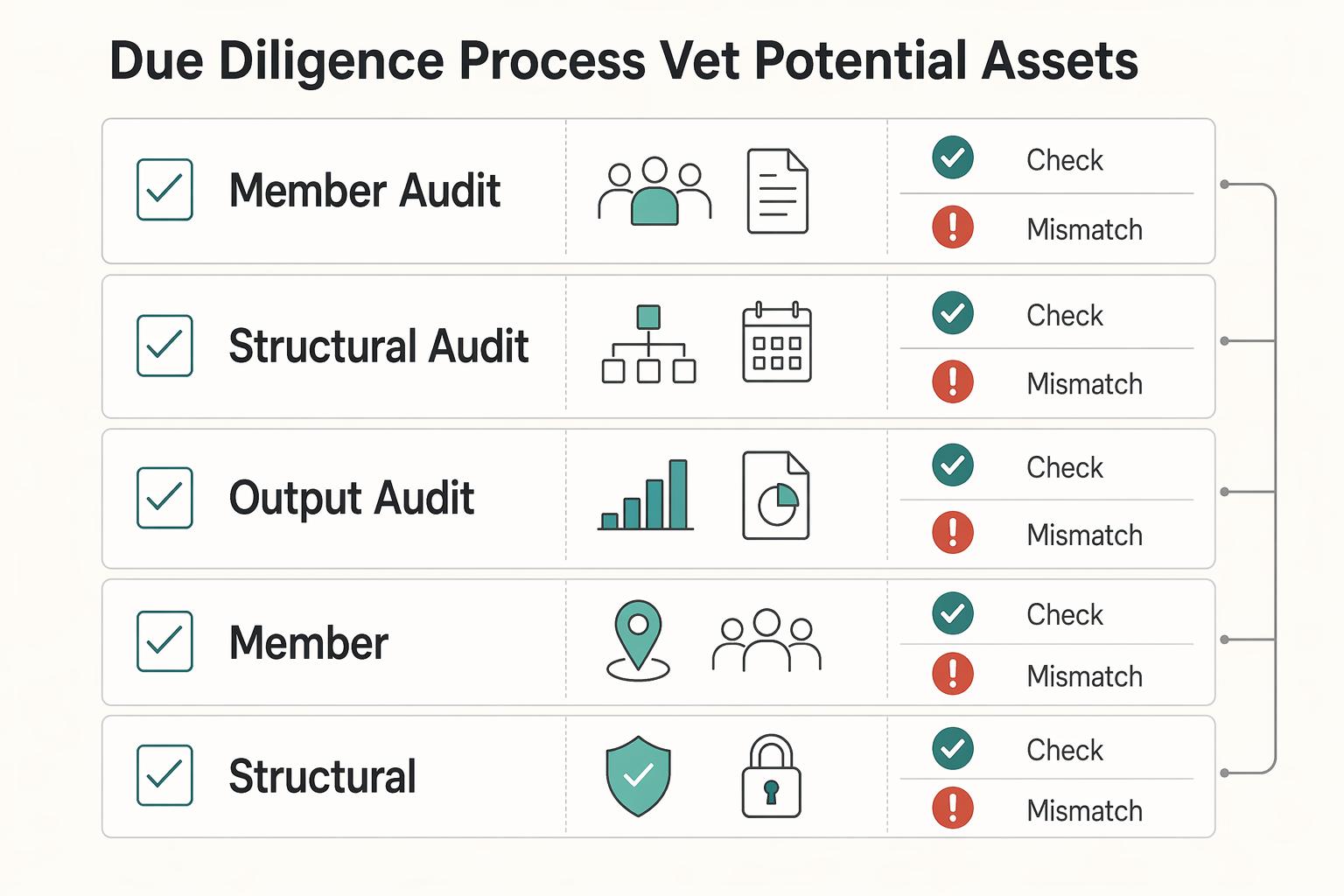
Use your Stage 1 job statement as a hard filter. Verify members, structure, and output before you commit your time. This is due diligence, not browsing.
| Audit | Prompts or test | What it checks |
|---|---|---|
| Member audit | Who is this group for in practice?; What stage are most members at right now?; What kind of writing do members usually bring?; What problem does this group mainly solve? | Peer alignment with your current job |
| Structural audit | What is the meeting format?; Is work shared in advance?; How is speaking time managed?; What happens when someone misses deadlines or sessions?; How are new members screened?; How are drafts and discussion handled outside the group? | Whether expectations are explicit enough to protect trust, attention, and fair participation |
| Output audit | Observe one session; review sample comments; or submit a short piece with one clear question | Whether feedback is specific, tied to your goal, and usable in revision |
Build a short list from trusted channels (referrals, professional communities, people you already know), then narrow it to a manageable number before deeper review. If you try to evaluate too many groups at once, review quality drops.
Step 1. Run a member audit. Before joining, ask direct questions in plain language:
- "Who is this group for in practice?"
- "What stage are most members at right now?"
- "What kind of writing do members usually bring?"
- "What problem does this group mainly solve?"
You are testing peer alignment. After one call or exchange, you should be able to describe the member mix clearly and decide whether it matches your current job: critique, accountability, or strategy.
Step 2. Run a structural audit. Ask the organizer to explain the operating rules in writing, even if it is just a short email. Use prompts like:
- "What is the meeting format?"
- "Is work shared in advance?"
- "How is speaking time managed?"
- "What happens when someone misses deadlines or sessions?"
- "How are new members screened?"
- "How are drafts and discussion handled outside the group?"
You are checking whether expectations are explicit enough to protect trust, attention, and fair participation. Treat integrity concerns, evasive answers, or trust friction as a stop sign.
Step 3. Run an output audit. Test the group's claims with a trial interaction you can verify: observe one session, review sample comments, or submit a short piece with one clear question.
Look for feedback that is specific, tied to your goal, and usable in revision. If you cannot leave the trial with a clear revision list, decision, or next action, treat output quality as weak.
| Audit area | What strong groups show | Red flags to exit |
|---|---|---|
| Member | Clear peer fit for your stage, goals, and type of work | Persistent mismatch in level, goals, or use case |
| Structural | Written operating expectations and clear confidentiality handling | Vague rules, unclear process, evasive answers |
| Output | Specific, practical feedback you can test immediately | Generic praise, taste-only reactions, no usable next step |
Use this pass/fail check after the trial:
- Peer alignment: Members can speak to the work and decisions you actually face.
- Operating rules: You have clear answers on cadence, submissions, attendance, and screening.
- Confidentiality expectations: The group explains how drafts and discussion are handled.
- Feedback quality: You received specific, respectful input you can apply.
Then make a clean go/no-go decision: proceed when all four are clear, test further when one point is unresolved, and decline when multiple areas are weak or trust feels off. The goal is to avoid surprise downside before you commit.
If you want a deeper dive, read How to Network Effectively as a Remote Freelancer.
Stage 3: Build Your Own Group With a Charter, Invitations, and a Trial#
If vetted groups keep missing your needs, build one yourself. This is a practical fallback when fit is weak, not a status move. You get to set the two levers that matter most: member fit and operating rules.
| Charter element | What to include |
|---|---|
| Purpose | The exact job of the group: critique, accountability, or business decisions |
| Member fit criteria | Who belongs, what stage they are at, and what work they bring |
| Feedback protocol | How comments should be delivered and what context the writer provides |
| Meeting workflow | What happens before, during, and after each session |
| Confidentiality expectations | How drafts, ideas, and discussion are handled outside the room |
| Conflict resolution | A simple process for missed deadlines, repeated disruptions, or trust issues |
Step 1. Write a one-page charter before you invite anyone. Start with a clear charter so people can evaluate the idea without guesswork. If you skip this, you usually inherit confusion later.
Include this checklist:
- Purpose: the exact job of the group (critique, accountability, or business decisions).
- Member fit criteria: who belongs, what stage they are at, and what work they bring.
- Feedback protocol: how comments should be delivered and what context the writer provides.
- Meeting workflow: what happens before, during, and after each session.
- Confidentiality expectations: how drafts, ideas, and discussion are handled outside the room.
- Conflict resolution: a simple process for missed deadlines, repeated disruptions, or trust issues.
Use one checkpoint before moving on: a peer should be able to read the charter and explain who the group is for, how meetings run, and how conflicts are handled.
Step 2. Send selective invitations, not a broad call. Invitation quality beats volume. Invite people whose judgment and follow-through you already trust, or who come through strong referrals.
In each outreach note, include:
- Why you are forming the group now.
- Why you are inviting that person specifically.
- The fit criteria and core expectations from the charter.
- The trial-first structure (not an open-ended commitment).
- A clear yes/no ask.
Do not over-invite and hope alignment appears later. Usually, it does not. You end up with mixed goals, uneven effort, and early trust friction.
Step 3. Run a trial, then make a go/no-go call. Treat the trial as a structured evaluation, not a courtesy period. After each session, capture what happened while it is fresh: preparation, feedback quality, alignment to charter, and trust signals.
| Decision | Use it when you see | Next move |
|---|---|---|
| Formalize | Strong fit, reliable prep, useful feedback, stable trust | Confirm members, lock operating rules, continue |
| Adjust and retest | Core purpose is right, but one operating issue keeps showing up | Fix the issue, run another short trial |
| End and restart | Persistent mismatch, weak reliability, or trust concerns | Close cleanly and rebuild with a different mix |
Saying no is strategic here. The wrong group can burn time and attention before the mismatch is obvious.
We covered this in detail in How to Find Remote Work on LinkedIn Without Mass-Applying.
Stage 4: Managing the Asset - How to Drive a Return on Investment#
Manage the group with a simple operating rhythm and judge it by outcomes, not activity. A room can feel busy and still produce little, so your job is to turn each session into decisions and results.
Step 1. Run a repeatable operating rhythm. Treat your Stage 3 charter as your written plan, and revise it when your needs change. Before each meeting, share only the work the group agreed to review and name the key questions you need answered. During review, give feedback your peers can use in a revision, not just impressions. After the meeting, capture your own decisions in one place: what you will change, what you will hold, and what you will test next.
If you cannot pull clear action items from a session, reset the process before the next one.
Step 2. Track return across three outcome categories. Use a lightweight tracker so you can judge the return against the time you invest and what that time would otherwise go to. Keep it practical, and add verified metrics where you have them.
| Category | What to log | Verified metric if available |
|---|---|---|
| Craft quality | stronger structure, clearer argument, fewer repeated issues | fewer repeat edit notes, fewer revision cycles |
| Output consistency | drafts finished, commitments met, work shipped | completed pieces, on-time submissions |
| Business pipeline | referrals, collaborations, sharper market decisions | qualified leads, accepted pitches, booked work |
Do not mistake more meetings for more value. The tracker is there to show whether your core objective is actually improving.
Step 3. Reassess fit, then choose one path. Start with one question: what is the primary job this group does for you now? Then choose exactly one action path and communicate it clearly.
| Signals you see | What it suggests | Action path |
|---|---|---|
| Feedback is specific, members prepare, trust is steady | Healthy fit | Continue |
| Purpose is still right, but prep, scope, or airtime is drifting | Correctable drift | Restructure expectations and workflow |
| Your primary need changed, or return stays thin over time | Persistent mismatch | Leave professionally |
A direct, professional message protects relationships better than slowly disengaging.
You might also find this useful: How to Find and Secure Public Speaking Gigs as a Freelancer.
Conclusion: Your Brain Trust Is Your Competitive Moat#
Treat your group like an operating asset, not a vague source of encouragement. That keeps the focus on what matters: clearer feedback, stronger decisions, and steadier execution.
- Step 1. Define the job.
If your ask is fuzzy, your results are likely to be fuzzy too. "I need a group" is about as useful as saying "I need an editor" without knowing whether you need developmental, substantive, copy, or proofreading help. Write down the group's primary job in one sentence before you join or build anything. Your checkpoint is simple: can you say what problem this group is supposed to solve?
- Step 2. Vet or build for fit.
Choose people you can trust for the specific job, not just people who are friendly or available. Check whether members give specific, usable notes and whether their judgment is relevant to your work. If one person or one format is expected to cover every editing layer at once, that is usually a mismatch.
- Step 3. Run it with clear rules.
Less vague groups are easier to run. Set the submission format, turnaround time, meeting purpose, and what kind of comments are in scope. Then review the output. After a meeting or exchange, you should be able to name concrete revisions, decisions, or next actions. If you cannot, the problem is often structure, not motivation.
- Step 4. Take one concrete action this week.
Break the goal into manageable parts: define the job, shortlist or invite people, and test the setup over a short trial. That is a practical sequence for finding a writers group that actually helps. If your real need is business strategy rather than manuscript critique, read How to Join a Mastermind Group for Your Freelance Business.
For a step-by-step walkthrough, see How to Find a Mentor as a Freelancer.
Frequently Asked Questions
What are the biggest red flags in a writers group?
Walk away if the group's purpose is fuzzy, the feedback stays vague, or the same people regularly fail to show up prepared. A workable group should match your goals and working style, because not all groups are built for the same job. Before you commit, use a simple check: after one meeting or sample exchange, can you name specific revisions or next actions? If not, you are probably getting talk, not usable critique.
Are paid groups worth it?
Sometimes, but on a case-by-case basis. Do not assume typical price ranges or ROI benchmarks apply, so judge paid groups by fit with your goals and working style. Before paying, ask for concrete details about how the group runs and compare that with free options. If the offer stays vague, wait before committing.
How do you start your own group?
Start small and make the first ask concrete. Invite a few peers, state the group's job, name the submission format, and suggest a short trial so everyone can assess fit without a long commitment. If you use Poets & Writers Groups, the person who creates the group becomes the Organizer, and that role can assign other organizers too. A good verification step is to use a Writing Project early, because it shows you whether members can leave useful comments on actual pages, not just say they are "supportive."
What’s the difference between a critique group and a mastermind?
Do not assume there are proven performance differences between critique groups and masterminds, so choose based on the problem you need solved right now. For a deeper look at the business side, see How to Join a Mastermind Group for Your Freelance Business. | Type | Possible use case | What to bring | Potential outcome | Bad fit signals | |---|---|---|---|---| | Critique group | You want craft feedback on pages | Draft excerpt, context, 1 to 2 questions | Specific revision notes you can test | Discussion drifts into taste wars or no one reads the work | | Mastermind | You want help with career or business decisions | Current challenge, constraints, next-step options | A clearer decision or next move | Advice stays abstract or nobody understands your market | | Accountability group | You want momentum and regular check-ins | Goals, deadlines, status update | More consistent follow-through | Meetings turn into social catch-ups with no commitments |
How often should a professional group meet?
Pick a cadence your members can actually sustain, then test it for a few cycles. Regular meetings can help with craft and accountability, but there is no universal best schedule. Use one checkpoint: are people still reading, submitting, and following through after a few cycles? If attendance slips or prep quality drops, reduce frequency or narrow the scope instead of forcing more meetings.
What should you check before requesting to join a group online?
Complete your profile before you start browsing, because on Poets & Writers Groups, fuller profiles improve recommendation quality. Check the Dashboard for group news and pending invites or requests so you do not miss a response. One privacy note matters. Hiding your profile does not make you invisible in every case. If you request to join, the group's organizers can still view your profile, so make sure it reflects what you actually write and what kind of feedback you want.
Try a related tool
Researched and edited by the Gruv editorial team. Gruv builds cross-border billing, payouts, and finance-operations software for global businesses.
Sources
Includes 8 external sources outside the trusted-domain allowlist.
- angelcapitalassociation.org/data/Documents/Resources/AngelCapitalEducati...external
- creators.spotify.com/pod/profile/matt-gray72/episodes/Give-Me-15m...external
- groups.pw.org/help-frequently-asked-questionsexternal
- halekatie.com/tag/new-writingexternal
- helpingwritersbecomeauthors.com/find-a-writing-buddy-2025-editionexternal
- indeed.com/q-audit-report-writer-jobs.htmlexternal
- inventive.ai/blog-posts/go-no-go-decision-projectsexternal
- investopedia.com/terms/d/duediligence.aspexternal
Educational content only. Not legal, tax, or financial advice.
Related Posts

How to Network Effectively as a Remote Freelancer
Treat **remote freelance networking** as recurring relationship work, not a burst of applications or random visibility. That shift turns a noisy week into a useful one. You spend less time in low-fit conversations, lose less time to busywork, and end each session knowing the next move.
The Best Digital Nomad Communities to Join
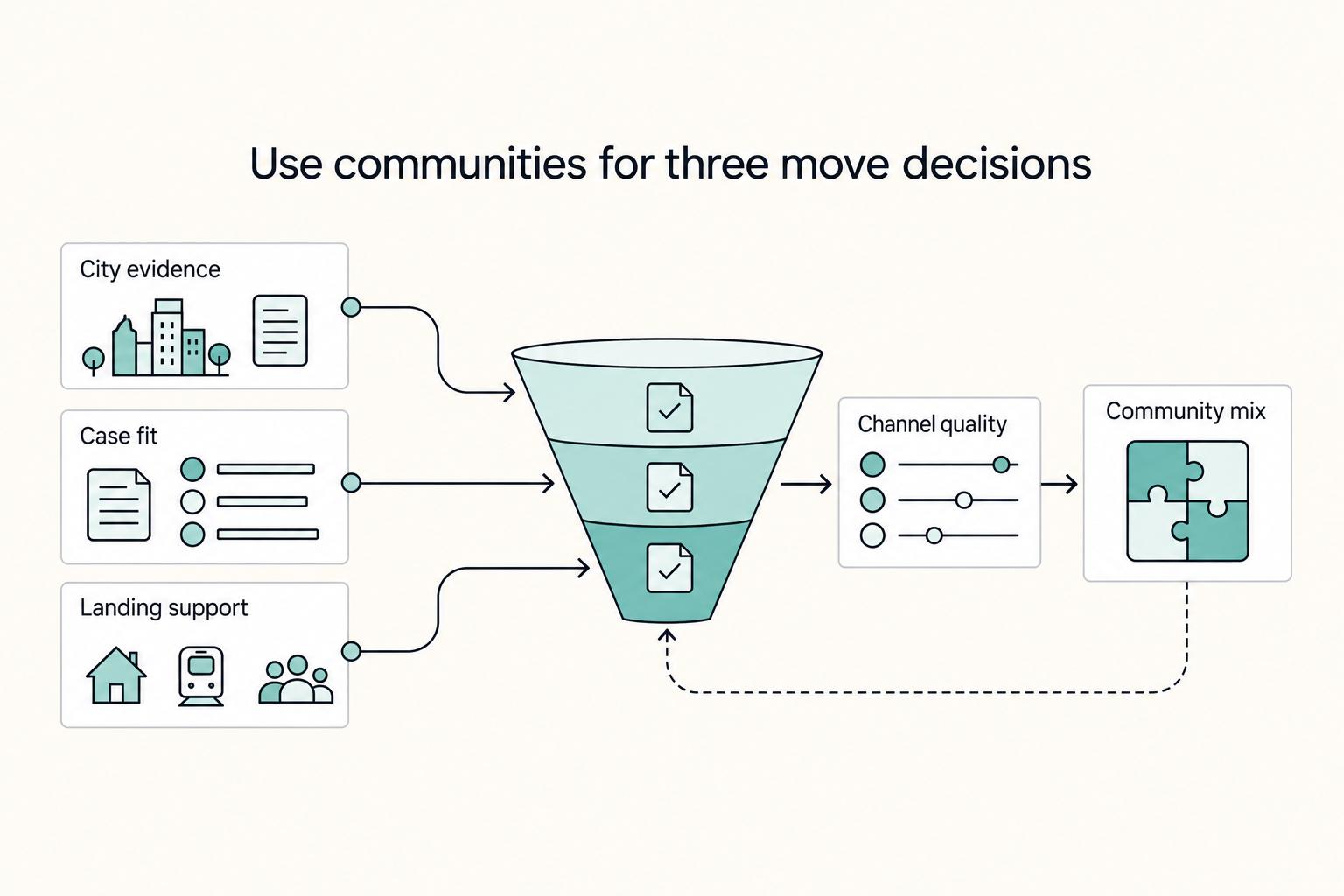
If your move date is real, use communities to answer three decisions in order: which city stays on your list, whether your case actually fits, and whether your landing week is covered. Judge every channel by outcomes, not activity. If it does not give you evidence you can use, stop giving it time.
How to Join a Mastermind Group for Your Freelance Business
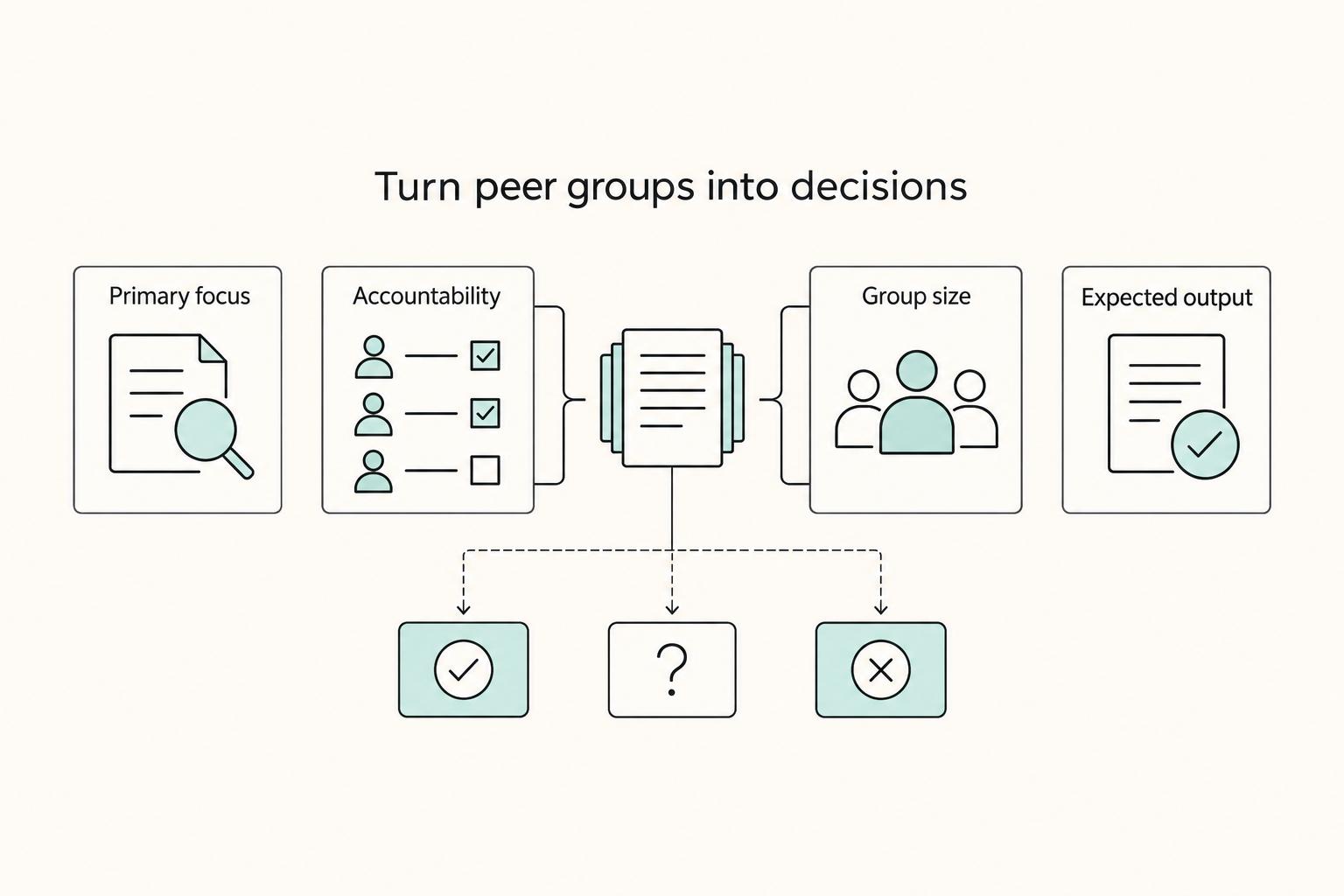
A **freelance peer group** can do more than make you feel less alone. At its best, it works like a personal board of directors: a small group that meets regularly to discuss issues, test decisions, and hold each other accountable, not just a general support circle.