
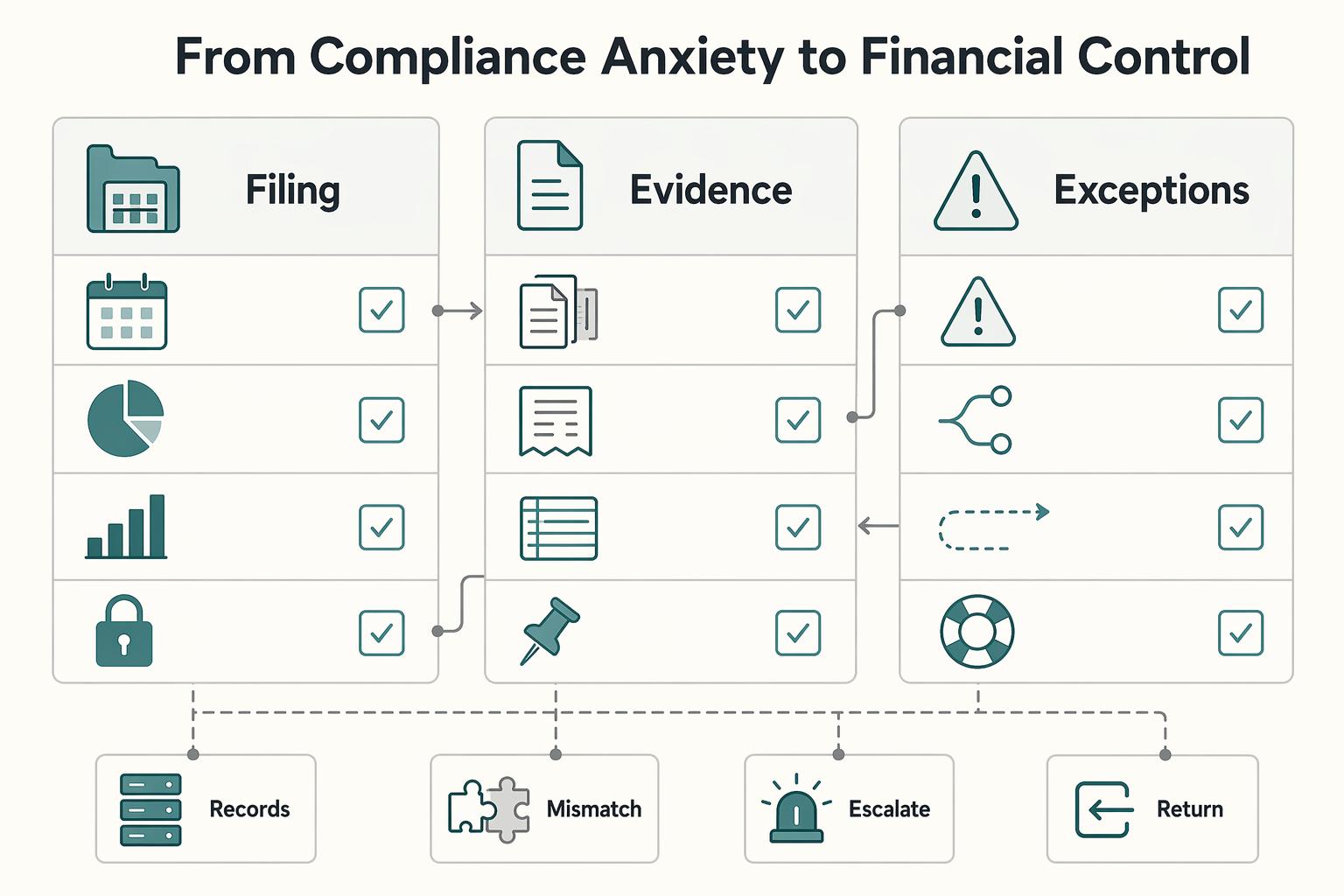
Quick Answer
To fill out Form 1116, first classify your foreign-source income by category and country, then remove any income and taxes excluded under Form 2555, choose the paid or accrued method, and apply the foreign tax credit limitation. Report Part I by source and category, Part II by tax timing, and Part III for the allowable credit and any carryover that may require Schedule B.
Choosing between the foreign tax credit and the exclusion#
Start with mechanics, not convenience. Form 1116 (FTC) reduces U.S. tax liability on foreign-source income, while Form 2555 (FEIE) excludes qualifying foreign earned income from taxable income. A credit reduces tax dollar for dollar. An exclusion reduces the income being taxed. If the Form 1116 limitation applies, unused FTC can generally be carried back to the previous tax year or forward up to 10 tax years.
Step 1: Classify Income Before You Choose#
Classify the income before you open your software. FEIE applies to foreign earned income such as wages, salaries, professional fees, and other pay for personal services. FTC requires category-by-category treatment on Form 1116, with separate handling by income category and country.
Use this checkpoint early: if you cannot clearly tag each income stream by source, type, and country, pause before choosing between the exclusion and the credit.
Step 2: Use a First-Pass Decision Screen#
Use a quick screen to decide which path is worth modeling first.
| Path | Foreign effective tax profile | Income type fit | Future U.S. tax exposure | Documentation readiness |
|---|---|---|---|---|
| FTC (Form 1116) | Useful when foreign taxes may materially offset U.S. tax | Works when you can map foreign-source income and foreign taxes by category | Stronger when future U.S. tax may absorb carryovers | Higher burden: separate Form 1116 treatment by category, plus country-level detail |
| FEIE (Form 2555) | Useful when excluding qualifying foreign earned income is the priority | Only for qualifying foreign earned income from personal services | No FTC carryover value on excluded income | Moderate burden, but election remains in effect until revoked |
| Partial-year / mixed-income path | Relevant when only part of income or year fits FEIE cleanly | Some earned income may be excluded; remaining income may still require FTC analysis | May preserve some FTC value on non-excluded income | Highest burden: taxes allocable to excluded income are not creditable |
Treat FEIE as a sticky election. If you revoke it, choosing it again within 5 tax years generally requires IRS approval.
Step 3: Run the Retirement Checkpoint#
Do the retirement check before you commit to the exclusion. For IRA limits, IRS rules require adding back excluded FEIE and housing amounts when determining compensation. Verify current contribution rules before filing for your account type and tax year.
Step 4: Avoid the Common Failure Modes#
Most filing problems start when the exclusion and the credit get mixed before the underlying income and taxes are separated.
| Failure mode | Grounded correction |
|---|---|
| Claiming FTC on taxes tied to income excluded under FEIE | Remove excluded income and taxes allocable to that excluded amount from FTC calculations |
| Misclassifying income into the wrong Form 1116 category | Map the remaining items into the correct Form 1116 categories and country detail |
| Trying to take both a credit and a deduction for qualified foreign taxes in the same tax year | Do not take both in the same tax year; you can change that choice year to year |
Use this sequence:
- Decide whether you are claiming any Form 2555 exclusion.
- Remove excluded income and taxes allocable to that excluded amount from FTC calculations.
- Map the remaining items into the correct Form 1116 categories and country detail.
- If you have carryovers, confirm Schedule B (Form 1116) requirements by category.
Step 5: Know When to Escalate#
Escalate early if your facts stop fitting one clean bucket. That often means multi-country income or prior-year FTC carryovers. These situations combine category rules, country detail, and carryover tracking quickly, and FEIE does not remove self-employment tax on net profit, including when net earnings are at least $400.
If your facts are simple, you can usually make this decision yourself. Once the strategy is set, the next job is execution.
If you want a deeper dive, read 183-Day Rule Explained: Stop the Tax Myths Before They Cost You.
Assembling the documentation behind each amount you claim#
If you want your Form 1116 position to hold up, treat documentation as risk control, not admin. For each amount you claim, your file should show three things: the income is foreign source and belongs in Form 1116 Part I, the tax was imposed on you and paid or accrued by you, and your U.S. dollar conversion method is documented and consistent.
Step 1 Build the file around what the IRS actually needs#
Start by deciding what each item is. In Form 1116, Part I is for foreign-source income in the applicable income category. U.S.-source income does not belong there. Form 1116 is also category-specific, so you generally use a separate form for each income category.
| File requirement | What the file should show |
|---|---|
| Foreign-source income support | The income is foreign source and belongs in Form 1116 Part I |
| Foreign tax support | The tax was imposed on you and paid or accrued by you |
| Currency conversion support | Your U.S. dollar conversion method is documented and consistent |
There is no single document that solves this. You need records that support each item of income, deduction, or credit. For income, that usually means who paid you, what the payment was for, the source country, the amount in foreign currency, and the date. For taxes, stronger support shows the tax was your legal and actual foreign tax liability, imposed on you, and paid or accrued by you.
Use this checkpoint before you draft numbers: if you cannot explain why an item is foreign source, which Form 1116 category it belongs in, and which record supports the related tax, stop and fix the file first.
Step 2 Map every transaction before you touch the form#
A clean working sheet turns a messy filing into one you can actually review. Build one sheet with one row per income item or tax event, then tie that sheet directly to Form 1116. Use columns that force decisions: payment date, foreign-currency amount, payer, source country, income category, related tax record, tax paid or accrued date, exchange rate used, U.S. dollar amount, and Form 1116 bucket.
In Part II, keep withholding buckets distinct where relevant, because the form separates taxes withheld at source for dividends, rents and royalties, and other income. Every Part I line should trace to a country and category, and every Part II amount should trace to a tax record.
Form 1116 amounts are reported in U.S. dollars except where Part II says otherwise, so keep both original currency and U.S. dollars in the sheet. That crosswalk also helps with Part IV, where lines 25 through 32 must be completed even when filing only one Form 1116.
Step 3 Lock one exchange-rate method and document it#
Pick one conversion method that fits your facts, then document it. The general rule is to use the exchange rate prevailing when you receive, pay, or accrue the item. The IRS does not publish one official rate, and generally accepts posted rates used consistently. In practice, consistency tied to your records is what matters.
| Item to convert | Timing rule (general) | Source standard | Save in your file |
|---|---|---|---|
| Foreign income received | Spot rate when received | Posted rate used consistently for your facts | Rate source, capture date, U.S. dollar conversion |
| Foreign tax paid | Spot rate when paid | Same consistency standard | Proof of payment plus rate record |
| Foreign tax accrued | Spot rate when accrued | Same consistency standard | Accrual or assessment record plus rate record |
| Multiple published rates | Use the rate that fits your facts and circumstances | Apply consistently across similar items | Short method note |
Your functional currency is generally the U.S. dollar, except certain QBU cases. Avoid mixing methods across similar items unless you can explain why in writing.
If you are considering the simplified credit path instead of filing Form 1116, verify the current filing-year threshold and conditions first, including the $300 limit, or $600 if filing jointly. That path also requires foreign income and taxes to be reported on payee statements such as Form 1099-INT, Form 1099-DIV, or Schedule K-1, and it does not allow carrybacks or carryovers for that year.
Step 4 Rank your evidence and close the obvious gaps#
Not all records carry the same weight. Organizing them by strength makes weak points visible before filing. Use the tiers below as an internal review tool, not IRS-mandated labels.
| Evidence tier | Examples from the article |
|---|---|
| Core records | Foreign tax authority assessments, receipts, withholding certificates, payer statements showing foreign tax withheld, qualified payee statements, and bank records showing tax payment |
| Supporting records | Contracts, invoices, payroll slips, platform payout statements, and notices explaining what the payment covered |
| Tie-out records | Your ledger, tie-out from gross income to foreign return amounts, tie-out from paid or withheld tax to Form 1116 Part II, and notes for adjusted or estimated figures |
Use this quick gap check before filing:
- Missing payer statement: request a replacement, or pair available payroll or platform records with the foreign return and proof of payment.
- Bundled platform payouts: split them into underlying income items and separate fees, reimbursements, and tax withholdings.
- Mixed personal and business accounts: annotate statements so the income and tax trail is traceable without guesswork.
Step 5 Escalate when timing, sourcing, or ownership gets messy#
Do not keep self-filing by inertia once the facts become unclear. Consider escalating when sourcing or timing is hard to trace, or when withholding shown may not match the amount that is creditable.
One hard trigger is a foreign tax redetermination under section 905(c), which requires Schedule C (Form 1116). If you are claiming a provisional credit for contested foreign income taxes, Form 7204 is also required. At that point, this is no longer just recordkeeping. It is technical reporting.
Related: A Deep Dive into the Foreign Tax Credit (Form 1116).
Executing the Plan: A Strategic Guide to Form 1116#
Treat Form 1116 as a sequence, not a spreadsheet exercise. Build the credit in order: Part I for source and category, Part II for timing method, then Part III for the limitation and carryover implications.
Part I: Classify foreign-source taxable income before you calculate#
Get the basket right before you do any math. File a separate Form 1116 for each separate category of income, and check only one category box per form.
Foreign-source taxable income means taxable income from sources outside the United States. For services, sourcing generally follows where the services were performed, often on a time basis, so travel-heavy work often requires a time-based split supported by your records.
Allocation and apportionment means assigning deductions against foreign-source gross income when computing the limitation. If an expense supports both U.S. and foreign income, allocate it with a consistent method your records can support.
| Input data | Decision rule | Common misclassification risk |
|---|---|---|
| Service income by project, work dates, work location | Source by where services were performed, often on a time basis | Using client location instead of where work was performed |
| Investment income and payer statements | Categorize income first, such as passive versus general, then place it on the matching Form 1116 | Pooling passive and general category income on one form |
| Shared expenses such as software, insurance, home office | Allocate or apportion deductions to foreign-source gross income using a consistent method | Assigning 100% of shared expenses to foreign income without support |
| Income excluded under FEIE or housing exclusion | Exclude taxes tied to excluded income from the FTC claim | Claiming a credit for taxes on excluded income |
Checkpoint: Part I amounts should tie back to country-level sourcing where required, the selected category, and documented deduction treatment.
Part II: Choose paid vs accrued as a method, not a one-year shortcut#
This is a method choice with consequences beyond the current return. Pick the method your records can support, then make sure the support matches the position you file.
- Paid method: claim based on when foreign tax was actually paid.
- Accrued method: claim based on when foreign tax liability accrued.
- If electing accrued, make that choice on a timely filed original return by checking the accrued box.
- Once accrued is chosen, it must be followed in later years.
The practical control is simple: do not mix method logic and documentation. Paid-basis claims need payment evidence. Accrued-basis claims need accrual or liability evidence.
Part III: Apply the limitation, then interpret the result#
The result in Part III is the practical answer: how much credit you can use now, and what remains to manage later. The foreign tax credit allowed is the lesser of qualified foreign taxes paid or accrued, or the FTC limitation. The limitation is your total U.S. tax liability multiplied by the FTC limitation fraction, with foreign-source taxable income in the numerator.
If your limitation is lower than foreign taxes paid, not all foreign tax is usable this year. The excess may generally be carried 1 year back and 10 years forward. If you report a carryover on line 10, attach Schedule B (Form 1116) for each applicable income category.
Checkpoint: at the end of Part III, you should know whether you used all current-year credit, created excess credit, or need additional tax support because the facts are multi-country, multi-category, or carryover-heavy.
Final completion check#
Before filing, confirm current-year completion requirements, including Part IV lines 25 through 32 even if you file only one Form 1116, and confirm that amounts are reported in U.S. dollars except where Part II specifies otherwise. The safest sequence is still the same: classify first, then compute.
For a step-by-step walkthrough, see How to Fill Out Form 2555 With Fewer Filing Mistakes.
Running the credit as an annual operating cycle#
The credit is easier to manage when you treat it as an annual operating cycle. Close this year cleanly, protect carryover value by category, and build next year's filing inputs while the records are still easy to trace.
Step 1 Close the year with a category-by-category file#
A year is not truly closed until each filed Form 1116 is supportable by category. Save the final Form 1116 for each separate income category, the workpapers behind Parts I through III, and any Schedule B (Form 1116) used for carryovers.
If line 10 includes prior carryover activity, reconcile it to Schedule B, since line 10 includes carryover amounts plus any carrybacks to the current year. Your end-state test is straightforward: each Form 1116 ties to one category, one source-income support set, and one carryover schedule when applicable.
Step 2 Track unused credits as a rolling balance#
Treat unused credits as a live ledger, not a year-end note. Schedule B is built around running balances, and tracking is category-specific.
| Origin year | Income basket | Amount generated | Amount used | Amount remaining | Review note |
|---|---|---|---|---|---|
| Tax year 1 | General, passive, or other applicable category | $ | $ | $ | Track age and category match |
| Tax year 2 | General, passive, or other applicable category | $ | $ | $ | Monitor aging balances and upcoming expiries |
| Current filing year | General, passive, or other applicable category | $ | $ | $ | Record any new balance created this year |
Unused qualified foreign taxes can generally be carried back 1 year and carried forward 10 years, except taxes on section 951A income. Also watch any remaining amount from the 10th preceding tax year, because that carryover can expire unused.
Step 3 Run a repeatable evidence control checklist#
The goal here is not prettier files. It is faster, safer filing next year.
- Use a consistent internal naming convention so records are sortable and reviewable.
- Reconcile on a cadence you can actually maintain: foreign income, foreign taxes paid or accrued, and expected category tags.
- Retain records until the period of limitations for the return runs out. That period is generally 3 years, and it can be longer when carryovers, amendments, or redeterminations are still in play.
- Perform a year-end tie-out that maps records to Form 1116 categories and the inputs used in the return.
A common breakdown is pooling all foreign tax records together and trying to split categories at filing time.
Step 4 Use the no-Form-1116 route only after a hard gate check#
Use the simplified route only when all IRS conditions are met for the filing year. Verify the filing-year threshold and reporting requirements before you rely on it.
| Decision gate | Practical read |
|---|---|
| All current-year no-Form-1116 conditions are verified | Simplified route may be viable |
| Any condition is unclear or not met | Full Form 1116 is the cleaner choice |
| Prior carryover, expected unused credit, or category complexity is present | Full Form 1116 is usually the better operating choice |
Step 5 Escalate when facts change or complexity compounds#
Bring in a qualified tax advisor when the system stops being stable.
- Category treatment changes, or a prior-year category classification may be wrong
- A foreign return is amended, or a foreign tax redetermination occurs, which can trigger Schedule C and, in most cases, a U.S. redetermination filing (for example, Form 1040-X or Form 1120-X)
- Income sourcing changes materially, such as single-country to multi-country, or services-only to mixed income types
- Unused credits become large enough that expiry risk and multi-year planning matter
That is the point where DIY mistakes stop being workflow friction and become real tax exposure.
We covered this in detail in How to Fill Out FBAR (FinCEN Form 114) Step by Step.
Before you file, tighten your records workflow with the Tax Residency Tracker so your travel timeline and supporting notes are easier to reconcile.
Keeping the credit usable and supportable year over year#
Form 1116 gets easier when you run it as an annual control system, not a one-time form exercise. The objective is to keep your foreign tax credit usable, supportable, and visible year over year, especially when the FTC limit prevents full use in one filing cycle.
Control framework (each filing cycle):
- Document workflow: Build one tax-year packet with foreign income records, proof of foreign tax paid or accrued, U.S. dollar conversion workpapers, prior-year Form 1116, and Schedule B (Form 1116). Before filing, confirm that Form 1116 amounts are in U.S. dollars except where Part II allows otherwise, and complete Part IV lines 25 through 32 even if you file only one Form 1116.
- Category consistency: Lock category treatment before calculations start. The IRS requires a separate Form 1116 for each income category, so do not pool all foreign income first and classify later. If treatment changes during the year, document why.
- Carryover tracking: Treat carryovers as a controlled asset and reconcile them on Schedule B. Unused credit limited in the current year may generally be carried back to the previous tax year and forward up to 10 tax years, but confirm filing-year rules before relying on it. Also confirm election tradeoffs. If you use the narrow no-Form-1116 path, that year's unused foreign tax cannot be carried back or carried over.
- Annual escalation triggers: Move beyond self-filing when you have treaty re-sourced income, contested foreign tax liability, FEIE or housing exclusion overlap, qualified dividend or capital gain adjustments affecting line 1a, or carryovers across multiple baskets. At that point, working with a qualified cross-border tax professional is usually a risk-control step, not an optional convenience.
You might also find this useful: How to Handle Taxes on Income from Multiple Countries.
If your case involves multi-country income, mixed categories, or recurring carryovers, use contact Gruv to confirm the right compliance-first setup for your workflow.
Frequently Asked Questions
What is the difference between Form 1116 and Form 2555?
Form 1116 reduces U.S. tax liability on foreign-source income, while Form 2555 excludes qualifying foreign earned income from taxable income. A credit reduces tax dollar for dollar, while an exclusion reduces the income being taxed. FEIE applies to qualifying earned income from personal services, so confirm current instructions before you choose.
Can I use both the FEIE and the foreign tax credit?
Potentially, but you cannot claim a foreign tax credit for taxes tied to income excluded under FEIE. Decide first whether you are claiming any Form 2555 exclusion, then remove excluded income and allocable taxes from the credit calculation. Confirm current filing-year coordination rules before filing.
What exchange rate should I use?
Use the exchange rate prevailing when the item is received, paid, or accrued, and apply a method that fits your facts consistently. The IRS does not publish one official rate, but generally accepts posted rates used consistently. Keep the rate source, capture date, and U.S. dollar conversion in your file.
Do I need a separate Form 1116 for each country?
Form 1116 is category-specific, so you generally use a separate form for each income category. Every Part I amount should trace to a country and category in your records. Check the current instructions to confirm how your facts should be grouped.
What happens if I have unused foreign tax credits?
If the limitation is lower than the foreign taxes paid or accrued, not all of the credit is usable this year. The excess may generally be carried 1 year back and 10 years forward, and reporting a carryover on line 10 can require Schedule B for each applicable category. If you use the no-Form-1116 route, that year does not allow carrybacks or carryovers.
Try a related tool
Researched and edited by the Gruv editorial team. Gruv builds cross-border billing, payouts, and finance-operations software for global businesses.
Sources
Educational content only. Not legal, tax, or financial advice.
Related Posts

183-Day Rule Tax Myths That Trigger Residency Filing Mistakes
If you are a mobile freelancer or consultant, start here: the "183 day rule tax" idea is not a single universal test. It is a shortcut phrase people use for different residency rules that do not ask the same question. If you mix federal and non-federal residency logic, you can create filing risk even when your travel calendar looks clean.

A Deep Dive into the Foreign Tax Credit (Form 1116)
If you paid qualifying foreign income taxes and still owe U.S. tax, start with the Foreign Tax Credit and Form 1116. A credit usually beats a deduction because it offsets tax dollar for dollar. Do not start entering numbers until you decide whether you are taking a credit, an itemized deduction, or an exclusion. If you use the [Foreign Earned Income Exclusion](https://www.irs.gov/individuals/international-taxpayers/foreign-earned-income-exclusion) or the foreign housing exclusion, remove the excluded income and related foreign taxes from the credit path first.
How to Handle Taxes on Income from Multiple Countries
Start with a compliance objective, not a minimization objective. First identify where you may owe tax, then test relief only when a specific rule fits a specific income item. Keep records that will still make sense if the Internal Revenue Service (IRS) or a local authority later asks how you got there.