
Quick Answer
A ROBS plan fits founders who want owner control and can run a retirement plan correctly after funding. A rollover as business start-up is not just a way to access capital, because it also requires ongoing plan administration, clean records, valuation support, payroll discipline, and annual filings. If you want fast money with light administration, it is a poor fit.
When ROBS Fits: Owner Control and Ongoing Plan Administration#
A rollover as business start-up (ROBS) makes sense only if you want owner control and are prepared to run a retirement plan correctly, not just launch a company. If you want fast money with light administration, this is a poor fit because the funding move and the compliance burden come together.
The upside is obvious. You are using retirement assets to capitalize the business through a tax-free rollover into a new plan instead of taking a taxable early distribution. The downside is just as real. The IRS does not treat ROBS as automatically abusive, but it does describe these arrangements as "questionable" because they may solely benefit one individual. Read that as high scrutiny, not automatic illegality, and verify current IRS and DOL requirements before setup and again before each annual filing.
How the structure actually works#
In the standard structure, the business is organized as a C corporation, and that corporation adopts a qualified retirement plan. You then roll over funds from an existing retirement account into the new plan in a tax-free transaction. After that, the plan, not you personally, buys stock in the new C corporation, and the cash from that stock purchase becomes working capital for the business.
That separation matters. The corporation runs the business. The plan holds plan assets and becomes a shareholder. You, or anyone else acting as a plan fiduciary, must operate the plan solely in the interest of participants and beneficiaries and avoid transactions that benefit related parties at the plan's expense. This is where many problems begin. People treat the plan like a personal funding pocket instead of a regulated employee benefit plan under ERISA and the Internal Revenue Code.
The early operator detail is not optional. A favorable IRS determination letter on plan language is not approval of how you operate the arrangement day to day. The IRS has also focused on missing annual filings, including Form 5500 or Form 5500-EZ, and those filings are generally due the last day of the seventh month after the plan year ends, which is July 31 for a calendar year plan. If you cannot produce clean records for stock valuation, stock purchases, and plan administration, you are already in the danger zone.
Quick readiness check#
| You are likely ready | Pause and fix first |
|---|---|
| You already keep clean corporate records and can separate personal, company, and plan activity | You mix accounts, backfill documentation later, or rely on memory |
| You are ready to run ongoing plan administration with defined processes | You have no plan-administration process or you plan to "sort that out later" |
| You have capacity for annual plan administration and filing discipline | You are stretched thin and already miss recurring compliance deadlines |
| You can get independent tax, legal, or plan-admin review of the structure | You are relying only on a sales pitch from a promoter |
| You are comfortable defending the stock purchase with real valuation support | You assume the share price is a formality and not an evidence file |
ROBS can work. It stays workable only if the business is sound, your compliance execution is steady, and your personal downside is controlled. That is what the next phases are designed to test.
Want a quick next step for "rollover as business start-up robs"? Try the free invoice generator.
Phase 1: Decide Whether the Business Deserves the Money#
Before you do more compliance work, decide whether the business deserves the money. With a rollover as business start-up robs, this phase is a pre-funding gate: validate the operating model first, then move forward.
Use a simple pass/fail lens. If the business cannot support your role, survive pressure, and show credible demand, pause here and test more.
Can the business carry you without fantasy math#
Start with your actual work, not an optimistic model. If you will be selling, operating, hiring, or delivering, include pay for that role in your plan now.
A practical salary defensibility checklist:
- Role definition: Write the real job you will perform in the first 12 months.
- Market benchmark source: Use one consistent pay benchmark for comparable roles and save it.
- Payroll funding path: Show how salary is funded month by month.
- Documentation file: Keep role notes, benchmark evidence, assumptions, and updates in one dated folder.
If the model only works after removing your pay, treat that as a red flag. Pressure from personal obligations can distort decisions; one founder described being under $1,200 monthly payments before the model stabilized.
Demand proof needs tiers, not vibes#
Treat demand evidence in tiers so you can separate noise from commitment:
| Tier | Signal type | Examples |
|---|---|---|
| Tier 1 | Interest signals | Waitlist signups; survey responses; social engagement; inbound questions |
| Tier 2 | Active intent | Discovery calls completed; proposals requested; pilot discussions; letters of intent |
| Tier 3 | Committed demand | Deposits; preorders; signed contracts; paid pilot work; repeat customers |
Keep an evidence file with dated screenshots, signed documents, invoices, payment confirmations, and short notes on what each prospect agreed to.
Early tests should also expose operating risk, not just interest. In the grounding example, initial platform testing surfaced asset misuse and damage. Use that lesson to identify loss points before scaling.
| Scenario | Founder pay assumption | Cash survivability question | Decision note |
|---|---|---|---|
| Base case | Market-based salary included | How many months can the business operate if sales land as expected? | Proceed only if the model works without removing salary |
| Downside case | Salary reduced only if role actually changes | What happens if revenue is delayed, conversion drops, or costs rise? | If one bad stretch breaks the business, pause |
| Recovery case | Salary path back to normal documented | What specific actions restore cash flow after a miss? | No recovery path means you are funding hope |
Decision framework:
- Proceed: Compensation is feasible, downside cash survival is credible, and demand proof reaches committed revenue (or a clearly equivalent commercial commitment).
- Pause: One area is weak but fixable with targeted testing.
- Stop: The model depends on unpaid labor, optimistic assumptions, or interest-only signals.
Phase 2: The Compliance Gauntlet - Vetting Providers and Staying Legal#
Phase 2 is a documentation test, not a trust-the-sales-call test. In a rollover as business start-up robs, you should only move forward when a provider can show a written, maintainable compliance process for after funding.
The grounding here is limited: the IRS excerpt provided only shows the title "Rollovers as business start-ups compliance project," not operational rules. Treat provider claims as unverified until they are backed by documents, assigned responsibilities, and a live review calendar.
Turn the compliance pillars into a file test#
Use one rule: if you cannot point to the artifact, treat the control as missing.
| Area | What to keep | Key detail |
|---|---|---|
| Plan documents | Draft/specimen plan documents; adoption paperwork; participant-facing summary materials | Written ownership for document maintenance |
| Valuation support | Written support for the initial stock purchase; assumptions used | Who prepares support; how updates are handled if needed |
| Payroll evidence | Payroll setup; owner compensation file; role description; market-pay backup | Payroll reports showing compensation is actually run through payroll |
| Eligibility tracking | Maintained employee tracker with service dates, hours or entry conditions | Confirm current notice timing with the IRS or plan administrator |
| Filing calendar | Recurring filings, notices, reviews, and checkpoints | Confirm current filing deadline windows with the IRS; name an owner for each task |
Your minimum evidence pack for this phase:
- Plan documents: draft/specimen plan documents, adoption paperwork, participant-facing summary materials, and written ownership for document maintenance.
- Valuation support: written support for the initial stock purchase, assumptions used, who prepares support, and how updates are handled if needed.
- Payroll evidence: payroll setup, owner compensation file, role description, market-pay backup, and payroll reports showing compensation is actually run through payroll.
- Eligibility tracking: a maintained employee tracker with service dates, hours or entry conditions, and notice timing confirmed with the IRS or plan administrator.
- Filing calendar: recurring filings, notices, reviews, and checkpoints with deadline windows confirmed with the IRS, plus a named owner for each task.
Compliance is continuous. Pre-funding: confirm entity/plan setup, document readiness, and signatures. Post-funding: confirm transaction records, payroll activation, employee administration, and calendar activation. Ongoing: monitor hiring, compensation, plan access, record retention, and any owner-benefit transaction.
Owner actions: allowed vs likely prohibited (practical screen)#
Use this as a risk screen, not a legal determination.
| Owner action | Usually acceptable only with written support | Likely prohibited/risky signal |
|---|---|---|
| Paying yourself compensation | Compensation support tied to actual work, plus payroll records | Off-payroll owner pay or "we'll fix it later" guidance |
| Running expenses through the business | Clear business-purpose records and clean personal/business separation | Mixed personal/company spending without controls |
| Related-party arrangements | Written conflict review, pricing support, and documented approval path | Related-party transaction approved without analysis |
| Paying setup/admin fees | Clear written fee flow (who pays, from where, how recorded) | Provider cannot explain fee flow consistently |
Escalate before acting when answers are vague on self-benefit, related-party dealings, fee flow, employee treatment, or valuation support.
Score the provider before you sign#
Score each provider 0-2 by category. You are scoring operational defensibility, not polish.
| Category | 0 | 1 | 2 |
|---|---|---|---|
| Transparency | vague scope/fees/responsibilities | partial written detail | full written scope, sample documents, responsibility map |
| Administration depth | setup-heavy, little post-funding structure | ongoing service described at a high level | concrete trackers, calendar, payroll coordination, employee-handling workflow |
| Audit support | undefined "support" | reactive Q&A only | documented retrieval/response process and clear included vs extra-billed support |
| Conflict controls | related-party/fee conflicts brushed off | risk acknowledged but generic | written escalation and review path |
| Handoff process | no clear post-setup ownership | checklist plus brief handoff | named admin contact, documented owner duties, and live calendar before funding |
- Transparency
0: vague scope/fees/responsibilities 1: partial written detail 2: full written scope, sample documents, responsibility map
- Administration depth
0: setup-heavy, little post-funding structure 1: ongoing service described at a high level 2: concrete trackers, calendar, payroll coordination, employee-handling workflow
- Audit support
0: undefined "support" 1: reactive Q&A only 2: documented retrieval/response process and clear included vs extra-billed support
- Conflict controls
0: related-party/fee conflicts brushed off 1: risk acknowledged but generic 2: written escalation and review path
- Handoff process
0: no clear post-setup ownership 1: checklist plus brief handoff 2: named admin contact, documented owner duties, and live calendar before funding
Do not sign until you have sample documents, a named admin contact, a written task split, and a usable calendar.
Phase 3: The Personal Risk & Exit Strategy Audit - Confronting the Worst-Case Scenario#
Do not fund until you have a written plan for how your household operates if the business stalls. This phase is your pre-commitment check: decide now, while you are calm, how much risk you will accept and what actions you will take under pressure.
Start with a direct opportunity-cost comparison. If this money stayed in your retirement account, confirm a realistic expected-return assumption from an independent source before you use it. Then compare that to the startup path, where outcomes are uneven and losses can be hard to recover from. If you cannot clearly say, "I understand the tradeoff and accept it," pause before funding.
Build your personal lifeboat before funding#
Treat this like your own Compliance Verification Checklist. Your business plan and your household plan should be separate, documented, and usable without relying on future sales.
Use a personal-liquidity checklist that covers:
- Essential expenses: rent or mortgage, food, utilities, transport, and medical costs, with the exact liquidity window you calculate from your own budget.
- Household obligations: childcare, support payments, tuition, elder care, and other fixed family commitments.
- Insurance continuity: health, disability, life, and any relevant business coverage, including how premiums are paid if payroll stops.
- Debt servicing: mortgages, cards, personal loans, student loans, and any guarantees linked to the business.
- Access and control: where reserves are held, who can access them, and proof they are not mixed with company funds.
Keep the evidence simple and current: account statements, policy declarations, premium due dates, and a one-page monthly cash map. Do not treat available credit or hoped-for revenue as your lifeboat.
Define the kill switch before emotion takes over#
Write your continue, pause, and wind-down rules before funding, and use observable signals rather than gut feel. Add one non-negotiable: no additional capital goes in until your advisor reviews the situation and that review is documented.
| State | Observable signals | Required actions |
|---|---|---|
| Continue | Sales trend is tracking to plan; obligations are current; records are up to date | Keep operating, update your cash map monthly, and document major variances from plan |
| Pause | Targets are missed for a defined review period; liquidity tightens; admin tasks start slipping; stress is affecting decisions | Freeze new commitments, stop adding capital, update financials, and send the file for advisor review |
| Wind-down | Core obligations cannot be covered without personal strain; documentation gaps grow; debt or household instability rises | Start an orderly wind-down review, preserve records, and follow your written escalation path before any further money moves |
This framework keeps discipline, not optimism, in control. That sets up the next section, where you compare this path against other funding options before deciding.
Related: Digital Nomad Health Insurance: A Comparison of Top Providers.
The Strategic Audit: Benchmarking ROBS Against the Alternatives#
Use one document-backed matrix before you choose a funding path. If a comparison point is not supported by current documents, treat it as unknown until verified.
Do not assume generic financing figures apply to your deal. So if your decision depends on old fee examples, assumed rates, or recycled dilution numbers, replace them with live paperwork first: provider proposal, lender term sheet, and investor term sheet or draft operating documents.
Build one decision sheet, not three separate stories#
| Funding path | Asset at risk | Failure-path questions |
|---|---|---|
| ROBS | Exact asset exposure must be verified from signed documents before use | If performance drops, what value is impaired and what records support compliance? |
| Loan financing | Exact collateral and personal-obligation exposure must be verified from signed documents before use | If revenue misses plan, what happens first and what remedies apply? |
| Equity-style funding | Exact ownership and control rights transferred must be verified from signed documents before use | If growth slows, which rights remain with investors and which decisions require approval? |
Checkpoint: every cell should tie to a document. If any term is described as "standard" or "hands off," ask for the exact clause in writing.
Compare downside by asset type, not by headline cost#
Do not compare only a monthly payment to a setup line item. Instead, map each option to:
- The specific document that creates the downside
- The trigger that activates it
- The party that can enforce it
- The household impact based on your Phase 3 plan
Assess control in operational terms#
Define control as operating rights, not slogans. Write clear answers to:
- Who approves major decisions (hiring, compensation, new debt, asset sales, exit)?
- What reporting is required, how often, and what happens if you miss it?
- What triggers outside intervention, default, or forced renegotiation?
- Which option is still acceptable after you map downside to your personal fallback plan?
Fit test
- ROBS is strategically coherent when your matrix is document-complete, the downside is acceptable to you, and you are prepared to execute the ongoing obligations shown in writing.
- An alternative is safer when verified terms create a downside you can absorb more reliably.
- Pause for advisor review when any material term is unclear, missing, or still assumption-based.
If you're comparing ROBS with other funding paths, our guide to Stripe Capital for business financing covers one alternative.
The Unavoidable Question: What Happens If the Business Fails?#
If the business fails, the retirement capital you put into it may be permanently lost. That is the central risk: you moved from portfolio diversification to concentrated exposure in a single operating company.
Use your prior 401(k) allocation as a reality check. If most of your old mix sat in bonds, CDs, or other cash-like holdings, this is a major risk shift from a conservative allocation that may only keep pace with inflation to a single-company outcome.
| Scenario | What you can treat as the immediate reality | What to verify before your next move |
|---|---|---|
| Business fails and records appear complete | The business investment can still lose substantial or all value | Exact plan treatment, filings, and shutdown steps with your administrator and tax/legal advisors |
| You start taking money out personally to keep operations going | You have moved beyond the original investment decision path | Whether that action changes distribution, tax, or penalty exposure |
| Possible noncompliance or missing records | The failure risk now includes documentation and process risk | What your plan file, corporate file, payroll trail, and advisor review support before closure or liquidation |
If failure risk is rising, act in a fixed order:
- Preserve records immediately: plan, corporate, payroll, valuation, and administrator communications.
- Coordinate with your third-party administrator on what must be documented before closure, sale, or dormancy.
- Recheck payroll handling and employee plan-eligibility handling before stopping operations.
- Get legal and tax review before distributions, liquidation steps, or abandoning filings.
The control point is straightforward: compliance discipline does not remove investment risk, but it helps reduce the chance that a business loss becomes a larger administrative or tax problem.
For a step-by-step walkthrough, see How to Start a Business as a Teenager.
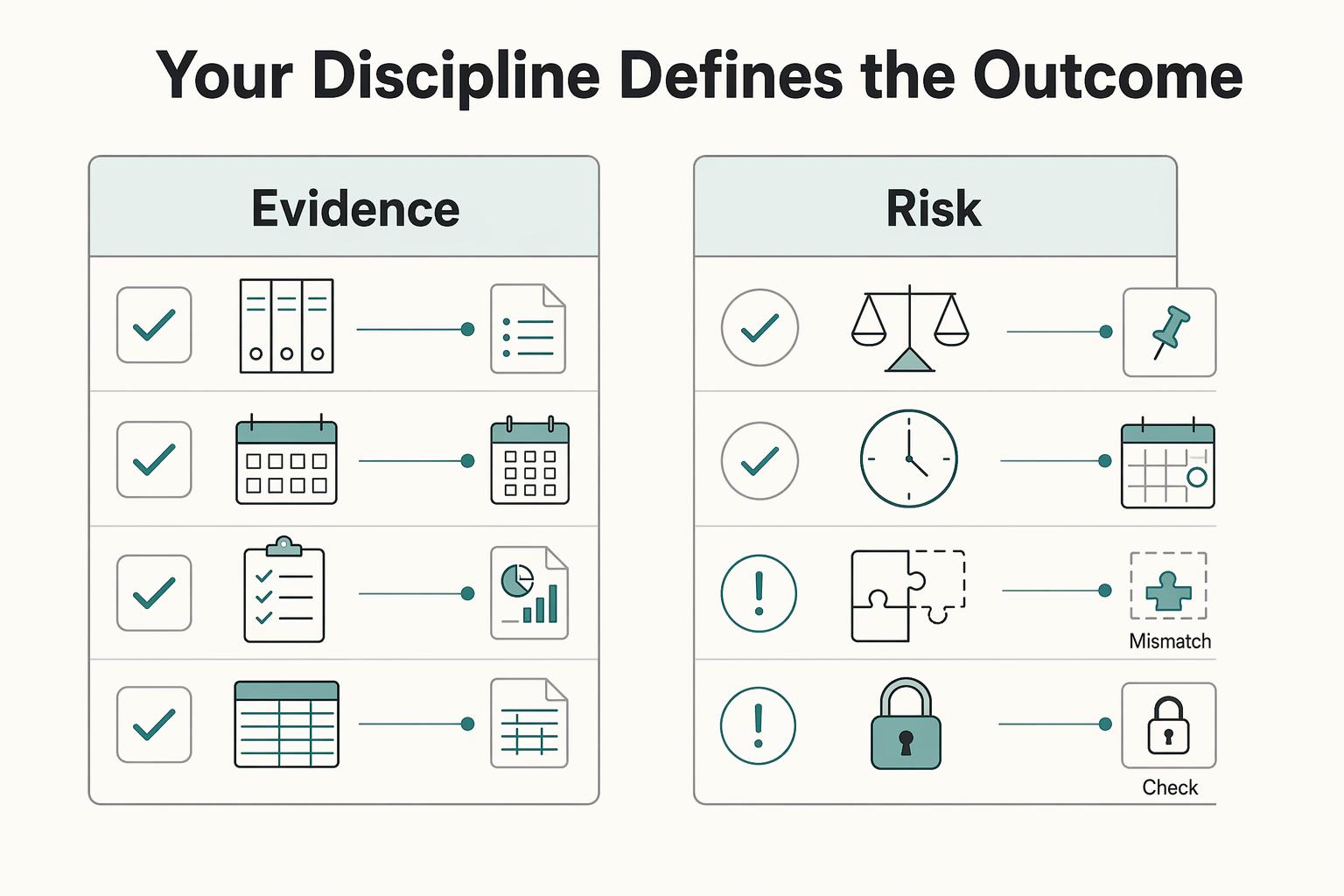
The Final Verdict: Your Discipline Defines the Outcome#
A rollover as business start-up robs is a neutral structure, so your outcome is mostly an execution decision: proceed only if you can run the business and the ongoing oversight with consistency.
That is the go/no-go test. If your operating rhythm, governance habits, or personal risk capacity is unstable, this can become pressure you carry into every decision.
The earlier phases are one system, not separate tasks: due diligence, provider vetting, ongoing administration, documentation, and failure planning. If a provider cannot clearly explain ongoing administration or how valuation-related records will be handled, treat that as a stop signal until the process is clear.
Use this readiness gate before you commit:
- Business viability evidence: You are basing the decision on real demand signals and a plan that still works under slower progress.
- Compliance operations: You know who owns ongoing administration, which records you must maintain, and when you will review them.
- Personal risk buffer: You have enough non-business cash buffer to avoid rushed decisions under stress.
- Decision process: You have documented your assumptions, your checkpoints, and the conditions that would make you pause.
If you can check all four honestly, proceed carefully. If not, delay or choose a lower-risk funding path.
Frequently Asked Questions
What are the biggest red flags when choosing a ROBS provider?
The biggest red flags are weak transparency and vague answers about ongoing administration. Be cautious if a provider downplays IRS scrutiny, treats a determination letter like approval of operations, or cannot clearly explain stock valuation, stock-purchase records, participant data, and Form 5500 or Form 5500-EZ filing. Pressure to sign fast is also a warning sign.
Can I pay myself a salary with a rollover as business start-up (ROBS)?
The article does not give a specific salary rule. It says the IRS materials here make clear that a determination letter covers plan terms, not day-to-day operation, and that incorrect or discriminatory administration can lead to disqualification and adverse tax consequences. If you move forward, keep records clear on the stock purchase, compensation support, payroll, and plan and company files.
Try a related tool
Researched and edited by the Gruv editorial team. Gruv builds cross-border billing, payouts, and finance-operations software for global businesses.
Sources
- budget.alamedacountyca.gov/Content/pdf/FY16-17/FY%202016-17%20Proposed%...trusted
- congress.gov/73/crecb/1933/03/14/GPO-CRECB-1933-pt1-v77-7...trusted
- congress.gov/113/chrg/CHRG-113shrg85162/CHRG-113shrg85162...trusted
- dol.gov/sites/dolgov/files/ebsa/employers-and-advise...trusted
- dol.gov/general/topic/retirement/fiduciaryresptrusted
- extapps.dec.ny.gov/data/DecDocs/C915380/Application.BCP.C915380...trusted
- federalreserve.gov/monetarypolicy/files/FOMC20161102meeting.pdftrusted
- govinfo.gov/content/pkg/CHRG-115shrg31548/html/CHRG-115s...trusted
Educational content only. Not legal, tax, or financial advice.
Related Posts

Japan Digital Nomad Visa 2026: Six-Month Planning Runbook
Treat this as your operating model: identify the right mission first, commit to one route, and keep dated records before you make irreversible plans. That is what keeps the rest of your timeline, paperwork, and decisions coherent.

Digital Nomad Health Insurance Comparison for Long-Stay Moves
Use focused time now to avoid expensive mistakes later. Start with a practical `digital nomad health insurance comparison`, then map your route in [Gruv's visa planner](/tools/visa-for-digital-nomads) so we anchor policy checks to your real plan before pricing pages pull you off course.
A Guide to Selling Your Freelance Business or Agency
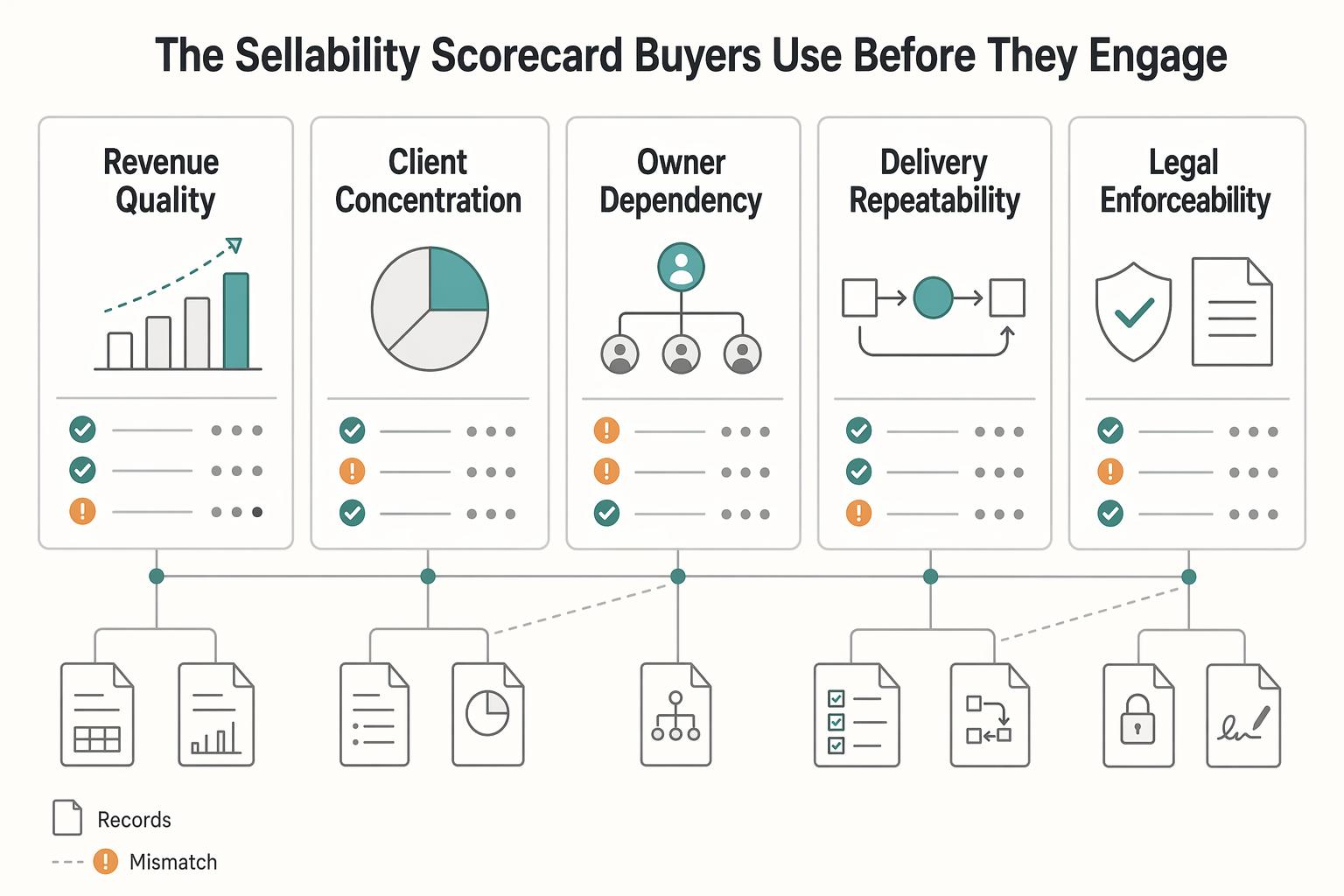
**When you sell your freelance business, buyers are paying for a reliable asset they can verify, transfer, and run, not for your personal hustle.** A common mistake is mixing advice about winning clients with advice about closing an acquisition. Those are different jobs. This guide is a sellability-to-close playbook designed to reduce surprises before buyer conversations begin.