

Quick Answer
Start by writing a one-page freelance marketing plan tied to one business result and a short list of recurring actions. Keep scope tight, assign clear roles across outbound, inbound, and referrals, and measure qualified leads, proposals, and wins instead of raw activity. Set a fixed review rhythm so each cycle ends with a decision, not open-ended notes. Add early intake gates for scope fit, payment clarity, and required documents such as a W-8 or SOW before work begins.
Start With the Business Outcome, Then Build the Weekly Plan#
A usable freelance marketing plan starts with one business result, not a pile of activity. If a task cannot be tied to pipeline movement, client acquisition, or revenue, cut it before it takes up calendar space.
That may sound strict, but it prevents a common failure mode: visible marketing work that never does a real business job. Random posting is not a strategy, and unplanned activity often turns into wasted effort, weak engagement, and missed opportunities. A plan should make three things clear: what you are trying to change, who owns each action, and how you will know whether it worked.
Build the outcome-to-action chain#
Keep the first draft simple enough to finish in one planning session. You need four links, in order:
| Step | Requirement |
|---|---|
| Define the target client segment | Write one sentence that names who you want more of, specific enough that you could sort prospects into yes or no |
| Define one business outcome | Pick the result you need for the next planning period, such as more qualified leads, more proposals sent, a better close rate, or higher monthly revenue |
| Map each weekly task to one KPI | Every recurring action should point to a metric in your tracking system |
| Remove anything that does not connect | If you cannot explain how the task should move the number, it does not belong in version one |
In practice, your work stops being "post on LinkedIn," "send emails," or "update portfolio." It becomes "send targeted outbound messages to increase qualified conversations" or "publish one case study to increase inquiry quality." That wording matters because it forces a yes or no decision. If the task has no measurable job, you are just staying busy.
Treat this page as a decision document, not a motivation note. Test every task against three verification points:
- Owner: who does it each week
- Metric source: where the number comes from
- Review trigger: what tells you to revisit it
If any of those are missing, the task is not ready. For example, "post three times this week" is weak if no one knows whether success means reach, replies, inquiries, or booked calls. "Send follow-ups on open proposals, tracked in pipeline status, and review if proposal count rises but closes do not" is much stronger.
Give each channel one job#
Channel confusion often comes from overlap. You do not need every channel doing the same work.
| Channel | Primary job | Useful KPI to watch | Main tradeoff | Cut it back when |
|---|---|---|---|---|
| Outbound | Start direct conversations with a defined segment | Replies, qualified calls, proposal count | Can produce fast feedback, but quality can drop if targeting or follow-up gets rushed | You are sending volume but not learning which segment or message creates qualified replies |
| Inbound | Build trust and help prospects self-select | Inquiries, qualified inbound leads, content-assisted calls | Can build over time, but results may be slower and consistency matters | You are publishing regularly but cannot tie content to inquiries or lead fit |
| Referrals | Generate warm introductions from clients, peers, or partners | Intro to call rate, call to proposal rate by source | Can produce strong-fit leads, but volume can be less predictable | You ask for referrals casually without tracking which sources send good opportunities |
The goal is not to force each channel into a silo. It is to stop duplication. If outbound already owns first conversations, your content should usually support trust instead of trying to do the same job twice. If referrals are already producing strong-fit leads, you may not need broad awareness activity right now. Cut overlap before you add another tactic.
Review fast and reallocate faster#
Set recurring time to review the plan. A practical checkpoint is a day or half a day each month to execute plan items, review testing and measurement, and make written decisions. This is where the document becomes operational instead of aspirational.
Use this short rule set:
- Keep a task if the KPI is moving and lead quality is holding up.
- Adjust it if effort is happening but the signal is weak or unclear.
- Pause it if you cannot verify ownership, metric source, or business impact.
- Reallocate time before adding new tactics, especially when client delivery gets heavy.
When workload spikes, the wrong move is usually "do more marketing in more places." The better move is faster correction. Protect the channel with the clearest business job, pause duplicated effort, and keep measurement intact so the next part of the plan is built on facts instead of guesses.
Related: What is a Suspicious Activity Report (SAR) and When to File One.
Gather Prerequisites Before You Build the Plan#
Before you pick tactics, lock your setup: baseline, measurable goal, operating capacity, and review cadence. Without that, a freelance marketing plan usually turns into activity you cannot verify.
Use one shared planning document so execution stays in one place. Include your calendar, clear responsibilities, and KPI tracking so the plan is actually operable week to week.
Use a pass/fail setup check#
Treat this as a pre-build checklist. If an item fails, fix it before you expand channels.
| Prerequisite | What to capture | Pass signal | Fail signal |
|---|---|---|---|
| Baseline snapshot | Current performance by channel, with activity metrics separated from outcome metrics | You can show current leads and revenue, and what each channel is producing | You only track output volume (posts, sends, impressions) |
| Measurable goal | One goal written with SMART criteria, plus a primary KPI and supporting KPI | Progress and success are clearly measurable and tied to a business result | The goal sounds positive but cannot guide channel decisions |
| Capacity limit | Real weekly time you can protect for marketing while client work is active | The workload fits your actual schedule | The plan assumes time you do not consistently have |
| Review cadence | A fixed review rhythm and a documented decision each cycle | Reviews produce written changes based on results | Reviews become updates with no meaningful adjustments |
Keep activity and outcomes separate on purpose. Activity tells you whether work happened; outcomes tell you whether the work moved leads or revenue. If a metric is on the page, label its source (for example, CRM, pipeline tracker, or invoice report) so you can trust it later.
Tighten the goal before you choose channels#
Set the goal first, then choose channels that support it. Marketing activity should follow the business objective, not the other way around.
If your objective is more qualified leads, define the KPI pair before execution starts. For example, use one KPI for lead quality and one KPI for downstream movement, then verify your current numbers before setting a target.
Limit scope early and avoid over-planning#
Start with 1-2 marketing channels and optimize them before expanding. Narrow scope makes it easier to execute consistently, learn faster, and improve what is already working.
Watch for two common failure patterns: analysis paralysis in planning, then scattered execution once you feel behind. If the document keeps growing while follow-through gets weaker, simplify the plan and focus on the channels you can run well now.
For referrals, see Build a Freelance Referral Program Without Payout Disputes.
Build a One-Page Marketing Plan You Can Actually Operate#
Turn your setup into a one-page operating plan you can scan quickly and execute without rethinking basics. If it will not fit on one page, tighten it until each decision is clear.
Use this page as your execution roadmap, not your full strategy document. A concise structure helps reduce decision fatigue, keeps next actions obvious, and lowers the risk of random, disconnected marketing activity. You can still maintain a broader strategy elsewhere.
Fill the page in one working session#
Complete the page in this order so the plan stays practical:
| Plan section | What to include |
|---|---|
| Who do you serve | Ideal client profile in one tight sentence: company type, buyer role, and the core problem you solve; add one disqualifier if poor-fit leads are common |
| What do you sell | Core offer in plain language: service, intended result, and who it is for; if you have multiple services, list only the one this plan supports |
| How demand should show up | A focused channel mix; for each channel, define its job, the weekly actions, and the owner for each action |
| What happens after interest appears | The handoff path from first response to call, proposal, and onboarding; assign an owner at each step so follow-up does not stall |
- Who do you serve
Write your ideal client profile in one tight sentence: company type, buyer role, and the core problem you solve. If poor-fit leads are common, add one disqualifier.
- What do you sell
State your core offer in plain language: service, intended result, and who it is for. If you have multiple services, list only the one this plan supports.
- How demand should show up
Choose a focused channel mix. For each channel, define its job, the weekly actions, and the owner for each action.
- What happens after interest appears
Map the handoff path from first response to call, proposal, and onboarding. Assign an owner at each step so follow-up does not stall.
Add the monthly review date at the bottom. A reader should be able to identify who you help, what you sell, how demand is generated, and what happens next.
Put decision rules beside each channel#
Write compact if/then rules now, not during review. Use verified baselines where possible, and mark any missing number as Current threshold pending pipeline-data verification until confirmed.
| Channel | Role | Expected signal | Failure trigger | Next action |
|---|---|---|---|---|
| Outbound email or LinkedIn | Start conversations | Qualified replies and booked calls | Weekly actions completed, but qualified replies stay below your set baseline for one review cycle | Tighten segment, revise message, keep volume steady until fit improves |
| Content or newsletter | Build trust | Inbound inquiries, repeat site visits, call bookings from content | Publishing continues, but inquiry or call movement stays below your set baseline | Narrow topic focus and strengthen the CTA |
| Referrals | Generate warm introductions | Intro-to-call movement and proposal quality | Intro volume exists, but calls or proposals stay below your set baseline | Update referral brief, disqualifiers, and handoff expectations |
Keep reporting simple and separated: track activity metrics and outcome metrics in distinct columns. Add a named source beside each metric so review decisions stay auditable. If capacity drops, reduce scope before follow-up quality slips.
For a content lane that survives client work, see Build a Freelance Content Calendar That Survives Client Work.
Choose Your Channel Mix With Explicit Tradeoffs#
Pick the smallest channel mix you can run consistently. Reliability beats reach when your delivery load is high, your message is still evolving, or follow-up is uneven.
Run one customer-outcome hypothesis across every active channel: who you help, what outcome you create, why you can create it, and how you measure success. Buyers often need over 10 touchpoints before converting, and many expect a consistent experience across platforms. If your email, LinkedIn, and referral message do not match, you are not coordinating a system. You are running isolated channels that split attention.
| Channel | Primary job | Supporting KPI | Named owner | Coordination load | Expected signal | Failure trigger |
|---|---|---|---|---|---|---|
| Outbound | Start conversations | Qualified-reply benchmark from your pipeline data | One person owns list, message, and follow-up | Medium | Replies that turn into booked calls | Activity is logged, but lead fit is weak or replies do not move to calls |
| Inbound content | Build trust | Inquiry or call-booking benchmark from your pipeline data | One person owns topic, publish date, and CTA | High if content and follow-up are split | Repeat visits, inbound inquiries, booked calls | Content ships, but no movement to inquiry or call stage |
| Referrals | Create warm introductions | Intro-to-call benchmark from your pipeline data | One person owns partner list and follow-up | Low to medium | Warm intros with clear fit | Intros arrive, but proposals stall or fit is inconsistent |
If channels start conflicting, fix this before adding anything new: reduce scope, align the core message, and reassign ownership. If delivery pressure spikes, cut channel count before copy quality or follow-up quality drops.
At each review cycle, log three items per channel: lead fit, conversion movement, and operational drag. Use both qualitative notes and quantitative signals so you do not optimize for vanity activity alone. If evidence stays weak, pause and reallocate.
Related reading: How to Create a Content Flywheel for Your Freelance Business.
Turn the Plan Into a Weekly and Monthly Operating Cadence#
Your plan stays useful only if it runs on a weekly schedule and a monthly review, not ad-hoc effort. If marketing is not blocked on your calendar before client work expands, it usually gets deferred and then dropped.
Start by planning the week before it begins. One published solopreneur workflow recommends planning on Sunday afternoons and assigning only 80% of capacity so the week can absorb changes. Treat that as a practical checkpoint, not a universal rule.
Weekly operator checklist#
Keep this checklist in the same working document as your channel plan, KPIs, and content calendar.
- Schedule marketing blocks first: prospecting, follow-up, content distribution, referral outreach, and pipeline cleanup.
- Protect slack around those blocks so client surprises move work instead of deleting it.
- Review what happened at week-end: completed, intentionally moved, or dropped. Repeated drops usually signal scope or ownership problems.
- Adjust only where evidence points. If follow-up happens but content does not ship, reduce content scope or reassign ownership. If outreach volume is fine but lead fit is weak, revisit segment and message.
A content calendar helps because it shows when and where work will publish. If a post, email, or follow-up sequence has no date, owner, or channel, it is not actually scheduled.
| Cadence | Purpose | Inputs | Outputs | Decision trigger |
|---|---|---|---|---|
| Weekly cadence | Keep execution consistent during delivery-heavy weeks | Calendar blocks, current priorities, pipeline status, content calendar | Completed work, moved work, updated next actions | Blocks are repeatedly dropped or one channel never gets finished |
| Monthly cadence | Decide whether each channel still deserves time | KPI movement, execution logs, lead-fit notes, ownership friction | Keep, adjust, pause, or replace decisions | Results stay inconsistent, costs feel unpredictable, or learning is not compounding |
Monthly decision log#
Run one monthly review and record the decision in four lines:
- What changed
- Why
- Expected signal
- Next check
Keep outcomes simple: keep as-is, adjust message or scope, pause, or replace. That discipline matters because what worked in January can underperform by March if you do not refine it. Without a regular review loop, effort and results tend to become inconsistent, and improvements do not compound.
Install Client Qualification and Compliance Gates Early#
Once your calendar is protected, keep unqualified work off it. Use early gates as pass-or-pause decisions: no proposal before discovery, no SOW before scope is clear, and no kickoff before a binding agreement defines key terms.
Start with written intake criteria you apply the same way every time. Keep it focused on scope fit, workable commercial terms, realistic timing, clear change handling, and clear ownership on both sides. If any one of those is unclear, pause and clarify before moving forward. That structure is one of your best defenses against scope creep and margin erosion.
| Checkpoint | Proceed now | Pause and clarify |
|---|---|---|
| Qualification | Work fits your offer, terms are workable, and timeline is realistic | Scope is drifting, terms are unclear, or timing is not credible |
| Discovery | Written notes cover goals, constraints, deliverables, timeline, and what "done" means | You are still relying on assumptions or incomplete context |
SOW or proposal readiness | In-scope, out-of-scope, change process, and ownership are documented | Proposal would be based on guesswork or unresolved dependencies |
| Pre-kickoff agreement | Binding agreement is signed and payment schedule, IP ownership, and change handling are explicit | Core contract points are still open |
Discovery is the gate that turns conversations into usable scope. If your notes do not clearly capture goals, constraints, deliverables, timeline, and completion criteria, you are not ready to issue an SOW or proposal.
Before kickoff, hold the line on contract clarity. A strong agreement formalizes the relationship and makes payment schedule, IP ownership, and change handling explicit before work starts. Starting early may feel faster, but it usually creates the same problems you are trying to prevent: scope creep, unpaid invoices, and admin overhead that reduces profit.
Execute Outbound Marketing Without Looking Spammy#
Outbound feels human, not spammy, when every touch is targeted, relevant, and rule-based before you send anything. Narrow targeting first so you can tell whether weak results come from the list, the message, or the offer.
Start with your ICP, then segment by fields you can review later, such as location, lead status, campaign, role, or another custom field tied to a real problem. Before outreach, confirm each segment can receive the same core message for the same reason. If you cannot state that reason in one line, the segment is too broad.
| Criteria | Useful outreach | Spam-like outreach |
|---|---|---|
| Audience fit | Narrow segment that matches your ICP | Broad list with mixed roles, needs, or buying context |
| Message specificity | Mentions a recognizable problem and relevant solution | Uses generic claims that could fit anyone |
| Follow-up behavior | Each touch adds value, a new angle, or a clear reason to reconnect | Repeats the same ask with no new context |
| Next-step clarity | One simple CTA with an obvious next action | Vague request or multiple asks in one message |
Set follow-up rules before the first send: follow up, wait, or stop. Keep those rules consistent within each segment, and make each follow-up add something new instead of sending repeated "just checking in" messages.
Use one shared response log across email and LinkedIn. Track segment, channel, message angle, reply type, objection type, next action, and whether a reply should be flagged as a compliance risk. If a segment gives mostly brush-offs across channels, refine the list; if replies come in but stall at the CTA, adjust the offer or ask.
Lead with outcomes, not a full service menu. Open with the problem they likely recognize, the result you help move, and one low-friction next step.
Keep one core message across channels, but adapt format. On LinkedIn, stay short and anchor to visible context (role, post, or company change). In email, use the same core claim with slightly more context and a clear CTA.
Add simple guardrails to your workflow: log contact status, record opt-outs in your tracker, and stop outreach when someone asks not to be contacted. For legal or jurisdiction-specific requirements, keep a note such as Current requirement pending legal review until the correct requirement is confirmed.
Build Inbound Assets That Keep Working While You Deliver Client Work#
Inbound earns its place in your plan when it can keep creating relevant paths to contact while you are busy delivering, but it is usually a slower-return channel. Treat it as a compounding system, not a quick fix.
Build inbound around what you execute best, then document it in a real content plan. Your plan should state what you will publish, when and where it will be distributed, and how each asset supports a business goal.
Use your content calendar as an operating tool, not a list of ideas. For each asset, capture reader intent, distribution channel, ownership, and how you will track progress with KPIs so you can review and adapt the plan over time.
| Criteria | Durable inbound asset | Low-traction content output |
|---|---|---|
| Buyer relevance | Tied to a specific client problem and offer | Broad advice with mixed-fit audience |
| Execution fit | Uses a format you can sustain consistently | Uses a format you cannot maintain |
| Operating clarity | Scheduled in a calendar with responsibilities and KPI tracking | Published ad hoc with no clear workflow |
| Decision quality | Easy to evaluate and improve in plan reviews | Hard to tell what to keep, change, or stop |
Keep social optional, not automatic. Social can have lower purchase intent than search traffic and may convert too weakly for some freelancers, so treat channel effort as a tradeoff and keep investing where inquiry quality is stronger.
When you need a practical supporting example, link to one relevant deeper read, such as A Freelancer's Guide to LinkedIn Marketing.
For a step-by-step walkthrough, see Build a Freelance Customer Journey Map You Can Run Every Week.
Design a Referral System Instead of Hoping for Word of Mouth#
Treat referrals as a repeatable channel, not passive word of mouth. They can be a strong growth path, but if you rely on them without a system, lead flow can become inconsistent.
| Checkpoint | Operated referral system | Passive word-of-mouth |
|---|---|---|
| Who you ask for | Introductions to people who fit your ideal client profile | Any introduction, regardless of fit |
| How you ask | You ask directly as part of routine client moments | You wait and hope clients think of it |
| Handoff support | You share a short, forwardable referral template | You leave contacts to write the intro from scratch |
Start by defining who should be introduced to you. If someone cannot clearly describe your ideal client profile, they are unlikely to send strong-fit referrals.
Then make the ask easy to act on. Use a short referral template a client can forward, and ask after delivery satisfaction checks when results are still fresh.
Finally, build referral asks into your normal workflow instead of waiting for pipeline dips. Happy clients often do not refer unless prompted, so consistency matters more than occasional urgency.
Set Stop, Scale, and Replace Rules for Every Channel#
Set your Stop, Maintain, Scale, and Replace rules before review day so decisions are based on evidence, not preference.
Use one shared scorecard for every channel and review the same fields each time: effort hours, cash spend, lead fit, commercial outcome, and delivery strain. If each channel is judged with different metrics, you are not making trade-offs; you are protecting favorites. Quick check: can you pull those same fields for every channel from your tracker in one pass?
| Decision | Required evidence | Common failure pattern | Immediate next action |
|---|---|---|---|
| Stop | Repeated low fit or weak commercial outcome against your verified threshold | Keeping a familiar channel active without results | Remove its calendar blocks and spend |
| Maintain | Stable lead fit and acceptable commercial outcome, with no clear case to expand yet | Changing too much and losing your baseline | Keep cadence fixed until the next review |
| Scale | Strong lead fit, clear proposal or revenue movement, and constraints still hold | Increasing volume before checking capacity | Increase one input only (for example, send volume or publishing frequency) |
| Replace | Activity is happening, but the channel role or audience is off | Adding more effort instead of changing the lane | Change the channel or its role and document why |
Define these triggers for a 90 day window, then reset quarterly if that cadence fits your business. A useful plan states what you will not do, not only what you will do.
If a channel looks busy but conversion is weak, do not scale it yet. Diagnose first: narrow the segment, sharpen the offer, or run one A/B test and review the result. Also protect against marketing blackouts during heavy delivery, because long gaps in marketing can leave you short on clients later.
Avoid the Most Common Failure Modes and Recover Fast#
If progress stalls, diagnose your system before you change channels. A common root cause is business structure and execution discipline, not talent, so start with capacity, pipeline continuity, and onboarding control.
| Failure mode | Early signal to watch | What it usually means | First recovery move |
|---|---|---|---|
| Changing tactics too early | You keep switching channels before logs are consistent | You do not have clean evidence yet | Hold the current mix for a full review cycle and change one variable only |
| Commitments outrun capacity | Prospecting blocks disappear, deadlines slip, workload pushes past what you can handle | Intake discipline is too loose | Tighten screening for scope fit, timeline realism, and communication expectations before new proposals |
| Marketing blackout | Delivery gets busy, then pipeline activity drops and follow-up stalls | Selling stopped while client work expanded | Restore minimum weekly blocks for follow-up, prospecting, and pipeline cleanup |
| Onboarding disorder after a yes | Scattered messages, missing files, unclear expectations, moving goalposts | Client disorder is spilling into delivery | Pause kickoff until ownership, scope record, and approval path are clear |
Use one more pressure test on pricing: if weak demand leads you to cut rates, you can end up working more hours for less room to operate. Use this cycle to fix the broken step first, then decide whether a channel change is still needed.
If pipeline continuity is the repeated issue, rebuild the handoff between outreach and follow-up with Build a Freelance Sales Funnel You Can Run in One Hour a Week.
For outreach psychology, see Use the Reciprocity Principle in Your Freelance Marketing.
Put This Into Practice This Week#
This week's goal is simple: finish with a freelance marketing plan you can run on a recurring cadence, not a perfect document you abandon after a few days. Keep it to one page, make the work visible, and focus on consistency and follow-through.
| Day | Focus | Output |
|---|---|---|
| Day 1 | Build your one-page plan and baseline in one place | One tracker that includes your goal, current baseline, ideal client note, core offer, and the fields you will review each week |
| Day 2 | Lock your weekly execution blocks on the calendar | Recurring blocks for outreach, follow-up, and review |
| Day 3 | Publish and send your first week of activity | One outbound batch and one inbound proof asset or post, each pointing to a clear next step |
| Day 4 | Tighten your intake notes and qualification routine | A short checklist for fit and a consistent place to capture discovery notes |
| Day 5 | Run a mini review and log decisions | One decision log entry with what you will keep and what you will change next week |
- Day 1: build your one-page plan and baseline in one place.
Output: one tracker that includes your goal, current baseline, ideal client note, core offer, and the fields you will review each week. If it is spread across too many tabs, simplify now.
- Day 2: lock your weekly execution blocks on the calendar.
Output: recurring blocks for outreach, follow-up, and review. If those blocks are not scheduled, they usually get replaced by delivery work.
- Day 3: publish and send your first week of activity.
Output: one outbound batch and one inbound proof asset or post, each pointing to a clear next step. Track whether responses are moving toward real conversations, not just activity volume.
- Day 4: tighten your intake notes and qualification routine.
Output: a short checklist for fit and a consistent place to capture discovery notes. This keeps next week's targeting decisions clearer.
- Day 5: run a mini review and log decisions.
Output: one decision log entry with what you will keep and what you will change next week. The plan matters, but your consistency matters more, and quitting early is a common failure mode.
| Channel | Primary job | Keep signal | Replace signal |
|---|---|---|---|
| Outbound outreach | Start direct conversations | Replies from good-fit prospects with a clear next step | Activity increases, but replies stay vague or poorly matched |
| Inbound proof asset | Build trust and reduce repeated explanation | Prospects reference it and move faster to a next step | Attention appears, but qualified follow-up does not |
| Referral outreach | Generate warm introductions | Introductions come from people who understand your fit | Introductions are friendly but consistently off-target |
Before you end the week, confirm three things: your calendar blocks are live, your tracker has baseline and response notes, and your monthly review date is set. If those are done, Monday starts with execution, not rebuilding the plan.
For lead-magnet planning, see Create a Freelance Lead Magnet That Filters for Ideal Clients.
Frequently Asked Questions
What is a freelance marketing plan, in practical terms?
A freelance marketing plan is a short, executable plan for winning clients and reviewing results. It should be specific enough to guide weekly actions and simple enough to update as real performance data comes in. The value is not in writing more pages. The value is in executing consistently and making decisions faster because your priorities and checkpoints are already clear.
What should be included in a one-page plan for a solo freelancer?
A one-page plan can cover target clients, core offer, channel focus, weekly actions, and review cadence. Keep checkpoints tied to performance data so reviews produce actions, not open discussion. Track concrete outcomes like leads and revenue from the start, then adjust based on results. Add short risk notes so acquisition choices stay connected to delivery capacity and onboarding reality.
How many channels should I run at the same time?
Start with 1-2 marketing channels and optimize them before expanding. Running too many channels at once usually lowers execution quality and makes review data harder to trust. Expansion should come after you can sustain consistent cadence in your current mix. If consistency breaks, reduce scope before adding anything new.
How do I choose between outbound marketing and inbound marketing first?
There is no single order that fits everyone. Start with the path you can execute consistently now, and judge it using lead and revenue data. Keep focus narrow instead of splitting effort across too many channels early. The priority is to keep your pipeline active so it does not run dry.
When should I stop a tactic like Google Ads or Instagram?
Pause a tactic when review data shows rising effort or spend without better lead or revenue outcomes. Write the pause decision clearly, then reallocate time or budget to a channel with stronger fit signals. Do not keep weak tactics active just to maintain channel presence. Presence without progress is expensive distraction.
How do I avoid feast-or-famine cycles when client work gets busy?
Protect a minimum weekly marketing cadence even in heavy delivery periods. Use recurring calendar blocks that are realistic for your current workload, and reschedule missed blocks inside the same cycle. Keep at least one regular review so pipeline health does not become invisible. If your pipeline runs dry, existing clients can gain more leverage over your schedule and terms.
What compliance items should I prepare before onboarding cross-border clients?
Prepare a practical checklist for worker classification, contract terms, payment setup, tax responsibilities, and data handling responsibilities. Clarify ownership of each compliance step before kickoff, especially where classification affects tax, data privacy, and labor-rights exposure. If a requirement is unclear, escalate early instead of guessing. The goal is clear ownership, lower legal and reputational risk, and realistic start timing.
Try a related tool
Researched and edited by the Gruv editorial team. Gruv builds cross-border billing, payouts, and finance-operations software for global businesses.
Sources
Includes 1 external source outside the trusted-domain allowlist.
- academia.edu/95874861/The_1_Page_Marketing_Plan_by_Allan_Dibtrusted
- cfo.asu.edu/cfo-pdf-site-maptrusted
- chicagounbound.uchicago.edu/cgi/viewcontent.cgitrusted
- digitalplanet.tufts.edu/wp-content/uploads/2022/10/Ease-of-Doing-Dig...trusted
- dol.gov/sites/dolgov/files/VETS/files/OBTT_Marketing...trusted
- egrove.olemiss.edu/cgi/viewcontent.cgitrusted
- scholarworks.waldenu.edu/cgi/viewcontent.cgitrusted
- adamerhart.com/how-to-create-a-marketing-planexternal
Educational content only. Not legal, tax, or financial advice.
Related Posts

Digital Nomad Health Insurance Comparison for Long-Stay Moves
Use focused time now to avoid expensive mistakes later. Start with a practical `digital nomad health insurance comparison`, then map your route in [Gruv's visa planner](/tools/visa-for-digital-nomads) so we anchor policy checks to your real plan before pricing pages pull you off course.

LinkedIn for Freelancers Who Want a Predictable Client Pipeline
Treat LinkedIn as two jobs you run at the same time: a credibility check and a conversation engine. If you only chase attention, you can get noise. If you only send messages, prospects may click through to a thin profile and hesitate.
What is a Suspicious Activity Report (SAR) and When to File One
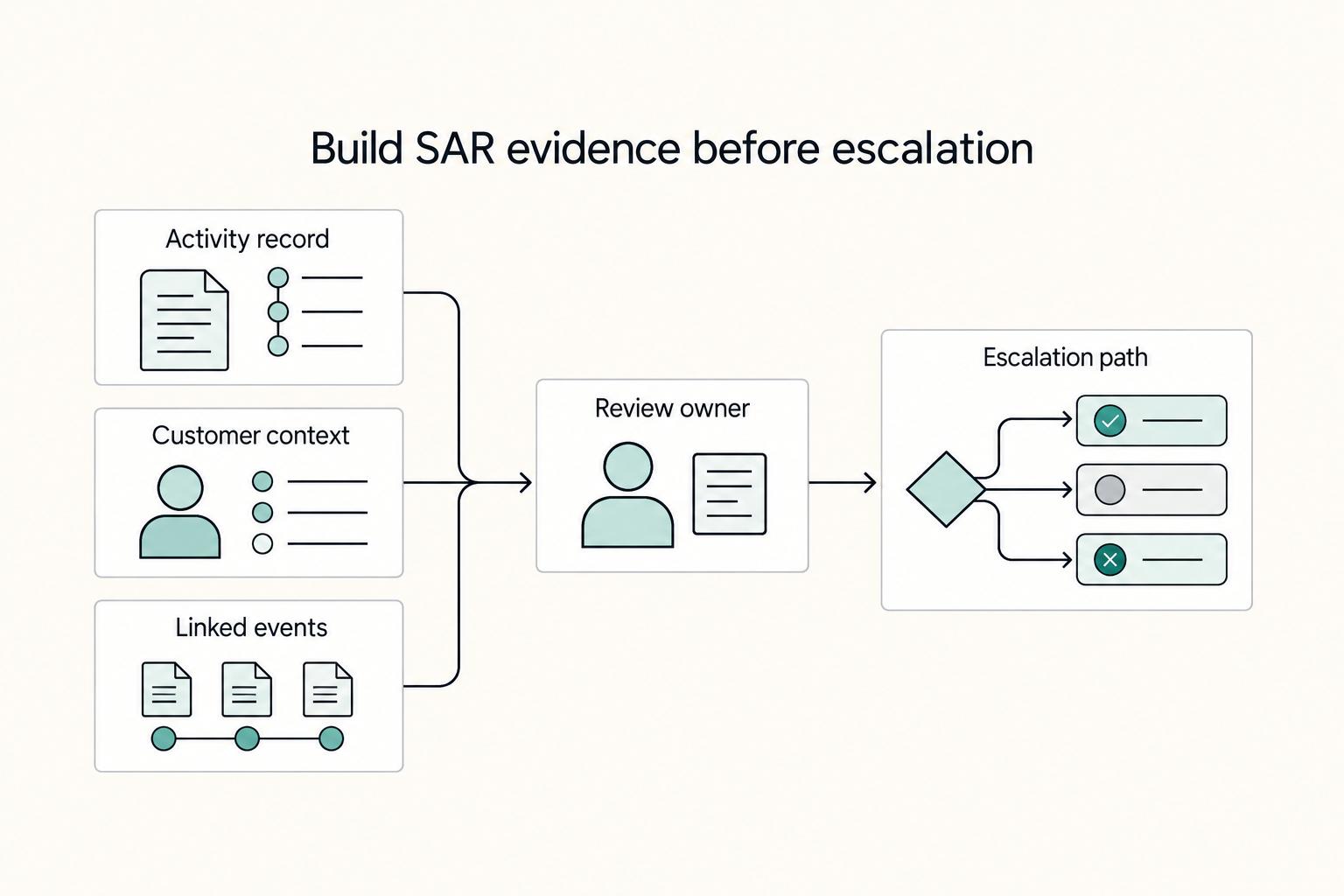
When activity looks off, the next move is to capture facts and escalate through the right channel without making accusations. The goal is a response that is proportionate, traceable, and easy for a regulated reviewer to follow.