

Quick Answer
Create an Invoices database, then use New → + New template to build a reusable invoice draft. Include legal identities, a unique sequential ID, issue/service/due dates, itemized lines, and clear payment-routing details, then run a pre-send compliance check for cross-border cases. For EU B2B work, validate VAT status and reverse-charge handling before release; for U.S. payer requests, provide the appropriate W-9 or W-8 form through the payer’s requested secure process. Keep each invoice tied to client and project records so approvals and follow-up stay consistent.
What an invoice needs to be accepted and paid without rework#
Step 1. Define what "bulletproof" means. A bulletproof invoice is not just a document. It is a document backed by a repeatable process. It includes the required invoice fields, covers cross-border tax and payer checks where applicable, and fits cleanly into your Notion setup so creation, approval, payment, and recordkeeping stay consistent. Payment delays often come from missing details, unclear payment instructions, and compliance gaps that force back-and-forth before anyone can approve the bill.
Step 2. Treat invoice errors as payment risks, not admin trivia. When an invoice is incomplete, you usually do not get a free pass. You get rework. In U.S. federal procurement, for example, an invoice that does not meet the requirements must be returned within 7 days after receipt. Requirements differ by regime, but incomplete invoices still create avoidable friction. Leave out a unique invoice number, a clear description of charges, or the right cross-border tax details, and you create a delay that did not need to happen. The basic failure mode is simple: the work is done, but payment stalls because the paperwork is not.
Checkpoint: before you build your Notion invoice template, make sure a third party could read one invoice and answer a few basic questions. Who is billing, who is paying, what was delivered, when it was delivered, when payment is due, and how the client should pay.
Step 3. Use the rest of this guide with a clear success test. Build this in three layers: core invoice fundamentals, the international compliance layer, and the Notion operating setup using a database template plus relations to clients or projects. The goal is not to make the invoice look professional. The goal is to have it accepted without revisions, make the payment path obvious, and keep records clean enough for bookkeeping when you need to prove income or support deductions.
The Universal Foundations: Non-Negotiable Invoice Components#
If you want faster approval and fewer payment disputes, validate these fields before you send. Build your Notion template around this checklist so you standardize the right details, not just the layout.
| Field | Purpose | Common mistake | Pre-send check |
|---|---|---|---|
| Seller, buyer, and payment-routing details | Confirms who is billing, who must pay, and where payment should be sent | Using a trading name only, missing billing details, or incomplete payout instructions | Do seller legal details, buyer billing details, and payment-routing details match your contract and payout setup? |
| Unique sequential invoice ID | Creates one traceable record for approval, bookkeeping, and audit trails | Reused IDs, ad hoc naming, or duplicate numbers after revisions | Is this ID unique, in sequence, and logged once? |
| Key dates | Makes payment timing and service timing clear at a glance | Showing only one date or leaving due timing implied | Are issue date, service date, and due date all explicit? |
| Itemized lines | Shows exactly what was delivered and how totals were calculated | Vague lines with no quantity/extent or rate | Can a reviewer reconstruct the total from line descriptions, quantity/extent, rate, and subtotals? |
Step 1. Confirm legal identity and payment route first#
Start with legal identity, not branding. Include your business legal details, the customer's billing details, and the payment-routing details the payer needs to release funds through their process.
This matters because missing required information can cause an invoice to be treated as improper and pause payment handling. Before you send, verify any region-specific required fields for your invoice type.
Step 2. Use one sequencing rule for invoice IDs#
Pick one rule and keep it consistent: each invoice gets one unique ID in a sequence, and that ID is never reused. The specific format can vary, but the sequencing discipline cannot.
This prevents delays because duplicate or inconsistent IDs trigger approval and reconciliation issues. If you void a draft, keep the number marked as void in your register instead of reassigning it; if a tax treatment error requires correction, issue a credit note and revised invoice rather than overwriting a sent record.
Step 3. Make dates and line items unambiguous#
State all key dates directly on the invoice: issue date, service date, and due date. Do not rely on assumptions, even if a default payment window may apply when no date is agreed.
Then itemize the work so each line shows what you supplied and how you priced it. This prevents delays because reviewers can approve faster when the service scope and pricing math are explicit.
For a step-by-step walkthrough, see How to Create a Project Timeline in Notion.
The International Compliance Layer: Mastering Cross-Border Invoicing#
Cross-border invoices are usually delayed by classification gaps, not formatting. Before you send, run this order every time: confirm EU VAT treatment, match any U.S. payer request to the correct tax form, then document currency handling so your records are defensible.
Step 1. Confirm EU customer status before applying reverse charge
For EU services, Article 44 is the default B2B place-of-supply rule, with service-specific exceptions. Article 196 makes the customer liable for qualifying Article 44 services when the supplier is not established in the customer's EU country. Check the transaction and any relevant fixed establishment; business status alone is insufficient.
- Confirm the customer is acting as a business and identify the service and countries involved.
- Collect the VAT number where applicable and save the VIES validation result.
- Check supplier establishment, any participating fixed establishment, and service-specific place-of-supply exceptions.
- Apply reverse charge only when the transaction qualifies, using the required invoice wording.
When reverse charge applies, include a reference to that treatment under Article 226, but do not hard-code one phrase across countries. Verify the jurisdiction-approved wording from official guidance, client requirements, or tax-advisor review before use.
Save the dated VIES result and supporting record in the client file. A valid result supports the customer-status check but does not establish the full VAT treatment.
Step 2. Match U.S. payer requests to the right form
If a U.S. payer or AP process requests tax documentation, send the matching form to that requester. These forms are provided to the requester, withholding agent, or payer, not sent directly by you to the IRS.
| Your status | Form | Use it when |
|---|---|---|
| U.S. person or U.S. business | W-9 | The requester needs your TIN for an information return |
| Non-U.S. individual | W-8BEN | A U.S. payer or withholding agent requests proof of foreign status |
| Non-U.S. entity | W-8BEN-E | A U.S. payer or withholding agent requests the entity version |
Ask one setup question early: "Will your payer require a W-9 or W-8 form before payment approval?" Track the answer and file status before invoice submission. For W-8BEN, track validity because instructions state it generally remains in effect through the last day of the third succeeding calendar year unless circumstances change. Use the current IRS form and instructions for the recipient's actual status; the table summarizes common cases, not every withholding exception.
Step 3. Document multi-currency choices so bookkeeping is defensible
You can invoice in other currencies, but you should record your conversion method every time. Keep this checklist:
- Invoice currency (ISO code, for example
USD,EUR,GBP) - Conversion method used for internal accounting
- Rate source and rate date
- Internal bookkeeping/functional currency
- Applicable tax treatment and invoice wording for the destination
Keep the invoice currency separate from the currency used for bookkeeping or tax reporting. U.S. tax returns report amounts in USD; record the conversion method, source, and date used. Confirm local tax-display requirements before issuing a foreign-currency invoice.
Step 4. Track minimum compliance fields in Notion
Use your Notion template to prevent missing-document blocks, not to create compliance on its own. Link invoices to clients with a relation property, then track the minimum fields needed for release.
- Per client: legal name, country, business/consumer status, VAT number, VIES status, VIES check date, VAT evidence file/URL, U.S. tax form type, tax form received status, tax form file, AP/payer contact
- Per invoice: unique invoice ID, invoice currency, tax treatment, reverse-charge reference status, FX source, FX date, internal converted amount, bookkeeping currency, compliance status
Pre-send rule: every compliance field for that invoice must be complete, attached, or marked not applicable. Notion can track this with status, date, relation, URL, file, and unique ID properties, but the template itself does not make the invoice legally or tax compliant.
You might also find this useful: The Complete Guide to Invoicing as a Freelancer.
Beyond the Document: Integrating Your Invoice into a Business OS#
Treat your invoices database as your single source of truth, not a folder of finished files. Use one database, then layer relations, formulas, and views so you can quickly decide what needs action, what is paid, and what is still outstanding.
Step 1. Build one master invoices database#
Start with one master database and keep the schema lean. Add these properties first:
| Property | Type | What it helps confirm |
|---|---|---|
| Invoice Number | Title | Unique identifier assigned before sending |
| Client | Relation to Clients | Who owes you |
| Project | Relation to Projects | Which project it maps to |
| Currency | Select | ISO currency code |
| Amount Due | Number | Invoice total in that currency |
| Issue Date | Date | Invoice date |
| Due Date | Date | Payment deadline |
| Status | Status | Draft, Sent, Paid or Overdue |
| Payment Method | Select | How payment is expected |
| Sent Date | Date | When it was sent |
| Paid Date | Date | When receipt was confirmed |
Use consistent status labels. Filter outstanding invoices by a populated Sent Date and a Status other than Paid; this avoids maintaining a separate checkbox that can drift from payment status. Mark partial payments separately and keep the remaining amount due visible.
Quick check: from one invoice row, you should be able to confirm who owes you, which project it maps to, how payment is expected, when it was sent, when it was paid, and whether anything is still outstanding.
Do not duplicate invoices across pages. Use linked views of the same database so you keep one source of truth.
Step 2. Add relations only when they answer a decision#
Add relation-driven fields only when they answer a real question.
For the Client relation, your linked view should answer:
- Which invoices for this client are still outstanding?
- When was the last invoice sent?
- How many invoices are marked paid in the period you review?
For the Project relation, your linked view should answer:
- Which invoices belong to this project?
- Has this project produced paid revenue yet?
- Which sent invoices still need follow-up?
If a property does not change a decision, skip it for now. Open one client page and one project page; if the linked invoice view does not answer a money question directly, simplify before you add more.
Step 3. Use formulas and views to trigger action#
Use formulas for operational logic, not decoration. If you add a set-aside field, keep it configurable and verify the jurisdiction or accounting treatment from source records before use.
A practical pattern is to calculate only when Paid Date is set, so internal estimates are tied to recorded payment activity. Keep this as planning support, not legal or tax advice.
Build these views first:
| View | Purpose | Filter | Decision triggered |
|---|---|---|---|
| All Invoices table | Master record | None | Is every invoice tracked in one place? |
| Status board | Workflow review | Group by Status | What needs sending or follow-up now? |
| Outstanding list | Payment follow-up | Sent Date is populated and Status is not Paid | Who needs a reminder? |
| Client linked view | Client billing snapshot | Client contains current page | Is this client carrying unpaid invoices? |
| Project linked view | Project billing snapshot | Project contains current page | Has this project been invoiced and paid? |
| Calendar view | Timing review | Use Sent Date or Paid Date | Are billing actions happening on time? |
Each view keeps separate settings, so add a new view only when it supports a repeated decision you cannot answer cleanly with the current set.
We covered this in detail in How to Implement the PARA Method in Notion.
The Step-by-Step Guide: Building Your Notion Template#
Build this in the same order you will use it: database first, template body second, reusable business details third, and delivery/tracking last. That sequence keeps your setup practical when you are invoicing quickly.
| Step | Notion feature used | Common setup error | Quick validation check |
|---|---|---|---|
| Step 1 | Invoice database | Starting with page design before the database exists | You can create one test record with client, products/services, pricing, and due date |
| Step 2 | Database template | No fixed structure in new invoices | A new invoice opens with the same layout every time |
| Step 3 | Reusable template content | Re-entering your own business details manually each time | Sender details and payment instructions are already present in each new draft |
| Step 4 | Payment status + PDF export | Sending invoices without updating tracking in the same record | The same record moves from Draft to Sent to Paid, and the invoice can be exported as PDF |
Step 1. Create the invoice database#
Create an Invoices database with the properties listed above. Use Invoice Number as the title, Client and Project relations for context, Currency and Amount Due for the total, and date and status fields for tracking. Assign a unique invoice number before sending, following applicable numbering rules.
Done state: one test invoice can hold the essential invoice fields and current payment state without extra workaround notes.
Step 2. Build the reusable template body#
In the database, open the dropdown beside New and choose + New template. Name it Invoice draft. Set default Status to Draft and add page sections for supplier details, client details, invoice and service dates, line items, totals, tax treatment, and payment instructions. Leave Client and Project relations blank unless every invoice created from that template belongs to the same client or project. Create a draft from the template, enter quantities and rates, and check its total against Amount Due before sending.
Done state: when you open a new invoice, the full layout is already there and you can complete it top-to-bottom without rearranging blocks.
Step 3. Add reusable business details#
Put your standard sender details and payment instructions directly into the template body so they appear by default. Keep placeholders reusable and avoid one-off example text.
Done state: every new draft starts with consistent business identity and payment instructions already in place.
Step 4. Deliver and track from the same record#
Use the same record for delivery and tracking. After sending the completed PDF, set Status to Sent and record Sent Date. Set Paid and Paid Date only after confirming receipt against your payment or bank record; creating a page does not confirm a payment.
Open the invoice page's ••• menu, choose Export, then PDF. Check the exported layout, line-item totals, tax wording and payment details before sending. Notion may fall back to HTML if PDF export fails; resolve that before delivery. Keep the final file attached to its invoice record.
Done state: after sending, you can update the same record from Draft to Sent to Paid without rebuilding anything.
If you want a deeper dive, read Value-Based Pricing: A Freelancer's Guide.
Conclusion: Your Invoice is an Instrument of Control#
Your invoice process should do three jobs every time: define what must be on the document, catch gaps before sending, and protect the payment after it leaves your hands. If your Notion invoice template does those three things reliably, you are not just making invoices. You are controlling avoidable risk.
Use a simple operating model. First, your Notion database template gives every invoice the same starting structure, so required fields are not rebuilt from memory each time. Second, your review step checks the details that tend to get missed. That includes a unique invoice identification number, a clear description of what you are charging for, correct totals, and any jurisdiction-specific text you have already verified. For EU VAT cases, remember there are basic EU-wide rules plus member-state rules, so this is where you confirm those requirements instead of guessing.
Third, your send-and-follow-up step protects cash flow. A common breakdown is not the invoice itself, but missed reminders, weak payment options, or poor record retention after sending. Keep the exported PDF and your supporting evidence because electronic records count, and invoices are part of the records you may need to keep. If you use Notion automations, remember that creating and editing database automations generally requires a paid plan and full database access, with the limited Free-plan exceptions described above.
Here is the tool-choice lens: stay in Notion alone when your volume is low and you can manually export, send, track status, and chase overdue payments without drift. Add a dedicated invoicing tool when reminders are slipping, clients expect built-in payment collection, or your tax handling needs support such as automated sales tax or structured reminder scheduling.
A clean invoice makes approvals easier because clients do not have to ask what the charge means, which date applies, or how to pay. Finalize your template, validate the required fields, run a pre-send check, and invoice the same way every time.
This pairs well with our guide on How to Use Notion AI for Productivity as a Solo Operator.
Frequently Asked Questions
How do you handle VAT or reverse-charge text for an EU client?
Do not guess. Treat reverse-charge and VAT wording as verification-dependent before you send, since requirements can vary by jurisdiction and client context. Verify the current requirement from official tax guidance, client records, contract terms, or tax-advisor review before use, and log the verification date with the relevant client tax details.
Is an invoice created in Notion legally binding?
Treat that as a jurisdiction and content question, not a software question. Based on what's here alone, you cannot conclude whether a given client invoice is legally binding. Verify current local requirements before you send it.
Should you use an invoice template in notion on its own, or pair it with an invoicing tool?
Use Notion on its own when the manual work is still manageable. If retrieval, reminders, or consistency start slipping, pair it with an invoicing tool and keep your workflow checks explicit. Before connecting an invoicing add-on, verify its current retrieval rules, currency formatting, numbering, tax-field mapping, pricing and access permissions. Test one draft end to end before using it for client invoices.
How should you document multiple currencies?
A universal legal standard for multi-currency documentation is not established. Use a consistent internal record for currency, exchange rate, date, and rate source, and verify jurisdiction-specific requirements separately.
Can you automate client invoicing in Notion?
Notion database automations run configured triggers and actions. Creating or editing them generally requires a paid plan and full database access; Free has limited Slack-notification support and can use existing template automations. A recurring template does not trigger another database automation. External payment detection needs a verified integration; otherwise reconcile receipt manually before marking Paid.
Try a related tool
Researched and edited by the Gruv editorial team. Gruv builds cross-border billing, payouts, and finance-operations software for global businesses.
Sources
Includes 2 external sources outside the trusted-domain allowlist.
- acquisition.gov/far/32.905trusted
- ato.gov.au/businesses-and-organisations/gst-excise-and-...trusted
- irs.gov/instructions/iw8bentrusted
- irs.gov/individuals/international-taxpayers/foreign-...trusted
- taxation-customs.ec.europa.eu/taxation/vat/vat-businesses/invoicing_entrusted
- taxation-customs.ec.europa.eu/taxation/vat/vat-directive/persons-liable-va...trusted
- gov.uk/invoicing-and-taking-payment-from-customers/...external
- notion.com/help/database-templatesexternal
Educational content only. Not legal, tax, or financial advice.
Related Posts
Value-Based Pricing for Freelancers Under Real Payment Risk
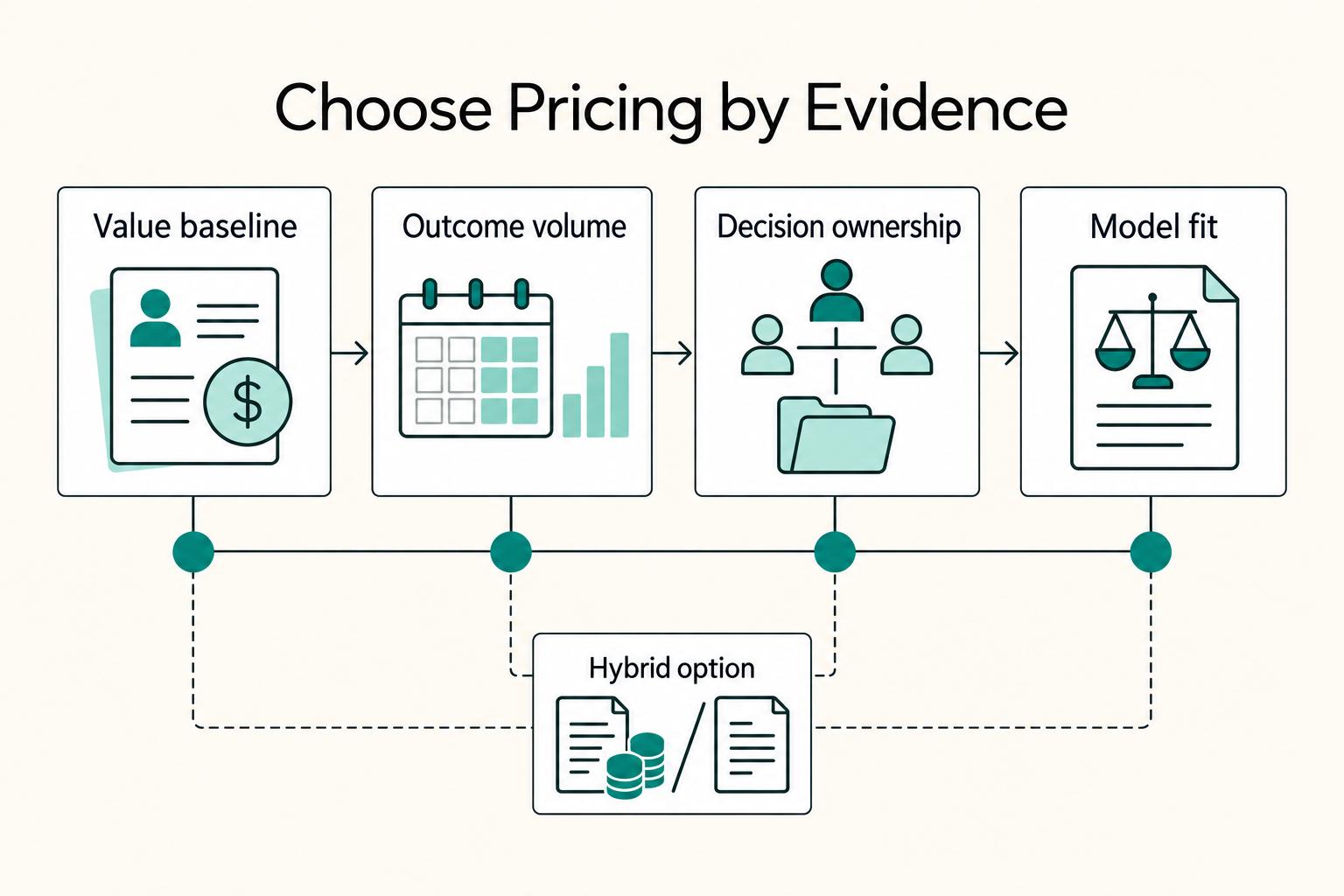
Value-based pricing starts with the client’s expected benefit and willingness to pay. It still needs a deliverable, scope and payment agreement you can perform. Use a discovery phase when the benefit or effort is too uncertain to support a defensible quote.

A Guide to Notion for Freelance Business Management
If your workspace feels busy but fragile, you do not need more pages. You need one connected system. Treat your freelance business like a business-of-one and use Notion as the control layer that connects client decisions, delivery, and billing in one place.
How to Invoice as a Freelancer Without Chasing Late Payments
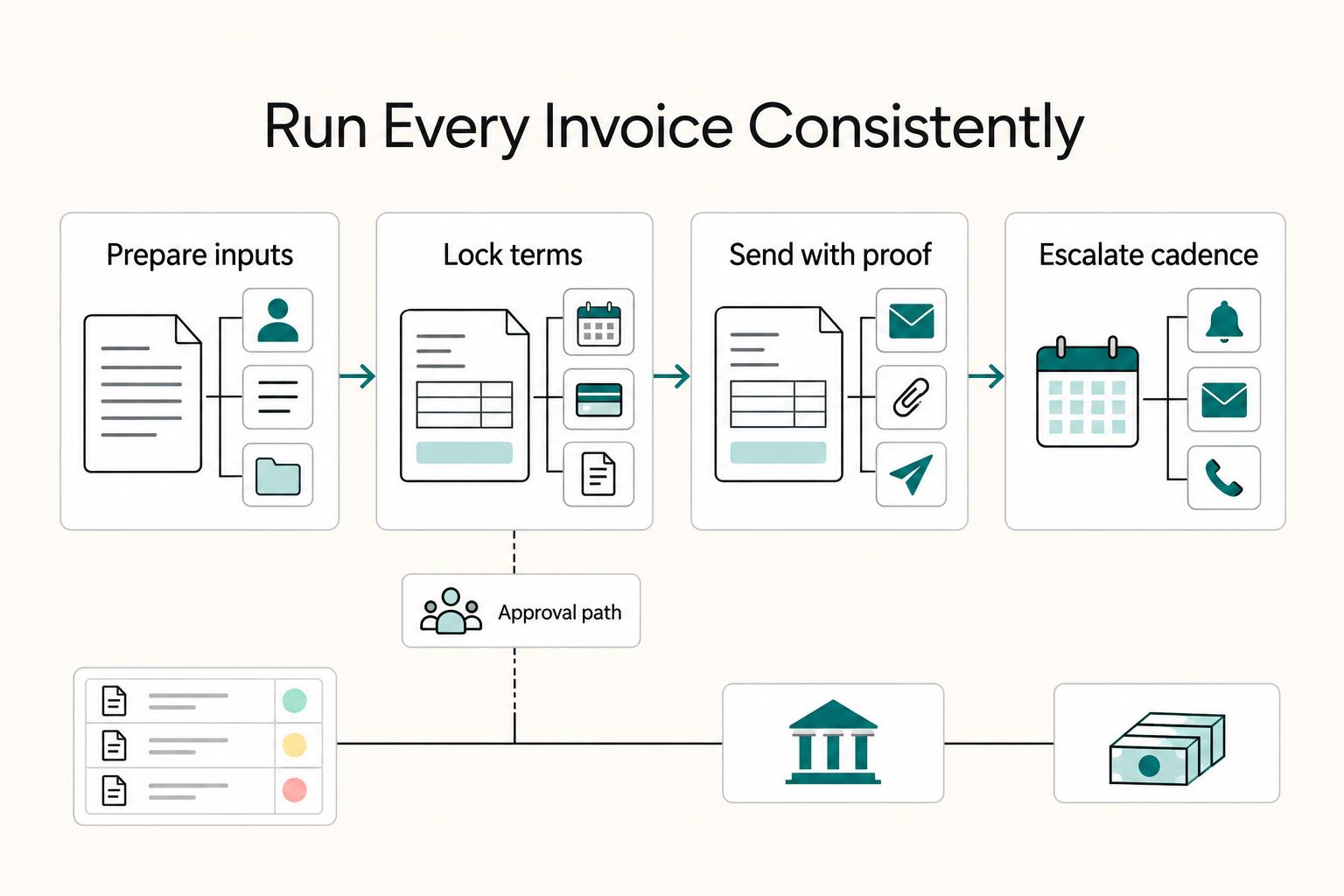
Set one standard from the start: every freelance invoice should identify the client, itemize the work, state agreed terms, and be tracked until funds settle. That habit helps prevent avoidable payment delays and keeps cash flow more predictable.