
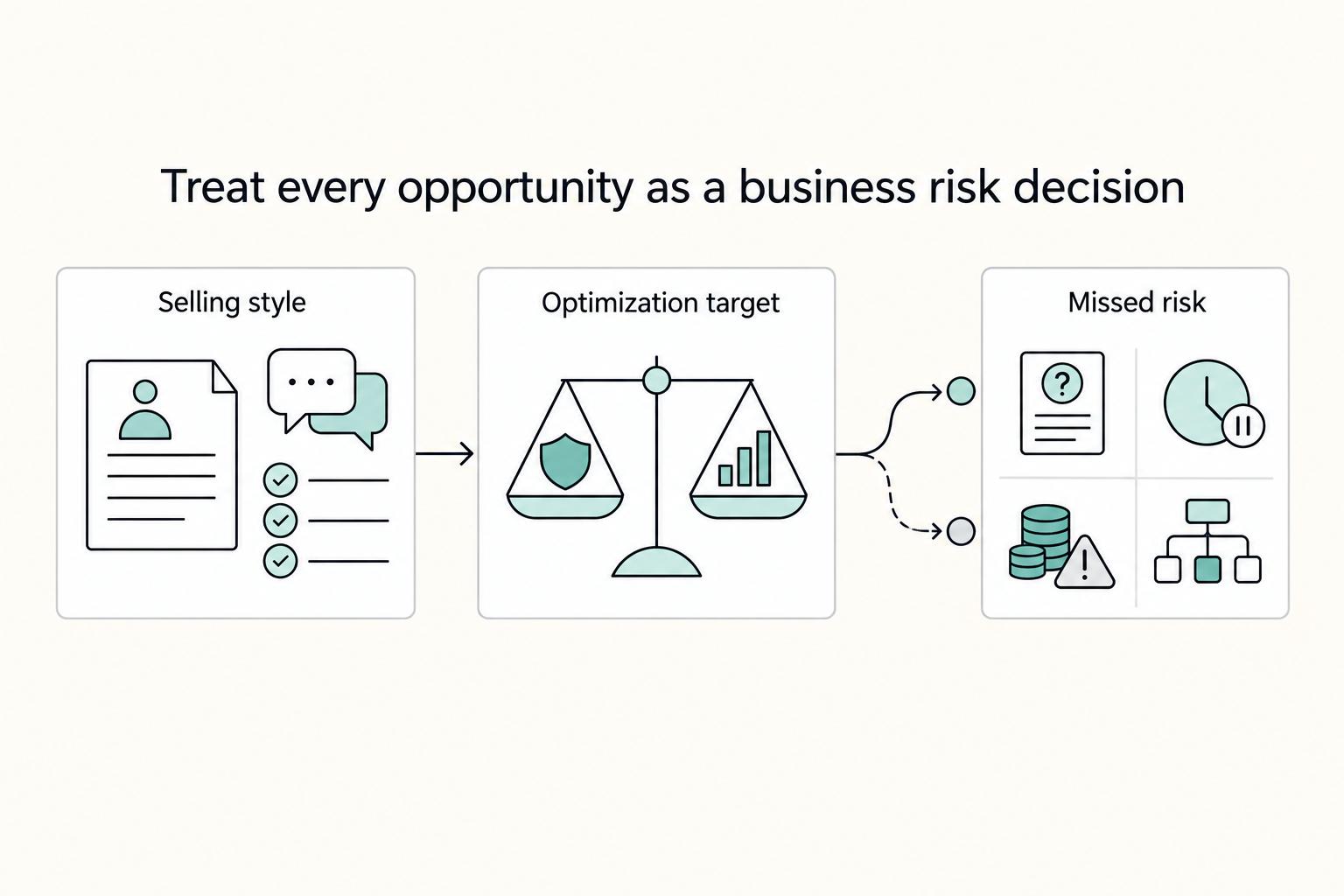
Quick Answer
Start with one customer segment and define the evidence needed to advance an opportunity. Add discovery questions, a use-case demo, evaluation success criteria, pricing and contract approvals, and the handoff that helps the customer reach the promised first outcome.
A new account executive should be able to open your sales playbook and answer three questions: who is a good fit, what evidence moves a deal forward, and what can I promise this buyer? If the document only contains a company overview and a list of product features, it leaves the hardest decisions to improvisation.
Build the first version around one customer segment and one buying motion. A self-service subscription, a sales-assisted team purchase and a negotiated enterprise contract need different guidance. Start with the motion your team actually runs, then add variations after the core process works.
Define the customer you can help#
Describe the customer’s current workflow, the problem your product solves and the conditions needed for it to work. Include company or team characteristics only where they affect fit. “Growing SaaS businesses” is less useful than “finance teams that reconcile provider reports manually and can supply an owner for implementation.”
| Fit dimension | Question for the representative | Evidence to record |
|---|---|---|
| Problem | What work is slow, costly or unreliable today? | Buyer’s description and a concrete recent example |
| Product fit | Can the current product support the required workflow? | Required capabilities, limitations and dependencies |
| Ownership | Who will use the product and own the outcome? | Named users, internal champion and implementation owner |
| Decision process | Who approves the purchase and what reviews are required? | Budget owner, procurement, security and legal steps |
| Timing | Why consider a change now? | A real trigger and a buyer-confirmed next step |
Keep an explicit poor-fit list: unavailable mandatory integrations, an unsupported deployment model, a required capability you cannot deliver, or no owner for adoption. A slow procurement process may call for a different sales plan; it is not automatically evidence that the buyer is unsuitable.
Turn stages into decisions#
A stage should describe what you know about the opportunity. “Demo completed” records seller activity, but it does not show that the buyer saw a relevant solution or agreed to evaluate it. Give each stage an exit criterion and a owner for the next step.
| Stage | Exit evidence | Next action |
|---|---|---|
| Qualification | A relevant problem, plausible product fit and an identified buyer contact | Agree a discovery conversation |
| Discovery | Documented workflow, impact, stakeholders and purchasing process | Prepare a use-case demo or decline the opportunity |
| Evaluation | Buyer-reviewed results against agreed success criteria and a proceed, defer or stop decision | Advance to commercial review only if the buyer agrees to proceed |
| Commercial review | Confirmed package, pricing, term and required approvals | Resolve contract and procurement questions |
| Closed won | Authorised agreement or purchase mechanism is complete under your policy | Confirm activation, billing and customer-success ownership |
| Closed lost / deferred | Recorded reason and any agreed future trigger | Stop forecasting the deal as an active close |
Configure the CRM to capture this evidence in a small set of useful fields. Do not require representatives to copy the same answer into a spreadsheet, call note and stage checklist. If a field does not support a decision, coaching or handoff, reconsider whether it belongs in the process.
Write discovery prompts that expose the workflow#
Use questions as prompts for a conversation rather than a script to read without listening. Ask the buyer to describe a recent occurrence of the problem, who handled it and what happened afterward. Confirm your understanding before proposing a solution.
- “Walk me through the last time this happened.”
- “Who does that work, and which systems do they use?”
- “What is the consequence when the process fails or takes longer?”
- “What have you tried, and why did it fall short?”
- “What would need to be true for your team to adopt a replacement?”
- “Who will evaluate it, approve it and own it after purchase?”
If impact is vague, ask for a baseline the buyer can defend. A representative should not invent an ROI percentage to fill a slide. Record assumptions separately from measured inputs and show which inputs the customer still needs to confirm.
Make the demo follow the buyer’s use case#
Choose a short scenario from discovery and show how the product handles it. Explain the inputs, user actions and resulting output. Include the relevant limitation or dependency at the point where it matters, such as an integration that requires the customer’s administrator.
Provide a demo outline with optional branches for common needs. Keep approved answers for security, integrations, reporting and deployment requirements, along with the person who can answer questions outside the representative’s scope. An unconfirmed roadmap item should not become a committed delivery date.
At the end, ask what would prevent the buyer from using the workflow you showed. Agree a next step owned by both sides. A positive reaction to the demo is useful feedback; it is not the same as authority to buy.
Give trials and proofs of concept an end point#
An evaluation needs a purpose, a duration and a decision meeting. Write down the use case, test data, participants and result that would support a purchase. Distinguish the product’s responsibility from the buyer’s preparation and adoption work.
| Illustrative evaluation plan | Agreed detail |
|---|---|
| Use case | A five-person finance team reconciles one representative payout batch |
| Buyer inputs | An approved sample dataset and an administrator for the integration |
| Success evidence | The team can explain matched items and identify unresolved exceptions without losing source references |
| Limitations | This evaluation does not establish support for every currency or production volume |
| Review | Named buyer and seller owners assess the evidence on the agreed date |
Those details are an example, not a universal trial template. A different SaaS product needs different success evidence. Avoid open-ended access that leaves both parties unsure whether the trial succeeded or whether anyone is responsible for a purchasing decision.
Keep commercial terms and approvals concrete#
Document the available plans, included capabilities, seat or usage definitions, contract term, billing frequency and approved discount process. Representatives need to know who can approve exceptions and where the approved terms must be recorded.
A software subscription may use an order form and subscription terms. Implementation or other professional services may also require a separate statement of work. Do not impose a freelance-project contract structure on every SaaS sale; use the documents appropriate to what the customer is buying.
| Hypothetical offer | Amount | Meaning |
|---|---|---|
| 20 seats at USD 50 per seat per month | USD 1,000 per month | Recurring subscription price before stated taxes or adjustments |
| Twelve-month commitment at that price | USD 12,000 | Contract value for this subscription example |
| Annualised recurring amount | USD 12,000 | A run-rate measure under the company’s defined ARR policy |
| One-time setup charge | USD 2,000 | A separate nonrecurring charge, excluded from this example’s ARR |
If the subscription is billed monthly, signing a twelve-month contract does not mean USD 12,000 has been collected. Bookings, invoices, cash receipts and recognised revenue are different records. Finance should define the company’s metrics and accounting policy; representatives should quote the agreed commercial terms accurately.
Handle objections by checking the underlying issue#
For a budget objection, find out whether the issue is available budget, perceived value, package size or payment timing. For a product objection, establish whether the missing capability is essential or whether the demonstrated workflow already addresses the need. Do not promise a workaround until the relevant product or technical owner confirms it.
For “we need more time,” ask what decision or dependency remains and who owns it. Agree a realistic next step. Pressure for an arbitrary close date can produce a signed customer who is unprepared to implement, or a forecast that nobody can defend.
Make the handoff preserve what was sold#
- Customer entity, signed commercial terms and billing contact.
- Buyer’s intended outcome, agreed success criteria and evaluation findings.
- Users, administrator and owner of implementation.
- Approved commitments, dependencies and limitations.
- Activation date, first success milestone and next customer meeting.
Customer success should be able to trace a promise to the agreement or approved opportunity record. If implementation reveals a misunderstanding, route it to an accountable owner promptly. Do not leave the customer to repeat discovery because the salesperson’s notes disappeared at close.
Teach, measure and maintain the playbook#
Use real examples for coaching: a discovery conversation that clarified fit, an evaluation that exposed a limitation, and a lost opportunity where the decision process was misunderstood. Remove customer information that should not be shared widely and obtain appropriate permission for recording use.
Track conversion, time in stage and loss reasons by comparable segment and buying motion. Pair sales measures with activation and early customer outcomes so the team does not optimise for signatures that lead to avoidable churn. Small samples deserve caution; they do not support confident universal conversion benchmarks.
Assign an owner and review the playbook when pricing, product capabilities or the buying process changes. Keep a dated revision log and show representatives the practical differences. The playbook should help the next sales decision rather than become another document the team is expected to remember.
Frequently Asked Questions
What should a SaaS sales playbook include?
Include customer fit, discovery prompts, stage exit evidence, demo and evaluation guidance, approved pricing and contract processes, and the customer-success handoff. Adapt it to the buying motion your team actually runs.
Does every SaaS sale need a statement of work?
No. Subscription sales use the commercial documents appropriate to the offer, often an order form and subscription terms. Separate implementation or professional services may require a statement of work.
How do I know whether a trial succeeded?
Agree the use case, participants, required inputs and success evidence before the trial begins. Review the results with the buyer on a defined date and record what remains unresolved.
How often should the playbook change?
Review it when product capabilities, pricing or the purchasing process changes, and use comparable opportunity and customer-outcome evidence to improve it. Assign an owner and keep a revision log.
Try a related tool
Researched and edited by the Gruv editorial team. Gruv builds cross-border billing, payouts, and finance-operations software for global businesses.
Sources
Includes 3 external sources outside the trusted-domain allowlist.
Educational content only. Not legal, tax, or financial advice.
Related Posts

The Freelance Payment Penalty: A Modeled Audit of Platform Fees, FX Spreads, and Payout Delays
The money rarely disappears through a single, easy-to-spot fee. The real loss is stacked. A marketplace takes its commission, a processor adds a charge for international cards, a bank or payment company converts the currency at a spread, a platform holds the funds before release, and a wire sheds a little to intermediaries on the way in. Each layer looks defensible on its own, but the worker feels the combined result as a smaller deposit and a later payday.

How to Respond to a Subpoena for Business Records
Move fast, but do not produce records on instinct. If you need to **respond to a subpoena for business records**, your immediate job is to control deadlines, preserve records, and make any later production defensible.
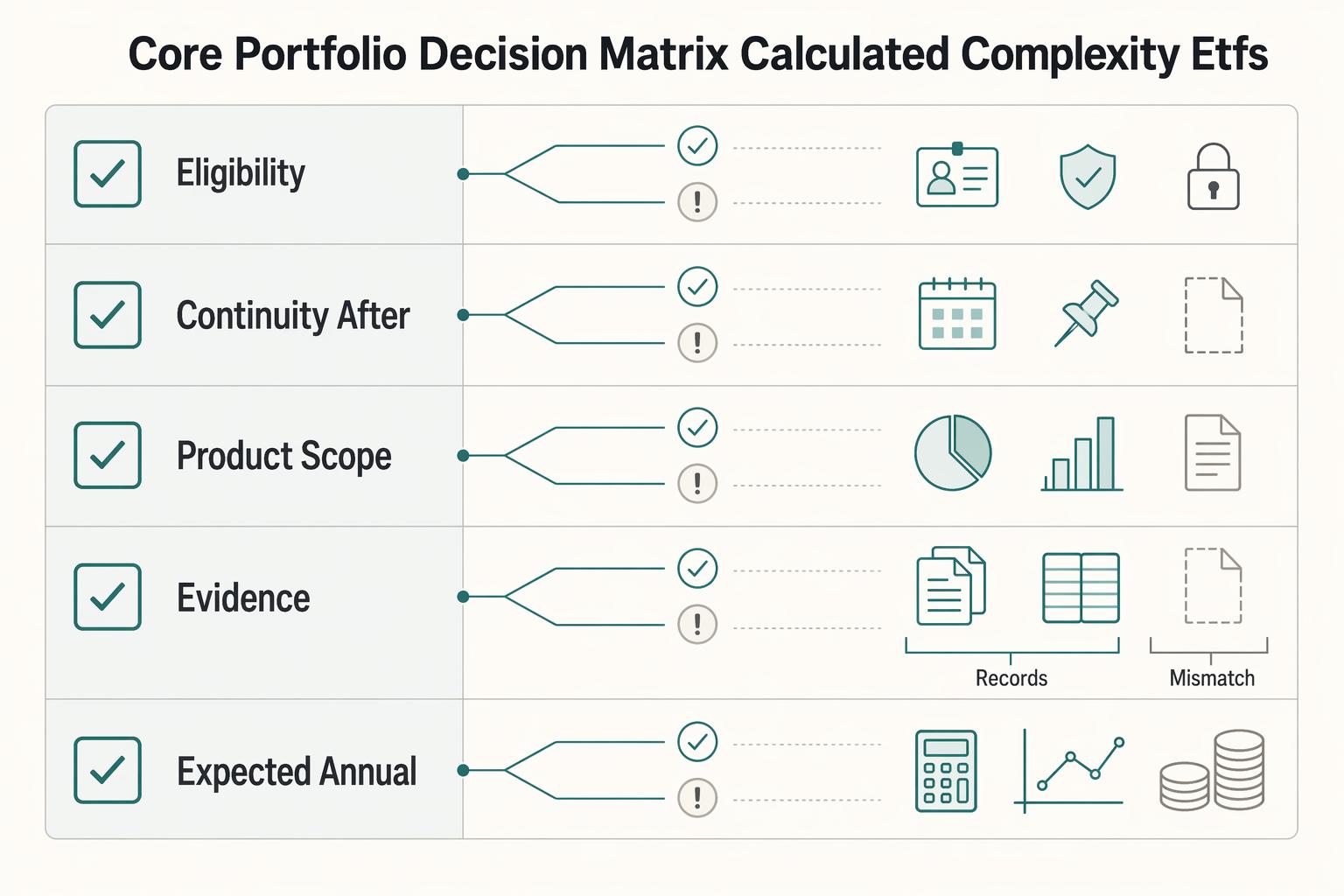
A US Expat's Guide to Investing in UCITS ETFs to Avoid PFIC Issues
The real problem is a two-system conflict. U.S. tax treatment can punish the wrong fund choice, while local product-access constraints can block the funds you want to buy in the first place. For **us expat ucits etfs**, the practical question is not "Which product is best?" It is "What can I access, report, and keep doing every year without guessing?" Use this four-part filter before any trade: