
Quick Answer
Block one 90-minute weekly session and decide meals before your workweek gets noisy. For how to create a meal plan, start from a saved template and a Dinner Winner List, then map meals to your actual calendar, build one shopping list, and set prep in the same window. Keep the plan small enough to repeat, not perfect. Add a simple travel fallback so late arrivals or schedule overruns do not reset your week. Your checkpoint is clear: meals chosen, list ready, and prep time locked.
Why Your Current "System" is a Tax on Your Performance#
If food keeps breaking your workday, the problem is usually not discipline. It is often timing. Breakfast, lunch, and dinner decisions can get pushed into the same hours you need for client work, admin, and deadlines. Then low-value choices start competing with high-value work.
That is the performance tax. You stop to figure out what to eat, then lose more time to ordering, shopping, or cooking whatever is easiest. Harvard notes that a busy schedule is one of the top reasons people choose quick takeout meals. If that sounds familiar, your current setup is not neutral. It is shaping your time, stress, and spending whether you meant it to or not.
Step 1 Diagnose the reactive pattern#
If you want a meal plan that actually helps, start by naming the failure mode you already have. Reactive eating usually looks ordinary in the moment, but the pattern is often easy to spot. Meals get decided late, groceries get bought without a plan, and convenience wins when energy drops.
For freelancers and small teams, that friction can show up in practical ways. You may make extra grocery runs when there is no list. You may default to delivery on deadline-heavy days. You may make purchases that feel less planned than they should be. Even without dramatic overspending, this can make weekly food spend less predictable and your workday less stable.
Use this checkpoint. Look back at the last five workdays. If you regularly asked, "What am I eating?" during working hours, left your desk to solve lunch, or ordered food because nothing was ready, you are running on reaction.
Step 2 Compare reaction with a planned setup#
The useful difference is not cooking skill. It is whether decisions get made before the week gets noisy. Meal prep can save time, money, and stress, but only when it becomes a repeatable planning habit instead of a short burst of motivation. Planned weeks do not have to be perfect to work better.
| Area | Reactive meal choices | Planned setup |
|---|---|---|
| Time cost | Last-minute decisions, unplanned shopping, and takeout delays | One planning block, one list, fewer in-week decisions |
| Money leakage | Unplanned purchases and convenience meals when plans are unclear | Planning before grocery shopping supports more predictable spending |
| Stress load | Last-minute decisions and rushed prep | Lower stress because choices were made ahead of time |
| Workday consistency | Meal decisions land during work hours | More meal decisions handled before the week starts |
That is the real tradeoff. A planned week still has friction. It keeps that friction from showing up at the worst time.
Step 3 Build the minimum setup before you optimize#
Do not overbuild this. The minimum useful setup is small, and there is no one correct method.
| Element | Action | Output |
|---|---|---|
| Planning day | Pick one day a week to plan your menu and write your grocery list | Menu and grocery list |
| Planning artifact | Use a calendar or spreadsheet to store meal ideas, recipe links, and the shopping list | Meal ideas, recipe links, and shopping list in one place |
| Starter scope | Plan only 2 to 3 dinners if you are just starting | Next 2 to 3 dinners planned |
| Shopping and prep routine | Set a shopping routine and a prep routine, and aim for one day of the week to do most of the cooking | Ingredients bought from the list and one main cooking day |
Harvard's guidance is practical here. Choose a specific day each week to plan the menu, and use a calendar or spreadsheet to track meal ideas, recipe sources, and shopping lists. That planning artifact gives you one place to make decisions before you are hungry.
Start with the smallest version that can work:
- Pick one day a week to plan your menu and write your grocery list.
- Use one planning artifact such as a calendar or spreadsheet to store meal ideas, recipe links, and the shopping list.
- Plan only 2 to 3 dinners if you are just starting. That is enough to build the habit without overcommitting.
- Set a shopping routine and a prep routine so ingredients get bought from the list, and aim for one day of the week to do most of the cooking.
By the end of that planning block, you should be able to answer three questions without hesitating. What are you eating for the next 2 to 3 dinners? What exactly do you need to buy? When will the prep happen?
The common failure mode is planning a fantasy week. Seven new recipes, no chosen shopping day, and a vague note like "eat healthier" will collapse the first time work runs long. Keep it boring enough to repeat.
Once these four pieces are in place, you are no longer depending on good intentions. You have a simple structure that moves food decisions out of the middle of the day. The next step is turning that structure into a weekly appointment you can actually keep.
If you want a deeper dive, read Should Your Freelance Business Accept Credit Cards?. Want a quick next step for "how to create a meal plan"? Try the free invoice generator.
The 90-Minute Weekly Block: Plan Meals, Shop, and Schedule Prep#
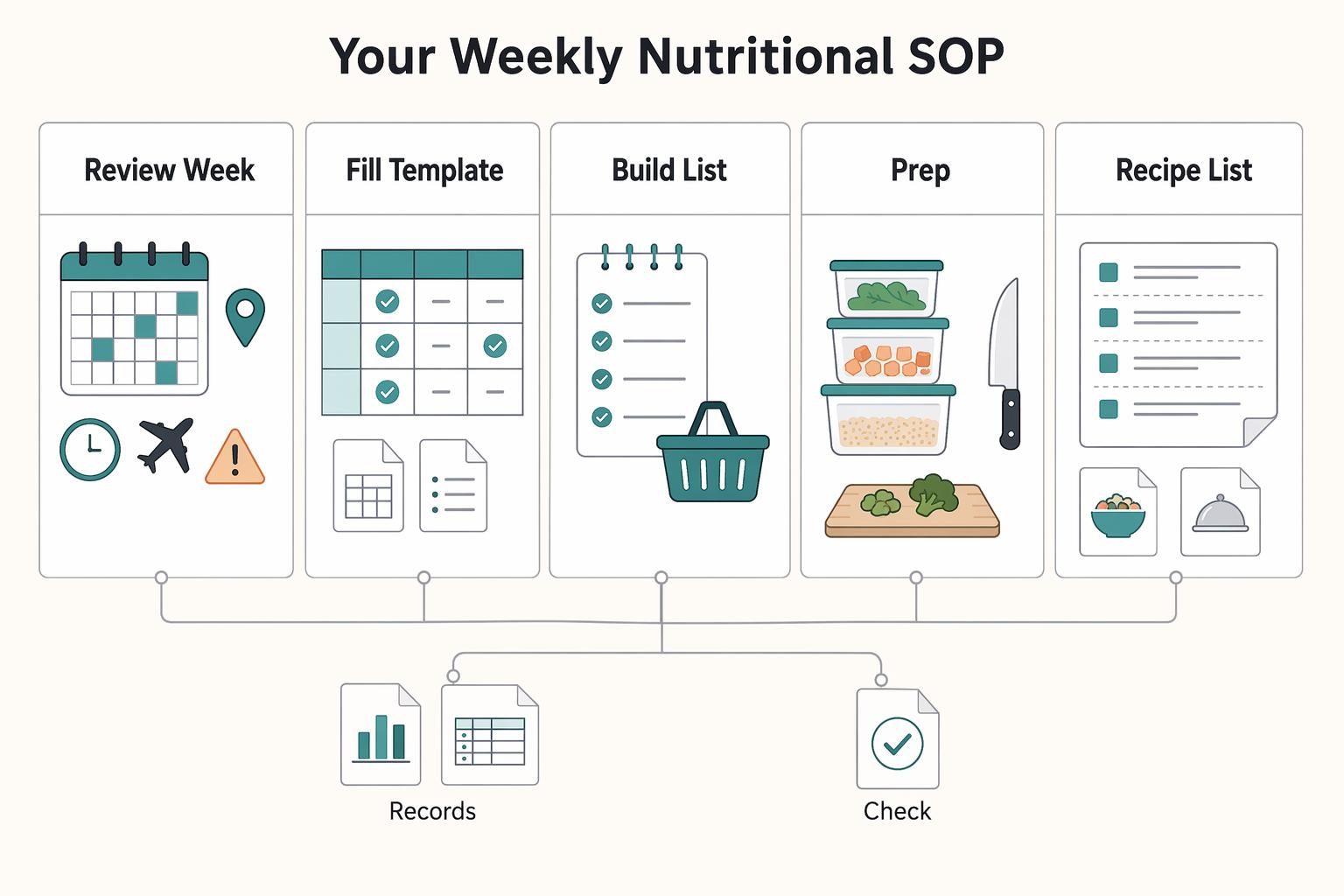
Use one fixed 90-minute weekly block to plan meals, complete shopping, and schedule prep before the workweek starts. Run the same sequence each time so decisions happen once, not during busy work hours.
| Step | Focus | Output |
|---|---|---|
| Review week | Open next week's calendar and mark high-friction moments | Day tags like "desk lunch," "quick dinner," or "out" |
| Fill template | Assign meals to specific days and prioritize ingredient overlap and leftover reuse | Weekly plan plus one fallback meal |
| Build list | Enter ingredients, remove one-off items, verify overlap, and record planned spend | Shopping list and planned spend |
| Prep | Cook components or schedule prep within the next 24 hours | Prep done or scheduled |
Step 1 Review your real week first. Open next week's calendar and mark high-friction moments: call-heavy lunch windows, deadline nights, travel days, or late admin blocks. Input: your calendar plus known home constraints. Output: simple day tags like "desk lunch," "quick dinner," or "out."
Step 2 Fill one meal plan template. Use a printable or digital template so each meal is assigned to a specific day. Choose recipes you already trust, then keep the plan tight and reusable across meals. Prioritize ingredient overlap and leftover reuse over novelty. Output: one-page (or one-screen) weekly plan plus one fallback meal for your busiest day.
| Option | Choose it based on | Tradeoff | Best use case |
|---|---|---|---|
| Recipe/list app | You want recipes and list-building in one place | Faster list creation, but meal choices still require intent | You already save recipes digitally and want quicker list creation |
| Local grocery app or delivery service | You want to enter ingredients and finish shopping in the same sitting | High convenience, but substitutions or fees can change the final cart | Your week is packed and you want shopping completed before Monday |
| Simple fallback prep list | You need 2 to 3 low-effort staple meals | Less variety, but lower odds of reactive ordering | Prep is your weak point, or you have travel/launch/deadline weeks |
Step 3 Build the list and set your spend check. Move directly from planned meals to shopping in the same block. Enter ingredients, remove one-off items you will not reuse, and verify overlap across meals. Before checkout, record: Planned spend: $____. After the week ends, compare it with your recent reactive week total so you can track planned spend vs reactive spend with a real baseline. Adjust for your household and local prices rather than copying someone else's budget.
Step 4 Prep what makes weekdays easier. Prep is usually the hardest part, so schedule it explicitly. Do it inside the same 90-minute block or lock it within the next 24 hours. Focus on components: cook a grain, prep a protein, wash/chop vegetables, portion snacks, and label leftovers. Final weekly check: meals assigned, list complete, order placed or shopping time set, prep done or scheduled, planned spend logged.
For a step-by-step walkthrough, see How to Create a Financial Plan for a Sabbatical.
The Peak Performance Plate: Engineering Meals for Cognitive Output#
Use one repeatable plate model all week, then scale effort up or down by workload so meals stay consistent, fast, and budget-aware.
Step 1 Build each meal from the same four components#
Use this as your default build template: protein, carbohydrate, fat, and produce.
| Component | Purpose in your workflow | Easy swaps | Travel-friendly options | Prep-ahead suitability | Common mistake to avoid |
|---|---|---|---|---|---|
| Protein | Anchors the meal so it is not snack-only | Eggs, chicken, tofu, yogurt, beans, fish | Greek yogurt cup, hard-boiled eggs, tuna pouch, roasted chickpeas | High | Skipping it and relying on convenience snacks later |
| Carbohydrate | Gives structure to repeatable meals across the week | Oats, rice, potatoes, whole-grain bread, pasta, quinoa | Instant oats cup, fruit, wraps, plain rice cup | High | Using only quick snack carbs with no full meal plan |
| Fat | Makes simple meals practical and complete | Olive oil, avocado, nuts, seeds, cheese, nut butter | Nut packs, peanut butter cups, single-serve guacamole | Medium to high | Turning add-ons into the main calorie load |
| Produce | Keeps repeat meals usable with variety and volume | Salad mix, frozen vegetables, berries, carrots, peppers, broccoli | Baby carrots, apples, bananas, side salad | High | Treating produce as optional and dropping it first on busy days |
Apply it without guesswork:
- Breakfast: pick one option from each column (for example, eggs + toast + avocado + fruit, or oats + yogurt + nuts + berries).
- Lunch: default to your easiest repeatable bowl or wrap using prepped components.
- Dinner: reuse lunch components and change one element (sauce, seasoning, or format).
- Snacks: pair two items on purpose (fruit + yogurt, carrots + hummus, nuts + fruit).
Step 2 Adjust effort by workload, not by ideal plans#
Keep the same plate model every day. Change execution based on how heavy the day is.
| Day type | How to build |
|---|---|
| High-workload day | Use mostly prep-ahead items, keep assembly under 10 minutes, and set one backup meal in advance. |
| Lighter day | Keep the same four-part plate, but use extra cooking time for variety and leftovers that support later busy days. |
If a deadline day usually breaks your plan, assign your simplest meal format to that day first.
Step 3 Make hydration and convenience-food replacements automatic#
Run hydration as a routine, not a memory test:
- Start work with a filled bottle at your desk.
- Refill at fixed anchors you already have (first break, lunch, late afternoon).
- Refill once before ending work so tomorrow starts ready.
Use a default replacement list for common convenience-food pitfalls:
- Pastry or muffin -> yogurt + fruit, or toast + eggs
- Chips -> nuts, popcorn, or crackers + hummus
- Candy bar -> fruit + peanut butter
- Sugary coffee drink -> regular coffee or tea + a planned snack
For broad baseline guidance, use the Dietary Guidelines for Americans, 2020-2025 (9th Edition, December 2020). Stronger cognitive-performance claims should stay pending until a current evidence summary is verified from appropriate source records.
This plate model is your content standard; the next section covers the tools that execute it consistently.
Related: The Best Budgeting Methods for People with Irregular Income.
Your High-Leverage Toolkit: Automating the Nutritional OS#
Your toolkit should remove friction, not add complexity. Set it up once, run a short weekly check, and do a monthly reset so the plan keeps working when life gets messy.
Step 1 Set up once: one hub, one backup, clear tool roles#
Use one planning hub for meals, grocery lists, and staples, plus one simple backup so you are never blocked by a single app. If you want deep tracking, only prioritize it if you will review it; for example, some tools track up to 84 nutrients.
- Keep your hub as the default place for weekly planning
- Keep a plain-text backup with 10 repeat meals, 15 staples, and 3 emergency dinners
- Use a 14-day checkpoint to confirm you can build next week's list quickly and move your data without retyping
| Tool category | Best use | Cost control | Flexibility | Coverage | Data portability | Main failure risk |
|---|---|---|---|---|---|---|
| Meal planning app | Build lists and repeat meals | High | High | Not location dependent | Usually strongest | You stop maintaining it |
| Grocery delivery | Remove store trips | Medium | Medium | Depends on local service area | Low to medium | Delays, stockouts, substitutions |
| Meal-prep service | Cover overload weeks | Low to medium | Low to medium | Depends on address and schedule | Low | Menu fatigue, missed delivery, less plate control |
Step 2 Run the operating cadence: weekly execution, monthly review#
Your weekly check keeps the system reliable without daily re-decisions.
| Cadence | Check | Action |
|---|---|---|
| Weekly | Heavy day match | Match at least one heavy workday to a low-effort meal |
| Weekly | Backup ingredients | Confirm backup-meal ingredients are available |
| Weekly | Cart substitutions | Set substitution rules in your delivery cart so swaps do not break the plan |
| Monthly | Tool cleanup | Remove tools or workflows you are not actively using |
| Monthly | Meal list refresh | Refresh your repeat-meal list and emergency options |
| Monthly | Fit check | Check whether your current setup still fits your workload and schedule |
- Match at least one heavy workday to a low-effort meal
- Confirm backup-meal ingredients are available
- Set substitution rules in your delivery cart so swaps do not break the plan
Then run a quick monthly review to keep the toolkit usable.
- Remove tools or workflows you are not actively using
- Refresh your repeat-meal list and emergency options
- Check whether your current setup still fits your workload and schedule
Step 3 Use fallback rules and escalate only when capacity is the issue#
Outsourcing helps when it removes the exact step that is failing, not by default.
- Delivery delay: run one backup meal from staples the same day
- Stockout: switch to pre-approved substitutions that keep your plate structure intact
- Travel week: reduce to a shorter repeat-meal list and simpler staples
- Heavy workload week: shift to the lowest-effort meal set before you miss the week
Escalate to a meal-prep service when your normal workflow cannot keep up for that period. Keep it temporary, then return to your base system once capacity stabilizes.
This same toolkit carries into travel: keep the hub, tighten the ingredient list, and adapt to local grocery access and kitchen limits. We covered this in detail in How to Create a 5-Year Financial Plan.
The "Road Warrior" Protocol: Maintaining Your System from Lisbon to Tokyo#
Use this as a continuity plan, not a perfection plan: your target is consistent meal quality and fewer last-minute decisions when travel disrupts your routine.
Step 1: Lock your 5-7 ingredient baseline before departure. Build your list by category so you can swap to local equivalents without rebuilding your whole week. Stress-test it with one question: if you land late, can you get these categories fast and cover the next two days?
| Category | Swap rule across destinations | Storage need | Prep friction | Portability | Fallback if options are thin |
|---|---|---|---|---|---|
| Protein anchor | Keep category fixed; switch to a local equivalent | Often chilled | Low to medium | Medium | Choose a non-fried option first |
| Carb base | Keep a simple base you can repeat | Shelf-stable or chilled | Low | High | Choose the simplest non-fried option available |
| Produce | Prioritize ready-to-eat items | Room temp or chilled | None to low | Medium to high | Use whatever fresh item is available now |
| Emergency item | Keep one shelf-stable default | Shelf-stable | None to low | High | Use this when a meal window collapses |
Step 2: Run an arrival routine before you settle in. Make baseline shopping your first food task in a new city. If timing is tight or a full grocery run is not realistic, check the convenience-store open-air cooler first; practical components can include sandwiches, veggie trays, and fruit snack packs.
Your quick checkpoint: find one protein option, one produce option, and one non-fried base before you move on.
Step 3: Carry a go-bag that covers one disrupted meal window. Pack only what buys you one delay buffer, then restock after each trip.
- 1 to 2 shelf-stable emergency snacks
- 1 shelf-stable breakfast or protein option
- 1 drink ritual item (for consistency, not complexity)
Step 4: Pre-commit your disruption defaults. When plans break, execute defaults instead of improvising.
- Late arrival: use go-bag coverage, then do baseline shopping next morning.
- Limited kitchen: run a no-cook version of your baseline for two days.
- No nearby grocery: use cooler-first scanning and pick non-fried options.
- Schedule overrun: repeat one simple meal instead of creating a new plan.
This protocol is designed for consistency under imperfect conditions. For edge cases, use the FAQ section below as your decision backstop.
You might also find this useful: A Guide to Healthy Snacking for a Productive Workday.
Conclusion: Reinvest Your Cognitive Capital#
The throughline is simple: your meal plan only helps when it fits your real week. A short weekly routine cuts daily food decisions and reduces the stall over what to eat. It also gives you a better shot at steady energy when you need to focus on client work.
That is the practical value here. You are not trying to build a perfect food routine. You are moving decisions out of the middle of the workday and into one controlled point: the 90-minute weekly block where you plan, order, and prep. One good lunch will not carry the week. One-off fixes usually fail because the weak point is not one meal. It is the repeated need to decide again when you are busy, tired, or traveling.
Here is the smallest useful version to do this week:
- Block 90 minutes on one fixed day.
Check your calendar first, then plan only the meals you will actually be home to eat. Verification point: when you finish, you should have one weekly note and one shopping list.
- Choose repeat meals instead of searching from scratch.
Use your saved meals and keep the plate simple with protein, complex carbs, and healthy fats. Red flag: if you are planning novelty every night, you are making the plan easier to ignore.
- Shop and prep in the same session.
Use list generation and delivery if the fee is worth the friction it removes. Verification point: by the end, your fridge should hold ready-to-use parts, not just ingredients with good intentions.
- Build a travel fallback.
Pick 5 to 7 universally available ingredients you can buy quickly after arrival. That keeps one disrupted week from turning into a full reset.
Do that once, review what you actually ate, and make next week simpler, not more ambitious.
This pairs well with our guide on How to Create a Family Emergency Plan.
Frequently Asked Questions
How do you reduce decision fatigue when figuring out how to create a meal plan?
Start with a meal plan template, a simple note with days and mealtimes that you copy each week. Keep a Dinner Winner List of fast meals you already know you will eat, then fill the template from that list instead of starting from scratch. Avoid shopping first and deciding later, especially when you are tired.
What is a practical weekly planning routine?
Put a calendar block on the same day every week, or every two weeks if that fits better. Check your work and social schedule first, then plan only the meals you will actually be home to eat so you do not make too much food. Your output is a realistic plan built around your week, not an aspirational one. | Approach | What it looks like | Main upside | Common snag | |---|---|---|---| | Manual planning from scratch | Decide meals each week without a saved template | Flexible choices | Easy to stall when you are busy or tired | | Template planning from saved meals | Reuse a note template and Dinner Winner List | Faster, repeatable weekly planning | If you stop using it, the method likely needs to be simpler | | Buffet meal prep | Batch-cook ingredients, then assemble meals during the week | Flexible mix-and-match meals | You still have to assemble meals later |
Should you plan manually, use a template, or automate it?
Template planning is often a practical middle ground. Use a saved note to keep repeat meals, then build each week around your real schedule. The checkpoint is simple: if you keep ignoring the plan, the method does not fit your life and needs to get simpler.
How do you prep food without wasting it?
Use buffet meal prep. Cook components like grains, proteins, and vegetables first, then assemble meals during the week. Let cooked food cool for 30-40 mins before sealing it in airtight containers. Treat up to four days in the fridge as a rough rule of thumb, knowing some foods should be eaten within three days. Your output is a few ready-to-use parts, not five identical boxed meals.
How do you handle travel weeks or irregular schedules?
Plan around the days that are fixed, and keep the rest loose. Build the plan around known work and social commitments, and avoid buying for a full week before you know which meals will happen. Your output is a short backup plan, not a full itinerary.
How do you know your plan is getting better over time?
Keep a record you can reuse. If you plan on a fridge wipe-board, take a photo before you rewrite it. If you plan in a note, keep old versions instead of deleting them. That gives you a clear history of what you planned and what belongs on your repeat list.
Try a related tool
Researched and edited by the Gruv editorial team. Gruv builds cross-border billing, payouts, and finance-operations software for global businesses.
Sources
- access-board.gov/adatrusted
- bpc.edu/wp-content/uploads/2025/08/2024-2025-Academi...trusted
- bu.edu/housing/wp-content/themes/r-housing/js/vendo...trusted
- dietaryguidelines.gov/sites/default/files/2020-12/Dietary_Guidelin...trusted
- nutritionsource.hsph.harvard.edu/meal-preptrusted
- pmc.ncbi.nlm.nih.gov/articles/PMC12209867trusted
- pmc.ncbi.nlm.nih.gov/articles/PMC11773239trusted
- statutes.capitol.texas.gov/Docs/GV/htm/GV.403.htmtrusted
Educational content only. Not legal, tax, or financial advice.
Related Posts
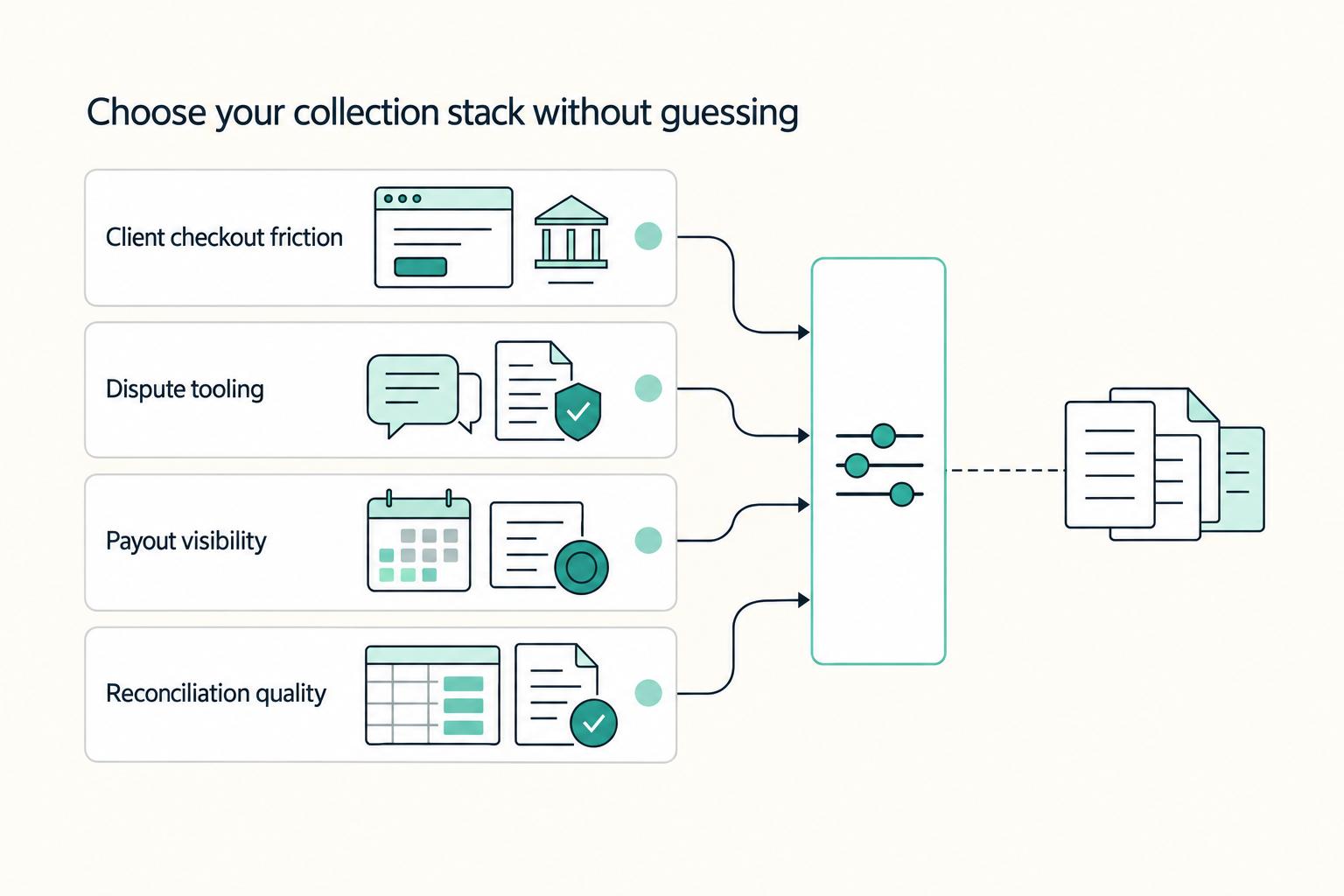
Should Your Freelance Business Accept Credit Cards?
Offer card payments, but stay in control of how money reaches you. The goal is not a smoother checkout screen. It is predictable cash you can use to run the business.
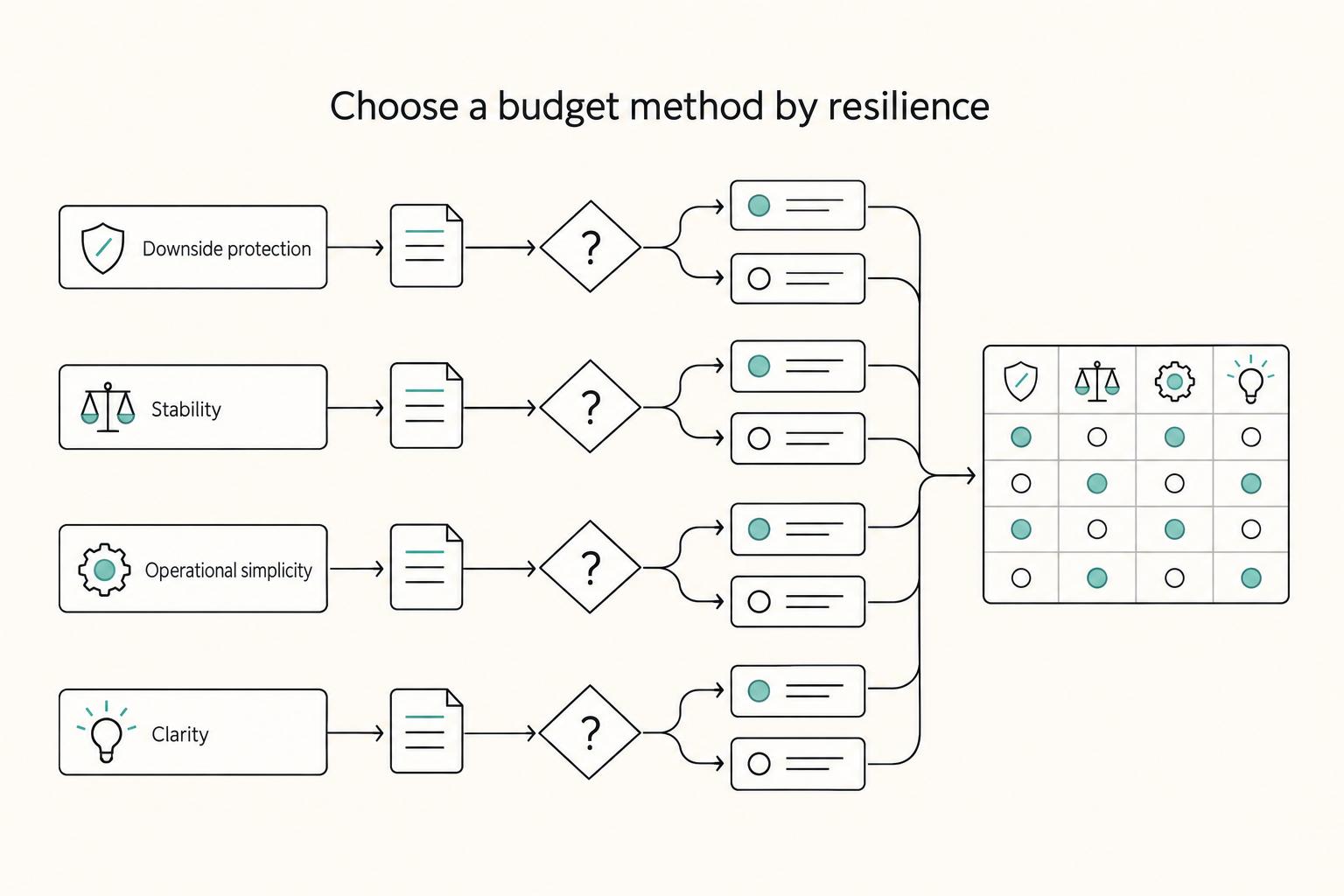
The Best Budgeting Methods for People with Irregular Income
Budgeting with irregular income works better when you separate "money arriving" from "money you're allowed to spend," then run the same transfer routine each cycle.
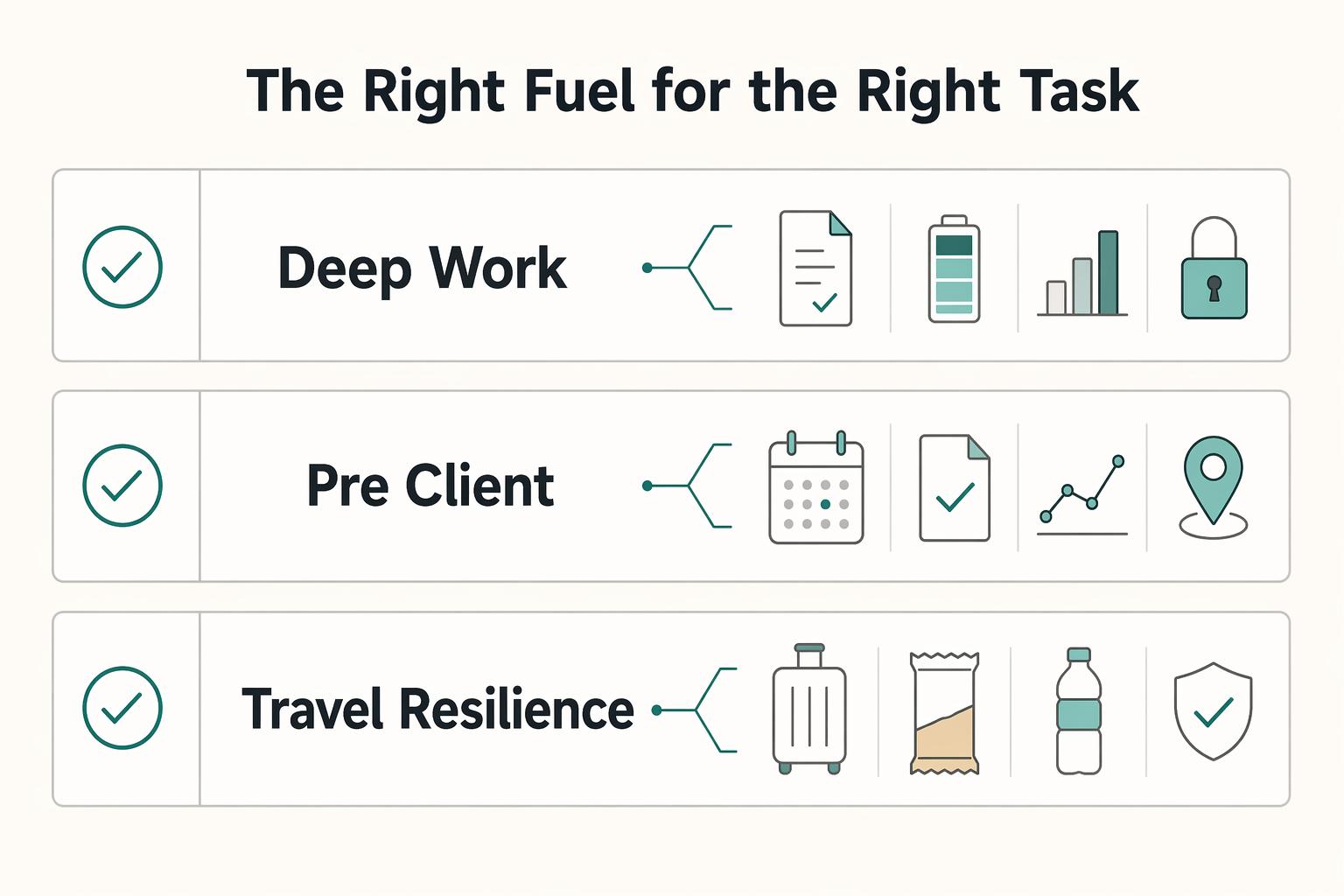
Healthy Snacks for Work That Support a Productive Day
If your food choices happen only when you are already hungry, distracted, or rushing, you are making those decisions under pressure. This is not just a discipline problem. It is also a decision-load problem. Unplanned eating often shows up at the exact moments when your attention is already split.