
Quick Answer
Build your lindy-proof freelance career with a three-layer operating system: market position, operational control, and jurisdiction discipline. Clarify the outcome you sell, reduce single-provider failure points in payments and records, and run contracts with an MSA plus project-level SOWs. Then keep a live log of day counts, move dates, and account values so filing decisions are based on documentation instead of memory.
The usual freelance playbook is more fragile than it looks. It leans on trend chasing, rented platforms, and systems you do not control. For a seasoned professional, longevity comes from a different approach: building a practice that gets more resilient as markets, tools, and jurisdictions change. That is the point of a "Lindy-proof" career. Durability becomes a real competitive advantage.
This framework skips generic advice and uses a three-layer approach for building a durable business of one. First, you strengthen market demand around work buyers can understand and trust. Then you harden operations so delivery and cash collection do not depend on a single tool or platform. Finally, you treat jurisdiction and reporting as an operating discipline, not a year-end scramble.
Layer 1: Fortifying Your Market Position for Enduring Demand#
A strong market position helps a buyer answer three questions quickly: what you do, what business result you create, and why they should trust you. In a durable freelance practice, that usually comes from a clear skill stack, a client mix that is not exposed to one failure pattern, and proof that compounds instead of disappearing into inboxes.
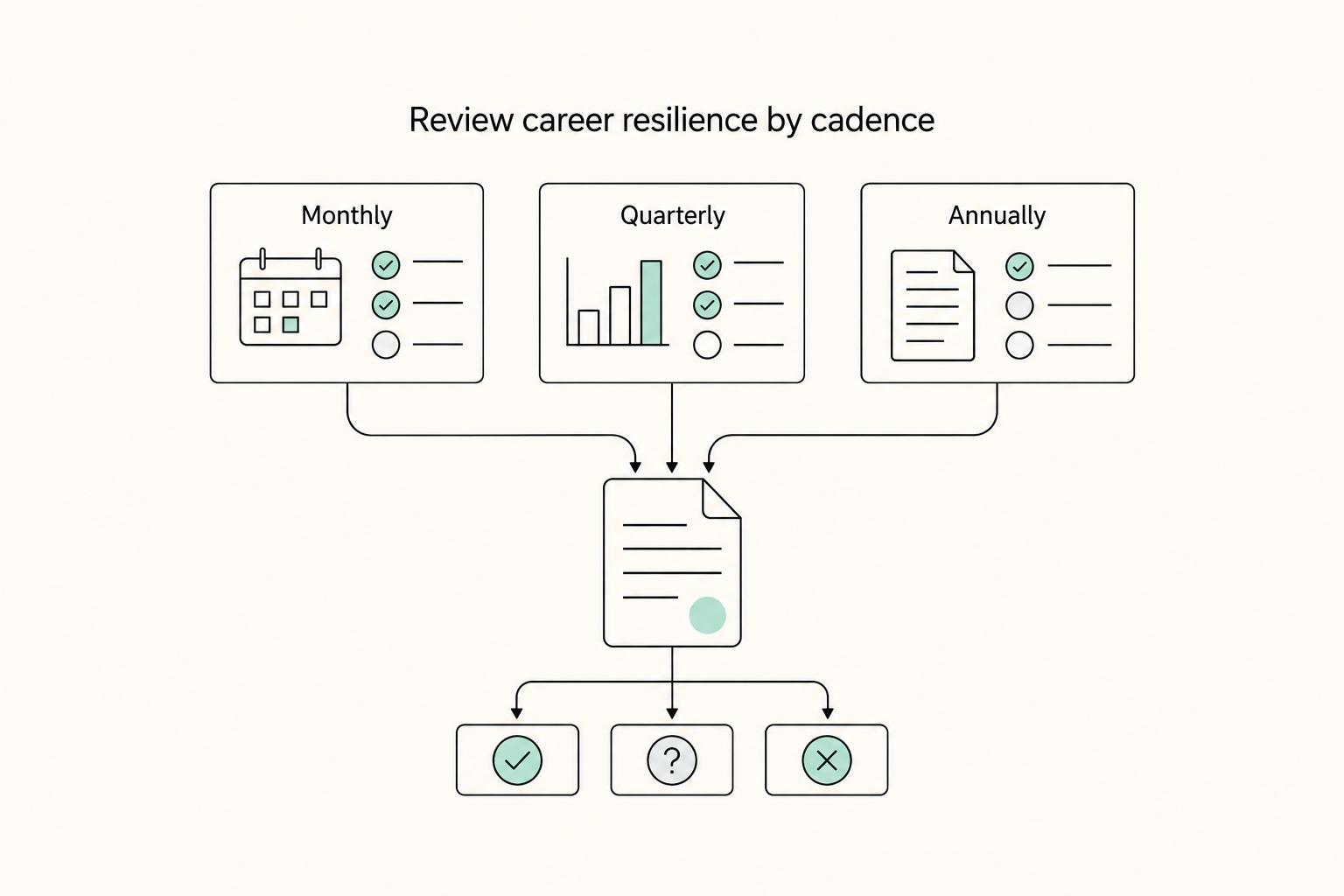
| Cadence | Action | Why it helps |
|---|---|---|
| Each month | Capture one client result and one lesson learned | Keeps maintenance light but consistent |
| Each quarter | Turn one of those into a case study | Builds the evidence pack |
| Once a year | Write a Year in Review so periods of work do not blur together | Helps with sales and honest self-assessment |
Step 1. Define your core durable skill, then add adjacent skills that make it easier to buy. Start with the capability that stays useful even as tools change: process design, technical implementation, research, writing, analysis, stakeholder communication. Then add one or two adjacent skills that improve delivery or make the value easier for a buyer to see. Map the full stack to a business outcome, not your job title.
- Pair your core delivery skill with communication and documentation so handoffs stay clear and repeatable.
- Pair your core analysis skill with concise writing so decisions and priorities are easier to align.
- Pair your core implementation skill with discovery conversations so adoption friction drops after delivery.
What to de-prioritize matters just as much. Trend chasing is rarely worth it if it does not change the client result. A new tool earns a place only when it improves speed, quality, or insight for your current offer.
Step 2. Build a client mix that does not fail for the same reason at the same time. "Diversified" sounds good, but it does not help much if every client depends on the same budget cycle, sector mood, or payment behavior. Review your current book of business against practical risk signals, then set internal gates based on your own verified history rather than generic thresholds.
Use a simple checkpoint: if you lost one client this quarter, could you still protect cash flow and pipeline quality? If the answer is no, concentration risk is likely higher than it should be, even if revenue looks fine today.
Step 3. Turn reputation into an evidence asset. Trust should not live only in emails, DMs, or memory. Build an evidence pack with four parts: case studies, proof artifacts, referral signals, and owned channels. Proof artifacts can include before-and-after screenshots, audit summaries, decision memos, process maps, or anonymized client feedback. Referral signals include introductions, repeat work, and public recommendations. Owned channels can be your site, newsletter, or a bi-weekly publishing rhythm that shows how you think.
Keep the maintenance light but consistent. Each month, capture one client result and one lesson learned. Each quarter, turn one of those into a case study. Once a year, write a "Year in Review" so periods of work do not blur together. That annual record helps with both sales and honest self-assessment.
Step 4. Keep learning tied to offers, not vanity. Learning pays off when it changes how you sell or deliver. A practical loop is simple: collect recurring client questions, study one adjacent shift, test it on active work, then update your positioning. AI may speed up knowledge retrieval, but you still need to verify that new knowledge improves delivery, communication, or service relevance. A good monthly test is whether learning changed one proposal, one service page, or one pricing conversation. If it changed nothing, you consumed content instead of improving the business.
A clear market position is what gets you hired. The next layer is what keeps delivery, cash flow, and records from breaking under pressure. If you want a deeper dive, read GDPR for Freelancers: A Step-by-Step Compliance Checklist for EU Clients.
Layer 2: Reduce Provider Dependence and Keep Contracts and Records Aligned#
If you want fewer operational surprises, reduce single-provider dependence before it turns into downtime. Use this section as an internal operating checklist, not legal or regulatory advice.
| Order | Ops element | Article note |
|---|---|---|
| 1 | Business banking | Start here in the minimum viable ops stack |
| 2 | Invoicing workflow | Add after business banking |
| 3 | Accounting trail | Add after invoicing workflow |
| 4 | Contract templates | Add after accounting trail |
| 5 | Recurring review cadence | Review monthly, confirm backup paths still work, and verify invoices, contracts, and account records still match |
Step 1. Map your single-provider exposure. List your current setup across four areas: payments, contracts, client communication, and file access. For each area, document one primary tool and one backup path you can activate quickly if access is interrupted.
| Decision area | Platform-dependent setup | More sovereign setup |
|---|---|---|
| Control | One account gate controls access | You retain direct copies, contacts, and account access paths |
| Fee visibility | Charges can be bundled or hard to isolate | You track each fee line clearly; confirm the current fee range with the provider |
| FX handling | Conversion follows provider defaults | You choose when and where conversion happens |
| Payout reliability | A single hold can block cash movement | One route can fail without stopping all payouts |
| Reconciliation effort | Data lives across disconnected dashboards | Invoices, payouts, and bookkeeping records align more cleanly |
| Failure recovery | Recovery depends on provider support timing | Recovery starts from your own backup path and records |
Step 2. Split standing terms from project terms. Keep relationship-level terms in your MSA and project-specific terms in each SOW, then confirm the exact split for your situation with legal counsel. A practical split is: MSA for reusable relationship rules such as confidentiality, payment mechanics, ownership framing, and termination process, and SOW for live project details such as scope, deliverables, timeline, pricing, dependencies, and acceptance criteria.
Use a short contract hygiene workflow so updates stay clean:
- Update the right document first (MSA for relationship changes, SOW for project changes).
- Issue a new version with a clear date and version label.
- Route approval through the same sign-off path each time.
- Archive signed copies and amendments in one source-of-truth folder.
Step 3. Implement a minimum viable ops stack in order. A simple sequence is: business banking, invoicing workflow, accounting trail, contract templates, then recurring review cadence. Keep it light but consistent: review monthly, confirm backup paths still work, and verify invoices, contracts, and account records still match.
Operational control helps you keep delivery and records stable as complexity grows. Related: Digital Nomad Health Insurance: A Comparison of Top Providers.
Layer 3: Keeping Your Facts, Filings, and Delivery Footprint Aligned#
Jurisdiction risk is manageable when you verify it continuously, not just at filing time. Your goal is simple: keep your facts, filings, and delivery footprint aligned across where you live, work, and get paid.
| Review step | Question | Focus |
|---|---|---|
| Residency review | Are day counts, move dates, and physical work locations complete and internally consistent? | Day counts, move dates, physical work locations |
| Filing review | Are items like FinCEN Report 114 or Form 540NR in scope based on records, not memory? | Scope based on records, not memory |
| Contract/framework review | Do your MSA and SOW terms still match where and how you actually deliver? | MSA, SOW, actual delivery |
| Client-footprint risk review | Which clients depend on your repeated presence in one location, and does that change exposure for either side? | Repeated presence in one location |
Step 1. Verify your residency and source-income map before filing season. Keep one live sheet with your physical presence, workdays, move dates, client locations, and where services were actually performed. You do not need every rule memorized, but you do need to know which rule sets require current verification before you file, sign, or relocate.
| Jurisdiction layer | What you need to track | Trigger point | Likely consequence |
|---|---|---|---|
| Country or territory where you are physically present | Entry and exit dates, workdays, visa or work permission, local notices received | Confirm the current threshold with the relevant tax authority | Residency, registration, or filing review may be required |
| State tax exposure, including California if relevant | Move date, California workdays, California-source invoices, compensation allocation | Verify whether part-year residency or nonresident California-source rules apply | California Form 540NR may be required. Part-year residents are taxed on worldwide income while resident. Nonresidents are taxed on California-source income |
| Source-income or client-delivery jurisdiction | Where services were performed, contract delivery location, repeat in-person work | Confirm the current threshold with the relevant tax authority | Local filing, sourcing, or advisor review may be needed |
If you cannot show why each jurisdiction is in or out of scope using dates, invoices, and signed documents, pause before filing. For California work allocation, use the FTB method: CA Workdays / Total Workdays = % Ratio.
Step 2. Treat FBAR and Permanent Establishment as early-warning items. Track these during the year so you can escalate before filing pressure starts.
| Risk area | Exposure signal to watch | Records to maintain | Escalate to a qualified advisor when |
|---|---|---|---|
| FBAR (FinCEN Report 114) | If applicable to you, aggregate maximum value of foreign accounts exceeds $10,000 at any point in the year | Periodic account statements for maximum-value support; exchange-rate source when converting foreign currency; rounded USD amounts (for example, $15,265.25 -> $15,266); if aggregate is uncertain and you have fewer than 25 accounts, complete account sections and mark item 15a as amount unknown | Account values are unclear, currency conversions are not well documented, or you are relying on deadline assumptions without checking current FinCEN notices |
| Permanent Establishment | Your in-country activity no longer looks incidental and starts looking established | Travel logs, contracts, SOWs, invoices, and notes showing where work was delivered | Before expanding in-country activity or when a client starts relying on your local presence as part of their footprint |
Step 3. Run your compliance self-audit in sequence. Do this before year-end close so corrections are still practical.
- Residency review: Are day counts, move dates, and physical work locations complete and internally consistent?
- Filing review: Based on records, not memory, are items like FinCEN Report 114 or Form 540NR in scope?
- Contract/framework review: Do your MSA and SOW terms still match where and how you actually deliver?
- Client-footprint risk review: Which clients depend on your repeated presence in one location, and does that change exposure for either side?
Step 4. Use jurisdictional arbitrage with guardrails. Jurisdictional arbitrage only helps when it is legal, documented, and sustainable. Choose structures you can defend with clean records and explain clearly to a client, bank, and advisor. If a setup lowers tax on paper but weakens continuity, complicates filings, or erodes client trust, it is usually the wrong tradeoff.
You might also find this useful: A guide to 'Antifragile' thinking for building a resilient freelance business.
From Freelancer to Founder: Mastering Risk is the Final Strategy#
Use one risk system, not three separate checklists. Your career is more durable when market decisions, operating discipline, and jurisdiction reviews are handled together before they turn into expensive cleanup.
| Layer | Reactive behavior | Founder behavior | Better decision signal |
|---|---|---|---|
| Market position | You send generic pitches and chase any lead. | You tailor outreach to context, show clear proof, and track response quality. | You judge by replies and new clients, not by how polished the message sounds. |
| Operations | You run ad hoc: default platforms, mixed records, vague terms. | You run systemized: controlled payment paths, documented process, signed MSA/SOW records. | You can still invoice, collect, and explain records if one platform delays, freezes, or changes terms. |
| Jurisdiction | You defer decisions until filing season. | You review continuously: presence, accounts, and filing facts during the year. | You escalate early instead of discovering issues late. |
Step 1: Tighten your market layer. If your outreach sounds interchangeable, expect low response. Keep proof assets that travel well: case studies, testimonials, and concise outcome examples.
Step 2: Systemize operations before growth stress-tests them. Dependency risk is strategic, not theoretical. Maintain dated records and a backup path so your workflow holds when one provider changes.
Step 3: Run jurisdiction as a recurring review. This is how people end up feeling trapped later when they delay risk management. Keep your travel log, account list, and filing file current, and verify the current residency standard, FBAR trigger, state filing form, and advisor contact from official or source records before using them.
Implement in sequence: update proof and outreach, verify payment and contract records, then reconcile presence and account data against current rules you have verified.
For a step-by-step walkthrough, see A guide to 'Social Proof' for your freelance website.
Frequently Asked Questions
What are the biggest non-market risks for your freelance business?
Common non-market risks include compliance gaps and over-reliance on a small number of clients or payment paths. Review your travel log, client locations, account list, and revenue concentration monthly, then keep dated statements, invoices, contracts, SOWs, and a simple presence calendar. Escalate before a move, repeated in-person work, or any filing you cannot explain from your records.
How do you build a durable financial setup?
Start with control and redundancy. Use a payment setup with a primary account you control directly, a backup receiving path, separate tax reserves, and a clear split between business and personal spending. Plan for interruptions so you can still invoice and get paid if one processor is delayed or unavailable.
Do you need to worry about tax residency if you move around?
Yes. If you have California ties, verify whether you are a resident, part-year resident, or nonresident, whether Form 540NR is in scope, and whether California-source income includes services physically performed in California. Reconcile day counts, move dates, and where work was physically performed, then keep leases, travel records, invoices, and signed contracts that match the timeline.
How should you handle FBAR without guessing?
If FBAR applies to you, use the filing trigger and timing from current FinCEN notices, not memory. FinCEN says an FBAR must be filed if the maximum value of one foreign account, or the aggregate maximum of multiple foreign accounts, exceeds $10,000 at any point in the calendar year. If you did not reach that threshold at any time in the year, no FBAR is required. Value each account separately from statements, keep your conversion source and maximum-value worksheet, and verify current filing timing against current FinCEN notices.
What contract structure holds up better as you grow?
An MSA/SOW split can make repeat projects easier to manage. Keep the MSA for standing commercial terms, and use each SOW for current project facts: deliverables, deadlines, revision limits, acceptance, payment schedule, and what happens if the project pauses, changes, or ends early. Compare your latest SOW against how you actually deliver work, and keep signed versions and change approvals together.
Is it better to be a specialist or a generalist?
For many freelancers, a clear core specialty supported by adjacent skills is easier for clients to understand and buy. Pick one durable problem you solve, then add supporting abilities such as sales conversations, writing, analytics, or stakeholder management that reduce friction for clients. If your proposals keep sounding unclear or your close rate stays low, narrow faster.
How should you choose technology to learn?
Prioritize durable fundamentals, then add newer tools when they connect to real demand. Databases, networks, writing, spreadsheets, and core languages often stay useful across cycles. Review quarterly whether a tool helped you ship work, win work, or only consume time.
Can your personal brand support career longevity?
Yes, if it is built on proof instead of visibility alone. Your brand is stronger when it points to shipped work, clear thinking, reliable delivery, and material you control on your own site or list, not just on rented platforms. Publish useful artifacts on a regular cadence and keep screenshots, testimonials, dated outcomes, and links you control.
Try a related tool
Researched and edited by the Gruv editorial team. Gruv builds cross-border billing, payouts, and finance-operations software for global businesses.
Sources
- bsaefiling.fincen.gov/docs/FinCENFBARElectronicFilingRequirements.pdftrusted
- bsaefiling.fincen.gov/docs/XMLUserGuide_FinCENFBAR.pdftrusted
- ctstate.edu/images/Archives/Archived-Catalogs/GCC/GCC_20...trusted
- ctstate.edu/images/Archives/Archived-Catalogs/HCC/2021-2...trusted
- docs.gato.txst.edu/721833/November%202024%20Minutes.pdftrusted
- fincen.gov/reporting-maximum-account-valuetrusted
- fincen.gov/report-foreign-bank-and-financial-accountstrusted
- ftb.ca.gov/file/personal/residency-status/part-year-and...trusted
Educational content only. Not legal, tax, or financial advice.
Related Posts

GDPR Compliance Checklist for Freelancers Working With EU Clients
Start by separating the decisions you are actually making. For a workable **GDPR setup**, run three distinct tracks and record each one in writing before the first invoice goes out: VAT treatment, GDPR scope and role, and daily privacy operations.

Digital Nomad Health Insurance Comparison for Long-Stay Moves
Use focused time now to avoid expensive mistakes later. Start with a practical `digital nomad health insurance comparison`, then map your route in [Gruv's visa planner](/tools/visa-for-digital-nomads) so we anchor policy checks to your real plan before pricing pages pull you off course.
How to Build an Antifragile Freelance Business: Financial Core, Compliance Firewall, and Shock Absorbers
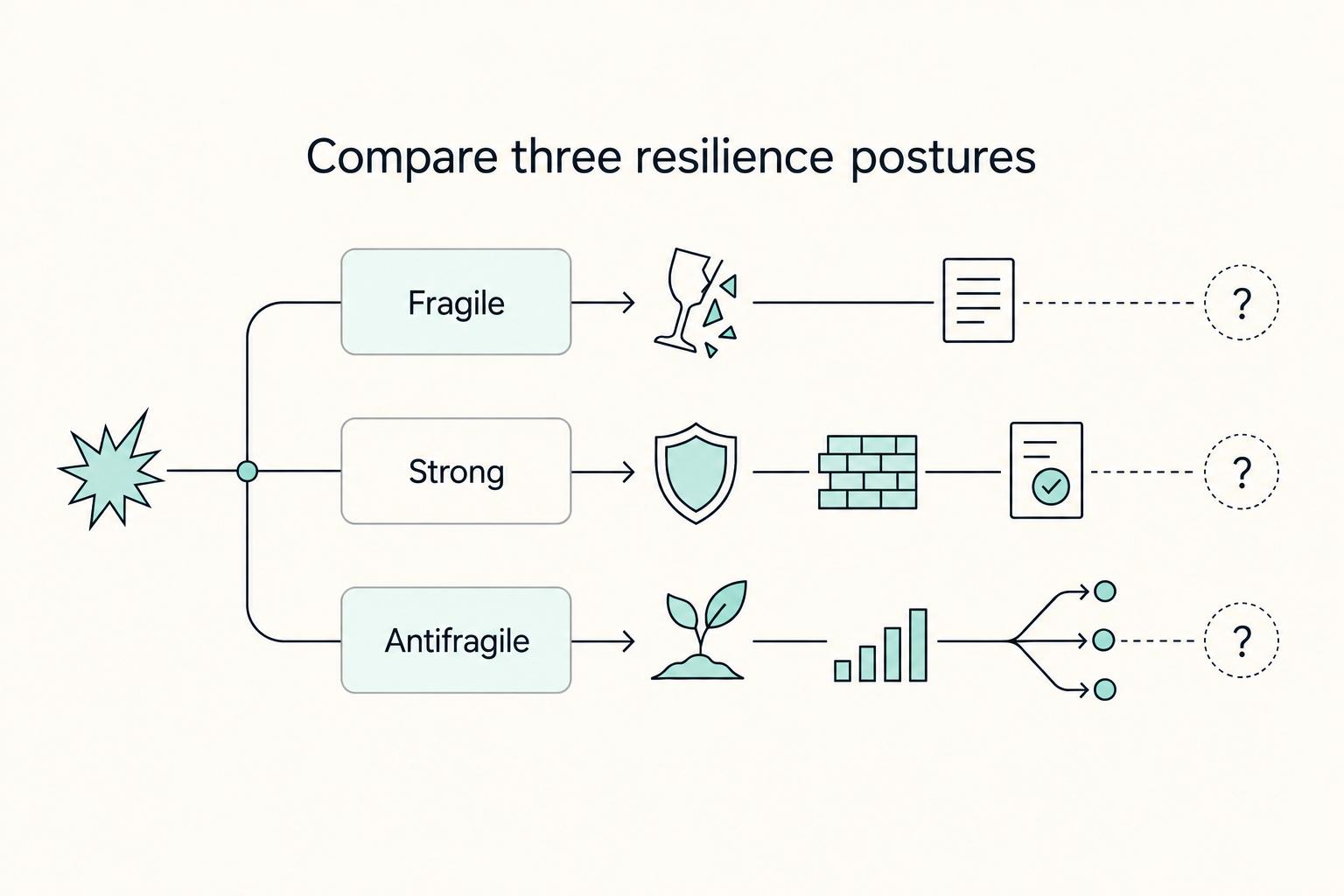
If you want an antifragile freelance business, design your operations to benefit from disruption, not just survive it. Resilience means you absorb a shock and recover. Antifragility, in Taleb's framing, means you improve because of volatility rather than merely endure it.