
Quick Answer
Use the deck as an operating document: define mission and values, then attach observable behaviors people can apply in hiring, onboarding, and reviews. Build it from recent decisions, not aspirational wording, and require one concrete example per value. Add a structured interview rubric and a first-30-day onboarding check so managers can verify behavior early. Keep policy governance in the employee handbook, then assign a clear owner, version date, and update triggers so the deck stays aligned as the company changes.
Why culture decks fail as employer branding and work as decision documents#
Treat your company culture deck as a decision document, not a branding artifact. At its simplest, a culture deck is a slide presentation about your mission, values, and culture. The version that helps a growing company goes further. It explains how the company runs, how people are expected to work, and how tradeoffs get handled.
That distinction matters when teams are trying to make consistent decisions. Culture is not just an about page or a founder note. It shows up in everyday choices. If the deck cannot help you choose between two candidates, show a new hire what good work looks like in week one, or support a performance conversation in clear language, it is still mostly marketing.
That is why this guide stays focused on execution. By the end, you should have a draft structure, a few decision checkpoints, and a maintenance rhythm you can keep. Start with one simple test: after you write a value or principle, ask whether someone else could use it to make both a small decision and a bigger one. If they cannot, it needs work.
Before you start#
Do not get stuck on slide count. Reported culture decks range from five to over 100 slides, so length is not the real decision. The real question is whether each page earns its place by making behavior clearer for recruiting, onboarding, and performance expectations.
Bring a small evidence pack into drafting, even for version 1. Pull recent examples of how your team handled priorities, client tension, deadlines, feedback, or collaboration. You are trying to describe lived behavior, not write an aspirational speech. One failure mode is a polished set of values that sounds right but does not match how work actually gets done.
Assume you will revise it. Culture presentations need regular updates, especially in a fast-growing company, because rapid change can make older language drift out of date. Put a visible version date on the deck and name who is responsible for checking whether the wording still matches real decisions.
The goal is not a deck that only supports employer branding. The goal is to turn values into operating rules your team can use repeatedly. If a statement cannot be applied in hiring, first-week onboarding, or a review conversation, treat that as a rewrite signal, not a design problem.
By the end of this guide, you should have more than a nice-looking presentation. You should have a working document your team can use in day-to-day decisions as the business grows.
Related reading: How to Onboard a New Employee in a Remote-First Company.
Set the scope before you open slide one#
A culture deck works best as an operating guide, not an everything document. If you try to make it your mission statement, policy manual, and recruiting brochure at once, it becomes harder to use.
Step 1. Define what this document does for your team#
Define what this document does for your team: it should show how your team works, makes decisions, collaborates, and handles tradeoffs so people know what to expect. Keep detailed policy language in your handbook or policy docs, and keep behavior and judgment in the deck.
Use a quick slide test: "Would this help someone understand how we work or what to expect here?" If yes, keep it. If it reads like policy text or a broad slogan, move it or rewrite it.
Step 2. Write a one-line purpose statement before slide one#
Write a one-line purpose statement before slide one, tied to outcomes. For example: "This deck helps us make better hiring decisions, onboard with fewer mixed signals, and set clear performance expectations."
Use that sentence as a filter. If a section does not support the purpose, cut it or move it.
Step 3. Set audience and ownership, and build for internal use first#
Set audience and ownership early. Build for internal use first, then adapt for candidates and external readers. Culture decks are commonly used to communicate expectations to both existing and potential employees.
Treat the deck as a living document. Update it regularly as your company grows so it stays relevant.
Gather proof so your values match real behavior#
Build this section from observed decisions, not aspiration. The deck is most useful when it reflects how people actually choose and act.
Step 1. Collect a recent evidence set from real decision points#
Collect a recent evidence set from real decision points. Focus on moments where someone had to choose between options, because that is where values become visible.
Use practical buckets to gather examples: hiring decisions, client conflicts, delivery tradeoffs, and repeated feedback themes. If you work solo, use past collaborators, contractors, or clients.
For each draft value, keep at least one concrete example in your notes: what happened, what options were considered, what decision was made, and why.
Step 2. Pressure-test draft values against observed behavior#
Pressure-test draft values with input from people who see the work from different angles, or from trusted past collaborators if you are solo. The goal is not broad opinion polling. It is checking whether the same behavior patterns show up consistently.
Ask for observed behavior. Questions like "What do we reward here?" and "Tell me about a decision that reflects how we work" usually produce better input than asking people to recite value words.
If a value sounds polished but no one can point to a real example, rewrite it in plain language or cut it.
Step 3. Use one verification question per value#
Use one verification question per value: can you name a real decision that proves this? If the answer is weak, narrow the claim into an expected behavior you can defend and teach.
Keep what you can verify now, and update later as behavior evolves. That keeps the deck credible for onboarding and alignment.
If you want a deeper dive, read Digital Nomad Health Insurance: A Comparison of Top Providers.
Build the deck in a strict sequence that teams can run#
Build the deck as an operating tool, not a symbolic artifact. A clear sequence makes expectations explicit and gives people enough direction to make better decisions day to day.
Step 1. Pick one consistent flow and keep it tight#
Pick one consistent flow and keep it tight: start with direction (mission and vision), then values, then expected behaviors, non-negotiables, and what good execution looks like in practice. The goal is to move from intent to observable action so the deck is usable when real tradeoffs show up.
Under each section, add a simple accountability check so statements stay practical: the claim, the behavior someone can observe, who owns it, and what should trigger review. If you cannot describe those in plain language, the slide is still too abstract.
Step 2. Add a decision-rules slide for the tradeoffs your team faces#
Add a "how we decide" slide with a short set of rules for the tradeoffs your team actually faces. Keep each rule as a decision sentence people can apply without waiting for approval on every call.
Use your evidence notes as a filter: if a rule is not grounded in how your team has already made decisions, rewrite it until it reflects reality.
Step 3. Add a contrast slide for in-scope and out-of-scope behaviors#
Add a contrast slide for in-scope versus out-of-scope behaviors, especially for onboarding. Clear boundaries help people self-correct faster than broad value language alone.
If you reference examples like the Netflix culture deck, use them for tone and clarity only. Keep only standards your team can actually apply and sustain in daily work.
We covered this in detail in How to Create a Pitch Deck in Canva.
Convert values into hiring and onboarding mechanics#
Make each value operational across hiring, onboarding, and reviews. If a value cannot be tested in interviews and observed in the first 30 days, rewrite it until it can.
Step 1. Build a structured interview rubric for each value#
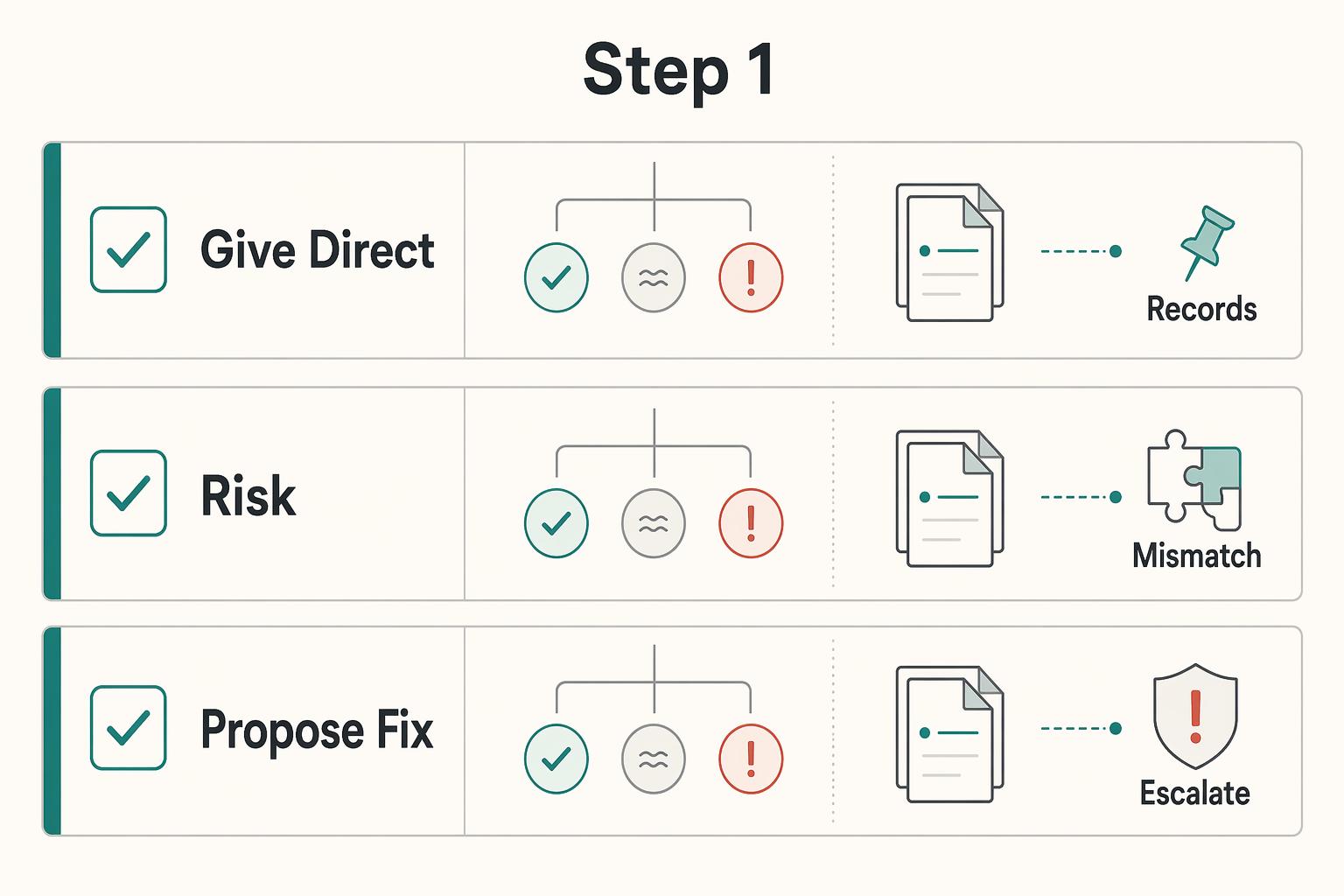
Build a structured interview rubric for each value with a pass signal, a fail signal, and one red-flag answer pattern. This is where the deck moves from intent to hiring decisions.
| Value | Pass indicator | Fail indicator | Red-flag answer pattern |
|---|---|---|---|
| We give direct feedback early | Candidate describes naming an issue quickly, with a concrete example and outcome | Stays vague or waits for formal review cycles | "I avoid hard feedback unless someone asks for it" |
| No hidden client risk | Candidate escalates risks before they affect scope, quality, or deadlines | Treats late escalation as acceptable if delivery keeps moving | "I usually try to fix it myself and tell people later" |
| Propose a fix before escalating | Candidate pairs problem-spotting with at least one recommendation | Escalates only the problem, with no next step | "My job is just to surface issues" |
Ask the same value questions of every candidate, and require interviewers to record one piece of evidence in each row. If a debrief still relies on "good culture fit," the rubric is too soft or the value is still too abstract.
Step 2. Attach a behavior-based 30-day checklist to onboarding#
Attach a 30-day checklist to onboarding, because that window can shape long-term outcomes. Keep it behavior-based, not paperwork-heavy.
For each core value, assign one required behavior and one observable output so a manager can verify progress without guessing:
- Direct feedback early: required behavior is raising one real concern or improvement point in the week it appears; observable output is a documented feedback note or meeting follow-up.
- No hidden client risk: required behavior is flagging delivery risk before it reaches the client; observable output is an internal escalation message or updated project note.
- Propose a fix before escalating: required behavior is bringing one recommendation with each issue; observable output is a written option list or decision comment.
The common failure mode is explaining values without asking new hires to perform them. In remote teams, weak onboarding can show up as disengagement and slower productivity, so explicit "what good looks like" markers matter.
Step 3. Use the same value labels in performance reviews#
Use the same value labels in performance reviews so culture language and accountability language stay aligned. If the deck says "give direct feedback early," the review template should assess that exact behavior, not a generic label like "communication."
Ask managers to include one observed example per value in each review cycle. If they cannot, either the expectation is not being managed or the value is not specific enough to hold up in practice.
You might also find this useful: How to Create a Culture of Asynchronous Communication.
Assign ownership and set update triggers#
To prevent drift, give the deck clear ownership and update it when operating behavior changes, not only when the calendar says to review it.
| Area | What to define | Notes |
|---|---|---|
| Ownership | One accountable owner; who can propose changes; who gives final approval | As hiring volume grows, move to shared ownership, but keep edit rights explicit |
| Update model | Trigger-based updates as the default; calendar reviews as backup | Name triggers up front: org design changes, new service lines, repeated hiring misses tied to the same behavior gaps, and operating-model shifts, including remote-to-hybrid changes |
| Version control | Version number, change log, and an effective-from date | Each change entry should state what changed, why now, who approved it, and when it applies |
Step 1. Start with one accountable owner and explicit edit rights#
Start with one accountable owner so decisions stay clear and the language stays consistent. As hiring volume grows, move to shared ownership, but keep edit rights explicit: who can propose changes and who gives final approval.
Use a quick alignment check: if two managers cannot give the same answer about who can change a value definition or behavior example, ownership is too fuzzy.
Step 2. Default to trigger-based updates, with calendar reviews as backup#
Use trigger-based updates as the default, with calendar reviews as backup. Culture is practiced behavior, so your deck should change when team behavior expectations change.
Name triggers up front, such as:
- org design changes
- new service lines
- repeated hiring misses tied to the same behavior gaps
- operating-model shifts, including remote-to-hybrid changes
This helps you avoid ad hoc local rules that split expectations across teams.
Step 3. Add basic version control so alignment stays traceable#
Add basic version control so alignment stays traceable: version number, change log, and an effective-from date. Each change entry should clearly state what changed, why now, who approved it, and when it applies.
For major policy shifts, update collaboration and decision guidance in the deck and reconcile linked handbook rules in the same cycle so people do not get mixed signals. That is especially important for in-office expectations, where purpose-driven time tends to work better than ad hoc attendance.
If your handbook needs work, clean it up in parallel with A Guide to Employee Handbooks for a Remote-First Company.
This also pairs well with A Guide to OKRs (Objectives and Key Results) for Company Goal Setting.
Use the deck where decisions happen#
A culture deck works only when it shows up in real decisions, not just in storage. Use it in the moments where people decide whether to join, how to work, and when to escalate.
Step 1. Use the same core slides across hiring and onboarding#
Use the same core slides or behavior examples across hiring and first-week onboarding so expectations stay consistent. In practice, each touchpoint should answer a different question with the same underlying values: what work style you reward, how you screen for fit, what you expect at offer stage, and what day-one behavior looks like.
Your checkpoint is simple: if a recruiter, hiring manager, and new hire describe the same value differently, the deck is not embedded yet.
Step 2. Keep one short client-facing excerpt and internal detail private#
Keep one short client-facing excerpt, and keep internal enforcement detail private. Clients can see how your team makes decisions, handles feedback, and raises risks, but they do not need manager-only guidance or internal correction language.
Use a quick failure check: if the excerpt reads like slogans, it is too soft; if it reads like an internal discipline document, it is too much. Keep this excerpt approved and versioned so sales and leadership are not improvising.
Step 3. Show decision discipline in investor and partner conversations#
Use the deck in investor and partner conversations to show decision discipline, not culture theater. Culture becomes credible when the thinking behind decisions is visible in how your team actually works, so show how values shape hiring calls, delivery tradeoffs, and escalation paths.
This is your guardrail against the credibility gap: a polished deck without lived behavior is easy to spot. If you cannot point to recent examples that match the document, do not present it externally yet.
For a step-by-step walkthrough, see How to Create a Pitch Deck for Your Agency.
Fix common failure modes early#
The fastest way to protect trust is to treat culture-deck misses as process issues and fix them before they spread.
| Issue | Signal | Response |
|---|---|---|
| Aspirational values | Values sound strong but are not yet visible in day-to-day decisions | Replace aspirational wording with actions your team can point to in real work |
| Handbook conflict | Deck statements do not match policy language | Cross-check each deck statement against policy language and resolve conflicts before publishing |
| Hiring mismatch | Debriefs rely on examples too little and on "culture fit" shorthand too much | Add clear behavior prompts and evidence expectations to your interview rubric |
| Drift | Onboarding messages, performance expectations, and daily reinforcement do not match | Run a blameless review and focus on why the gap happened and what to change in the process |
Step 1. Replace aspirational wording with behavior you can already see#
Values should describe behavior you can already see. Replace aspirational wording with actions your team can point to in real work, and rewrite any slide that sounds strong but is not yet visible in day-to-day decisions.
Step 2. Cross-check each deck statement against policy language before publishing#
Reconcile the deck with the employee handbook before rollout. Formal policy governance can sit in handbook sections like 1.2 (adoption and amendment) and 1.6 (change in policy), so cross-check each deck statement against policy language and resolve conflicts before publishing. If you need help tightening that boundary, see A Guide to Employee Handbooks for a Remote-First Company.
Step 3. Add behavior prompts and evidence expectations to your interview rubric#
Make values usable in hiring, not just visible in slides. Add clear behavior prompts and evidence expectations to your interview rubric so debriefs rely on examples instead of "culture fit" shorthand.
Step 4. Watch for drift and run a blameless review on gaps#
Watch for drift by comparing onboarding messages, performance expectations, and what actually gets reinforced in daily work. When gaps show up, run a blameless review. Mistakes and critical incidents will happen, and blame tends to create finger-pointing, distrust, and unproductive behavior, so focus on why the gap happened and what to change in the process. Need the full breakdown? Read How to Encourage Diversity and Inclusion in a Remote Workplace.
Build your first version this week#
Ship a usable version 1 quickly, then improve it based on real friction in hiring and onboarding.
- Set scope and benchmark before drafting.
Define what this deck should guide, then compare that to how your team currently works. Keep policy-heavy detail in your handbook, and link to A Guide to Employee Handbooks for a Remote-First Company when needed.
- Use a clear first-version structure.
Build the deck in this sequence: mission, vision, values, expected behaviors, and decision rules. This keeps the document practical instead of turning into brand copy.
- Replace vague values with observable behavior.
For each value, add a real example from recent work. If you cannot point to a concrete decision or behavior, rewrite the value until someone could verify it in practice.
- Assign ownership and review triggers.
Give each section one owner and one trigger for revision, for example repeated hiring misses or onboarding confusion. That keeps updates accountable and avoids committee language.
- Connect values to workflows.
For every value, add one interview prompt, one onboarding task, and one performance expectation. If a value cannot be used in those moments, it is not operational yet.
- Publish, test, and revise.
Use the deck in recruiter screens, interview debriefs, and onboarding, then update it where interpretation breaks down. Treat version 1 as a working draft and keep testing beliefs and values as you learn.
Related: How to Build a Culture of Innovation in a Remote Agency.
Frequently Asked Questions
What is a company culture deck?
A company culture deck is a slide presentation that explains your mission, core values, and work culture. It is most useful when people can use it to understand expectations and make better day-to-day decisions, not just admire the wording.
What should a culture deck include?
There is no mandated format, but common elements are your mission, vision or goals, and core values. Many teams also add expected behaviors and practical examples so the values are easier to apply in real work.
How long should it be?
There is no fixed length. Public guidance shows decks can range from five to over 100 slides, but that range is a warning, not a target. Start with the shortest version that is genuinely useful, and add detail only when a section is being used.
Who should own it?
There is no single required ownership model. Pick a clear owner or process so updates stay regular and the deck does not go stale.
How often should we update it?
Update it regularly, especially during rapid growth, so it does not become outdated. A practical trigger is any meaningful change in your vision, goals, or work culture.
How do we make sure it is real, not marketing?
Treat it as an operating tool, not a symbolic artifact. If it does not guide everyday work and decision-making, it is not doing its job.
Can we share it outside the company too?
Yes, selectively. Companies use culture decks to share their vision, goals, and work culture with employees and customers.
Can a remote-first company use this approach?
There is no separate remote-first approach to follow. The core principle still applies: clearly describe your mission, values, and work culture, and keep the deck current.
What is the biggest red flag that the deck is not working?
When it becomes symbolic instead of operational. If people reference it but it does not shape day-to-day work, it has slipped into branding instead of culture.
Try a related tool
Researched and edited by the Gruv editorial team. Gruv builds cross-border billing, payouts, and finance-operations software for global businesses.
Sources
- coloradosprings.gov/system/files/2024-07/r24-t086kk_tejon_revitl...trusted
- file.lacounty.gov/SDSInter/bos/bc/1063941_103019.B101112.LASDR...trusted
- hr.berkeley.edu/sites/default/files/change_management_toolki...trusted
- indianolaiowa.gov/DocumentCenter/View/17279/Employee-Handbook-...trusted
- ndupress.ndu.edu/Portals/68/Documents/jfq/jfq-86/jfq-86_60-65...trusted
- ofm.wa.gov/wp-content/uploads/sites/default/files/publi...trusted
- repository.upenn.edu/bitstreams/e0f63151-b667-4ada-a0a5-8e0d0bf15...trusted
- s3.wp.wsu.edu/uploads/sites/2070/2016/08/The-big-book-of-C...trusted
Educational content only. Not legal, tax, or financial advice.
Related Posts

Digital Nomad Health Insurance Comparison for Long-Stay Moves
Use focused time now to avoid expensive mistakes later. Start with a practical `digital nomad health insurance comparison`, then map your route in [Gruv's visa planner](/tools/visa-for-digital-nomads) so we anchor policy checks to your real plan before pricing pages pull you off course.
How to Build a Culture of Innovation in a Remote Agency
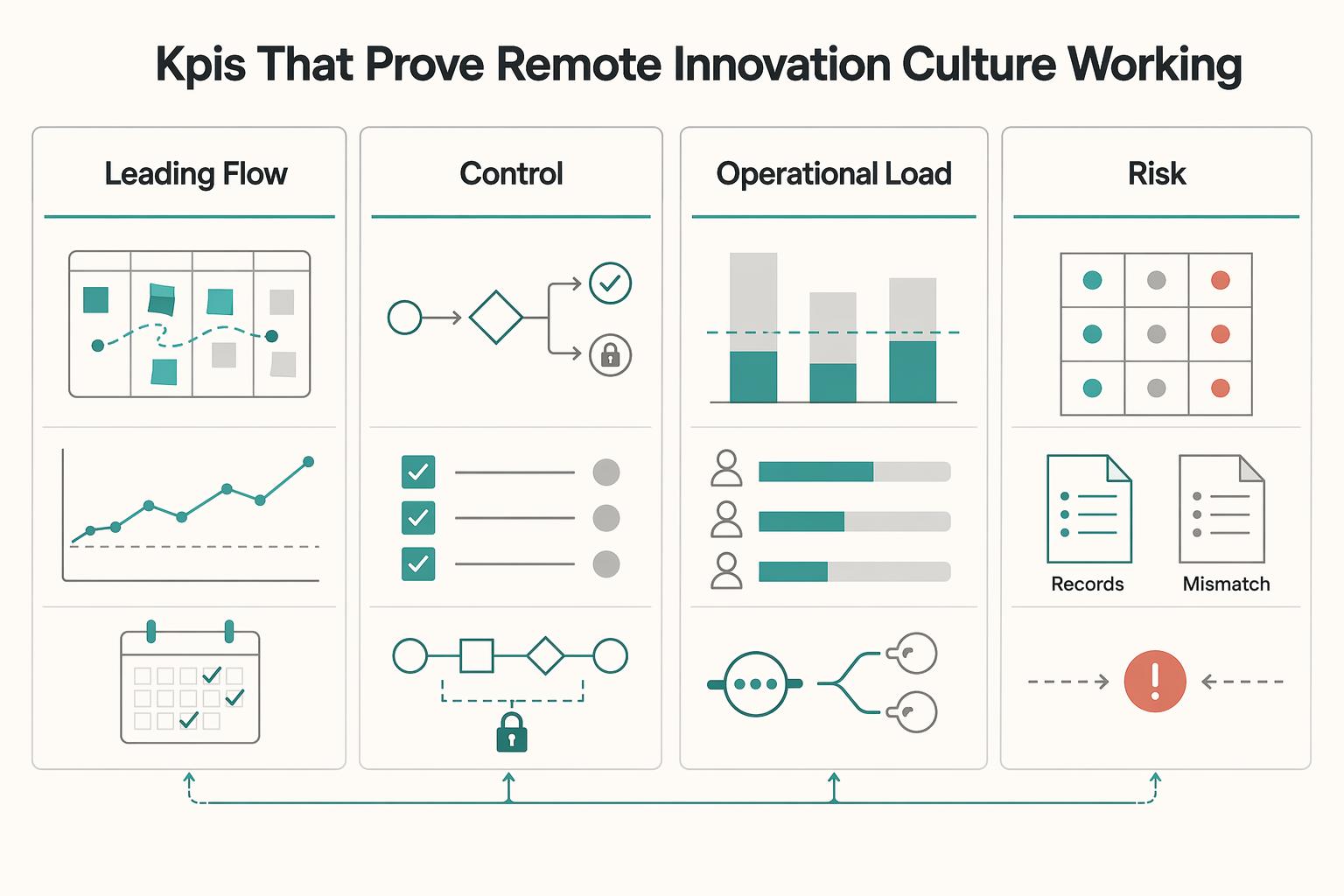
**Run your remote agency innovation culture through a one-week system with named owners, fixed Innovation Hours and Innovation Sprints, and simple controls that protect delivery quality and client trust.** Start here before you tune metrics or tooling. Execution discipline comes first, because remote culture alone does not create better ideas.
Build a Remote Employee Handbook Your Team Can Run
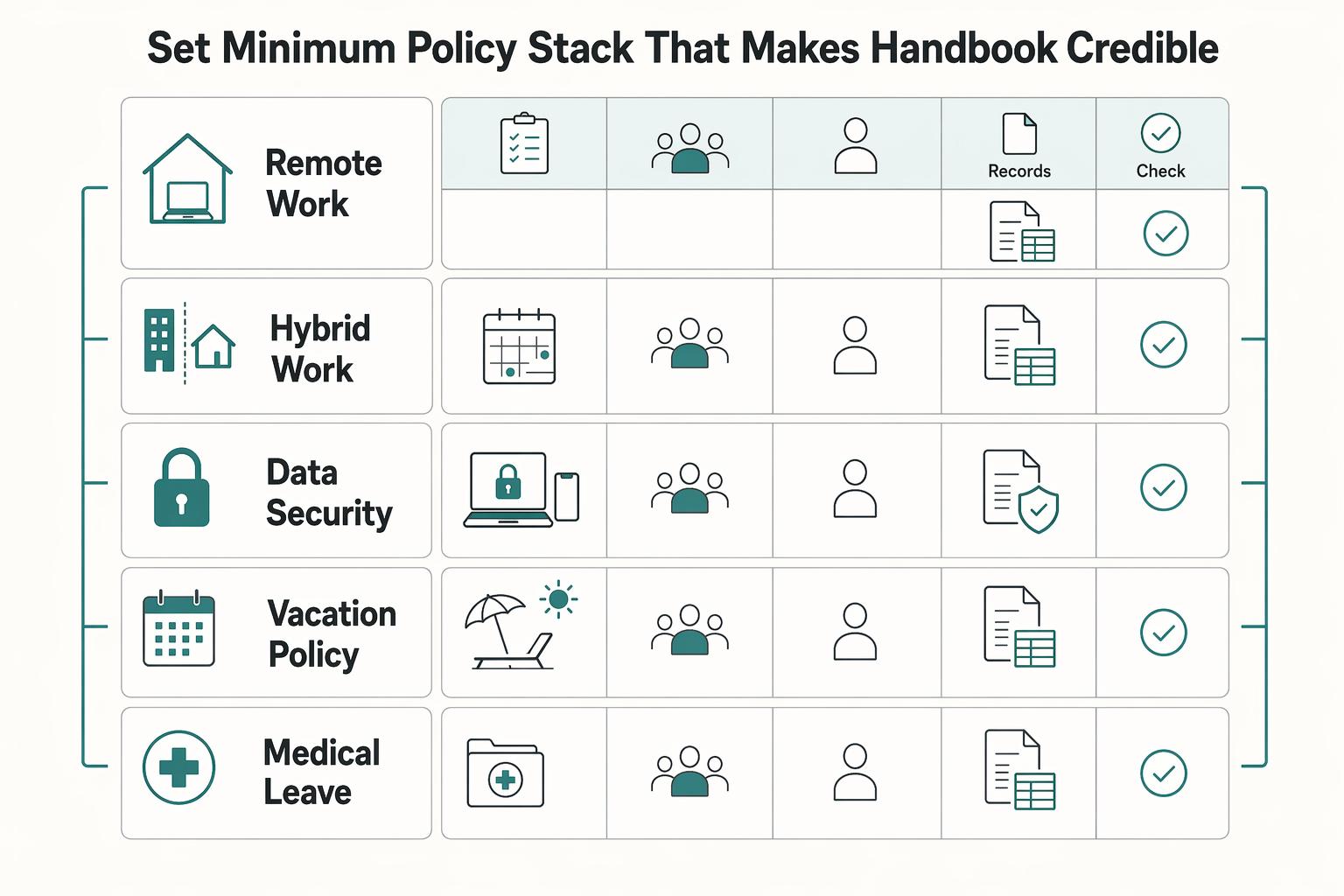
Your remote employee handbook should be an operating document, not a culture poster. It should make day-to-day rules clear enough to apply, enforce, and maintain as you scale.