
Quick Answer
Start by setting scope, decision ownership, and pause triggers in writing before interviews begin. For how to conduct a workplace investigation, keep one official file, classify inputs as verified or unverified, and use a go/no-go check before collecting additional evidence. As facts develop, log why sequencing or process choices changed. At closeout, deliver findings with unresolved points and named owners so leaders can act without treating uncertainty as settled.
When a client faces allegations of harassment, fraud, or other serious misconduct, they are not paying you for a generic compliance exercise. They need order, judgment, and a process that can hold up under pressure. Your job is to define the assignment, control risk, develop facts carefully, and give the company something it can actually act on.
That means leading the engagement from the start, not just performing tasks inside it. Set scope before facts start moving. Build a process you can explain and defend. Handle interviews with discipline. Close the matter in a way that supports decisions without pretending uncertainty does not exist. Done well, this is how you move from outside contractor to trusted advisor.
Part I: Architecting the Engagement#
If you want a usable answer to how to conduct a workplace investigation, define what the engagement can and cannot answer before you collect facts. At intake, consider documenting four things: allegation scope, who can approve scope changes, the review mandate, and out-of-scope items.
Step 1. Set the boundary in writing#
Start by labeling inputs as verified or unverified. Verified inputs are already in hand, such as a complaint email, current policy documents, or written direction about the review scope. Unverified inputs have been reported but not yet checked, such as witness names, timeline details, motive, or business impact.
That boundary matters because the supporting evidence here is narrow and context-specific. The cited study used semistructured interviews plus archived documents and applied member-checking. It was limited to four communication business leaders in Jackson, Mississippi with at least 1 year of successful employee-engagement experience. That supports careful process thinking, not universal investigation rules.
A practical checkpoint is to circulate a one-page scope note and get written confirmation on who can approve scope changes before interviews begin. If that approval path is unclear, pause.
Step 2. Apply a claim test before stating conclusions#
| Input type | State confidently | Qualify clearly | Remove pending verification |
|---|---|---|---|
| Written scope direction | Who requested the review, core question, expected output | Any objective not explicitly written | Assumptions about preferred outcome |
| Intake allegations or witness accounts | Who reported what, and when it was reported | Conduct as alleged, not established fact | Statements of intent, credibility, or policy breach |
| Outside research or background context | That the source used interviews, archived documents, and member-checking | Any direct carryover into investigation standards | Legal rules, mandatory roles, deadlines, or EEOC obligations |
The common failure mode is simple: unverified statements get repeated as if they were settled facts, and later you have to unwind your own language.
Step 3. Run this intake checklist#
Before you move into process design, make sure the official file includes the basics that will anchor the work. Consider keeping these five items in the file from day one.
- Mandate: designated approver (if assigned), deliverable, closure authority
- Scope statement: allegation, timeframe, people, business unit
- Policy set: the policies you will test facts against, or a pending note
- Communication boundaries: status cadence, file access, excluded recipients
- Escalation path: when scope expands or adjacent issues surface, including whether a separate process may be needed (for example, how to handle an EEOC discrimination charge)
Related: Canada's Digital Nomad Stream: How to Live and Work in Canada.
Part II: Designing a Defensible Process#
A defensible process separates what is source-supported from what is simply your internal operating choice. Once scope is set, one risk is process drift. The practical fix is to separate what is Grounded by your approved sources from what is still an Internal Draft choice. That is what makes the process defensible.
A defensible internal investigation is planned, independent, well-documented, and fair. That defensibility starts when an allegation is received with clear intake, early scoping, and documented rationale.
Step 1. Mark what is grounded vs provisional#
Use two labels from day one, Grounded and Internal Draft:
- Grounded: claims you can support from the approved pack
- Internal Draft: operating choices you may use, but cannot present as binding, standard, or legally required
This keeps your explanations accurate under review. “We documented rationale at intake and kept the process well-documented” is grounded. “We followed the required interview sequence” is not supported here and should stay out of formal methodology language.
Also keep source status clear. The Montana Discipline Handling Guide (June 10, 2013) states that it is not state policy, not an administrative rule, and not precedent. Treat it as nonbinding reference material, not procedural authority.
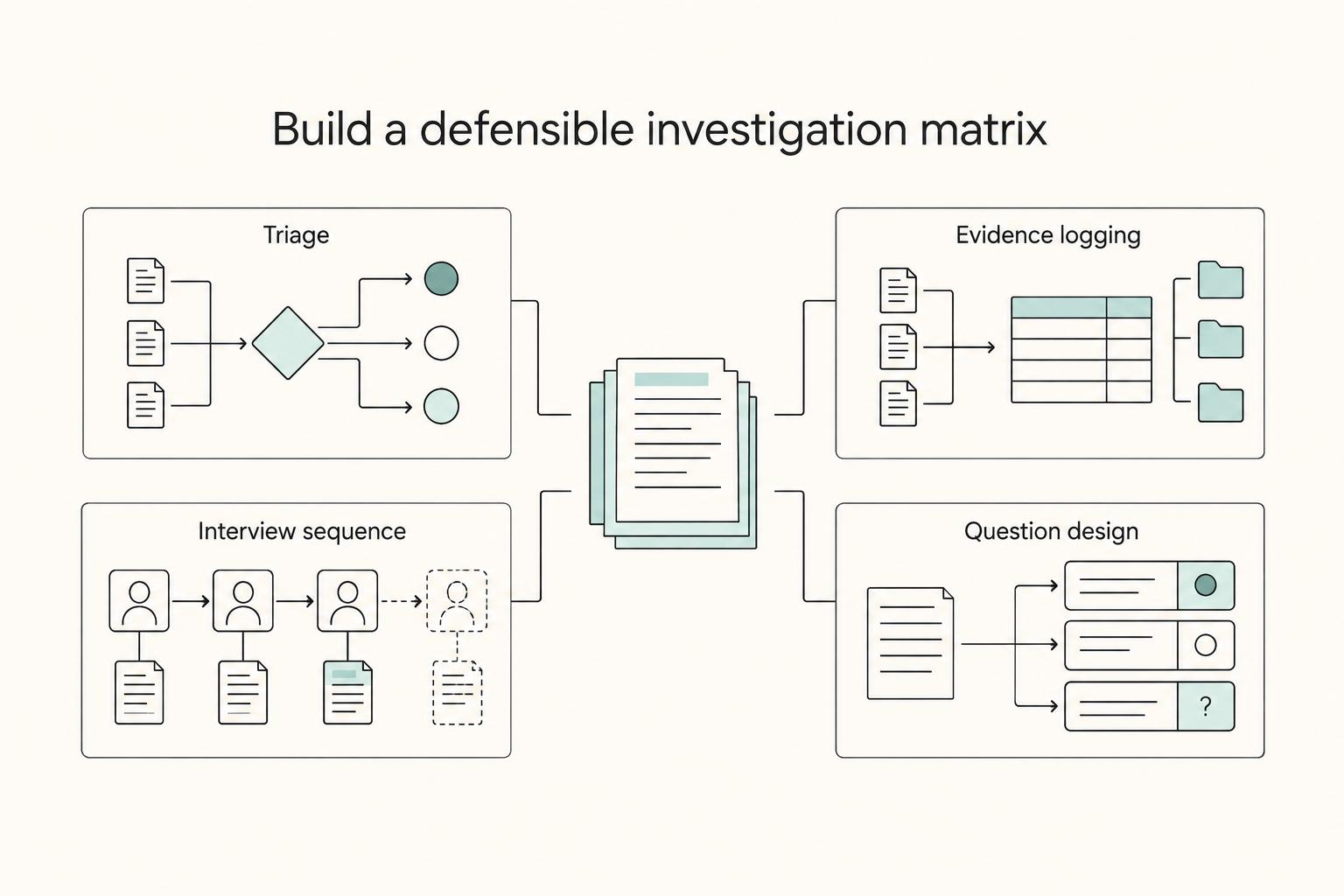
Step 2. Use a control matrix before process choices spread#
Before your internal preferences harden into “the way this had to be done,” run them through a simple control matrix.
| Process area | Use now | Use with qualifier | Hold pending verification |
|---|---|---|---|
| Triage | Record allegation receipt, early scoping decisions, and documented rationale | Prioritize participants using your internal judgment, labeled Internal Draft | Any claim that a specific witness order is required or legally preferred |
| Evidence logging | Keep records well-documented and explain why material was collected or reviewed | Use your own fields/status labels, marked Internal Draft | Any claim that your field list is mandatory under current sources |
| Interview sequencing | Document sequencing decisions and the reason | Re-sequence based on availability, new documents, or scope updates, with a qualifier | Any "standard sequence" claim presented as sourced without independent verification |
| Question design | Tie questions to approved scope and issue | Use your preferred pattern, labeled Internal Draft | Any claim that a specific questioning model is validated |
Use the labels literally: Use now for source-supported statements, Use with qualifier for internal method, Hold pending verification for anything you cannot support yet. Credibility slips fast when template language runs ahead of source support.
Step 3. Add three internal controls for this section#
These are Internal Draft controls unless your own policy requires otherwise. Use them at kickoff and when scope changes:
- Decision log discipline: Record date, decision, approver, reason, and what changed for each meaningful process choice
- Template version control: Freeze core templates at kickoff; if updated, save the prior version, increment versioning, and note what changed
- Change-reason capture: When process steps shift mid-investigation, record the trigger, such as new information, availability changes, or scope expansion. If the matter overlaps a charge response, route through your escalation path and coordinate with how to handle an EEOC discrimination charge
Step 4. Keep process language review-safe#
The same discipline should show up in your updates and findings. Use grounded language for established points, qualified language for internal method, and avoid unsupported procedural claims. In practice, that means documenting intake, scope decisions, rationale, and process changes clearly. It also means avoiding statements that your exact sequence, question structure, or log format was mandated by law or by the Montana guide.
For adjacent reading, see How to Encourage Diversity and Inclusion in a Remote Workplace Without Adding Bureaucracy. If you want to make your investigation checklist repeatable, align your templates to your own policy and escalation path, and you can also explore Gruv Tools.
Part III: Fair, Steady Interviews and Clean Notes#
The human element comes down to fair, steady interviews and clean notes. In interviews, consistency often matters more than style. Your goal is to run fair, steady conversations that produce usable evidence without assuming any single script or sequence is federally mandated. Use the grounded checkpoints as anchors and treat your interview format as an internal operating standard.
| Interview stage | Internal operating method | Grounded checkpoint |
|---|---|---|
| Opening | Frame the issue in neutral terms, explain purpose, and avoid signaling an outcome | Pre-investigation communication and mandate-setting are explicit checkpoints |
| Account gathering | Let the participant give their account first, then capture referenced documents, messages, or witnesses | “Who to interview, and in what order” plus “How to collect and record evidence” are supported planning tasks |
| Clarification | Separate what was directly observed from assumptions and follow up on gaps | Evidence collection and recording remain the supported anchor |
| Close-out | Confirm unresolved items, owner, and next action | Close-out should support a thorough, defensible report |
Step 1. Apply interviewer discipline#
Use one standard across participants: neutral phrasing, consistent structure, clear separation between fact and interpretation, and documented ownership for follow-up. After each interview, quickly tag key statements as direct observation, second-hand account, or interpretation so the record stays reviewable. Avoid fear-based or check-the-box execution. The source guidance criticizes both approaches and notes that low trust can reduce reporting.
Step 2. Use a simple internal note template#
A simple note format is usually enough, as long as you use it consistently. Treat it as an internal standard, not a legal requirement.
| Field | What to capture |
|---|---|
| Participant role | Their role in the matter |
| Statement type | Direct observation, second-hand account, or interpretation |
| Corroboration status | Corroborated, uncorroborated, or pending |
| Open questions | What still needs verification |
| Next action | Follow-up task and owner |
This helps you see what is established, what is still uncertain, and who owns each verification step.
Step 3. Escalate when interviews change case scope#
Interviews often change the assignment. When one materially expands scope or affects a charge response, stop and route the issue through your escalation path. For discrimination-related overlap, coordinate handling with how to handle an EEOC discrimination charge. For adjacent interview practice, you might also find How to Conduct Effective User Interviews useful.
Part IV: The Consultant's Shield#
A major protection here is file control: a clear mandate, controlled access, and findings tied back to evidence and policy. At this stage, file control is a core risk area in addition to interview quality. This is the risk-management layer of the work, not legal adjudication, with clear boundaries around mandate, evidence handling, and reporting.
A prompt, thorough review can help identify remedial action and may reduce exposure, but speed is not a reason to run a vague process. Before you collect another message, note, or exhibit, confirm an owner, a scope, and a stop rule.
Before you start: pull the engagement letter or SOW, the current in-scope policy set, the named client decision owner, and the legal-routing contact if counsel may direct or review the matter.
Step 1. Lock the mandate before evidence moves#
Lock the mandate before you expand the file. State your role in writing as fact-finding and policy-based reporting. If you are not engaged to give legal advice, do not imply that you are. Repeat the same role statement in the SOW, kickoff note, and file header so decision ownership and escalation are explicit.
For serious allegations, a prompt investigation still matters, but prompt does not mean blurry. Before evidence collection, name five items: the assignment question, the decision owner, scope boundaries, the escalation owner, and pause criteria. If you use an outside investigator, frame it as support for objectivity, not as insulation from challenge.
Verification point: a neutral reader should be able to quickly identify the investigation question, in-scope policies, decision owner, and pause triggers.
The common failure mode is role creep. If requests shift from fact development to legal judgment, route that request to the named owner rather than absorbing it into the report.
Step 2. Run a written go or no-go gate#
Use a short pre-evidence gate as a standard control step. If any row is unresolved, pause first.
| Gate | Control owner | Proceed when | Pause when |
|---|---|---|---|
| Mandate clarity | Engagement owner | Assignment question and deliverable are written and consistent across documents | The brief changes depending on who is asked |
| Decision ownership | Client sponsor | One person or role is named to accept findings and next-step decisions | Multiple stakeholders are giving conflicting direction |
| Scope boundaries | Investigator with client signoff | In-scope policies, time period, people, and issues are stated | New allegations appear without a scope decision |
| Escalation owner | Client sponsor or counsel-routing contact | A named person can approve scope changes or legal routing | Nobody owns escalation decisions |
| Pause criteria | Investigator and client sponsor | Triggers for stopping and reassessing are written | Urgency is being used to skip review |
Record who cleared each row and when. That log preserves why the work moved forward. If scope keeps expanding as interviews continue, run a quick pre-mortem before collecting more records. Use it as a scope-control checkpoint when pressure is pushing the assignment wider.
Step 3. Control access, changes, and exception handling#
Once the file is open, control who can see it, change it, and release it. Notes, drafts, and raw materials should be treated as high-risk records. Investigation outputs can become discovery targets, including interview notes and other underlying materials, so approvals and exceptions need to be named and documented.
| Control area | What to record | Approval action | Exception response |
|---|---|---|---|
| Official file location | Matter ID, official repository, current scope version | Name who can create or move the official file | Stop if records are being stored in side channels |
| Access approvals | Access list for notes, exhibits, summaries, report drafts | Record approver, date, and reason for each grant or change | Route any unlisted request to the named approver before sharing |
| Change logging | Log substantive edits to notes, exhibits, and report drafts | Name who can approve edits and final versions | Preserve originals and mark revisions instead of overwriting |
| Closure and release | Closure note, release instruction, recipient list | Name who authorizes release or closure | Do not mark closed or distribute findings without instruction |
Keep one official location and one version history. Also log exceptions as they happen: who approved access, what was shared, and why the exception was necessary.
Do not overpromise on privilege. Attorney-client privilege may apply only when the investigation is conducted to obtain and provide legal advice. Work product doctrine may apply when materials are prepared in anticipation of litigation. Privilege protections can fail when legal advice is not the purpose of the investigation, confidentiality is not handled clearly, or counsel is not directing the investigation.
Step 4. Map each finding to evidence and policy before release#
Before anything goes out, make sure every finding can be traced back to evidence and tied to an in-scope policy question. Keep the sequence simple:
- Write the conclusion in bounded factual language.
- Link it to the supporting note, document, message, or exhibit.
- Identify the policy question it answers.
- If the sentence depends on an external legal threshold or standard you have not confirmed, mark the threshold or standard as pending verification.
This catches two common failure points: unsupported statements and out-of-scope conclusions. If a fact is supported but policy relevance is unclear, rewrite it. If the policy concern is clear but the evidence is missing, remove it or mark it for verification.
Conclusion: From Client Crisis to Professional Credibility#
A strong closeout separates verified facts, unresolved points, and required local follow-up. Under pressure, that matters more than polished language because the record has to support decisions without hiding uncertainty.
Step 1. Write a handoff summary that shows what is known and what is still open#
Start with a short summary a decision owner can scan quickly. Anchor it to the written investigation scope so the file stays within the defined allegations, timeframe, parties, evidence, and policies. Use three buckets:
- Verified facts: supported by interview notes, documents, messages, or exhibits in the official file
- Unknowns or unresolved points: disputed, incomplete, or out-of-scope items
- Required follow-up: what still needs a local decision, verification, or escalation
Use unresolved-state wording where verification is still needed instead of writing past the record. For example: policy fit remains pending review against local policy text, or external reporting need remains pending review by local counsel or a named escalation owner.
Verification point: a neutral reviewer should be able to identify the allegation set, timeframe, policies considered, findings, and open items without reading the full file.
Step 2. State the decision posture, especially when accounts conflict#
Conflicting accounts do not relieve you of analysis. If a credibility determination is required, make it and show the reasoning using consistent, objective criteria.
If one account is better supported by records, consistency, or corroboration, state that in bounded factual language. If evidence is mixed, say exactly what is mixed and what local action is still required.
| Closeout risk | What to confirm before release | Defensible action if not ready |
|---|---|---|
| Record accuracy | Findings match the notes, exhibits, and report language in the official file | Pause release and reconcile the record instead of editing from memory |
| Policy fit | Each conclusion answers an in-scope policy question | Mark policy applicability as pending review and avoid broader conclusions |
| Ownership | Next-step ownership is documented for required actions | Do not distribute as final until ownership is clear |
| Escalation | Scope changes or routing concerns are documented with a next-step path | Hold closeout and route the issue before release |
Step 3. Run a release-readiness check and hand off one clean file#
Before closing, confirm that the report, supporting documentation, and handoff summary tell the same story. Release one clean package with the scope reference, findings, unresolved items, and documented next steps.
If timing moved beyond the initial planning window of one week, two weeks, or sometimes a month, note why. A documented delay can be less risky than a rushed release that cannot be defended.
The professional end state of how to conduct a workplace investigation is not forced certainty. It is a clear, documented handoff that separates what is verified, what is unknown, and what must happen next. If you want your broader operations to stay traceable and audit-ready as you grow, contact Gruv.
Frequently Asked Questions
When should I narrow the investigation scope in writing?
Do it before interviews, evidence requests, and reporting language start drifting. The scope should name the allegation set, timeframe, parties, policy questions, and escalation owner so the file stays review-safe when pressure rises.
What makes a workplace investigation release-ready?
A release-ready file ties every finding to evidence, answers an in-scope policy question, and names the owner for each required next step. If record accuracy, policy fit, or escalation routing is still unclear, pause release and fix the handoff first.
How should I handle conflicting witness accounts?
Do not hide the conflict behind summary language. State what each account says, show what records or corroboration support it, and explain the decision posture in bounded factual terms. If evidence remains mixed, name the unresolved point and the local action still required.
When should I escalate to counsel or a named decision owner?
Escalate when the investigation touches privilege, external reporting, scope changes, or a policy threshold you have not confirmed. It is safer to document the escalation and pause distribution than to release a report that cannot be defended later.
Try a related tool
Researched and edited by the Gruv editorial team. Gruv builds cross-border billing, payouts, and finance-operations software for global businesses.
Sources
- dccouncil.gov/wp-content/uploads/2021/05/JPS-Performance-O...trusted
- digitalcommons.wcl.american.edu/cgi/viewcontent.cgitrusted
- dodcio.defense.gov/Portals/0/Documents/CMMC/AssessmentGuideL2v2...trusted
- eeoc.gov/sites/default/files/2023-06/Wal-Mart%20Store...trusted
- explorecourses.stanford.edu/searchtrusted
- files.hawaii.gov/dbedt/erp/EA_EIS_Library/2019-05-08-HA-FEA-W...trusted
- govinfo.gov/content/pkg/CFR-2011-title29-vol4/xml/CFR-20...trusted
- govinfo.gov/content/pkg/GPO-STYLEMANUAL-2016/pdf/GPO-STY...trusted
Educational content only. Not legal, tax, or financial advice.
Related Posts

Germany Freelance Visa Application Path for Freiberufler and Gewerbe
Choose your track before you collect documents. That first decision determines what your file needs to prove and which label should appear everywhere: `Freiberufler` for liberal-profession services, or `Selbständiger/Gewerbetreibender` for business and trade activity.
Canada Digital Nomad Visa Planning for Visitor Status and Work Permits
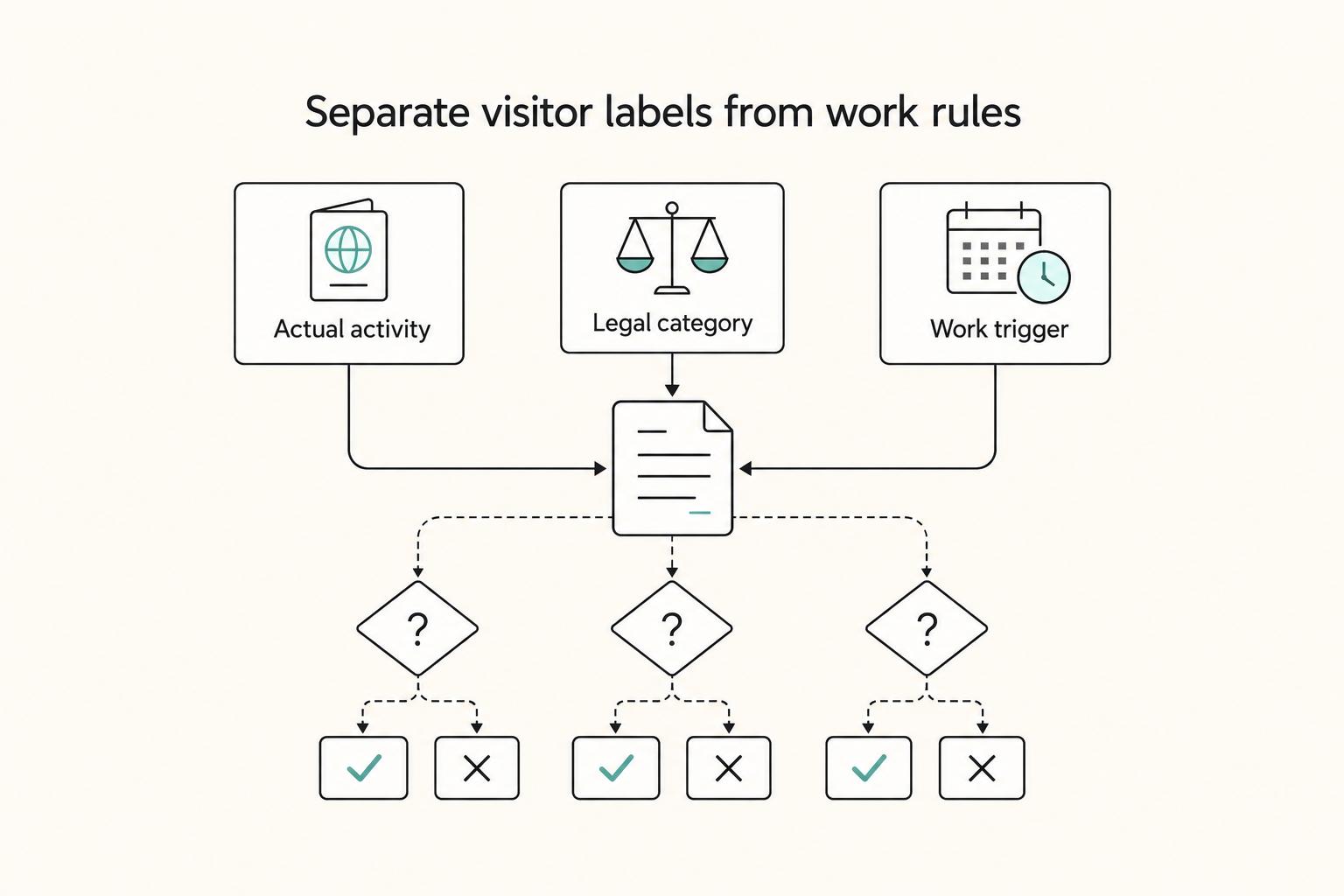
The phrase `canada digital nomad visa` is useful for search, but misleading if you treat it like a legal category. It is shorthand for existing Canadian status options, mainly visitor status and work permit rules, not a standalone visa stream with its own fixed process. That difference is not just technical. It changes how you should plan the trip, describe your purpose at entry, and organize your records before you leave.
How to Handle an EEOC Discrimination Charge
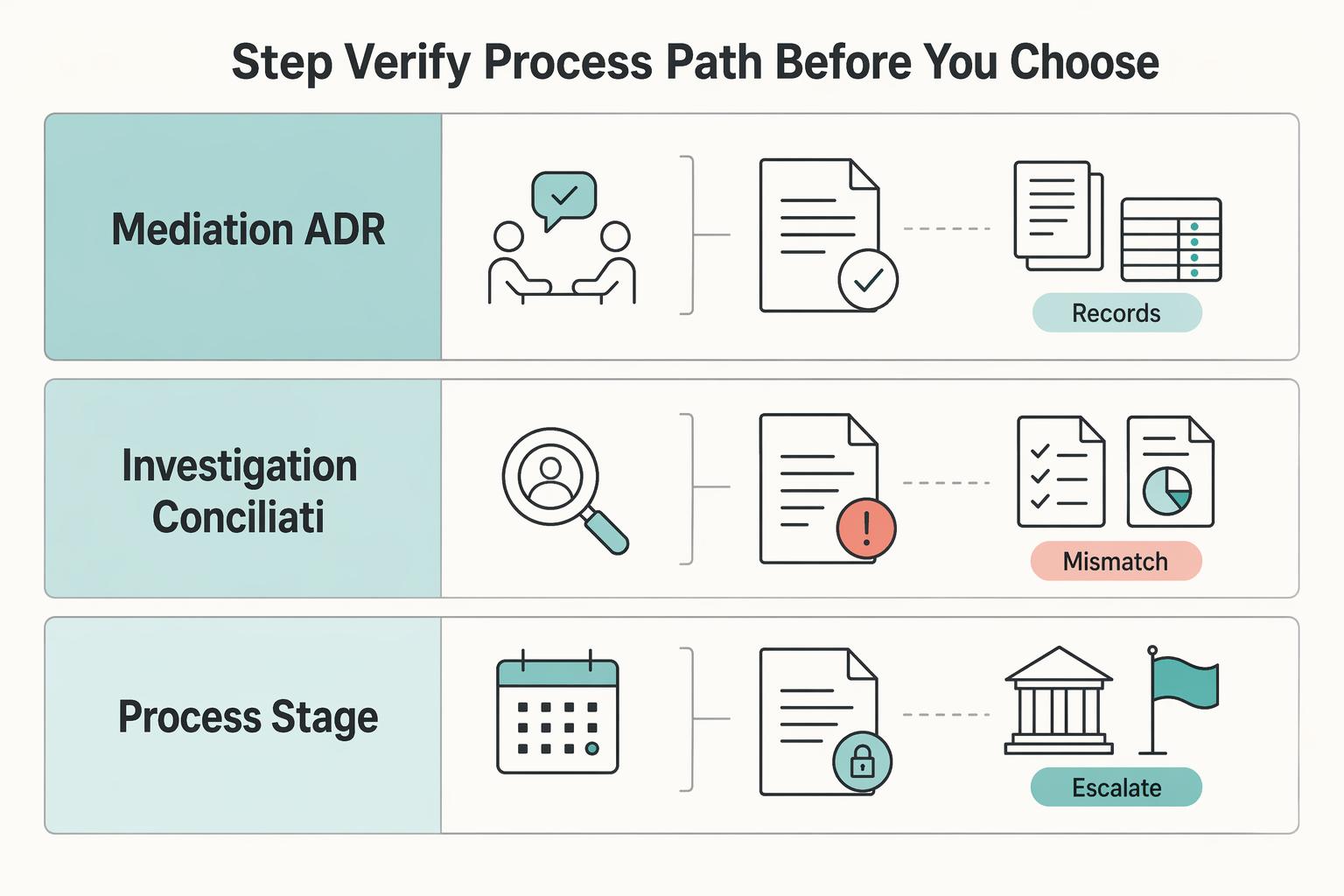
When an **eeoc discrimination charge** arrives, get control of the record before you decide how to respond. The safest sequence is simple. Clean up the documents, build the timeline, confirm the process path, and assign clear ownership.