

Quick Answer
Choose one operating base and one backup, then validate VAT routes after that decision. Use VAT Cross-border Rulings, OSS, and the cross-border SME scheme as execution tools, not as proxies for where to incorporate. Build a shared evidence pack, score countries on compliance workload and banking execution before tax, and set explicit switch triggers. Before filing, confirm MSEST notification steps, EX number timing, and threshold logic so your first-year plan is workable.
What to Consider When Choosing a Jurisdiction#
Pick your European subsidiary jurisdiction as an operating decision first, then map VAT administration around that choice. The aim is simple: one primary incorporation country and one fallback you can activate without restarting discovery. If your fallback depends on Estonia setup speed, map banking steps in How to Open a Business Bank Account for Your Estonian Company.
| VAT tool | Main use | Key note |
|---|---|---|
| VAT Cross-border Rulings (CBR) | Advance VAT rulings for complex cross-border transactions | File in the participating EU country where you are VAT-registered |
| One Stop Shop (OSS) | One Member State registration for covered VAT declaration and payment | Record keeping, audits, and leaving OSS still apply |
| Cross-border SME scheme | Prior notification through the Member State of establishment | EUR 100,000 Union turnover cap; registration processing should not exceed 35 working days |
The EU materials in scope here belong in the VAT lane, not the incorporation lane:
- VAT Cross-border Rulings (CBR): advance VAT rulings for complex cross-border transactions. File in the participating EU country where you are VAT-registered.
- One Stop Shop (OSS): one Member State registration for covered VAT declaration and payment. Record keeping, audits, and leaving OSS still apply.
- Cross-border SME scheme: one prior notification through the Member State of establishment, a EUR 100,000 Union turnover cap, and a stated registration processing timeline that should not exceed 35 working days.
Use these tools to plan VAT administration after setup. Therefore, validate your operating assumptions against the EU OSS portal and your filing sequence before you score countries. They do not decide which country is best for subsidiary incorporation.
Keep your notes in two lanes from day one: Lane A for incorporation and operating execution, and Lane B for VAT administration choices after setup. When those lanes get mixed, even a detailed page can leave it unclear who files what, where, and by when.
- Define the output now: one primary jurisdiction and one fallback.
- Keep two lanes in your notes: Lane A for incorporation and operations, Lane B for VAT administration.
- Set switch triggers early: state what moves you to fallback if onboarding, registration, or compliance assumptions fail.
By the end, you should have a practical shortlist, explicit risk checkpoints, and a filing-ready checklist for advisor review.
Start with the right definition of jurisdiction choice#
Keep the scope tight: this guide covers VAT process execution, not subsidiary-jurisdiction doctrine. Start with one backup option so a delay in the primary path does not reset your timeline. For incorporation workflows, compare with How to Set Up a Limited Company in Ireland before final ranking.
-
Split context from decision inputs. Keep doctrine-heavy or unrelated legal material in a context lane, not your scoring lane. Score only what changes filing feasibility or reporting effort. If an item cannot change a filing sequence or first-year compliance load, it does not belong in your scoring sheet.
-
Use VAT mechanisms as post-setup planning tools. CBR covers complex cross-border VAT transactions under national VAT ruling conditions in the filing country. OSS covers how to register, declare, and pay VAT in one Member State of identification. The cross-border SME route adds the EUR 100,000 Union turnover cap and a stated timeline of up to 35 working days for registration processing. These are operational planning tools, not stand-ins for incorporation analysis.
-
Lock the output before deeper research. Write one line now: primary path + fallback path + switch trigger. Add an owner for each trigger and a review date. If timeline assumptions break, you can move to fallback without restarting from zero.
-
Set a pre-filing checkpoint. Require legal and tax advisors to confirm that both options are viable for your current model before filings begin. Use one shared memo version so comments do not get split across old drafts. This prevents search-noise drift and keeps the comparison practical.
Prerequisites and evidence pack before you compare countries#
Before you score countries, build one shared evidence pack. This keeps legal, tax, and onboarding conversations anchored to the same assumptions and reduces avoidable rework.
| Evidence item | What to capture | Key detail |
|---|---|---|
| Operating facts | Customer locations, contractor or employee footprint, payout corridors, and expected FX volume | Keep one owner for updates; add a last-updated field and edit log |
| VAT path candidates | Whether CBR, OSS, or the cross-border SME route may apply | For SME access, prior notification goes through MSEST; for OSS, record declaration, payment, and records through one Member State of identification |
| Thresholds and timing assumptions | Union turnover for the current and previous calendar year | Track against EUR 100,000; treat 35 working days as planning guidance, not a guaranteed deadline |
| Filing gate | CBR participation, filing country, and reporting obligations | If multiple companies are involved, define which entity will file; require tax counsel confirmation for primary and fallback options |
-
Gather operating facts in one place. Record customer locations, contractor or employee footprint, payout corridors, and expected FX volume. Keep one owner for updates so assumptions do not drift between calls. Add a last-updated field and require edits to be logged with a reason.
-
Document VAT path candidates before ranking countries. Capture whether CBR, OSS, or the cross-border SME route may apply. For SME access, note that prior notification goes through the Member State of establishment (MSEST). For OSS, record how declaration, payment, and records would be handled through one Member State of identification. You are not deciding final VAT routing yet. You are preventing last-minute surprises once filing work starts.
-
Pre-check thresholds and timing assumptions. If the SME route is in scope, track Union turnover against EUR 100,000 for the current and previous calendar year. Treat 35 working days as planning guidance for registration processing, not as a guaranteed deadline. Mark any timeline that depends on external approval as a planning estimate in your tracker.
-
Set a filing gate before submissions. If CBR is in scope, confirm that the countries involved participate and that the request can be filed in the participating EU country where the requester is VAT-registered, under that country's national VAT ruling conditions. If multiple companies are involved in one transaction, define which entity will file on behalf of the others. Then require tax counsel to confirm reporting obligations for both primary and fallback options. Do not let "we will sort this after filing" pass review.
If a new advisor joins and cannot understand your setup in one read, your evidence pack still needs cleanup.
Decide your non-negotiables before looking at tax rates#
Set hard feasibility gates first, tax second. If a country fails your year-one compliance capacity, remove it before you model tax.
-
Lock the elimination order. Use one fixed sequence: compliance feasibility, reporting workload, banking execution, then tax. This keeps the team from moving goalposts when a headline tax number looks attractive.
-
Use VAT access conditions as hard gates where relevant. For the cross-border SME route, confirm Union turnover does not exceed EUR 100,000, respect each target-country threshold, file one prior notification in MSEST, and track the EX number because use starts after grant and confirmation. If your team cannot maintain these conditions with confidence, remove that route early.
-
Set OSS feasibility rules early. If OSS is part of the plan, confirm you can register in one Member State of identification and support VAT declaration and payment under that setup. Also set ownership for filing cadence checks where applicable, so reporting does not rely on memory.
-
Keep threshold logic clean. Do not mix the EUR 100,000 SME threshold with the EUR 10,000 cross-border B2C e-commerce threshold. They are different tests used in different contexts. If one spreadsheet cell tries to represent both, split it now.
A good non-negotiable list is short, testable, and hard to reinterpret later. If a gate cannot be tested, it is not a gate.
Compare Ireland, Estonia, Malta, Netherlands, and Luxembourg on operating fit#
Compare operating fit, not tax headlines. Keep rankings tied to evidence you can verify in writing, with dated notes and named owners.
Build a side-by-side table before ranking#
Use one table across Ireland, Estonia, Malta, Netherlands, and Luxembourg. Fill each cell with advisor-confirmed inputs and dated notes.
| Jurisdiction | Incorporation friction evidence | Ongoing compliance load evidence | Practical banking setup evidence | VAT path evidence |
|---|---|---|---|---|
| Ireland | Filing sequence, required documents, expected lead times | Reporting calendar and filing frequency | Account opening prerequisites and onboarding steps | CBR participant check; OSS single Member State registration check; cross-border SME prior notification, EX number, and EUR 100 000 cap checks where relevant |
| Estonia | Filing sequence, required documents, expected lead times | Reporting calendar and filing frequency | Account opening prerequisites and onboarding steps | CBR participant check; OSS single Member State registration check; cross-border SME prior notification, EX number, and EUR 100 000 cap checks where relevant |
| Malta | Filing sequence, required documents, expected lead times | Reporting calendar and filing frequency | Account opening prerequisites and onboarding steps | CBR participant check; OSS single Member State registration check; cross-border SME prior notification, EX number, and EUR 100 000 cap checks where relevant |
| Netherlands | Filing sequence, required documents, expected lead times | Reporting calendar and filing frequency | Account opening prerequisites and onboarding steps | CBR participant check; OSS single Member State registration check; cross-border SME prior notification, EX number, and EUR 100 000 cap checks where relevant |
| Luxembourg | Filing sequence, required documents, expected lead times | Reporting calendar and filing frequency | Account opening prerequisites and onboarding steps | CBR participant check; OSS single Member State registration check; cross-border SME prior notification, EX number, and EUR 100 000 cap checks where relevant |
Do not rank a country until each cell has an owner and date. For a 2026 decision cycle, use a 100-point matrix with a 90% evidence-complete gate before final scoring, then recheck in early 2027. If a cell says TBD, mark that country as not score-ready.
Add execution criteria that expose hidden effort#
Score legal setup and day-to-day execution together: payout reliability, multi-currency handling, reconciliation effort, and cross-border vendor payments. Meanwhile, request onboarding requirements and sample export formats before go-live so your finance processes are testable, not assumed. If your first-month close process is still unclear, benchmark your controls against The Best Financial Dashboards for Tracking Business KPIs.
Add one manual-effort column in your notes. Teams often discover hidden cost there, especially when exceptions are frequent. The best-looking option on paper can still fail if month-end requires repeated hand fixes.
Run two scenario tests before selecting finalists#
Run the same table through two scenarios: a solo consultant scaling to a small team, and a digital-first services business with high payout volume. Change only transaction count, payout corridors, and reconciliation volume so you can test whether the fit still holds under load.
Keep assumptions controlled between scenarios. If you change too many variables, you cannot tell what caused a country to move up or down. Some jurisdictions may look similar at low volume and then diverge once payment and reporting activity rises. For cross-border SME scheme registration, keep 35 working days as planning guidance, not as a guaranteed timeline.
Apply a tie-break rule and document the decision#
If two countries are tied, apply the tie-break criteria you defined before scoring and record the rationale in writing. Document filing ownership and escalation contacts before signoff. For CBR, verify participant status country by country from the current list instead of assuming inclusion, using the VAT Cross-border Rulings page.
Write the tie-break rule before final scoring, not after. Post-hoc rules often mirror team preference rather than execution risk. Related: How to Open a Business Bank Account for Your Estonian Company.
Pressure-test legal and regulatory exposure before you commit#
Treat this as a go-or-no-go gate. If legal scope or VAT treatment is still ambiguous, treat it as unresolved risk before formation.
-
Map planned activities and force issue-level legal review. Build one activity sheet covering services, customer locations, invoicing flow, and contracting pattern. For each shortlisted jurisdiction, ask counsel to label items clear, conditional, or uncertain and list missing evidence. If an item stays uncertain for too long, assign a decision owner and deadline instead of letting it linger.
-
Keep jurisdiction boundaries explicit in the decision memo. Separate formation choice from out-of-scope legal topics so unresolved VAT administration work is not hidden in broader legal discussions. Keep a short out-of-scope list in the memo so everyone can see what is intentionally deferred.
-
Stress-test VAT administration with hard gates. For complex cross-border VAT treatment, decide whether a VAT Cross-border Ruling (CBR) is needed and follow the national conditions for VAT rulings in that country. File CBR requests in the participating EU country where you are VAT-registered, and if multiple companies are involved, nominate one filer on behalf of the others. For the cross-border SME route, confirm the EUR 100,000 ceiling, submit prior notification in MSEST, and track EX number grant and confirmation timing against the 35 working days registration timeline target. For OSS, confirm records, invoicing, and bad debt relief readiness in the selected Member State.
-
Define your escalation gate before signatures. Set one ambiguity trigger that reopens legal review before signing formation documents, and tie that trigger to a concrete event such as a material change in transaction model or an unresolved filing dependency.
Verification checkpoint: each open risk has an owner, target date, and explicit next action. If any critical risk has no owner, you are not ready to sign.
Model banking and money movement operations from day one#
If collections and payouts are frequent and cross-border, prioritize the country that creates fewer operational exceptions. A small tax advantage does not offset recurring reconciliation breaks.
-
Map the full money path before formation. Document the path from invoice to collection, payout, reconciliation, and export, including held or returned payment states. Test the flow with realistic volumes. Do not stop at a successful payment receipt. Confirm that each transaction can be tied back to accounting entries and reporting outputs.
-
Confirm tool and compliance-gate coverage in writing. Verify availability and constraints for Virtual Accounts, Payouts, and KYC, KYB, and AML checks across your target corridors. Confirm that request identifiers and provider references stay visible through settlement and exports. Ask where manual review is likely and who owns those escalations.
-
Align VAT routing with payment operations. For complex cross-border VAT cases, confirm whether a CBR request is appropriate and, if so, submit it in the participating EU country where you are VAT-registered. If using OSS, one Member State registration can simplify VAT declaration and payment, but it does not remove record-keeping or audit duties. Keep EUR 100,000 and EUR 10,000 thresholds separate, and treat 35 working days as an indicative planning timeline for cross-border SME registration rather than a guaranteed completion time.
-
Set an audit-trace gate before go-live. Require a minimum trace pack for each payment: request, provider reference, ledger posting, and export artifact. Sample both normal and exception cases, not just clean transactions.
Verification checkpoint: finance can reconstruct any sampled payout from transaction record to final books without manual stitching. If traceability fails in repeated tests, treat that jurisdiction setup as blocked until resolved.
Choose your first and second-choice jurisdiction using decision rules#
Choose with gates, not intuition. Require compliance and operational readiness before tax becomes a tie-breaker.
-
Build a weighted scorecard with hard minimum gates. Use one page per finalist and score compliance complexity, banking certainty, advisor access, reporting load, and tax position. Weight compliance, banking, and advisor access above tax. Add clear pass or fail criteria for each high-risk area so a strong tax score cannot hide a weak execution base.
-
Anchor the score to VAT process constraints. Keep VAT routing explicit by transaction type. If OSS is used, note the Member State of identification and ongoing obligations. If the SME route is relevant, track EUR 100,000, prior notification through MSEST, and EX number timing. Keep EUR 10,000 in its own context. This avoids accidental threshold substitution during review.
-
Apply an if-then rule and pre-authorize fallback. Example: if advisor access and banking certainty are stronger in one jurisdiction than another, choose the stronger operating base even if another option looks cheaper. If your first choice has unresolved execution risk, define a date-based switch trigger before you finalize the decision. Keep fallback evidence current so activation is procedural, not a fresh research project.
-
Record a decision memo with enforceable change triggers. Document assumptions, open risks, and events that force review, including OSS exclusion risk or repeated operational exceptions. Include who can authorize a switch and what evidence is required.
Verification checkpoint: the memo is dated, approved, and names one primary jurisdiction plus one pre-vetted fallback.
Validate with local advisors and lock the filing plan#
Before incorporation, lock one written filing plan across legal, tax, and onboarding teams. This is where strategy becomes execution.
-
Coordinate with corporate counsel and confirm legal assumptions. Have counsel confirm entity form, director setup, and contracting posture, then list assumptions that would force a re-check. Keep a short list of unresolved points, each with a deadline and accountable owner.
-
Stress-test VAT routes with your tax advisor before submission. Require a transaction-type matrix with filing country, VAT route, required records, and an owner for each deadline. For complex cross-border cases, confirm whether a CBR request is appropriate and where it should be filed, and make sure the request follows national VAT-ruling conditions in the country where the requester is VAT-registered. For SME access, confirm one prior notification in the Member State of establishment and EUR 100,000 turnover monitoring. Flag any route that depends on unverified assumptions.
-
Validate onboarding against the tax plan. Confirm your document pack supports OSS obligations, including registration, VAT declaration and payment, record keeping, and audits. Make sure the same document names are used across legal, tax, and onboarding notes to avoid mismatches at filing time.
-
Freeze the filing packet with go or no-go criteria. Require one approval packet signed by legal, tax, and onboarding owners with filing sequence, first-year compliance calendar, and fallback trigger. If one signoff is missing, filing stays paused.
Verification checkpoint: filing date, responsible owner, and fallback trigger are visible on one page.
Common mistakes and how to recover fast#
When this process drifts, costs rise fast. The usual failures come from missed threshold checks, choosing the wrong registration path, weak fallback prep, or filing before core VAT assumptions are documented.
-
Mistake: theory-first research instead of operations. Teams can spend too long on high-level debate and skip route-defining checks. Recovery: rebuild an operations-first shortlist using customer countries, invoice volume, and filing ownership. For cross-border B2C e-commerce, explicitly test the EUR 10,000 EU-wide threshold and assign an owner for that decision.
-
Mistake: blending thresholds from different schemes. Treating EUR 10,000 and EUR 100,000 as interchangeable can push you into the wrong route. Recovery: keep separate fields and named reviewers: EUR 10,000 for cross-border B2C e-commerce rules, and EUR 100,000 as the Union turnover cap for cross-border SME-scheme eligibility.
-
Mistake: leaving registration design too late. Filing can sprawl when the scheme and Member State process are not set early. Recovery: confirm whether OSS applies (single registration in one Member State of identification); for eligible businesses, it can reduce red tape by up to 95%. If using the cross-border SME scheme, file the prior notification in the Member State of establishment, track EX-number status, and monitor the 35 working days registration target.
-
Mistake: delaying clarification on complex cross-border cases. Late clarification increases rework risk. Recovery: for complex cross-border VAT transactions, consider requesting a CBR advance ruling before final filings.
Verification checkpoint: each country file includes the VAT route, threshold checks, unresolved risks, due dates, and fallback trigger conditions.
30-day execution timeline after you pick a jurisdiction#
Treat the first month as a gated sequence. Lock decisions first, then execute filings and operations in order.
| Week | Focus | Key actions |
|---|---|---|
| Week 1 | Lock the decision memo and evidence pack | Finalize a dated memo with primary jurisdiction, fallback, assumptions, and legal-tax signoff; prepare incorporation and KYB materials in one indexed pack |
| Week 2 | Start formation and confirm the VAT path before onboarding sequencing | Begin entity formation and tax registrations; if using OSS, register in one Member State; if using the cross-border SME route, file prior notification in MSEST and track EUR 100,000 separately from EUR 10,000 |
| Week 3 | Configure invoicing, payouts, and reconciliation controls | Run one end-to-end test transaction with full traceability and test at least one non-ideal case |
| Week 4 | Close open risks and approve go-live ownership | Run final compliance checks; for complex VAT treatment across participating Member States, decide whether to request CBR in the participating EU country where you are VAT-registered |
-
Week 1: lock the decision memo and evidence pack. Finalize one dated memo with primary jurisdiction, fallback, assumptions, and legal-tax signoff. Prepare incorporation and KYB materials in one indexed pack. Confirm version control so each advisor reviews the same document set.
-
Week 2: start formation and confirm the VAT path before onboarding sequencing. Begin entity formation and tax registrations, then align onboarding to the selected VAT route. If using OSS, register in one Member State for VAT declaration and payment on eligible distance sales and cross-border services. If using the cross-border SME route, file prior notification in MSEST and track EUR 100,000 separately from EUR 10,000. Add explicit owners for submissions, follow-ups, and evidence capture.
-
Week 3: configure invoicing, payouts, and reconciliation controls. Configure invoice, payout, and reconciliation settings together, then run one end-to-end test transaction with full traceability. Test at least one non-ideal case, such as a delayed payout or corrected booking, to confirm exception handling.
-
Week 4: close open risks and approve go-live ownership. Run final compliance checks across legal status, VAT readiness, payment operations, and reporting responsibilities. For complex VAT treatment across participating Member States, decide whether to request CBR in the participating EU country where you are VAT-registered. Close or defer open items with named owners and dates before launch.
Use 35 working days only as planning guidance for cross-border SME registration after prior notification receipt, not as a setup-wide deadline.
Copy-paste checklist and next step#
Complete this checklist before filing so VAT routing, ownership, and fallback actions are explicit. If evidence completeness drops below 80% at any checkpoint, keep fallback live and escalate before signature.
-
Confirm operating facts before comparing countries. Document customer locations, payment corridors, expected invoice volume, and filing ownership in one assumptions memo shared with legal and tax advisors. Add owner names and review dates so stale assumptions are easy to spot.
-
Build a weighted comparison across your shortlisted countries. Prioritize compliance load, filing clarity, payment operations, and reconciliation effort ahead of headline tax outcomes. Keep tax in the model, but only after feasibility and execution criteria pass.
-
Select a primary jurisdiction and a fallback with switch triggers. Define triggers such as onboarding delay, unresolved legal ambiguity, or advisor capacity limits by a fixed date. Write who can activate the switch and what evidence is required.
-
Validate VAT route and timing assumptions. If eligible, OSS supports one Member State registration for covered cross-border declaration and payment. For the SME route, confirm EUR 100,000, check Member State thresholds, file prior notification in MSEST, and treat exemption as active only after EX number grant and confirmation. Keep 35 working days in your plan as guidance for registration processing after prior notification receipt.
-
Check edge cases before filing. For complex VAT treatment across participating EU countries, assess whether CBR is needed and file in the participating country where you are VAT-registered. If multiple companies are involved, appoint one filing entity.
-
Finalize an execution plan with go-live criteria. Publish a time-bound plan with named owners and dated checkpoints for legal setup, VAT readiness, payment operations, and reporting cadence. For OSS, record filing cadence by scheme so monthly and quarterly obligations are not mixed. If your next constraint is money movement at scale, validate Gruv coverage and controls where supported before committing formation spend.
Next step: run this checklist line by line with your legal and tax advisors, then lock the decision memo the same day so your filing sequence can start without rework. Before final onboarding, validate cross-border VAT identities with How to Verify a European VAT Number Using the VIES System.
Frequently Asked Questions
What does choosing an EU subsidiary jurisdiction actually mean for a business owner?
It means choosing where incorporation, compliance ownership, and first-year execution will run in practice. Treat it as an operating decision, not a label. Your choice should map to filing owners, registration steps, and a fallback trigger. If those pieces are not written down, the decision is not complete.
Which factors matter most when I compare jurisdictions beyond tax?
Prioritize execution clarity: filing effort, onboarding reliability, and recurring compliance ownership. A lower tax headline can still create friction if reporting and payment operations are unclear. If options are close, choose the cleaner first-year operating path. The best practical test is whether month-end can run without repeated manual fixes.
How is EU subsidiarity law different from corporate jurisdiction selection?
Doctrine-focused material gives legal context. Corporate jurisdiction selection decides where you form, file, and run ongoing obligations. Use doctrine for context and use execution criteria for go-live decisions. When in doubt, ask whether a source changes a filing decision or only explains legal background.
What minimum checklist should I complete before choosing a country?
Confirm your VAT path first. Under OSS, you can register in one Member State of identification for covered cross-border declaration and payment. If you are evaluating the SME route, check Union turnover against EUR 100,000, verify Member State thresholds, file prior notification through MSEST, and wait for EX number grant and confirmation before treating exemption as active. Pair that with a written owner for each filing step.
When should I pause and get local legal or tax advice?
Pause when VAT treatment is unclear for complex cross-border transactions involving two or more participating Member States. That is the point to assess whether CBR is needed before final filings. Also pause if your timeline assumes 35 working days for all setup work, because that timing target applies to SME registration processing after prior notification receipt. If assumptions change midstream, reopen review before signing.
What key decisions are still unknown if I only rely on doctrine-focused search results?
You may still not know whether OSS fits your transaction mix or whether you qualify for the cross-border SME route. You also cannot confirm exemption start timing without EX number conditions being met. Those unresolved checks can delay filing. You may also miss ownership gaps that become visible only during filing preparation.
Try a related tool
Researched and edited by the Gruv editorial team. Gruv builds cross-border billing, payouts, and finance-operations software for global businesses.
Sources
Educational content only. Not legal, tax, or financial advice.
Related Posts

SEP IRA vs Solo 401(k) for Freelancers With Uneven Cash Flow
Pick the plan you can keep funding in weak months, not the one that looks best in a strong quarter. That is the real decision.
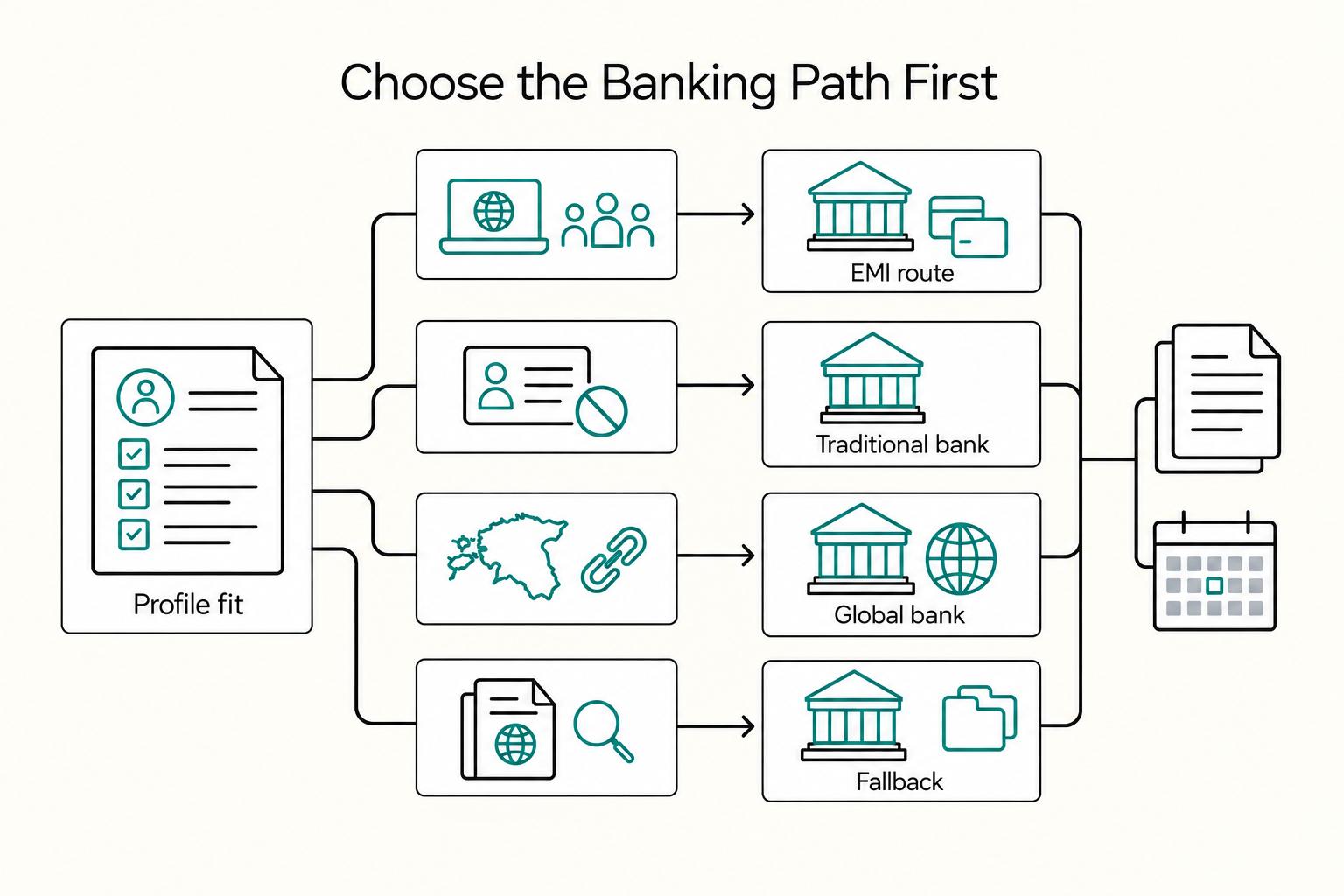
Open an Estonian Company Bank Account With Fewer Delays
The most common way to waste time is comparing providers before you have decided which route actually fits your company. Start with route fit, then build one evidence pack that stays consistent from the first form through the last follow-up. Most avoidable problems do not come from missing a feature on a pricing page. They come from choosing a route that was never realistic for the ownership profile, then answering the same compliance questions in slightly different ways as the application drags on.
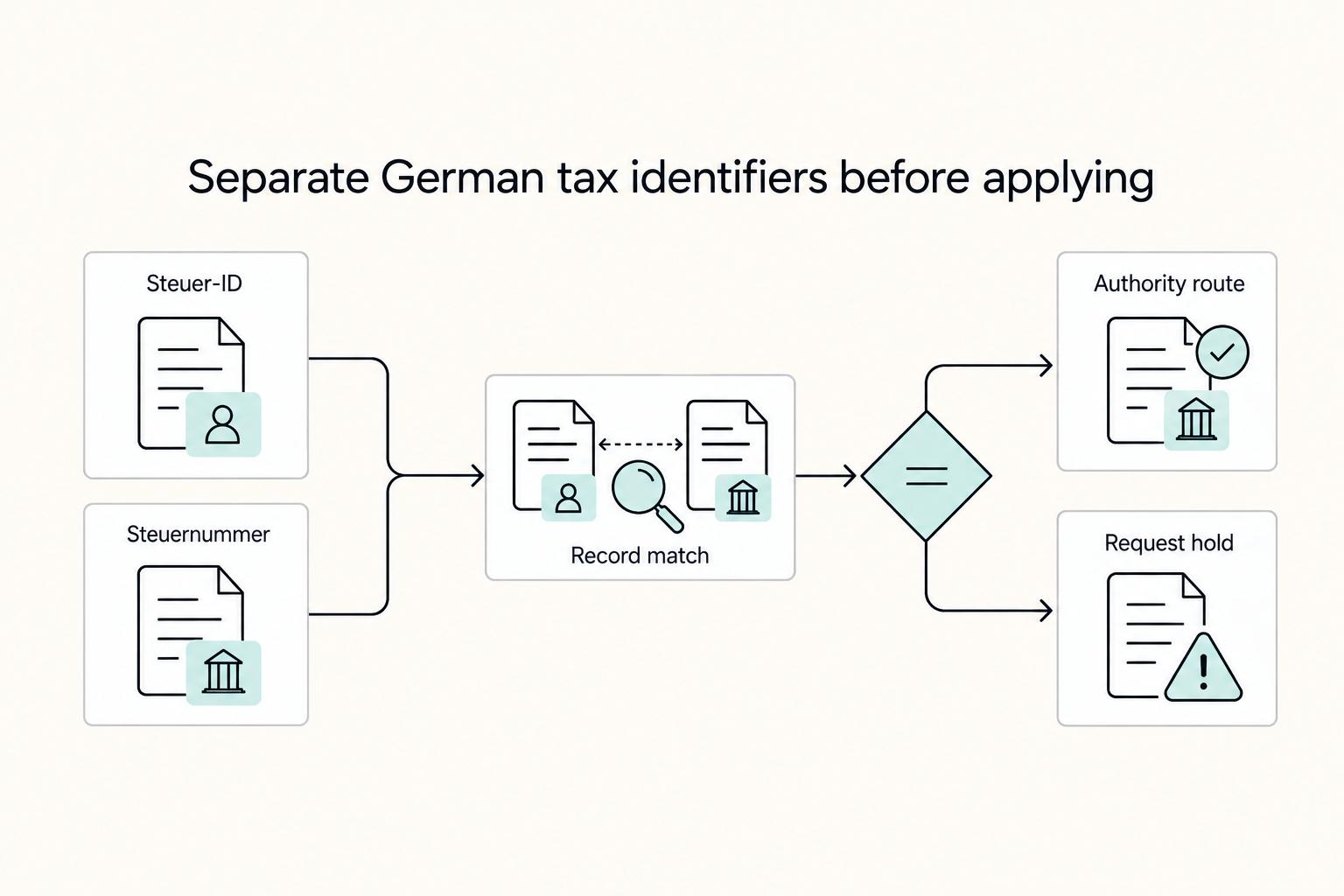
How to Get a German Tax ID as a Freelancer Without Mix-Ups
Define the task before you open any form. In Germany, mix-ups usually start when a request goes out for the wrong number type or to the wrong office.