
Quick Answer
Start with a real hiring scenario, then run pass-fail gates before you score anyone. To answer how to choose an eor provider, verify country coverage, Employment Contracts support, Global Payroll ownership, and Terminations process with written evidence, not demo claims. After that, score finalists with fixed criteria, lock Service Level Agreement (SLA) escalation terms, and launch in a small pilot so operational failures show up before full rollout.
Why EOR selection needs a real hiring scenario before vendor comparisons#
A practical way to choose an Employer of Record (EOR) is to test one real hiring case, cut vendors that cannot support it, and ask for proof before you score finalists. It is an operating decision, not a brand popularity contest. The right provider is the one that can support your actual hiring plan, in your target locations, with clear ownership when something goes wrong. If you start from vendor hype, you can miss the details that determine whether the relationship works in practice.
That is the right frame for how to choose an eor provider. There is no single best option for every startup. A provider that works well for one team may be a poor fit for yours because hiring approach, hiring location, flexibility needs, support expectations, or cost structure can differ. This guide is built to get you to a clear go/no-go decision using due diligence checkpoints, not vague impressions.
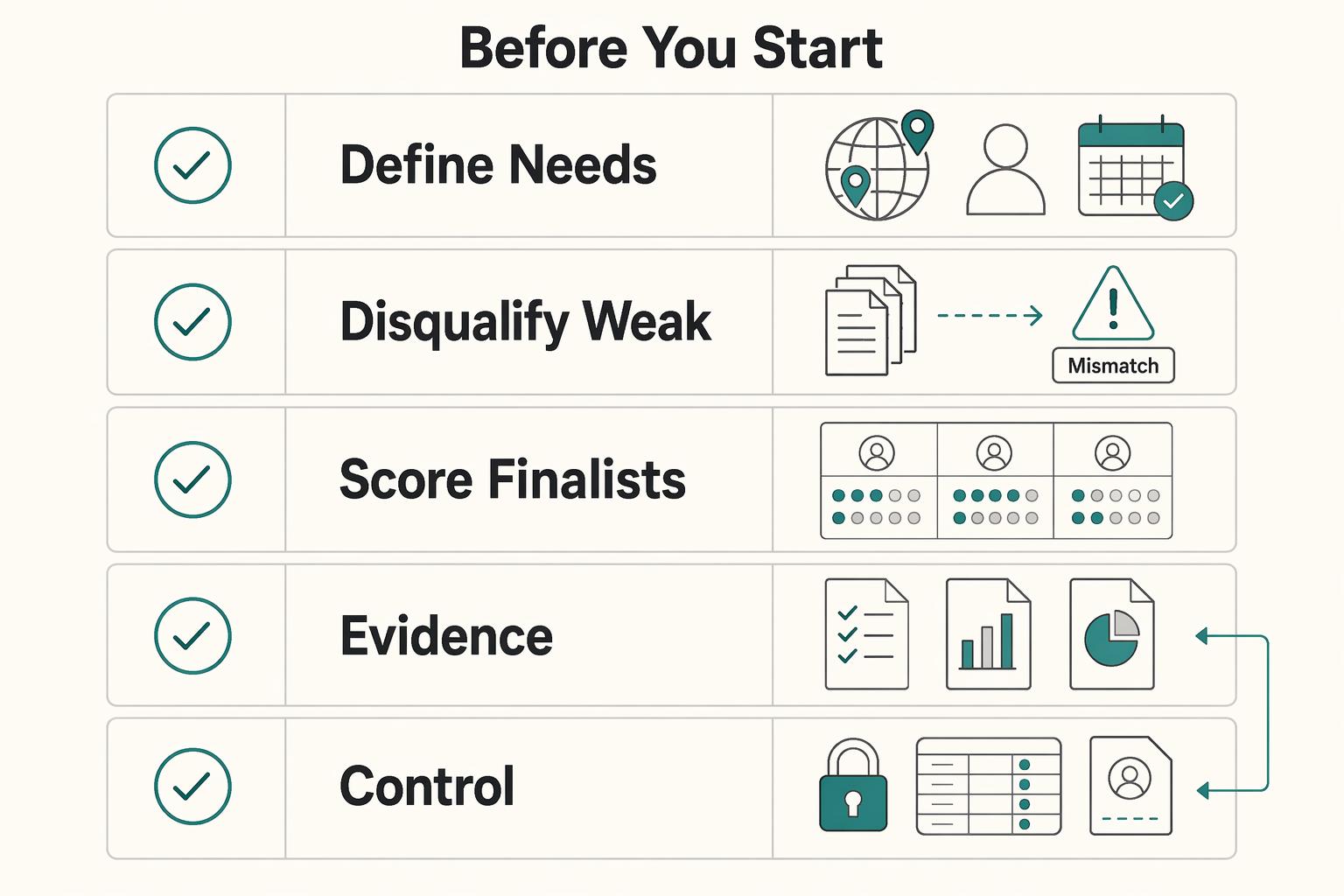
Before you start#
Start with one real hiring scenario, not a theoretical one. You need enough detail to test fit against reality: how you are hiring, where you are hiring, and how much contract flexibility you need. That becomes your first verification checkpoint. If a provider cannot explain how it would support that exact case in a clear, specific way, it should not survive the first pass.
Also, do not let monthly pricing anchor your decision too early. Headline EOR fees may not reflect true cost once benefits, setup fees, FX, and offboarding terms are included. A vendor can look affordable at the proposal stage and become more expensive when those terms take effect.
Use this sequence to keep the process grounded:
-
Define your needs. Write down the hiring context you actually have, not the one a sales page assumes. This helps you compare providers on practical fit.
-
Disqualify weak options early. If a provider cannot support your target location, cannot explain its support model clearly, or stays vague on contract flexibility, remove it before deeper review.
-
Score finalists on the same criteria. Keep the comparison grounded in pricing transparency, speed to hire, contract flexibility, and support quality so each vendor answers the same practical questions.
-
Verify risk controls with evidence. Ask for a written pricing breakdown that shows what sits outside the monthly fee, and get explicit terms around offboarding.
-
Launch in a controlled way. Start with a process you can observe closely, so payroll or support issues show up early.
Follow that sequence and you leave with something more useful than a shortlist: a clear decision record and fewer surprises once the EOR relationship is live.
If you want a deeper dive, read A Guide to Employer of Record (EOR) Services.
Define your hiring scenario before you compare vendors#
Define your exact hiring scenario first, then compare vendors against that scenario. There is no single best EOR for every company, and providers can differ in coverage and compliance approach across regions, so a vague brief will get you vague answers.
A one-page brief is enough if it forces specific responses:
- Write your one-page hiring brief.
Include your first country, expected headcount, role types, and whether any workers are currently engaged as Independent Contractors (IC). If IC conversion is in scope, state it clearly so vendors respond to your real operating case, not a generic one. Verification point: someone outside your team should be able to read the brief and explain who you want to hire, where, and what makes the case sensitive.
- Separate non-negotiables from preferences.
Keep non-negotiables in four buckets: country coverage, employment contracts, global payroll, and terminations. Treat interface polish and demo experience as preferences. If a vendor cannot support your first country or cannot clearly explain its contract and termination approach, remove it from consideration.
- Set success criteria before the first call.
Define success in writing: compliant hiring, predictable payroll operations, and support responsiveness documented in the Service Level Agreement (SLA). Ask each vendor to respond to your brief, not their standard pitch. Evidence to request: written confirmation of scope, how payroll will run for your case, and how support/escalation is handled under the SLA.
Once your scenario is clear, decide what proof each vendor must provide before you give credit for any claim.
For a step-by-step walkthrough, see How to Choose a Corporate Service Provider for Offshore Incorporation.
Prepare the evidence pack before vendor calls#
Build your evidence pack before the first vendor call so you can judge providers on proof, not presentation quality.
Gather the pre-call inputs most providers ask for#
Create one folder with your entity details, hiring plan, compensation structure, and onboarding timeline assumptions. The goal is to cut avoidable back-and-forth so vendors can answer your real hiring case.
| Category | Inputs |
|---|---|
| One folder | Entity details; hiring plan; compensation structure; onboarding timeline assumptions |
| Onboarding and payroll setup inputs | Planned country; role; target start date; work location |
| Core worker fields | Full legal name; date of birth; nationality |
| Compensation fields | Gross salary; currency; pay frequency |
Include the inputs that drive onboarding and payroll setup: planned country, role, target start date, work location, and core worker fields (full legal name, date of birth, nationality). For compensation, include gross salary, currency, and pay frequency. Incomplete submissions are a common cause of onboarding delays, so fix gaps before calls.
Standardize one question sheet across every vendor#
Use one due diligence sheet so every provider answers the same prompts in the same order. If your team prefers a BambooHR-style or Boundless-style format, use it, but keep the questions identical across vendors.
Focus on comparable answers: country support, employment contracts, payroll handling, onboarding ownership, support escalation, and contractor-conversion support. Ask for written responses when possible so you can compare evidence later instead of relying on demo notes.
Define the proof required for each claim#
Set artifact requirements in advance, and treat unsupported claims as incomplete.
| Artifact | Scope | If missing |
|---|---|---|
| Redacted sample locally compliant employment agreements | Two countries you plan to hire in | Treat unsupported claims as incomplete |
| Payroll process artifact or written process document | Your case | Treat unsupported claims as incomplete |
| Clear support escalation path | Including handoff ownership | Treat unsupported claims as incomplete |
| Onboarding handoff steps | Between your team and the provider | Treat that as a risk signal if the vendor cannot show how onboarding moves from sales to operations |
At minimum, require:
- Redacted sample locally compliant employment agreements for two countries you plan to hire in
- A payroll process artifact or written process document for your case
- A clear support escalation path, including handoff ownership
- Onboarding handoff steps between your team and the provider
If a vendor will not share redacted samples or cannot show how onboarding moves from sales to operations, treat that as a risk signal.
List IC conversion risks before the demo#
If any current worker is an Independent Contractor, include that in your pack before demos. Misclassification means treating a worker who is an employee under the FLSA as an independent contractor, and U.S. classification requires weighing multiple control-and-independence factors rather than relying on a single label.
Document risk-relevant facts in your case, such as who controls schedule, who provides tools, whether the person can work for others, and how integrated the work is in your business. Then ask each provider what IC-to-EOR transition support it provides and what documents it needs from you. The Department of Labor published a final rule on January 10, 2024, effective March 11, 2024, so this deserves explicit due diligence.
With this pack ready, you can eliminate weak options earlier, before pricing and demos blur differences. We covered the discipline of defining fit before comparison in How to Choose a Niche for Your Freelance Business.
Build pass-fail gates before any scoring#
Start by eliminating vendors that fail your non-negotiables, then score only the viable options. This keeps polished demos from outranking weak operating reality.
Build a disqualification table before demos start to blur together#
Use one table and mark each vendor as pass, fail, or unclear.
| Gate | What counts as a pass | What should fail fast |
|---|---|---|
| Country coverage fit | Confirms support for your exact hiring countries and role type, with local capability verified at the jurisdiction level | Relies on total country count but cannot validate your target country locally |
| Employment contracts support | Clearly explains who drafts, reviews, and updates locally compliant contracts | Cannot show contract support or stays vague on local legal ownership |
| Global payroll reliability | Explains payroll ownership, exception handling, and handoffs for your case | Cannot show a payroll process or cannot explain who owns errors |
| Terminations handling | Clearly explains local process, documentation needs, and execution ownership | Treats terminations as a generic admin task or avoids country-level process questions |
Country list claims are not enough on their own. Ask for country-by-country disclosure of the employing model (owned entity vs partner) and how partner oversight works; if that is missing, mark it unclear at best.
Set hard-stop rules and use them consistently#
Write your hard stops before pricing review and apply them exactly as written. If a provider cannot support must-have jurisdictions, cannot explain compliance ownership, or cannot define day-to-day accountability and escalation ownership, remove it before commercial comparison.
This gate matters because an EOR decision transfers legal accountability, not just admin workload. Do not accept "we handle that" without clear operating ownership for contracts, payroll, and escalation.
Apply scenario gates based on what you are actually trying to do#
Use your hiring scenario to set gate emphasis, not to change your standards. For a first international hire, prioritize clear onboarding ownership and practical operational support; for multi-country scaling, prioritize repeatable onboarding, payroll controls, and consistent escalation behavior across jurisdictions.
A simple rule works: if your main risk is execution uncertainty, weight hands-on support more; if your main risk is cross-country complexity, weight operational consistency more.
Treat SLA clarity and exit handling as pass-fail items#
Require SLA accountability upfront: escalation contacts, response windows, incident communication standards, and clear liability when service fails. Also gate for transition risk by reviewing exit clauses, data transfer expectations, and payroll continuity planning.
By the end of this step, each vendor should be disqualified, held pending proof, or allowed into scoring. Once only viable options remain, scoring becomes useful instead of distracting. This pairs well with our guide on How to Choose a Trustee for Your Trust.
Score the finalists with weighted criteria#
Once you remove non-starters, score every finalist on the same weighted rubric. Use one sheet for Deel, Remote, Velocity Global, and any niche provider, and tie the weights to your risk profile, not demo polish.
Build one weighted rubric and apply it to every finalist#
There is no single best EOR for every company, so your scoring model should reflect where you hire, your budget, and how much local support you need.
| Criterion | What to score | Weight it higher when | Evidence to require |
|---|---|---|---|
| Coverage fit | Fit for your exact hiring countries and worker types | You have near-term hires in specific jurisdictions | Country-by-country support confirmation and delivery model |
| Compliance confidence | Strength of Employment Contracts, payroll controls, and local execution | Your main risk is legal exposure or payroll failure | Redacted Employment Contracts, payroll reports, invoice breakdowns |
| Support model | Day-to-day ownership, escalation clarity, and handoffs | Your team is small or new to international hiring | Named contacts, escalation path, ownership map |
| Total operating friction | Admin load, usability, and exception handling | You expect repeated onboarding or multi-country coordination | Demo proof, onboarding steps, amendment and payroll exception process |
If your hiring risk is concentrated in one country, weight local execution more heavily than global breadth. This keeps broad marketing claims from outranking country-level delivery.
Set weights and tie-breaks before final demos#
Set weights before anyone starts "winning." If compliance risk is high, weight Employment Contracts and payroll controls above UX polish. If operational scale is your bigger risk, give more weight to support model and operating friction.
Define your tie-break rule up front: when scores are close, pick the vendor with stronger execution evidence, not broader marketing. If proof is incomplete, cap that category at an average score until evidence is provided.
Record why each score was assigned#
Log the rationale behind each score, not just the number. A short note tied to a document or named owner makes procurement and legal review auditable.
Use a simple check: any above-midpoint score should point to a concrete artifact or accountable owner. If your team cannot point to supporting evidence, reopen the item or lower the score.
A strong scorecard is still only one step. You should still validate full-lifecycle operations before signing. Related: Deel vs. Remote: A Comparison from the Freelancer's Perspective.
Pressure-test operations from onboarding through offboarding#
A finalist that looks strong in demos can still fail in day-to-day operations. Before you sign, run one realistic employee journey end to end and test how the provider handles exceptions, ownership, and offboarding risk.
Rehearse one real hire from start to finish#
Use a scenario that matches your actual plan (country, role, start date, pay, and benefits scope). Ask the provider to walk that hire through onboarding, one payroll cycle, benefits enrollment, a contract amendment, and employee offboarding.
Do not score the walkthrough on polish. Score it on operational proof:
- Who owns each step (your team vs. EOR)
- What artifact confirms completion (checklist, template, report, approval, or handoff record)
- Who takes over when timing slips or data is wrong
If the provider can explain the platform but not the people, approvals, and handoffs, treat that as operating risk.
Probe failure handling, not just the happy path#
After the happy path, test failure modes directly: missed payroll inputs, post-cutoff data corrections, mid-cycle pay changes, delayed benefits enrollment, amendment delays, and termination disputes.
For terminations, get specific on the process. Offboarding quality varies across providers, and poor offboarding can create compliance, cost, security, and relationship risk. Ask who drafts documents, who approves final payments and compliance documentation, who communicates with the employee, and how disputes are handled.
If exception handling comes down to "contact support," you still do not have a reliable operating model.
Put ownership and escalation in writing under the SLA#
Convert the walkthrough into a responsibility map tied to the SLA:
- Stage-by-stage owner (your team or EOR)
- Escalation owner and contact
- Final decision owner for deadline misses and disputes
- Offboarding cost terms, including any early termination or hidden offboarding fees
Keep this standard strict. Some providers may charge early termination or hidden offboarding costs, and slow offboarding can increase compliance and security exposure. If ownership, escalation, or offboarding terms remain vague, downgrade the vendor or stop the deal.
If the operating path holds up under pressure, move to the documents that control risk when the relationship becomes real. Related reading: How to Pay International Contractors With Fewer Delays and Disputes.
Verify compliance and contract risk before signature#
Once the operating handoffs look workable, move to the legal paper. Before signature, treat risk allocation in the documents as the real test, not sales assurances.
Review the Employment Contracts, not just the demo promise#
Start with country-specific contract documents. Ask for the employment contract used in your target country, plus an amendment example and a termination document sample, so you can confirm locally compliant contracts are actually part of delivery.
Then check role clarity and liability language. The contract should clearly state who the legal employer is, what the provider handles, what your company still directs, and where liability sits if payroll, benefits, or labor-law compliance issues occur. Because providers can differ in operating model and may outsource or package services differently, get the full delivery chain in writing, including which entity issues the contract and supports the employee.
Treat "we use one standard template everywhere" as a risk signal. Standardization can help operations, but it does not prove local-law alignment. If your legal reviewer cannot inspect the country-specific contract before signature, pause the deal.
Confirm the IC-to-EOR transition plan before you convert anyone#
If you are converting an Independent Contractor (IC) to EOR employment, require a written cutover plan before you proceed. The goal is to reduce misclassification exposure and avoid payroll disruption during the transition.
Ask for a sequence with dates, owners, and required documents, including onboarding checklist, required worker data, contract issuance timing, payroll cutoff timing, and worker communication on when invoicing stops and employment starts. If the provider says it supports IC conversion but cannot explain the cutover path, treat first-cycle payroll as high risk.
If this is an active reclassification concern, review What to Do If You've Been Misclassified as an Independent Contractor.
Lock audit records and document retention expectations#
Before signing, lock down what records you can access during the relationship and after exit. Focus on payroll evidence, termination documentation, and policy acknowledgments.
For each record type, confirm the artifact, storage location, access owner, and retrieval timeline for audits or disputes. If responses are vague, assume delays where legal and financial risk is most likely to surface. Also verify service transparency and any hidden costs tied to amendments, record requests, or offboarding support before signature.
A clean contract review is not the end of the job. The launch plan decides whether early issues stay small or become expensive. Need the full breakdown? Read How to Handle Termination of an International Contractor.
Launch in phases and set recovery triggers early#
Treat your first country as a pilot, not proof that broad rollout is safe. Teams can look stable for months, and one reported case looked smooth with three developers for six months before a Permanent Establishment issue surfaced.
Start with one country and a small cohort#
Launch in one jurisdiction with a limited cohort, and use the First 12 Weeks as your implementation window. Expand only after onboarding, payroll, and contract workflows are working as expected for that pilot group.
If you are converting Independent Contractor (IC) relationships, keep that flow controlled in the pilot stage. The handoff should be clear so no worker is left between contractor invoicing and employee payroll status.
Set triggers that pause expansion#
Define expansion-stop triggers before go-live and document them. Practical triggers include repeated payroll corrections tied to the same root cause, contract turnaround delays against agreed timelines, or support tickets that stay open beyond agreed SLA terms.
| Trigger type | Pause trigger | Required review record |
|---|---|---|
| Payroll corrections | Repeated payroll corrections tied to the same root cause | Issue log; root cause; owner; fix date; confirmation in the next cycle that the fix held |
| Contract turnaround delays | Contract turnaround delays against agreed timelines | Issue log; root cause; owner; fix date; confirmation in the next cycle that the fix held |
| Support tickets | Support tickets that stay open beyond agreed SLA terms | Issue log; root cause; owner; fix date; confirmation in the next cycle that the fix held |
If those triggers keep recurring, pause new countries or headcount and run a structured remediation review before scaling. Require an issue log, root cause, owner, fix date, and confirmation in the next cycle that the fix held. Include adjacent risk checks for misclassification, Permanent Establishment, IP, and security.
Keep a backup migration file ready#
Keep a documented fallback path from day one so you can change providers without breaking payroll continuity. Maintain current core records and export access so a transition can be executed cleanly if service quality or risk controls do not recover.
Make the decision and execute with control#
Choose the provider that fits your real hiring plan and passes your hard gates, then execute with written controls. Treat the final decision like vendor due diligence, not a brand or demo contest.
Use this order every time:
- Freeze requirements.
Confirm your non-negotiables in writing: country coverage, role support, employment contracts, global payroll, benefits, and terminations. Verify lawful employer capability in each target country before anything else.
- Run pass/fail gates, then score finalists.
Do not reopen failed vendors because of late concessions. Score only vendors that passed core gates, and keep written reasons so procurement, finance, and compliance can follow the decision.
- Pressure-test real operations.
Walk one real employee path in your first country: offer, onboarding, payroll, benefits, and offboarding. Require artifacts and ownership detail, not promises, especially for escalations and exceptions.
- Complete contract and continuity checks.
Lock SLA terms, escalation ownership, reporting expectations, and recovery steps if payroll or compliance slips. Review exit clauses and timing, including data transfer and payroll continuity if you later switch providers.
- Approve rollout controls.
Define launch scope and set the first review date before expansion. If you are changing providers, treat it as a structured transition program, not a simple handoff.
Copy/paste checklist for decision day:
- Confirm must-have country coverage and role support
- Validate employment contracts, global payroll, employee benefits, and terminations flows
- Lock SLA terms, escalation ownership, and recovery plan
- Approve the rollout scope and first review date
Frequently Asked Questions
What should I check first before choosing an EOR provider?
Start with fit for your actual hiring plan, not brand recognition. Check four things first: the countries you need, the provider’s compliance depth, pricing clarity, and whether it fits your current HR stack. If a provider looks strong in demos but cannot show how it handles your first country in practice, stop there.
How do I compare EOR providers quickly without skipping Due Diligence?
Use one written question set for every vendor and make the first round pass or fail. Your fast screen should cover country coverage for the jurisdictions you actually need, compliance support, transparent pricing, and HR systems fit. Then pressure-test only the finalists. Speed comes from eliminating weak options early, not from asking fewer questions.
What are the biggest red flags in EOR proposals and contracts?
Watch for vague pricing, vague responsibilities, and vague exits. A proposal that glosses over reporting, dispute handling, or termination conditions is not finished due diligence. Another red flag is any assurance that a “standard template” contract works everywhere, because local employment terms still need jurisdiction-specific review.
Is an EOR better than hiring Independent Contractor (IC) talent for my situation?
Not always. The IRS says worker status turns on the usual common-law analysis of the working relationship, and the U.S. Department of Labor has warned that misclassification can deny workers legal protections. If the working relationship points to employee status under common-law rules, take the EOR route seriously. If the work is truly independent and project-based, IC may still fit.
How much should Country Coverage matter versus provider maturity?
Coverage matters only if it includes your target jurisdiction and the provider can execute there cleanly. For a first launch, choose stronger maturity in one required country over a longer coverage list with thin evidence. Breadth looks good on a slide, but risk shows up in day-to-day execution and compliance handling.
What should be in an EOR Service Level Agreement (SLA)?
At minimum, your Service Level Agreement should define responsibilities, reporting and monitoring, dispute procedures, and termination conditions. It should state how performance will be reported, not just promised. Do not assume a standard response-time target exists across the market. Get contract-specific terms in writing.
What evidence should I request before signing an EOR agreement?
Ask for written documentation of pricing, service responsibilities, performance reporting, dispute procedures, and termination conditions. Also review how the provider will handle your first target jurisdiction in practice before signature. A good verification check is simple: the written documents should match what sales said in the demo. If key details stay verbal only, treat that as a risk signal.
Try a related tool
Researched and edited by the Gruv editorial team. Gruv builds cross-border billing, payouts, and finance-operations software for global businesses.
Sources
- dmas.virginia.gov/media/jtujhlgt/sfy-2026-ccmc-contract-07-01-...trusted
- dol.gov/agencies/whd/flsa/misclassificationtrusted
- dol.gov/agencies/whd/flsa/misclassification/rulemakingtrusted
- hfs.illinois.gov/content/dam/soi/en/web/hfs/sitecollectiondoc...trusted
- irs.gov/businesses/small-businesses-self-employed/in...trusted
- irs.gov/taxtopics/tc762trusted
- ntrs.nasa.gov/api/citations/19820007113/downloads/19820007...trusted
- sau.edu/media/content-assets/pdfs/registrar/SAU-Cour...trusted
Educational content only. Not legal, tax, or financial advice.
Related Posts

What to Do If You've Been Misclassified as an Independent Contractor
Treat this as a protection problem first, not a label debate. If your work was treated as an independent contractor arrangement even though the relationship functioned differently, your first goal is to protect pay, rights, and records while you choose the least risky escalation path. You can do that without making accusations on day one, which often keeps communication open while you document what happened.
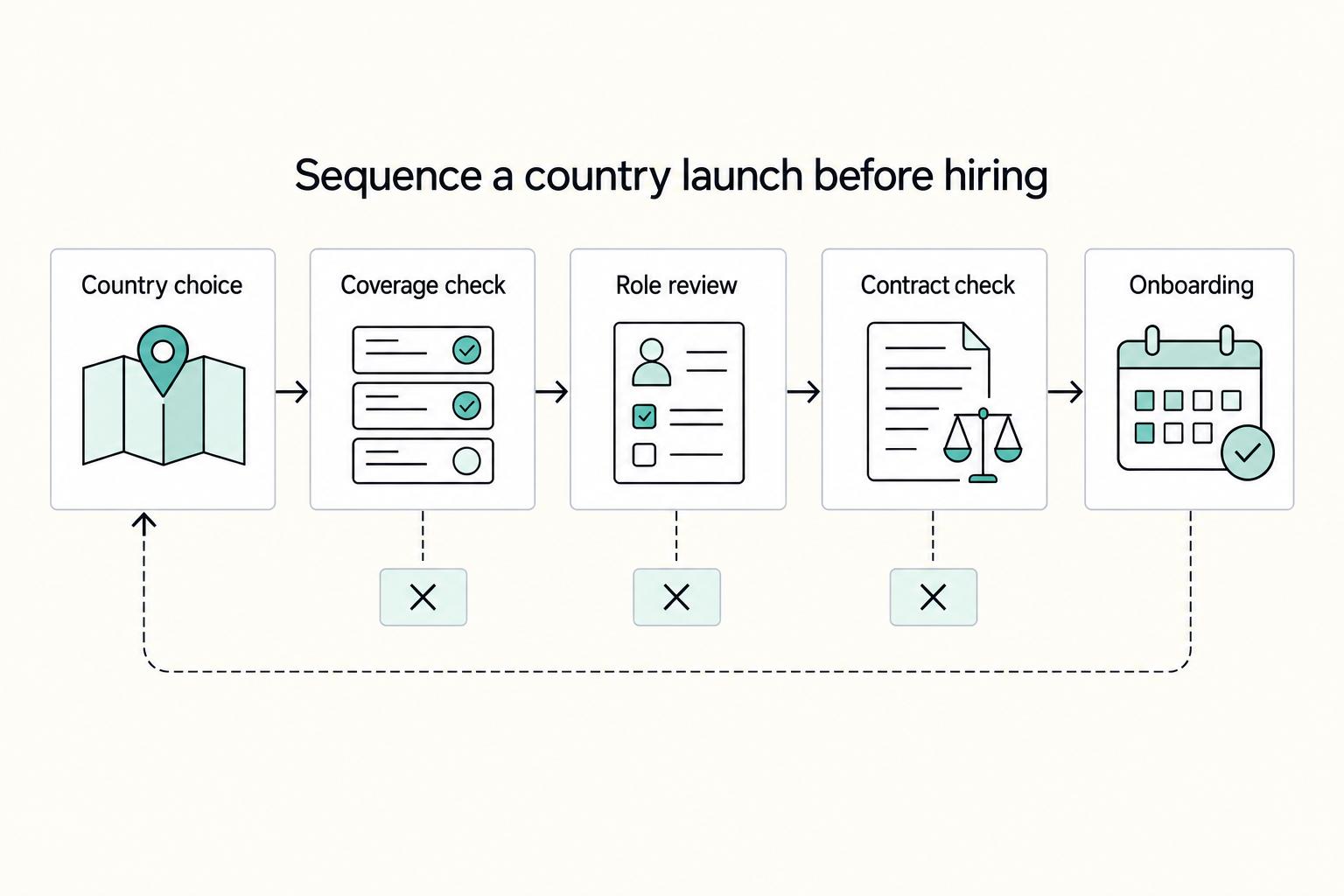
When to Use an Employer of Record for International Hiring
An Employer of Record lets you hire in another country through a third party, without setting up your own local entity first. The provider handles key compliance mechanics, but it does not hand off every employment risk.
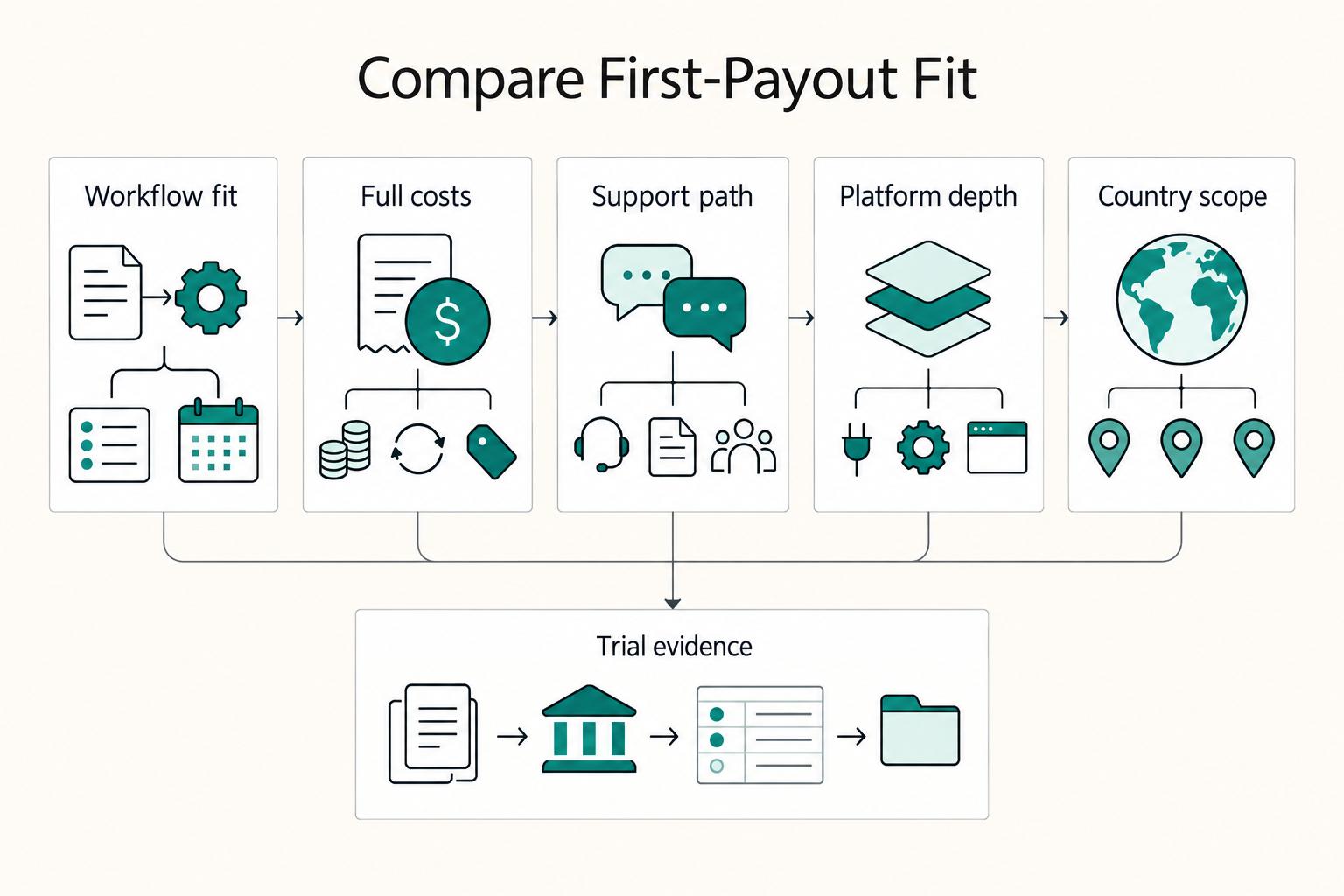
Deel vs Remote for Freelancers Who Need a Clear First-Payout Decision
Choose the platform that makes your first payout cycle predictable and your contracts easier to defend. This is an operating decision, not a brand contest.