
Quick Answer
Start with one account you fully control, pay the full statement balance on time every month, and keep utilization restrained while history builds. For how to build credit in college, the article’s sequence is to establish a stable base with a secured or student card, expand only after clean cycles, and verify reporting behavior before each change. Keep your oldest positive account open when practical, and monitor your files through AnnualCreditReport.com across all three bureaus.
Forget the usual advice about "student" credit. You are not just looking for a starter card. You are building the financial track record for a business of one: you. That profile shapes how lenders, landlords, and card issuers deal with you long after school.
A high score is not the real objective. It is the result of running your accounts well over time. The goal is to build a clean, independent credit file you control, then strengthen it carefully without taking on avoidable risk. The three phases below follow that sequence: secure the base, expand with discipline, then protect what you built.
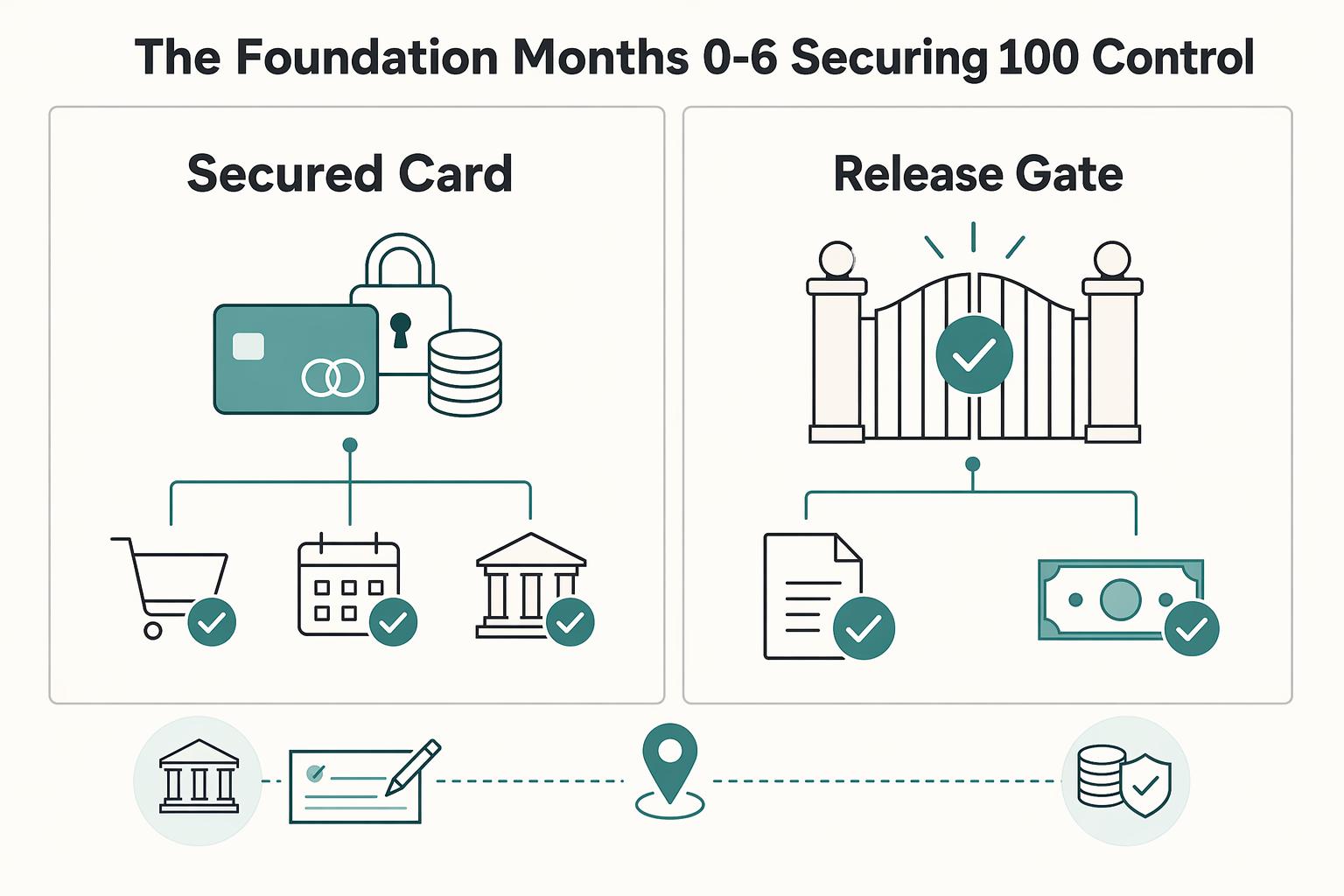
Phase 1: The Foundation (Months 0-6) - Securing 100% Control#
For your first six months, focus on one thing: credit history you control directly. Open one account in your name, put one small recurring charge on it, and pay the full statement balance on time every month. If you are starting with little or no history, a secured card is often a controllable starting option.
Before you begin, make sure you have a checking account ready for autopay and enough cash for the security deposit. With secured cards, the deposit usually matches the limit.
| Path | Control | Approval difficulty | Risk exposure | Who should choose it |
|---|---|---|---|---|
| Secured card | High. Account is in your name. | Usually easier with thin or no credit history, but requires a deposit. | Mostly your own spending and payment behavior. | Choose this for a strong independent foundation. |
| Student card | High after approval. | May be harder under 21 because issuers must consider ability to make required minimum payments. | Your own payment behavior drives outcomes; terms vary by issuer. | Choose this if you qualify on your own and do not want to tie up cash in a deposit. |
| Authorized user | Low. The account belongs to the primary cardholder. | No standard standalone approval, but depends on someone adding you. | Primary cardholder owes the debt; your credit outcome depends on how they manage the account. | Use as a supplement, not your foundation, and only with a consistently well-managed account. |
Choose an account path you can verify#
Pick the path you can manage from start to finish. Before you apply, ask the issuer one basic question: Do you report this account to all three major credit bureaus? Save proof of the answer, whether as a chat transcript, email, or product page. Some issuers report to all three, some to one or two, and some may not report at all.
If the answer on reporting is vague or inconsistent, move on.
Confirm the money terms before funding#
Before you put money down, confirm the deposit requirement, any ongoing fees, and what happens if a payment is returned. Treat the Minimum Payment Warning as disclosure, not a strategy.
Your operating rule is simple: pay the full statement balance by the due date. When your card's grace-period terms apply, this is how you avoid purchase interest. For a specific card, treat penalty and APR details as pending until you verify them against current issuer or cardholder-agreement records.
Set autopay correctly and add a manual check#
This is where many preventable mistakes happen. Set autopay to statement balance, not minimum payment. The statement balance is what you owed at the end of the billing cycle. The current balance includes newer charges made after the statement closed.
| Term | What it means here | Action |
|---|---|---|
| Statement balance | What you owed at the end of the billing cycle | Pay the full statement balance by the due date |
| Current balance | Includes newer charges made after the statement closed | Keep it separate from the statement balance |
| Due date | Statements should generally be sent at least 21 days before it | Do one manual check a few days before it |
| Reporting date | Not the same as the due date; credit reports may lag recent activity | Do not assume it controls what appears in reports |
Keep due date and reporting date separate. They are not the same, and your credit reports may lag recent activity. Statements should generally be sent at least 21 days before the due date, so use that window. Then do one manual check a few days before the due date to confirm autopay is still active and your checking account has enough funds. Payments generally cannot be treated as late if received by 5 p.m. on the due date.
Keep one small recurring charge active#
Once the account is set up correctly, keep the activity boring and predictable. Put one monthly bill on the card and avoid extra spending. That gives the account regular activity so it keeps reporting and the file develops over time.
After the first or second statement, confirm a statement was generated, autopay paid the full statement balance, and the next cycle started clean.
Define your failure response now#
Have your response ready before anything goes wrong. If autopay fails or your checking balance is short, add funds immediately and make a manual payment as fast as possible. If you miss the due date, stop new charges, pay immediately, and review the returned-payment and penalty terms in your agreement. Current penalty and APR details stay pending until you verify them against the issuer's current agreement records.
Do not assume the only downside is interest. A reduced limit can cut off available credit right away. Late payments generally do not appear on credit reports until at least 30 days after a missed payment, but that is a narrow recovery window, not extra time to wait.
You might also find this useful: How to Build a Credit History in a New Country.
Phase 2: The Growth Engine (Months 6-24) - Strategic Acceleration#
Once your base account is stable, grow slowly. The source material behind this phase is not fully credit-specific, so treat it as a verification framework, not a timeline guarantee. Keep the original account steady and change one variable at a time.
Audit your current account before any expansion#
Before you ask for more, make sure the account you already have is clean. Review recent statements and payment confirmations, and look for anything unresolved that could affect your next move.
Build a short evidence pack before you contact the issuer:
- Recent statements
- Current limit and current status from your account portal
- Payment confirmations
- Current cardholder agreement
When you check public guidance, prioritize official .gov pages and confirm the connection uses HTTPS.
This gives you a clear baseline before you request graduation, a product change, or a new account.
Request graduation or a product change in writing#
If your base account is secured, ask whether graduation to an unsecured version is available. Use secure message, chat, or email so you have a record of the response.
| Ask about | What to document |
|---|---|
| Graduation availability | Whether graduation is available for your account |
| Review decisions | How review decisions are handled and communicated |
| Security deposit | What happens to the security deposit if graduation is approved |
| Product change without closure | Whether a product change is possible without closing the account |
| Reporting before and after a change | How the account is reported before and after any change |
Use this outreach checklist:
- Ask whether graduation is available for your account.
- Ask how review decisions are handled and communicated.
- Ask what happens to the security deposit if graduation is approved.
- Ask whether a product change is possible without closing the account.
- Ask how the account is reported before and after any change.
Before you send the request, review your account history so you can discuss it clearly and accurately. If graduation is declined, do not close the account out of frustration. Ask what path remains, what to improve before the next review, and whether a product change is available instead.
Pick one acceleration path at a time#
Do not stack multiple moves just because you finally have options. Choose one path based on what you can verify now, not on what sounds fastest.
| Path | What changes | Verify first | Operational cost |
|---|---|---|---|
| New card application | You add a separate account in your name | Application terms, required info, fees, and potential documentation requests | Varies by issuer terms and your monitoring process |
| Product change or graduation | You update an existing account | Eligibility path, account continuity details, and deposit handling terms (if secured) | Varies based on approval path and account setup |
| Authorized user | You may be added to another person's account | Whether the issuer supports authorized-user reporting and what account visibility you will have | Depends on transparency, communication, and shared account behavior |
Use authorized-user status only after a risk screen#
Authorized-user outcomes are not established, so treat this as a verification-first option. Set expectations in advance and confirm what you can document in writing.
| Decision | Conditions |
|---|---|
| Proceed | The primary cardholder shares recent statements, confirms current account status, agrees to alert you about issues, and agrees to remove you quickly if needed. |
| Pause | You are asked to rely on verbal reassurance only, visibility is limited, or reporting behavior is unclear. |
| Avoid | Known payment problems, known account restrictions, or refusal to provide basic transparency. |
Set expectations in writing so both sides know what gets shared, how often, and how removal works if the risk changes.
Track timing before making reporting assumptions#
Because credit-reporting mechanics are not covered here, do not assume one date controls what appears in reports. Track the account across several cycles and use the pattern you actually observe.
Use a simple log:
- Statement date
- Due date
- Statement balance
- Date you see report updates
Then test small adjustments one at a time. After each cycle, compare what changed in your records before you make another change. Keep utilization goals or timing rules out of your plan until you can verify them directly from your issuer communications and your own report data.
For a step-by-step walkthrough, see How to Maximize Credit Card Rewards for Free Travel.
If you are also freelancing in college, tighten your payment flow so client cash-in timing supports your on-time card payoff routine. See freelancer workflows.
Phase 3: The Optimization System (Year 3+) - Building Financial Infrastructure#
By year 3, the job changes. You are no longer trying to prove you can handle one account. You are protecting account age, keeping records accurate, and running a maintenance routine that still works when life gets busier.
| System part | Main action | Key detail |
|---|---|---|
| Banking setup | Pick a setup you can manage consistently | Confirm your primary servicing bank, where autopay pulls from, and that your backup account is funded, active, and usable |
| Credit-file audit | Use AnnualCreditReport.com on a regular cycle | Free reports are available once a week from Equifax, Experian, and TransUnion |
| Student loans | Use them as a supplement, not a substitute | For most federal student loans, default starts after more than 270 days without payment |
| Oldest positive card | Protect it when you can | If annual fee pressure is the issue, ask the issuer about downgrade or product-change options first |
1. Pick a banking setup you can manage consistently. Then stress-test it on a regular review cycle.
| Path | Choose this when | Upside | Tradeoff |
|---|---|---|---|
| Single-bank depth | You want one primary operating hub with fewer moving parts | Simpler monitoring and payments, plus possible institution-specific relationship benefits (for example, one major bank advertises 0.05% to 1% mortgage rate discounts tied to balances) | Higher dependence on one institution's policies, outages, and approval decisions |
| Multi-bank diversification | You want backup access if one institution limits, freezes, or closes an account | Better continuity for cash access and servicing; insured deposit coverage applies per depositor/owner, per insured institution, per ownership category (FDIC and NCUA standard amount: $250,000) | More accounts to monitor, more statements, and more alert fatigue risk |
Verification point: confirm your primary servicing bank, confirm where autopay pulls from, and confirm your backup account is funded, active, and usable.
2. Run a credit-file audit through AnnualCreditReport.com on a regular cycle. Use the exact AnnualCreditReport.com site, not lookalikes: it is the official portal, and free reports are available once a week from Equifax, Experian, and TransUnion. The goal is simple: every tradeline is either correct or actively in dispute with documentation.
Use this checklist:
- Verify identity fields first, including name variations, addresses, and Social Security Number details.
- Confirm each listed account and loan is yours and reported with the correct status.
- Flag unfamiliar accounts, incorrect closures, or late marks you believe are wrong.
- Dispute errors with the credit reporting company, and where appropriate also dispute with the information furnisher.
- Keep copies of dispute letters, attachments, and confirmation records in one folder.
- If identity-theft risk is high, place a free security freeze to limit new-credit access by prospective creditors.
- If fraud is suspected, consider a fraud alert, whether one year or seven years for an extended alert after filing an identity theft report.
3. Use student loans as a supplement, not a substitute. Student loans can help round out your file, but they do not replace card history. Revolving accounts and installment accounts show different repayment behavior, and credit mix is part of scoring.
Keep a simple good-standing routine:
- Confirm autopay is active.
- Review each servicer statement.
- Save payment proof.
- If you need deferment, forbearance, or a repayment-plan change, arrange it before missing payments.
- For most federal student loans, default starts after more than 270 days without payment, so resolve servicing issues early.
4. Protect your oldest positive card when you can. Account age is a long-term scoring anchor, so closing old accounts deserves a deliberate review rather than a quick cleanup decision.
Use this decision order before closing:
- If annual fee pressure is the issue, ask the issuer about downgrade or product-change options first, and verify current policy details before acting.
- If you keep the card but rarely use it, run occasional small activity and monitor statements for fraud or unexpected fees.
- If the issuer warns about inactivity closure risk, add documented activity and confirm account status.
- If you close a card with a balance, continue repayment as required; closing does not erase the debt, and interest can continue under account terms.
For a different but related risk-management angle, see IP Protection for Software Developers: A Deep Dive into Copyright.
Conclusion: Your Credit Is Your Capital#
The throughline is simple: start with what you control, expand only when the terms are clear, and protect the account history you worked to build. Credit is a reusable asset, but only if you manage it with repeatable habits.
- Pay every account on time, every time. Payment history has the biggest impact on credit scores, so this is the most important habit to lock in.
- Keep card balances low relative to your total limits. There is no single universal utilization rule, but scoring models do react to how close you are to maxed out, and common guidance ranges from about
30%to under10%. - Protect account age where practical. A longer credit history helps, and closing an account can hurt if it raises how much of your total available credit you are using.
- Review your credit reports on a schedule. You can access free weekly online reports from Equifax, Experian, and TransUnion at AnnualCreditReport.com, and regular checks help you catch errors and possible identity-theft issues early.
| Credit habit | Near-term benefit | Long-term payoff |
|---|---|---|
| On-time payments | Builds a clean payment record | Can improve loan qualification odds and may lower interest rates |
| Low reported balances | Reduces "maxed out" risk signals | Stronger score outcomes over time |
| Account longevity | Preserves history and available credit | A more established credit profile |
| Regular report review | Finds errors and suspicious activity faster | Helps protect future applications and borrowing terms |
What to do next is straightforward:
- Turn on autopay for at least the minimum so no payment is missed.
- Check your reported balance rhythm so utilization stays in range.
- Review all three credit reports and address errors quickly.
- As you move into post-college work, plan your next credit step around your income and housing needs.
If your next phase includes self-employment, read How to Build Credit as a Freelancer to adapt these habits to uneven cash flow.
If you want a deeper dive, read Should Your Freelance Business Accept Credit Cards?.
As you turn this credit plan into a broader cash-flow system, use one practical benchmark before changing how you accept payments. Run the fee comparison tool.
Frequently Asked Questions
What is the fastest way to build credit?
This guide does not establish a single guaranteed "fastest way" for every student. What is supported is that payment history and utilization are core score factors, and late payments can lower scores. | Path | Quick score signal | Independent foundation | What to verify first | Main risk | |---|---|---|---|---| | Secured card | Not established | Not established | Confirm bureau reporting and payment automation | Missed payments or avoidable interest | | Authorized user | Not established | Not established | Confirm authorized-user reporting and primary account payment habits | Reporting and outcomes are not guaranteed | | Credit-builder path | Not established | Not established | Confirm what is reported, to which bureaus, and total cost | Paying for weak reporting or expensive terms | If your priority is control, choose an option you can automate and monitor yourself.
What score do you start with, and how are scores calculated?
This guide does not give one fixed starting score. A common FICO example uses a 300 to 850 range. Most explainers describe five factors: payment history, utilization, length of credit, new credit, and credit mix. If you need current weighting or range, verify the exact model you are reviewing first.
Can you build credit without a credit card?
Yes, but only reported activity helps. Confirm reporting before you enroll or pay fees, then compare how each option shows up on your file. | Option | What gets reported | How to enroll | Cost/limitations | Main risk | |---|---|---|---|---| | Credit-builder loan | Verify lender reporting details directly | Provider-specific | Provider-specific | Paying for limited or delayed reporting | | Student loans | Loan status and repayment timing vary by loan type and status | Through federal/private loan servicing | Federal loans are often deferred; private plans vary | Assuming in-school periods build repayment history | | Bill-reporting service | Verify bureau coverage and eligible bills directly | Provider-specific | Provider-specific | Assuming everyday bills report automatically | For federal student loans, repayment commonly starts about six months after graduation or dropping below half-time enrollment. That timing matters if you assume an in-school loan is already building repayment history.
Do you need to carry a balance to build credit?
No. You do not need to carry a balance to build credit. A practical approach is to let a statement post and then pay the statement balance by the due date to avoid interest. That keeps the account active without paying extra just to show usage. Long-term minimum-payment behavior can become very expensive, including examples where $10,000 can become over $77,000 paid over decades.
What routine keeps you out of trouble?
Use a repeatable control loop: automate payments, keep utilization in check, monitor accounts, and fix errors quickly. If a payment reaches reportable delinquency checkpoints, including 30-day or 90-day late status, scores can drop. Keep this checklist active each cycle. Autopay at least the minimum, preferably the full statement balance. Review statements, monitor reported balances, check credit reports, and dispute errors when needed.
Try a related tool
Researched and edited by the Gruv editorial team. Gruv builds cross-border billing, payouts, and finance-operations software for global businesses.
Sources
- consumer.ftc.gov/consumer-alerts/2023/10/you-now-have-permane...trusted
- consumerfinance.gov/consumer-tools/credit-reports-and-scores/how...trusted
- consumerfinance.gov/ask-cfpb/a-box-on-my-credit-card-bill-says-t...trusted
- ecfr.gov/current/title-12/chapter-X/part-1026/subpart...trusted
- ecfr.gov/current/title-12/chapter-X/part-1026/subpart...trusted
- fdic.gov/consumer-resource-center/deposit-insurance-g...trusted
- federalreserve.gov/econres/notes/feds-notes/an-overview-of-cred...trusted
- files.consumerfinance.gov/f/documents/201612_cfpb_credit_invisible_che...trusted
Educational content only. Not legal, tax, or financial advice.
Related Posts
Should Your Freelance Business Accept Credit Cards?
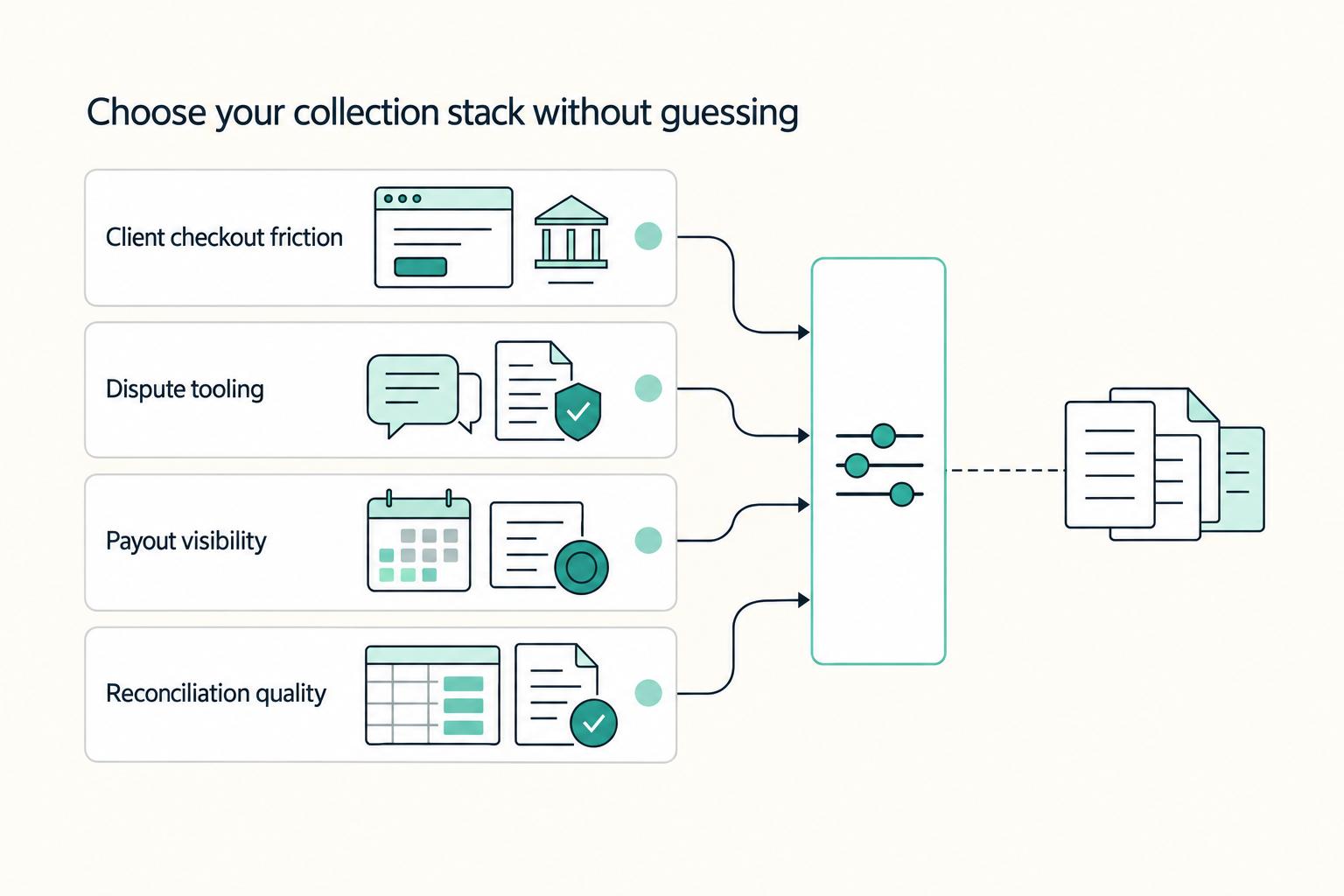
Offer card payments, but stay in control of how money reaches you. The goal is not a smoother checkout screen. It is predictable cash you can use to run the business.

How to Build Credit as a Freelancer
To build credit as a freelancer, stop relying on motivation and start running a simple, repeatable system that still works when income is uneven. You run a business-of-one, and credit is part of your operating model, not a personality test. If you've ever blamed your "money habits," you probably just lacked a workflow that turns irregular cashflow into consistent credit behavior. Start thinking like an operator: controls first, then tools.

IP Protection for Software Developers Using a Copyright-First Plan
Start with a copyright-first baseline, then add other protections where they reduce a specific risk. For small teams doing client work or shipping SaaS features, that makes software IP protection more usable in day-to-day operations.