
Quick Answer
Use game theory for freelance pricing by setting deal rules before rate pressure starts: send terms in writing with your MSA, run scope changes through a Decision Memo, and link final handoff to cleared payment. This turns negotiation into repeatable checkpoints across opening, middle, and closeout instead of reactive bargaining. You can stay collaborative while making approvals, invoice readiness, and release timing explicit.
The Three-Stage Gambit: How to Reframe Every Client Engagement#
Price alone is a weak win. A strong fee does not help much if scope, process, and payment expectations stay loose. You can still end up doing more work, waiting longer, and arguing harder to get paid. The practical use of game theory for freelance pricing is simple: shape the deal so the easiest move for the client is also the move that protects both sides.
Many client conversations start in a guarded standoff. Each side assumes the other may push too far, so the discussion narrows into rate pressure, vague promises, and mistrust. Better outcomes usually come from changing the framing and the process, not just the number. The three-stage play is straightforward:
| Dimension | Price-only negotiation | System-level negotiation |
|---|---|---|
| Leverage | Mostly your rate | Your proposal package, terms, and process |
| Dispute risk | Can rise when scope stays fuzzy | Can ease when scope boundaries and approvals are clear |
| Payment flow | Relies more on ongoing trust | Is easier to manage when billing steps are explicit |
| Relationship quality | Can feel more adversarial | Can be easier to preserve |
- Set the opening around terms, not just rate.
Outcome: both sides know what is being bought, how decisions get made, and what "done" means. Main control: a proposal package that states scope boundaries, approval points, timeline assumptions, and payment steps. Checkpoint: if the client can restate deliverables, review rounds, and who signs off, your framing is working. If they only ask, "Can you do it cheaper?", pull the discussion back to the package.
- Run the middle through change control.
Outcome: extra requests become explicit choices instead of informal favors. Main control: change control tied to scope boundaries, timeline impact, and revised cost. Failure mode: when you absorb "small" additions without documenting them, you create confusion while carrying more risk.
- Close the end with invoice readiness and handoff process.
Outcome: delivery, billing, and next steps happen in the right order. Main control: a handoff process that confirms acceptance, required files, invoice details, and payment contact before the final delivery scramble. Tradeoff: this can feel more formal upfront, but it can help reduce stalemate, antagonism, and last-minute confusion by making process decisions explicit.
Start with the opening, because that is where you decide whether the rest of the engagement will run on clear rules or real-time pressure.
You might also find this useful: The 'Getting to Yes' framework for client negotiations. Want a quick next step for "game theory for freelance pricing"? Try the free invoice generator.
The Opening Game: Win the Negotiation Before It Starts#
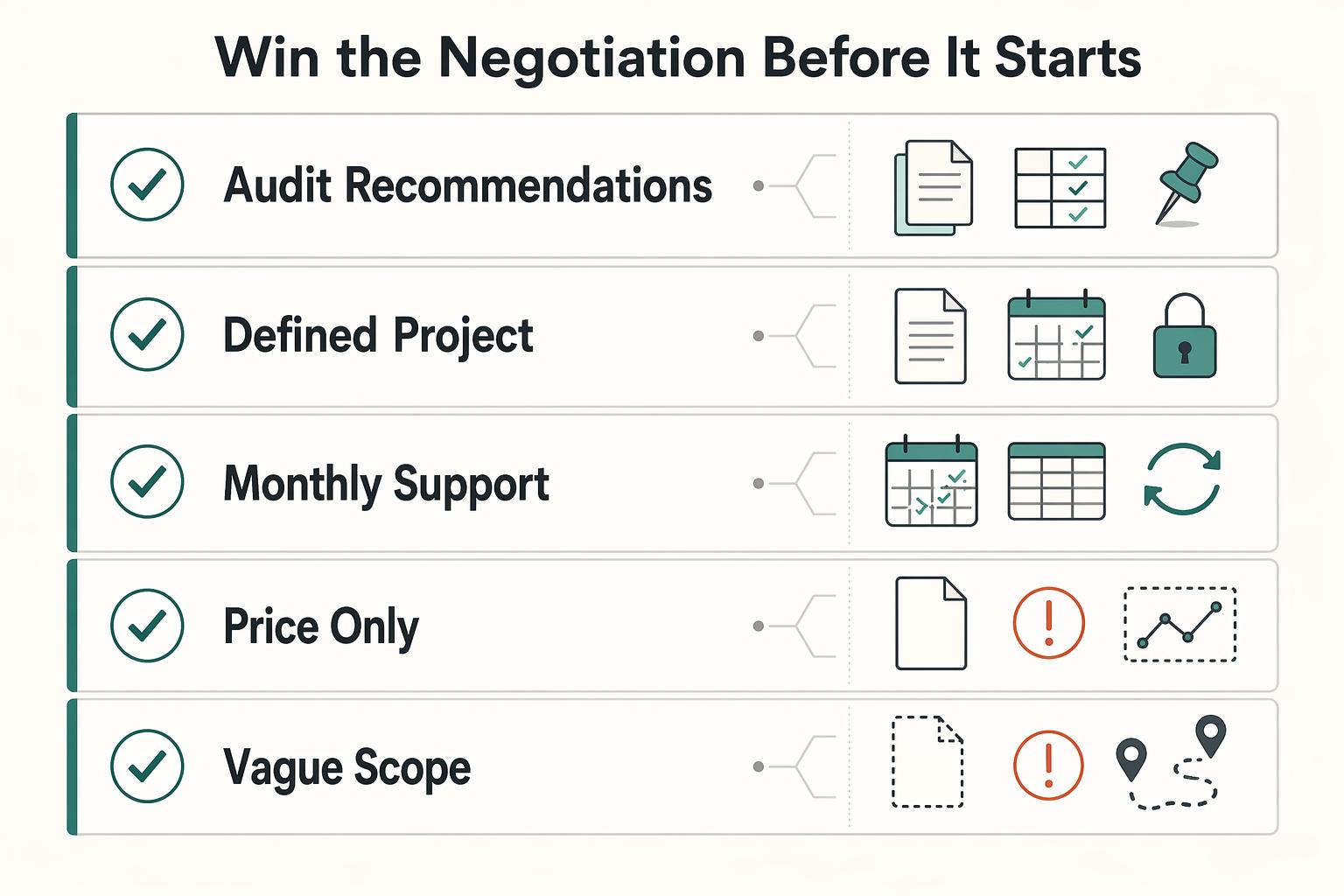
Before you discuss final price, anchor the full engagement: scope, decision flow, revisions, payment workflow, and IP transfer timing should be visible from the first written packet.
| Option | Outcome | Delivery | Risk |
|---|---|---|---|
| Audit and recommendations | Narrow outcome | Fixed deliverable | Lower delivery risk |
| Defined project delivery | Broader implementation | More coordination | Higher revision risk |
| Monthly support | Reserved capacity | Ongoing delivery | Variable demand risk |
Step 1. Gather the missing facts before you price. You do not need to give an exact fee the moment a prospect asks. First collect the details you need, calculate deliberately, then send a written proposal by email. If scope is still moving, quote a range or a minimum instead of improvising. For example: "Based on what we know so far, this usually lands around $300 to $400 per post."
Use a quick checkpoint before pricing: can you state the deliverable, timeline assumptions, review owner, approval point, and client dependencies? If not, you are still guessing. Opening low can lock you into underpricing, and repeated underpricing can create overload across your wider client portfolio.
Step 2. Send your proposal and Master Services Agreement together. After discovery, send one packet, not a loose quote. Pair your proposal with your MSA so the first review frames the job as an operating agreement, not a standalone number. Include at minimum a scope summary, payment workflow, revision rules, and IP transfer conditions.
| Weak opening | Strong opening | Effect |
|---|---|---|
| Price-only quote | Terms-led proposal + MSA | Price is no longer the only variable |
| Vague scope | Boundary-based scope summary | Change requests become explicit choices |
| Terms deferred to "later" | Payment, revisions, and IP terms upfront | Risk is surfaced before work starts |
Ask the client to confirm the packet in writing before price redlines. If they can restate what is included, how revisions work, and who approves, your anchor is working. If they reply only with "Can you do it cheaper?", return to scope and terms first.
Step 3. Offer two or three options tied to outcome, delivery model, and risk. Keep options to two or three to avoid decision stall. Each option should map to a different client outcome, delivery model, and risk profile, not just a different number. Common choices are Audit and recommendations, Defined project delivery, and Monthly support.
This gives both sides clear defaults, so constant renegotiation is less attractive.
Step 4. State default rules before they are tested. Make your defaults explicit in both proposal and agreement: scope boundaries, early termination protection, and IP ownership sequencing. For termination and IP language, add jurisdiction-specific wording only after legal verification.
Use a short script when a client pushes for riskier payment terms: "Those are not my standard terms. My proposal assumes the payment workflow in the packet. If your process requires a longer payment window, I need to verify the timing against the contract and finance-policy records before I reprice for that cashflow risk or adjust scope. If legal needs different IP language, we can review it, but transfer timing still needs to be stated clearly in the agreement."
If you want a deeper dive, read GDPR for Freelancers: A Step-by-Step Compliance Checklist for EU Clients.
The Middle Game: Make Scope Creep an Unprofitable Move#
Once your proposal, revision rules, and approval owner are set, treat every new ask as a formal decision, not an informal favor. Take scope changes out of chat and run them through one written workflow both sides can follow.
Document out-of-scope requests before work starts#
Before you do extra work, send a short Decision Memo (one page or one structured email). For this workflow, include:
- request summary
- business rationale
- scope impact
- timeline impact
- pricing impact
- approval path
Use one quick quality check: can someone outside the thread tell what changed, what it affects, and who approves it? If not, the request is still informal.
| Handling style | Speed to clarity | Dispute risk | Margin protection | Client accountability |
|---|---|---|---|---|
| Informal scope handling | Fast at intake, then slower when details are missing | Higher, because details live in memory and chat | Weaker, because extra work can start before repricing | Lower, because ownership is unclear |
| Decision Memo workflow | Slightly slower at intake, then clearer once impacts are documented | Lower, because the change is documented before work starts | Stronger, because time and price are reviewed together | Higher, because approval is explicit |
Set a reusable kickoff protocol#
Define the process before the first extra request appears:
- Requests are submitted through the agreed channel, such as a shared email address, client portal, or project form.
- Requests are reviewed during the agreed cadence, such as a weekly check-in or standing project review.
- Requests are approved by the named client owner.
- Added work starts only after approval is confirmed in the agreed record, such as email, the project tool, or a signed addendum.
This matters because intake forms alone do not guarantee delivery. In one reported case, teams submitted forms and sent heads-ups weeks or months in advance, but work still was not staffed and people reverted to an old template to ship on time. Without a named next step owner, requests can sit in a silent queue.
Keep cooperation explicit with repeatable scripts#
Use the same written response each time:
| Scenario | Action 1 | Action 2 | Action 3 |
|---|---|---|---|
| New request | Acknowledge the ask | Restate current agreed scope | Confirm you will send a Decision Memo with scope, timeline, and pricing impact |
| Partial approval | Confirm exactly what is approved now | List what is not approved | Ask whether deferred items should stay parked or return at the next review |
| Deferred request | Mark it as pending | Name the trigger for reconsideration | Ask for exact next steps, not general agreement |
If approvals stall, escalate early: identify who can unblock the decision, and if internal capacity is unavailable, ask whether the work should be routed to an external resource.
Once scope is locked this way, move to the next control point: payment timing and delivery rules that keep execution moving without reopening the deal.
For a step-by-step walkthrough, see How to Use Performance-Based Pricing for Your Freelance Services.
The End Game: Secure Compliant Payment and Set Up Your Next Win#
Your project is not fully closed until the invoice is processable, payment is cleared, and the handoff is recorded. Treat payment and relationship continuity as one workflow: reduce payment friction first, then close in a way that makes the next engagement easy to start.
| Invoice item | Status |
|---|---|
| your tax ID | Current tax ID requirement pending client finance or adviser verification. |
| client tax ID | Current client tax ID requirement pending client finance or source-record verification. |
| required invoice statement or local wording | Current invoice wording requirement pending jurisdiction and client finance verification. |
| withholding document or residency form | Current withholding or residency-document requirement pending adviser or client finance verification. |
| accepted payment method, routing details, and remittance contact | Current payment-method and remittance-detail requirement pending client finance or platform verification. |
Step 1: Validate invoice requirements before sending. Do not reuse one invoice format across countries or entity types. Use a per-jurisdiction checklist and mark each field unresolved until requirements are confirmed with the client's finance contact or your advisor. The table above covers the fields to verify.
Checkpoint: if accounts payable would still need to chase missing fields, expect delay before payment terms even begin.
Step 2: Choose closeout billing structure deliberately.
| Decision point | Single final invoice | Staged closeout |
|---|---|---|
| Leverage at project end | Lower once most deliverables are already handed over | Higher when payment is tied to closeout checkpoints |
| Delay risk | Concentrated in one approval event | Spread across smaller approvals |
| Dispute handling | One dispute can stall the full balance | Issues can be contained to the final stage |
| Cashflow stability | Lumpier | Smoother |
Use staged closeout when approvals involve multiple reviewers or a longer chain. For smaller projects with one clear approver, a single final invoice can be sufficient.
Step 3: Release final handoff items after clearance, not promises. Set this as a transparent contract policy: final source files, editable assets, transfer credentials, or similar handoff items are released after the agreed approval checkpoint and after funds show as cleared. Remittance advice helps, but it is not the same as settled funds.
Also verify payment-rail costs before closeout. Historical marketplace accounts describe charges like a $5 USD acceptance fee and a further $1 PayPal withdrawal fee; do not assume those figures apply now, but do confirm current platform and withdrawal fees so you are not surprised at payout.
Step 4: Run a short closeout sequence after payment clears. Send an outcome recap tied to the original brief, request feedback or a testimonial, complete the agreed documentation handoff, and end with a specific next-scope prompt (retainer, maintenance block, or follow-on phase).
Keep a final evidence pack with the approved deliverables list, paid invoice, and handoff record. The next practical questions are usually compliance edge cases, payment friction, and renewal timing.
We covered this in detail in Using Nudge Theory in Freelance Proposals and Pricing.
Conclusion: Play Your Own Game#
Treat game theory for freelance pricing as preparation for cooperation, not manipulation. The practical shift is simple: stop reacting to pressure in real time and decide in advance how the engagement will work.
That matters because contract design is a real decision point, not a cosmetic one. A study first published on 10 March 2026 frames early pricing as a commitment device and found higher freelancer prices and profits than late pricing in its setting. But it did not show better effort, product quality, or overall welfare, so do not judge this approach by whether it makes everyone work harder. Judge it by what you can actually control: clearer scope, explicit change approvals, and a defined payment process.
| Stage | Before | After |
|---|---|---|
| Opening | You give a number on the call and adjust it under pressure | You decide price timing, calculate the fee, and send terms in writing |
| Middle | Extra requests slide in as favors | Changes get restated with cost, timing, and approval before work starts |
| End | Handoff happens on assumptions and payment gets chased | Final deliverables, invoice status, and release point are confirmed before handoff |
On your next client, keep it that concrete:
- Set the opening terms. Decide whether the brief is clear enough for early pricing. If it is, send the fee and core terms in writing. Checkpoint: the client can review scope, price, and payment path before work begins.
- Control the middle. When work changes, price the change before doing it. Failure mode: "quick extras" that never get documented become your lowest-paid hours.
- Close the end cleanly. Confirm what is being delivered, what approval triggers payment, and when final handoff happens. Checkpoint: there is no ambiguity at release time.
That is how you act like a partner instead of a reactive vendor. You negotiate scope, change process, payment, and handoff together, not price alone.
Related: How to Calculate Your Billable Rate as a Freelancer.
Frequently Asked Questions
How do I use game theory for freelance pricing?
Use it to structure the engagement so cooperation is easier than improvisation. In practice, that means setting price early once scope is clear enough to price responsibly. Research on freelance co-creation published on 10 March 2026 treats early pricing as a commitment device and reports higher prices and profits than late pricing, but it did not increase effort in the experiment, so do not treat early pricing as magic. Your next action is simple: gather the brief, calculate the fee, and send a proposal by email. If exact scope is not pinned down yet, quote a range or a minimum first.
Should I make the first offer?
Usually, yes, if you already have enough detail to avoid guessing. If the client asks too early, do not improvise on the call. Quote a range or a minimum, then follow up after a considered fee calculation. Instant discounting is how a rate slips from something like $700 a week to $600 a week before the real discussion has even started.
How do I prevent scope creep without sounding difficult?
Slow down the yes/no moment on extra requests. Restate what changed, recalculate the fee, and confirm the updated price before you accept the extra work. The failure mode is agreeing to "quick extras" until you are carrying low-paying work that strains both workload and cashflow.
What contract terms matter most in this approach?
This approach speaks more to pricing process than to specific contract clauses. Keep your written proposal clear on deliverables and pricing, then update those details when the work changes so expectations stay aligned.
How should I negotiate payment schedules?
There is no one specific payment schedule structure to recommend. Use your standard process, and confirm timing and billing expectations in writing before work starts.
What does a cooperative strategy look like with a real client?
It looks calm, not soft. You set expectations early, avoid improvised pricing, and return to the same written process each time. That is still collaborative: value is jointly created during the work, and consistency keeps shared effort from turning into open-ended risk.
Quick comparison
Most pricing and negotiation mistakes are not about bad intentions. They happen in the moment, under pressure. This is the difference between reacting and using your standard process. | Situation | Reactive response | System response | |---|---|---| | Client asks for a price on the first call | You answer instantly and start trimming the number to keep momentum | You collect details, do a considered fee calculation, and send the proposal by email | | Client asks for "one more thing" mid-project | You squeeze it in and hope it stays small | You pause, restate the change, and confirm the updated price before agreeing | | Client pushes for a discount immediately | You drop from something like $700/week to $600/week on the spot | You hold your floor, and if needed quote a range or minimum until scope is clear | | Work starts feeling heavy for too little pay | You keep going and absorb the strain | You recheck pricing against workload and cashflow before taking more low-paying work | If you keep returning to the same written checkpoints, the conclusion is less about tactics and more about consistency.
Try a related tool
Researched and edited by the Gruv editorial team. Gruv builds cross-border billing, payouts, and finance-operations software for global businesses.
Sources
Includes 1 external source outside the trusted-domain allowlist.
- catalog.stchas.edu/mime/media/8/1133/18-09-28-2018CollegeCatalo...trusted
- catalog.tamuct.edu/course-information/tamucttrusted
- hed.nm.gov/uploads/documents/CCNS_Catalog_2025.12.19.pdftrusted
- ndl.ethernet.edu.et/bitstream/123456789/40532/1/41.pdftrusted
- pmc.ncbi.nlm.nih.gov/articles/PMC10807828trusted
- pon.harvard.edu/tag/negotiatorstrusted
- waketech.edu/programs-courses/non-credit/workforce-traini...trusted
- askamanager.org/2025/04/marketing-team-refuses-to-do-our-pro...external
Educational content only. Not legal, tax, or financial advice.
Related Posts

GDPR Compliance Checklist for Freelancers Working With EU Clients
Start by separating the decisions you are actually making. For a workable **GDPR setup**, run three distinct tracks and record each one in writing before the first invoice goes out: VAT treatment, GDPR scope and role, and daily privacy operations.
How to Calculate a Freelance Rate You Can Actually Get Paid On
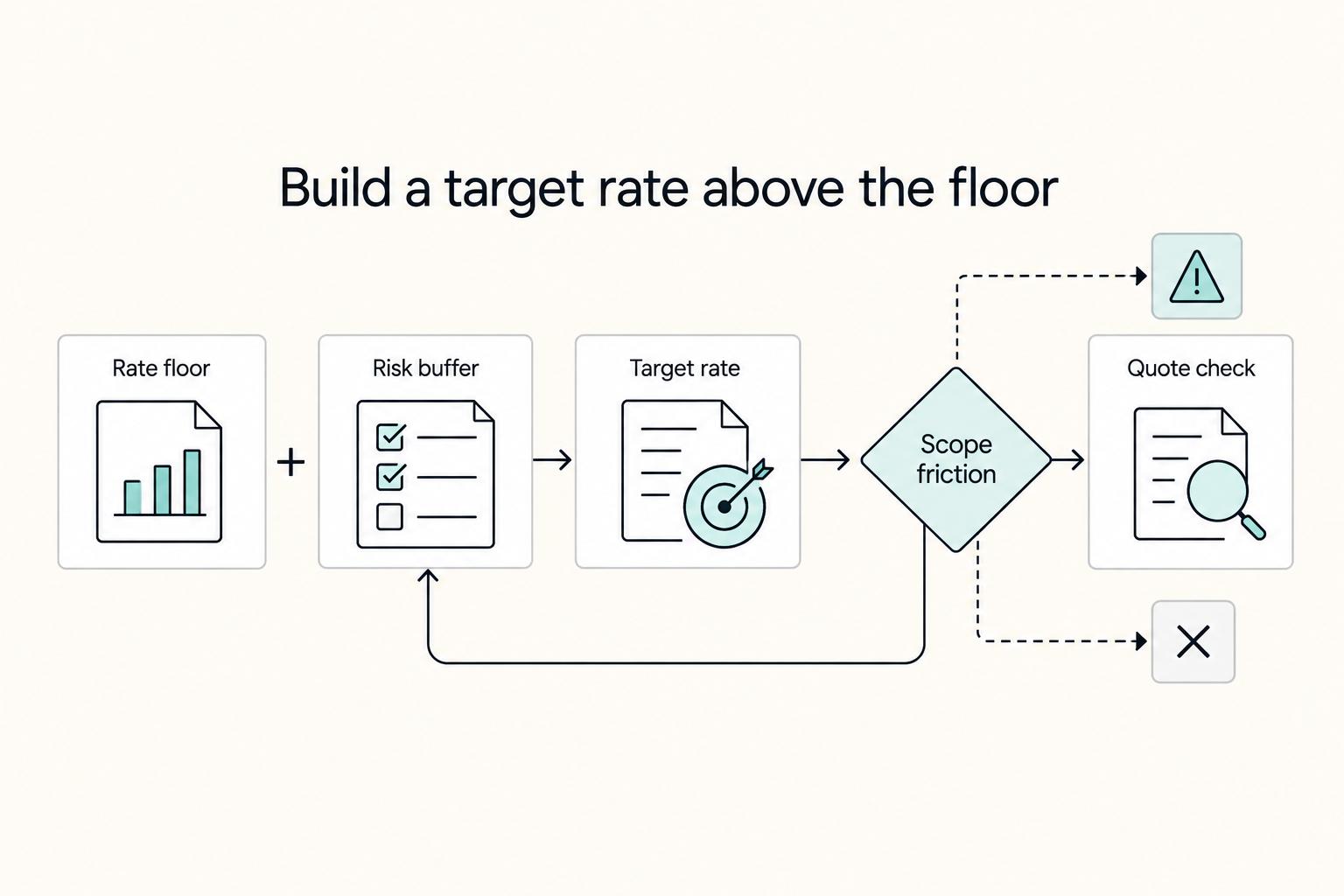
A workable rate is not the neat number a calculator produces. It is the number that still works after you account for real billable capacity, non-client time, scope drift, and the gap between sending an invoice and receiving cleared cash. Start with hourly math even if you do not plan to bill hourly, then turn that number into a quote with clear `payment terms`.
The 'Getting to Yes' framework for client negotiations
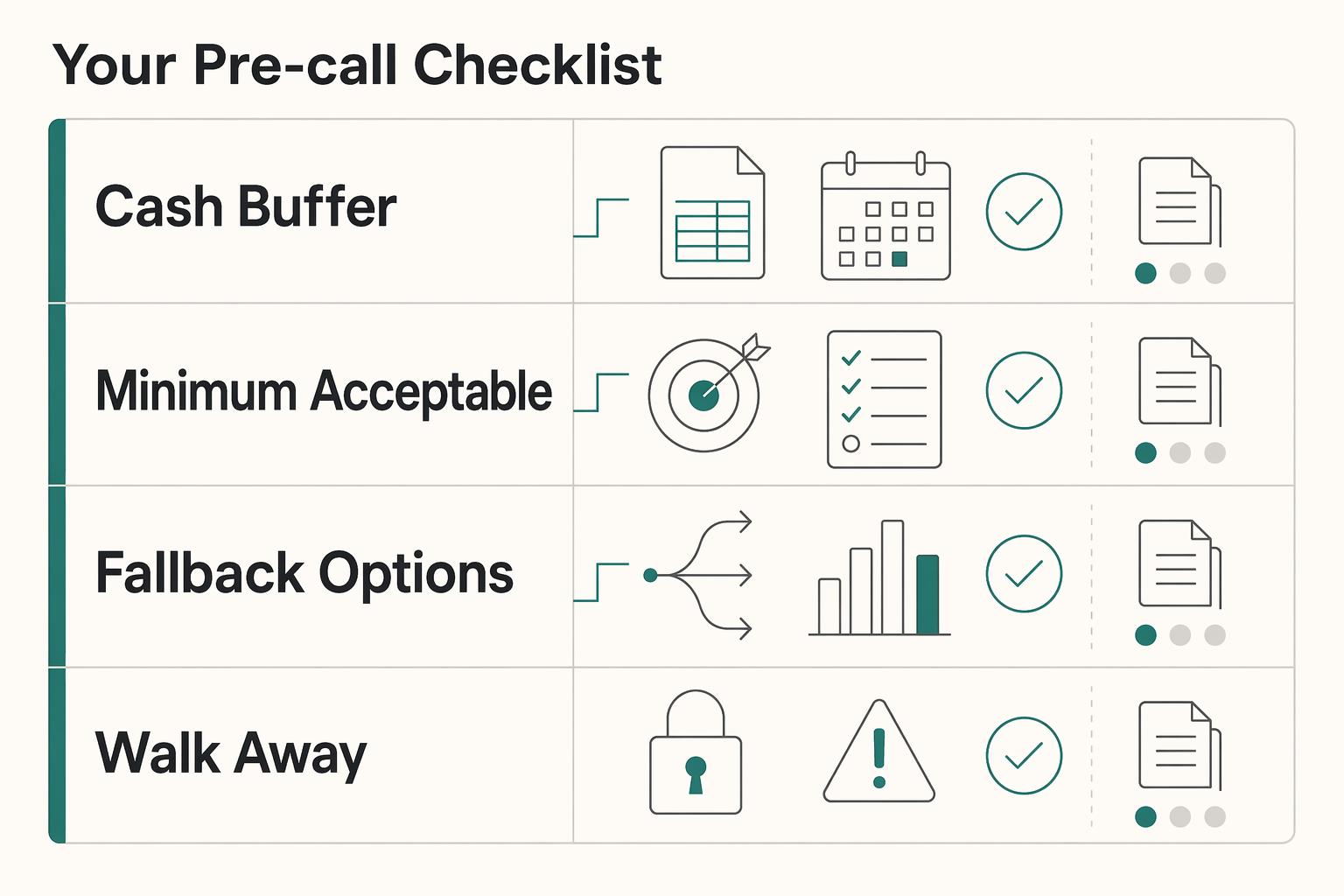
A strong "yes" is not just a price agreement. You are negotiating the terms that control real project risk: scope, schedule, payment timing, responsibilities, and what is enforceable if things break down.