
Quick Answer
UK VAT MOSS is historical for sales through 31 December 2020. A UK seller without an EU establishment can assess Non-Union OSS for eligible EU-taxable B2C services. The non-EU seller cannot use the €10,000 TBE threshold. Confirm buyer status, classification, platform role and registration coverage; report all scheme supplies quarterly and pay by the following month end, including required nil returns. Retain OSS records for ten years from the transaction year end.
The MOSS to OSS Shift Changes Your EU Filing Path#
If you sell digital services from the UK to EU customers, treat UK VAT MOSS as historical and Non-Union OSS as the current route to assess. You cannot use UK VAT MOSS for sales made from 1 January 2021 onwards. For UK sellers who are not established and have no fixed establishment in the EU, the relevant OSS branch is the Non-Union scheme.
That terminology shift matters because it changes both the filing path and the decisions you need to make. MOSS was the earlier mechanism for covered services, and at EU level it was extended into OSS from 1 July 2021. So when you see UK MOSS guidance, read it as historical context for sales on or before 31 December 2020, not as your current route.
Old route vs current route#
| Question | Old route | Current route |
|---|---|---|
| What is it called? | VAT MOSS | OSS, and for many UK sellers, the Non-Union scheme |
| Where do you register/file? | UK VAT MOSS system (historical) | One EU Member State of identification that you choose |
| Is UK MOSS guidance current? | Historical only (sales on or before 31 December 2020) | Current path is OSS, including UK guidance on registering for non-Union VAT OSS |
| Admin model | Legacy single filing route for covered services | One registration, one return, one payment for EU sales through your chosen EU country |
| Filing cadence | Historical context only here | Quarterly under the non-Union scheme |
Your real decision is operational: centralize through OSS or handle separate country registrations. OSS is optional, but skipping it can mean registering in multiple Member States where you supply services.
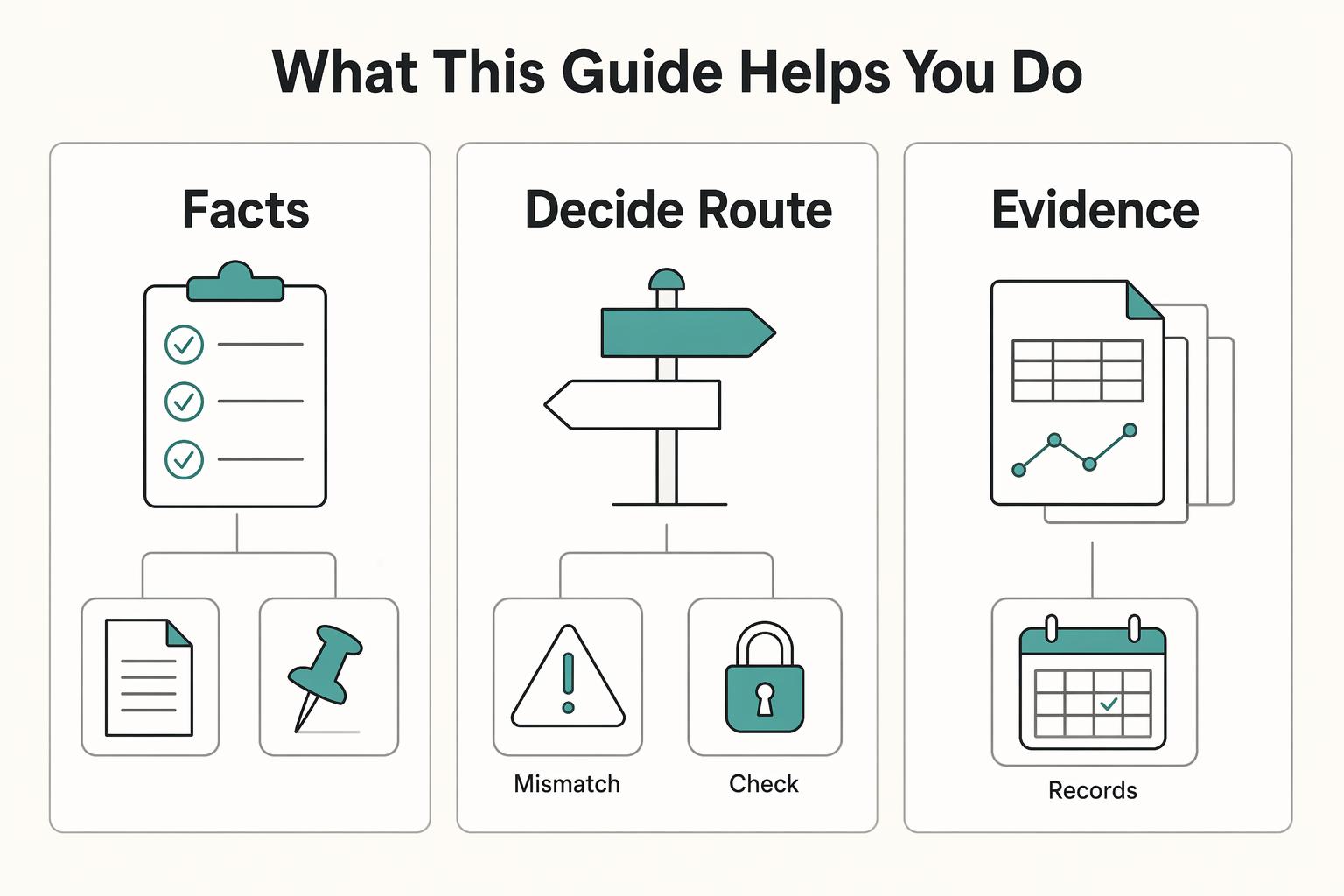
What this guide helps you do#
This guide is built around three decisions that matter in practice:
- Assess eligibility: check whether your sales are in scope and whether Non-Union OSS fits your facts, especially your EU establishment status.
- Decide the route: choose whether to use OSS and, if yes, choose your Member State of identification.
- Execute reliably: file quarterly, pay through the selected OSS authority and retain records for 10 years from the end of the transaction year.
Two mistakes create avoidable risk. First, treating "MOSS" and "OSS" as interchangeable. Second, treating "optional" as "can wait." If you do not use OSS, you still need another compliant route for your EU obligations. By the end of this guide, you should be able to answer three questions clearly: does this apply to your offer, is Non-Union OSS your cleanest path, and what quarterly habits keep compliance routine rather than disruptive? If you want a deeper dive, read our guide to a defensible 2026 filing plan.
Assess: A 60-Second EU VAT Diagnosis#
Run this self-check before you choose any compliance setup. Keep UK admin checks and EU VAT checks separate, because they are different decisions.
Classify the buyer, supply and place of taxation before choosing a filing route. A digital-service sale can have different treatment from a live professional service, and neither EU VAT analysis nor OSS registration depends on having finished a UK Self Assessment return.
1. Who is the customer#
Start by identifying the customer and documenting what you can evidence.
For a business buyer, retain a validated VAT number or other acceptable evidence of business status. For a consumer, apply the relevant B2C place-of-supply rule. A business label or an unverified VAT-number entry alone is weak evidence.
Under HMRC’s digital-service guidance, accepted business status takes the supply outside these B2C arrangements; cross-border B2B services generally follow the relevant customer-accounting rules. Check exceptions and the customer’s actual status rather than treating every overseas invoice as OSS or reverse charge.
2. What exactly are you selling#
Next comes classification. Describe what you sell and how it is delivered, then verify the VAT treatment before you file.
Electronically supplied services are essentially automated with minimal human intervention, such as automatic downloads, hosted software or prerecorded self-study material. A bespoke report written by a consultant and emailed to the buyer is not electronic merely because delivery uses email. Bundles with live support need a single/multiple-supply analysis rather than one label for every element.
3. Which threshold are you actually testing#
For a UK-established seller with no EU establishment supplying in-scope B2C digital services, destination-country VAT generally applies from the first relevant sale. The €10,000 TBE threshold is not available to this non-EU seller. UK VAT-registration and Self Assessment thresholds do not waive EU destination VAT.
| Separate UK administration | Action |
|---|---|
| Trading-income check | Check registration/reporting where gross trading income exceeds the £1,000 trading allowance, subject to the actual rules |
| Notification for 2025/26 | 5 October 2026 where notification is required |
| Ordinary paper filing | 31 October 2026 for 2025/26 |
| Ordinary online filing/balancing payment | 31 January 2027 for 2025/26; payments on account can have separate dates |
| Access and records | Keep UTR, required registration/reactivation and return evidence ready |
| Filing route | Check whether HMRC online service, commercial software or paper is appropriate |
- These are UK personal filing tasks, separate from EU OSS.
- Do not delay EU registration or VAT accounting while waiting for a UK return deadline.
Non-Union OSS now covers eligible services taxable in the EU, not only automated digital services. A live/custom service may be outside the electronic-service category yet still have an EU B2C place of supply under another rule; check that rule before deciding whether it belongs in OSS.
If you are filing online for the first time, HMRC says you must register for Self Assessment first. If you were previously registered, you may need to reactivate your account, and HMRC says filing without reactivation may delay your return. Keep records such as bank statements or receipts, since HMRC states you need them to complete the return correctly. HMRC also notes that some cases must use commercial software or other forms instead of the online filing service.
Before you move to the next decision, confirm all three:
- Customer type recorded
- What you are selling is clearly described
- VAT trigger/status verified for your case
You might also find this useful: A Guide to VAT for UK Freelancers.
Choose Non-Union OSS or the applicable local filing routes#
For UK freelancers selling B2C digital services to EU consumers, there are two valid compliance paths: centralized reporting through the Non-Union OSS, or separate VAT registration in each EU country where you sell.
Once you confirm this is a B2C digital-service case, the choice is operational: one reporting hub or country-by-country administration. HMRC frames the options as either registering for the Non-Union route in one EU member state or registering for VAT in each EU member state where you supply digital services to consumers.
Also take UK MOSS off your options list. UK VAT MOSS cannot be used for sales made from 1 January 2021, and from 1 July 2021 MOSS moved into OSS. For UK sellers without an EU establishment, the centralized route is the EU Non-Union scheme.
Your real choice#
If you register separately, you take on separate processes by country, and as you add markets, admin and filing load can grow with them.
With Non-Union OSS, you pick one Member State of identification, meaning the EU country where you register for OSS and handle filing and payment. A non-EU supplier can choose any member state for this role. VAT still follows the customer's country, so you apply the destination-country rate to in-scope sales.
Decision matrix#
| Decision factor | Separate local VAT registrations | Non-Union OSS |
|---|---|---|
| Admin overhead | Grows country by country | One registration in one Member State of identification |
| Filing and payment flow | Multiple return and payment tracks | One quarterly OSS return and one consolidated payment |
| Process handling | More country-specific process handling as footprint grows | One registration, one return, one payment for covered EU sales |
| Error exposure | More deadlines and filing points to control | Fewer filing points, but you must report all supplies that fall under the scheme through OSS |
| Scalability | Expansion can add new compliance lanes | Centralized reporting across multiple EU countries |
How Non-Union OSS works#
- Choose your Member State of identification.
- Register there for the Non-Union scheme.
- Apply destination-country VAT to in-scope B2C sales.
- Submit one quarterly OSS return for supplies covered by the scheme.
- Make one payment to that tax authority, which then redistributes VAT to destination countries.
One rule matters more than it first appears: if you use the scheme, you must declare all supplies that fall under it through OSS. OSS centralizes covered supplies, but it is not a blanket answer for every EU VAT scenario. Some non-covered supplies can still require local EU VAT registration.
Default recommendation and exceptions#
Non-Union OSS is optional, not mandatory. As a default, if you are a UK freelancer without an EU establishment selling digital services to EU non-taxable persons, it can be administratively simpler than managing multiple local registrations.
| Review trigger | Note |
|---|---|
| Part of your sales mix may be outside OSS scope | Flag for professional review |
| Buyer status is unclear | Consumer versus business is unclear |
| You may have an EU establishment or similar eligibility complication | Flag for professional review |
| You plan to split reporting between OSS and local filings | Without a clear scope reason |
Flag your case for professional review if:
- part of your sales mix may be outside OSS scope
- buyer status, meaning consumer versus business, is unclear
- you may have an EU establishment or similar eligibility complication
- you plan to split reporting between OSS and local filings without a clear scope reason
For OSS records, retain them for 10 years from the end of the transaction year, including after leaving the scheme. Separate local registrations have their own record rules; “up to 10 years” is not the OSS requirement.
Choose your Member State of identification#
Treat this as an operating decision, not a company-formation or residency decision. You are choosing a filing hub you can run reliably.
Choose an EU filing hub using its official registration, portal, support and payment instructions. Ireland is the example below, not a company-formation requirement or an automatically best choice for every seller.
| Option on your shortlist | Language support | Portal usability | Support route for non-residents | Payment practicality from a UK setup | Ongoing admin friction |
|---|---|---|---|---|---|
| Option 1 | Can you follow registration and filing guidance clearly? | Can you find the OSS flow and required fields quickly? | Is there a clear path for technical/help requests? | Are payment instructions clear before filing? | Are access and identity steps manageable for a solo operator? |
| Option 2 | Can you follow registration and filing guidance clearly? | Can you find the OSS flow and required fields quickly? | Is there a clear path for technical/help requests? | Are payment instructions clear before filing? | Are access and identity steps manageable for a solo operator? |
| Option 3 | Can you follow registration and filing guidance clearly? | Can you find the OSS flow and required fields quickly? | Is there a clear path for technical/help requests? | Are payment instructions clear before filing? | Are access and identity steps manageable for a solo operator? |
UK Self Assessment is a separate obligation. Where required for 2025/26, notification is normally due 5 October 2026 and online filing/balancing payment 31 January 2027. Keep the UTR and access tasks on that timetable; they are not prerequisites to choosing an EU Member State of identification.
Two avoidable failures are filing without reactivating an existing Self Assessment account, which HMRC says can delay your return, and assuming online filing always applies. HMRC says some cases, including non-residents, may need commercial software or other forms.
Review establishment status, supply types and any other EU registrations before selecting the scheme. An existing EU VAT number does not necessarily mean an EU establishment or bar Non-Union OSS; identify what it covers.
Execute: Your Quarterly Compliance System#
Once you have chosen your route, make it repeatable. The cleanest setup is one where each quarter follows the same sequence: track each in-scope EU B2C sale, file one return, and make one payment through your chosen OSS route.
The steps below assume you use Ireland as your Member State of identification. Keep one boundary clear from the start: UK VAT MOSS cannot be used for sales made from 1 January 2021 onwards, so your active EU reporting path is non-UK.
Setup#
Register in Ireland through the non-Union OSS registration portal. If you are a non-EU supplier already registered for another OSS scheme in Ireland, you can register through the VAT OSS section in Revenue Online Service (ROS). Do not treat ROS as the default for every case.
Prepare your filing inputs before you apply, including your core business and contact details and the information required by the registration flow. Also decide where records and evidence will be stored so you can export them electronically without delay.
Set scope before your first return. Once you are registered for the scheme, all in-scope supplies must be declared through it. If your scope is unclear or your sales model is mixed, escalate before filing.
Tracking#
Track every in-scope B2C sale at transaction level. Record the Member State of consumption, type of supply, date of supply, and VAT payable. Apply destination-based VAT rates, meaning the customer's country rate.
For the general electronic-service location rule, retain two non-contradictory pieces of evidence where required, such as billing address and IP or bank-location information. Specific location presumptions have their own rules. Investigate conflicting evidence rather than choosing whichever country gives the lowest rate.
Keep records for 10 years from the end of the transaction year, and keep them exportable electronically without delay. If requested records are not provided within a month of a reminder, that can be treated as persistent non-compliance.
| Workflow | Data captured reliably | Error risk | Review burden |
|---|---|---|---|
| Manual spreadsheet only | Sale date, amount, country, VAT amount (if entered correctly) | Highest risk of wrong country rate, duplicate rows, missing evidence links | High: manual checks on rates and evidence fields |
| Invoicing tool plus payment processor exports | Sale totals, timestamps, transaction IDs, some customer country fields | Medium risk if evidence is split across tools and not reconciled | Medium: quarter-end matching across exports |
| Accounting tool with VAT logic and evidence storage | Transaction data, VAT amount, country logic, evidence references | Lower risk if mappings and rates are configured correctly | Lower ongoing burden, but still requires quarter-end human review |
Filing#
File one OSS VAT return electronically for each calendar quarter through your Irish portal. File even when you made no in-scope supplies, because a nil return is still required.
The return deadline is the end of the month following the calendar quarter. It does not shift for weekends or public holidays. File and arrange payment early enough to meet the deadline; filing a return is not payment.
Before submission, reconcile totals back to underlying transactions by country. Confirm VAT collected matches the applied country rate. Confirm out-of-scope items are excluded, and complete a nil-return check where applicable.
Payment#
Pay the total VAT to the chosen OSS authority using the return’s correct payment reference and instructions by the deadline. The authority distributes it to consumption countries. Do not leave the payment until after the deadline simply because the return was submitted on time.
| Issue | Consequence | Context |
|---|---|---|
| Failure to furnish a quarterly Non-Union OSS return | €4,000 fixed penalty | Ireland |
| Failure to remit tax payable for a quarter | €4,000 fixed penalty | Ireland |
| Persistent non-compliance | Exclusion from the scheme and a 2-year quarantine period after exclusion | Current OSS guidance |
Archive the payment confirmation, payment reference, and submitted return together for the same quarter. Keep this with the transaction and evidence records so the full pack is retrievable quickly.
Irish Revenue lists €4,000 fixed penalties for failure to furnish the quarterly return and failure to remit that quarter’s tax. Persistent failures can also lead to scheme exclusion and a two-year quarantine. Follow the actual notice and recovery process; a single late item is not automatically the full persistent-failure test.
Check registration timing before the first sales#
Registration normally starts on the first day of the next calendar quarter. An earlier first in-scope sale can be covered where the Member State of identification is notified by the tenth day of the following month. If that deadline is missed, earlier supplies can require local registration/accounting until OSS coverage begins. Confirm the effective date and retain the notification; an application alone does not retrospectively cover every prior sale.
Work through a quarter-end example#
Hypothetical Q3 2026 sales, assuming the applicable rates shown and valid OSS coverage: Country A has €1,000 net taxable sales at 20%, giving €200 VAT; Country B has €500 net sales at 21%, giving €105 VAT. The return reports €1,500 net sales and €305 VAT, separated by destination and rate. The gross receipts would be €1,805 before fees; processor deductions do not reduce the VAT liability by themselves. If prices are VAT-inclusive, extract VAT using gross × rate ÷ (1 + rate) rather than adding tax again.
For this quarter, return and payment are due 31 October 2026 even though that date falls on a Saturday. Use the actual authority payment instructions and retain the matched reference. If sales were charged in GBP, apply the prescribed quarter-end ECB conversion rule for the return; retain that calculation separately from the processor’s actual settlement rate.
Keep refunds and prior-period corrections linked to the original sale, country, rate and period. OSS generally uses a later return’s correction section within the relevant three-year window rather than overwriting the submitted return. Input VAT is not deducted on the Non-Union OSS return; assess the separate refund or local-return route where eligible.
Quarterly close checklist#
- Lock quarter records: transaction export, customer-location evidence, VAT totals by Member State of consumption, return copy, payment confirmation.
- Check evidence consistency: where two evidence items are used, confirm they are non-contradictory and linked to each transaction.
- Run nil-return check: if no in-scope EU supplies occurred, submit a nil return.
- Submit the return before the month-end deadline after quarter close.
- Send the consolidated payment by the deadline with the correct return reference and confirm receipt.
- Complete the archive so the full quarter can be produced electronically without delay for 10 years.
Escalate to a VAT professional if you have conflicting evidence, unclear scope, an existing EU VAT registration, a missed return or payment, or incomplete records for a closed quarter.
We covered this in detail in A guide to the 'One-Stop-Shop' (OSS) for VAT in the EU.
Use validated buyer facts and the actual place-of-supply rule before classifying a sale. The VAT reverse charge checker can support a preliminary check, but it cannot determine every mixed-supply, establishment or platform case.
From Compliance Burden to Business Asset#
The goal now is not more theory. It is to make Assess, Decide, Execute something you can repeat without rethinking the whole issue every quarter.
Assess means confirming what applies before you file. Decide means choosing a method and changing it only when the facts change. Execute means making the admin predictable: register when required, keep usable records, file on time, and pay on time.
On the UK side, keep the checkpoints simple. If you need to tell HMRC you must file, register for Self Assessment. If this is your first return, register before using the online filing service. If you registered before but did not file last year, confirm whether your account needs reactivating, because filing without reactivation can delay your return. Keep your UTR accessible, and keep records like bank statements and receipts so your return is accurate.
| Criteria | Ad-hoc compliance | Systemized compliance |
|---|---|---|
| Error exposure | Decisions are made late, often at filing time | Decisions are made early and applied consistently |
| Admin effort | You scramble for records and account access near deadlines | You capture records as you go and file from a clean pack |
| Filing confidence | More last-minute uncertainty and avoidable delays | Clear status on registration, access, records, filing, and payment |
| Readiness to expand | New markets feel operationally risky | You reuse the same process with fewer surprises |
Keep each quarter’s export, location support, country/rate totals, return reference, payment confirmation and correction history retrievable. Review portal access early and preserve required OSS records after deregistration.
Next, verify the OSS effective registration date, classify the first sales, test the evidence export and schedule the next return and payment. Keep UK Self Assessment access and deadlines on their separate calendar. If sales preceded OSS coverage, resolve the earlier country-level liabilities rather than silently adding them to a later return.
Review the process when the offer, platform role, customer mix or establishment facts change. Reuse the records workflow while reassessing the tax facts.
If you want to simplify how you invoice clients and manage cross-border money operations with clearer compliance rails, review Merchant of Record for freelancers.
Frequently Asked Questions
Which EU country should you choose for Non-Union OSS registration as a UK freelancer?
You can choose any EU Member State of identification. Ireland can be a practical route, but it is not mandatory. If you choose Ireland, register through the non-Union OSS registration portal. If your setup is complex, get case-specific advice before you choose.
Do you need to register if you are below the UK VAT threshold?
For in-scope EU B2C digital services, the place of supply is where your consumer is located, not where your UK VAT threshold sits. For non-EU suppliers in this context, the €10,000 threshold does not apply. If the sale is B2B or not electronically supplied, apply the normal place-of-supply rules instead of assuming OSS treatment.
What counts as a digital service for EU VAT purposes?
An electronically supplied service is essentially automated with minimal human intervention, such as automatic downloads or hosted software. A live/custom service does not become electronic merely because it is delivered online. Since Non-Union OSS covers other eligible EU-taxable B2C services too, assess their place of supply before excluding them.
How do you register for the scheme?
Choose your Member State of identification and complete that country's non-Union OSS registration process. If you choose Ireland, use Ireland's non-Union OSS portal. UK guidance may still use legacy "Non-Union VAT MOSS" wording, but the EU framework moved to OSS on 1 July 2021. Once registered, you must declare all supplies that fall within the non-Union scheme through that scheme.
What happens if you miss filings or payments?
Act quickly, including on nil periods, because a nil return is still required when no in-scope EU supplies were made. Persistent non-compliance can lead to exclusion from OSS and a quarantine period; Irish Revenue guidance describes a 2-year exclusion from OSS special schemes in persistent-failure cases. A single error is not automatically persistent non-compliance, but repeated failures and ignored record requests are high-risk patterns.
What evidence do you need to keep for customer location?
Retain the facts used to locate the customer, linked to each transaction. For the general electronic-service rule, keep two non-contradictory evidence items where required; specific presumptions follow their own rules. OSS records must be retained for 10 years from the end of the transaction year and supplied electronically on request. Failure to provide records within one month of a reminder is a persistent-noncompliance ground.
Try a related tool
Researched and edited by the Gruv editorial team. Gruv builds cross-border billing, payouts, and finance-operations software for global businesses.
Sources
Includes 4 external sources outside the trusted-domain allowlist.
- vat-one-stop-shop.ec.europa.eu/one-stop-shop/record-keeping-and-audits-oss_entrusted
- vat-one-stop-shop.ec.europa.eu/one-stop-shop_entrusted
- gov.uk/guidance/the-vat-rules-if-you-supply-digital...external
- gov.uk/government/collections/vat-moss-vat-on-sales...external
- revenue.ie/en/vat/vat-ecommerce/non-union-scheme/index....external
- revenue.ie/en/tax-professionals/tdm/value-added-tax/par...external
Educational content only. Not legal, tax, or financial advice.
Related Posts

Digital Nomad Taxes in 2026 With a Defensible Filing Plan
With digital nomad taxes, the first move is not optimization. It is figuring out where you may be taxable, where filings may be required, and what proof supports that position.

Understanding the UK's Statutory Residence Test (SRT)
Treat SRT like ops, not folklore. You want a repeatable workflow you can run monthly so your tax-year answer is boring, documented, and easy to defend.

VAT for UK Freelancers Without Filing Surprises
For a UK-established freelancer, VAT begins with the value and location of supplies, not profit or a marketplace tax setting. Check whether registration is compulsory, establish the effective date, then connect invoices, digital records and VAT returns.