

Quick Answer
Yes - treat quarterly payments as the default until your file supports a different result. FEIE can lower federal income tax, but it does not automatically remove Schedule SE, and net self-employment earnings of $400 or more keep that check active. Build Form 1040-ES amounts from projected net profit, then update after each quarter-close reconciliation. Reduce payments only after your travel-day, residence, and credit records are complete enough to defend.
Why this guide exists for US freelancers abroad#
If you freelance abroad, do not assume FEIE solves your full U.S. tax picture. You can qualify for the Foreign Earned Income Exclusion and still have separate obligations, including self-employment tax. Estimated-tax mechanics are separate, and the IRS summaries used here do not fully confirm every detail, so verify them before you rely on assumptions.
The IRS treats these layers separately. FEIE applies only if you are a qualifying individual with foreign earned income and you file a U.S. return reporting that income. Self-employment tax is the Social Security and Medicare tax on net self-employment earnings. The IRS says the rules are generally the same whether you live in the United States or abroad. If net self-employment earnings are at least $400, self-employment tax is still in scope and Schedule SE can apply.
This guide helps you make decisions in the right order: what applies, what to file, what to document, and when to stop guessing and get professional review. The main risk it helps you avoid is treating FEIE as a blanket answer, then finding out later that other filing or payment obligations are still active.
FEIE eligibility is easy to over-assume, so keep the tests explicit rather than treating them as soft signals.
| FEIE path | Grounded standard |
|---|---|
| Physical presence test | 330 full days in a 12-month period |
| Bona fide residence test | Uninterrupted period that includes an entire tax year (January 1 through December 31 for calendar-year taxpayers) |
Missing the 330-day threshold for any reason means that test is not met.
Scope is intentionally narrow: U.S. freelancers and consultants earning business income abroad. Where IRS summaries are clear, this guide stays specific. Where mechanics are not fully confirmed in those summaries, it uses conservative defaults and flags when professional review is the safer move.
Related: A guide to the 'Foreign Earned Income Exclusion' for Americans working on a yacht.
Know the tax pieces before you calculate anything#
Before you model payments, separate the tax buckets the IRS treats differently. That one step helps prevent underpayment mistakes later.
Three separate buckets#
Estimated tax is the pay-as-you-go method for income not subject to withholding, and self-employed taxpayers use Form 1040-ES to calculate and pay it. For self-employed people, the IRS treats estimated tax as the method used to pay income taxes plus the Social Security and Medicare taxes tied to self-employment.
| Tax bucket | What it covers | Form/mechanics |
|---|---|---|
| Estimated tax | Pay-as-you-go method for income not subject to withholding | Form 1040-ES; for self-employed people, used to calculate and pay income taxes plus Social Security and Medicare taxes tied to self-employment |
| Self-employment tax | Social Security and Medicare tax on net self-employment earnings, not the full U.S. tax bill | Schedule SE (Form 1040) is used to figure the amount |
| U.S. income tax | Separate federal layer | Keep separate from the Schedule SE layer because one can change while the other still applies |
Self-employment tax is specifically the Social Security and Medicare tax on net self-employment earnings, not your full U.S. tax bill. You use Schedule SE (Form 1040) to figure that amount.
U.S. income tax is a separate federal layer. Keep it separate from the Schedule SE layer because one can change while the other still applies.
The FEIE mistake that causes trouble#
A common mistake is treating FEIE as a full reset. Even if you claim the foreign earned income exclusion, the IRS states that you still owe self-employment tax on net profit, and income exempt from U.S. income tax can still be subject to self-employment tax.
So do not assume estimated payments automatically drop to zero based only on FEIE treatment. If your net self-employment earnings are $400 or more, use that as a clear checkpoint to see whether Schedule SE applies.
What to verify before you model payments#
Before you estimate anything, check your last filed return and ask whether this year is likely to follow the same basic pattern.
- Did you file Schedule SE last year?
- Will you likely need Form 1040-ES this year because your freelance income is not subject to withholding?
If yes to both, modeling only income tax can understate the Social Security and Medicare piece. Keep separate workpapers for each bucket so you can clearly show why a FEIE claim changed income tax but not the Schedule SE amount.
You might also find this useful: How to calculate 'quarterly estimated taxes' when you have both US and foreign clients.
Decide if quarterly payments apply to you this year#
If you are in business for yourself and expect tax due, start by checking whether quarterly estimated payments apply this year. For U.S. citizens and residents, the IRS says self-employment tax rules are generally the same whether you live in the U.S. or abroad. Use IRS categories to classify your situation first:
| IRS category | How to classify yourself | Why it matters |
|---|---|---|
| Sole proprietor | You carry on a trade or business as a sole proprietor | You are in a self-employed category |
| Independent contractor | You carry on a trade or business as an independent contractor | You are in a self-employed category |
| Partnership member | You are a member of a partnership that carries on a trade or business | You are in a self-employed category |
| Gig worker / part-time business | You are otherwise in business for yourself, including in a part-time business or as a gig worker | IRS includes this in "in business for yourself" |
Keep one hard checkpoint in view: if net earnings from self-employment are at least $400, self-employment tax applies. FEIE does not remove self-employment tax on net profit, so excluding foreign earned income does not automatically reduce this tax to zero.
Before you decide to skip quarterly payments, run this quick check:
- Confirm your category in the Self-Employed Individuals Tax Center, including its quarterly-payments guidance.
- Compare this year's assumptions to your prior filing and payment pattern.
- If your income mix changed, write down why that change supports a different payment approach.
If your income sources changed during the year, run a fresh full-year estimate before you decide to skip quarterly payments.
Separate FEIE from foreign tax credit decisions#
Treat FEIE and the foreign tax credit as separate decisions from the start. Both can change your U.S. income-tax result, but they work through different rules and filing mechanics. If you blend them together too early in your quarterly planning, you can misstate estimated payments.
| Lever | What you must confirm first | Key filing/mechanics point |
|---|---|---|
| FEIE | You are a qualifying individual under FEIE rules | You still file a U.S. return reporting the income when you claim the exclusion |
| Foreign tax credit | Your foreign taxes and income are organized by category/country | Form 1116 is filed by income category, one category per form, with separate country detail where required |
FEIE is about qualifying status first#
FEIE starts with status, not assumption. Under the physical presence test, you need 330 full days in a 12-month period in foreign country or countries. Missing that threshold fails the test regardless of reason.
The bona fide residence test is different. It includes an uninterrupted period that covers an entire tax year, and living abroad for one year does not automatically make you a bona fide resident. For calendar-year taxpayers, that full year is January 1 through December 31. For 2026, the FEIE maximum is $132,900 per person, but only after you qualify.
The foreign tax credit is a separate filing decision#
The foreign tax credit is not just a fallback label for FEIE. Its filing path is separate, and Form 1116 must be split by income category, with only one category box checked per form. If you paid tax in multiple countries, you also need country-level separation on the form.
Use a conservative payment rule when interaction is unclear#
If you cannot confidently model FEIE and foreign tax credit interaction, use a conservative estimated payment and true up later. A common risk is reducing payments on the assumption that FEIE or the credit will solve everything, then finding that qualification or support does not hold as expected.
Keep the core documentation before reducing payments: records for travel days, residence support if relevant, and foreign tax records. Final treatment can vary by jurisdiction.
For a step-by-step walkthrough, see Quarterly Estimated Taxes for Freelancers Without Guesswork.
Build a conservative quarterly estimate you can actually run#
Once you know which tax buckets and cross-border positions are in play, build your estimate in a sequence you can repeat every quarter.
Use this order so you do not miss the tax that survives FEIE#
Use the same simple sequence each quarter:
- Project revenue and deductible business expenses.
- Estimate the Schedule SE amount from projected net earnings. It is the Social Security and Medicare tax for people who work for themselves, with a combined 15.3% rate (12.4% Social Security and 2.9% Medicare).
- Estimate U.S. income tax separately after any exclusions or credits you expect to claim.
- Set a quarterly payment target from the combined federal estimate.
This order matters because FEIE does not remove self-employment income from Schedule SE. If net earnings from self-employment are at least $400, treat Schedule SE as in play. Also, do not stop at Schedule SE. IRS guidance here covers Social Security and Medicare taxes only, not every other tax you may owe.
Keep one compact table and update it at quarter close#
| Period | Projected revenue | Deductible expenses | Net profit | Schedule SE estimate | Quarterly payment target |
|---|---|---|---|---|---|
| Q1 plan | |||||
| Q2 update | |||||
| Q3 update | |||||
| Q4 update |
Use it as a planning tool, then reconcile it to your actual return workflow. Schedule SE (Form 1040) is the form used to calculate tax due on net earnings from self-employment, and that data is also used for benefit records.
Match your payment rhythm to your income pattern#
The IRS Self-Employed Individuals Tax Center includes a quarterly-payments checkpoint. Keep a consistent quarterly rhythm and update your estimate when your actual results change.
Run one verification checkpoint every quarter#
Before sending the next payment, compare projected revenue, expenses, and net profit against actuals, then update the rest-of-year estimate. Adjust the next payment target only after checking both the Schedule SE side and the income-tax side.
Also verify that you are using current Schedule SE instructions before finalizing your estimate logic. The IRS posted a correction to the 2025 Schedule SE instructions on 20-FEB-2026, so instruction version checks belong in your quarterly process. Before you send Q1, run your assumptions through the FEIE calculator and compare the result against your conservative estimate.
Choose your penalty-control method before the first payment#
Start with the simpler method unless your income swings are large enough to justify annualized calculations. A conservative default is to use a safe harbor-style plan first, then shift to annualized payments if equal installments no longer match how income actually came in.
This choice is practical, not theoretical. IRS guidance says the rules are generally the same whether you live in the U.S. or abroad. Claiming FEIE does not remove self-employment tax from net profit, and net earnings from self-employment at or above $400 keep it in play.
| Method | Usually useful when | Main advantage | Where complexity increases |
|---|---|---|---|
| Safe harbor approach | Income is fairly steady, or you want a lower-admin process | Can be easier to run and repeat each period | You must confirm current IRS thresholds and exceptions before relying on protection |
| Annualized income approach | Income is uneven, seasonal, or back-loaded | Can better align payments with when income was earned | Requires period-by-period tracking and tighter documentation |
What this guide does not pin down are the exact safe-harbor percentages, AGI-based variants, annualized installment mechanics, and underpayment-penalty formulas. Treat those as open items until you review current IRS instructions.
Before your first payment, document your method choice in your tax file and keep a clean audit trail if your payment pattern is questioned later:
- method selected
- why you chose it
- decision date
- records you will keep to support the choice if the IRS asks later
If you want a deeper dive, read How to Prepare for an IRS Audit.
Handle social security overlap with totalization rules#
Treat potential totalization relief as separate from your payment cadence. If you cannot document a different treatment, plan for U.S. self-employment Social Security and Medicare exposure.
The IRS defines self-employment tax as Social Security and Medicare taxes primarily for people who work for themselves. The published rate is 15.3% (12.4% Social Security and 2.9% Medicare). For 2024, the first $168,600 of combined wages, tips, and net earnings is subject to the Social Security portion. For freelancers abroad, overlap questions can arise, so avoid assuming a reduced U.S. amount unless your records and current guidance support it.
Use this decision table#
| Situation | Planning assumption for U.S. Social Security and Medicare exposure | What to do now |
|---|---|---|
| You have current authority and records supporting a non-default treatment | A different result may apply only to the extent your support covers your facts | Apply that position consistently in your Schedule SE workpapers and estimates |
| You do not have current authority and records supporting a non-default treatment | U.S. self-employment tax may still apply | Keep the U.S. amount in your estimate unless current authority supports a different treatment |
| Your agreement status or records are unclear | Treat yourself as exposed for planning | Do not reduce U.S. amounts yet; resolve the documentation gap first |
Strict rule: do not assume treaty or totalization relief without support. Keep your supporting records in your tax file if you plan to rely on a non-default position.
What to track in your file#
Keep these items together so your position is easy to support later:
- supporting records for any non-default position you apply
- SSA relevance: the IRS states the Social Security Administration uses Schedule SE (Form 1040) information to figure benefits
- IRS guidance: the IRS self-employment tax page plus current Schedule SE instructions, including the heading for U.S. Citizens or Resident Aliens Living Outside the United States
Also track instruction version dates. The IRS posted a correction to the 2025 Schedule SE instructions on 20-FEB-2026, so stale instructions are a real process risk.
Verification checkpoint before reducing U.S. amounts#
Before reducing any U.S. amount tied to Schedule SE in your estimate, confirm:
- the basis for a non-default treatment is identified for your facts
- supporting records are in hand
- Schedule SE treatment matches that position
- your file shows the guidance version/date used
If any item is missing, use the conservative default: keep the U.S. amount in the estimate until support is complete.
Avoid the state-tax trap while living abroad#
Moving abroad does not automatically end California filing exposure, so run a California check before you cut state estimated payments.
| California status | What California taxes | Checkpoint |
|---|---|---|
| Resident | All income regardless of source | Moving abroad does not automatically end California filing exposure |
| Nonresident | California-source income | Work physically performed in California can create California-source income |
| Part-year resident | Worldwide income while resident plus California-source income during your nonresident period | If you moved during the year, review whether Form 540NR is required if California-source income exists |
If California still treats you as a resident, it taxes all income regardless of source. If you are a nonresident, California can still tax California-source income. If you moved during the year, you may be a part-year resident, which means worldwide income while resident plus California-source income during your nonresident period.
Before you lower payments, ask: do your facts still require a California residency review? Do not assume moving abroad alone resolves California status. California's standard focuses on whether you were in California for other than temporary or transitory purposes, or remained domiciled there while away for temporary or transitory purposes.
Also test source rules. Even as a nonresident, work physically performed in California can create California-source income. The FTB workday method is: CA Workdays / Total Workdays = % Ratio, then % Ratio x Total Income = CA Sourced Income.
Before reducing state payments, confirm:
- your residency status
- whether any services were physically performed in California
- whether part-year or nonresident filing is still in play, including whether Form 540NR is required if California-source income exists
If your facts are messy, read Gruv's deeper guide on state taxes for digital nomads before changing your payment amount.
Need the full breakdown? Read A Step-by-Step Guide to Filling Out Form 2555 (Foreign Earned Income).
Keep an audit-ready evidence pack all year#
Your best protection is being able to rebuild each quarter from records, not memory. Keep one working file per quarter so you can explain changes in income, FEIE position, or foreign tax credit approach without recreating the logic later.
Keep the core payment file#
Build a practical record set you can use to rebuild your estimates and year-end positions. Treat this as an operating checklist, not an IRS-required minimum.
- invoices with client name, service period, amount, and payment status
- expense support, plus a short business-purpose note when needed
- a payment log that ties invoices to platform receipts and bank deposits
- estimated-tax payment confirmations or receipts you relied on
- the workpapers you used for each quarter's estimate
Quarter-close check: can you tie billed revenue, collected cash, deductible expenses, and estimated payments to one clean record set? If not, reconcile before the next payment cycle.
Add the cross-border support#
If you claim FEIE, keep support for the test you actually use, not just the filed form.
| Position | Records to keep | Grounded rule |
|---|---|---|
| Physical presence test | Travel calendar and underlying records | 330 full days in a 12 consecutive months window that includes part of the tax year; a counted day is 24 consecutive hours from midnight to midnight |
| Bona fide residence test | Facts showing bona fide foreign residence | Uninterrupted period that includes an entire tax year; living abroad for one year alone does not automatically establish bona fide residence |
| Foreign tax credit | Records organized by Form 1116 category | Form 1116 is filed separately by income category, and each form has only one checked category box |
For the physical presence test, keep a travel calendar and underlying records supporting 330 full days in a 12 consecutive months window that includes part of the tax year at issue. A counted day is a full 24 consecutive hours from midnight to midnight. Missing the day count fails the test even if the reason was illness, family issues, vacation, or employer orders.
For the bona fide residence test, keep facts showing bona fide foreign residence for an uninterrupted period that includes an entire tax year. Living abroad for one year alone does not automatically establish bona fide residence. Eligibility is based on your facts and circumstances.
Also keep this FEIE rule explicit in your file notes: excluded foreign earned income is still reported on a U.S. return.
For the foreign tax credit, organize records by Form 1116 category from the start. Form 1116 is filed separately by income category, and each form has only one checked category box, so your support should already be grouped that way before return prep.
Version your assumptions by quarter#
Save a dated copy of each quarter's estimate and assumptions: projected revenue, major deductions, whether you modeled FEIE or the foreign tax credit, and the calculation version. This makes later changes easier to explain. It is not an IRS template requirement.
Use tools that leave a trail#
Choose tools that can export transaction history and show reconciliation trails. If you receive cross-border client payments through Gruv, where supported, export quarterly activity, tie it to invoices and bank deposits, and archive that reconciliation with payment confirmations. Platform exports help, but they do not replace your invoices, return positions, or workpapers.
Related reading: How Much Should a Freelancer Save for Taxes? A Simple Formula.
Use a quarterly execution checklist with escalation triggers#
The goal is consistency, not perfect forecasting. Run the same checklist each quarter, and escalate early when eligibility or method choice becomes unclear. For a freelancer with foreign income, that discipline usually matters more than trying to model everything perfectly up front.
Quarter start#
At the start of each quarter, reset your assumptions before the next payment is due.
- Refresh your income forecast using signed work, active proposals, and known churn.
- Confirm your estimated-tax approach for the year, and save a dated note if you change it.
- Set your next estimated-tax payment reminder when you finalize the forecast.
- If you are relying on FEIE, confirm your qualification path is still credible:
- physical presence test: tracking toward 330 full days in a 12 consecutive months window * bona fide residence test: facts-and-circumstances based and includes an entire tax year
Quarter close#
Close the quarter by reconciling what you expected with what actually happened.
- Reconcile forecast vs actual, then reconcile income timing (year earned vs year received) before the next payment.
- Document variance in plain language and tie it to invoices, collections, expenses, and payment receipts.
- If you use the foreign tax credit, clean up Form 1116 support now:
- separate records by income category * one category box per form * amounts generally reported in U.S. dollars
Escalate early#
Bring in a tax pro if any of these appear:
- risk of missing the 330 full days threshold in a qualifying 12-month period
- uncertainty about whether your facts support bona fide residence for an uninterrupted period that includes an entire tax year
- uncertainty between FEIE and the foreign tax credit
- a large forecast-versus-actual swing that changes payment logic
Year-end handoff#
Prepare a clean, complete package for return prep: quarterly estimates, payment confirmations, FEIE support, Form 1116 support by income category, and records that reconcile income by year earned and year received. Include workpapers showing foreign earned income is reported on the return when claiming FEIE. A complete handoff makes the return easier to prepare and defend.
The main takeaway for a low-stress tax year#
Use this default: document your filing position first, and move away from a conservative approach only when your exception is documented and supportable. The main risk for a freelancer with foreign income is combining separate decisions into one assumption. Keep these in separate lanes: FEIE qualification, FEIE filing/reporting, and foreign tax credit filing.
FEIE is the clearest example of why this matters. Claiming FEIE still means filing a U.S. return reporting that income, and the exclusion amount only matters after you qualify. For 2026, the maximum FEIE is $132,900 per person.
Qualification is factual, not aspirational. The physical presence test is 330 full days in a 12-month period, and the bona fide residence test requires an uninterrupted period that includes an entire tax year. Living abroad for one year alone does not automatically qualify you.
If you use the foreign tax credit, treat it as its own filing track. Form 1116 requires separate forms by income category, with one category box checked per form. That is a concrete filing checkpoint, not a general assumption that credits will cover everything.
For a low-stress year, keep a short file with:
- whether you are relying on FEIE, the foreign tax credit, or neither
- FEIE support facts, including the test used and day-count or residence facts
- Form 1116 category split, if you are claiming the credit
- records of filings/payments made and any open questions you escalated early
If a rule is unclear, choose the conservative filing path, document why, and escalate early.
This pairs well with our guide on A Deep Dive into the Foreign Housing Exclusion for US Expats.
If FEIE, foreign tax credit, or state-residency decisions are still unclear, contact Gruv to confirm which compliance and audit-trail workflows are supported for your setup.
Frequently Asked Questions
Do I owe quarterly estimated taxes if I am a US freelancer living abroad?
Maybe, but living abroad by itself does not answer it. Use your current-year facts and current IRS estimated-tax instructions before deciding you are exempt. This section does not provide a definitive yes-or-no rule for quarterly estimated-tax obligations.
Does FEIE eliminate estimated tax payments?
Not by itself. FEIE alone is not a safe basis for assuming estimated payments disappear. FEIE applies only if you are a qualifying individual with foreign earned income, and you claim it by filing a U.S. return that reports that income. If you use the physical presence test, the standard is 330 full days in a 12-month period, and a full day is 24 consecutive hours from midnight to midnight.
What is the difference between Form 1040-ES and Schedule SE?
This section does not cover Form 1040-ES mechanics. Schedule SE (Form 1040) is used to figure tax due on net earnings from self-employment. Its information is also used by the Social Security Administration to figure benefits, and that tax can apply regardless of age or whether you already receive Social Security or Medicare benefits.
How do I estimate quarterly payments when my freelance income changes every month?
If your income is uneven, update your estimate using your latest actual results instead of relying on one static annual projection. Reconcile projections against actuals each quarter and keep short notes on major changes. That recordkeeping makes later corrections and return prep cleaner.
When should I use safe harbor rules instead of an annualized method?
This guide does not provide numeric safe-harbor thresholds or annualized-method trigger rules. A practical approach is to pick a method, document why you chose it, and revisit only when your actual income pattern changes materially. If the choice is unclear, get professional input early rather than guessing.
How do totalization agreements affect Social Security and Medicare for self-employed expats?
This section does not include country-by-country totalization rules or documentary requirements. Treat totalization as a high-impact issue, and verify current SSA and IRS guidance for your specific country before relying on an assumption.
When should I hire a tax professional instead of self-managing US expat tax?
There is no single decision rule in this guide. Consider professional help when FEIE qualification facts are uncertain, estimated-tax method choice is unclear, or totalization questions are unresolved.
Try a related tool
Researched and edited by the Gruv editorial team. Gruv builds cross-border billing, payouts, and finance-operations software for global businesses.
Sources
- ftb.ca.gov/file/personal/residency-status/part-year-and...trusted
- ftb.ca.gov/file/personal/residency-status/index.htmltrusted
- irs.gov/individuals/international-taxpayers/figuring...trusted
- irs.gov/individuals/international-taxpayers/foreign-...trusted
- ssa.gov/international/CoC_link.htmltrusted
- state.gov/report/custom/ca75f017ebtrusted
Educational content only. Not legal, tax, or financial advice.
Related Posts

Do I Have to Pay State Taxes While Living Abroad as a Digital Nomad?
Living abroad does not end `state income tax` exposure by itself. The first decision is practical: choose a filing position your facts can support, then build records that support the same story all year.
How to Prepare for an IRS Audit
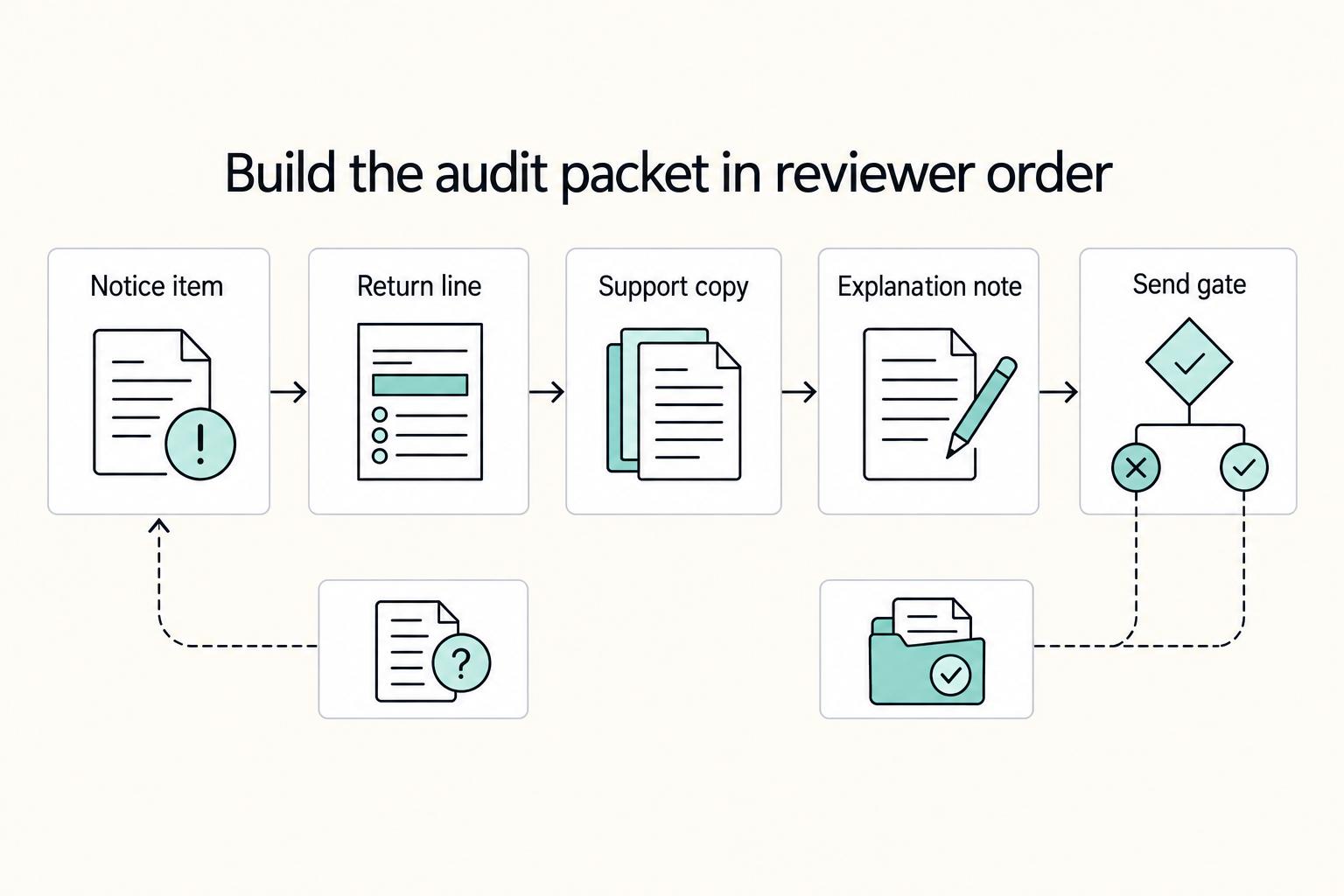
Treat an IRS audit as a records check, not a contest. Your job is to show, item by item, how what you filed ties back to the records behind it.

The Freelance Payment Penalty: A Modeled Audit of Platform Fees, FX Spreads, and Payout Delays
The money rarely disappears through a single, easy-to-spot fee. The real loss is stacked. A marketplace takes its commission, a processor adds a charge for international cards, a bank or payment company converts the currency at a spread, a platform holds the funds before release, and a wire sheds a little to intermediaries on the way in. Each layer looks defensible on its own, but the worker feels the combined result as a smaller deposit and a later payday.