
Quick Answer
Start with a verification-first process and do not transfer funds until your route documents are provable for your case. For turkey citizenship by investment, choose the path with the clearest proof trail, then move through ordered gates: certificate of eligibility, the Article 31(1)(j) residence step, and citizenship filing. In property cases, align land-registry ownership records with DAB and bank-transfer evidence so early defects do not slow later stages.
Turkey citizenship by investment without the guesswork#
Use this guide to verify each step before you commit money, not to compare marketing claims. It focuses on sequence, documents, and decision points that reduce avoidable delays.
That framing matters because this area has been flagged for compliance vulnerabilities. A joint FATF/OECD report from November 2023 addresses vulnerabilities in CBI/RBI programmes, and FATF Recommendations are recognized as the global AML/CFT standard. In practice, expect scrutiny and keep a document trail that matches your transaction history.
What you should expect from this guide#
The goal is to help you reach a practical yes-or-no decision on Turkish citizenship with fewer preventable mistakes. The focus is on what must be true before your next step, not headline benefits. Use that filter throughout.
| Confidence level | How to treat it |
|---|---|
| High confidence | Tied to an official-facing authority, process, or document requirement you can verify. |
| Medium to low confidence | Comes from advisory content and should be verified before filing or paying. |
| Do not rely | Repeated online but not traceable to an authoritative source or filing requirement. |
How to read conflicting claims#
Do not treat all sources as equal. One private advisory source cites a USD 400,000 minimum and a hold commitment of at least 3 years, while a Quora claim cites a million US dollars. That conflict is exactly why unverified summaries should not drive your decision.
If you remember one rule, make it this: do not move funds based on a "standard process" claim alone. Ask which exact document proves the step, which authority issues it, and when it appears in your file.
What this changes in practice#
A verification-first approach changes how you prepare. For example, one private legal-marketing source names a government-approved property valuation report as a checkpoint artifact in property cases. Treat that as a prompt to verify the issuing basis, approval status, and where it appears in the application record.
It also changes how you assess risk. Advisory content mentions failure modes such as incorrect transfer handling and rejection after months of waiting. The point of this guide is to help you avoid preventable mismatches between what was marketed, what was signed, and what the filing actually required.
Separate confirmed rules from advisory claims on day one#
Start with one rule: do not pay, transfer funds, or sign until each step is backed by evidence you can verify for your exact filing path.
Use this two-column reality check from day one.
| What is confirmed | What is advisory or still unverified for Turkey |
|---|---|
| The EU CBI/RBI study (PE 627.128, October 2018) is background context and highlights risk areas like corruption, money laundering, and tax evasion. | Turkey-specific process claims, agency mechanics, and route instructions, including commonly cited references to bodies like the Land Registry Directorate or Ministry of Industry and Technology, are not confirmed. Verify with official Turkish government sources before relying on them. |
| The same study says it is not an official Parliament position, so treat its authority level carefully. | Marketing summaries, advisor playbooks, and "standard process" explanations remain advisory unless tied to route-specific authority and documents you can verify. |
A source can be credible and still fall short as operational proof for your case. Use background material to understand risk, but treat it as context rather than proof of Turkey filing mechanics. Before you pay anything, run this verify-first checklist:
- Which authority is being cited for this exact step?
- What exact document proves the claim?
- Is this instruction specific to your route, or blended from another route?
- If the authority or document trail is unclear, stop and verify before moving forward.
Choose your investment route based on goal and liquidity#
Choose the route you can document cleanly, fund correctly, and hold without friction. In practice, the right route is usually the one with the clearest evidence trail for your case, not the one that sounded simplest on a sales call.
| Route | Core threshold and hold | Liquidity shape | Operational complexity | Verification burden |
|---|---|---|---|---|
| Property | USD 400,000 minimum, with a title deed restriction on resale for at least three years | Lower liquidity in practice because you are tied to a specific asset and resale restriction | Moderate if you can handle property due diligence, land-registry steps, and bank transfers | High: title deed registration, resale restriction, Döviz Alım Belgesi for foreign natural person purchases, and bank transfer records in citizenship-by-property files |
| Fixed capital investment route | USD 500,000 minimum, as attested by the Ministry of Industry and Technology | Capital is committed to the qualifying investment. Confirm exit constraints in the underlying structure | Higher, because the path depends on ministry attestation and certificate handling | High: institutional paperwork, including the certificate of eligibility through the ministry pathway |
| REIF/VC fund route | USD 500,000 minimum, with fund shares not sold for at least three years, as attested by the Capital Markets Board of Türkiye | More passive than property, but still locked by the no-sale period | Moderate to high, with share-purchase proof and regulatory attestation | High: subscription, holding, and attestation records rather than title documents |
Decision rule: if you want direct control of an asset you can inspect and verify through title records, start with property. If you prefer a passive structure and are comfortable with institutional attestations, compare REIF/VC funds and fixed capital.
Where execution friction actually shows up#
Property often sounds straightforward, but the paperwork is strict. In Türkiye, ownership is recognized through land-registry registration, and a preliminary notary contract does not transfer title by itself.
The property route also has a strict money trail. For foreign natural persons acquiring property by purchase, submission of the Döviz Alım Belgesi is mandatory, and citizenship-by-property files also require the buyer-to-seller bank transfer receipt. Before registration, verify that the transfer path, account names, and supporting bank records align with the property file.
CBRT mechanics add a conversion step. Under the cited instruction, relevant FX is sold through a bank to the Central Bank before covered transactions. The eligible currencies for that bank sale are USD, EUR, and GBP. If your funds start in another currency, confirm the conversion handling with the bank early.
Non-property routes shift the friction elsewhere. The fixed capital path relies on Ministry of Industry and Technology attestation and the certificate of eligibility process. The REIF/VC fund path relies on fund-share purchase and hold evidence plus Capital Markets Board attestation.
Pick based on how you want to operate#
If relocation is your priority, property can be a legible route because the asset can also support your housing plan. That does not make it universally easier. It means the evidence chain is tangible. Do not treat possession, reservation, or a notary pre-sale document as equivalent to registered ownership.
If you are mobility-first and do not want to manage a specific property, REIF/VC funds may fit better. The tradeoff is less day-to-day asset visibility and heavier dependence on share, holding, and attestation records.
If you are considering fixed capital, choose it because the underlying investment structure already makes sense to you. The threshold is USD 500,000. The main operational test is whether the ministry attestation and certificate path are clear before you move funds.
Best fit by profile. For relocation planners, property is often the first route to review if you want direct control and can accept lower liquidity. For mobility-first applicants, REIF/VC funds may be a cleaner fit when you want a passive structure and no building-level due diligence.
For U.S.-linked applicants thinking ahead to the separate E-1/E-2 context, prioritize the route whose source-of-funds and ownership records you can explain clearly later. Turkish citizenship and U.S. visa adjudication are separate processes.
Final check before transfer: choose the route with the shortest, most coherent chain from money movement to attestation to filing. If that chain is still unclear, pause and verify before sending funds. Related: How to Write a Professional Bio That Attracts Clients.
Confirm eligibility and family scope before committing funds#
Before you move funds, confirm that your people, documents, and admissibility profile can support the file you plan to submit. This pre-commit check helps you avoid expensive delays later in a process that is often sequential and slower than applicants expect.
Treat family scope as a records check, not a sales phrase#
Eligibility is generally described as extending to dependents or immediate family, but not every edge case is defined here. If your plan depends on anyone beyond the clearly documented core family unit, treat that as unresolved until it is supported by records.
| Pre-funding check | What to confirm |
|---|---|
| Principal applicant identity file | Complete and consistent |
| Civil-status records | Assembled where relevant for any spouse or dependent included |
| Name differences | Reconciled across passports and civil records |
| Baseline admissibility review | Complete, including adult age, criminal or security background, and financial profile |
Verify legal basis and sequencing before assuming timeline#
Use the legal basis as a verification step, not an assumption. Law No. 5901 and an implementing Presidential Decree serve as core programme anchors, but do not assume they settle exact family-edge treatment or every procedural sequence in your case. Confirm the exact basis and required document set being used for your file before you commit funds.
Set a hard pre-commit gate. Do not move funds until identity, dependency, and admissibility checks are complete in writing.
For property cases, include route-specific checkpoints before transfer:
- Immovable valuation report is accepted under Capital Market Board standards
- Three-year title deed annotation is correctly reflected in the file
- You understand early sale is described as a revocation risk in one advisory source
For non-property routes, apply the same gate and verify the relevant legal and document path first. Be clear who is included, on what basis, and with which records, then fund.
Follow the end-to-end timeline from prep to passport#
Treat this process as a sequence of evidence gates, not a single timeline promise. Advisory ranges can help you plan, but movement between phases depends on the file being complete and internally consistent.
| Phase | Planning range or checkpoint | Responsibility (varies by case) | Evidence to confirm before advancing | Common delay trigger |
|---|---|---|---|---|
| Preparation | 1 to 3 months (advisory) | Varies by route and filing setup | Identity and civil records, route choice, draft filing set | Documentation gaps or mismatches |
| Investment execution | 1 to 6 months (advisory) | Varies by route and filing setup | Property route: bank transfer trail, DAB/FCPC, SPK valuation, title deed record, 3-year no-sale annotation. Non-property routes: route-specific proof of investment | Incomplete conversion, valuation, or annotation evidence |
| Pre-citizenship status | Before or with citizenship filing | Varies by route and filing setup | Short-term investor residence permit step under Article 31(1)(j), aligned identity file | Residence-step sequencing not aligned with filing |
| Citizenship filing | Certificate of conformity before submission. Then 3 to 6 months (advisory) | Varies by route and filing setup | Certificate of conformity, complete civil-status and route evidence files | Incomplete or inconsistent supporting files |
| Approval and issuance | 2 to 4 months (advisory) | Varies by case | Approval and passport issuance records | Upstream file issues discovered late |
Plan around the real choke points#
A common timing risk is treating "investment completed" as one event. On the property route, funds movement, CBRT conversion evidence through a Turkish bank, DAB/FCPC, valuation, title registration, and the 3-year restriction note all need to align.
Treat title-deed and no-sale-annotation verification as its own checkpoint in property files. Confirm the record before you move to citizenship filing.
What to verify at each handoff. Do not move downstream until upstream evidence is in hand and consistent.
- Personal-file details match the investment file exactly
- Route evidence is complete for the route you chose
- Certificate of conformity is obtained before final submission
- Article 31(1)(j) residence-step sequencing is aligned before or with filing
Use ranges as planning tools, not promises. A practical planning baseline is 1 to 3 months for preparation and 1 to 6 months for investment execution. Filing and processing are described at 3 to 6 months, and final approval and naturalization at 2 to 4 months. These are advisory ranges, not guaranteed service levels. Plan around evidence milestones, not optimistic calendar assumptions.
Build your document pack before filing day#
Before you file, build one evidence chain that is complete and internally consistent, not a mixed folder of drafts and finals. Keep your personal records separate from route-specific investment records so reviewers can follow the file without guesswork.
Start with a core file, then split by route#
Start with one core folder for identity and civil-status records, then create a separate folder for your investment route. This structure helps you catch mismatches early instead of during later review.
For each file, track a quick checkpoint list:
- issuing body
- final versus draft status
- consistency with related records before submission
Keep property-route evidence in its own pack#
If you are using the property route, keep a dedicated property file with final records, not negotiation drafts. Include the document set referenced in your case, such as DAB, valuation report materials, notarized property contracts if used, and the Certificate of Conformity once issued.
If you are planning around commonly cited figures like a $400,000 minimum purchase and a 3-year holding period, treat them as guide-level inputs and confirm current official requirements before filing.
If your team refers to a valuation report, confirm the exact acceptance standard with your adviser before filing. Do not assume every valuation document will be accepted the same way.
For non-property routes, use the same structure. Keep route-specific proof separate from the core personal file. Confirm the exact document names and issuing authority for your chosen route before submission.
| File bucket | What to include | What to confirm before filing |
|---|---|---|
| Core file (all routes) | Identity and civil-status records | Issuer details and consistency with route documents |
| Property-route file | DAB, valuation report materials, notarized property contracts (if used), Certificate of Conformity (when issued) | Final records use consistent names and details across the property file |
| Non-property route file | Route-specific investment proof documents | Exact document name and issuer for your route |
Use one red-flag rule. Do not file on a partial document chain. If personal records, investment proof, and route evidence do not align, delays can compound at later checks.
Execute the property route without title surprises#
For the property route, the file works when your evidence chain follows the land-registry record, not just negotiation-stage paperwork. Meeting the investment amount alone will not prevent delays if compliance checks find technical defects or mismatched records.
Keep commitment papers and ownership proof in sequence#
Use commitment papers as setup, then anchor the file to the tapu or title deed, which is the official ownership record. Keep the file in order: commitment papers first, then the registered title record, then the rest of the compliance documents.
Before filing, compare documents line by line so names, property identifiers, and dates match. If that chain is inconsistent, the file can be prolonged or returned at the compliance certificate stage.
Run registry-first due diligence before transfer#
Do not rely only on deal documents. At this stage, due diligence means direct registry checks, including whether encumbrances are recorded, such as mortgages, easements, court annotations, or enforcement actions, because these can survive transfer.
| Pre-transfer check | What to confirm | File element |
|---|---|---|
| Encumbrances | Check whether mortgages, easements, court annotations, or enforcement actions are recorded | Registry checks |
| 3-year annotation | Confirm the 3-year sales-prohibition annotation is correctly recorded on the title deed | Title deed |
| Registry match | Confirm the registry details match the rest of your property pack | Property pack |
| Valuation report | Confirm your licensed valuation report meets the acceptance standard expected in your case | Valuation report |
| Certificate sequence | Sequence documents so the Certificate of Conformity step is not blocked by missing or inconsistent records | Certificate of Conformity |
The risk tradeoff is simple. Finding an encumbrance before transfer gives you room to renegotiate or walk away. Finding it after transfer is usually costlier to fix.
Use non-property routes only when they fit your risk profile#
Use the fixed capital investment route or REIF/VC fund route only if you are comfortable with route-specific documentation requirements. In one advisory source, both non-property routes are listed at $500,000 with a 3-year hold, while property is listed at $400,000 with a 3-year hold.
| Route | Advisory threshold | Holding period | Main proof dependency |
|---|---|---|---|
| Property | $400,000 | 3 years | Title deed record, CBRT conversion flow, DAB/FCPC, SPK valuation, no-sale annotation |
| Fixed capital investment route | $500,000 | 3 years | Route-specific qualifying records (the advisory source does not detail the full proof chain) |
| REIF/VC fund route | $500,000 | 3 years | Route-specific qualifying records (the advisory source does not detail the full proof chain) |
The source gives a detailed checklist for property-route proof and lists fixed-capital and REIF/VC routes under the same $500,000 / 3-year framework. Because documentation requirements can vary by route execution, confirm the full citizenship-stage document chain before you transfer funds.
Before you commit funds, ask for the exact citizenship-stage proof chain in writing. Confirm who issues each qualifying document, what 3-year holding evidence will exist, and how your name, amount, dates, and transfer records will appear across the file.
When these routes make sense. The REIF/VC fund route can fit if you do not want direct property ownership and you are comfortable with a $500,000 commitment in advisory materials and a 3-year hold. The fixed capital investment route can fit when you already have specialist legal and financial support for route execution.
A practical decision rule.
- If you want a route with explicitly listed proof artifacts in the advisory source, the property path has a clearer checklist.
- If you are documentation-ready and comfortable with a $500,000 commitment in advisory materials plus a 3-year hold, non-property routes may fit.
- If you want a file you can audit against the listed property artifacts, focus on title, valuation, conversion evidence, and annotation.
Whichever route you choose, the process is still described as linking to the short-term investor residence permit under Article 31(1)(j) before or with citizenship filing.
For a step-by-step walkthrough, see The Best Citizenship by Investment Programs in the Caribbean.
Treat the U.S. pathway as separate from Turkey approval#
Treat this as a two-track plan. Turkish citizenship and a future U.S. E-2 treaty investor visa are related, but they are not the same case.
The U.S.-Türkiye E-2 treaty relationship can be strategically useful because E-2 eligibility is tied to nationality. But Turkish approval does not automatically produce U.S. visa approval. The citizenship file and an E-2 case are reviewed separately, with different evidence expectations.
Plan for separate documentation from the start. On the U.S. side, do not assume one universal checklist across consulates. Some posts may ask for recent domicile history, and documentation often includes a 3-year domicile list, but that is not a universal U.S. rule.
Keep one rule in mind.
- If the U.S. path matters, have counsel map the Turkey file and the E-2 file separately.
- If anyone presents E-2 approval as automatic after passport issuance, treat that as a red flag.
- If timing matters, do not plan around a presumed U.S. approval date.
Prevent avoidable delays with a pre-submission risk screen#
Run a pre-submission defect screen and pause the file if core evidence does not align. The goal is simple: do not file a Turkish citizenship property case with known defects.
For the property route, anchor the file to one rule. Ownership is recognized only upon registration at the Land Registry Directorate. A preliminary real estate contract can show commitment, but it does not transfer ownership.
What to screen before submission#
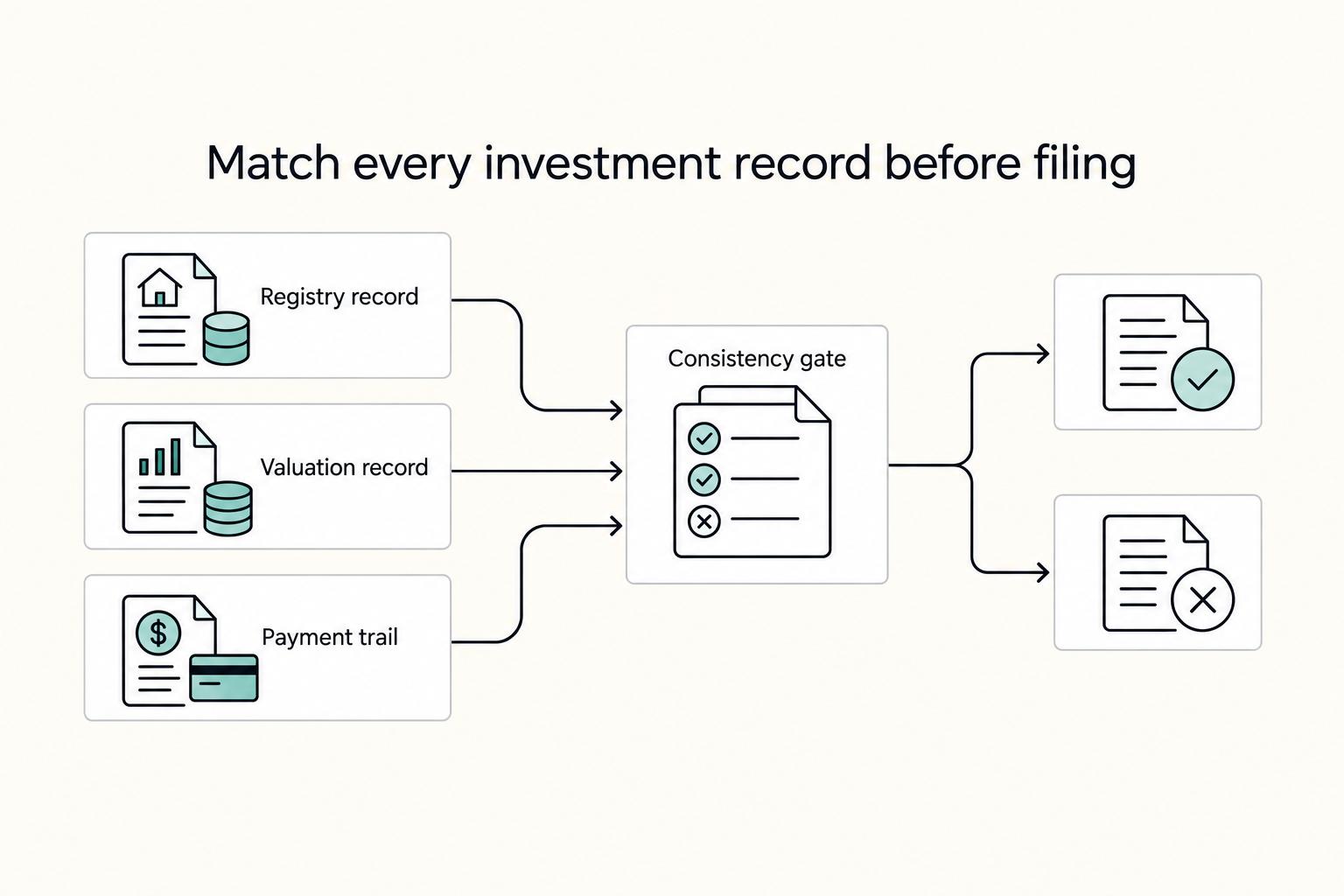
Check that the registry record, valuation record, and payment trail tell the same story.
| Screen item | What to confirm | Record |
|---|---|---|
| Land registry status | No mortgages, liens, or similar restrictions before procedures begin | Land Registry Directorate |
| Ownership evidence | Rely on the registered title deed, not a preliminary contract | Registered title deed |
| Valuation consistency | Make sure report details match the property and transaction details | TADEBIS under GENELGE 2024/2 (01.03.2024) |
| FX conversion evidence | FX is sold through a bank to the Central Bank and the DAB is submitted to the land registry | DAB |
| Citizenship-property payment proof | Include the buyer-to-seller bank transfer receipt in addition to FX conversion evidence | Bank transfer receipt |
| Identity-field match | Make sure the DAB identity fields match the rest of the file | Passport number or foreign ID number |
Do not treat payment proof as sufficient if the conversion path is wrong. Cash or exchange-office conversion is not accepted for these transactions, and DAB submission has been mandatory since 24 January 2022.
Use escalation channels before filing#
If you hit process uncertainty on title-deed, cadastre, or Webtapu steps, use the Alo 181 Call Center before filing. It is an official support channel. Availability is described differently across official pages, so verify current hours before relying on one schedule. TKGM also lists an overseas number: +90 312 410 8 600.
If the issue is substantive, escalate internally with counsel and the transaction team while the file is still editable.
Keep sequence strict. Follow the official order: certificate of eligibility -> residence permit -> citizenship application. Do not file downstream stages while upstream evidence is missing, inconsistent, or being corrected.
Stop and fix if any of these appear:
- title is not properly registered
- DAB is missing, incomplete, or mismatched to buyer identity details
- buyer-to-seller bank transfer receipt is missing for the citizenship-property file
- valuation report and property records do not align
- there is an unresolved lien, mortgage, or similar restriction
- one document chain shows commitment while another implies completed ownership transfer
If any defect appears, stop, reconcile the evidence, and only then move to the next stage. Related reading: A Guide to Real Estate Investment Trusts (REITs).
Before you file, pressure-test your timeline against travel and filing windows with the Tax Residency Tracker.
Plan post-approval compliance if you are U.S.-connected#
Post-approval, your U.S. reporting obligations may continue. Treat this as a coordination checklist to reduce surprises, not individualized tax advice.
Keep FBAR and Form 8938 separate#
If you are U.S.-connected, run FBAR and Form 8938 as two separate checks each year. Filing Form 8938 does not replace FinCEN Form 114, or FBAR, when FBAR is required. The filing tracks are different. FBAR is filed with FinCEN, while Form 8938 is attached to your annual U.S. return.
A practical annual sequence is:
- check whether your foreign accounts create an FBAR filing question
- check whether your specified foreign financial assets are above the applicable Form 8938 reporting threshold under FATCA
- if Form 8938 applies, attach it to your annual return by that return's due date, including extensions
Build a small evidence file while facts are fresh#
Do not wait until filing season to reconstruct account activity. Form 8938 asks for details such as maximum account values and whether foreign deposit or custodial accounts were closed during the tax year, so track this as you go.
Keep a simple year-end file with:
- foreign account records and statements
- a list of accounts added, closed, or still held during the year
- support for the maximum value figures you report
- notes that confirm the correct calendar year or tax year for Form 8938
Before filing, review the IRS comparison chart for Form 8938 versus FBAR so you do not treat overlapping rules as identical. Also verify current-season FinCEN guidance, because additional FBAR extension notices can appear in specific disaster or event contexts.
Final decision checklist before you commit funds#
Do not commit funds until your decision file passes two tests: source relevance and document consistency. A strict pre-funding process is justified, but Turkey-specific route mechanics, thresholds, and authority workflows should be confirmed directly with the relevant Turkish authorities before you proceed.
Choose only after you can explain why. Pick a path only after you have a written comparison of complexity, timeline risk, and verification burden for your own case. If two advisers describe the same step differently, pause and reconcile that conflict in writing before any irreversible action.
Reject weak sources before they shape your case. Treat "official-looking" and "usable for this decision" as different standards. Sources that do not cover Turkish CBI filing procedure should be set aside regardless of how authoritative they appear.
Use a hard filter for every item in your file:
- Is it directly relevant to your next step?
- Is it current enough for a live decision?
- Does it provide action-level guidance, not just archive metadata (for example, "Published Date" and "Archived Date" fields)?
If not, remove it from the decision file before you move money.
Build the artifact pack before the payment pack. Before any transfer, assemble your working artifact checklist and check it for internal consistency across names, dates, and the records you plan to rely on. Then move in phases so mistakes are caught early:
- Verify your logic and source quality.
- Execute only steps supported by documents already in hand.
- Take the next irreversible step only when the file is complete and cross-checked.
- Re-verify at each milestone.
Use a strict stop rule: if a critical item is missing, inconsistent, outdated, or supported only by advisory language, pause and fix it before proceeding.
If you want a second-plan mobility option before committing funds, compare practical relocation pathways in the Visa Cheatsheet for Digital Nomads.
Frequently Asked Questions
What is the minimum investment for Turkey citizenship by investment across different routes?
The only minimum that is clearly established is the real-estate route at USD 400,000. Current thresholds for other routes have not been confirmed, so avoid relying on recycled comparison tables. If you are choosing between routes, verify the exact amount for your route before moving funds.
How long does the Turkey citizenship by investment process usually take in practice?
Treat timeline estimates as advisory, not guaranteed. Some estimates put it at 4 to 6 months, while others say at least 8 months, so a conservative plan is safer. One law-firm source also says the in-person residence-permit and citizenship application steps can be completed within 2 weeks if the investor and spouse stay in Turkey for that window.
Do I need to live in Turkey during the application process?
One advisory source says there is no residence-period requirement, but a residence permit before the citizenship application is mandatory. The same source says both the investor and spouse must be physically present in Turkey for the residence-permit and citizenship application steps. In practice, that means no stated long-stay requirement, but not a fully remote process either.
Can I include my spouse and children in one application path?
The excerpts clearly account for a spouse, including spouse presence and spouse documentation such as a criminal record. They do not fully define child eligibility rules, age limits, or dependency tests. Before committing funds, confirm your family structure against the required civil documents for your route.
What are the most common reasons applications get delayed?
Delay causes are not ranked in any strict order, but there are clear avoidable failure points. Possible delay or rework points include document-chain issues, including apostille or Turkish consular approval, expired records such as criminal records issued outside the last six months, and real-estate file gaps. Property-specific risks include missing Capital Markets Board-authorized valuation at the eligibility checkpoint, assumptions that shared ownership or land will qualify, and direct crypto payment attempts, which are generally treated as not legal in Turkey.
Is Turkish citizenship enough by itself to secure a U.S. E-2 visa?
No. E-2 is an opportunity to pursue, not an automatic result of Turkish citizenship. Treat Turkish citizenship approval and a U.S. E-2 application as separate processes with separate evidence and adjudication.
Which route is usually easier to execute for someone relocating on a tight timeline?
There is not enough publicly confirmed information to claim one route is universally easier. The property path has a stated USD 400,000 threshold plus clear valuation and document checkpoints. But that route also carries execution risks, including potential price manipulation, undisclosed commissions reported around 10% to 20%, and documentation mismatches.
Try a related tool
Researched and edited by the Gruv editorial team. Gruv builds cross-border billing, payouts, and finance-operations software for global businesses.
Sources
- comptroller.war.gov/Portals/45/documents/fmr/Volume_06a.pdftrusted
- congress.gov/114/plaws/publ113/PLAW-114publ113.htmtrusted
- dspace.mit.edu/bitstream/handle/1721.1/42013/226316618-MIT.pdftrusted
- europarl.europa.eu/cmsdata/155728/EPRS_STUD_627128_Citizenship%...trusted
- fincen.gov/report-foreign-bank-and-financial-accountstrusted
- gpo.gov/fdsys/pkg/FR-2016-08-23/xml/FR-2016-08-23.xmltrusted
- irs.gov/pub/irs-pdf/i8938.pdftrusted
- irs.gov/forms-pubs/about-form-8938trusted
Educational content only. Not legal, tax, or financial advice.
Related Posts

The 2026 Global Digital Nomad Visa Index for 50+ Countries
Start with legal fit, not lifestyle filters. The practical order is simple: choose a route you can actually document, then decide where you want to live. That single change cuts a lot of wasted comparison work and stops you from falling in love with places that were never a real filing option.
How to Write a Professional Bio That Attracts Clients
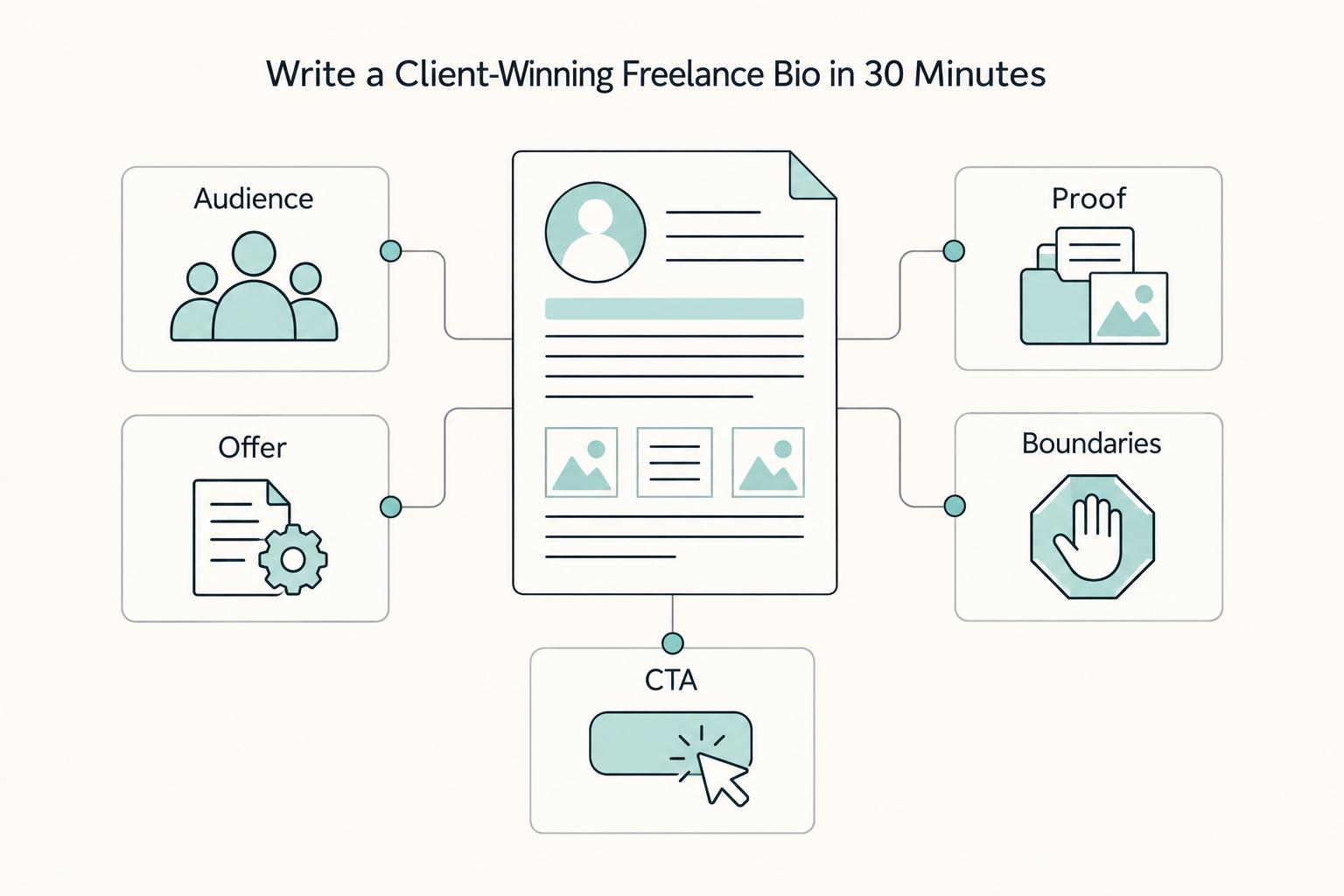
If you want to know **how to write a freelance bio** that is client-focused, write for scan speed, not autobiography. Clients often read your headline before they open your portfolio, and first impressions can form in less than seven seconds. Your opening should show fit, proof, and a clear next step fast.
Second Citizenship for U.S. Citizens: Routes, Tradeoffs, and Ongoing Compliance
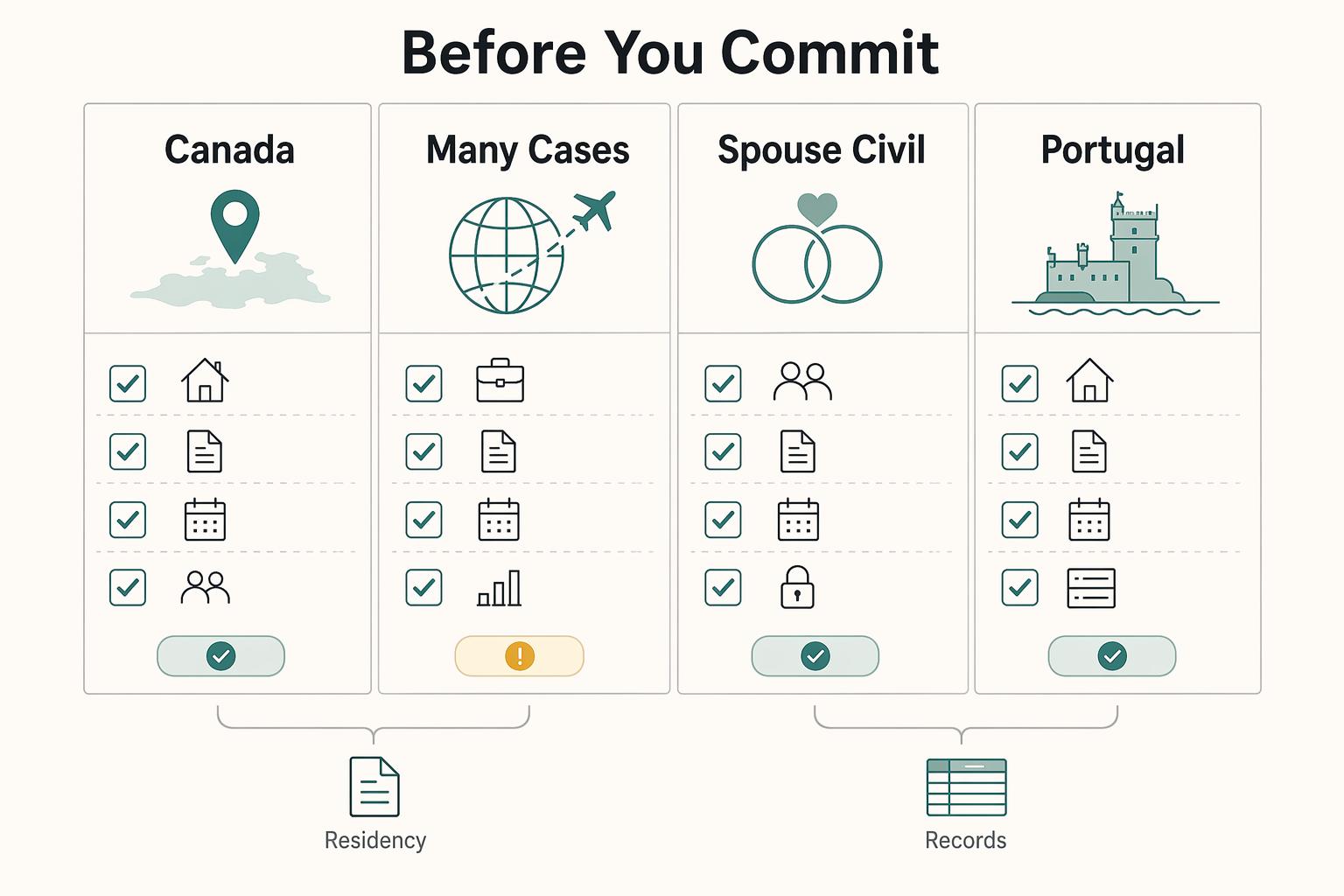
Pick one primary objective before you compare countries. For most people considering a second citizenship as a U.S. citizen, the first decision is not where to apply, but what that citizenship needs to do for you.