

Quick Answer
Travel vaccinations for nomads are best handled as a reusable system you rerun before every move. Start early, separate what is confirmed from what must be verified, run a three-gate decision framework, and keep a show-ready documentation packet. This approach helps you avoid last-minute delays, reduce duplicate costs, and make safer booking decisions for each country move.
You are not behind and you need a system not another vaccine list#
You are not behind, and you need a repeatable system to handle vaccinations on the road, not another generic vaccine list.
Remote moves usually stall when logistics do. Most delays come from unclear checks, scattered records, and last-minute decisions, not lack of effort. This guide gives you a single-session playbook with control points for travel health, vaccinations, and the proof you may need at checkpoints.
Use one trust rule to keep your planning clean: known now versus must confirm.
- Known now means facts you can verify today from official guidance and your own records.
- Must confirm means details that destination programs, airlines, border teams, and long-stay onboarding staff may apply differently for each move.
| Decision lane | Known now | Must confirm before each move |
|---|---|---|
| Clinical readiness | Your current vaccination record and a risk discussion with your clinician | Whether your exact route or stay pattern changes what your clinician recommends |
| Entry and program checks | Baseline destination guidance you reviewed in advance | How your destination authority and transport operators interpret proof requirements |
| Document acceptance | What records you already hold, including official immunization records and any vaccination booklet you use | Which proof format each checkpoint accepts during visa, airline, border, and onboarding checks |
Run this single-session setup before every country move:
- Collect your official immunization records in one folder.
- Review destination and travel health guidance from official sources, and capture only what you can confirm now.
- Book a travel clinic review and bring your vaccination record to the visit.
- Use only official, secure websites when you handle sensitive details. If you check U.S. guidance, verify the
.govdomain and the HTTPS lock. - Build one documentation packet with scan-ready copies and a clean digital backup.
- Set decision gates for go, confirm, and hold so you do not lock flights or housing before verification.
When a client changes your destination after you planned your route, you do not start over. You rerun the same gates, update the packet, and recheck proof acceptance. You end up with a reusable timeline, decision gates, and a documentation packet you can run before every move.
If you want a deeper dive, read The Crypto Cautionary Tale: Why Freelancers Should Be Wary of Crypto Payments.
Turn scattered travel health signals into a go or hold decision#
A vaccination playbook turns scattered travel health signals into a clear go or hold decision before you lock in a move.
Use the known now versus must confirm rule to control sequencing. This is where vaccination planning usually breaks down for digital nomads. People mix security alerts, entry checks, and clinical planning into one messy step, then miss a confirmation that derails the move at the last minute.
A strong playbook separates channels and gives each one a job. You treat security and travel notices as inputs to your risk plan, and medical guidance as a separate track.
| Channel | What it tells you | What you do next |
|---|---|---|
Government pages (for the U.S., look for .gov) and other secure official websites | Official updates and notices from government channels | Capture only confirmed facts in your move checklist |
| Travel Advisories and STEP enrollment | Security context and embassy or consulate update flow | Adjust route risk planning and keep contact paths ready |
| Travel clinic review with your records | Personalized clinical planning for your itinerary and activities | Finalize your vaccination plan and documentation tasks |
| Destination and carrier confirmation | How each checkpoint applies rules in practice | Mark each leg as clear before payment lock-in |
Run the safe default every time#
Use this sequence:
- Start one move file with two columns: known now and must confirm.
- Save official immunization records and current planning notes in that file.
- Share sensitive information only on official, secure websites.
- If you are a U.S. traveler, enroll in STEP for security updates.
- Keep the 24/7 consular help lines in your emergency notes:
+1-202-501-4444(abroad) and+1-888-407-4747(U.S. and Canada). - Book your travel clinic consult before you commit nonrefundable bookings.
- Approve flights, housing, or program fees only after each checkpoint is confirmed.
Build your three-gate vaccine decision framework#
Use a three-gate framework to make go or hold decisions before you spend money.
You already separated signals into known now and must confirm. Now turn that rule into an operating sequence you can run in one sitting, then rerun before each move. The goal is to stop guessing and start deciding with checkpoints.
A gate is a decision stop. You move forward only when you log what you know, what you still need to verify, and who owns the next confirmation.
| Gate | Decision focus | Known now | Must confirm | Output |
|---|---|---|---|---|
| Gate 1 | Baseline readiness at a travel clinic | Your routine status, your records, and your current travel health context | Any follow-up doses or timing constraints your clinician flags | A clinical action list and appointment plan |
| Gate 2 | Legal-entry documentation risk | Your current proof packet and whether any health or vaccine documentation might matter on your route | What your destination (and any transit points) requires, and what documentation formats or issuers are accepted (rules vary by jurisdiction) | A pass or hold decision for bookings |
| Gate 3 | Route and stay exposure risk | Your itinerary pattern, work setup, and likely activity profile | Which destination-specific risks, vaccines, or preventive steps need clinician review | A prioritized clinical review queue |
Run this gate card before every move#
| Task | What to do | Key detail |
|---|---|---|
| Checklist setup | Add a known now line and a must confirm line under each gate | Use one checklist |
| Official updates | Pull official updates from official channels | Include .gov pages where relevant |
| Owner assignment | Add a source owner for each unknown | Clinician, official travel health authority, destination authority, airline, or clinic |
| Booking decision | Lock flights and housing only after Gate 2 shows clear and Gate 3 has no unresolved clinical questions | Gate 2 clear; no unresolved clinical questions |
| Recordkeeping | Store final decisions with your documentation packet | So you can audit changes fast |
Keep everything in one checklist. Under each gate, write what is known now, what still must be confirmed, and who owns that answer. Pull updates from official channels, including .gov pages where relevant. Do not lock flights or housing until Gate 2 is clear and Gate 3 has no unresolved clinical questions, then store the final call with your documentation packet so you can audit changes fast.
When should you start and what happens each week?#
Start as soon as your route looks likely, then run a weekly checklist until departure so your travel prep stays organized.
You now have three gates. This section turns them into calendar actions. You are not waiting for perfect certainty; you are running a rolling plan each week, then making a clear go or hold decision before you lock in nonrefundable bookings.
Use one timing rule: trust current guidance, not memory. CDC guidance carries a January 2025 label, so treat old screenshots as stale. When you check guidance, prioritize official sources, including U.S. government .gov websites where relevant.
Weekly operating rhythm#
| Week block | Primary action | Decision trigger | Output |
|---|---|---|---|
| Planning week | Book a travel health specialist at a travel clinic and gather official immunization records | You have a likely route and tentative departure window | Confirmed consult date and complete records folder |
| Clinical week | Review routine status and discuss trip-specific risk with your specialist | The consult flags gaps or follow-up needs | Written action list and scheduled next appointments |
| Scheduling week | Reserve any needed follow-up visits early and track each booking | Your clinician confirms you need more than one visit | Calendar with firm dates and reminder checkpoints |
| Documentation week | Validate records, confirm accepted proof formats, and register trip details where relevant | Each gate has an owner for remaining unknowns | Show-ready packet plus a go or hold booking decision |
Contingency rule for itinerary shifts#
Routes change, so you need a reset rule. If a destination changes, run a same-day update cycle:
- Recheck current official destination guidance for the new leg, and make sure you are on an official
.govwebsite when relevant. - Reconfirm clinic actions before you move money or dates.
- Update your checklist lines for known now and must confirm.
- Register your trip with the U.S. Department of State when applicable.
How do you verify destination rules without guesswork?#
Verify in layers by starting with itinerary-specific requirement tables and published destination guidance, then confirm ambiguity with the destination's embassy or consulate before you book.
This is where research becomes a booking decision. For every country leg in your route, log what is known now and assign an owner to anything you still must confirm. Keep one rule in view: separate entry conditions from risk guidance.
- Entry conditions affect clearance at checkpoints.
- Risk guidance helps your travel clinic and travel health specialist shape vaccination choices for your itinerary.
Reusable verification script#
| Verification prompt | First check | Final confirmation | What you log |
|---|---|---|---|
| Required for entry | Itinerary-specific requirement tables (when available) and published destination entry guidance | Destination embassy or consulate if wording is unclear | Clear, unclear, or not applicable |
| Recommended by risk | Travel health guidance plus your clinic plan | Travel health specialist review for your route pattern | Action now, action later, or monitor |
| Proof format accepted | Destination guidance and visa instructions | Embassy or consulate if the format rules are unclear | Exact document format to carry |
| Who can issue the certificate | Destination wording on certificate origin | Embassy or consulate confirmation when text stays ambiguous | What the destination will accept (as written) |
Yellow fever branch you should run every time#
Run a separate Yellow fever check even if the rest of your plan looks complete. An itinerary table can show no official certificate requirement for entry, while the same destination flow can still request proof for some visa applicants. When you hit that split, stop guessing and confirm with the appropriate embassy or consulate.
| Scenario | What you may see | Action |
|---|---|---|
| Entry table | No official certificate requirement for entry | Still check whether the same destination flow requests proof for some visa applicants |
| Visa flow | Proof for some visa applicants | Stop guessing and confirm with the appropriate embassy or consulate |
| Restriction snapshots | Dated restriction snapshots | Treat them as context, not truth; recheck before payment and before departure |
Treat dated restriction snapshots as context, not truth. Recheck before payment and before departure. Keep route notes specific by checkpoint so you do not redo work later.
Related: How to Stay Healthy and Fit While Traveling.
Build a proof packet that survives checks across your route#
Build one compact vaccination proof packet, keep it instantly retrievable, and store it separately from tax compliance paperwork.
Verification is only half the job. You also need an execution system that works at real-world checkpoints. Speed matters as much as accuracy. If you cannot produce the right proof fast, a correct plan still fails.
What to include in your show-ready packet#
| Packet item | Why it matters | Show-ready format |
|---|---|---|
| Official immunization records | Gives reviewers a formal history of your vaccinations | Clean PDF plus one printed copy |
| Vaccination booklet copy | Supports situations where a standardized booklet format is expected | Color scan and legible photo backup |
| One-page vaccine index | Lets staff review details quickly | Vaccine name, date, issuing clinic, and document location |
| Verification notes | Preserves your latest guidance checks and open questions | Short log with last review date and pending confirmations |
| Digital backup set | Prevents disruption if one device fails | Offline phone copy plus a secure cloud folder |
Store, share, and separate files with discipline#
Use one folder structure across your devices so you are not hunting for records under pressure. Keep a read-only share copy for airlines or employers, and remove unrelated personal data before you send anything. Share only the proof required for that checkpoint.
| Document/workflow | What it is for | Where it belongs |
|---|---|---|
| Vaccination materials | Travel health documents | Keep in a different vault from tax workpapers |
| Form 8938 | Report specified foreign financial assets when the total value exceeds the appropriate reporting threshold; attached to your annual tax return when required | Alongside your other tax workpapers |
| FBAR (FinCEN Form 114) | Separate filing; some people may need to file it | Alongside your other tax workpapers |
Run this checklist before each move:
- Keep master records in a private folder and a sanitized share folder.
- Mirror both folders on phone, laptop, and cloud storage.
- Label files with plain names that non-medical staff can read quickly.
- Ask a qualified clinician to confirm unclear record entries early.
- Test retrieval in under a minute before departure day.
Control cost and uncertainty with a planning-grade checklist#
Budget for variability first, then sequence decisions so you pay only for vaccinations you truly need right now.
With your proof packet set, move to financial control. The goal is predictable execution, not the cheapest sticker price. You stay in control when your travel health plan matches your route and your records.
Costs for Typhoid fever and Rabies vary across providers and markets, so treat public pricing examples as rough signals, not commitments. Build your budget in ranges, then confirm current pricing locally with each travel clinic before you book. Use destination health guidance on an official .gov website as your baseline planning reference, and verify you are on an https page before you rely on details.
| Decision step | What to do | Cost risk you avoid |
|---|---|---|
| Start with trusted guidance | Review destination guidance on an official .gov site, then list only route-relevant vaccinations | Buying low-priority items too early |
| Compare clinics | Request itemized quotes (vaccine, consult, admin) from at least two travel clinic options | Hidden fees and bundle confusion |
| Sequence by priority | Book any administratively required items first (where applicable), then risk-based recommendations | Spending budget before critical tasks |
| Bring full records | Share official immunization records at consult | Duplicate dosing from incomplete history |
Treat validity tracking as an operations workflow tied to your move calendar. Keep one tracker for Yellow fever, Hepatitis B, and COVID-19 status that includes issue dates, document location, and the next review checkpoint from your clinician. Recheck before each border leg, not only before your first departure.
If you add a new country after booking flights, your tracker tells you what to reconfirm, your records prevent repeat vaccinations, and your budget stays steadier because you follow sequence instead of reacting under pressure.
Run this checklist today#
- Verify destination guidance and your route assumptions.
- Book a consult with a travel health specialist or travel clinic.
- Assemble and pre-share clean immunization records.
- Confirm proof format acceptance with your carrier or program.
- Set reminder checkpoints on your move calendar for rechecks and updates.
- If route rules change often, cross-check visa timing with Global Digital Nomad Visa Index.
Treat this as a reusable system for decisions, timing, and proof#
Treat this guide as a reusable system for decisions, timing, and proof control, not a one-time vaccine list.
Build the process into your relocation workflow. Consistency wins. You reduce risk when you rerun the same checks before every move instead of relying on memory from your last destination.
Expect variation across countries and programs, including how policies are written and how they are applied in practice. Plan for that reality: verify again, document again, and decide with current information.
Reuse this operator loop every move#
- Start each move by checking official public health and entry guidance for your destination, then list what you still need to confirm locally.
- Bring your route plan to a qualified health professional and turn guidance into a dated action list.
- Update your official immunization records after each appointment, then store clean share copies.
- If a route checkpoint asks for specific proof, confirm early what format is accepted and where you can obtain it.
- Log each decision, owner, and next review date so your system stays reusable.
If you manage full relocation operations, pair this health workflow with visa planning so timelines stay aligned. Use the digital nomad visa index when you compare country options.
Run the checklist now, then get expert support early when rules, coverage, or program interpretation varies by market.
Frequently Asked Questions
How early should digital nomads get travel vaccinations before departure?
Start as soon as your route looks likely. Book the travel clinic consult early so you have room for follow-up doses, schedule changes, and documentation checks. This keeps your move timeline from getting compressed.
What is the difference between required and recommended travel vaccines?
A required vaccine ties to entry rules set by a destination (and sometimes a carrier or program). A recommended vaccine supports travel health based on your itinerary, activity pattern, and exposure risk. Handle required items like compliance tasks, then make risk-based choices with a travel health specialist.
Which travel vaccines are most commonly discussed for digital nomads?
Travel vaccine guides often mention vaccines like Hepatitis A and Japanese encephalitis, alongside other route-specific options. Many nomads also start by reviewing routine and recommended protection status separately from travel vaccines. Build your shortlist from your route and your clinician conversation, not a generic internet list.
Do I need proof of vaccination when traveling and where might I be asked?
Sometimes, yes, and where you are asked depends on the destination and your route. You may be asked during check-in, border control, visa processing, or long-stay onboarding. Plan as if you might be asked and keep official immunization records in a digital format you can access quickly, plus a printed copy when practical. Before your trip, check destination guidance and any travel alerts.
When do I need a specific clinic to issue official proof?
If destination guidance says proof must be issued in a specific format or by a specific type of clinic, treat that as a book-early item. Confirm the exact wording before you pay, because the clinic setup can affect whether your documents are accepted. If the wording is unclear, confirm with the destination authority and your travel clinic so you are not relying on interpretation.
How should I organize official immunization records for multi-country travel?
Keep one clean packet with official immunization records and a one-page vaccine index. Maintain a private master set and a sanitized share set so you can send proof without exposing unrelated data. Before each move, relabel files so non-medical staff can verify them fast.
How much do travel vaccines cost and how long do they last?
Costs vary by provider, location, and consult structure. Request itemized quotes from each travel clinic. Keep your records current to avoid duplicate dosing and repeat consult costs. For duration and booster timing, rely on your clinician’s schedule and put your next review checkpoint on the calendar.
Try a related tool
Researched and edited by the Gruv editorial team. Gruv builds cross-border billing, payouts, and finance-operations software for global businesses.
Sources
Educational content only. Not legal, tax, or financial advice.
Related Posts

The 2026 Global Digital Nomad Visa Index for 50+ Countries
Start with legal fit, not lifestyle filters. The practical order is simple: choose a route you can actually document, then decide where you want to live. That single change cuts a lot of wasted comparison work and stops you from falling in love with places that were never a real filing option.
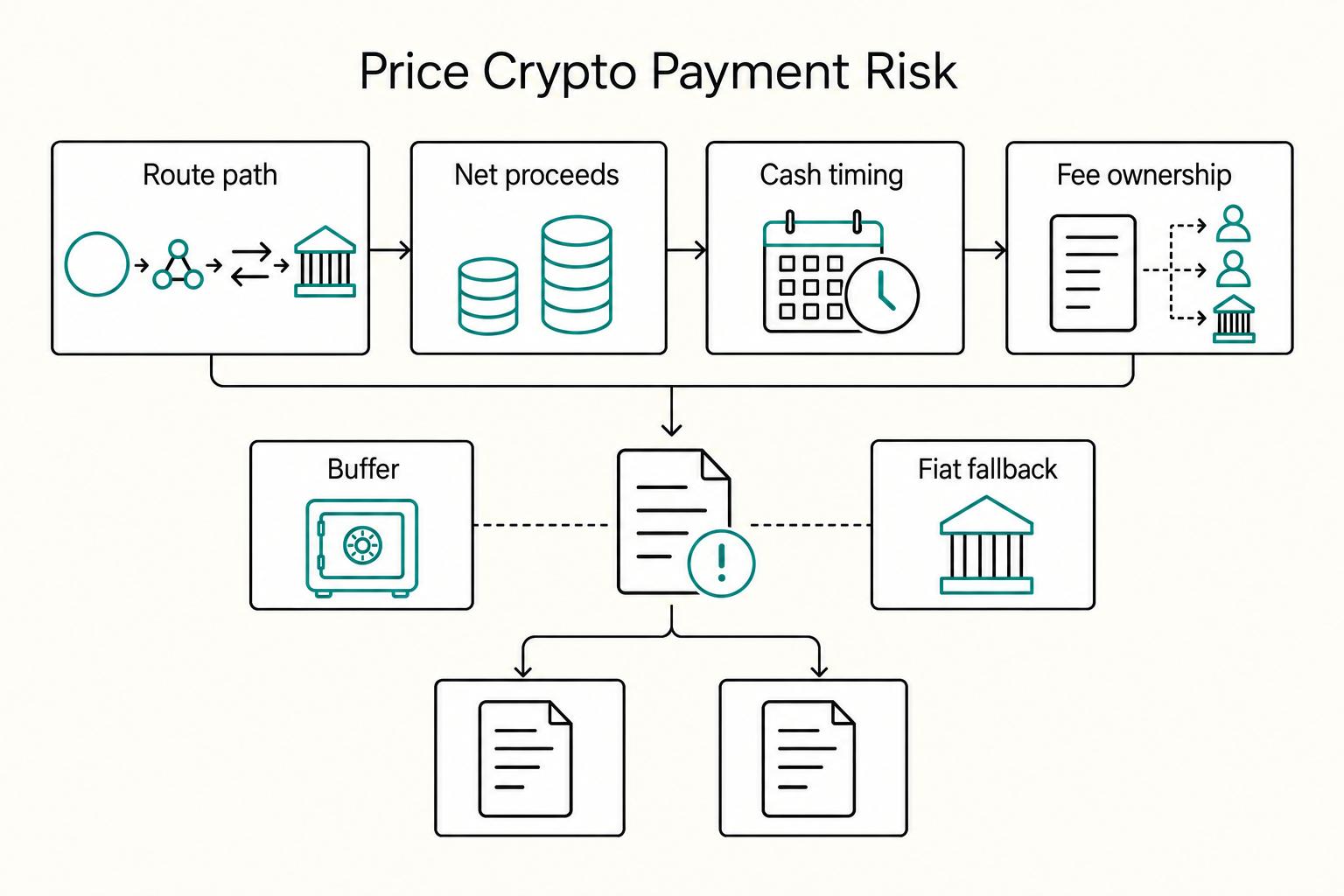
Freelance Crypto Payments That Protect Cashflow and Reduce Disputes
Crypto payments make sense only when they improve how reliably you get paid after you plan conversion, compliance, and recordkeeping up front. They can reduce friction in some international setups where traditional platforms add fees, restrictions, or extra steps. They also move risk onto conversion timing, exchange-fee exposure, and documentation quality, so use a simple acceptance test before you agree:

How Remote Professionals Stay Healthy During Long Stays Abroad
Use this sequence before workload, housing, and travel friction make health tasks harder to execute. If you are traveling for months, treat this as four pass-fail gates. A gate is closed only when you have a written output you can verify.