
Quick Answer
Yes - treat EB-5 as a dual-risk decision, not a visa purchase. First confirm you can lock up $800,000 or $1,050,000 in at-risk capital and still absorb downside. Then choose the filing track that matches your role: Form I-526 for a standalone business or Form I-526E for a regional center offering. Before wiring funds, verify a credible route to 10 full-time U.S. jobs and assemble a lawful source-and-path record set that reconciles from origin to transfer.
Start With a Fit Test Before You Compare EB-5 Projects#
Start with a simple fit test: if locking up capital at this level would strain your flexibility, this is probably not the right move right now. This is a high-risk, generally illiquid investment. Its immigration outcome is separate and never guaranteed.
You are looking at a required investment of $1,050,000 at the standard level or $800,000 at the reduced level. That investment must tie to a plan that creates 10 full-time jobs for qualified U.S. workers. Before you compare projects, confirm that this fits your risk tolerance, timeline, and fallback plan.
Know the terms before you assess fit#
| Term | Article definition | Text emphasis |
|---|---|---|
| At-risk capital | Funds must be invested in a new commercial enterprise tied to job-creating activity | Not parked as protected principal |
| Illiquid investment | You may not be able to exit quickly | Access to your capital can be limited for a long period |
| Investment risk | The project can underperform and returns can disappoint | Loss can be substantial, including total loss |
| Immigration risk | Even with an approved Form I-526 or I-526E, visa issuance is a separate decision | Immigration outcome is separate and never guaranteed |
| Opportunity cost | Capital committed here is capital you cannot deploy to your business, other investments, or another mobility strategy | Capital committed here is unavailable for other business uses |
- At-risk capital: Your money cannot sit there as protected principal.
- Illiquid investment: You may not be able to exit quickly, and access to your capital can stay limited for a long time.
- Investment risk: The project can underperform, and loss can be substantial, including total loss.
- Immigration risk: Even an approved Form I-526 or I-526E is not the final immigration decision.
- Opportunity cost: Capital committed here is capital you cannot use for your business, other investments, or another mobility strategy.
Your go/no-go screen#
Use this as an intake filter, not a quick self-check. If you answer "no" or "not sure" on more than one item, pause before moving forward with any project review.
| Screen item | Question to answer | Key detail |
|---|---|---|
| Capital lock-up | Can you commit $800,000 or $1,050,000 without a fixed repayment date? | Investment must be expected to remain invested for at least 2 years and may remain tied up longer |
| Loss tolerance | Can you absorb a major loss, including total loss, without destabilizing your core financial plan? | Major loss can include total loss |
| Dual-risk planning | Do you have one fallback plan for investment underperformance and a separate fallback plan for an immigration setback? | Use separate fallback plans for the two risks |
| Compliance timing | Can you manage process deadlines? | Includes the two-year conditional period and the 90-day period before card expiration to file for removal of conditions |
| Family fit | If your spouse and unmarried children under 21 are included, does your family timeline still work? | The process is multi-step |
- Capital lock-up: Can you leave $800,000 or $1,050,000 invested without counting on a fixed repayment date, knowing it must be expected to remain invested for at least 2 years and may stay tied up longer?
- Loss tolerance: Could you absorb a major loss, including total loss, without destabilizing your core plan?
- Dual-risk planning: Do you have one fallback plan for project underperformance and a separate one for an immigration setback?
- Compliance timing: Can you stay on top of the two-year conditional period and the 90-day period before card expiration to file for removal of conditions?
- Family fit: If your spouse and unmarried children under 21 are included, does the timeline still work for everyone?
If your hesitation is mainly about risk tolerance, do not let residency goals override that signal. If the issue is that you may need a different operating route first, compare alternatives like the E-2 Treaty Investor Visa.
The non-financial return you are evaluating#
| Likely upside | Tradeoff you accept | Best fit signal | Verify before you assign value |
|---|---|---|---|
| Potential ability to live and work in the U.S. | High capital commitment plus separate project and immigration risk | You want location flexibility in the U.S. | Current filing requirements and whether you qualify at the standard or reduced amount |
| Spouse and unmarried children under 21 can be included | More documentation and tighter household timing coordination | You are planning as a household, not only for yourself | Family document readiness and timeline alignment |
| Platform for U.S. business presence | Capital committed here is unavailable for other business uses | You expect concrete business value from U.S. presence | Whether expected business upside justifies the opportunity cost |
| A regional center path with a defined authorization timeline | You still carry both investment and immigration risk | You are evaluating a regional center route for your plan | Program authorization timing, currently cited through Sept. 30, 2027 |
If you still land on yes, move to mechanics: which filing path fits, how capital must be structured, and which dates actually control the case.
If you want a deeper dive, read The 2026 Global Digital Nomad Visa Index: 50+ Countries Compared.
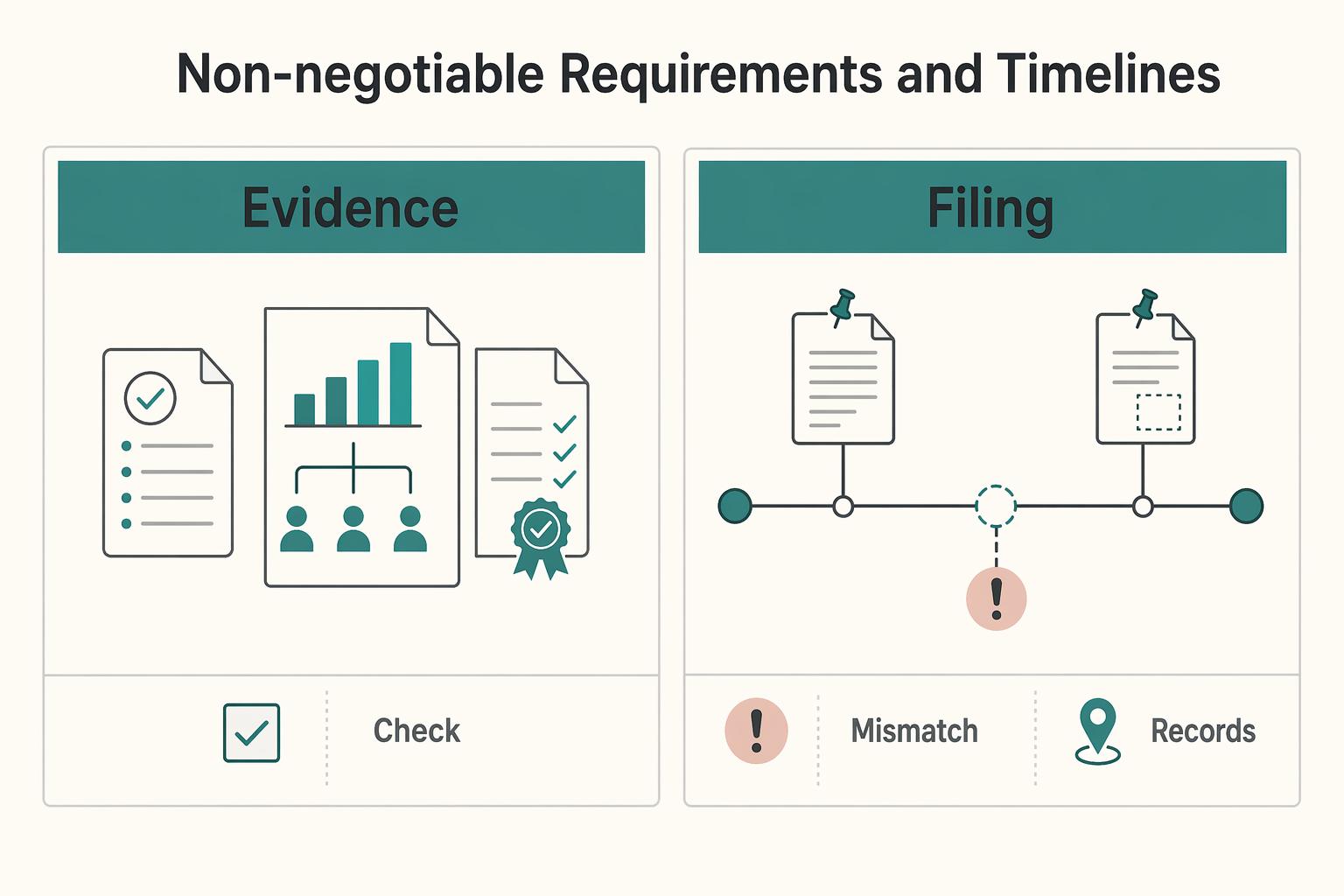
The Core Mechanics: Non-Negotiable Requirements & Timelines#
An EB-5 case turns on sequence and evidence, not marketing language. Many avoidable problems come from filing in the wrong order or building evidence too late. Use these definitions as your baseline:
- Targeted Employment Area (TEA): A rural or high-unemployment area. If you are relying on TEA status, verify the current threshold rather than stale figures, especially with the inflation-adjustment cycle beginning January 1, 2027.
- At-risk capital: Your funds must be genuinely exposed to investment gain or loss, not protected by guaranteed repayment.
- New commercial enterprise (NCE): A qualifying for-profit business formed for ongoing lawful business activity.
- Conditional permanent residence: Your status is conditional first, for a two-year period.
- Condition removal (Form I-829): You file within the 90-day period immediately preceding the second anniversary of conditional residence. Plan around that window, not a rough drafting shortcut.
| What you file | What you must prove | What can delay you | What evidence to prepare now |
|---|---|---|---|
| Form I-526 (standalone) or Form I-526E (regional center) | Qualifying investment into the NCE and a credible path to required job creation | Weak eligibility documentation, or trying to file I-526E before required Form I-956F is filed for the offering | Organized investment and offering records, plus TEA support if claimed |
| Form I-485 (if a visa is immediately available) or DS-260 (after petition approval) | Ongoing eligibility for adjustment or immigrant visa processing | Visa availability and priority-date constraints | Core civil and immigration records for the filing path you will use |
| Conditional residence period | Investment remains in place as required and the project continues toward job creation | Execution or documentation gaps that weaken later I-829 evidence | Periodic project and job-creation records that support the later I-829 filing |
| Form I-829 | Investment remained in place as required and jobs were created, or can be expected within a reasonable time | Missed filing window or weak job evidence | Evidence that investment remained in place and the required jobs were created, or can be expected within a reasonable time |
Before you commit funds, pressure-test job creation. You need a documented, credible path to 10 full-time jobs for U.S. workers tied to your investment. Ask:
- Which records will support the jobs claim later at I-829?
- Whether the timeline is realistic or depends on late-stage execution near the end of the two-year period.
- Whether the sponsor can show a complete trail from offering documents to job-creation evidence.
Warning signs include:
- The sponsor describes job creation in broad terms but cannot show how the proof will be presented at I-829.
- A regional center offering cannot confirm required I-956F filing before any investor files I-526E.
- Reporting practices are vague, infrequent, or inconsistent with the project plan.
The governance changes signed on March 15, 2022 increased what you should verify. They did not make any project inherently safe. In regional center cases, USCIS audits each designated regional center at least once every five years, and reporting duties are part of the operating reality. Before you commit, verify:
- Who handles investor reporting and how often you will receive updates.
- How clearly the regional center explains its audit and compliance history.
- Which documents you will receive on fund deployment, project progress, and job tracking.
- How schedule slips are disclosed and when investors are notified.
Keep the stages separate in your mind: I-526 or I-526E approval does not guarantee visa issuance, admission, or adjustment approval. Treat petition filing, visa or adjustment processing, and condition removal as separate proof stages, each with its own failure points.
With the mechanics clear, the next real decision is structural: do you want to run the business yourself or rely on a sponsor to carry execution? Related: 183-Day Rule Explained: Stop the Tax Myths Before They Cost You.
Direct Investment or Regional Center: Choose by Control and Workload#
Choose based on how much control and execution responsibility you want to carry. If you want to run a U.S. business yourself, the standalone path can fit. If your priority is residency with less day-to-day operating load, a regional center can fit. In either case, you still carry both investment and immigration risk. This choice changes your filing form, job-counting method, management role, and the evidence you will need again when removing conditions.
Define the paths#
A direct investment, also called the standalone pathway, means your investment must support direct jobs inside the new commercial enterprise (NCE). You file Form I-526.
A regional center is a USCIS-designated economic unit that promotes economic growth. In that pathway, you file Form I-526E. Immigrant visas under the Regional Center Program are authorized through Sept. 30, 2027.
Use these terms precisely:
- Direct jobs: Jobs held inside the NCE or its subsidiaries.
- Indirect jobs: Jobs outside the NCE that may be counted in the regional center context.
- Induced jobs: A type of indirect job tied to worker spending on goods and services.
- Active management: Day-to-day managerial control.
- Policy-level role: Governance or policy formulation rights rather than daily operations.
A policy-level role is not zero involvement. EB-5 still requires investor engagement through day-to-day control or policy formulation.
Compare the real choice#
| Selection criterion | Standalone direct | Regional center |
|---|---|---|
| Control rights | Can involve direct operational control over business and hiring decisions. | Often policy-level equity-holder rights rather than daily control. |
| Operational workload | Often high: you build, run, and document the business. | Often lower daily operations for you, but you still need independent sponsor and project diligence. |
| Job-creation method | Direct jobs inside the NCE. | Direct jobs plus indirect or induced jobs may be counted in this context. |
| Documentation burden | You maintain business and employment records to support later filings. | You still provide required investor evidence and rely on sponsor and project records for deployment and job evidence. |
| Capital return path | Depends on business performance and your deal terms. | Depends on project terms and sponsor execution. USCIS designation is not an endorsement and does not remove investor risk. |
| Who bears execution risk | Largely your operating team and business execution. | Largely sponsor and project managers, while your immigration outcome depends on their execution and reporting. |
The tradeoff is straightforward: standalone gives you more control and more operational burden. A regional center can reduce your daily operating role, but it increases your dependence on the sponsor.
Choose standalone if#
- You already plan to run a U.S. business and can take real managerial responsibility.
- Your model can produce at least 10 full-time jobs inside the NCE on a credible timeline.
- You can maintain a clean evidence trail from investment through operations and hiring.
- Pause if your jobs model depends on jobs outside the NCE.
- Pause if management or governance rights are unclear in your deal documents.
Choose regional center if#
- Your main goal is U.S. residence, not operating a U.S. company day to day.
- You are comfortable with a policy-level role instead of daily managerial control.
- The sponsor can clearly explain how direct, indirect, and induced jobs will be documented.
- Pause if anyone treats USCIS regional center approval as proof that the investment is safe or endorsed.
- Pause if reporting, fund-deployment records, or job-evidence tracking are vague.
Once you choose a path, the work shifts from structure to verification. That is where due diligence tells you whether the project, operators, and evidence plan can hold up over time. For a related household question, see Can My Foreign Spouse Live with Me in the US on an E-2 Visa?.
Your Due Diligence Framework: Vetting the Investment#
Verify first, then subscribe. If a deal does not clear basic diligence, do not fund it. Regional center approval is not government approval of investment quality, does not guarantee securities-law compliance, and does not eliminate investor risk. EB-5 capital must remain at risk, and private-placement terms can leave you with low liquidity and meaningful loss exposure.
Start with the gating check for regional center offerings. Confirm that the sponsor can show Form I-956F was filed for that specific offering before any investor files Form I-526E. Then re-check status on both the USCIS approved list and the USCIS terminations page right before you commit. USCIS also says its published approved list may not be complete, timely, or accurate, so do not rely on old marketing materials.
Five checks before you subscribe#
| Workstream | Documents to request | Pass signal | Pause or fail signal |
|---|---|---|---|
| Sponsor integrity | Principal bios, organizational chart, litigation and regulatory disclosure list, broker or adviser disciplinary-history details, proof of current regional center status | Principals, selling agents, and entities match across documents; disclosures are complete; status re-verifies on USCIS pages | Unresolved litigation with weak explanation, missing disclosures, disciplinary history you cannot reconcile, or "trust us" answers instead of records |
| Project economics | Comprehensive business plan, sources-and-uses schedule, capital-stack summary, financial model, third-party market or feasibility materials if used | Capital stack is clear, assumptions are readable, and the project does not depend on best-case projections to function | Unclear senior debt or equity mix, funding gaps, or repayment assumptions that work only if everything goes right |
| Job-creation defensibility | Full economic impact report, underlying assumptions or input sheet, business plan, budget and spend schedule, independent review memo if available | Methodology is transparent and consistent with the plan, and key inputs tie back to real budgets or operating assumptions | Report is summary-only, inputs are opaque, or the model breaks if timing, revenue, or spending slips |
| Legal structure | Private placement memorandum or offering memo, subscription agreement, NCE operating or partnership agreement, agreement between the NCE and JCE, conflict disclosures, fee schedule | You can trace where your money goes, who controls each entity, and what rights and restrictions you actually receive | Path of funds is hard to follow, related-party roles are obscured, or fee layers are not clearly disclosed |
| Exit pathway | Exit or repayment summary, maturity schedule, waterfall or distribution terms, risk factors, transfer or redemption restrictions | Exit is framed as a target outcome with stated risks, and the assumptions are understandable | Return timing is described like a promise, liquidity is assumed, or there is no credible explanation of how capital could come back |
Pressure-test the job evidence#
Treat the jobs model as evidence to test, not a headline number to trust. USCIS requires a credible, comprehensive business plan and job estimates based on economically and statistically valid, transparent methods. Ask what drives the model, then check whether those inputs line up with the business plan, budget, and capital stack.
For a regional center deal, request the full economic report and have independent counsel or an economist test it against the offering documents. If the model depends on aggressive revenue ramps, delayed spending treated as timely, or assumptions without independent validation, treat that as both immigration risk and investment risk.
Questions for your counsel and the project team#
- Has Form I-956F been filed for this offering, and can you show filing evidence? Ask counsel to confirm any current filing prerequisites before you subscribe.
- Who controls the NCE and the JCE, and are they affiliated?
- What third-party reports were used, and which red flags remain unresolved?
- What specific event is expected to return capital: sale, refinancing, or operating cash flow?
- What restrictions apply if you need liquidity earlier than expected?
- Who represents you, and who is paid by the project or its affiliates? If the same network introduces the deal, broker, and lawyer, ask for conflict disclosures in writing.
If you cannot get clear answers and matching documents before funding, treat that as a no-go signal.
For a step-by-step walkthrough, see Japan Digital Nomad Visa Guide. If you are weighing EB-5 timelines against relocation tax exposure, use the Tax Residency Tracker to map when your filing obligations may change.
Mastering Your Compliance Burden: Source of Funds#
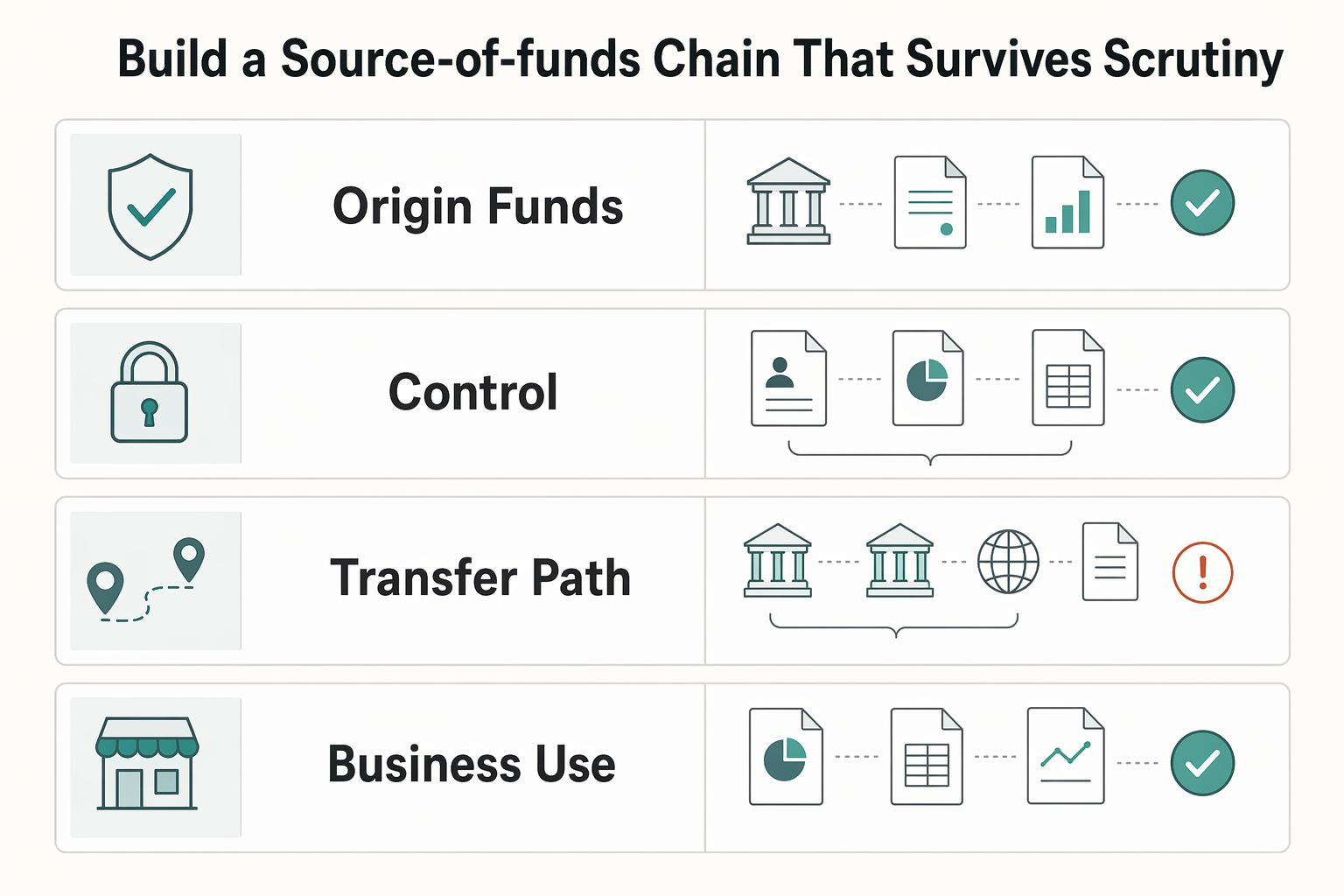
A strong project will not save a weak source-of-funds file. You must show a lawful, traceable chain from where your money originated to where it entered the EB-5 investment structure. This is not just a net-worth exercise. USCIS treats lawful source and path of funds as separate proof questions, and bank letters or account statements alone are not enough.
Build the file as one evidence chain with four linked parts: origin of funds, movement trail, records that explain key transfers, and final transfer into the investment structure. Form I-526E must include the required initial evidence at filing. The instructions reference tax returns from the last 7 years. USCIS has also said no universal lawful-source lookback period applies, so earlier records may still be necessary when the trail starts earlier.
| Fund type | Examples of evidence that can help | Common failure points | How to strengthen the file |
|---|---|---|---|
| Salary or bonus | Personal tax returns and deposit records that align with claimed earnings | Deposits that exceed reported income, missing tax years, or cash movement without records | Reconcile income records, tax filings, and bank credits by date and amount |
| Asset sale | Records supporting the source of capital from the sale and where proceeds were deposited | Unclear ownership, sale price that does not match deposits, or third-party routing gaps | Link ownership records, sale documents, and receiving-account entries in one timeline |
| Business distributions | Foreign business registration records, ownership records, and business tax records tied to distributions | Company records that do not match ownership claims, or distributions unsupported by business or tax records | Tie ownership documents to distribution approvals and receiving-bank entries |
| Gift or inheritance | Transfer records to you plus records supporting the donor or estate source | Transfer is documented but donor or estate source is not | Document both layers: donor or estate source and transfer into your account |
| Loan (if applicable) | Loan terms plus proof collateral is your asset | Unsecured debt, or debt tied to enterprise assets instead of your assets | Document the collateral chain, disbursement path, and core repayment terms |
Mixed funds#
Mixed funds are a common trouble spot. If you are funding from multiple sources or a commingled account, identify each source. Do not submit a long bank statement alone and expect the officer to reconstruct the story. Prepare a deposit-level schedule showing each source, each amount, and which amounts were in the end deployed into the investment. Before filing, run this sequence to reduce denial risk:
- Build a pre-file document map from origin to final transfer.
- Run a consistency check across names, dates, amounts, and certified English translations.
- Ask your attorney for a gap review focused on unexplained deposits, missing ownership records, and any monetary judgments within the past 15 years.
This pairs well with our guide on A Guide to the IRS Offer in Compromise (OIC) Program.
Conclusion: Your Investment in Autonomy Demands Uncompromising Due Diligence#
Treat EB-5 as a major capital-allocation decision, not a visa purchase. You are managing two separate risks at the same time: investment-performance risk and immigration-outcome risk. USCIS explicitly tells investors to do independent research and consult a financial professional before committing funds. Before you file, run three hard tests:
- Eligibility test: Verify a lawful source and path of funds package with records that reconcile. Confirm the correct minimum applies to your case, either $800,000 or $1,050,000, and that your capital will be placed at risk in a new commercial enterprise tied to 10 full-time jobs.
- Financial model test: Stress-test the deal against delays, cost increases, and slower revenue. If repayment or project viability depends on optimistic assumptions, treat that as a pause signal.
- Operator test: Verify track record across petition stages, not marketing claims. Confirm the team can support the job-creation evidence that may be needed later for Form I-829, and remember that regional center designation is not government approval of investment quality or safety.
After you invest, keep managing the file. Form I-526 or I-526E approval does not guarantee visa issuance, and visa issuance does not guarantee U.S. entry. Track material events, including regional center termination, debarment, or other major project changes that may require amendments to maintain eligibility. If you become a conditional permanent resident, calendar the two-year period. Also calendar the 90-day period before the second anniversary for your I-829 filing window, because missing that window can cost status.
Decision checkpoint#
Use this as a working filter, not an official USCIS framework.
| Decision | When the article says it fits |
|---|---|
| Proceed now | Your funds trail is defensible, the job-creation approach has independent review, and your downside case is acceptable |
| Proceed with conditions | Gaps are specific and fixable before filing |
| Defer, pause, or exit the project path | Records do not reconcile, job creation relies on aggressive assumptions, or anyone effectively promises both visa success and investment return |
Proceed now if your funds trail is defensible, the job-creation approach has independent review, and your downside case is acceptable. Proceed with conditions if gaps are specific and fixable before filing. Defer, pause, or exit the project path if records do not reconcile, job creation relies on aggressive assumptions, or anyone effectively promises both visa success and investment return. Keep a residency plan you can document, monitor, and adjust as the facts change.
For a founder-focused comparison, see O-1 Visa for Extraordinary Ability in the US for Independent Professionals.
If this move will also change how you collect client payments and run cross-border operations, talk to Gruv to confirm supported workflows for your markets.
Frequently Asked Questions
What are the biggest risks in the EB-5 immigrant investor program?
The two core risks are separate: immigration-outcome risk and investment-performance risk. Before you invest, verify what you can control: your lawful source of funds, the project’s job-creation model for 10 permanent full-time jobs, and, for a regional center offering, that Form I-956F was filed before any Form I-526E filing. You cannot control USCIS adjudication, Department of State visa issuance, or whether the project performs as projected after your capital is committed. Walk away if anyone presents both your immigration result and your capital return as effectively assured.
How do I choose a Regional Center I can actually trust?
Use a four-part filter: USCIS standing, project execution history, fee transparency, and independent review. Confirm the regional center appears on the approved list, check the terminations page, and confirm the offering ties to a project with a filed Form I-956F. Then test execution reality, not marketing. Ask how comparable projects were delivered, how milestones were met, and how job creation will be documented for condition removal. Walk away if fee disclosures are vague, key documents appear only after pressure, or the sponsor treats USCIS approval as proof of investment quality or safety.
What is a Targeted Employment Area, and why does it matter?
A TEA is a rural area or a high-unemployment area. TEA status can affect whether the lower minimum investment applies, so verify the current amount and the project’s TEA basis with counsel before filing. Walk away if the TEA claim is outdated, unsupported, or too loose to defend.
Can your case still be denied after you invest?
Yes. Form I-526E is the petition for a regional center investor, and approval still does not guarantee visa issuance. If you are admitted or adjust status, you first receive conditional permanent residence for a two-year period, then use Form I-829 in the 90-day period preceding the second anniversary to request removal of conditions, where job-creation proof remains central. To lower risk, keep a strict prevention checklist: complete lawful source-of-funds documentation and project records that support job-creation execution. If either your source-of-funds documentation or the project’s job-creation evidence is not defensible, the better move is to walk away before investing.
Try a related tool
Researched and edited by the Gruv editorial team. Gruv builds cross-border billing, payouts, and finance-operations software for global businesses.
Sources
- congress.gov/crs_external_products/R/PDF/R44475/R44475.12...trusted
- congress.gov/crs-product/R44475trusted
- ecfr.gov/current/title-8/chapter-I/subchapter-B/part-...trusted
- investor.gov/introduction-investing/general-resources/new...trusted
- investor.gov/introduction-investing/general-resources/new...trusted
- uscis.gov/working-in-the-united-states/permanent-worke...trusted
- uscis.gov/working-in-the-united-states/permanent-worke...trusted
Educational content only. Not legal, tax, or financial advice.
Related Posts

The 2026 Global Digital Nomad Visa Index for 50+ Countries
Start with legal fit, not lifestyle filters. The practical order is simple: choose a route you can actually document, then decide where you want to live. That single change cuts a lot of wasted comparison work and stops you from falling in love with places that were never a real filing option.

183-Day Rule Tax Myths That Trigger Residency Filing Mistakes
If you are a mobile freelancer or consultant, start here: the "183 day rule tax" idea is not a single universal test. It is a shortcut phrase people use for different residency rules that do not ask the same question. If you mix federal and non-federal residency logic, you can create filing risk even when your travel calendar looks clean.
E-2 Visa for Entrepreneurs Launching a U.S. Business
The E-2 is a strong option only if you can clear five gates before major spending: treaty nationality, ownership and control, a real develop-and-direct role, an enterprise that is real and operating and not marginal, and nonimmigrant intent. If any gate is weak, stop and fix the structure first. Use these plain-language checks first: