
Quick Answer
Start by running a same-day fit check for singapore entrepass: map each claim to one proof file, label it Confirmed, Verify on official page, or Open item, and stop if key gaps remain. Then move through a four-week sequence covering eligibility, documents, final consistency checks, and post-submission readiness. Verify route-critical wording on current Ministry of Manpower and Enterprise Singapore pages before filing, paying, signing leases, or setting family move dates.
Start Here and What This Guide Helps You Decide#
Treat the Singapore EntrePass as a work pass decision first, not a paperwork sprint. It is described as a work visa for foreign entrepreneurs, innovators, and experienced investors who want to start and run a business in Singapore, and foreign professionals need a valid work pass before starting work there.
| Status | Meaning | Next step |
|---|---|---|
| Confirmed | Supported by official-source material you have verified | Keep the proof file and verification date in your working note |
| Verify on official page | Appears in secondary or partial material and must be checked on the current MOM or Enterprise Singapore page before you act | Recheck the live official page the same day you decide |
| Open item | Not reliably supported yet | Do not treat it as a firm deadline, cost, or move-date input |
Your first call is practical: file now, or pause and strengthen the case first. Use these checkpoints to prevent avoidable delays.
Before you do anything else, open one working note with three columns: claim, status label, and proof file. Update that note each time you verify an official page. By filing time, every material claim should point to one document and one verification date.
Use the same labels as you review each step. If a point affects eligibility, filing sequence, or when you can legally start work, confirm it on the live official page the same day you decide.
Early red flag: treating third-party thresholds as settled policy. Claims about shareholding, company age, or salary can guide your checks, but they are not final until current MOM wording confirms them.
Understand EntrePass Fit Before You Spend Time Applying#
Do the fit check before you touch the form. EntrePass is often stronger when your case already shows innovation, research, or venture signals, and weaker for a standard small-business setup.
| Test | What the case should show | Evidence to prepare first |
|---|---|---|
| Company-level signals | The business is innovation-led, research-linked, or venture-backed | Product or R&D summary, funding evidence, partnership or pilot proof |
| Applicant-level signals | The founder can credibly execute that plan | Founder profile, relevant track record, incubator or research-linked documents |
Run a quick mismatch check. If your immediate goal is salaried employment or a low-innovation business launch, forcing an EntrePass narrative can waste time. If your plan is genuinely innovation-led and you can evidence it now, this route may be a better fit.
This route is commonly described as aimed at technopreneurs and R&D-intensive enterprises, with innovative-technology businesses often seen as better positioned. It is also described as requiring you to meet at least one listed criterion. If you cannot show at least one credible signal that maps to a listed criterion yet, pause and build that evidence first.
Use this pre-filing checkpoint:
- Label each core claim as
Confirmed,Verify on official page, orOpen item. - Recheck route-critical points on current official pages before deciding.
- If a core eligibility point is still
Open item, stop and strengthen the case first.
Do not force-fit this route. Singapore also has Employment Pass, S Pass, and Work Permit categories, so compare options early if your near-term plan is paid employment or a non-innovation role.
Run a Go or No-Go Eligibility Check in One Sitting#
Make the go or no-go call in one focused session using proof you can show now. Treat this as a practical screen, not a substitute for current official criteria.
An early eligibility check is indicated before later filing steps, but full MOM or Enterprise Singapore requirements are not confirmed. Verify every route-critical point on official pages before proceeding.
| Signal bucket | What stronger evidence looks like now | What weak looks like |
|---|---|---|
| Business-side signals | External validation you can document now, such as investor backing or IP evidence tied to the product | Interest-only conversations, a generic deck, or IP claims without supporting files |
| Founder-side signals | Clear execution history plus incubator or innovation-program credibility you can verify now | Broad profile statements without concrete innovation or incubator proof |
| Research-route signals | Verifiable collaboration with a relevant research institution and a named counterpart | Research intent only, with no collaboration record or named counterpart |
Use this as a rule of thumb, not an official requirement: if two or more buckets are weak, call no-go for now and strengthen evidence first. When teams skip this step, they often build polished narrative language around weak proof. The draft may read well, but the package can still break during final checks. Treat this table as a decision gate, not a writing prompt.
Before deciding:
- Track each core claim with its current proof file and status:
Confirmed,Verify on official page, orOpen item. - Verify every claim that depends on current official wording on the same day.
- If core claims remain
Open item, pause and close those gaps before drafting.
Also pressure-test internationalisation readiness. OECD reporting notes that incubators and accelerators often screen for internationalisation potential. It also warns that rapid internationalisation can raise failure and delocalisation risk, and highlights challenges around accessing international networks, skilled workers, and financing.
Build the Evidence Pack That Matches Each Eligibility Signal#
Build a claim-to-file matrix so each eligibility signal has one primary proof document and one status. For this route, it is mostly a matching exercise: if a claim has no file, downgrade it or remove it.
| Claim you make | Primary proof file | What it should prove | Status |
|---|---|---|---|
| Funding route | Investor backing evidence | Backing from a government-recognized venture capital firm or business angel | Confirmed / Verify on official page / Open item |
| Innovation route | IP evidence file | Proprietary product or technology with intellectual property protection | Confirmed / Verify on official page / Open item |
| Incubator route | Incubator or accelerator support file | Significant partnership with a government-backed incubator or accelerator | Confirmed / Verify on official page / Open item |
| Business viability | Business plan file | A viable plan aligned to your eligibility claim | Confirmed / Verify on official page / Open item |
| Company form | Company registration file | The business is registered as a Singapore private limited company | Confirmed / Verify on official page / Open item |
Make the pack easy to audit. Use clear file names, keep the latest version date visible, and avoid multiple files trying to prove the same point unless each file has a distinct purpose. If two files conflict, fix the claim before filing instead of hoping reviewers infer your intent.
Keep identity and travel records separate from claim evidence. If a Short Term Visit Pass is relevant, add it as a separate row and mark it Verify on official page, since STVP document rules should be confirmed on the official MOM page.
If you add ownership records tied to the founder role, do not assume specific thresholds. Keep Employment Pass material out of this pack. Incorporation and EP filing can be linked in practice, but EP scoring rules are not EntrePass rules.
Before filing:
- Confirm each row has one primary file and one current status.
- Rewrite or remove any claim with no file owner.
- Verify route-critical points on current MOM and Enterprise Singapore pages the same day.
- If two or more core claims are still
Open item, pause and close gaps first.
Set Company Formation Timing and Ownership Correctly#
Set timing and ownership so your filing package is complete and internally consistent on submission day. The best sequence is the one that gives you coherent ACRA and ownership records, not simply the earliest start.
ACRA is Singapore's company registrar, so incorporation status and ownership records become core evidence as soon as you rely on them.
| Timing choice | What you can prove immediately | Main risk to manage |
|---|---|---|
| Incorporate before filing | You can submit current ACRA registration and ownership records together. | Reportedly, a registered company should be less than 6 months old at application, so long prep timelines can create timing pressure. |
| File before incorporating | Reportedly, you may register within 30 days after approval, which can reduce early admin work. | You still need a clear ownership story before registration and a ready plan to register quickly after approval. |
Timing mistakes often happen when company setup and pass planning are handled separately without a single review pass. Put ownership, incorporation timing, and pass narrative on one page before submission so contradictions show up early.
Treat ownership structure as an evidence decision, not just a legal setup choice. Third-party material mentions a 30% shareholding floor and also claims full foreign ownership may be possible. Keep both as checkpoints until current MOM and Enterprise Singapore pages confirm them at filing time.
Decision rule: if incorporating now leaves ownership or company records incomplete, delay filing until the record set is complete. At minimum, confirm:
- Your sequence is consistent: either already registered or clearly planned for post-approval registration.
- Ownership evidence matches the founder position you are claiming, with no unresolved shareholder changes.
- Any capital or share percentages in your narrative match your latest company records.
- Treat any mention of Standards, Productivity and Innovation Board (SPRING) in third-party guides cautiously and cross-check it against current official pages.
Related guidance on company setup context: A Guide to Singapore's Corporate Tax System for Foreign Entrepreneurs.
Follow a Week by Week Timeline From Prep to Submission#
Use a simple four-week sequence and move on only when each week's output is complete.
| Week | Focus | Output before moving on |
|---|---|---|
| Week 1 | Eligibility and filing path | Complete an eligibility check and decide whether you will apply before or after incorporation. |
| Week 2 | Documents and draft quality | Prepare required documents and finalize a business plan that stays within the reported 10-page limit. |
| Week 3 | Final checks and filing | Reconcile key names and dates across all files, then submit the application online once the package is internally consistent. |
| Week 4 onward | Post-submission readiness | Monitor status and keep response materials ready while waiting for updates. |
Set calendar checkpoints around two timing points from one published guide. If you are already incorporated, file within 6 months of incorporation. If you apply before incorporation, the guide says you may get a 30-day incorporation window after the In-Principle-Approval letter. Verify the latest wording on official MOM pages before final submission.
Quick pre-submit checks:
- Your business plan is within 10 pages.
- Key names and dates match across your application documents.
- You treat the commonly cited 6-8 week processing time as an estimate, not a guarantee.
Treat each week as a gate, not a countdown. Move forward because the output is complete and consistent, not because the calendar says so.
Submit Cleanly and Avoid Administrative Rework#
Treat submission day as a control point. Finalize evidence files first, then complete the application form from that fixed set. This is a practical way to reduce avoidable rework, not an official submission rule.
| Log item | What to capture |
|---|---|
| Uploaded document | Final file name and purpose for each uploaded document |
| File version | Version timestamp for each file |
| Identity details | Checked against passport records |
| Company details | Checked against the latest ACRA record |
| Payment | Reference and receipt timestamp |
| Submission | Timestamp and confirmation capture |
Before you submit, run a direct field-to-file check across identity and company details so the same information appears everywhere you upload.
A practical move is to freeze document edits before the final form pass. If a file changes after you complete the form, rerun the related checks instead of patching one field and assuming everything else still aligns.
If your process includes a payment step, verify the available payment option on submission day, then save proof immediately.
Use company records as your consistency anchor. One referenced guide describes ACRA as the registration authority, and another notes Bizfile name reservation may move quickly, often within hours to one day. Last-minute name changes can create mismatches if your draft form is not updated.
Keep one submission log:
- Final file name and purpose for each uploaded document.
- Version timestamp for each file.
- Identity details checked against passport records.
- Company details checked against the latest ACRA record.
- Payment reference and receipt timestamp.
- Submission timestamp and confirmation capture.
Plan for Waiting Time Without Guessing Processing Dates#
Do not plan around a fixed approval date. An official, current EntrePass processing timeline is not confirmed. Treat public timelines as rough planning inputs, then verify current wording on MOM and Enterprise Singapore pages before making time-sensitive commitments.
Most published timing figures relate to Employment Pass, not EntrePass. One estimate lists 3–8 weeks for online EP applications and 2–4 weeks for renewals or variations, qualified to information up to May 2024. Timing also depends on application type and document completeness. Use that only to frame uncertainty, not to predict your case.
One personal account also says its own guidance may be outdated and references a move ending in late 2012. That is a clear signal not to treat internet timelines as definitive.
| Planning area | Baseline while review is pending | Red flag that means adjust now |
|---|---|---|
| Housing | Start with flexible arrangements and delay long commitments until status is clearer. | You are about to sign a long lease based only on a target approval date. |
| Cash buffer | Keep runway for normal monthly costs plus delay tolerance. | Your buffer drops below your own minimum before a decision arrives. |
| Work continuity | Keep delivery plans and income continuity active from your current base. | A key project depends on relocation by a fixed week. |
Run two calendars in parallel. One tracks case status checks and response readiness. The other tracks housing, cash, and work decisions that must stay reversible until your pass status is clear.
Set verification checkpoints now so you can move quickly if reviewers ask for more information.
- Keep a dated copy of your submitted package and file log in one place.
- Run scheduled status checks and record check dates.
- Prepare draft clarifications for likely follow-up questions on your submission.
- Define an internal response target so follow-up requests are handled promptly.
If waiting extends, protect optionality first. Delay irreversible moves, keep travel plans changeable, and keep your evidence pack current. Plan for a range, verify official updates, and keep relocation timing contingent until case status is clear.
Handle Family and Relocation Logistics in the Right Order#
Treat family relocation as phase two. Until the principal work-pass path is stable and verified, keep family timelines flexible and avoid fixed move promises.
Use this sequence: confirm the main work-pass path first, then handle family-pass steps. Family routes may include Dependant's Pass and Long-Term Visit Pass (LTVP); confirm complete criteria and timing directly with MOM.
| Confirmed here | Unknown and must be verified on current official pages |
|---|---|
| Singapore work-pass guidance explicitly addresses bringing family along. | EntrePass-specific family eligibility thresholds are not provided here. |
| A valid work pass is required before starting work in Singapore. | Confirm Dependant's Pass criteria, document requirements, and approval timing with MOM. |
| LTVP exists, and the excerpts describe two LTVP types handled by ICA and MOM. | Whether your family profile should use Dependant's Pass or LTVP must be confirmed against current rules. |
| Reportedly, LTVP applications require sponsorship by a Singapore citizen or permanent resident. | Confirm exact sequencing between principal approval, family filing, and relocation dates with the relevant authority. |
| Reportedly, LTVP applications typically take several weeks to process; LTVP+ is described as a three-year stay with renewals up to five years per renewal. | No fixed family-pass approval date can be guaranteed; verify expected timelines with MOM. |
Decision rule: if the principal path is pending or policy checks are incomplete, do not lock family move dates. Keep family planning in the same tracking note as the principal case, but with separate decision dates. That makes dependencies visible and reduces the chance of paying non-refundable costs based on assumptions.
Use this checklist once status certainty improves:
- School: shortlist early, but finalize enrollment and non-refundable fees only after the family route and timing are verified.
- Housing: start with flexible arrangements, then move to longer commitments after principal status is clear and family timing is credible.
- Healthcare: prepare medical records now, then finalize local coverage and care setup after pass timing is clearer.
- Documents: keep passports, relationship records, and identity documents current and consistent.
- Checkpoints: recheck current MOM and ICA pages before each irreversible commitment.
Practical test before committing money: if you cannot point to a current rule page that supports your route and timing, keep plans reversible.
Prepare for Renewal and Long Term Residency Decisions Early#
Treat renewal as an operating target from day one, not a last-minute paperwork task. For EntrePass holders, one excerpt describes an initial one-year period, so weak recordkeeping can become a risk quickly.
Tie the core elements of your original case to dated proof as you operate. The excerpts reference a viable business plan and relevant experience or track record, so keep evidence that shows those points over time, not only at first submission. If direction changes, update the narrative early so records stay consistent.
Each update should answer two questions in plain language: what changed in the business, and which original claim that change supports. This helps keep the story coherent if consistency is reviewed during renewal.
Keep a Living Evidence File#
Maintain one evidence file and update it regularly. For each item, add a short note on what it supports and when it happened. Use dated, attributable records so your business story stays clear.
One avoidable failure mode is postponing documentation while focusing on launches, hiring, or expansion. Late reconstruction can create gaps and inconsistencies that make a strong business look weaker on paper.
Track Milestones With Permanent Residence in Mind#
If Permanent Residence may be a future path, preserve continuity now. Focus on a clean chronology of your role, ownership context, and major company outcomes in Singapore, and verify PR eligibility rules and timelines with ICA when the time comes.
Verify Renewal Rules on Current MOM Pages#
Renewal requirements exist, but official thresholds, document lists, and filing timing are not established. Before irreversible commitments, verify current Ministry of Manpower (MOM) guidance and log what you checked:
| Area | What to verify |
|---|---|
| Criteria | Current EntrePass renewal criteria, including any updates after your approval date |
| Documents | Required documents and consistency across identity and company records |
| Timing | Stated filing timelines and any expiry-related cutoff language |
| Review process | Review steps and how requests for more information are handled |
| Earlier claims | Any changes affecting how earlier business-plan claims should be evidenced |
A practical cadence is after approval, at mid-cycle, and before major spend decisions. If evidence is still thin by mid-cycle, prioritize strengthening business proof before expansion distractions.
You might also find this useful: How to Get Health Insurance as an Early Retiree (Before Medicare).
Avoid the Most Common EntrePass Mistakes Found in Current Results#
Most avoidable EntrePass setbacks come from planning sequence and evidence gaps, not effort. Common problems are relying on summaries as rules, filing with weak proof, and planning around fixed timelines that may shift.
First mistake: treating third-party explainers as final requirements. Use them for context, then verify critical points on current official pages before making irreversible commitments.
Second mistake: making claims that are not tightly tied to evidence. Current comparisons often position EntrePass toward high-growth or innovation-led cases and note that many traditional businesses may not fit. If your case relies on business-plan quality, funding, sponsorship, or innovation claims, keep dated, attributable documents that directly support each point.
Third mistake: treating documents as separate pieces instead of one package. Immigration review focuses on whether the business appears viable and compliant, not just incorporated, so your records should align to that story.
Fourth mistake: treating timeline unknowns as fixed dates. Singapore allows foreigners to incorporate before visa approval, but incorporating first without coordinated visa planning can still create legal obligations, operational delays, and added rejection risk. Reported blockers before approval include difficulty opening corporate bank accounts or hiring staff.
Another avoidable error is assuming incorporation alone will carry the application. In practice, approvals often depend on the strength of your business plan and supporting proof.
Pre-Submission Mistake Check#
- Verify key requirements on current official pages, not only third-party summaries.
- Map each application claim to a specific dated document.
- Make sure your package demonstrates business viability and compliance, not incorporation alone.
- Plan for approval delays before locking major operating commitments.
- If core evidence is still thin, strengthen proof before filing.
If you want a deeper dive, read our digital nomad visa index for 50+ countries.
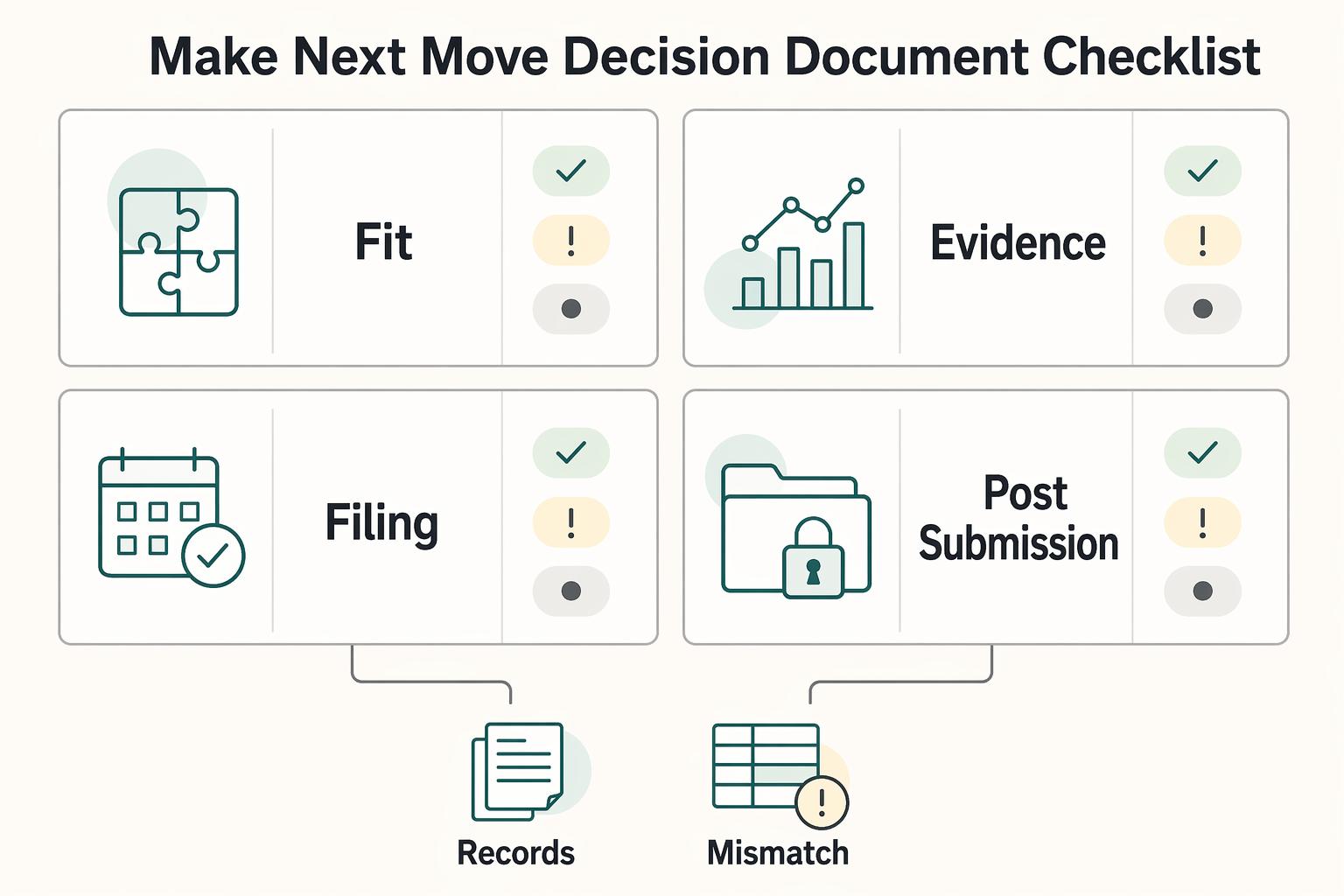
Make Your Next Move With a Decision and Document Checklist#
Use this as a final go or no-go screen for the EntrePass path. Clean decisions and clean documents do not guarantee approval, but they can reduce avoidable delays from weak evidence, poor timing, and mismatched records.
Review this in one sitting with your co-founder or advisor. If any item is unclear, mark it unresolved and pause before filing.
Use the checklist as a stoplight, not a comfort exercise. Green means verified and documented. Yellow means partially supported and needs same-day verification. Red means unresolved and not ready for filing.
| Checklist area | What must be true before filing | Red flag that means pause |
|---|---|---|
| Go or no-go fit | You have, or will set up, an ACRA-registered private limited company in Singapore; you can meet at least one route under Entrepreneur, Innovator, or Investor; and you hold at least 30% of the company share capital. | You cannot clearly map your case to a route, or your ownership does not meet the stated threshold. |
| Evidence readiness | At least one listed signal is backed by documents: government-accredited VC or business angel funding, government-supported incubator participation, an IP asset, or research collaboration with A*STAR or a university. | Your case depends on future intent, verbal commitments, or broad claims without proof. |
| Filing sequence | Your timing matches the stated window: apply before company formation, or while the company is within 6 months of registration. | The company is already older than 6 months and you are still trying to file under EntrePass instead of assessing an Employment Pass route. |
| Post-submission contingencies | Your hiring plan, relocation timing, and fixed commitments can absorb delays. | Your plan depends on an assumed decision date. |
Before final submission, verify every open item on current MOM pages and any linked official program pages. Prioritize criteria wording, required documents and format, filing steps, fees, payment instructions, and timeline guidance, then update your checklist before you submit.
Frequently Asked Questions
Who is EntrePass actually for, and who is usually a poor fit?
EntrePass is described here as a business pass for foreign founders starting and running innovative businesses in Singapore. Stronger cases show clear signals such as funding, IP, research collaboration, or incubator backing. If those signals are weak, strengthen evidence first instead of filing early.
What minimum evidence signals matter most to MOM and SPRING Singapore?
The guidance here points to four signal groups: recognized VC or accredited business angel funding, IP linked to an approved national IP institution, research collaboration with institutes of higher learning, and ties to a government-supported incubator. One cited pathway includes funding of at least S$100,000. Treat these as third-party guidance and verify current official criteria before submission.
How much does it cost to apply, and what payment methods apply?
Confirm current EntrePass fee amounts and accepted payment methods on the official application pages right before you submit.
What is the exact order of steps from application form completion to submission?
A practical approach is to finalize evidence first, then complete the form so each claim matches its supporting documents. A 10-page draft business plan is submitted with the EntrePass application, so that should be ready before filing. Confirm exact portal step order on the official instructions before you submit.
What details are still unknown from public excerpts and must be confirmed on official pages?
You still need official confirmation of current criteria wording, fee schedules, accepted payment methods, and processing timelines. MOM and SPRING Singapore are also named as jointly responsible, which should be cross-checked against current official ownership and process pages. Re-verify any point that affects money, hiring, or relocation timing before making commitments.
When should I plan family-pass applications?
Plan family moves after the principal pass path is stable. The excerpts say holders may bring family, and they also say dependant privileges apply after renewal. They do not provide detailed timing or criteria for each family route, so confirm current rules before locking school, housing, or move dates.
How should I think about renewal and a later Permanent Residence path?
Treat renewal as a core milestone from day one. The excerpts reference first-12-month expectations tied to spending and local hiring, so keep clear, dated business records early. They also state that EntrePass holders may apply for Permanent Residence, but PR criteria and timelines are not defined here and should be verified separately.
Try a related tool
Researched and edited by the Gruv editorial team. Gruv builds cross-border billing, payouts, and finance-operations software for global businesses.
Sources
Includes 3 external sources outside the trusted-domain allowlist.
- efile.fara.gov/docs/2003-Informational-Materials-20181003-1...trusted
- sec.gov/Archives/edgar/data/1951294/0001641172250039...trusted
- coworkingspace.com.sg/how-to-apply-for-singapores-entrepass-visa-a...external
- startupdecisions.com.sg/singapore/relocation/entrepassexternal
- terraadvisoryservices.com/singapore-entrepass-requirements-2025-update...external
Educational content only. Not legal, tax, or financial advice.
Related Posts

The 2026 Global Digital Nomad Visa Index for 50+ Countries
Start with legal fit, not lifestyle filters. The practical order is simple: choose a route you can actually document, then decide where you want to live. That single change cuts a lot of wasted comparison work and stops you from falling in love with places that were never a real filing option.
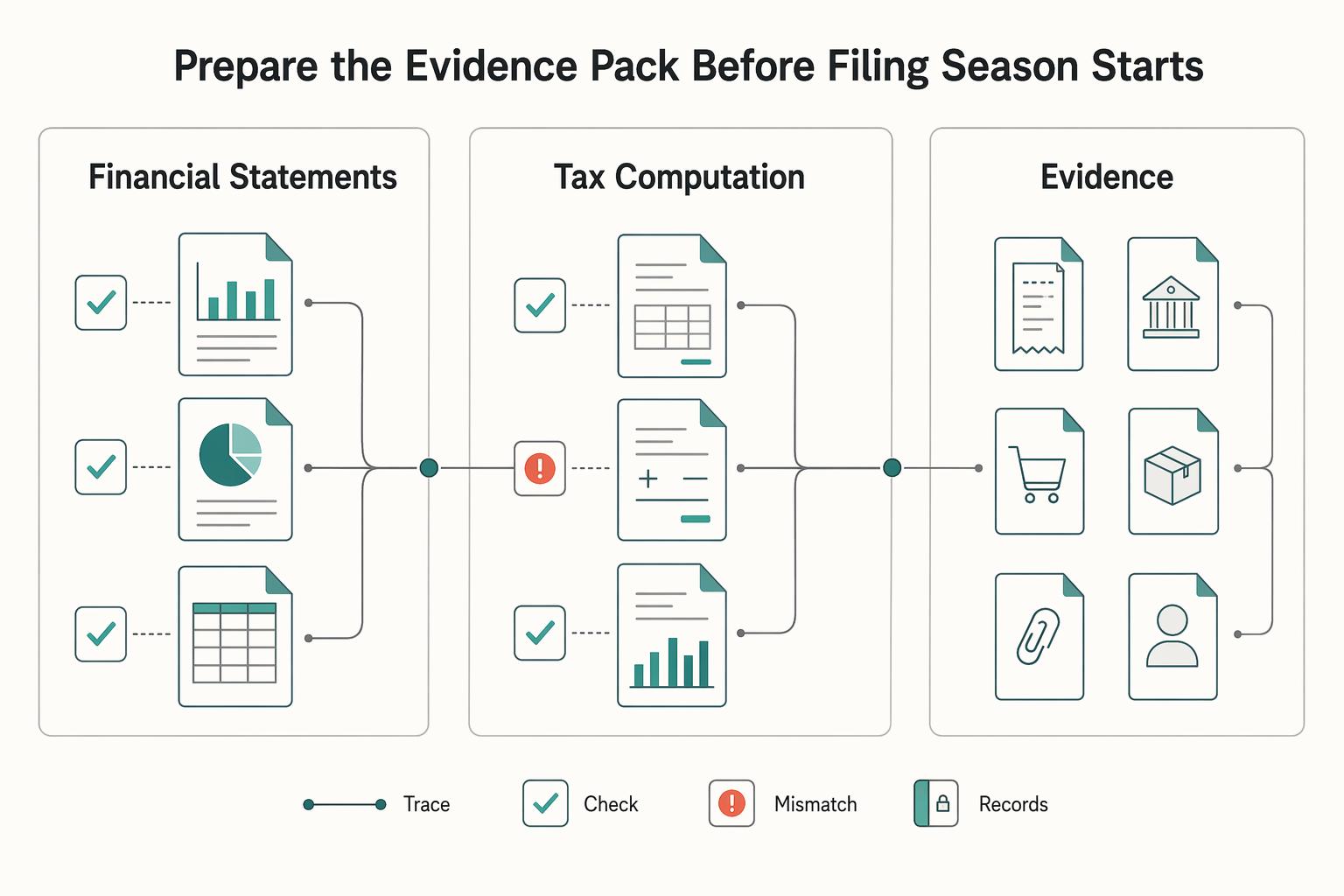
Singapore Corporate Tax for Foreign Entrepreneurs Without Filing Surprises
Delays often come from mismatches between entity records, tax timing, and filing prep, not just the 17% rate. Start in this order: confirm whether your setup is treated as a company for income tax, map the correct Year of Assessment (YA), then verify core records before estimating anything.
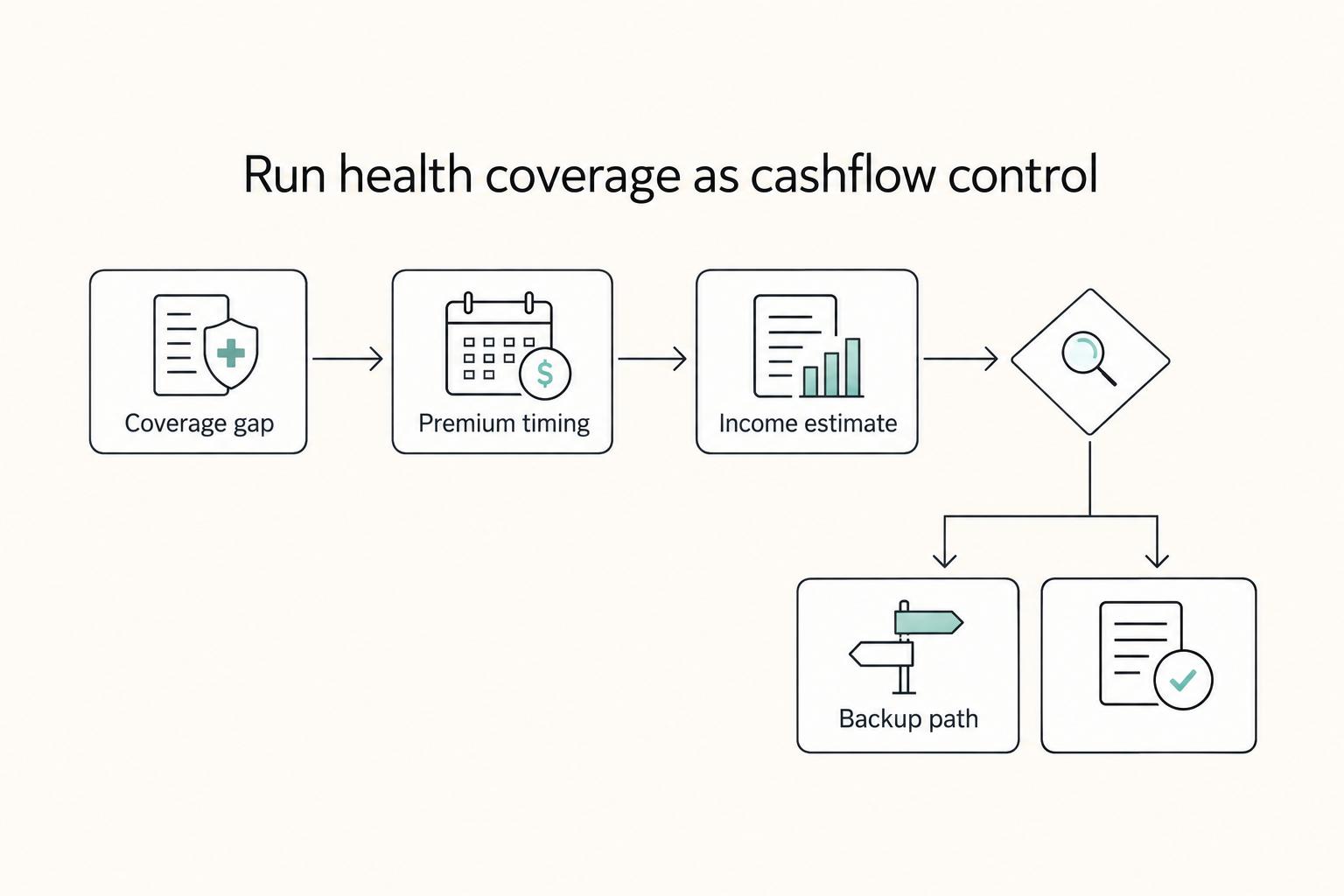
How to Get Health Insurance as an Early Retiree (Before Medicare)
**Treat health insurance in early retirement as an operational bridge to Medicare, then run a simple system that prevents coverage gaps and financial surprises.** You already made the early-retirement call. Now you need execution discipline. The goal is not "find the perfect plan." The goal is continuous coverage that protects runway.