

Quick Answer
For long-term car rental europe, the safest approach is to choose the option with the clearest written terms for borders, returns, extensions, and price validity, not the lowest headline rate. Use a four-gate process, validate terms before payment, and recheck in week one and week four. That system reduces avoidable delays, surprise fees, and plan-breaks when your route changes.
You are not booking a car you are de-risking a 90 day move#
For a 90-day move, the safest car decision is the one that clears route, paperwork, and return risk before you compare price. Provider pages are built to sell. Your relocation plan can still fail on eligibility, border limits, or return conditions that only show up in the terms.
Use this guide as a system: a quick decision framework, a timeline playbook, and a verification checklist. The goal is simple: reduce avoidable delays, surprise costs, and last-minute changes by validating critical constraints first, then choosing the option that fits your move.
| What public provider positioning can confirm | What you must verify directly before payment |
|---|---|
| Some programs present Temporary Transit (TT) as an alternative to car rental in Europe. | Confirm your exact eligibility and required documents for your residency status. |
| CAR-2-EUROPE describes TT as a French customs and tax provision under temporary admission and references customs-duty and VAT exemption for eligible residents outside the EU (and certain overseas territories). | Confirm how this applies to your specific case and pickup process. |
| Providers may advertise circulation across Europe while also listing country exclusions. | Confirm your exact border permissions for your planned itinerary. |
| A program may publish contract-specific return terms, including a reduced 100 € return fee outside France from 31 days of contract, under stated conditions. | Confirm your return city, contract length, and current terms on booking day. |
| Providers may run time-limited offers, including discounts up to €250. | Confirm validity for your dates, location, and contract type. |
Use this article as a system, not a brand roundup. We will run four decision gates in order so you protect execution first and optimize spend second.
- Duration gate: Match your expected stay to the option with the lowest renewal friction.
- Border gate: Confirm where you can drive and where you can return, in writing.
- Paperwork gate: Lock identity, payment, residency, and contract requirements before pickup day.
- Renewal gate: Decide your fallback now if your timeline shifts.
A plan that looks flexible can still break if your route or return logic changes after month one. Run the gates early, then align vehicle timing with A Guide to the Schengen 90/180 Day Rule. If you are also coordinating housing, see A Guide to Renting an Apartment in Europe as a Foreigner.
Build the mental model before you compare providers#
Build your model around written contract terms, not offer labels, and shortlist only options that clear your duration, border, return, and flexibility gates.
When comparing providers in Europe, treat each label as a prompt for questions, not an answer. A label helps you find options; it does not prove how the contract behaves when your route, return city, or timeline changes.
Compare downside risk first, then price.
Separate labels from operations#
| Label on the page | How to treat it in your model | What you must confirm before payment |
|---|---|---|
| Long-term rental | A provider label that still needs contract verification. | Border permissions, return location rules, extension process, and change penalties. |
| Short-term lease | A different label that may follow different contract logic. | Eligibility documents, handover conditions, and return consequences. |
| Subscription | A recurring-access label that still requires written terms review. | Billing cadence, cancellation terms, and renewal friction. |
Use a confidence model when facts conflict#
If the sources disagree or feel incomplete, fall back to one rule: do not guess. Get written confirmation tied to your booking.
| Source | Known from article | Booking limit |
|---|---|---|
| Delors policy report | Received ACEA financial support; says the research was conducted independently under ethics charters | Useful context, but does not answer operational questions about your specific contract |
| ScienceDirect page | Excerpt is captcha-gated | You cannot reliably extract operational detail from the excerpt |
| Rental software vendor | Markets contracts, e-signatures, and damage reports | Feature copy is not proof of your cross-border rights or return permissions |
| Verify with provider before booking | Does not settle rental versus lease operations for your booking | If a term is unclear, ask for written confirmation before payment |
One Delors policy report says it received ACEA financial support and that the research was conducted independently under ethics charters. That is useful context, but it does not answer operational questions about your specific contract.
Some public sources on this topic are captcha-gated, so operational detail may be hard to verify independently. A rental software vendor markets contracts, e-signatures, and damage reports, but that feature copy is not proof of your cross-border rights or return permissions.
If a term is unclear, treat it as unresolved and ask for written confirmation before payment.
Run the ten-minute shortlist test#
- Keep only options that pass all four gates: duration, border plan, return location, and term flexibility.
- Drop any option that leaves one gate unclear after support follow-up.
- Rank survivors by downside risk first, then total cost.
Your safest choice is the contract that still works after a plan change, not the one that only looks cheapest on day one.
If you want a deeper dive, read the 2026 Global Digital Nomad Visa Index.
Which option wins for your timeline rental lease or subscription?#
No single lane wins from this evidence. Choose the contract with the clearest written terms for extension, return, and session-based price validity for your timeline.
For a long stay in Europe, treat provider names as options to verify, not defaults to trust. Compare providers directly and confirm flexibility rankings with each before booking.
Make the call from each contract's written operating terms, not label language.
Apply the three lane framework#
| Lane | What the lane means in this section | Verify before payment |
|---|---|---|
| Rental lane | One provider model describes long-term rental as lasting from a month to several years. | Border permissions, return location rules, extension steps, and change charges in writing. |
| Subscription lane | Recurring-access model with its own billing and renewal flow. | Billing cadence, cancel/pause process, renewal friction, and vehicle-change rules. |
| Lease-style lane | A buy-back style program can be framed as taking possession of a new car for your stay. | Eligibility, handover and end-of-term conditions, and whether displayed pricing is session-bound. |
Use a relocation-first decision tree#
- Start with route reality: pickup city, likely border crossings, and realistic return locations.
- Shortlist by contract clarity: keep only options with explicit written terms for extension, early return, and cross-border use.
- Confirm price reliability: if a page says pricing is valid only in the same session, assume it can change in a later session.
- Treat bundled-cost language as provider-specific: one model says operating costs are included and fuel is extra, but that is not a Europe-wide rule.
Pick the safe default when duration is uncertain#
If your end date is unclear, default to the option with the lowest documented downside when plans change and the clearest written border and return rules. That beats optimizing for day-one price when your route may shift.
What should you do before departure and in your first 30 days?#
Use a two-gate operating plan: lock pre-departure inputs, then run a first-week check and a week-four decision review.
For a long stay, execution details are the main risk. Confirm them in writing before and after arrival. Use the same sequence for any contract: pre-departure setup, first-week validation, then a week-four adjust, extend, or switch decision.
Lock your pre departure sequence#
Pre-departure is where you lock what is known and surface what is still unknown.
| Pre-departure item | What to lock |
|---|---|
| Country and residency inputs | Confirm your exact country and residency inputs early |
| Country of Residence selector | A Country of Residence selector is a required step in at least one booking flow |
| Records folder | Keep one folder for booking confirmations and support transcripts so changes can be handled quickly |
| Written terms before departure | If your route may change, ask support to confirm extension, return, and cross-border terms in writing before departure |
Use A Guide to the Schengen 90/180 Day Rule as a planning reference, then verify legal limits separately because rules vary by jurisdiction.
Validate your first week like an operations audit#
In week one, test process reliability, not just vehicle comfort.
If your likely route spans multiple countries, use your first stops as checkpoints and re-validate each operational assumption with support.
| First-week check | Why it matters | Action |
|---|---|---|
| Pickup and return assumptions | Booking flow language may not match desk execution | Reconfirm pickup, return city, and after-hours handling in writing |
| Border permissions | Confirm route-level border policy with your provider | Confirm planned and fallback routes with support before crossing |
| Support channel quality | Response quality affects disruption handling | Test phone and chat channels before an urgent issue |
| Contract clarity | Ambiguity raises change risk later | Ask for plain-language confirmation on extension and early return |
Run a week four route and contract gate#
At week four, decide from your real movement pattern, not your day-one plan.
Use actual travel behavior to choose whether to extend, switch product type, or rebalance your route. If you may cross borders or change base, treat border and legal details as jurisdiction-dependent and re-confirm before acting.
- Extend only after written confirmation of renewal steps.
- Switch product type if current terms no longer fit your route.
- Rebalance transport and housing together, then recheck timeline planning in A Guide to the Schengen 90/180 Day Rule and verify legal limits separately.
Can you pick up in one country and return in another without getting trapped?#
Yes, sometimes, but treat one-way and cross-border plans as unconfirmed until your provider approves your exact route and return setup in writing before payment. This is where many long-stay plans break. Online language can look flexible, but desk approval and your contract terms decide what you can actually do.
For planning purposes, use this evidence as a risk signal, not a rulebook. One account reports a 47-day one-way Europe rental with bundled insurance and a $0 deductible. It also describes typical one-way-plus-insurance pricing as very high.
Another personal case reports France pickup, driving through nearby countries including the Netherlands, and returning to the original city after confirming at pickup.
Know what you can trust right now#
Route execution is provider- and booking-specific, so desk-level confirmation can matter as much as what you saw online. Before you authorize payment, use contract text plus written support confirmation as your baseline.
Some public legal pages on this topic state they are informational and not the official legal edition. Treat such pages as context only, and make route decisions from your provider's written terms and your support record.
Use this border feasibility matrix#
| Route scenario | Known now | Must confirm before authorization |
|---|---|---|
| France pickup, Netherlands transit, return to France | One personal case reported this pattern worked after pickup approval. | Exact allowed countries on your contract, return-city rules, and any one-way drop-off fee triggers. |
| Italy to Greece movement with return outside pickup country | Confirm route eligibility and fee norms with your provider | Border permissions, ferry-related contract limits, return geography, and written exception handling. |
| Continental Europe to United Kingdom movement after Brexit | Verify leased-vehicle movement rules for this route with your provider | Entry eligibility for your contract type, insurance validity, re-entry terms, and route-specific restrictions. |
Run this pre payment call script#
Call before payment and ask support to attach responses to your booking record.
| Call topic | Ask support to confirm | Record |
|---|---|---|
| Route approval | List every planned country and ask for a clear yes/no for each | Attach responses to your booking record |
| Return geography | State your intended return city and one fallback city | Attach responses to your booking record |
| One-way cost logic | Ask when a one-way drop-off fee applies and when it does not | Attach responses to your booking record |
| Exception handling | Ask what happens if border or return terms change after pickup | Attach responses to your booking record |
| Proof format | Request written confirmation by email or booking note | Attach responses to your booking record |
If support cannot confirm route permissions, return geography, and exception handling in writing, treat that option as high risk and keep comparing providers.
What will actually drive your total cost beyond the headline monthly rate?#
Your true total cost is driven by contract structure and quote method, not the headline monthly rate. For long stays, use the monthly number as a starting point, then validate how the offer is built. The most reliable way to avoid budget surprises is to compare matched quote structures before you authorize payment.
Use this contract-first cost map before you decide.
| Cost driver | What the evidence supports | What to verify in your quote |
|---|---|---|
| Base rate logic | Monthly base pricing can change by pickup location. | Compare the same car class, dates, and pickup point across options. |
| Quote method | A 30-day booking can be cheaper as a weekly-rate build than a monthly program in some cases. | Request both: monthly program and weekly rate x4 plus two days. |
| Discount timing | Heavier long-stay discounts may appear when usage reaches two months or more. | Ask when any discount step-down starts and how month-by-month pricing changes. |
| Included items | One historical example included taxes and unlimited mileage, but inclusions are not universal. | Confirm exactly what is included versus charged separately in your contract. |
Use older published price examples as a method check, not a 2026 price benchmark. Historical references show useful mechanics, including step-down month pricing and claims of savings up to 25% in some structures. They do not establish current market totals.
Before approval, run a short review pass focused on mileage terms, cancellation language, and geographic coverage. If those terms are unclear, treat the quote as incomplete even when the monthly number looks attractive. Choose the offer with the lowest fully loaded downside for your actual travel pattern.
Your booking verification checklist you can run in 15 minutes#
Finalize your booking only after you have written proof of identity and payment terms, plus a documented Form 8938 versus FBAR decision for your situation. This makes the plan easier to support later if tax or admin questions come up.
Verify booking identity and payment setup#
Use this quick grid before you confirm with any provider.
| Checkpoint | Why it matters | What to capture in writing |
|---|---|---|
| Driver identity match | Name mismatches can create pickup issues | Exact name format across passport, license, and booking |
| Payment eligibility | Card rules and holds can delay release | Accepted card type, cardholder requirements, and hold terms |
| Rate and fee confirmation | Unclear desk terms can create cost surprises | Base rate, included items, taxes, one-way terms, add drivers |
| Route and return geography | Rules vary by country and program | Approved countries, return location, and exception process |
| Support escalation path | You need fast resolution if terms conflict | Contact channel, case ID format, and written response record |
Run the U.S.-linked compliance check#
For U.S.-linked readers, treat this as documentation hygiene and confirm reporting obligations before final payment. FATCA generally requires certain U.S. taxpayers with foreign financial assets to report those assets to the IRS, generally using Form 8938, and Form 8938 is attached to an annual tax return when required. If you are not required to file an income tax return for the year, Form 8938 is not required for that year.
FBAR (FinCEN Form 114) is a separate filing that may also be required. Form 8938 and FBAR are not interchangeable, and one or both may apply. Use the IRS comparison resource to determine what applies to you, and avoid assuming one universal threshold because requirements can vary by filing status and circumstances.
Build one records folder now:
- Booking contract and any amendments
- Payment receipts and account statements tied to the booking
- Your Form 8938 and FBAR determination notes
- Any related tax-document checklist items your preparer flags for your case
Capture proof with a rules-vary protocol#
When your route or country plan changes, reconfirm terms in writing before you authorize or modify payment. Save timestamped screenshots of the quoted terms, then request written confirmation that matches those terms by country, route, and program.
If your trip spans multiple countries, repeat the same verification fields before each change and store updates in the same folder. If any key term remains unclear in writing, pause and resolve it before you proceed.
Lock your plan then book with confidence#
Book when one option gives you clear written terms on price validity, cancellation/change flexibility, return setup, and payment method, with no critical unknowns left. Use confirmed terms as your planning base, and treat unresolved points as blockers until they are clarified in writing before payment.
Run a final go or no-go matrix#
Use this final pass across your top options.
| Final gate | What to check now | What to save before payment |
|---|---|---|
| Product fit | Confirm the contract model still matches your stay and flexibility needs | Final offer version with date and time |
| Price validity | Check whether pricing is tied to the current session and may change after disconnect | Screenshot of checkout totals in the active session |
| Flexibility terms | Verify your exact rate's cancellation and change terms in writing | Written terms for cancellation, rebooking, and extension |
| Return setup | Confirm whether a different return location is available for your selected booking | Written return-location confirmation and related fee terms |
| Payment readiness | Confirm your intended payment method works at checkout | Payment confirmation and one fallback method |
Apply the confidence standard before you click pay#
Treat provider headlines as a starting point, then verify the exact rate terms you are actually buying.
- If pricing is session-based, finish checkout in one continuous session where possible.
- If you need cancellation flexibility, confirm it applies to your selected rate, country, and channel.
- If you need a different return location, confirm eligibility and fees in writing.
- If you plan alternative payment, verify availability first. One booking channel states SeQura is unavailable for car rentals and lists alternatives such as Afterpay and Affirm.
- If any core term remains unclear, pause and resolve it before authorization.
Take the next action today#
- Complete this checklist for your top two options.
- If needed, contact support and ask them to restate route, return, and change terms in writing before payment.
- Book once terms are clear, then archive screenshots, confirmations, and receipts in one folder.
Frequently Asked Questions
What is the practical difference between long-term rental, lease, and subscription in Europe?
The practical difference is the contract model. Rental is a standard rental agreement. TT is an alternative to car rental under a temporary-admission legal framework, and buy-back involves taking possession of a new car for your stay. Subscription terms are provider-defined, so treat flexibility and fees as contract-specific and confirm them in writing.
How long can I keep a long-term rental before I should switch to a subscription model?
Switch based on written terms, not duration alone. If extension terms, change penalties, or pricing stability are unclear, move to the option with clearer written conditions.
Is leasing usually cheaper than monthly rental for stays longer than a few weeks?
No universal rule here shows leasing is always cheaper than monthly rental. One forum excerpt recommends leasing for longer-term use, but that is anecdotal guidance rather than binding market evidence. Compare full contract cost line by line, including add-on insurance charges such as CDW.
Can I pick up in one country and return in another on a long-stay contract?
Sometimes, but one-way returns are program-specific. One TT example mentions reduced return fees outside France from 31 days of contract, which shows these terms can be conditional. Confirm pickup country, return country, and fee conditions in writing before payment.
Can I drive a leased car from continental Europe into the United Kingdom?
You cannot assume UK access across lease-style programs. In one TT program, the United Kingdom is listed outside that program’s stated free-circulation scope. Treat UK travel as a separate approval check and get written confirmation before departure.
What should I verify before booking a 1-5 month car option in Europe?
Verify eligibility, geography, and fee conditions before you lock payment. Check whether your program has residency and eligibility limits, which countries are excluded, how one-way returns are priced, whether CDW is offered as an added-fee coverage, and whether quoted prices can change between sessions. Keep all confirmations in writing, and align your transport plan with A Guide to the Schengen 90/180 Day Rule.
Which details are usually missing from provider landing pages that change total cost?
The biggest cost movers are in the contract details, not the headline price. Watch for added insurance pricing (including CDW), one-way return conditions, and session-based price changes. Treat quoted pricing as provisional until checkout terms are finalized in writing.
Try a related tool
Researched and edited by the Gruv editorial team. Gruv builds cross-border billing, payouts, and finance-operations software for global businesses.
Sources
Educational content only. Not legal, tax, or financial advice.
Related Posts

The 2026 Global Digital Nomad Visa Index for 50+ Countries
Start with legal fit, not lifestyle filters. The practical order is simple: choose a route you can actually document, then decide where you want to live. That single change cuts a lot of wasted comparison work and stops you from falling in love with places that were never a real filing option.
Renting in Europe as a Foreigner on a 90-Day Timeline
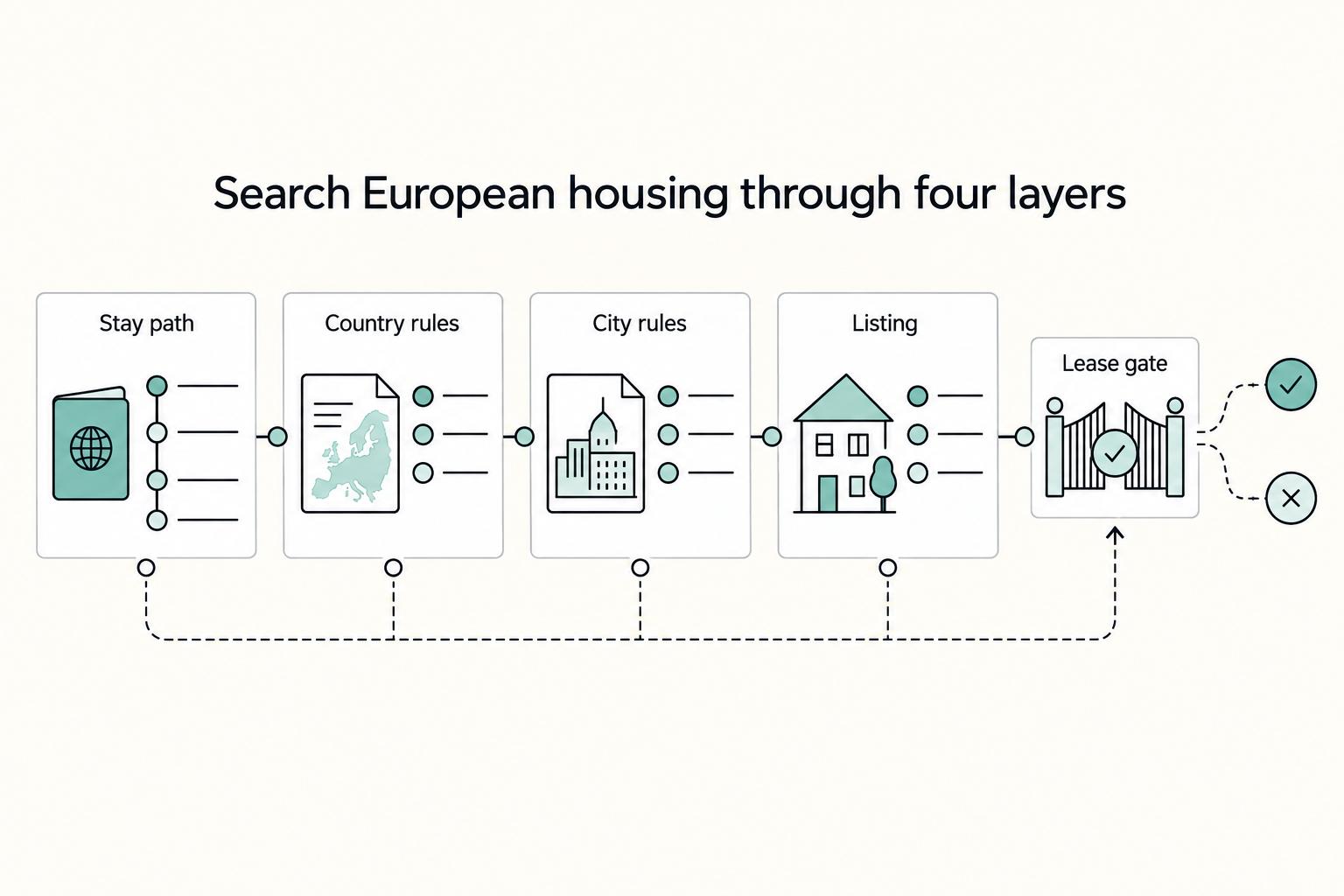
If you're **renting in Europe as a foreigner**, treat the move as a staged long-term housing plan, not a booking sprint. Your first decision is not which listing looks best. It is which city you're targeting, which legal stay track applies there, and when you'll be ready to sign without guessing.
A Guide to the Schengen 90/180 Day Rule
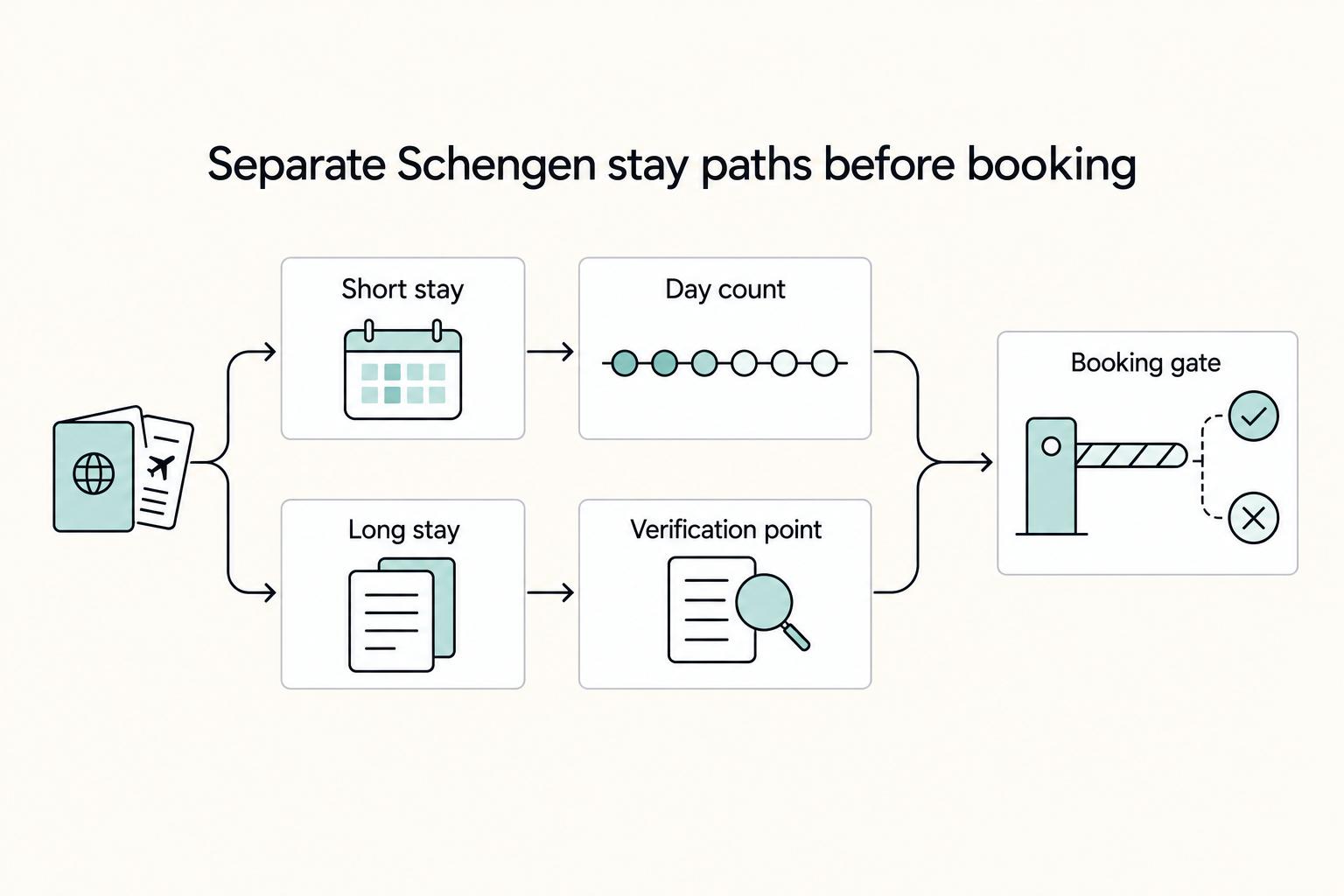
**Treat Schengen short-stay limits as an operating constraint, then run every movement decision through one repeatable system.** If you treat Europe travel like a chain of bookings, you create avoidable risk. Run it like operations, and you protect flexibility, reduce stress, and keep your visa compliance posture clean across the Schengen Area.