

Quick Answer
Existing Self-Employed subscribers can continue; new buyers should compare current products such as Solopreneur. Self-Employed has manual overdue reminders and quarterly tax estimates, while successor billing/accounting tools differ. Test sample workflows, check payment eligibility and export records before a real migration.
QuickBooks Self-Employed Review for Freelancers Who Need Predictable Cashflow#
QuickBooks Self-Employed is a legacy bookkeeping option for existing subscribers. New buyers should compare current products such as Solopreneur, then test their actual billing and tax workflow.
Invoicing is easy. Getting paid on time, with low dispute risk, is the hard part. In a business-of-one, cashflow reliability is your job, not your software's.
Intuit’s current U.S. product comparison says existing Self-Employed subscribers can continue; it directs new customers to products such as Solopreneur. This guide uses U.S. product and tax documentation. For an existing solo operator, income/expense categorization, mileage, receipts and tax records can still be useful. Check the current account and workflow rather than treating Self-Employed, Solopreneur and QuickBooks Online as interchangeable.
The cracks show up when scope is fuzzy, signoff drags, or follow-up is inconsistent. Software cannot enforce scope, acceptance, or dispute posture for you.
This guide uses one decision framework from start to finish: the Get Paid Reliability Scorecard. Use it to decide whether QuickBooks Self-Employed fits your current stage or whether you need a stronger stack now. The goal is speed and clarity, before a missed payment forces the decision.
Start with the product distinction, then use your own invoice and bookkeeping tasks to compare. The published feature matrix separates Self-Employed’s manual overdue follow-up and quarterly tax estimation from successor products’ different billing and accounting tools. A feature on a QuickBooks Online help page does not automatically belong to Self-Employed.
| Workflow | QuickBooks Self-Employed | What to compare before changing |
|---|---|---|
| Invoice follow-up | Create/send invoices, PDF export and manual overdue reminders; no automatic reminders in Intuit’s comparison. | Solopreneur and Online Simple Start list automatic reminders; test the sending rules in the selected product. |
| Online payment status | Activate QuickBooks Payments for cards/ACH; external receipts must be manually marked paid. | Verify processing eligibility/fees and the actual bank deposit, separately from invoice status. |
| Tax/bookkeeping | Single-entry self-employed income/expense tracking and quarterly tax estimates. | The current matrix lists double-entry for Solopreneur, but no quarterly tax estimation; confirm the tax workflow you need. |
| Move existing data | Export financial records before changing. | Check destination-specific history, invoice and unsupported-data limits. |
Here is the failure mode to watch for: you deliver on time, send the invoice, and still wait because acceptance proof and follow-up steps were never standardized. The tool did not fail. The process did.
By the end, you will have a reusable system for safer terms, cleaner workflows, and fewer payment surprises. If you want a deeper dive, read Value-Based Pricing: A Freelancer's Guide.
Build the Mental Model Before You Pick a Tool#
Treat QuickBooks Self-Employed as a bookkeeping layer, then add contract and payment controls to protect cash flow.
| Control | Defines | Article note |
|---|---|---|
| Statement of Work (SOW) | Scope, timeline, and cost | Set before kickoff |
| NDA | Confidential information for both sides | Agree confidentiality terms before sharing sensitive information; a separate NDA depends on the engagement |
| Termination | Exit rights when milestones stall | Tie triggers to missed approvals or payment delays |
| Governing Law | Which legal rules apply | Can affect how damages and limitation are analyzed if a dispute escalates |
| Jurisdiction | Where disputes get heard | Reduces forum uncertainty |
Keep this review anchored on payment reliability, not feature hype. QuickBooks Self-Employed covers core solo-operator bookkeeping needs like recording income and expenses, tracking mileage, and preparing Schedule C. It is a lightweight workflow, not an advanced accounting system.
That distinction matters. The tool can organize records and support tax prep, but it does not replace contract terms for scope, acceptance, and dispute handling.
Use the Get Paid Reliability Scorecard to evaluate fit across four pillars, then pick the simplest tool that supports your operating controls.
| Pillar | What to score first | Pass signal |
|---|---|---|
| Invoice execution | Invoice speed, follow-up cadence, payment status visibility | You can track every invoice from send to paid without manual guesswork |
| Risk controls | Agreed scope/payment terms, relevant confidentiality protections and termination process | Work starts with agreed terms appropriate to the engagement |
| Operational visibility | One place for obligations, due dates, and proof of acceptance | You can explain current risk in minutes |
| Upgrade readiness | Friction points that bookkeeping alone cannot solve | You know exactly when to upgrade or add controls |
Set scope, price, payment timing and acceptance terms before kickoff. A Statement of Work (SOW) can organize those details. Add an NDA or confidentiality clause when sensitive information is involved, and define any termination notice, cure period and payment consequences in the agreement. Choose dispute and ownership terms that fit the engagement rather than adding every clause by default.
Governing law is not cosmetic boilerplate. It can affect how damages and limitation are analyzed if a dispute escalates.
A common scenario: a client approves early drafts in chat, then challenges the final invoice. If your SOW acceptance terms, termination trigger, and governing law language stay clear, you can escalate with structure instead of improvising under stress.
Use this default checklist before any new client, and log it in your workflow notes so follow-ups stay consistent.
- Confirm agreed scope and payment terms before work starts; agree confidentiality protections before sharing sensitive information.
- Set termination triggers tied to missed approvals or payment delays.
- Align governing law and jurisdiction with your enforcement strategy.
- Record these controls in your workflow notes so follow-ups stay consistent.
For more tooling context, see The Best Expense Tracking Apps for Freelancers.
Is QuickBooks Self-Employed Enough for Your Stage Right Now?#
Keep Self-Employed only if you already subscribe and its actual features fit your solo workflow. Compare a current product when you need different billing, accounting or collaboration tools.
Intuit’s comparison scopes Self-Employed to single-entry, self-employed income/expense tracking. Solopreneur is intended for one-person businesses and has a different feature set. Growth can make the legacy setup awkward, but judge the missing workflow rather than treating a product change as automatic.
Existing subscribers can continue Self-Employed. Intuit’s August 2026 help says its standalone mobile app is no longer offered to new downloaders after March 24, 2024, while prior downloaders retain store access. Existing customers should test their own app access; new buyers should evaluate the current product and mobile workflow offered to them.
| Stage | Operational reality | Best-fit direction |
|---|---|---|
| Solo freelancer, simple workload | Low complexity, one-person operation | Existing Self-Employed subscriber: assess current fit; new buyer: compare current Solopreneur/Online options |
| Solo but process strain appears | More moving parts and less room for manual workarounds | Stay only if your process remains reliable |
| Growth stage | Your setup is outgrowing an entry-point tool | Move to broader workflows |
Use one consistent set of tasks for each candidate: invoice creation, a paid and an unpaid receipt, expense categorization, tax records and export. The result should show what changes in your own workflow, rather than relying on a creator’s endorsement.
Before you subscribe, run this confidence gate so you validate your real workflow, not a marketing checklist.
- Verify live pricing and plan details directly, since third-party pages can lag.
- Check the selected product’s current feature matrix; do not transfer Online or Solopreneur features to Self-Employed.
- Use sample or representative billing data to trial invoice follow-up and month-end tasks, then verify the live payment path before rollout.
- Check whether your process still works when one client pays late.
If you manage a small roster with simple deliverables, this setup can stay stable. If approvals and payment handoffs keep multiplying, upgrade before cashflow breaks.
Score QuickBooks Self-Employed with the Get Paid Reliability Scorecard#
Use a pass-or-fail scorecard to test payment reliability in your workflow, then decide whether QuickBooks Self-Employed or another QuickBooks setup is the safer fit.
Move from opinion to execution checks. QuickBooks Self-Employed supports invoice, income, and expense tracking, but your contracts and operating discipline still carry the risk. Score the workflow, not the marketing.
| Score area | Pass rule | Fail signal |
|---|---|---|
| Invoice-to-cash reliability | You can track invoices, retain acceptance records and run the required manual or supported automatic follow-up | You rely on memory, inbox search, or ad hoc reminders |
| Legal defensibility | Scope and payment terms are agreed; ownership or licence terms fit the deliverables | Scope or ownership terms appear late, or not at all |
| Dispute posture | Any liability limits or indemnities are reviewed against the actual engagement | Contract language stays generic and misaligned with delivery risk |
| Edge-case resilience | You know how agreed disruption, transfer and consent provisions would apply to a realistic scenario | You negotiate these terms only after a problem appears |
Use the scorecard to ask concrete questions: what counts as acceptance, who owns or may use the deliverables, which losses each party agrees to cover, and whether changing the client entity needs consent. Under U.S. work-made-for-hire rules, an independent contractor’s commissioned work qualifies only within specified categories and a signed written agreement. A label alone does not transfer every freelancer’s copyright; choose the actual licence or transfer terms required.
Example: a client asks to transfer the contract to a partner entity right as a disruption delays delivery. If your assignment and force majeure steps already sit in your client packet, you can keep decisions clear and move faster.
Run the same pass-or-fail test for QuickBooks Self-Employed and your broader QuickBooks option. Keep the tool that supports your process with the fewest manual gaps, then rescore each quarter.
Can It Reduce Late Payments and Risky Clients in Practice?#
It can help reduce late payments and risky client exposure when you run QuickBooks Self-Employed inside a contract-first control flow.
Self-Employed’s invoice instructions describe manual reminders for overdue invoices. Intuit’s comparison does not list automatic reminders for Self-Employed, although it does for Solopreneur and Online Simple Start. If you keep the legacy account, schedule your own follow-up and log each reminder; if you change products, test the selected product’s automation rules.
Build a payment control flow#
Tie each invoice to contract proof, not just a due date.
| Step | Action | When it applies |
|---|---|---|
| Invoice milestones | Send invoices against defined milestones in the Statement of Work (SOW) | For defined milestones |
| Acceptance proof | Capture the acceptance or billing-trigger evidence required by the agreement | At the agreed milestone or billing trigger |
| Follow-up sequence | Run a fixed follow-up sequence for overdue invoices | For overdue invoices |
| Termination path | Follow the Termination path already defined in your agreement, where applicable | If milestones or payment obligations fail |
Invoice against the agreement’s milestones or billing triggers, retain the required approval/delivery evidence, and run a fixed overdue follow-up sequence. Use a termination path only when the contract and applicable rules support it; do not assume every final invoice must wait for a separate client signoff.
Scenario: a client accepts a deliverable, requests extra scope, then pauses payment. If your workflow links invoice, acceptance proof, and termination triggers, you respond with a clear next step instead of a reactive negotiation.
Lock dispute and liability terms before stress hits#
Keep the agreed scope and payment terms in each client packet. Include confidentiality protections where the work involves sensitive information; they may be part of the services agreement rather than a separate NDA for every job.
Predefine escalation paths inside the contract packet so you are not improvising when payment stalls.
| Contract control | Practical purpose |
|---|---|
| Arbitration or Jurisdiction | Routes disputes to a defined forum instead of improvised escalation |
| Governing Law | Sets which legal rules apply during disputes |
| Limitation of Liability | Sets boundaries on recoverable damages |
| Indemnification | Assigns who covers specific losses tied to service delivery |
Align these terms with the services you actually deliver, not generic template language. Rules vary by market and legal venue, so confirm your standard template with qualified local counsel before you roll it out across all clients.
Set Up a Safe Default Client Onboarding and Payment Checklist#
Use a four-gate onboarding checklist before kickoff so every client starts with clear scope, clear contract terms, and a predictable payment path.
You turned invoicing into a control flow. Now hard-code that flow into onboarding so you stop negotiating process details under pressure.
Use the Self-Employed customer record for billing contact details, then keep your own engagement checklist for scope, acceptance, confidentiality and follow-up. Creating a customer profile does not validate the client’s agreement or supply contract controls.
| Gate | What you verify | Pass condition | If it fails |
|---|---|---|---|
| Pre-work check | Agreed scope/payment terms and any relevant confidentiality or termination conditions | Required engagement terms are agreed before work or sensitive disclosure | Resolve the affected terms before that work starts |
| Dispute-route check | Any chosen governing-law, court or arbitration provisions fit the engagement | The selected provisions are consistent; no separate arbitration clause is required for every job | Review a conflicting or unclear provision before relying on it |
| Scope and IP check | Ownership/licence, transfer and any consent requirements match deliverables | Agreed rights and timing match what you sell; work-made-for-hire status is not assumed | Revise the affected scope or rights terms |
| Risk check | Any indemnity or disruption clause fits actual project risks | Relevant obligations and limits are understood | Review the affected clause rather than adding unrelated boilerplate |
Keep the checklist specific: record termination notice and payment consequences, the rights to be transferred or licensed, and any consent needed to move the engagement to another entity. Assignment of rights and delegation of duties are separate questions. Do not assume that an IP transfer, a “work for hire” label or a change of client entity resolves all three.
Scenario: a client changes internal ownership mid-project and asks a new entity to take over approvals. If your onboarding packet already aligns assignment, jurisdiction, and arbitration terms, you can keep momentum and reduce approval-related payment delays.
Close every onboarding with a one-page checklist in your internal record for each client profile. Include milestone owners, follow-up cadence, and clause status. Repeat it on every client. Consistency helps you catch gaps before they turn into billing friction.
If you want a quick next step, try the free invoice generator.
When Should You Keep It, Upgrade It, or Replace It?#
Keep your current setup while it works for a one-person workflow, then upgrade or replace when repeated internal scorecard failures show the tooling is the bottleneck.
Use the same control mindset for platform decisions, and prioritize predictable cashflow over feature collecting.
| Decision path | Trigger you can observe | Action |
|---|---|---|
| Keep your current QuickBooks setup | You run a one-person business, your flow stays stable, and your internal reliability scorecard stays above your own cutoff. | Keep your stack simple and protect bookkeeping quality with weekly expense tracking, invoice follow-up, and contract checks. |
| Upgrade within QuickBooks | Team handoffs or bookkeeping needs exceed the current tool. U.S. Online Essentials permits 3 billable users; Plus permits 5, under Intuit’s current usage limits. | Compare the actual missing feature. Multicurrency is in U.S. Online Essentials/Plus/Advanced, not Simple Start; enabling it cannot be undone and is incompatible with QuickBooks Payments/Bill Pay. Treat accounting currency support separately from cross-border payment processing. |
| Replace or augment | Your operating model needs capabilities beyond a lightweight setup. | Evaluate Gruv and peer options against the same scorecard. Approve migration only after you confirm coverage and compliance requirements for your target markets. |
The move is not just a brand change. Intuit lists quarterly tax estimation in Self-Employed but not Solopreneur, while listing automatic reminders and double-entry accounting in Solopreneur. Compare those tradeoffs against your current tax and billing process before upgrading.
Run a quarterly checkpoint#
- List your last quarter failures by type: late payment, reconciliation miss, scope dispute, or tax-prep friction.
- Mark each failure as a process gap or tooling gap.
- Keep your current setup if process fixes close the gap within one cycle.
- Upgrade or replace if the same tooling gap repeats after you enforce the process fix.
Protect migration execution#
If you add a coordinator and an external bookkeeper in the same quarter, handoffs multiply quickly. Before you switch, run a small migration test, verify reporting continuity, and confirm data history access.
| Destination/check | What to preserve or verify |
|---|---|
| Backup before either move | Download reports, transactions, mileage, receipts and invoices; keep a separate copy. |
| Self-Employed → Solopreneur | Automatic migration includes up to 3 years of transactions and invoices only for the new invoice experience; rules/tax estimates are not currently migrated, and integrations/tags/vendors cannot transfer. Old account access ends after upgrade. |
| Self-Employed → Online | The copy is one-way; app-store subscribers must switch manually. Reconcile open invoices and follow Intuit’s invoice handling steps before relying on the migrated balances. |
| Verify the result | Match sample balances and outstanding invoices, confirm reports and required history, then cancel a separate old subscription only after the manual transfer is checked. |
Use the destination-specific migration instructions: Solopreneur and QuickBooks Online. Intuit warns that copied unpaid Self-Employed invoices cannot be marked paid in Online after the move and must be deleted/recreated there; plan that cleanup with your outstanding-invoice record. Export before upgrading, since the Solopreneur upgrade ends old-account access. A trial with sample data is different from committing a one-way account migration.
Turn Everything Above Into a Repeatable Operating Decision#
Each quarter, review billing and bookkeeping gaps, check the engagement terms that apply, and compare the simplest tool that supports your workflow.
Turn everything above into a repeatable operating decision. The goal is not to chase features. The goal is to protect payment timing, bookkeeping quality, and decision clarity as your business changes.
| Playbook step | What to check | Decision rule |
|---|---|---|
| Score the current setup | Review your Get Paid Reliability Scorecard across invoice execution, risk controls, visibility, and upgrade readiness. | Keep your current stack if process fixes close gaps within one cycle. |
| Lock contract controls | Record agreed scope/payment terms, relevant confidentiality protections and the dispute process selected for the engagement. | Resolve the terms before the affected work or disclosure; compare tools in parallel with sample records. |
| Verify product fit now | Confirm whether you are a current QuickBooks Self-Employed subscriber or a new buyer evaluating available QuickBooks paths, including Solopreneur. | Choose the path that matches your current operating shape, not your hoped-for future shape. |
| Validate market execution | Check payout program coverage, country-specific payment regulation requirements, and current product terms before rollout. | Migrate only after you confirm support for your target market and program. |
Use crisp definitions so your process stays teachable. SOW is the work statement that clarifies the work and objectives. NDA protects defined confidential information. Governing law selects which law applies in a dispute, while jurisdiction defines which court can hear it. Arbitration can be binding or nonbinding, depending on your agreement.
Example: you add an international client while bookkeeping work increases. If your existing Self-Employed account still fits, retain it while comparing the missing workflow with sample records. Agree the new client’s billing currency and payment method, then verify accounting support separately from payment processing before migrating.
Take the low-friction next step. Run your scorecard this week, confirm current QuickBooks terms and availability at decision time, and document one keep, one upgrade, and one replace trigger. If cross-border control and audit-ready process discipline now drive your roadmap, evaluate Gruv with the same checklist and confirm market and program coverage where supported before rollout.
Frequently Asked Questions
Is QuickBooks Self-Employed worth it for freelancers focused on cashflow reliability?
It can remain useful for an existing solo subscriber whose single-entry records, mileage and quarterly tax workflow still fit. New buyers should compare current products such as Solopreneur. Self-Employed needs manual overdue reminders; retaining clear scope, invoice status and follow-up records helps you judge whether that extra work is acceptable.
Who should use QuickBooks Self-Employed and who should move to a different setup?
Existing one-person subscribers can keep it when its actual bookkeeping and manual invoice follow-up fit. Compare a different product when you need automatic reminders, broader accounting or collaboration. Validate the successor’s tax and migration limits rather than assuming every legacy feature carries over.
What are the practical pros and cons of QuickBooks Self-Employed?
Intuit lists income/expense categorization, receipts, mileage and quarterly tax estimation for Self-Employed. Its limits include single-entry accounting and no automatic invoice reminders in the current comparison. Solopreneur adds different accounting/billing tools, but quarterly estimates and some legacy data do not transfer; test those tradeoffs in your workflow.
Can QuickBooks Self-Employed prevent late payments and risky client terms on its own?
No. Self-Employed supports manual overdue reminders, not the automatic reminder schedule published for other QuickBooks products. Keep agreed scope/payment terms and a follow-up log beside the invoice. A separate NDA is relevant when confidentiality needs it; software does not establish those engagement terms.
What should I verify before subscribing if competitor reviews are incomplete or conflicting?
Confirm the actual product available to you and compare its current features. Use representative sample invoices, expense records and tax tasks in the selected product’s trial or demonstration. Test payment processing eligibility, reminder rules and exports before rollout; export old records and check migration limits before committing a real account change.
What are the signs my workflow has outgrown QuickBooks Self-Employed?
The clearest sign is growth pressure: your solo workflow no longer keeps up without recurring friction. You should move when your process still depends on expanding manual work after reasonable fixes. In practice, repeated scorecard misses after process cleanup usually signal a tooling gap.
How do I compare QuickBooks Self-Employed alternatives without relying on hype?
Run the same invoice, reminder, payment-status, expense and export tasks in each candidate. Compare current vendor documentation and trial results, including manual steps, fees and tax/migration differences. A product with a useful extra feature may still remove something your existing process relies on.
Watch
Is QuickBooks Self-Employed Enough for Freelancers?
Try a related tool
Researched and edited by the Gruv editorial team. Gruv builds cross-border billing, payouts, and finance-operations software for global businesses.
Sources
Includes 2 external sources outside the trusted-domain allowlist.
Educational content only. Not legal, tax, or financial advice.
Related Posts
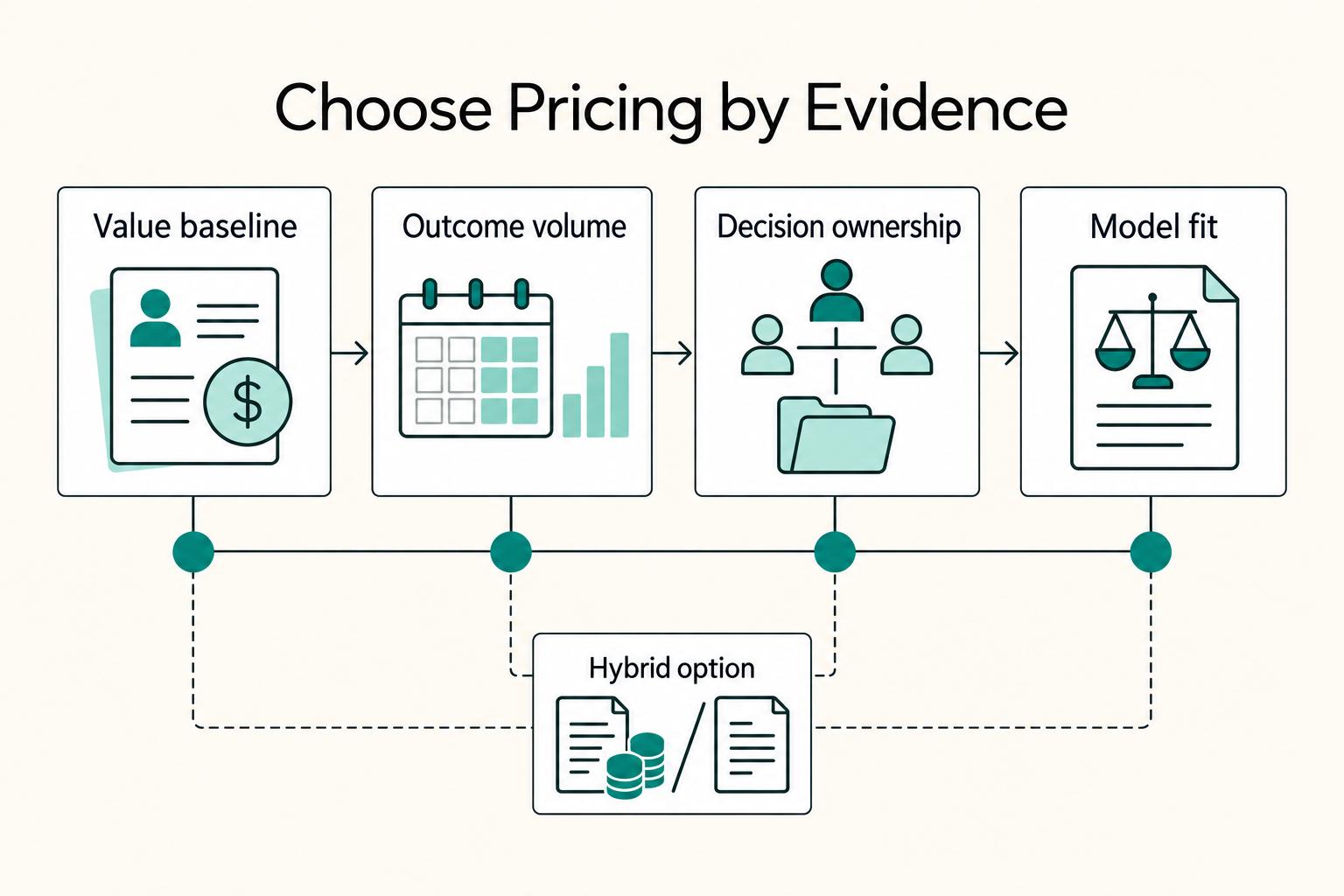
Value-Based Pricing for Freelancers Under Real Payment Risk
Value-based pricing starts with the client’s expected benefit and willingness to pay. It still needs a deliverable, scope and payment agreement you can perform. Use a discovery phase when the benefit or effort is too uncertain to support a defensible quote.

The Best Expense Tracking Apps for Freelancers
Admin drag usually starts small, then eats margin at month-end. Use this as a decision guide, not a popularity roundup: pick one tool quickly, then stick to a weekly routine that keeps records clean.

The Freelance Payment Penalty: A Modeled Audit of Platform Fees, FX Spreads, and Payout Delays
The money rarely disappears through a single, easy-to-spot fee. The real loss is stacked. A marketplace takes its commission, a processor adds a charge for international cards, a bank or payment company converts the currency at a spread, a platform holds the funds before release, and a wire sheds a little to intermediaries on the way in. Each layer looks defensible on its own, but the worker feels the combined result as a smaller deposit and a later payday.