
Quick Answer
Freelancers can often claim the qbi deduction for freelancers when income is in the pass-through lane, but only after clean classification. This guide recommends a one-session Yes, No, or Need-Review framework, then a documentation-first workflow. It emphasizes that “up to 20 percent” is a ceiling, not a guarantee, and that mixed income, SSTB uncertainty, and cross-border reporting overlap should trigger professional review.
Stop Guessing Your QBI Eligibility and Run a One-Session Decision Framework#
You can classify your Section 199A path in one focused session, then move with confidence instead of guessing. Treat this as an operating manual for the QBI deduction if you freelance. Classify first, optimize second. That order matters even more when you work across borders, where documentation and residency rules can vary by jurisdiction.
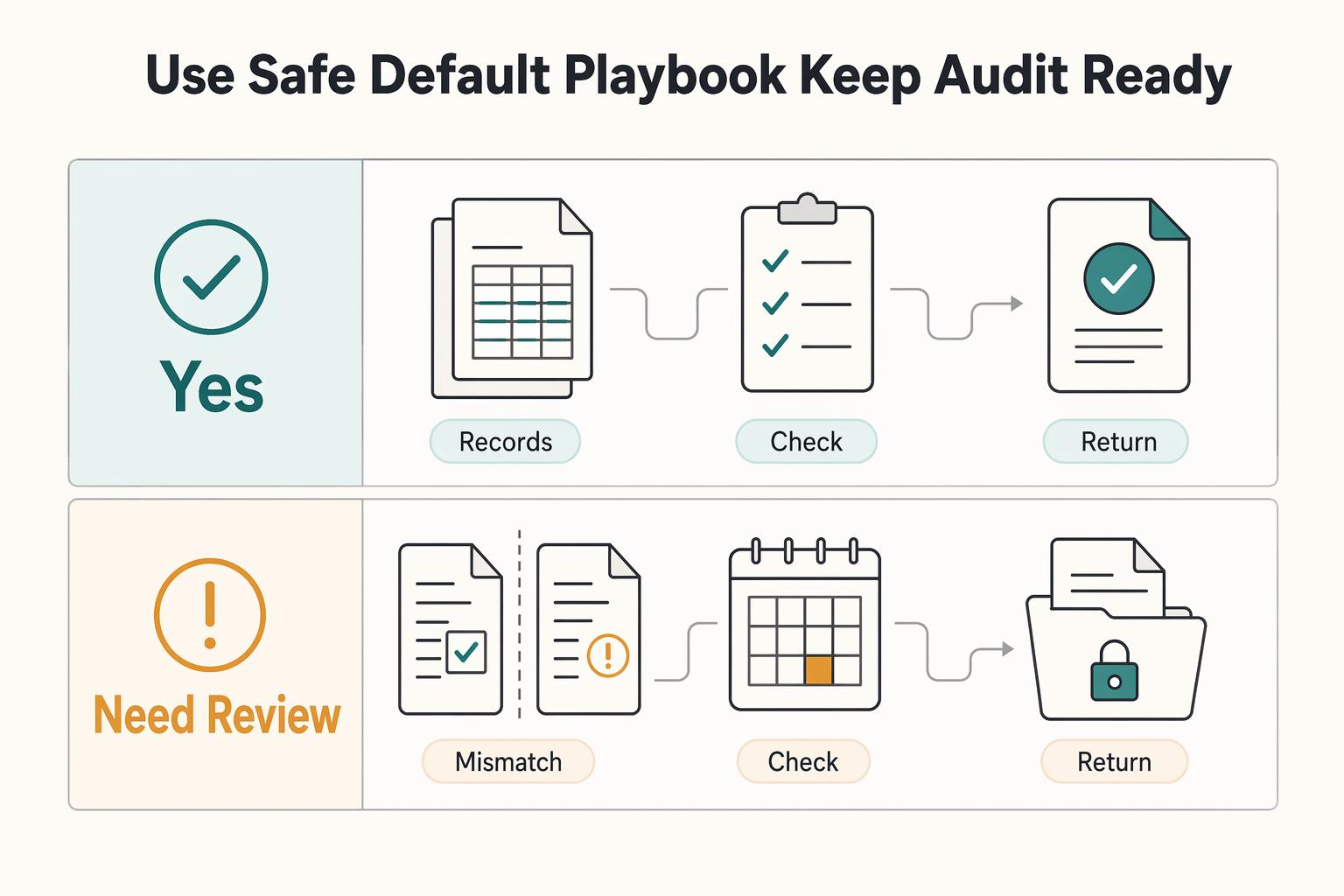
As a business of one, you need a decision you can run quickly, document cleanly, and defend later. This is not about debating theory. It is about making a clean call on the QBI deduction using a practical Yes / No / Need-Review framework, then moving your freelance tax workflow forward.
| Decision | What it means | What you do now |
|---|---|---|
| Yes | Your income appears to sit in the IRS lane for pass-through deduction treatment under Section 199A. | Continue with the worksheet and prep your calculation inputs. |
| No | Your income falls into an excluded lane for this deduction path, such as employee wages or C corporation income. | Stop QBI optimization and focus on accurate filing in the correct lane. |
| Need-Review | Your facts contain mixed signals or unresolved classification issues. | Freeze assumptions, document facts, and hand off to a CPA. |
This guide stays within hard boundaries. It uses the core guardrails for Qualified Business Income (QBI). Eligible taxpayers may deduct up to 20 percent of QBI. Employee income and C corporation income do not qualify for this path. IRS also points taxpayers to Form 8995 and Form 8995-A instructions to determine what qualifies as a trade or business.
It will not solve every fact pattern, claim exact threshold math without current-year verification, or treat cross-border residency, FBAR, or FATCA questions as "handled" just because you passed a QBI screen.
By the end of this article, you will have:
- A one-session eligibility checklist you can run without overthinking.
- Clear risk gates that force a Need-Review outcome when facts get messy.
- A clean CPA handoff packet so your advisor can validate decisions fast instead of rebuilding your case from scratch.
Build the Mental Model Before You Optimize#
Treat the QBI deduction as an income classification decision first, then optimize. The Yes/No/Need-Review framework only works if the definitions are tight, so you do not smuggle in the wrong income type and call it "QBI." This step keeps your freelance tax plan defensible when the facts are not perfectly clean.
Know the terms that control the outcome#
Qualified Business Income (QBI) is the net amount of qualified income, gain, deduction, and loss from a qualified trade or business. The Section 199A deduction is a potential deduction tied to that QBI, with a ceiling of up to 20 percent for eligible taxpayers.
The same framework can also include qualified REIT dividends and qualified PTP income. Keep those items separate from core business profit while you review your records.
Entity type drives your first pass, and pass-through income sits at the center of this analysis.
| Structure or income type | QBI lane | Operator takeaway |
|---|---|---|
| Sole proprietorship | Can be in scope | Start with business net income, not top-line revenue. |
| Partnership | Can be in scope | Confirm how income flows through before you classify it. |
| S corporation | Can be in scope | Separate pass-through business income from other pay types. |
| C corporation income | Out of scope | Route to No for Section 199A planning. |
| Employee wage income | Out of scope | Do not treat wages as QBI. |
Congress set this structure in law through the Tax Cuts and Jobs Act (TCJA), tied to P.L. 115-97, and IRS guidance frames Section 199A for tax years beginning after December 31, 2017. That means you are operating inside a statutory system, not a loophole.
Keep this out of your model#
What this is not:
- QBI is not gross receipts.
- QBI is not invoice volume.
- QBI is not total revenue.
A simple habit prevents most self-inflicted errors. If you have both business income and employee wages, classify them into separate lanes before you touch any deduction math.
If your entity choice still feels fuzzy, use How to Choose the Right Business Structure for Your Freelance Business before you run eligibility gates.
Do You Actually Qualify for QBI as a Freelancer?#
Classify your income source and entity first, then assign a clear Yes, No, or Need-Review result for Section 199A. This is where the QBI deduction stops being a concept and becomes a workflow tied to real documents.
A common failure point is mislabeling a business as a specified service trade or business (SSTB) when evaluating Section 199A. That is why you screen before you chase tax savings.
Run the eligibility screen in one pass#
If you report self-employment activity on Schedule C and receive contractor income documents like Form 1099-MISC or Form 1099-NEC, start in likely eligible pending limits. Then pressure-test by entity and income type.
| Checkpoint | Route | Why it matters |
|---|---|---|
| Sole proprietorship with Schedule C business profit | Yes (pending limits) | Pass-through income often enters the QBI deduction path. |
| Partnership owner | Yes (pending limits) | The entity passes required data to partners, then owners compute at return level. |
| S corporation owner | Yes (pending limits) | The entity passes data through to shareholders for Section 199A analysis. |
| C corporation income | No | C corporation income does not qualify for this deduction path. |
| Employee wages | No | Wage income from employee services does not count as QBI. |
| Mixed or unclear income streams | Need-Review | You need clean classification before you claim a pass-through deduction. |
If your facts suggest an SSTB, route to Need-Review unless you can confirm the taxable-income context. The Form 8995 and Form 8995-A instructions for 2025 include year-specific gates and phase-in ranges. Treat those figures as filing-year inputs, not permanent rules.
In practice, mixed profiles are common. If you have Schedule C profit and employee wages in the same year, keep the business profit in the QBI lane. Keep wages out of it. Escalate anything that requires judgment before you claim the Section 199A deduction.
What Can Reduce the Deduction Even If You Qualify?#
Treat "up to 20 percent" as a ceiling, not a promise. Passing the basic eligibility screen is step one. Step two is testing the limits that can shrink the final deduction so you do not plan around a best-case number that never shows up on the return.
Know which levers reduce the result#
The Section 199A deduction has two moving parts: a QBI component and a qualified REIT/PTP component. Even if both components look strong, the deduction is limited to the lesser of that computed amount or 20 percent of taxable income.
The QBI component can tighten further based on trade or business type, W-2 wages, and UBIA (unadjusted basis immediately after acquisition).
| Limiter | What it changes | Safe operator move |
|---|---|---|
| Taxable income cap | Caps the final deduction even after component math | Recalculate after taxable income is final, not while the numbers are still moving |
| W-2 and UBIA limit test | Can reduce the QBI component using the greater of 50% W-2 wages or 25% W-2 wages plus 2.5% UBIA | Pull wage and property records early, then run one clean worksheet |
| Aggregated business treatment | Requires combined QBI, W-2 wages, and UBIA across aggregated trades or businesses | Test aggregation impact before you lock the pass-through deduction estimate |
| REIT/PTP component | Adds a separate component that is not limited by W-2 wages or UBIA | Track REIT/PTP items separately from operating business QBI |
For 2025, the instructions show phase-in endpoints at $394,600/$494,600 for MFJ and $197,300/$247,300 for other returns; above the threshold and phase-in range, the full reduction applies. Use the filing-year instructions you are actually filing under, and verify current-year values before you file.
Example: you can be eligible based on entity and income type, then still see a smaller final result once taxable income and the wage and UBIA limits interact.
Safe default: If your facts are mixed, multi-entity, or incomplete, treat the result as provisional. Mark it Need-Review, then hand off your worksheet and source documents to a CPA before you file.
How Do Cross Border Facts Change Your Safe Default?#
Run your QBI analysis and your cross-border reporting checks in separate lanes, then reconcile them before you file. QBI math can be clean while your reporting stack still has gaps. If you are globally mobile, "safe" tax savings comes from coordination, not from a single worksheet.
Use a rules vary map before you finalize#
| Area | What the rule set says | What you do |
|---|---|---|
| U.S. federal QBI lane | QBI eligibility and deduction analysis should be handled on its own track. | Keep this lane focused on QBI eligibility and deduction limits. |
| FBAR lane | FBAR is FinCEN Form 114 and you do not file it with the IRS. | Check foreign account reporting separately through FinCEN requirements. |
| FATCA lane | Certain U.S. taxpayers with foreign financial assets must report on Form 8938. | Test whether Form 8938 applies, and do not assume it replaces FBAR. |
| California lane | California residents face tax on income from all sources, and part-year residents include worldwide income during the resident period. | Re-test residency status and filing scope if you returned to or left California. |
A useful trigger: if your foreign assets are high enough that Form 8938 could apply based on your filing status, move to Need-Review. Do that unless you can confirm the correct threshold for your situation.
Example: you can qualify for a pass-through deduction, hold foreign accounts, and spend part of the year back in California. Your QBI result can still be valid, but your filing duties can expand across IRS, FinCEN, and FTB workflows.
Use this safe default checklist as your baseline:
- Confirm QBI and cross-border reporting in separate workpapers.
- Mark any treaty or residency interpretation as unconfirmed until reviewed.
- Escalate when facts span multiple jurisdictions or status periods.
- Read Do I Have to Pay State Taxes While Living Abroad as a Digital Nomad? before finalizing state assumptions.
Run the Documentation and Filing Checklist Like an Operator#
Build one tax-ready record system that ties every filing number to supporting evidence, then run it on a fixed cadence. Eligibility and math are only half the job. The other half is being able to prove where every number came from without reconstructing your year under deadline pressure.
Build your filing pack once, then reuse it#
Keep one structured workspace with traceable entries and exportable logs. When you update a number, update the source file in the same session.
| Artifact lane | What to keep | What it supports |
|---|---|---|
| Income records | Client payment records and categorized ledger exports | Business income flow for Schedule C support files |
| Expense support | Receipts, account statements, and categorization notes | Deduction support and cleaner net income calculations |
| Entity documents | Formation and ownership records for your business setup | Context for return prep and advisory review |
| Return-prep references | Draft and final Schedule C and Schedule SE support files | Sole proprietor reporting and self-employment tax computation |
| Cross-border evidence | Separate folders for FBAR and Form 8938 artifacts | Clear split between FinCEN filing track and IRS filing track |
If your net self-employment earnings reach the IRS trigger, include explicit Schedule SE backup in the same packet. That habit prevents last-minute scrambling.
Run a monthly, quarterly, and pre-filing rhythm#
Use systems, not heroics. You want predictable execution, not rushed cleanup.
| Cadence | Tasks |
|---|---|
| Monthly | Reconcile ledger entries to statements, resolve uncategorized items, and lock a clean month-end export |
| Quarterly | Review estimated-tax coverage across the four payment periods and adjust assumptions before drift grows |
| Pre-filing | Reconcile Schedule C totals to your ledger, confirm Schedule SE support, and tie workpaper inputs to final taxable-income files |
If you work while traveling and keep accounts in more than one country, you can still run a clean close. Keep FBAR evidence separate from Form 8938 files, and reconcile both before return prep.
Use this mini pre-filing QA gate right before you hand off or file:
- Every material line item traces to a document.
- Workpaper numbers match final return inputs.
- FBAR and Form 8938 packets stay separate and complete.
- Advisor handoff includes exports, summaries, and unresolved questions.
If your entity records feel unclear, tighten that first with How to Choose the Right Business Structure for Your Freelance Business.
When Should You Pause and Talk to a Pro?#
Pause DIY work when classification risk or filing overlap can change your Section 199A outcome or create a compliance miss. Your record system should make this decision faster: either the facts are clean enough to proceed, or they are not.
Use hard escalation triggers#
Treat these as non-negotiable gates for Section 199A and broader freelance tax planning:
| Trigger | Why this moves to Need-Review | Safe action |
|---|---|---|
| SSTB status is unclear | SSTB treatment has separate handling, and at higher taxable income it can disqualify the deduction | Escalate before finalizing eligibility |
| Mixed income types | Different income categories can change how Section 199A is analyzed | Segment income streams and request professional classification review |
| Multiple entities | Entity-level facts can change deduction treatment | Ask for a combined entity memo before filing |
| W-2 wages and UBIA uncertainty | W-2 wages and UBIA can limit the QBI component in relevant cases | Treat your result as provisional until reviewed |
| Foreign account reporting overlap | FBAR and Form 8938 are separate tracks with different thresholds and filing mechanics | Confirm both tracks, then file each correctly |
| California residency exposure | California uses a temporary-or-transitory-purpose standard and FTB maintains residency and sourcing audit guidance | Escalate state residency facts early |
If you run client work through one entity, take side income in another form, and move in and out of California during the year, assume you will hit at least one escalation trigger. Plan for that early instead of forcing a binary answer.
Bring a decision packet and set a stop date#
Bring a complete packet so the meeting produces decisions, not homework:
| Packet item | Include |
|---|---|
| Prior year return files | Current-year draft workpapers |
| Current-year bookkeeping exports | Reconciliations |
| Business structure summary | Each entity and income lane |
| Yes/No/Need-Review worksheet | Flagged assumptions |
Set decision deadlines now. If unresolved items remain near filing windows, stop researching and escalate immediately.
For cross-border reporting, remember FBAR runs on a separate FinCEN e-filing track with its own due date and extension rules. If California facts remain unclear, review Do I Have to Pay State Taxes While Living Abroad as a Digital Nomad? before your call. That way your advisor can rule faster.
Classify Yes, No, or Need-Review Before You Choose the Filing Path#
Use a strict Yes, No, or Need-Review call, then execute the matching filing path without improvising. The goal is a defensible filing, not a fragile estimate. Once the classification is right, you can pursue legitimate tax savings without creating avoidable compliance risk.
Use this operator table before you file:
| Classification | What it means | What you do next |
|---|---|---|
| Yes | Your income facts fit the Section 199A deduction path and your records support the claim | Calculate the QBI deduction up to the allowed limit, choose the correct form path, and keep your support packet audit ready |
| No | Your income comes from a C corporation or employee services | Stop the pass-through deduction workflow and remove it from your filing assumptions |
| Need-Review | You still have unresolved rule or structure questions | Document assumptions, freeze DIY changes, and schedule professional review |
Run the filing path with hard boundaries#
Use a simple sequence so your freelance tax process stays clean:
| Situation | Action |
|---|---|
| Taxable income before the QBI deduction fits the Form 8995 gate | Confirm the filing-year gate; for 2025 returns, the instructions cite $394,600 for married filing jointly and $197,300 for other returns |
| You do not meet that Form 8995 path | Move to Form 8995-A |
| You operate through a partnership or S corporation | Reconcile the QBI details passed through on your Schedule K-1 attachments and apply them at the owner level |
| W-2 wages, UBIA, or business type limits apply | Treat your result as provisional until you validate every input |
If you run one client line through a sole proprietorship and another through an S corporation, you can still make a clean decision. The condition is that both income streams reconcile cleanly across your worksheet, your pass-through documents, and the final forms.
Complete your qualification worksheet, finish your documentation checklist, and set a final pre-filing review date. Then run one last IRS update check, because form instructions can change late in the cycle. If your entity setup still creates uncertainty, tighten it with How to Choose the Right Business Structure for Your Freelance Business.
Frequently Asked Questions
Do freelancers qualify for the QBI deduction?
Many freelancers may qualify when they earn pass-through income through a sole proprietorship, partnership, or S corporation. The operator move is simple: do not claim a Yes until you confirm both your income type and your structure.
Who does not qualify for the Section 199A deduction?
C corporation income does not qualify for this pass-through deduction. Income you earn as an employee also does not qualify, even if you do similar work in your freelance business. If you mix eligible and non-eligible income, split the streams before you estimate any benefit.
How much can the QBI deduction be for a freelancer?
The headline cap is up to 20 percent of Qualified Business Income (QBI). That cap is not a guaranteed result. Limits tied to taxable income, business type, W-2 wages, and UBIA can reduce the final deduction.
Is the QBI deduction still available for current planning?
Current IRS explainer language ties the deduction to tax years that begin after December 31, 2017 and end on or before December 31, 2025. Treat availability outside that window as a live legal question and confirm current rules before filing.
What are W-2 wages and UBIA and why do they matter?
W-2 wages and UBIA can limit the Section 199A deduction when income crosses threshold levels. UBIA means unadjusted basis immediately after acquisition, based on basis at the placed-in-service date. If you aggregate multiple businesses, the limitation workflow uses combined QBI, W-2 wages, and UBIA.
How do SSTB rules affect freelancers and consultants?
SSTB status can change eligibility as taxable income rises, including cases where income moves through threshold and phase-in ranges. The filing-year forms and instructions lay out how that treatment changes across income ranges. If SSTB status is even slightly unclear, mark Need-Review instead of forcing a binary call.
When should I stop and hire a tax professional?
Stop DIY when you cannot classify income cleanly, cannot resolve SSTB status, or cannot validate W-2 wage and UBIA interactions with confidence. Escalate fast when multiple entities or mixed filing obligations sit in one return year. Bring prior returns, current bookkeeping exports, and your Yes/No/Need-Review worksheet so the advisor can make decisions quickly.
Try a related tool
Researched and edited by the Gruv editorial team. Gruv builds cross-border billing, payouts, and finance-operations software for global businesses.
Sources
Educational content only. Not legal, tax, or financial advice.
Related Posts

Do I Have to Pay State Taxes While Living Abroad as a Digital Nomad?
Living abroad does not end `state income tax` exposure by itself. The first decision is practical: choose a filing position your facts can support, then build records that support the same story all year.
How to Choose the Right Business Structure for Your Freelance Business
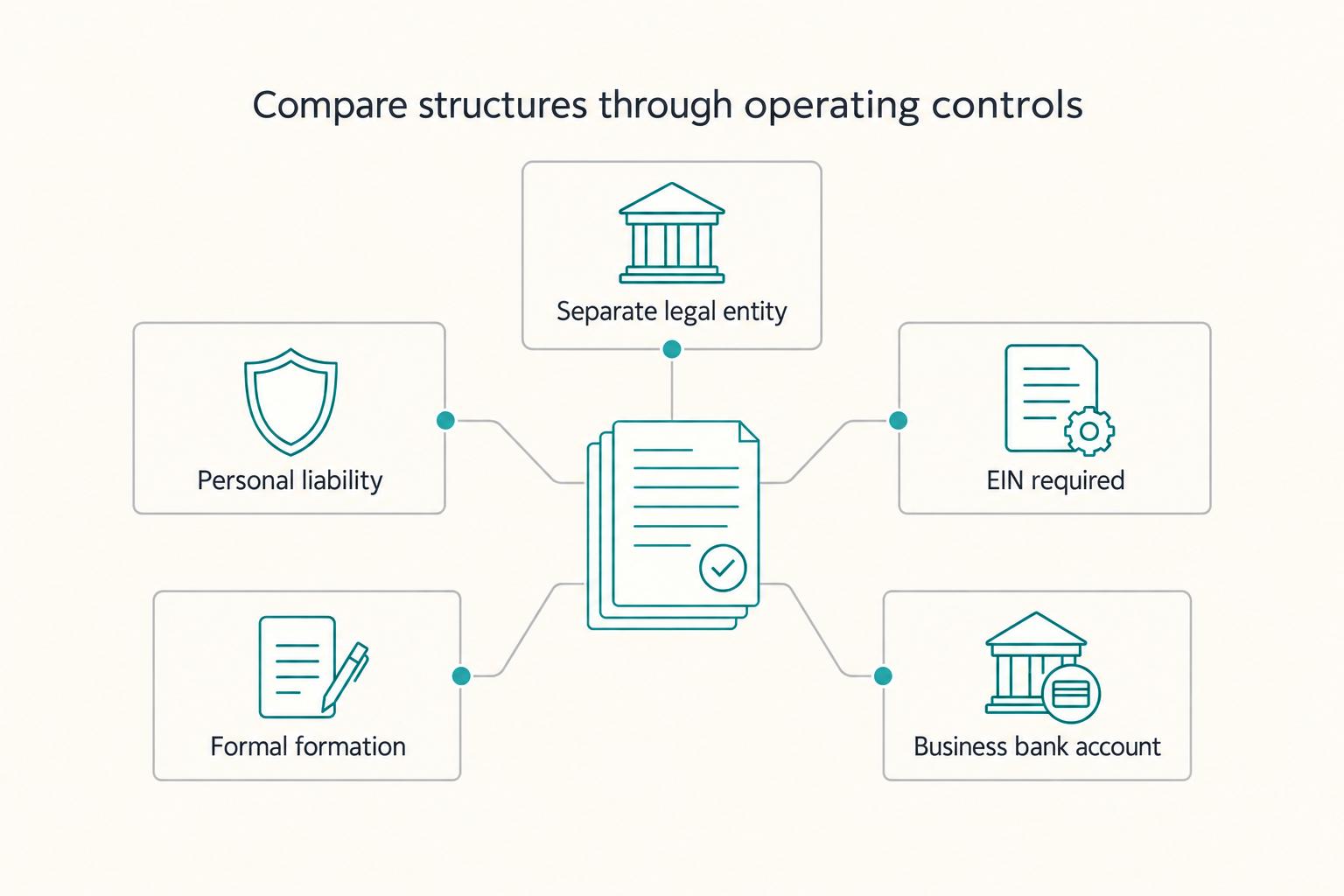
Most freelancers end up in a business structure by default rather than by design, but that accidental choice shapes taxes, personal liability, and payment operations in ways that compound over time. This guide walks independent professionals through four entity types — Sole Proprietorship, Single-Member LLC, S-Corp election, and Corporation — covering the tax treatment, liability exposure, and operational overhead of each. Rather than prescribing a single best answer, it provides a trigger-based framework: start with the structure that fits today, then upgrade when specific signals — indemnification clauses, enterprise KYB requirements, a first hire, or material net profit — make the switch worthwhile. The result is a deliberate, revisable foundation that keeps records clean, reduces onboarding friction, and avoids the expensive mismatches that come from letting structure lag behind business growth.

The Freelance Payment Penalty: A Modeled Audit of Platform Fees, FX Spreads, and Payout Delays
The money rarely disappears through a single, easy-to-spot fee. The real loss is stacked. A marketplace takes its commission, a processor adds a charge for international cards, a bank or payment company converts the currency at a spread, a platform holds the funds before release, and a wire sheds a little to intermediaries on the way in. Each layer looks defensible on its own, but the worker feels the combined result as a smaller deposit and a later payday.