
Quick Answer
Some foreigners, including nonresidents, may be eligible to open a Cyprus bank account. Ask the bank which account and onboarding route accept your profile, what documents and certification it requires, and which payment currencies and routes it supports. Use the provider’s actual receiving instructions on invoices and keep evidence linking each payment to your work.
Opening a Bank Account in Cyprus as a Foreigner: Choose an Account You Can Use#
Choose a Cyprus account around the payments you need to receive and the provider’s eligibility rules. For a freelancer or small team, the useful questions are practical: can clients pay in your invoicing currency, what will it cost, and what documents does the provider need to understand your business?
Opening the account is the first step. You also need receiving instructions clients can follow, a record of each invoice and payment, and a way to respond when the provider asks about an incoming transfer.
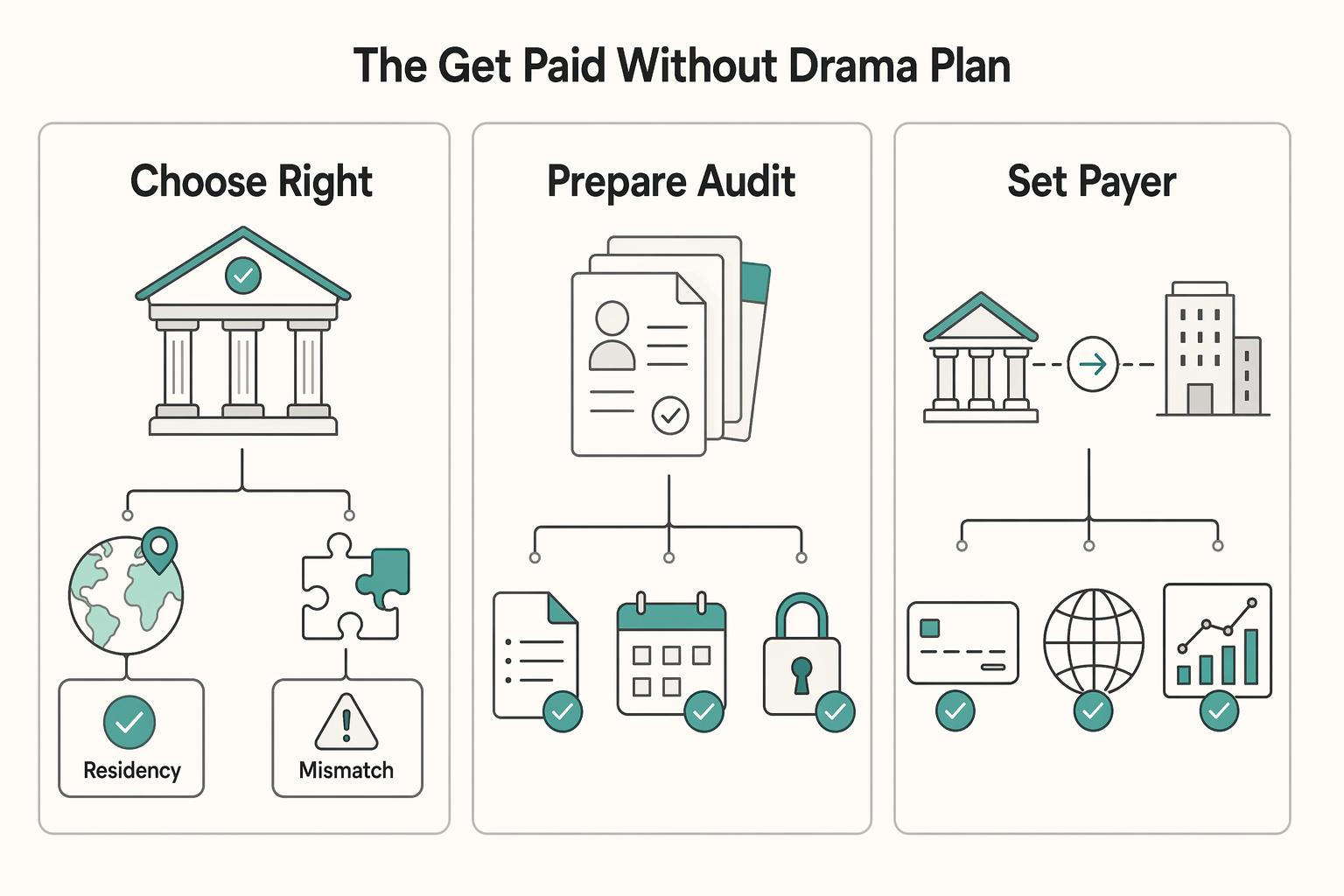
This guide uses a risk-first system built on three ideas:
- Choose an account setup: a Cyprus bank, a payment provider such as Wise, or a combination.
- Prepare the documents your chosen provider requires, with reusable evidence of your work and income.
- Set clear payer and invoice instructions so incoming payments are easier to match.
The compliance reality (and how to use it)#
KYC (Know Your Customer) involves verifying identity and understanding customer activity. AML (anti-money laundering) checks address the risk of illegal funds. Expect questions about who you are, what you do and where money comes from. For example, Bank of Cyprus’s account-opening process uses questionnaires and supporting documents, and the bank may request further information after review.
Your operator move: write a reusable source of funds narrative you can paste into forms and emails. Keep it boring and verifiable (example: "I provide UX design services to B2B SaaS companies. Clients pay against invoices. Typical invoice size: EUR X to EUR Y. Main client geographies: EU/UK/US. I can provide signed contracts and invoice history.")
Pick your setup: Cyprus bank, Wise, or both#
Compare the account choices against your client currencies, local banking needs and permitted account use:
| Setup | Best for | Tradeoffs | What you must control |
|---|---|---|---|
| Cyprus bank account | Local banking needs and traditional banking workflows | Eligibility and documents depend on the bank and account route | Clean incoming flows, consistent payer names, clear business activity |
| Wise (EEA payment institution) | Online multi-currency workflows where supported | Not a bank; confirm account eligibility and available receiving details | Correct account-holder name, invoice references and reconciliation |
| Bank + payment-provider workflow | Resilience and optional separation of "receive" vs "hold" funds | More moving parts | A written rule for which clients pay where, and why |
For a bank-led route, Bank of Cyprus QuickAccount can be opened through Internet Banking or the mobile app by individual 1bank subscribers aged 18 or over. That product condition is separate from becoming a bank customer. For Cyprus/EEA customers, Wise Europe SA is a Belgian payment institution authorized by the National Bank of Belgium. The UK electronic money institution authorization applies to a different Wise entity.
Choose one primary receiving account and use its actual instructions in your invoice template. Keep the account-holder name, currency and payment reference clear. Try the free invoice generator to make those details consistent.
The Mental Model: Rails + Risk (Define These Terms Before You Choose Anything)#
To do this without surprises, separate "payment rails" (how money moves) from "risk/compliance" (why providers ask questions). If you do that upfront, you stop guessing, answer KYC cleanly, and choose the right transfer method for each client.
Rails: IBAN, SEPA, SCT, SWIFT (what moves money, and how)#
IBAN is an account identifier defined by the ISO IBAN standard (ISO 13616-1). In practice, it is the account number format many European payers expect on invoices and bank forms. If your Cyprus bank account or payment provider gives you an IBAN, you will use it as the destination identifier for EUR bank transfers.
SEPA (Single Euro Payments Area) sets common rules for euro payments. The EPC country list, updated in December 2025, includes 41 countries, including Cyprus. SEPA Credit Transfer (SCT) is a euro credit-transfer scheme. Country inclusion does not mean every provider offers the scheme: check that the sending and receiving providers support the transfer.
SWIFT is different. SWIFT acts as a messaging carrier between financial institutions. It transports payment messages, but it does not hold funds or manage accounts. You will see SWIFT referenced in bank-transfer instructions where banks use SWIFT messages to communicate payment details.
Use this operator table when a client asks, "How should we pay you?"
| Need | Best-fit rail label you'll see | What you give the client | What can slow you down |
|---|---|---|---|
| EUR transfer within SEPA rules | IBAN + SCT | IBAN, account name, bank details, invoice reference | Missing reference, mismatch between invoice name and account holder |
| International transfer messaging | SWIFT | IBAN or account number plus SWIFT code and bank info | Extra information requests, missing or incorrect banking details |
Risk: KYC, AML, source of funds, source of wealth (why they question you)#
KYC (Know Your Customer) means the provider verifies your identity and assesses risk. AML rules aim to detect and report suspicious activity linked to money laundering and terrorist financing. This is why expat and non-resident banking can feel personal. The institution must understand the transaction context.
Two terms you must keep straight:
- Source of funds: the origin of the money used in a particular transaction (example: "Client A pays invoice #1042 for design services.")
- Source of wealth: how you accrued your overall wealth (example: "Income from employment and my registered freelance business over the last X years.")
Operator move: write both statements in plain language and keep them consistent across applications, onboarding calls, and every "please explain this incoming transfer" email. That consistency can reduce friction when you open the account and when payment volume grows later.
Which Account Setup Fits Your Clients and Business?#
Match your account to client currencies, receiving routes and business use. Start with the payments you expect, then check the provider’s account eligibility and documentation requirements.
A 10-minute decision tree (pick the path with the cleanest rails)#
Start with how clients pay you, not with whichever provider looks easiest.
- Most invoices are EUR and the providers support SEPA: prioritize an account that can receive SEPA Credit Transfers. A Cyprus bank account may also serve your local banking needs. Confirm the receiving IBAN and account-holder name before adding them to invoices.
- You need multi-currency receiving: consider Wise alongside a Cyprus bank. Cyprus is on Wise’s eligible-residence list, but check the personal or business account’s available currencies, receiving details and fees. Its EEA service is provided by Wise Europe SA, a payment institution.
- You need collection and reconciliation tooling: compare the provider’s transaction records and exports with your invoicing workflow. If considering Gruv Virtual Accounts where enabled, confirm receiving currencies, coverage and available features before assigning details to clients.
Use this quick comparison to decide without overthinking:
| What you optimize for | Cyprus bank account | Payment provider (Wise) | Hybrid setup |
|---|---|---|---|
| Best when | Local banking and supported EUR SEPA billing | Supported multi-currency workflows | You need both account types and clear reconciliation |
| Typical tradeoff | Eligibility and KYC documents depend on the chosen route | Some payers may prefer "traditional bank" setups | More components to maintain |
| Your job | Keep documents consistent | Keep account usage consistent | Define rules (what lands where) |
Personal vs business, and the non-resident reality check#
Choose personal or business banking according to your legal status and the provider’s permitted use. If you invoice through a company, the receiving account and supporting documents should identify that company. If you are self-employed, ask which account type permits your activity rather than assuming a personal account can receive business income.
For a nonresident application, confirm that the provider accepts your country of residence and business profile. Ask for the exact identity, address and source-of-funds checklist. A bank reference may be required by a particular route: Bank of Cyprus’s linked IBU personal questionnaire, for example, requests one dated within six months.
Safe default for cashflow protection: pick one primary receiving endpoint (usually a SEPA-based account for EUR billing), document it in your invoicing template, and add complexity only when you can explain it cleanly.
Your Audit-Ready Document Pack (KYC/AML) - Built for Freelancers and Creators#
A reusable document file helps you answer onboarding questions with evidence. Keep identity and address documents alongside contracts, invoices and statements that explain your activity, then submit what the chosen provider requests.
Follow the bank’s upload instructions and document checklist. Keep an index for your own files so you can find the right invoice or statement quickly. A single PDF can be useful if accepted, but it does not replace required originals, certified copies or separate upload fields.
The core pack (personal or non-resident banking)#
Start with table-stakes documents, then layer in money-flow evidence.
| Pack component | What to include | Operator notes (avoid KYC loops) |
|---|---|---|
| Identity | Valid passport or national ID. | BoC app onboarding requires an original passport/ID. Check the chosen route’s document format before applying. |
| Proof of address | Utility bill or bank statement showing your name and address. | Check accepted document types and recency. Explain any genuine address or formatting difference. |
| Source of funds support | Bank statements showing inbound payments. Contracts, client invoices, and other supporting documents that explain the flow of funds. | Use an index showing payer, amount and service; submit supporting documents through the requested channel. |
Nonresident approval depends on the bank’s eligibility rules and assessment. Provide your actual residential address and explain why you need the account; a consistent file supports review but does not guarantee acceptance.
Income evidence that works for freelancers and creators#
Banks often ask for income and source-of-wealth context. Give them a clean sample:
- Recent invoices that match real inbound payments on your bank statement.
- Contracts or SOWs for those clients.
- A short "what I do" summary (one paragraph) describing your services and typical client/counterparty locations.
Business-account specifics: UBO + activity summary
For a company application, prepare the ownership and activity information the bank requests. Bank of Cyprus’s linked business questionnaire covers beneficial owners, directors and signatories. A simple ownership chart—even “you: 100%”—helps connect the company to its ultimate owners and formation documents.
Also plan for "additional information and documentation" requests. That can be part of account opening and AML due diligence. Your goal stays the same: one story, backed by paper.
Tax self-certification: Bank of Cyprus collects tax residences and tax identification numbers through FATCA/CRS self-certification forms. Accounts within the reportable-account scope are reported annually. This bank process is separate from foreign-account filings you may owe personally; U.S. persons should check their own FBAR obligations.
Finally, treat translation and notarization as bank-specific. In some cases, notarized copies and translation into English or Greek are required. Confirm first, pay second.
Keep tax self-certifications with your account records so you can update the provider when your tax residence changes.
Online Opening, IBU Applications and In-Person Activation#
The onboarding route depends on the applicant and account. Distinguish initial customer onboarding from opening an additional product as an existing customer, and confirm which route applies before arranging travel.
Bank of Cyprus’s new-customer page describes individual mobile-app onboarding using an original ID/passport scan, selfie and financial details. Separately, QuickAccount is available through Internet Banking or the mobile app to individual 1bank subscribers aged 18 or over. An online product-opening option does not establish initial eligibility for every foreign applicant.
The international account-opening page gives two IBU routes: a personal visit to an International Business Unit or an application through a local Professional Intermediary. It also points individuals to digital onboarding. On the new-customer page, the separate application/upload fallback is for permanent Cyprus residents who are not existing customers and requires physical presence for activation and card collection. Confirm which route you can use; a branch visit is not the universal final step.
What to Expect on Each Bank of Cyprus Route#
Use these route-specific conditions when asking the bank which application process fits your profile:
| Action | What to expect |
|---|---|
| New-customer app route | Original ID/passport scan, selfie and requested financial details |
| QuickAccount product opening | Individual 1bank subscriber aged 18 or over; Internet Banking or app |
| IBU application | IBU visit or local Professional Intermediary, questionnaire and required documents |
| Application/upload fallback | Check the permanent-resident/new-customer conditions and required in-person activation |
Use the checklist for your actual route. The bank may request further documents or decline an application after assessment, so keep an existing receiving account available while approval is pending.
Prep for the interview so you do not contradict yourself#
Your goal in expat and non-resident banking is consistency. Walk in with numbers you can defend, and make sure they match your invoices and portfolio.
Have ready (and keep it identical across forms):
- One-paragraph business description (what you sell, how you deliver).
- Client countries.
- Typical invoice range and expected monthly inbound volume.
- Why you need the account in Cyprus (for receiving client payments and clean reconciliation).
What to say (copy, paste, adapt): "I provide [service] to clients in [countries]. Typical invoices are €[x] to €[y], paid by bank transfer. I can provide contracts, invoices, and proof of delivery as source of funds evidence."
Operator move: Ask the bank, in writing if possible, whether your specific profile can complete onboarding digitally or whether they require a meeting. Also ask for any account fees and minimum balance expectations attached to your customer profile, so the account does not surprise you after approval.
SEPA vs SWIFT in Cyprus: Fees, Timelines, and the Cashflow Gotchas#
When you open an account in Cyprus, you're not just getting an IBAN. You are choosing payment rails, and rails quietly shape your fees, predictability, and support workload. Once onboarding is moving, the next operator move is to route invoices on purpose so cashflow stops "mysteriously" leaking.
Choose rails intentionally (define the job first)#
SEPA Credit Transfer (SCT) is for euro payments. Cyprus is within SEPA’s geographic scope, but the actual sending and receiving providers must support the scheme. For a EUR client invoice, ask the receiving provider whether its IBAN accepts SCT and give the client the exact beneficiary and reference instructions.
Swift carries payment messages between financial institutions; the institutions process the funds. A non-EUR invoice or currency conversion does not automatically imply Swift. Your provider may offer a local receiving route or another transfer method. If it specifies Swift, ask for the required bank details, intermediary information and fee treatment.
Here is the practical decision frame:
| Your invoice scenario | Default rail to request | What to confirm before you send it |
|---|---|---|
| EUR invoice, both providers support SCT | SEPA Credit Transfer | EUR transfer, correct receiving IBAN/account name and invoice reference |
| Other currency or unsupported SEPA route | Provider’s supported route; Swift if specified | Receiving currency, routing details, conversion and possible deductions |
The three fee buckets to audit (in writing)#
Do not guess. Ask your provider to spell out:
| Cost area | Ask for in writing |
|---|---|
| Account fees | Monthly maintenance, dormancy, and any conditions tied to your account |
| Incoming transfer fees | Receiving fees for SEPA and/or SWIFT, plus whether correspondent fees can reduce the credited amount |
| FX economics | The bank's conversion method and markup if you invoice in USD and land funds in EUR |
Operator tip: Build a "fees and rails" checklist into your client onboarding, right next to KYC. That is how expat banking stops feeling random.
Reduce "pending transfer" anxiety (and card chaos)
Two controls cut stress fast:
- Cutoffs and value dates: ask your bank how postings behave around non-business days, and what timestamp they use for "received."
- Investigation readiness: for SWIFT, keep whatever payment confirmation/reference the sender can provide accessible so you can escalate with specifics.
If you accept card payments as well, keep dispute and refund records separate from bank-transfer collections. Follow your card provider’s actual evidence request and response deadline.
If you accept cards, isolate that flow (separate reconciliation and refund logic) so it does not contaminate your IBAN-based collections. If you need automation help on the card side, use Automating Your Freelance Finances: A Zapier Workflow for Connecting Stripe.
For any additional collection platform, including Gruv where enabled, confirm what transaction statuses and reconciliation exports are available for the account you would use.
Responding to Delayed Transfers and Information Requests#
A transfer may be delayed by routing details, processing schedules or a provider’s checks. Documentation can help when the provider needs to understand who paid and why, but it does not resolve every cause. Start with the payment reference and the provider’s stated reason or information request.
Design around the hold triggers you can control#
Check the details you can verify while asking the provider what it needs:
- Weak source-of-funds narrative: Banks may ask for information and documents on source or value of wealth during Cyprus account-opening, and they may request additional documentation after initial review. If inbound funds hit your account but you cannot tie them to invoices, contracts, and delivery, you create work for their AML process.
- Payer or beneficiary differences: give clients the receiving provider’s exact account-holder details. If another entity pays an invoice, document its relationship to the contracting client and ask whether the provider permits the arrangement. Do not assume every name difference causes an automatic return.
- Unexpected changes: If your activity changes in a way the bank doesn't understand from your existing file, they may ask questions. You do not control bank risk models, but you can control how well you explain the change.
Documents for a Payment Review#
Respond through the provider’s requested secure channel and within its deadline. For a payment-related source-of-funds question, the following documents can help connect the transfer to your work. Supply the relevant evidence, explain gaps and ask which alternatives are accepted if a required document is unavailable.
| Document or note | What to include |
|---|---|
| Contract or SOW | Signed, with scope and dates visible |
| Invoice | Contracting client’s legal name; explain any different paying entity |
| Proof of delivery or acceptance | Email acceptance, final deliverable link, or platform completion screenshot |
| Client entity details | Legal name, address, and website |
| Source-of-funds tie-out | The clearest proof you have that shows the source and movement of funds |
| Short explanation | Transfer amount, payment reference, invoice number, and service period in 5 to 8 lines |
For a service payment, a contract explains the work, an invoice explains the amount, and a statement or transfer confirmation helps identify the payment. Match these to the specific question rather than sending unrelated documents.
Prevention: run a remittance reference system
Payment reference is the note attached to a transfer. Ask the client to include the invoice number so you can identify what the payment is for.
Practical defaults for cross-border banking workflows:
- Standardize invoice numbers (example:
GRUV-INV-ACME-01). - Ask clients to paste the invoice number into the transfer reference for SEPA Credit Transfer.
- If an entity other than the contracting client will pay, clarify the arrangement before payment and check the provider’s rules. Keep a written explanation linking payer, client and invoice.
If the provider asks for more information, answer each requested point and include the matching documents in the format it accepts. If the request is unclear, ask: “What are you trying to verify, and which document would satisfy that request?” Keep a copy of your response and the case reference.
Invoices, Payer Rules, and Reconciliation a Bank Can Verify#
Consistent invoice and payment records help you explain incoming funds. Give clients accurate receiving details and keep the contract, invoice and receipt linked so a follow-up does not require reconstructing the transaction.
Invoice terms that reduce delays and disputes (copy, paste, enforce)#
Put these lines on every invoice you send once the account is live (and keep the wording consistent across invoices, contracts, and email threads):
- Payment method line: "Payment via bank transfer to IBAN preferred."
- Beneficiary name line: use the account-holder name supplied by the receiving provider. Ask clients to verify the account details before paying.
- Terms that create certainty: include a due date (for example, "Due within 7 days"), a late fee clause if you use one, and for new clients a deposit milestone (example: "50% upfront, 50% on delivery"). You reduce disputes by setting expectations before money moves.
Keep a dated invoice with a unique number, supplier and customer names and addresses, service description and amount. Add VAT registration numbers and VAT treatment where applicable to your invoice; do not invent a VAT number if you are not registered. These records also help explain the commercial reason for the transfer.
Payer rules + a reconciliation system you can defend in 60 seconds#
You do not hope clients pay correctly. You give them a checklist and head off sloppy payments before they happen.
| Control | What you require from the client | Why it helps when you need to explain deposits |
|---|---|---|
| Payer identity | Legal entity name and address (as registered) | Helps you match deposits to the contracting party if you're asked in a KYC follow-up |
| Payment reference | A consistent reference that includes the invoice number | Links the receipt to the invoice and identifies what the payment covers |
| Proof bundle | Contract/SOW + invoice + acceptance proof stored together | You answer "why this money" without scrambling |
Reconciliation system: maintain a ledger with invoice number, transfer reference, currency, expected amount, received amount and received date. Record fees or conversion differences rather than marking a short payment as settled without explanation. If you collect through multiple methods, track them separately so you can investigate the correct provider.
Source-of-funds narrative template: state your services, typical clients, client geographies, expected monthly volume range and typical invoice size. Keep relevant contracts, recent invoices and statements showing matching deposits available. Submit the date range and evidence the provider actually requests.
If you want less ops drag, use tooling that gives you audit-ready records and reconciliation exports. If you already automate parts of your workflow, plug your finance stack into a repeatable system like Automating Your Freelance Finances: A Zapier Workflow for Connecting Stripe.
Check the provider’s jurisdiction and legal entity before relying on eligibility information. A similarly named institution in another country may have entirely different account conditions.
Review your receiving instructions when you change provider, account currency or business entity.
Your Account-Opening and Receiving-Payments Checklist#
Choose an eligible account, follow its onboarding route and use accurate receiving instructions. Keep the documents that explain your work and payments ready for follow-up. These steps improve your records without promising approval or uninterrupted processing.
For EUR invoices, confirm that both providers support SEPA Credit Transfer. If the payment needs another currency or route, ask your receiving provider for the supported method, required fields and conversion terms before the client sends it.
Next, treat KYC/AML like a project, not paperwork. Banks will ask for identity and address (for example, Bank of Cyprus signals you should have a copy of ID/passport plus proof of residential address). Build a source of funds bundle once, then reuse it: contracts or SOWs, matching invoices, proof of delivery (screenshots, acceptance emails, statements of work completion), and a one-page narrative that explains who pays you and why.
Complete the provider’s FATCA/CRS tax self-certification accurately, including tax residences and tax identification numbers where required. Ask which forms apply to your personal or business profile and update the bank when relevant details change. Separate that process from any tax or foreign-account filings you owe yourself.
Use onboarding as a process (not a hope)#
Operate like this:
- Respond to follow-ups through the requested secure channel and within the deadline; keep a copy and case reference.
- Use accurate names, addresses and activity descriptions; explain genuine changes or differences.
- Confirm your profile’s eligibility, onboarding route, certification requirements, fees and minimum balance before relying on the account.
Short execution checklist (print this)#
- Confirm your receiving method: SEPA Credit Transfer for supported EUR payments, or the provider’s specified route for other transfers.
- Prepare your document pack: passport/ID, address proof, contracts, invoices, proof of delivery, source of funds narrative.
- Define invoice rules: beneficiary name match, mandatory reference format, deposit milestone for new clients.
- Ask the bank for 4 confirmations: onboarding channel, fees, minimum balance, translation/notarization expectations.
- If you need additional collection tooling, confirm its currency coverage, receiving-account availability and reconciliation exports before using it.
Frequently Asked Questions
Can a non-resident open a bank account in Cyprus?
Some nonresidents may be eligible, but approval depends on the bank, country of residence and applicant profile. Bank of Cyprus’s international account-opening page describes IBU application routes and notes that the bank can seek additional documents or decline applications. Confirm eligibility for your profile before arranging travel or changing client payment instructions.
Can I open a Cyprus bank account online as a foreigner?
Bank of Cyprus offers individual app onboarding using an original passport/ID scan and selfie, subject to its checks. Its separate application/upload fallback is for permanent Cyprus residents who are not existing customers and requires in-person activation. IBU applications can use a visit or a local Professional Intermediary. Confirm the route available to you; there is no universal “digital start, branch finish” rule.
Do I need a Cyprus address to open a bank account?
A residential-address document does not by itself mean you must live in Cyprus. However, a particular onboarding route may require Cyprus residency: Bank of Cyprus’s application/upload fallback does. Its IBU personal questionnaire requests residential-address evidence dated within six months. Check both the address-document requirement and the route’s residence eligibility.
What documents do I need for KYC in Cyprus (and what counts as source of funds)?
Requirements depend on the account and route. The personal questionnaire linked by Bank of Cyprus’s IBU page requests a certified true copy of the passport, residential-address evidence and a bank reference, with the latter two dated within six months. Source-of-funds evidence connects expected or received money to its origin—for example, a client contract, matching invoice and bank statement. App onboarding has its own original-ID verification steps. Check which originals or certified copies your route requires. Use address evidence and bank references within the provider’s stated date limits. For freelance income, keep the contract, invoice and matching deposit record together.
Do documents need translation, notarization, or an apostille?
Ask for the chosen route’s exact document and certification checklist before paying for translations, notarization or apostilles. Supply certified copies when required from the start: Bank of Cyprus’s linked IBU personal questionnaire requests a certified true copy of the passport. Do not assume an ordinary scan can substitute until rejected.
How long does it take to open a bank account in Cyprus - and what causes rejections?
There is no single timeline or guaranteed approval. Missing required documents or unresolved questions can delay review, and the bank may decline an application based on eligibility or its assessment. Ask whether your file is complete and whether further information is needed; keep another receiving option active until approval.
Is SEPA available with Cyprus bank accounts, and when do I need SWIFT?
Cyprus is within the 41-country SEPA geographic scope. A EUR transfer can use SEPA Credit Transfer when the sending and receiving providers support the scheme. For other currencies or routes, follow the receiving provider’s instructions; use Swift if specified. Swift carries payment messages rather than moving the funds itself.
Try a related tool
Researched and edited by the Gruv editorial team. Gruv builds cross-border billing, payouts, and finance-operations software for global businesses.
Sources
Includes 4 external sources outside the trusted-domain allowlist.
- wise.com/help/articles/2932693/how-is-wise-regulated-...trusted
- wise.com/help/articles/2813542/where-do-i-need-to-liv...trusted
- bankofcyprus.com/en-gb/Personal/Digital_Channels/campaign/new...external
- bankofcyprus.com/en-gb/Personal/deposits-investments/instant-...external
- europeanpaymentscouncil.eu/sites/default/files/kb/file/2025-12/EPC409-0...external
- swift.com/about-us/who-we-areexternal
Educational content only. Not legal, tax, or financial advice.
Related Posts
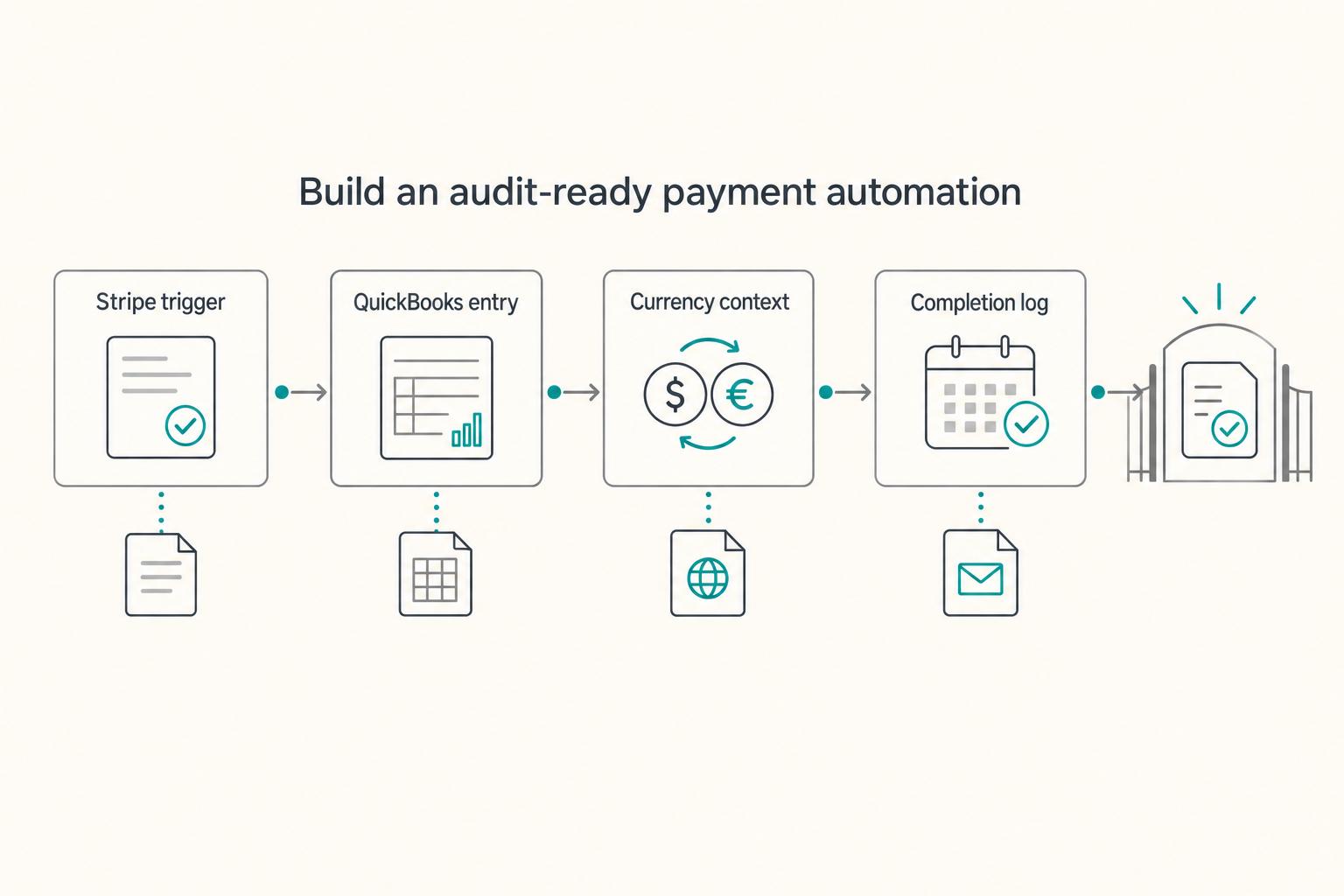
Automating Your Freelance Finances: A Zapier Workflow for Connecting Stripe, QuickBooks, and Wise
Start with one payment flow you understand, then automate its accounting record without losing the source reference. Stripe captures payments, QuickBooks holds the books, Zapier connects the selected steps, and Wise records any separate cross-border balance or conversion activity.

The Freelance Payment Penalty: A Modeled Audit of Platform Fees, FX Spreads, and Payout Delays
The money rarely disappears through a single, easy-to-spot fee. The real loss is stacked. A marketplace takes its commission, a processor adds a charge for international cards, a bank or payment company converts the currency at a spread, a platform holds the funds before release, and a wire sheds a little to intermediaries on the way in. Each layer looks defensible on its own, but the worker feels the combined result as a smaller deposit and a later payday.
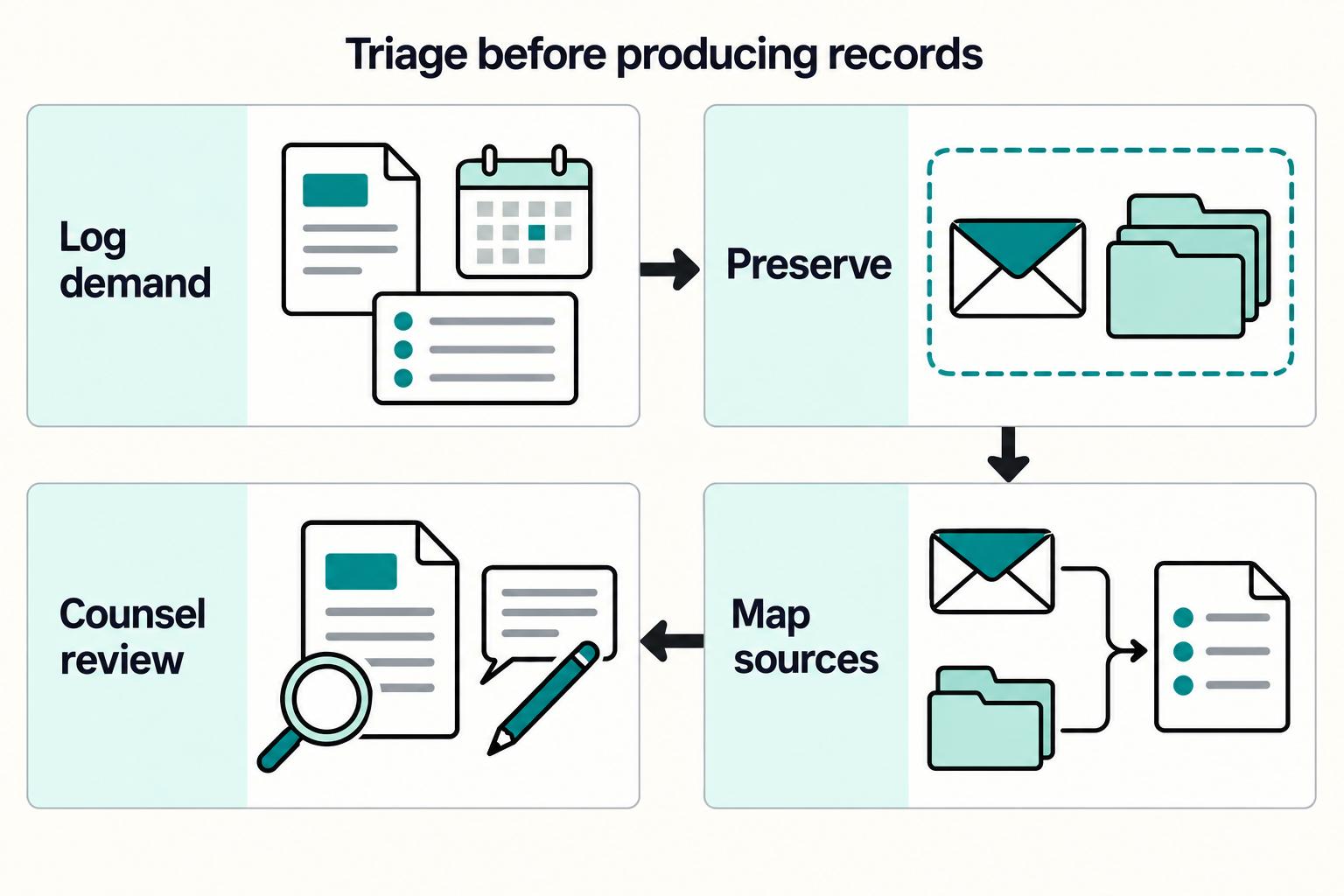
How to Respond to a Subpoena for Business Records
Move fast, but do not produce records on instinct. If you need to **respond to a subpoena for business records**, your immediate job is to control deadlines, preserve records, and make any later production defensible.