
Quick Answer
A non-resident business may need a banker-assisted application rather than the standard online route. Confirm the bank’s supported entity, signatories, residence and verification method, then prepare its actual documents. Keep an eligible payer-approved route active until the new account works. AUD receiving details and ABN or GST registration do not themselves establish a business bank account.
Choose the account or receiving details your business needs#
You may be able to get paid from Australia before full account onboarding is complete. The immediate goal is simpler: usable AUD receiving details, payer acceptance of those details, and records you can reconcile to each invoice. Define that deliverable first, and you lower the risk of cashflow delays while broader onboarding continues.
Different payers can want different things. Some may only need valid payment instructions. Others may not release funds until they see ownership evidence. Others may need a true operating account because refunds, outgoing transfers, or day-to-day treasury are part of the job.
Start with the exact deliverable#
Start with the deliverable, then choose the provider path.
| What you actually need | Decision trigger | Ready when | Red flag |
|---|---|---|---|
| AUD collection details | Your client only needs local or otherwise acceptable AUD payment instructions. | The payer confirms the details work in their AP process, and you have tested the format on a live invoice. | You assume payment details are enough, but procurement also requires ownership evidence or supplier onboarding documents. |
| Proof of banking | AP, procurement, or vendor onboarding requires evidence that the receiving account belongs to you or your business. | You have the exact document format the payer accepts, and the account-holder name matches your contract and invoice. | Ownership or trading-name relationships are unexplained, or payer-required evidence is unavailable. |
| Operating account | You need incoming funds plus ongoing banking activity, including outgoing payments, treasury, or business segregation. | You can access the account, receive funds, and export records for month-end reconciliation. | You only have an application in progress or provisional approval, not a usable account. |
Keep tax identifiers in their own lane. If a client asks for ABN, GST status, or a non-resident identifier, that is separate from the payment rail decision. The ATO states you need an ABN before standard GST registration, and that simplified GST registration is for non-resident businesses that do not need an ABN and do not need GST credits. After simplified registration, the ATO issues a 12-digit ARN. Those identifiers can matter for invoicing and tax handling, but payer onboarding still depends on the payer's requirements.
Keep three lanes separate#
Most avoidable delays come from answering the right question in the wrong lane.
The immigration lane covers visa status and physical presence. Keep it separate from tax registration and provider compliance checks.
Assess GST from your activities and the supplies connected with Australia, not from opening an AUD account. The usual business registration threshold is A$75,000 of relevant GST turnover; other triggers and exclusions can apply. Register within 21 days when required. Overseas consumer services and ordinary B2B work can require different assessments.
The provider compliance lane covers bank or fintech onboarding: identity checks, tax self-certification, and ownership evidence. This is the lane that determines whether the provider will let you use the account or collection details.
Standard GST registration and simplified registration are tax choices, not bank applications. Standard registration uses an ABN and allows the normal tax-invoice and credit rules; establish how you will lodge BAS and pay through the ATO or an authorized agent. Simplified registration is available for eligible non-resident supplies, issues an ARN, and does not allow GST credit claims or tax invoices. Choose from the actual supply and eligibility, not merely a payer’s preference for an identifier.
Run two tracks instead of one bet#
If payment timing matters, split the work. Use the live AUD collection path your payer already accepts, and keep full account or operating setup moving in parallel.
Use now#
Invoice through the live AUD collection path the payer has already accepted. Before sending material invoices, confirm that the supplier profile name matches the invoice, the payer has approved the payment details, and remittance advice includes a reference you can match.
Onboard in parallel#
Continue full account or broader operating setup if you need stronger controls later. Do not migrate all invoices until you can receive funds there, retrieve statements or transaction exports, and meet the payer’s document standard.
This split lowers operational risk during transition.
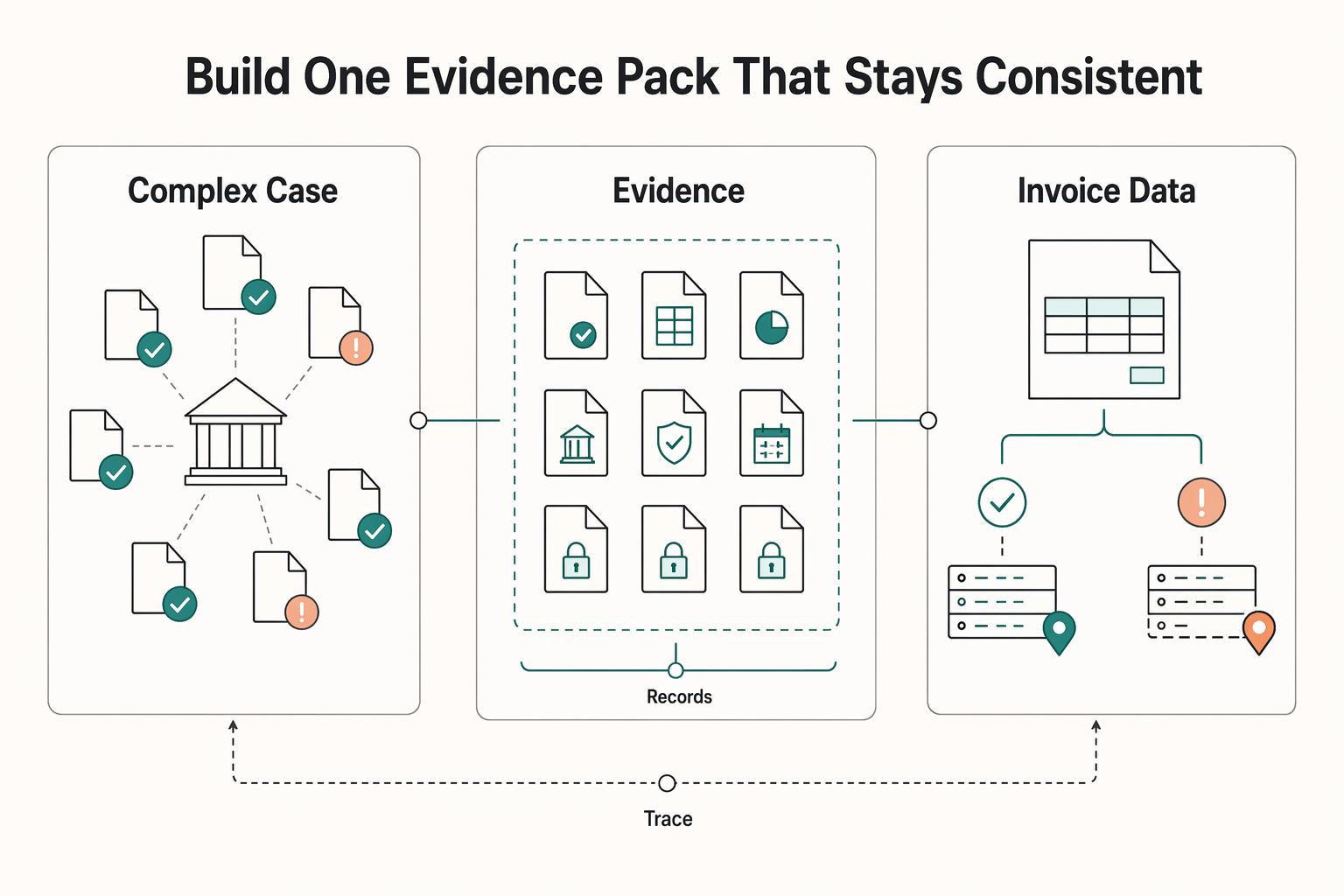
Build one evidence pack that stays consistent#
One compact evidence pack will save you repeated cleanup later. The key is internal consistency.
| Evidence item | What to keep aligned | Checkpoint |
|---|---|---|
| Name and entity details | Legal name, business name, entity name, and identifier (ABN or ARN, where relevant) | Explain legal entity, trading-name and identifier relationships accurately; not every record uses an identical name string. |
| Registration evidence | ABN record where relevant, or ARN and ATO registration confirmation where relevant | For standard GST with an existing ABN, keep ATO written confirmation showing the effective registration date. Keep a separate slot for any ownership proof the provider asks for during onboarding. |
| Invoice data | Seller identity, issue date, invoice number, GST treatment, and receiving details | Use one invoice format. If details change, version the template and keep written payer acknowledgement. |
| Reconciliation records | Invoice PDF, remittance advice, payout confirmation, receipt date, and internal notes on fees or FX where relevant | Link each receipt to the invoice or invoices it settles, including partial payments, fees and FX differences. |
The core control is simple: keep the name on your money path aligned with the name on your invoice path. That one habit reduces onboarding friction and month-end cleanup. It also sets up the mental model for the rest of this guide: treat getting paid as a sequence of checks, not a single application.
For a step-by-step walkthrough, see Opening a Bank Account in Cyprus as a Foreigner.
The 2026 mental model: "Get paid" is a pipeline (not a bank)#
Start with provider eligibility and the functions you need. Identify the applicant entity, owners, signatories, residence and tax details, and available identity documents before submitting. Track bank review separately from any ABN or GST application; completion of one does not establish completion of the other.
Run a lane check before every form#
Before you answer any registration field, label the lane first.
GST requirement: assess relevant supplies and registration triggers; apply within 21 days when required. Standard registration: ABN-linked registration, applicable tax invoices and credits, BAS and payment obligations. Establish the required lodgment method and authorized access or agent support. Simplified registration: eligible non-resident supplies, ARN instead of an ABN issued through that route, quarterly reporting and payment, no tax invoices or GST credits. It is not a bank account.
Use this rule: do not assume both GST lanes support the same operating capabilities.
Track the GST workflow when registration applies#
If GST registration is required, track each tax stage with its pass condition and stored record. This checklist is separate from the bank application.
| Stage | Pass when | Fail when | Evidence to store |
|---|---|---|---|
| Decide lane | You have confirmed whether GST registration is required and selected standard or simplified registration. | You start forms without confirming requirement or lane. | Decision note with lane and date. |
| Register | Required registration is submitted on time. | You are required to register but miss the 21-day window. | Submission confirmation and timestamp. |
| Confirm activation | Standard lane: written GST registration details and effective date received. Simplified lane: ARN received. | You cannot produce active registration details for your lane. | Registration notice and effective-date or ARN record. |
| Operate | Standard lane reporting and payment cadence is set, with BAS lodgment and GST payment monthly or quarterly, and simplified lane limits are respected. | You run processes your lane does not allow or miss required lodgments or payments. | Reporting calendar, lodged return or BAS records, payment records. |
If you need payment this week, the practical move is still a two-track path: complete the required GST lane actions now, and run broader onboarding tasks in parallel until they are fully usable.
You might also find this useful: How to Set Up a Business Bank Account in the UK as a Non-Resident.
Related: Opening a Business Bank Account for a UAE Free Zone Company.
Do you actually need an Australian business bank account?#
You may only need a reliable AUD receiving route rather than a full Australian operating account. Check eligible provider support, payer acceptance, transfer types, ownership evidence, fees, withdrawal access, and whether your business needs Australian banking functions. GST registration does not answer those account questions.
Decide by the outcome, not the logo#
Judge this by the operating outcome you need, not by whether the provider looks like a traditional bank.
| Need | What to compare | First step |
|---|---|---|
| Collect Australian client payments | Supported AUD transfer methods, receiving details, settlement access, fees and payer acceptance | Check your current provider and whether a supported receiving-details service is enough |
| Australian operating bank account | Applicant/entity eligibility, identity method, payment tools and statements | Identify the bank’s actual application route before preparing documents |
| Foreign-entity or non-resident signatory review | Banker-assisted eligibility and entity/person checklists | Ask a banker for the supported route and required certification or presence |
| Tax registration | Relevant supplies, GST triggers, ABN entitlement and filing capability | Complete the applicable tax process separately from bank approval |
Three definitions clear up most of the confusion.
ABN (Australian business number) is a business identifier. Individuals carrying on an enterprise can be entitled to one.
Standard GST registration is the non-resident path with ABN, identity, BAS, and GST reporting and payment requirements.
Simplified GST registration is the non-resident path for businesses that do not need an ABN. After approval, you receive a unique 12-digit ARN used to identify you in ATO systems.
Check these points before a GST registration application#
Before you submit forms, answer these four checks.
- Do your business activities mean you need GST registration now?
- If yes, can you register within the required 21-day window?
- Does the standard path fit, including ABN, identity proof, BAS, and GST lodgment and payment obligations?
- Or does the simplified path fit better, knowing you cannot issue tax invoices or claim GST credits?
Take one of these two tracks#
Choose a GST path only if registration is relevant and you meet its conditions. These tax tracks run alongside the bank application; neither is a universal prerequisite to receiving an Australian client payment.
Standard GST: establish ABN entitlement, identity and registration requirements, and your BAS/payment calendar. Confirm ATO access and lodgment methods from your actual setup or agent; being physically offshore is not a reason to assume every electronic method is impossible.
Simplified-GST track: proceed when you do not need an ABN and can operate within simplified limits. Use the 12-digit ARN for ATO identification after registration.
Related: Opening a Bank Account in Europe as a Non-Resident.
Related: Opening a UAE Bank Account as a Non-Resident Freelancer.
If your immediate priority is AUD collection while onboarding is still pending, compare whether Virtual Accounts fit your fallback path.
Can you open an Australian bank account from overseas in 2026? (What "start online" really means)#
Overseas applications depend on the bank, product, entity, owners, and verification method. NAB’s public online business-account route requires living in Australia and Australian tax residence; a non-resident checklist does not waive that online eligibility. For a foreign entity or non-resident signatory, ask the bank for its banker-assisted route and the remaining in-person or certified-document steps before planning remote activation.
This follows the same pattern as ATO registration: submission is not completion. For standard GST registration, non-residents may need extra identity proof when applying for an ABN, and the ATO confirms registration details in writing with an effective date.
The three gates that matter#
The useful question is not whether you applied. It is which gate you have actually cleared.
| Stage | One practical action | Proof to keep |
|---|---|---|
| Application submitted | Submit the provider form with your legal entity details exactly as used on registrations | Provider receipt, reference number, or confirmation email |
| Identity or proof requirements cleared | Complete all requested identity and business-proof steps, then confirm whether anything is still outstanding | Explicit confirmation that review is complete |
| Account usable | Confirm the account can perform the core functions you need, for example receiving funds | Provider confirmation or live account details showing the account is active and usable |
A screen that says "application received" is gate one, not gate three. If a payer requires final account details or provider-issued ownership evidence, you need proof from the last row.
Policy varies by provider#
NAB’s business-account application page distinguishes online eligibility from entity-specific document checklists. Its foreign-entity checklist directs applicants to a banker, and its non-resident individual checklist addresses identification. Use the checklist for the actual entity and people; these documents establish review requirements, not guaranteed approval or fully remote opening.
Prepare the bank’s actual document pack#
NAB’s foreign-entity checklist asks for registration and trading names, formation country, ownership/control, directors and beneficial owners, tax-residence information, addresses, and intended business activity. It also asks for ASIC/ARBN details in its foreign-company route. Clarify applicability with the banker; an ABN is not a substitute for an ARBN or the underlying incorporation documents.
Its non-resident identification checklist requires identity and overseas-address information, tax residence, banking purpose and source-of-wealth details. It describes originals for an in-person check or copies certified by an approved certifier, with accredited English translations where needed. Confirm acceptable certifiers and submission instructions before paying for certification; send identity documents only through the bank’s approved channel.
For collection-only needs, Wise’s AUD receiving-details guide describes a BSB and account number after verification and explicitly says these details are not a bank account. Availability depends on your registered location and eligible business setup. Its guide also restricts Australia-address accounts to domestic AUD receipts rather than international Swift receipts into those details. Check the actual account, transfer method and payer acceptance before using it.
Keep the tax application separate. Standard GST uses ABN-linked registration and BAS obligations; simplified registration for eligible non-resident supplies issues an ARN with no tax-invoice or credit entitlement. Neither proves banking ownership or guarantees the bank will accept a foreign entity or offshore applicant.
Onboarding readiness checks#
Use these checks before you submit.
| Banking check | Verify before applying | Evidence |
|---|---|---|
| Applicant eligibility | Supported entity, residence, business activity and application channel | Bank response identifying product and route |
| Identity and authority | Owners, directors, signatories, certification, translation and signing authority | Actual entity/person checklist and submitted copies |
| Functions and charges | AUD receiving method, outgoing access, statements, recurring and transaction fees | Product terms and fee schedule |
| Activation and payer approval | Access, verification completion, supported receipt, accepted proof of details | Provider confirmation and payer approval |
If you need standard GST registration, you need an ABN first. If GST registration becomes required, the ATO says you must register within 21 days, and penalties may apply if you fail to register when required.
So decide by payment-deadline risk:
- Do not rely on an account while material eligibility or verification requirements remain outstanding.
- Use the new route after access, required functions and payer evidence are confirmed.
- Continue through a lawful, eligible existing route if activation is delayed; address GST obligations on their own timetable.
If tax-residency concepts are getting mixed into provider onboarding, separate them first with A Guide to Tax Residency in Australia for Digital Nomads.
You might also find this useful: How to Open a Bank Account in Uruguay as a Foreigner.
Choose-your-path matrix: the lowest-risk setup for your situation#
A lower-risk default is a two-track setup: keep your live AUD collection path active now, and run fuller onboarding in parallel until the account is verifiably usable. Use this as an operational fallback while provider checks are still in motion, not as a provider-policy guarantee.
Route the decision with four inputs:
- how soon you can complete any required identity steps
- whether the provider currently requires local contact details, confirmed against the provider's current onboarding materials
- whether you need an individual or entity account path
- what your payer requires to release funds, whether that is receiving details only or ownership proof
Pre-application checks that prevent avoidable holds#
Before submitting anything, confirm the current rules on the provider’s onboarding page:
- eligibility and identity flow, including any in-country or branch step the provider currently requires
- Supported applicant/entity type, signatory authority, and accurate legal/trading-name relationships across records
- required evidence artifacts for your path, including identity, ownership, registration, and any provider-requested proofs
If GST setup is relevant, keep tax and banking as separate lanes. If you are a non-resident, whether you need to register for GST depends on your business activities. Standard GST registration is for non-resident businesses entitled to or holding an ABN, and ABN is required before GST registration. Once GST registration is required, registration is due within 21 days, and penalties may apply for failing to register when required. Simplified GST registration is for non-residents that do not need an ABN; it does not require identity proof and issues a 12-digit ARN, but it does not allow issuing tax invoices or claiming GST credits.
| Your situation | Route now or parallel | Verify before cutover | If activation is delayed |
|---|---|---|---|
| Overseas, payment due soon, no confirmed local onboarding path | Go now on your live AUD collection route; keep onboarding parallel | Payer accepts your current receiving details and remittance trail | Keep collecting on the live route and retain payment references for matching |
| Overseas, arrival soon, provider allows early application | Parallel onboarding | Remaining identity step, review status, and whether payer requires provider-issued ownership proof | Do not commit to bank-proof delivery until review is complete |
| In Australia, identity can be completed now | Go now only after verification and receipt testing succeed | Login access works, account can receive funds, payer accepts your proof document | Keep the existing route active until payer acceptance is confirmed |
| Company, partnership, or trust | Parallel unless the entity account is already active | Entity support, ownership disclosures, and identifier consistency across records | Continue collections on the live route while entity review completes |
A hypothetical cutover: an A$2,000 invoice is due Friday, but the new entity account still needs a signatory review. Keep the payer-approved existing route for that invoice. After verification, test the new receiving method with a small agreed payment, obtain the accepted proof of details, and switch future invoices on a documented date. Reconcile the test separately and retain the old route long enough to handle open invoices, returns and refunds under its terms.
Once the route is approved and tested, map invoice, receipt, settlement and ledger records. See Automating Your Freelance Finances. If considering Gruv Virtual Accounts, confirm your entity, country, currency and payment-method support before relying on them for continuity.
When should I switch from parallel onboarding to full cutover?#
Switch only after this is true in practice: the account is active, you can access it, and it can receive funds. Application submission or "approved" status alone is not enough when the payer requires ownership evidence or final account details. Keep the live collection route until those checks are complete.
When is proof of banking required instead of tax registration proof?#
Use the payer’s request as the rule. ABN, ARN, or ATO registration documentation can support tax workflows, but they do not by themselves prove an active, usable account owned by your business. If the payer asks for banking ownership evidence, hold cutover until that document standard is met.
Before switching routes, send the payer the provider-issued details and required evidence through the agreed verification process. Confirm who can approve the change and how open invoices will be handled.
If your route depends on provider eligibility, onboarding gates, or market-specific coverage, use contact Gruv to validate your setup before switching payment rails.
Frequently Asked Questions
When should I switch from parallel onboarding to full cutover?
Switch only after this is true in practice: the account is active, you can access it, and it can receive funds. Application submission or "approved" status alone is not enough when the payer requires ownership evidence or final account details. Keep the live collection route until those checks are complete.
When is proof of banking required instead of tax registration proof?
Use the payer’s request as the rule. ABN, ARN, or ATO registration documentation can support tax workflows, but they do not by themselves prove an active, usable account owned by your business. If the payer asks for banking ownership evidence, hold cutover until that document standard is met.
Try a related tool
Researched and edited by the Gruv editorial team. Gruv builds cross-border billing, payouts, and finance-operations software for global businesses.
Sources
Includes 2 external sources outside the trusted-domain allowlist.
- ato.gov.au/businesses-and-organisations/international-t...trusted
- ato.gov.au/businesses-and-organisations/international-t...trusted
- business.gov.au/registrations/register-for-taxes/register-fo...trusted
- softwaredevelopers.ato.gov.au/GSTintangiblestrusted
- taxboard.gov.au/sites/taxboard.gov.au/files/2022-03/bot_revi...trusted
- wise.com/help/articles/2879660/how-do-i-receive-money...trusted
- nab.com.au/business/business-bank-accounts/open-a-busin...external
- nab.com.au/content/dam/nabrwd/documents/forms/banking/c...external
Educational content only. Not legal, tax, or financial advice.
Related Posts
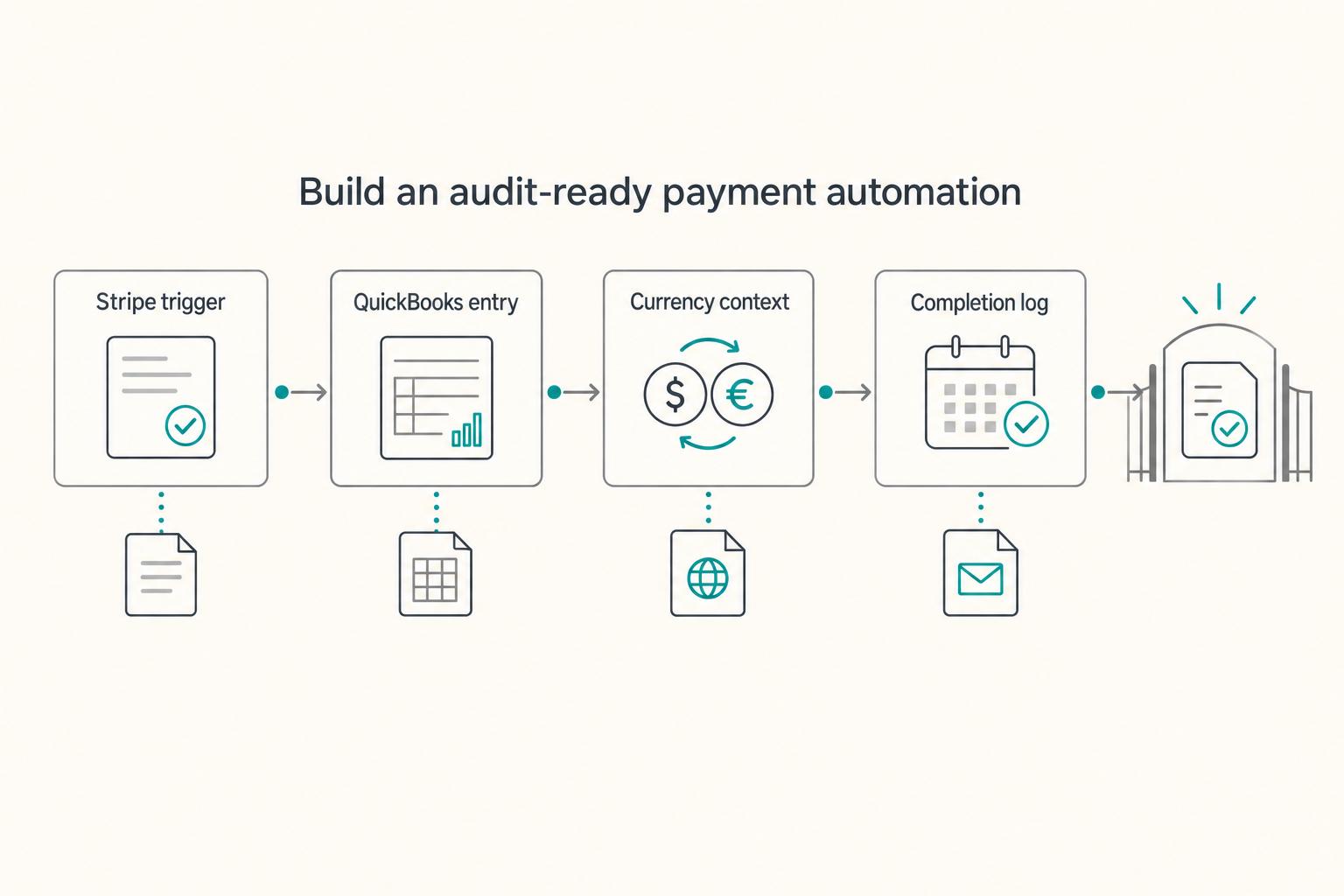
Automating Your Freelance Finances: A Zapier Workflow for Connecting Stripe, QuickBooks, and Wise
Start with one payment flow you understand, then automate its accounting record without losing the source reference. Stripe captures payments, QuickBooks holds the books, Zapier connects the selected steps, and Wise records any separate cross-border balance or conversion activity.
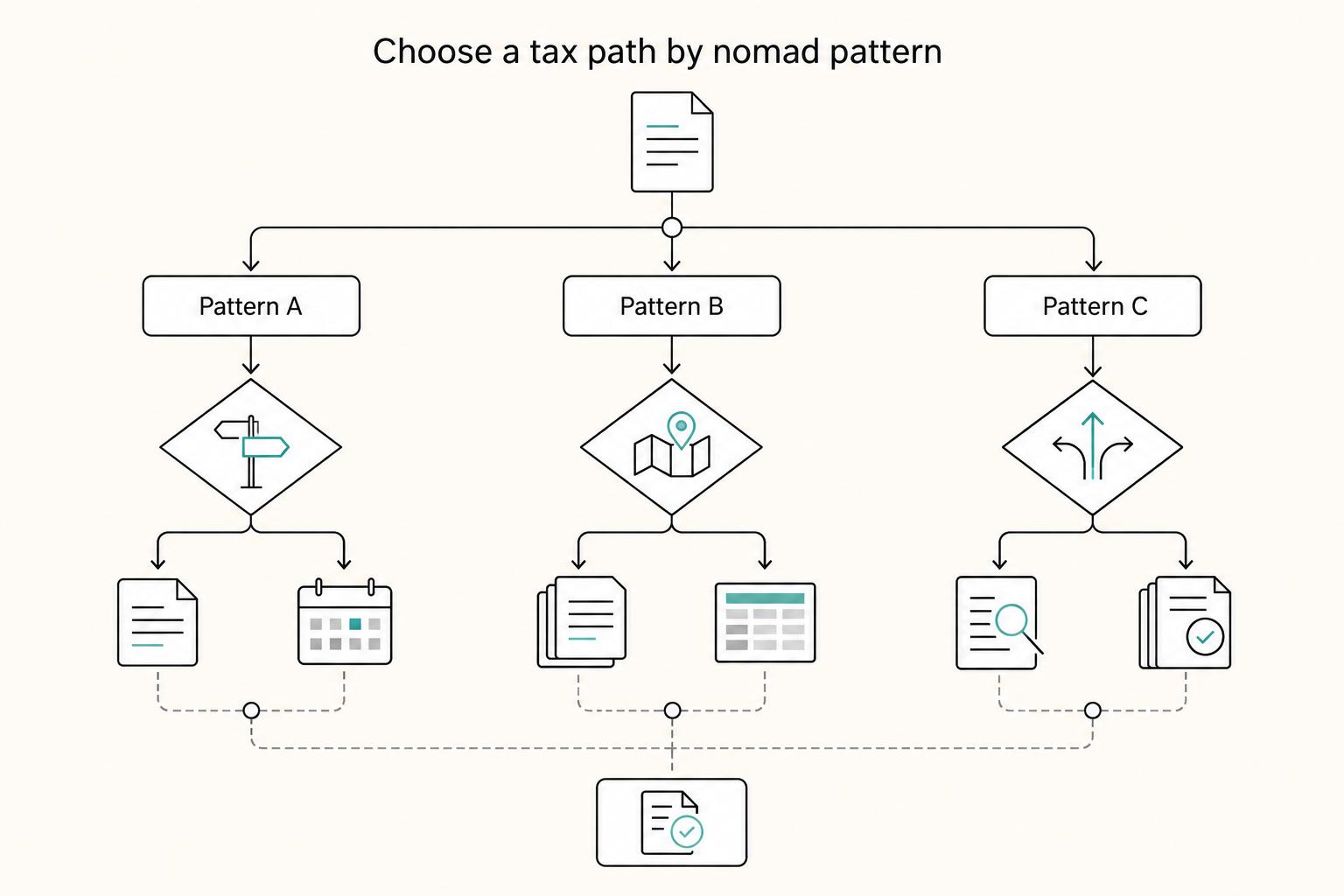
Australia Tax Residency for Digital Nomads With GST and ABN Checkpoints
The goal is a defensible, low-drama position the Australian Taxation Office (ATO) can follow from your records, not a clever workaround. For a digital nomad, that usually means keeping two tracks straight: residency and GST/ABN admin. Consistency is what holds up over time: use real facts, take steps in a clear order, and keep documents that still match months later.

How to Host a Webinar to Generate Freelance Leads
**Treat your webinar as a repeatable pipeline system (capture, qualify, route, follow up), not a one-off event you hope generates leads.** If you run a business-of-one, you're the CEO. Your webinar should behave like an asset you can operate, not a performance you have to reinvent.