

Quick Answer
Clarify approval authority, compare the full scope/payment/risk package, and read MSA/SOW precedence and incorporated terms. Agree invoice triggers, cap/indemnity interactions and delivery dependencies, then check the final signature copy. Keep proposals distinct from approved commitments.
Introduction for freelancers negotiating enterprise clients#
Enterprise deals can be good business, but only if you protect your margin, cash flow, and risk before the paper starts moving. The point is not to win every clause. It is to get a deal signed that you can deliver profitably, get paid for on time, and defend if the relationship gets strained.
That sounds obvious until Procurement and other review teams get involved. Some smaller clients may let you agree scope, rate, and timing in one thread with one decision maker. Many enterprise buyers work through a formal approve-and-route process tied to spend controls, vendor management, compliance, and the procure-to-pay cycle. In plain terms, the people who like your work are not always the people who control contract language, payment timing, or onboarding requirements.
That is the core tension. You may be discussing outcomes and urgency with a sponsor while another team is trying to standardize terms and delay cash outflows. That is not automatically bad faith. It is how many organizations manage spend and vendor relationships. The mistake is treating that process like ordinary B2B sales and assuming a verbal yes on scope or price will carry through unchanged.
Preparation keeps the deal from drifting. Before the conversation starts, decide what is non-negotiable, what is tradable, and what is a walk-away issue. If you do not do that in advance, you will make concessions in the wrong order. Common examples are payment terms, delivery deadlines, and scope expectations.
One checkpoint matters from day one. Document commitments clearly and follow up on them. If a sponsor agrees to milestone billing, a narrow scope, or a specific acceptance process, get that in writing before the draft contract starts circulating. A recurring failure mode in enterprise work is that commercial points are agreed informally, then reopened during Procurement or review because nobody can point to a written record.
You should expect trust and paperwork to work together, not to substitute for each other. Trust helps conversations move. Documented agreement is what holds when stakeholders change or approvals slow down.
By the end of this guide, you should have four things you can use right away: a decision map of who matters and when, contract checkpoints for the MSA and SOW, concession rules so you do not trade away the wrong protections, and a final sign-off checklist before you commit. If you want enterprise work without enterprise-style surprises, that is the standard to aim for. If you want a deeper dive, read How to Calculate Your Billable Rate as a Freelancer.
Build the mental model before you negotiate#
An MSA usually sets recurring legal and commercial terms, while an SOW describes particular services, deliverables, dates and fees. This is a useful document structure, not a legal requirement. A single services agreement can do both for a small project. Read incorporated purchase orders, policies, schedules and the order-of-precedence clause too: labels alone do not determine which term wins.
Before redlines, align on that split in plain language. If people are treating the same issue as an MSA point in one conversation and an SOW point in another, expect avoidable rework.
Then negotiate from value, not rate pressure alone. Keep the conversation tied to outcomes and expected return so it stays collaborative. If the discussion narrows to price, reset it to scope, success measures, and which terms would change with that price.
Map decision makers and approval requirements early#
Identify who can approve commercial terms, legal exceptions and signature. You can explore proposals with a sponsor while authority is being clarified; label those proposals as subject to approval rather than treating discussion as a commitment.
Titles vary by company, so map functions, not job labels. At minimum, confirm who owns budget, who sponsors day-to-day delivery, who controls Procurement steps, and who owns Legal review.
| Stakeholder function | What you need to confirm | What to capture in writing |
|---|---|---|
| Economic buyer | Budget authority, business outcome, approval boundary on price and terms | What result they are funding, spending owner, and whether they must sign off on pricing or payment terms |
| Day to day sponsor | Scope, delivery reality, internal coordination | Agreed scope summary, dependencies, timeline assumptions, and who they will bring in next |
| Procurement | Buying process, vendor onboarding, commercial policy constraints | Required intake steps, commercial documents needed, and who approves exceptions |
| Legal owner | Contract route, redline ownership, clause concerns | Which paper starts the review, who sends redlines, and which issues must go back to the business |
Keep the map current when budgets, reviewers or owners change. Enterprise procurement can take substantial time, but no generic nine-to-eighteen-month cycle should be assumed for a freelancer's engagement. Ask for this buyer's actual steps, expected dates and outstanding dependencies.
Keep access to the budget owner#
If access to the budget owner is indirect, ask the procurement contact or authorized delegate to confirm the approval route. Direct access to the economic buyer is useful, but is not a universal requirement for a valid negotiation.
State whether a proposed trade is exploratory or approved. Ask who has authority over price, payment timing and exceptions, and use the buyer's normal process to confirm the point. A recap documents discussion; the executed contract and applicable authority rules determine what binds the parties.
Use one sequence and leave a paper trail#
Use a clear sequence to reduce rework: discovery call, commercial alignment, legal alignment, then final approval path. It is not a universal order, but it helps prevent parallel chaos where legal redlines start before business terms are actually aligned.
Send a recap of proposed price, payment timing, scope, acceptance, changes and known dependencies. Legal, security and commercial reviews can run in parallel. Record which points remain tentative and reconcile the final documents; earlier emails may be superseded by an entire-agreement clause.
That record protects you later. If a point is reopened, you can tie it to prior agreement instead of renegotiating from scratch. Need the full breakdown? Read How a US-based SaaS consultant should structure a contract with a German enterprise client. Want a quick next step? Try the SOW generator.
Set your non-negotiables and concession trades before redlines start#
Prepare a concise matrix of non-negotiables, tradable terms and walk-away concerns before the first redline. Focus on payment timing, scope, liability and delivery assumptions, and identify the relevant approval route for each. Some terms may be acceptable without an offset elsewhere; evaluate the whole package against your own economics and risk tolerance.
Build the matrix around the documents that govern delivery#
Record scope, exclusions, dependencies and changes in the SOW where the actual documents allow it. Identify the invoice trigger and payment-clock start. Map liability exceptions to the MSA and its precedence rule, then ask who can approve commercial changes and legal exceptions.
Before redlines start, confirm that the Economic buyer or a named delegate with real authority can approve tradable items in writing. If that approval path is unclear, treat concession talk as exploratory. A practical working pack is enough: your matrix, current SOW draft, current MSA draft if available, and the latest commercial recap email.
Define give-get rules before the client asks#
Aim for a balanced package. A concession may merit an offset elsewhere, but every individual request does not need a mechanically matched give-get. Assess the total economics, enforceability and risks, and keep your own walk-away alternative in view.
Broader indemnity can add claim and defense exposure even when delivery scope is unchanged. Ask what claims trigger it, whose conduct is covered, who controls the defense, whether defense costs count toward the cap, and what exceptions apply. Narrower deliverables can reduce some risks but do not fix an uncapped defense obligation.
| Client ask | Freelancer response | Possible adjustment to assess |
|---|---|---|
Longer Payment terms | "We can review that if invoice triggers and acceptance are objective." | Shorter milestones, clearer acceptance timing, or a commercial adjustment for cash-flow impact |
| Broader indemnity | Ask which claims, conduct and defense costs are added | Narrow the actual trigger; agree defense/settlement controls and cap treatment, and assess the total package |
| Wider scope with no fee change | "Happy to price the added outcome once it is separated from the base SOW." | Reduced base scope, formal change control, or revised commercial terms |
| Compressed timeline | "We can discuss acceleration if client dependencies and approvals are fixed in writing." | Client resource commitments, shorter review windows, or narrower deliverables |
Keep the conversation tied to the business result the client is buying and the conditions required to deliver it.
Control the order of concessions#
Keep proposals involving price, timing, scope and risk subject to the relevant approval process. Authorized procurement, legal or delegated business owners may approve different terms; do not require every question to wait for one economic buyer.
Record material trades and approvals in the negotiation file. Escalate terms beyond your own risk tolerance, and confirm the whole package before committing. This is a working method, not a universal rule requiring a matched concession and direct buyer sign-off for every change.
Negotiate contract clauses that decide your downside risk#
Negotiate the downside-risk clauses as one system, and do it early. If you wait until final redlines, you are usually negotiating from the client's default risk position instead of your own.
Commercial contracts use Limitation of Liability to allocate risk, so read Limitation of Liability and Indemnification together, not separately. A common impasse is predictable: you do not want uncapped exposure that can exceed deal value, and the buyer does not want every risk inside one general cap. If a narrow high-risk contingency is driving concern, raise it early and discuss a structured cap approach as part of the overall allocation of responsibility. In larger deals, that can include an elevated cap for a named risk or a multi-tier cap structure.
| Clause | Common enterprise draft | Freelancer-safe fallback | When to escalate to counsel |
|---|---|---|---|
Limitation of Liability | Broad carveouts that weaken or bypass the cap | One clear cap framework, with narrow defined exceptions | If carveouts could effectively remove the cap, or a super cap/multi-tier cap is proposed |
Indemnification | Broad duty to defend across loosely defined claims | Narrow indemnity tied to specific claims you can control | If defense control, claim triggers, or cap interaction is unclear |
Termination | Early termination rights with limited protection for your committed work | Payment for completed work and committed non-cancellable costs, plus clear wind-down terms | If termination language conflicts with billing, resourcing, or handoff |
Intellectual property clause | Ownership language that sweeps in pre-existing materials | Client rights to contracted deliverables; you retain pre-existing IP | If background IP, work product, and reuse rights are blurred |
Confidentiality clause | Very broad duties with vague breach consequences | Clear definitions, realistic handling duties, balanced exceptions | If confidentiality obligations connect to uncapped or elevated liability |
Read the cap and indemnity together first#
Before debating wording details, map each relevant remedy back to the liability structure: what is capped, uncapped, or on a higher tier. Keep that map explicit across indemnity, confidentiality, IP, and termination remedies so you can see the real exposure, not just isolated clause text.
Set dispute mechanics early, not as boilerplate#
Governing law determines which law interprets the agreement; jurisdiction identifies the court or courts for litigation; dispute resolution sets the process, including escalation, mediation or arbitration if agreed. For arbitration, examine seat, rules, language, fees and any emergency or court remedies. A favorable clause does not itself collect money across borders: assets, enforcement rules and proportionate costs still matter.
Keep MSA and SOW in separate lanes#
Read the MSA and SOW together with their precedence rule. Record scope, exclusions, dependencies, acceptance and changes in the SOW where the documents allow it; put recurring risk allocation in the MSA. An SOW only overrides a conflicting MSA term if the agreed drafting permits it. This historical SEC-filed MSA, for example, requires a conflicting SOW to identify the affected main-agreement provision. It is an illustration of precedence, not a recommended freelancer template.
Push back on payment terms without sounding defensive#
The strongest pushback on Payment terms is commercial, not emotional: if payment windows get longer, the deal terms should change to match the added cash-flow risk.
Longer payment terms can improve the buyer's working capital while increasing the supplier's financing needs. BCG's payment-terms analysis describes this tradeoff from the buyer side. Use the actual buyer's constraints rather than assuming bad faith or a market-standard period.
Define invoice triggers, acceptance and the payment clock#
Agree whether invoicing follows a date, milestone delivery, acceptance or another objective event. If acceptance is a trigger, specify review criteria, a realistic response period and what happens when the client is silent or disputes only part of the work. Written acceptance is required before the next milestone only if the contract says so; do not impose a new pause after signing.
Keep delivery and acceptance records, but distinguish them from invoice receipt, procurement validation, approval and payment scheduling. Ask exactly when the contractual payment clock starts and whether a PO, vendor record or portal submission is required. Your checklist should reflect agreed obligations, not invent new invoice gates.
If terms get longer, change the deal#
Use a clear if-then rule in writing:
| Area | Change to the deal | Article detail |
|---|---|---|
| Scope risk | Reduce scope risk in the SOW | Use tighter deliverables or dependency assumptions |
| Milestone length | Shorten milestone length | Less unbilled work is exposed at once |
| Pricing | Adjust pricing | Reflect higher cash-flow exposure |
- If payment windows extend, reduce scope risk in the
SOWfor example, tighter deliverables or dependency assumptions. - If payment windows extend, shorten milestone length so less unbilled work is exposed at once.
- If payment windows extend, adjust pricing to reflect higher cash-flow exposure.
Model current financing costs rather than assuming a particular interest-rate environment. Keep the SOW, delivery/acceptance evidence where relevant, invoice submission date and outstanding balance together. Smaller milestones can reduce unbilled exposure but do not necessarily shorten the contractual wait after each invoice.
Also flag three common breakdowns early: "invoice approved but not scheduled," "work accepted verbally but not contractually," and change requests that bypass Change control. If the client insists on extended terms, ask which offset they prefer: smaller milestones, narrower scope, or revised pricing. For a step-by-step walkthrough, see Setting Boundaries With Clients as a Freelancer.
Handle procurement delays and redlines with clear decision rules#
Treat Procurement and Legal review as a tracked decision queue, not a waiting period. Redlines are expected, often template-driven, and can run through multiple iterations, so unmanaged back-and-forth creates avoidable drift.
| Field | What to track |
|---|---|
| Owner | The named client person who can answer or approve |
| Blocker | The exact clause, mismatch, or missing decision |
| Due date | When you need a response to keep current assumptions live |
| Consequence | What changes if it stays open, for example quote expiry, shifted start date, or paused resource hold |
Use a live issue list and keep it visible to your sponsor and contracting contact. Track each open item against those four fields.
This is not admin overhead. Procurement negotiation sets scope, service levels, and remedies, so unresolved redlines can change your real delivery exposure. Before each redline round, confirm every comment has one current owner and one requested decision.
Before commitment, put a reasonable validity date on a quote and explain how start dates or capacity reservations depend on approval. After a binding agreement, change price or delivery obligations only through its agreed variation provisions or another valid agreement; a new internal expiry rule cannot rewrite signed terms.
Use short scripts for predictable stalls#
Use consistent responses when patterns repeat:
- Unclear approver: "Happy to revise, but I need the legal or procurement owner for this clause so feedback is consolidated."
- Repeated clause resets: "We already resolved this point in the prior draft. If the position changed, please confirm who changed it and why."
- Request conflicts with agreed
MSAstructure: "This request conflicts with the currentMSAstructure. Please confirm whether you want to revise the baselineMSAlanguage or handle this in theSOWfor this deliverable."
These lines are not magic; they create accountability and reduce circular edits.
Know when to pause#
For an unsigned proposal, you can decline new unpaid work while material liability or termination terms remain unresolved. For existing contracted work, check suspension, notice, cure and continued-performance duties before stopping. Escalate unclear risk without assuming that an unresolved redline creates a right to withhold performance.
Plan cross-border execution before signature day#
Check the parties, governing law, forum, currency, taxes, payment instructions, privacy/security requirements and actual delivery location. Apply relevant law and the buyer's genuine onboarding requirements to this engagement; an unrelated transaction framework or acquisition programme is not a freelancer contracting rule.
Use this pre-signature check:
- Confirm the contracting entities, governing law, court forum or arbitration arrangements, and mandatory rules relevant to actual performance.
- Agree invoice triggers, payment-clock start, currency, exchange-rate responsibility, fees and legally required withholding documentation.
- Confirm the authorized billing entity, invoice recipient, PO/portal requirements, payment details and contacts for invoice queries.
If you use Gruv or another tool, verify the features and country/account eligibility actually available to your entity. Commit only to records, access permissions and payment functions that your process can support; software status labels do not establish legal acceptance or bank settlement.
Record who submits invoices, who resolves a rejected invoice and which communication channel receives formal notices. Keep operational contacts separate from the contract's authorized signatories and notice addresses.
Worked negotiation: compare cash timing and claim exposure#
Consider an invented USD 12,000 project taking two months. Your proposal bills USD 6,000 at each agreed delivery milestone, net 30 from receipt of a valid invoice. The buyer asks for one invoice at the end, net 90. That adds both more unbilled work before invoicing and a longer wait afterward; lowering the fee would compound the cash burden. You might offer the original milestone schedule with net 60, a different price for end-of-project net 90, or a smaller first phase. None is automatically acceptable: check capacity and cash reserves against the actual dates.
To isolate the financing effect, suppose only a USD 6,000 invoice changes from net 30 to net 90, is paid on time, and you actually borrow that full amount for the extra 60 days at a hypothetical 12% simple annual rate. The additional interest estimate is 6,000 × 0.12 × 60 / 365 = USD 118.36, excluding fees. That is not a complete price premium: default risk, administration, other delayed receipts and opportunity cost remain. If you do not borrow, there may still be an opportunity cost, but this calculation is not an actual borrowing charge.
Now suppose the draft says liability is capped at USD 12,000 but excludes all indemnity and its defense costs. A hypothetical covered claim with USD 15,000 settlement and USD 5,000 defense cost would create USD 20,000 exposure outside that stated general cap, subject to the actual contract and law. If the same claim and both cost categories instead fall within a single USD 12,000 aggregate cap, the contractual capped exposure would be USD 12,000. The point is to read the exception and defense language, not to assume the cap's headline protects every remedy.
A practical reply is: “We can explore net 60 on the two milestones. Please confirm that invoice receipt starts the clock and identify any portal or PO requirements. For indemnity, let's define the covered third-party claims and whether defense costs count toward the agreed aggregate cap.” Record it as a proposal until approved. Do not suspend already-contracted work merely because these new terms are under discussion.
Close the deal without accepting hidden risk#
Close the deal by checking your original boundaries one more time before anyone signs. That final check is what keeps enterprise complexity manageable and prevents deadline pressure from turning into avoidable risk.
Last-minute changes can alter payment timing, ownership or uncapped exposure. Compare the clean signature copy with your resolved-issues list instead of assuming the last redline contains everything agreed. Remove tentative commercial promises that were not accepted into the contract, or explicitly incorporate them where appropriate.
Run one final pre-signature check#
Before signature on the MSA or SOW, do one written pass across four areas:
| Check area | What to verify |
|---|---|
| Stakeholders and approvals | Confirm the current draft is approved by each decision owner, and identify who can still block signature and what is still open |
| Contract terms | Re-read the final MSA and SOW together, and verify payment terms, acceptance criteria, change control, liability cap, termination, and IP terms still match what you agreed |
| Payment and acceptance mechanics | Confirm what triggers invoicing, what proves acceptance, who approves invoices, and whether PO or onboarding steps are still pending |
| Execution readiness | Confirm start date, dependencies, client inputs, and resourcing assumptions are written down |
Use the table as a checklist, not a mental note. Do not rely on verbal "finance will handle it," and do not assume a signed contract removes delivery risk if operational prerequisites are not ready.
Your closing file should include the latest redline, clean MSA/SOW copies, a resolved-issues log, written approvals, the agreed payment schedule, and start-date assumptions. This is how you verify in writing and reduce later disputes.
Resolve material unknowns before committing, or document a deliberately accepted condition and its consequence. An incomplete administrative detail does not automatically require every negotiation to stop; evaluate whether it affects authority, economics, legal duties or delivery.
Once legal risk is controlled, check delivery economics too: How to Manage Project Profitability for Your Agency. This pairs with How to Manage Time Zones With Clients Without Being Always On.
Frequently Asked Questions
What should freelancers negotiate first with enterprise clients?
Start with the commercial structure, not just rate. Payment timing, scope, and term length can carry material economic value, and price-only conversations often default to discounting because procurement pressure is usually concentrated on price. Before you trade terms, align on the business outcome and approval path.
What are true non-negotiables in an enterprise MSA and SOW?
There is no universal list you can borrow blindly. Define non-negotiables by commercial impact and risk tolerance, then prioritize the terms that most affect payment timing, scope, renewal mechanics, and risk-sharing. If a term has no clear business impact, treat it as a preference rather than a true red line.
How do I push back on extended payment terms without losing the deal?
Treat longer payment windows as an economic term, not just an admin detail. Use value-for-value trades rather than pure discounting, such as adjustments in scope, renewal mechanics, risk-sharing, or price. The goal is to protect total enterprise value, not only the headline rate.
When should I walk away from an enterprise negotiation?
Walk when the deal stops making commercial sense even if the logo is attractive. If negotiations keep shifting value away from you through price pressure, longer payment timing, or one-sided risk transfer, continuing can create margin leakage. Leaving is reasonable when no balanced commercial structure is available.
How should I handle procurement delays that keep reopening legal points?
Use a visible issue list, track open issues, and bring clear alternatives to discounting. When points reopen, re-anchor the discussion on the full commercial package instead of restarting from price alone. That keeps the conversation focused on total enterprise value.
Which clauses matter most for cross-border work: Governing Law, Jurisdiction, or Dispute Resolution?
Do not assume Governing Law, Jurisdiction, and Dispute Resolution can be ranked by importance. For cross-border work, avoid treating any single clause as the only priority, and get qualified legal advice on how the full agreement works together.
Try a related tool
Researched and edited by the Gruv editorial team. Gruv builds cross-border billing, payouts, and finance-operations software for global businesses.
Sources
Includes 2 external sources outside the trusted-domain allowlist.
Educational content only. Not legal, tax, or financial advice.
Related Posts
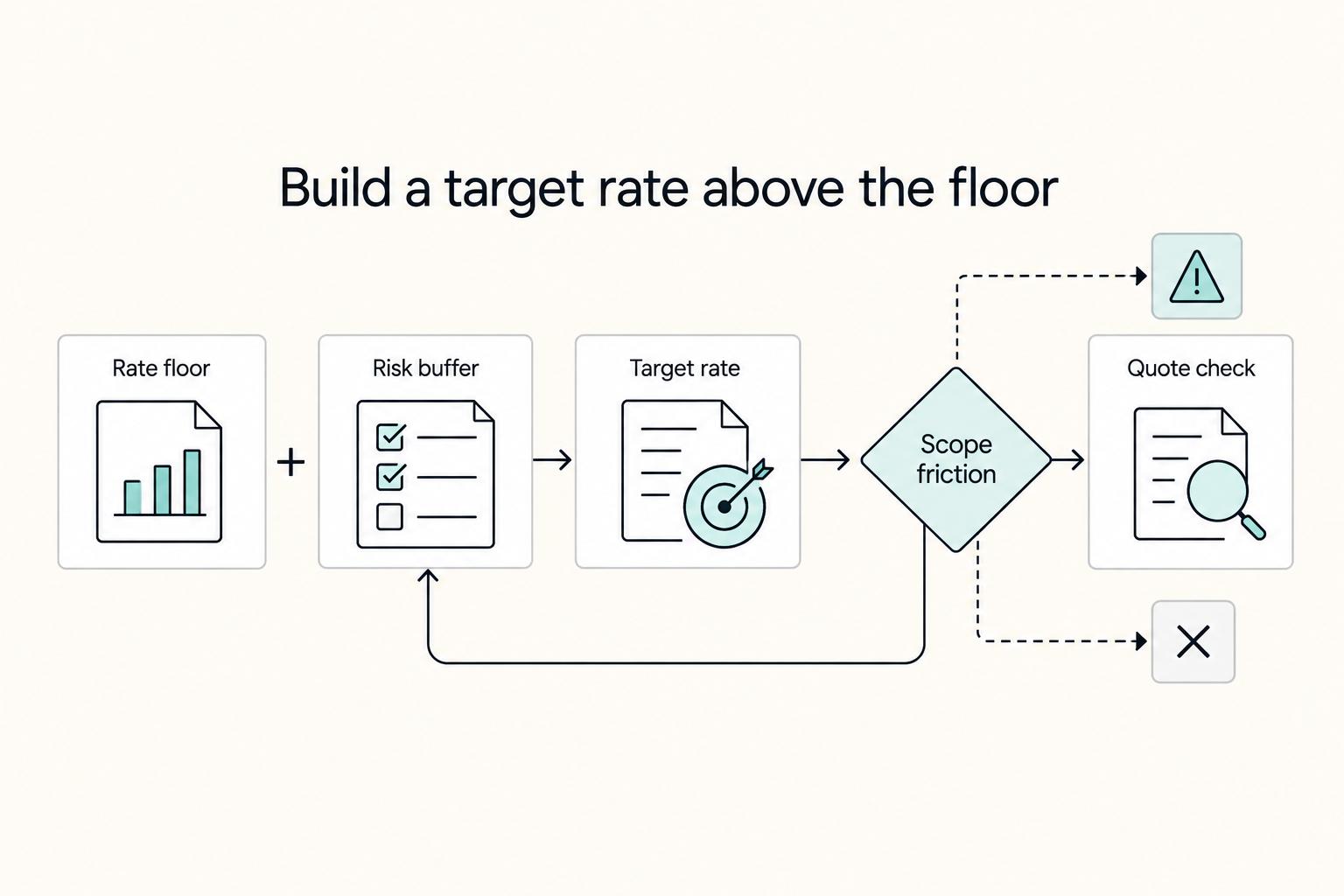
How to Calculate a Freelance Rate You Can Actually Get Paid On
A workable rate is not the neat number a calculator produces. It is the number that still works after you account for real billable capacity, non-client time, scope drift, and the gap between sending an invoice and receiving cleared cash. Start with hourly math even if you do not plan to bill hourly, then turn that number into a quote with clear `payment terms`.
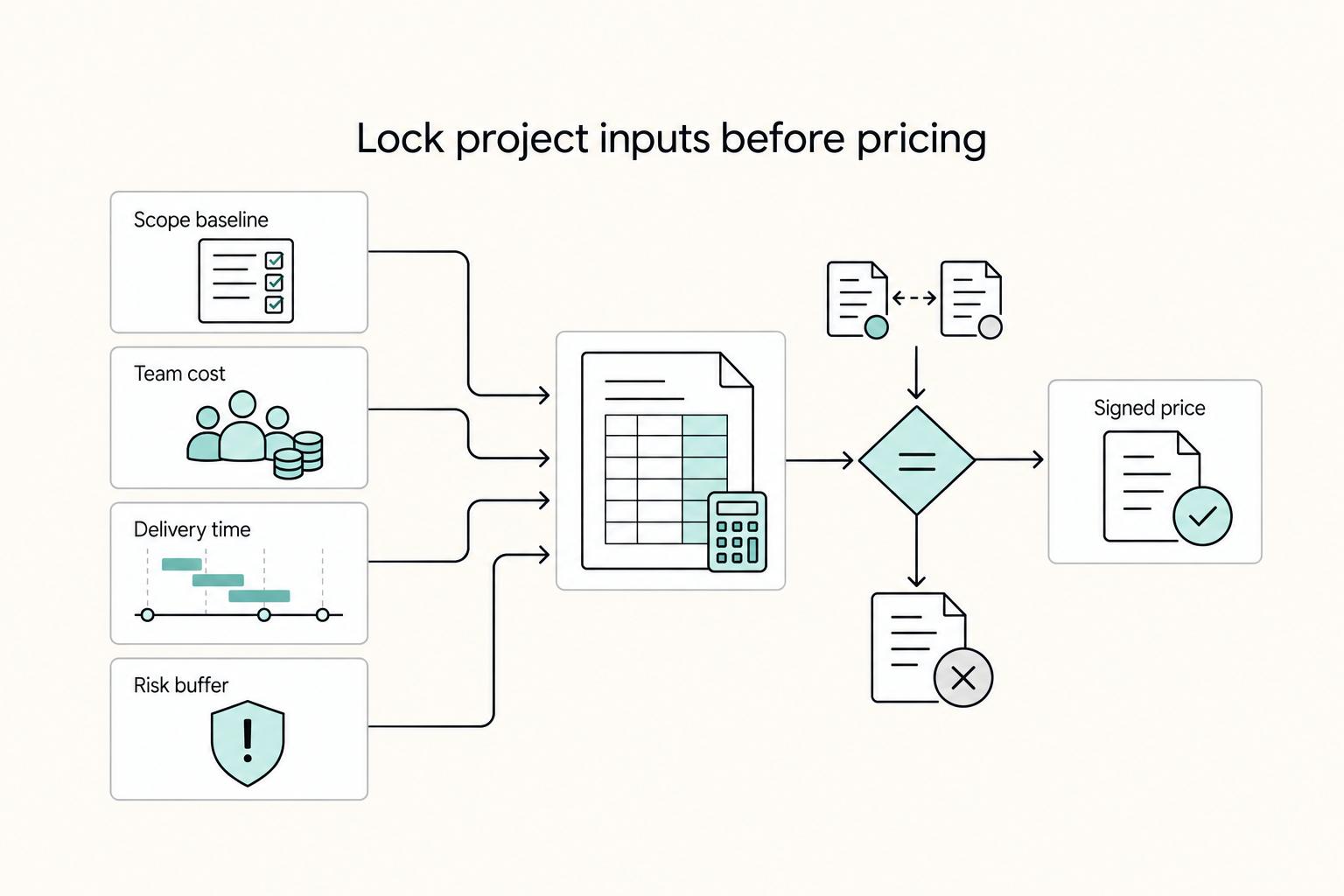
Manage Agency Project Profitability With Cashflow Checkpoints
Invoiced revenue can look healthy while cash is still unavailable. That gap is where a project that looks profitable can start to pressure routine operating costs such as payroll, rent, utilities, and equipment.

The Freelance Payment Penalty: A Modeled Audit of Platform Fees, FX Spreads, and Payout Delays
The money rarely disappears through a single, easy-to-spot fee. The real loss is stacked. A marketplace takes its commission, a processor adds a charge for international cards, a bank or payment company converts the currency at a spread, a platform holds the funds before release, and a wire sheds a little to intermediaries on the way in. Each layer looks defensible on its own, but the worker feels the combined result as a smaller deposit and a later payday.